

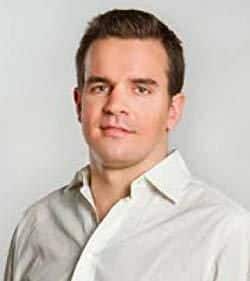
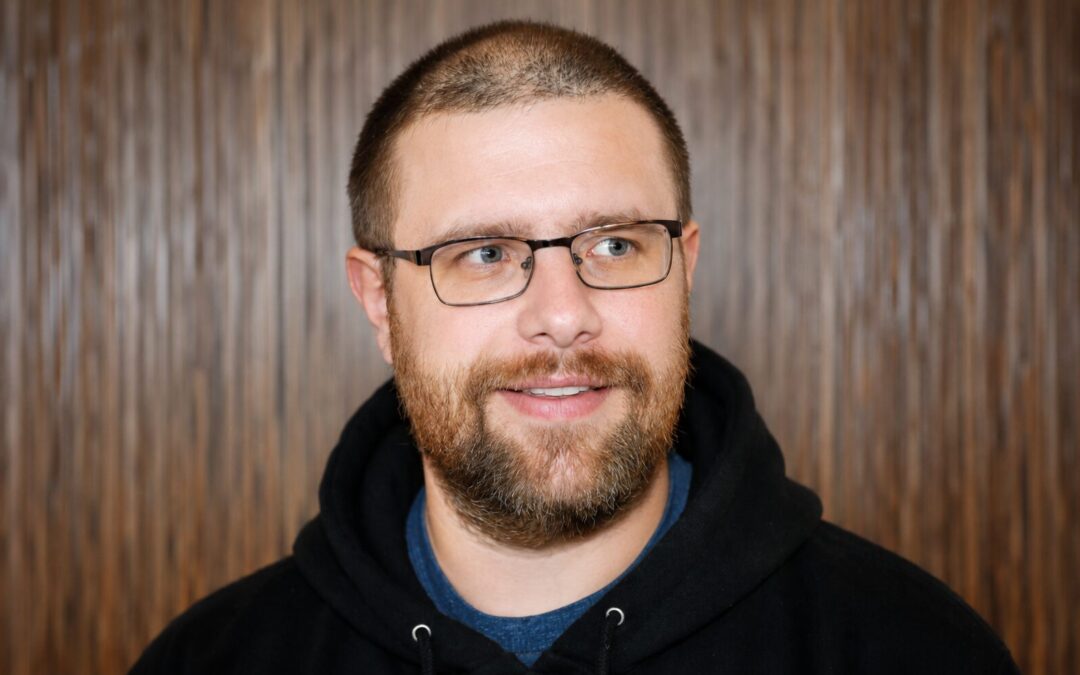
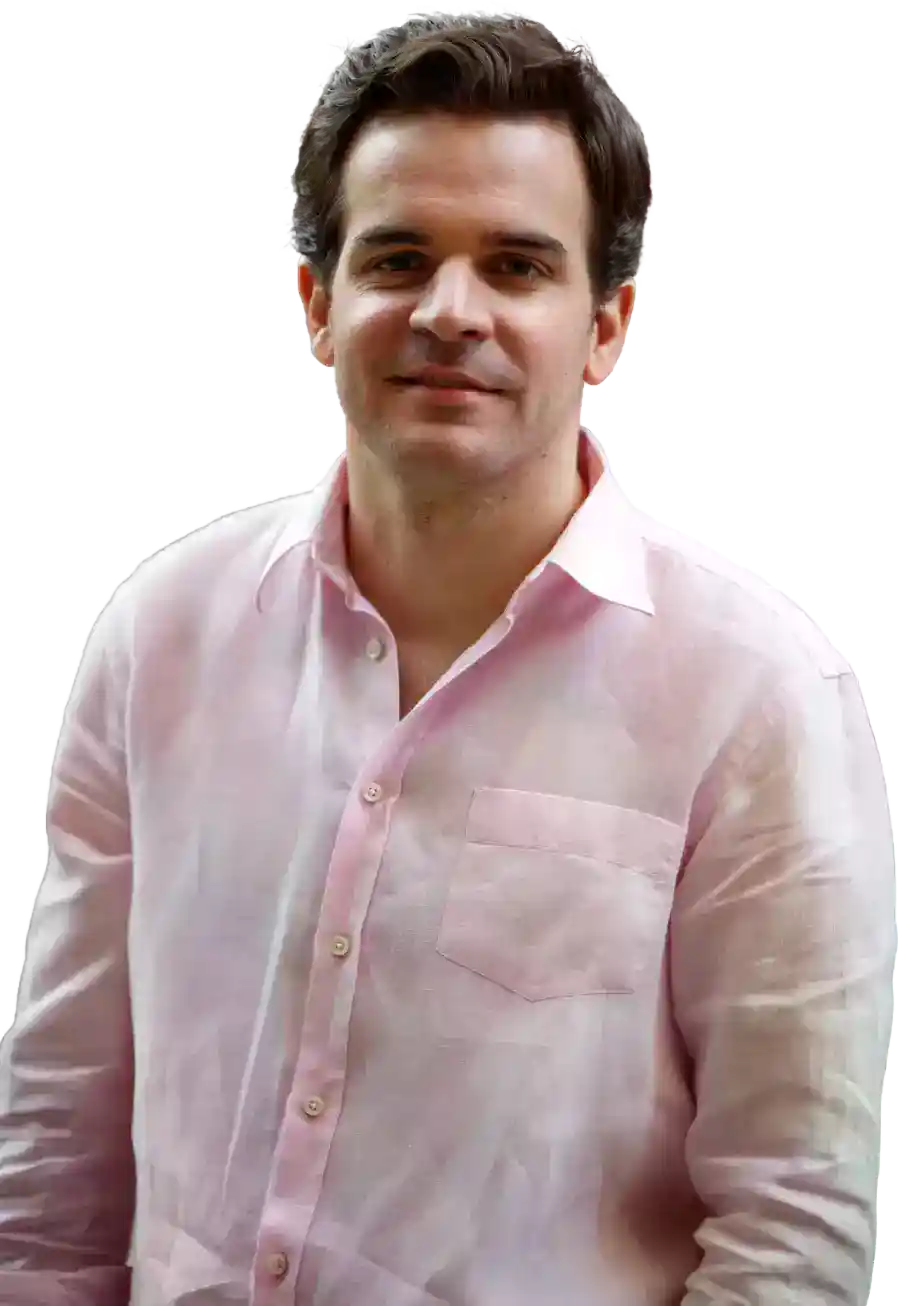
Most founders dream of building a company that changes an industry—Alex Haro built one that changed how families stay connected. Co-founder of Life360, he helped transform a simple idea inspired by a natural disaster into a publicly traded company used by 100+ million people worldwide.
Along the way, Alex navigated years without revenue, near-death fundraising moments, strategic acquisitions, an IPO, a life-altering accident, and eventually the launch of an entirely new venture that aims to connect billions of devices from space.
Today, Alex is building Hubble Network, a company creating a global satellite network capable of connecting ordinary Bluetooth devices directly to satellites. His journey offers valuable lessons in entrepreneurship, resilience, fundraising, scaling, and long-term vision.
Listen to the full podcast episode and review the transcript here.
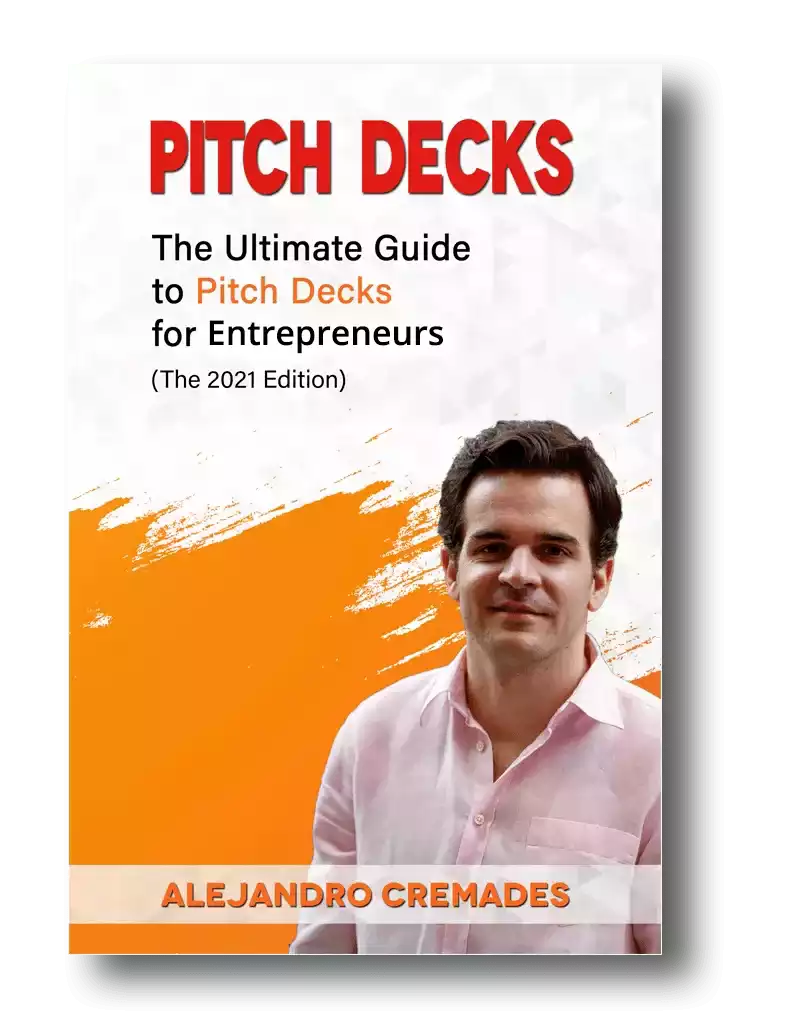
*FREE DOWNLOAD*
The Ultimate Guide To Pitch Decks
Growing Up In A Family Of Entrepreneurs
Entrepreneurship was woven into Alex’s childhood. Born to a Mexican father and an American mother from Salt Lake City, he grew up surrounded by restaurant businesses.
His father immigrated to the United States and built several successful Mexican restaurants in the Los Angeles area, including establishments in West LA that continue to operate today. Casablanca, La Cabana, Paco’s Tacos, and a few others are part of that impressive chain.
As a child, Alex spent much of his time either in school or helping around the family businesses. The experience shaped his worldview early and built the workaholic side of his personality. While many children grow up seeing entrepreneurship from a distance, he lived it every day.
Alex observed firsthand the relentless work ethic required to build something from nothing. The back office of a restaurant became his classroom. Watching his parents build businesses instilled a mindset that would later define his entrepreneurial career.
“Build what you can. Work hard. Solve problems. Keep moving forward,” Alex learned.
Choosing Technology Over The Family Business
Given his upbringing, many expected Alex to enter the restaurant industry. Instead, he chose a completely different path. While he respected the business his family had built, he had developed a deep passion for computers and technology.
After studying computer science, Alex faced a pivotal decision. Should he continue the family legacy in the restaurant business? Or should he venture into the unknown and build something entirely his own? He chose technology.
Leaving Southern California, Alex moved to San Francisco with no clear roadmap other than a desire to start a company and build something meaningful. That leap of faith would eventually lead him to the idea that became Life360.
Raise Capital Smarter, Not Harder
- AI Investor Matching: Get instantly connected with the right investors
- Pitch & Financial Model Tools: Sharpen your story with battle-tested frameworks
- Proven Results: Founders are closing 3× faster using StartupFundraising.com
The Hurricane Katrina Inspiration Behind Life360
The origins of Life360 can be traced back to an unexpected source: Hurricane Katrina. Alex met his future co-founder, Chris Hulls, at a technology event. The two began discussing the devastating impact of Katrina and how countless families became displaced and separated during the disaster.
Many struggled to locate loved ones or find help when communication systems failed. At the same time, two major technological shifts were unfolding. Apple had just introduced the iPhone, and Google had announced Android.
For the first time, always-connected GPS-enabled devices were becoming a reality. Alex and Chris saw an opportunity. What if smartphones could help families stay connected during emergencies? What if people always knew where their loved ones were and could connect with them?
What began as a disaster-response concept quickly evolved into a broader vision. Then the founders realized that families didn’t just need help during emergencies; they wanted peace of mind every day. That insight became the foundation of Life360.
Being Too Early Can Be As Difficult As Being Wrong
Today, it seems obvious that every family member would eventually own a smartphone. But, in 2008, that was far from certain. One of the biggest challenges Alex faced was convincing people that smartphones would become ubiquitous. Investors were skeptical, and consumers were uncertain.
As the infrastructure was still developing, users had doubts about powering up and sending text messages. Yet Alex remained convinced. The team entered an Android developer competition and won first place, securing a $300K grant from Google.
That grant became Life360’s first funding source. Ironically, it also remained the company’s only profitable year for quite some time. Like many transformative startups, Life360 wasn’t solving today’s problem; it was solving tomorrow’s problem. And that required extraordinary patience.
Six Years Without A Clear Business Model
One of the most striking parts of the Life360 story is how long it took the company to discover a scalable monetization strategy. For nearly six years, the focus wasn’t revenue—it was engagement. The team concentrated entirely on creating a product that families would use every day.
The logic was simple: If they could become embedded in daily family life, monetization opportunities would eventually emerge. That bet ultimately paid off. As Alex explains, Life360 is a freemium app. Anyone can download and start using it with their family.
Users can find their family members and check the histories of where everyone has been throughout the day at no cost. The breakthrough came when Life360 introduced driving safety features in 2014, some six years after the company’s launch.
They could now detect accidents, notify family members, and help coordinate emergency response. This feature unlocked the premium subscription model. Users could continue accessing the core service for free while paying for enhanced safety capabilities.
The freemium strategy proved highly effective. The company had already acquired millions of users through organic growth and word-of-mouth recommendations. Now it finally had a way to monetize that audience. The result was the beginning of Life360’s hypergrowth phase.
Scaling To 100 Million Users
Few consumer applications achieve meaningful scale, and even fewer become daily habits. Life360 accomplished both. Initially, growth came through organic adoption as parents recommended the app to friends, and families invited relatives. Communities shared the product naturally.
As premium revenue increased, Life360 could now reinvest in user acquisition and accelerate growth. Over time, the platform expanded beyond simple location sharing—it became a family safety ecosystem.
The milestones accumulated, growing from 1 million users to 5 million, 10 million, 50 million, and then over 100 million users. Each represented years of persistence and iteration. Yet Alex notes that the most meaningful moments weren’t tied to metrics.
Instead, they came from seeing real people use the product. Whether spotting Life360 on a stranger’s phone or hearing stories from parents who relied on it daily, those moments served as reminders of the impact the company was having on families worldwide.
Using Acquisitions As A Growth Engine
As Life360 matured, acquisitions became an increasingly important component of its strategy. One of the most significant was the acquisition of Tile. The rationale extended beyond simple expansion. Life360 saw an enormous opportunity in family-oriented hardware.
Alex started thinking about GPS watches for children, smart pet collars, elder-care devices, and asset-tracking products. However, the existing devices in the market were just not good enough.
Considering that Life360 is a very consumer-focused company, Alex just couldn’t offer a subpar experience to their users. The challenge they faced was that many hardware solutions failed to deliver a great UX. Tile stood out as one of the strongest hardware platforms available.
Acquiring it accelerated Life360’s product roadmap while expanding the company’s ecosystem into more of everyday family life. Alex started thinking about adding more avenues to engage and deliver value to Life360’s user families, thereby increasing revenue and developing premium features.
The deal also planted the seeds for Alex’s next venture—Hubble Network. While evaluating connected devices, he discovered a much larger problem. The network infrastructure itself was fundamentally broken. He would find solutions somewhere down the line.
Fundraising When Nobody Knows Who You Are
Life360’s fundraising journey was anything but conventional. For years, the company remained relatively unknown within Silicon Valley despite strong user adoption elsewhere. Communities that used Life360 in the Bay Area knew about the company, but not in places like, say, Texas.
This created a challenge. The company was growing, but many traditional venture investors didn’t fully understand the opportunity. Life360 didn’t have Silicon Valley venture capital firms writing big checks in every round.
As a result, Alex and his team had to become creative. Instead of relying exclusively on venture capital firms, they pursued strategic partnerships.
Storytelling is everything that Alex was able to master. The key is capturing the essence of what you are doing in 15 to 20 slides. For a winning deck, take a look at the pitch deck template created by Peter Thiel, Silicon Valley legend (see it here), where the most critical slides are highlighted.
Remember to unlock the pitch deck template that founders worldwide are using to raise millions below.
One notable example involved OnStar and General Motors, which they approached for their Series B round, around the time they launched driving safety features. The deal seemed certain to close—at the last moment, organizational changes killed the agreement.
Partnering with ADT
For many startups, that would have been fatal. But Life360 survived by finding another investor willing to step in. Later, the company formed a strategic partnership with ADT, the home security company.
The vision was compelling: Could home safety and family safety become integrated? Could a security system automatically respond based on family members’ locations? The interplay of automatically arming and disarming the home security system seemed like the future.
The partnership provided both capital and strategic value. But even that relationship faced challenges when ADT itself underwent ownership changes. ADT was acquired by Apollo, and its entire executive team was replaced by the private equity firm. These experiences reinforced a critical lesson.
Alex quickly realized that founders must control their own destiny whenever possible. External relationships matter, but dependence creates risk. Life360 would have to manufacture deals to continue running consistently.
The company is now a dominant family with several opportunities to expand its platform. It generated close to $500M in revenue in 2026, as Alex reveals.
The IPO And A Life-Changing Accident
In 2019, Life360 achieved a milestone few startups ever reach. The company went public first in Australia in May 2019 and then on the NASDAQ a few years ago. Technically, it is a dual-listed company. For Alex, it represented more than a decade of relentless effort.
But shortly after the IPO celebration, everything changed. While riding ATVs in the Nevada desert, Alex suffered a catastrophic accident. He flipped his vehicle and broke his neck, damaging his C6 and C7 vertebrae. The recovery process lasted roughly six months.
For someone who had spent over a decade immersed in Life360’s daily operations, the experience was transformative. For the first time, he was forced to step away. Initially, that felt impossible as founders often believe their companies cannot function without them.
Alex discovered the opposite. The company continued operating, and the leadership team performed well. Life360 didn’t need him involved in every decision. That realization changed his perspective. The accident ultimately created the space he needed to think about what came next.
Looking Back at the 20-Year Journey
Alex continues to serve as a board member at Life360 and talks about how he is humbled by the impact and positive change the platform has achieved. He could not have imagined when building the company that more than 100 million people would be using the app each month.
Before starting Life360, Alex had just seen it as a cool idea and a problem no one else was solving. He identified a gap in the market and set about filling it. In retrospect, when building the company, he hadn’t realized he was looking at a 10-year minimum journey if he was successful.
Alex had always known that the opportunity was big, but he expected to sign up for a five-year journey, not a 12-plus-year journey. He anticipated moving on to something else within five years, but Life360 is now poised to celebrate its 20th anniversary in a few weeks.
Alex advises aspiring founders to be mindful of the level of commitment they will need to dedicate to their startups if they become successful.
A Brief Detour To India
Before launching his next company, Alex pursued a long-standing personal goal—he moved to India. After spending virtually his entire adult life building Life360, he wanted a completely different experience: living abroad in an unfamiliar place.
The move offered a chance to step outside his comfort zone and experience a new culture. Although COVID eventually disrupted those plans and forced him back to the United States, the experience proved valuable—it helped him reconnect with his identity as a builder.
It reminded Alex that he wasn’t simply the co-founder of Life360—he was someone who loved creating companies. That realization set the stage for Hubble Network.
The Birth Of Hubble Network
Explaining Hubble Network in a sentence, Alex says: At Hubble, they connect any off-the-shelf Bluetooth chip directly to their space satellite with a simple software change. Next, he dives into the problem, explaining how the idea came about.
While working at Life360, Alex became increasingly interested in connected devices. He envisioned a future filled with smart hardware for families. The problem was connectivity, as cellular networks were too expensive and traditional satellite systems consumed too much power.
Existing solutions weren’t designed for billions of low-cost devices. Alex believed there had to be a better way—building a truly global, cost-efficient battery and network that could solve consumer device problems and also serve all sorts of enterprises and industries.
The sectors they could serve included construction, oil and gas, supply chain and logistics, mining, oil manufacturing, and defense—all the important use cases and verticals. where existing networks are far too expensive, too energy-intensive, and offer a suboptimal experience.
Alex’s search for an answer eventually led him to Ben Wild. Ben had previously built a peer-to-peer wireless mesh networking company that was later acquired by Ring Home Security and eventually became part of Amazon’s Sidewalk network.
Together, the duo shared a bold vision, and the result became Hubble Network.
Connecting Bluetooth Devices Directly To Satellites
At first glance, Hubble’s technology sounds impossible. The company enables ordinary Bluetooth chips to communicate directly with satellites despite the chips’ short-range nature. No cellular infrastructure. No special hardware. Just a simplistic solution—software change.
The concept challenges conventional assumptions about Bluetooth’s limited range. Yet through proprietary software and large satellite antenna arrays, Hubble has made it work. Today, the company has seven satellites in orbit and already has commercial customers using the network.
As Alex explains, the first three satellites were demonstration versions, but now, along with the next four, Hubble serves paying customers. It has scaled exponentially, transitioning from pre-revenue to $30M in revenue in just one year.
Hubble now has versions of Tile, the AirTag competitor, with a software change that are locatable by satellite. It enables these Tiles to be found anywhere globally without having to be near a cell phone, a cell tower, or any other infrastructure—a truly innovative product that the market needs and wants.
The implications are enormous. Devices that previously required expensive connectivity can now operate globally at a fraction of the cost.
Scaling Hubble From Zero To Tens Of Millions In Revenue
Unlike Life360, which spent years searching for a business model, Hubble identified monetization early. As Alex reveals, Hubble has already demonstrated traction and early product-market fit. The company’s model is straightforward.
Customers pay a monthly fee per active device connected to the network. If Hubble onboards 1,000 devices, it can expect 1,000x the monthly fee. This creates predictable recurring revenue based on the number of devices on the network.
The simplicity of implementation accelerates adoption. Customers don’t need to redesign products; they simply update software. The results have been remarkable.
Raising More Than $100 Million For A Space Company
Ironically, Alex originally planned to bootstrap his next venture, but then he decided to build a satellite network. That changed the math because space infrastructure requires significant capital. He realized they would need to raise a few hundred million dollars from outside investors for the long term.
To date, Hubble has raised more than $100M. The fundraising journey followed a familiar pattern. At the seed stage, investors largely bet on Alex and his track record. At Series A, the focus shifted to proving the technology worked.
As Alex reveals, Hubble is also a Y Combinator-backed company. The cash YC offered became its first source of funding. Hubble also benefited from networking opportunities with investors and a community of fellow founders, who were encouraged to build devices that work on Hubble as well.
Tapping Close Relationships with Investors
Alex points out that Life360 is a consumer smartphone app, and his most recent company, Hubble, is a hardware satellite networking company. Both are entirely distinct from the pure business model and product perspectives.
Even so, many investors who had built relationships with Life360 were excited about Alex’s next venture, regardless of how crazy his idea sounded. They were open to offering Hubble a $4M seed round, thanks to the great relationships its cofounders had built with them over a decade.
Retracing their fundraising journey, Alex reveals that their Series A was led by Transpose Platform, a venture capital firm and fund of funds headed by Alex Bangash, its managing director. Traditionally, Bangash invests in other funds and has previously backed Excel and Y Combinator.
Bangash also takes direct company bets when he sees a really interesting product targeting a big market share but needing a large capital injection. He was super excited about the Hubble concept.
The Series B round was led by Ryan Swagger and Mark Weiser, both of whom manage successful funds. Ryan was a board member and close friend of Alex from his Life360 Days. And Mark Weiser is totally space-focused, as Alex reveals.
Navigating Fundraising Challenges
Alex reminisces about the different fundraising challenges they faced through the various funding rounds. Investors believed in him, knowing that he would develop something interesting even if the satellite concept didn’t work out.
Initially, Hubble seemed like a crazy idea with a low chance of success, but it could become hugely successful if it worked out. Alex’s pitch centered on their ability to demonstrate they could get satellites into orbit, backed by full tech validation.
By Series B, the emphasis moved toward early go-to-market success, customer traction, and commercial validation. Each round required a different proof point. Each represented a new stage in the transformation of an ambitious vision into a real business.
Alex reveals that Hubble will be ready for its next round of capital soon. Launching satellites is much more inexpensive today than it was earlier. However, it’s not capital light. Additional rounds of capital are needed to build out the full constellation.
As for Hubble’s market footprint, from Alex’s perspective, one day, billions of devices will be on this network, solving some of the world’s biggest problems.
A Vision Beyond Connectivity
Alex’s ambitions for Hubble extend far beyond building another network. He envisions it ultimately becoming a generational company that connects the physical and digital worlds.
Alex believes the next generation of AI systems, robotics, automation, and intelligent infrastructure will require vast amounts of real-world data. Data based on the physical world—not on text, but digital.
That data must come from sensors that are connected. And the connectivity must scale globally to have a real impact on the world. In the next 10 years, a real concept of a digital twin for everything will emerge as Large Language Models (LLMs) and future real-world models evolve.
In Alex’s view, the future will involve billions of devices creating digital representations of physical environments. These digital twins could enable breakthroughs in climate monitoring, wildfire prevention, smart agriculture, and supply chain and logistics, and massively lower carbon emissions.
Hubble’s role would be to provide the foundational infrastructure that makes this future possible.
The Entrepreneurial Lesson Every Founder Needs To Hear
When asked what advice he would give his younger self, Alex offered a perspective that every founder should remember. He strongly believes in trusting his heart and gut and doing what seems right.
However, Alex also points out that entrepreneurs often attach enormous significance to individual events, such as a funding round, partnership deal, customer win, or any other milestone. Each win seems like a cause for celebration.
At the same time, every failed deal, investor rejection, missed term sheet, or customer loss feels like the worst pain. It’s crucial to remember that all these moments are temporary and survivable. They are neither as good nor as bad as they seem.
The highs are rarely as important as they seem, and the lows are rarely as devastating as they feel. Building a company is a long game. Eventually, you’ll make enough good decisions, fix enough bad mistakes, and build something interesting.
To Conclude
Alex Haro’s journey is a powerful reminder that transformative companies are rarely built overnight. From growing up in a family of entrepreneurs to co-founding Life360 and scaling it to more than 100 million users, his path was marked by several wins and setbacks.
Even after achieving an IPO and overcoming a life-changing accident, Alex chose to start over and tackle an even bigger challenge with Hubble Network. His story demonstrates that great founders are not defined by individual victories or hurdles.
They are defined by their ability to stay resilient and keep building, adapting, and pursuing ambitious ideas over the long term.
Listen to the full podcast episode to know more, including:
- Great companies often begin by solving a problem that most people don’t yet recognize.
- Product adoption and engagement should come before monetization when building a long-term platform.
- Being early to a market can be just as challenging as being wrong.
- Strategic partnerships can help founders survive when traditional fundraising paths fall short.
- Acquisitions can accelerate growth and open doors to entirely new business opportunities.
- Success requires accepting that entrepreneurship is often a decade-long commitment or longer.
- The highs and lows of building a startup are temporary, but persistence compounds over time.
SUBSCRIBE ON:
 iTunes
 Google Play
 Stitcher
 TuneIn
 RSS
RSS SoundCloud
 Spotify
Keep in mind that storytelling is everything in fundraising. In this regard, for a winning pitch deck to help you, take a look at the template created by Peter Thiel, the Silicon Valley legend (see it here), which I recently covered. Thiel was the first angel investor in Facebook with a $500K check that turned into more than $1 billion in cash.
*FREE DOWNLOAD*
The Ultimate Guide To Pitch Decks
Remember to unlock for free the pitch deck template that founders worldwide are using to raise millions below.
Podcast: Play in new window | Download
Subscribe: Apple Podcasts | Spotify | TuneIn | RSS | More
Facebook Comments