

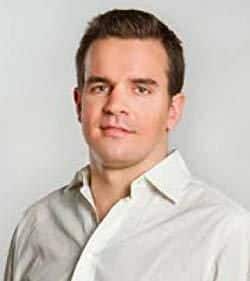
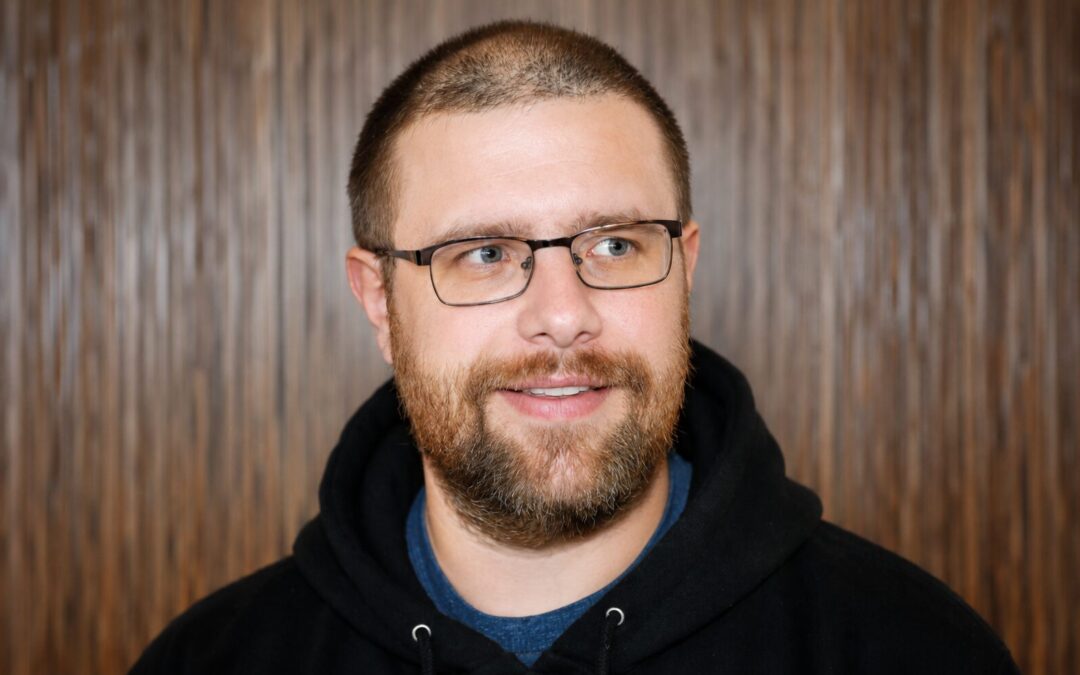
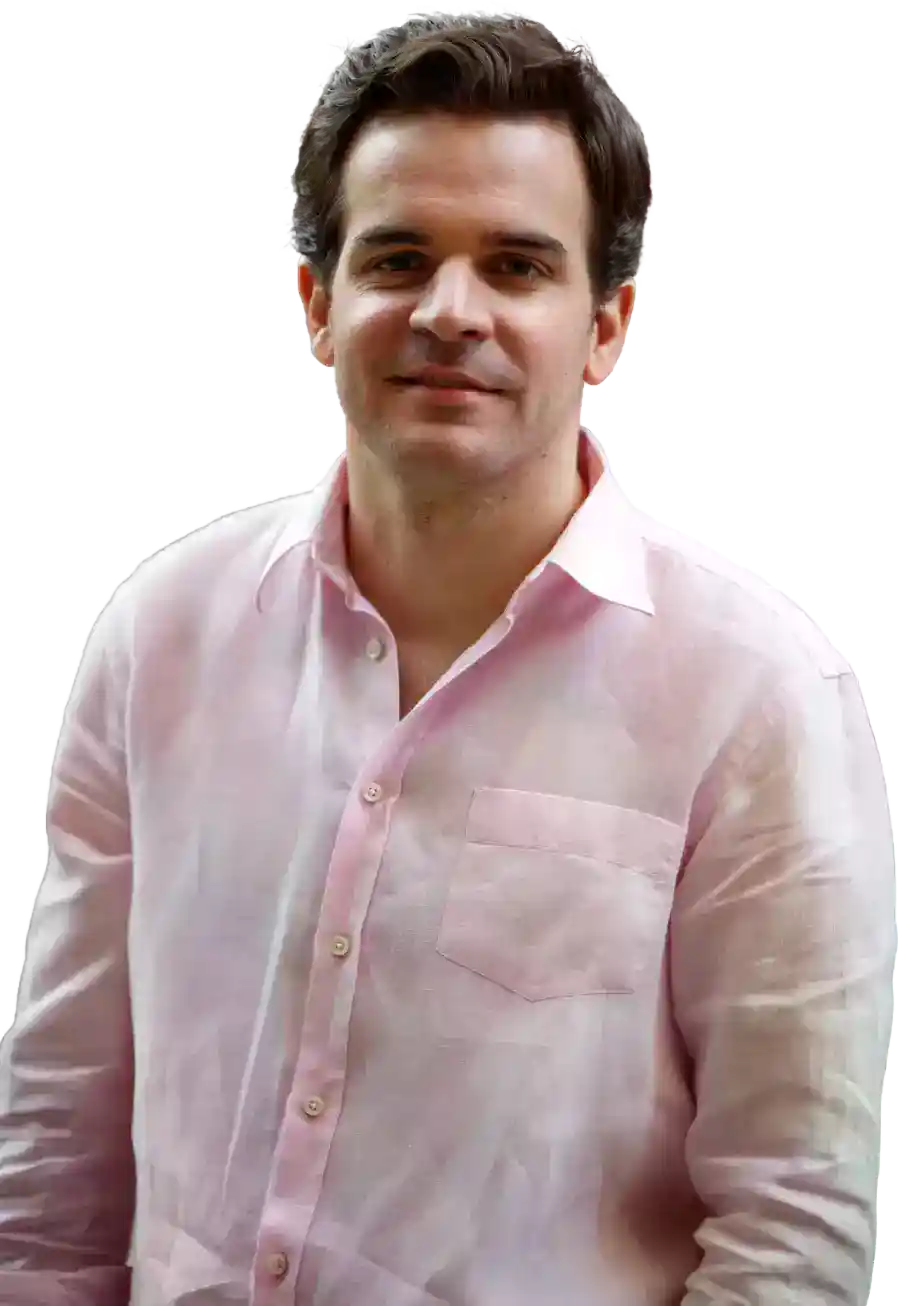
Most founders dream of building a company that changes an industry—Alex Haro built one that changed how families stay connected. Co-founder of Life360, he is currently building Hubble Network and has raised over $100M for the company.
Hubble Network has secured funding from top-tier investors like Gaingels, Seraphim Space, Pioneer Fund, Y Combinator, Marc Weiser of RPM Ventures, Transpose Platform, and Tom Gonser (cofounder of DocuSign),
In this episode, you will learn:
- Great companies often begin by solving a problem that most people don’t yet recognize.
- Product adoption and engagement should come before monetization when building a long-term platform.
- Being early to a market can be just as challenging as being wrong.
- Strategic partnerships can help founders survive when traditional fundraising paths fall short.
- Acquisitions can accelerate growth and open doors to entirely new business opportunities.
- Success requires accepting that entrepreneurship is often a decade-long commitment or longer.
- The highs and lows of building a startup are temporary, but persistence compounds over time.
SUBSCRIBE ON:
 iTunes
 Google Play
 Stitcher
 TuneIn
 RSS
RSS SoundCloud
 Spotify
Keep in mind that storytelling is everything in fundraising. In this regard, for a winning pitch deck to help you, take a look at the template created by Peter Thiel, the Silicon Valley legend (see it here), which I recently covered. Thiel was the first angel investor in Facebook with a $500K check that turned into more than $1 billion in cash.
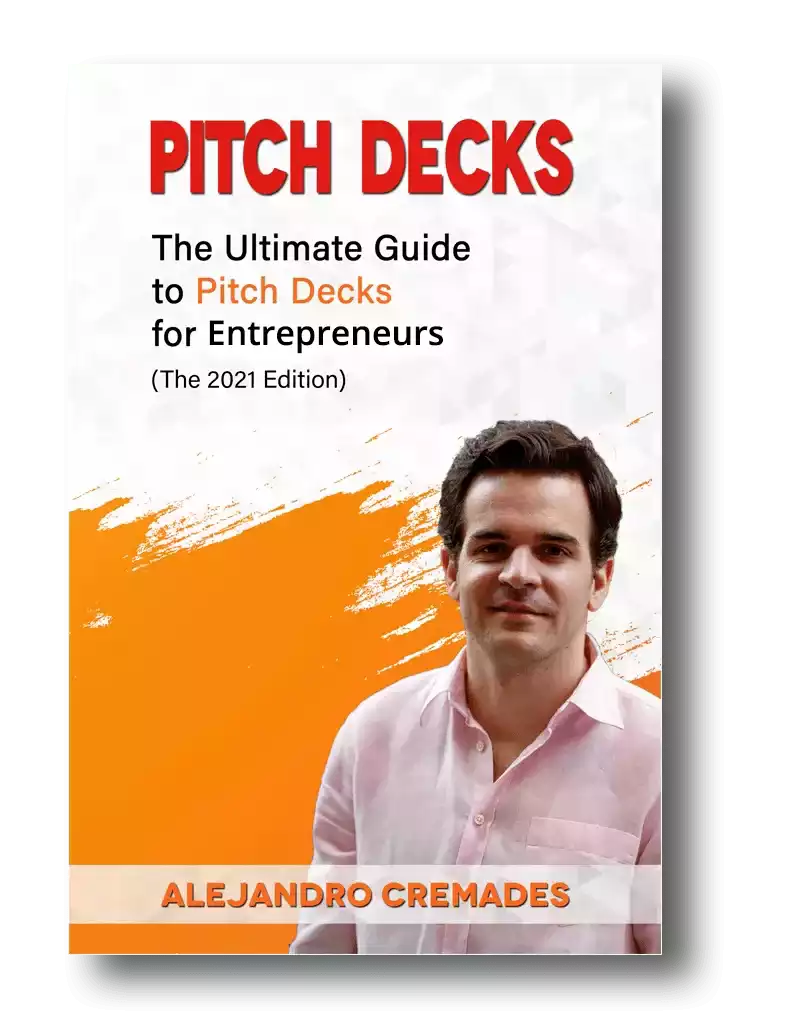
*FREE DOWNLOAD*
The Ultimate Guide To Pitch Decks
Remember to unlock for free the pitch deck template that founders worldwide are using to raise millions below.
About Alex Haro:
Alex Haro is a serial entrepreneur, technology innovator, and investor best known as the co-founder of Life360, the family safety platform used by more than 100 million people worldwide.
Over more than a decade, Alex helped scale the company from an idea inspired by Hurricane Katrina into a publicly traded business, serving in leadership roles that included President, Chief Technology Officer, and board member.
Following Life360’s growth and IPO journey, Alex turned his attention to a new challenge in global connectivity.
Today, Alex is the co-founder and CEO of Hubble Network, a company pioneering satellite connectivity by enabling standard Bluetooth devices to communicate directly with satellites through software alone.
Based in Las Vegas, he combines deep expertise in software, hardware, networking, and entrepreneurship with a passion for building technologies that solve large-scale real-world problems.
As both a founder and angel investor, Alex continues to back and build ambitious companies that push the boundaries of what is possible.
Raise Capital Smarter, Not Harder
- AI Investor Matching: Get instantly connected with the right investors
- Pitch & Financial Model Tools: Sharpen your story with battle-tested frameworks
- Proven Results: Founders are closing 3× faster using StartupFundraising.com
Connect with Alex Haro:
Read the Full Transcription of the Interview:
Alejandro Cremades: Alrighty, hello everyone, and welcome to the DealMaker Show. Today, we have an exciting founder. He’s done it a couple of times, and the last one was quite the hit. Now he’s on a rocket ship. We’re going to talk about all kinds of good stuff, whether it’s inspiration, stories about scaling a company all the way to an IPO, testing in the early days, building something from scratch, and, of course, all the good stuff that we like to hear when it comes to deal-making. So be very, very prepared because today’s session is going to be quite inspiring. Without further ado, let’s welcome our guest today, Alex Haro. Welcome to the show.
Alex Haro: Hi. Well, thank you for having me, and I appreciate you pronouncing the last name correctly.
Alejandro Cremades: Well, you know, obviously you’re from Spain too, just like me.
Alex Haro: Yeah.
Alejandro Cremades: So give us a walk down memory lane. Dad from Mexico, mom from Salt Lake City. How was life growing up for you?
Alex Haro: Yeah, life for me growing up, my parents were restaurant entrepreneurs. When my dad immigrated here to the U.S., he spent a majority of his career building a series of different restaurants, including some very popular Mexican restaurants that are still running in West L.A. Casablanca, La Cabana, Paco’s Tacos, and a few others.
Alex Haro: So I got my workaholic nature directly from my parents and spent most of my waking hours either in school or at the restaurant. I felt more at home in the back office of a restaurant than I did anywhere else. I think it’s a big part of who I am today, growing up with that sort of immigrant, workaholic mentality of building what you can and just getting stuff done.
Alejandro Cremades: But you didn’t wait any longer. Being able to have that entrepreneurial mindset from your upbringing, right after school you took good notes and went at it with your first company. Tell us what happened there.
Alex Haro: Yeah, absolutely. As you might imagine, there was a lot of pressure to get into the restaurant business. But I realized that I had a love for computers that I could not ignore. And, you know, the restaurant business is very brutal.
Alex Haro: So immediately after leaving college, where I studied computer science, I had to make a choice: either go into the restaurant game or go start my own company. I decided I wanted to start my own company, not focused on the food space at all, but really focused on what we could build with technology.
Alex Haro: That was a lot of the inspiration for me moving on a whim from Southern California to San Francisco to figure out what I wanted to do with my life and what company I wanted to start. It ultimately led me to find my co-founder for my first company.
Alex Haro: I feel very fortunate that I just went for it, left school, said no to the restaurant game, and decided to set out for San Francisco to figure out what I was going to do with my life.
Alejandro Cremades: So what ended up being the inspiration for Life360?
Alex Haro: Yeah, so my co-founder and I actually met at a random tech event. We ended up talking a lot about Hurricane Katrina and how a lot of families got displaced because of the natural disaster.
Alex Haro: There was a lot of criticism of the government and its response to the tragedy. Many families got displaced and didn’t know how to find each other, find help, or know what to do.
Alex Haro: Chris Hulls, my co-founder at Life360, and I spent a lot of time talking about this new platform called Android, which had just been announced.
Alex Haro: The iPhone had just launched as well. These always-on, GPS-connected devices could be something that actually helped families stay safe.
Alex Haro: That really was the initial inspiration for Life360. We were thinking about how, in times of natural disasters, we could help keep families close and connected. How could we help them know where everyone is and find each other?
Alex Haro: Initially, it was very focused on natural disasters, but pretty early on we learned that out of sight means out of mind. So we started asking ourselves how we could become part of everyday family life.
Alex Haro: But we were also very early in the days of mobile. We ended up putting together an application for a competition that Android announced and ended up winning first place. So our first source of funding ever was a $300,000 grant from Google. And for a very, very long time, it was our only profitable year as well, until more recently.
Alex Haro: But we were so early in the days of mobile that families didn’t have smartphones yet. It wasn’t clear to everyone that everyone was going to have a smartphone. In the early days of pitching this idea that a family would be connected through a smartphone, we had a lot of skeptics and people who just didn’t believe that everyone would eventually have a smartphone.
Alex Haro: That’s really what inspired us to push forward and start Life360, even in the early days.
Alejandro Cremades: So what was the business model of Life360? How were you guys making money?
Alex Haro: Yeah, it took us quite a long time. I think you look at Life360 now, and we’re a public company that will make over $500 million in revenue this year. It feels, in some sense, like a success that was always going to be.
Alex Haro: But it took many, many years of grinding it out and trying to figure out the business model. How would we scale? How would we grow?
Alex Haro: Honestly, for the first almost six years, we were focused on how to get people to use it. How do we engage our customers? How do we build something that becomes embedded into the everyday fabric of family life?
Alex Haro: It really wasn’t until we built the driving safety features that we started to monetize.
Alex Haro: Life360 is a freemium app. Anyone can download it, start using it with their family, see where everyone is, see what’s going on, and view the history of where family members have been throughout the day. You can do all of that for free.
Alex Haro: But we also built driving safety features. We can tell you if one of your family members gets into a car accident or if emergency services need to be dispatched.
Alex Haro: That really became the crux of what we launched in 2014. Almost six years after starting the company, we finally began monetizing.
Alex Haro: We can talk a lot more about the difficulties of fundraising before having any revenue. It certainly wasn’t the world’s most fun journey. But we stuck to it and grinded it out.
Alex Haro: When we launched those premium features, we realized we wanted every family to use Life360. That’s why we chose the freemium model instead of charging customers upfront.
Alex Haro: When we launched driving, it allowed us to monetize. In the first couple of years, we scaled to a few million users through pure organic growth and word of mouth. Soccer moms would show it to other soccer moms and say, “Look at this cool utility that I’m using.”
Alex Haro: As our driving and premium features matured, that allowed us to invest in user acquisition and really go into hypergrowth mode.
Alex Haro: As I mentioned, we’re now over 100 million users because of that.
Alejandro Cremades: What was that moment where you felt like, “I think this is really exploding”?
Alex Haro: Yeah, there were so many fun milestones along the road. Certainly, the first time we passed a million users, then 5 million, 10 million, 50 million, and now 100 million. All of those milestones were huge celebrations and very exciting.
Alex Haro: Being able to ring the bell on the NASDAQ and have that IPO moment is truly one of the highlights of my life so far. But honestly, it happens fairly often that I get reminded of the impact I’ve had at Life360.
Alex Haro: I’ll see a random taxi driver or Uber driver with Life360 installed on their home screen. Or I’ll be riding BART and see someone using Life360 to check in on their family.
Alex Haro: Sometimes someone learns that I was a co-founder of Life360 and tells me how they use it every single day. For parents who use Life360, they use it more than their kids use something like Snapchat. They’re opening it many, many times a day.
Alex Haro: Hearing those stories and understanding how important Life360 is to the families who rely on it brings me the most joy. When you’re running the business, looking at charts, thinking about MAUs and premium revenue growth, everything starts to feel like numbers. You’re chasing charts and solving problems.
Alex Haro: It becomes hard to conceptualize the actual impact you’ve had by launching something into the world and seeing people use it with their own hands. Ultimately, when I think of my happiest moments at Life360, even today, it’s having conversations with users and realizing that I’ve made an impact on their lives.
Alejandro Cremades: In that regard, as you guys were scaling and seeing all these millions of users, one of the strategies you used was inorganic growth through acquisitions and strategic roadmap acceleration.
Alejandro Cremades: Talk to us about how you thought through the M&A approach. That also led to acquisitions, including Tile, for example.
Alex Haro: Yeah, absolutely. Even from a fundraising perspective, we were always kind of an under-the-radar company until the last few years when we started seeing significant user traction and adoption.
Alex Haro: The communities that used Life360 knew about us, but outside of those communities, not many investors knew of Life360. Even in the Bay Area, where we didn’t have as much adoption as we did in places like Texas, Life360 remained relatively under the radar.
Alex Haro: That was one of the issues we had to work through, and we had to get creative when thinking about fundraising strategies.
Alex Haro: We definitely didn’t have traditional Silicon Valley venture capital firms writing big checks into every round. We had to manufacture almost every round ourselves.
Alex Haro: I remember for our Series B, we were trying to sign a strategic partnership with OnStar and GM. This was around the same time we were launching the driving safety features.
Alex Haro: We had a deal ready to go, and then literally on signing day, the president of the organization that was supposed to sign either left or was fired—I don’t exactly remember the details.
Alex Haro: But it meant our deal was dead. We didn’t necessarily have enough runway to keep going much longer. Luckily, we found another believer who stepped in and effectively became our Series B round. For our Series C round, we ended up doing a strategic partnership with ADT, the home security company.
Alex Haro: There was a vision around how to keep your family safe both at home and away from home. We started thinking about the interplay of automatically arming and disarming home security systems through something like Life360 and ADT.
Alex Haro: That was another very interesting deal that we worked on. Then, down the road, ADT was acquired by Apollo, and the entire executive team we had been working with was replaced by the private equity firm all at once.
Alex Haro: We realized that we always had to control our own destiny and, in some cases, manufacture the types of deals that allowed us to keep running the company consistently.
Alex Haro: In the earlier years, and now that we’re in a position where we are the dominant family platform, it provides us a lot of opportunity to offer a broader platform. I’ll talk about the Tile acquisition because it also relates to the new company I’m working on at Hubble.
Alex Haro: We saw so much opportunity for hardware for families. If you think about smart collars for pets, GPS watches for kids, fall detectors for elderly parents, there was all this opportunity for compelling hardware devices.
Alex Haro: But the devices in the market just aren’t good enough yet. As a very consumer-focused company, we couldn’t offer a subpar experience to our customers. That’s a big part of the reason we acquired Tile when we did, because it was best-in-class hardware.
Alex Haro: But it’s also how I became obsessed with solving this problem around how you provide a global network, which is what I’m now focused on at Hubble.
Alex Haro: So, yeah, that’s how we thought about not only acquiring a lot of users, but also thinking broader than just the family. How do we expand into more of everyday family life? How do we add additional avenues to engage and deliver value to our families and potentially create additional revenue and premium features to offer them as well?
Alejandro Cremades: So now, as part of this, you guys took the company public as well with Life360. Part of that celebration—who would have thought that you would celebrate so much that you ended up getting injured?
Alejandro Cremades: So, wow, what happened? I know that journey was really rough for you personally and professionally.
Alejandro Cremades: Talk to us about this because I’m sure that some of those days were quite gray.
Alex Haro: Yeah, absolutely.
Alex Haro: As you mentioned, in the run-up to our IPO—and Life360 has kind of a fascinating history—we IPO’d in Australia first in 2019, and then we IPO’d again on the NASDAQ a few years ago. So we’re technically a dual-listed company.
Alex Haro: After our first IPO in 2019, it was May, and we were celebrating. I was having some fun with friends in the deserts of Las Vegas, Nevada, riding ATVs around.
Alex Haro: I ended up flipping my ATV, being a little too aggressive of a driver, I suppose, and ended up breaking my C6 and C7 spinal cord. So I literally broke my neck.
Alex Haro: Luckily, everything turned out alright. I have no long-term issues from it. I can walk and do all of that. But it was about a six-month recovery process.
Alex Haro: When you’re so heads-down focused on building a business—at least this is my personal lived experience—Life360 was and is my baby. It’s such a personal thing that you’re building every single day. The concept of ever being able to step away is so foreign to me.
Alex Haro: Once I broke my neck and had to spend six months recovering, both for my health and to make sure I would be able to walk and avoid long-term issues, I was in deep recovery for six months, basically from June 2019 until December.
Alex Haro: It meant that I was literally ripped away from Life360 and forced to focus on my own recovery instead of being stuck in the day-to-day of building.
Alex Haro: I actually interviewed my replacement CTO from my hospital bed before we hired him.
Alex Haro: Then, about six months later, when I had recovered, I came back and realized that Samir, who was the CTO at the time, was doing a great job. The company had kept running without me, and I didn’t have to be the savior who came back and reinserted himself.
Alex Haro: It was the first time in my more than 12 years of running Life360 that I even imagined being able to step away from the day-to-day. I’m still a board member at Life360, but going through that recovery allowed me to focus on what I wanted to do next.
Alex Haro: I had this idea around building a truly global network. It was something I was very passionate about while I was at Life360. So I took the opportunity after recovering to follow my next dream while still being heavily involved with Life360.
Alex Haro: I honestly don’t think it ever would have happened had it not been for that accident. So even though there were some dark gray days, as you mentioned, on the other side it became much brighter because it allowed me the opportunity to step out and try something else.
Alejandro Cremades: So I’m just wondering, did you ever think you would build a three-billion-dollar-plus company like that? I mean, it’s just unbelievable looking back.
Alex Haro: Yeah, you know, half of me wants to say, “Of course, I was always going to build Life360, and of course it was always going to be successful.”
Alex Haro: But then the other half of me remembers the early days and how much potential I knew was there. I don’t think I ever imagined it being this big. I never imagined that literally 100 million people would use my app on a monthly basis.
Alex Haro: And every time I’m reminded of the stories our users tell us, I think most of all about the amount of impact we’ve had and the positive change we’ve been able to bring.
Alex Haro: I don’t think I ever could have fully articulated that in my own mind before starting it. I just thought it was a really cool idea that no one else was solving and that there was a huge need in the market.
Alex Haro: One piece of advice I give to entrepreneurs who are thinking about starting a company is that when you start something, you don’t necessarily realize that you’re signing up for a 10-year minimum journey if you’re successful.
Alex Haro: I think that was the most surprising part of building Life360. I remember when I started it, I knew it would be a big idea. But I started it with the assumption that I’d work on it for a few years and then go do something else.
Alex Haro: I always knew it would be big, but in my mind, it was a five-year journey, not a 12-plus-year journey. And now, at this point, it’s almost a 20-year journey. We’re about to celebrate our 20th anniversary in a few weeks.
Alex Haro: From that perspective, I signed up for something and just didn’t realize how long the grind was going to be. My advice to anyone thinking about starting a company is that if it’s successful, you’re going to be doing it for a long time. Make sure you realize the level of commitment you’re signing up for if things go well.
Alejandro Cremades: So then, in your case, as you were saying, you come back, you’re strong, you’re feeling good. You realize that Life360 is on a really good path and that you now have the ability, the availability, the time, and the creative juices to flow.
Alejandro Cremades: In which direction did you point that energy?
Alex Haro: Yeah, well, there was a minor detour before starting Hubble. I had spent all of my twenties in the Bay Area focused on building Life360, and I had always wanted to live internationally.
Alex Haro: So I ended up moving to India with a friend to help him start a company there. That was a fantastic way to get myself out of the U.S. I love the U.S. and will live here forever, but I wanted the experience of truly living abroad and being in a place that was completely foreign to me.
Alex Haro: I got to experience that in early 2020. Then, as everyone knows, COVID struck. I was forced to abandon my plan there and move back to the U.S.
Alex Haro: But I think it was a really cool transition period for me—from building Life360, to opening myself up to new ideas, and then pursuing my true passion, which is building Hubble Network.
Alex Haro: I really appreciate taking the leap to move to India, experience something completely different from my everyday life in the U.S., and renew my sense that I am a company builder.
Alex Haro: I needed to focus on building my next company for me. That’s really what inspired me to jump in with both feet and start Hubble.
Alejandro Cremades: So then tell us, what’s Hubble?
Alejandro Cremades: If you could tell the people listening, what is Hubble? How are you making money? What’s the business model? What problem are you solving?
Alex Haro: Yeah, absolutely. The quick takeaway is that at Hubble, we connect any off-the-shelf Bluetooth chip directly to our space satellite. I’ll get much deeper into how that works, but that’s the simple explanation.
Alex Haro: The reason I started this is that we wanted to build hardware devices for families at Life360, and we realized that existing cellular and satellite networks are fundamentally broken.
Alex Haro: I saw an opportunity to build a truly global, battery-efficient, and cost-efficient network that could solve not only consumer device problems but also serve enterprises and industries such as construction, oil and gas, supply chain and logistics, mining, manufacturing, and defense.
Alex Haro: There are all these important use cases and verticals where existing networks are far too expensive, too power hungry, and offer a suboptimal experience.
Alex Haro: I became hyper-focused, even while I was at Life360, on solving the network problem.
Alex Haro: In fact, it’s how I met my Hubble co-founder, Ben Wild. At the time I met Ben, I invested in his second company. Ben has been a company builder his entire career. I invested in his second company, which was a really interesting peer-to-peer wireless mesh network.
Alex Haro: He eventually sold the company to Ring Home Security. Shortly thereafter, Amazon acquired Ring and his company, and all of his code and protocol became part of the Amazon Sidewalk wireless network.
Alex Haro: I got to join Ben on that journey and became a close friend while watching him launch Sidewalk at Amazon. But we continued sharing this vision that there needed to be a global network—one that was battery efficient and cost efficient.
Alex Haro: The question became: How do we achieve those goals? The answer we came up with was that any device with Bluetooth could communicate directly with our space satellite through a simple software change.
Alex Haro: We got incredibly excited about that idea. Obviously, the initial reaction is, “There’s no freaking way.” That was my reaction too. Bluetooth seems like such a short-range technology.
Alex Haro: But through a combination of software running on the Bluetooth chip and our massive antenna arrays that we build and launch into space, we can actually connect any off-the-shelf Bluetooth chip directly to our satellites.
Alex Haro: Ultimately, the product we offer customers is simple: make one software change, and their Bluetooth chip becomes connected anywhere globally.
Alex Haro: And this isn’t theoretical. We’ve launched seven satellites. The first three were demonstration satellites, and most recently we launched our first four production satellites.
Alex Haro: We now have customers across a variety of industries that are paying for the service. Last year we were a pre-revenue company. This year we’ll make close to $30 million in revenue.
Alex Haro: We’ve been able to scale quickly, and the reason is the simplicity of making a software change to existing devices. We mentioned Tile, the AirTag competitor, earlier.
Alex Haro: We now have versions of Tile that, with a software update, are locatable by satellite. It allows these devices to be found anywhere globally without being near a cell phone, a cell tower, or any other infrastructure.
Alex Haro: We truly believe that’s an innovative product the market needs and wants. The early traction shows that we’re hitting some level of product-market fit. Ultimately, at the end of the day, the business model is relatively simple.
Alex Haro: We charge our customers a small per-active-device monthly fee, and that’s it. So if you onboard 1,000 devices, you pay us 1,000 times the monthly fee. You know exactly how to model that out based on the number of devices you have on our network.
Alejandro Cremades: So then talk to us about capital raising too. Obviously, with Life360, you really understood the deal-making side of things. I’m sure that, as a second-time founder—and especially a founder who had already built a successful company—you had money thrown at you.
Alejandro Cremades: You’ve now raised more than $100 million. So how has the journey of raising money the second time around been for you?
Alejandro Cremades: Why raise money? From whom did you decide it made sense to raise, and what was it like going through the motions once again here?
Alex Haro: Yeah, absolutely. It’s sort of funny. Before I started Hubble, I always had this vision that the next company I started, I was just going to bootstrap it myself and put in all the capital necessary to build the business.
Alex Haro: Then I decided to start a satellite company. I realized that, ultimately, if we’re successful, we’re going to have to raise a few hundred million dollars. Then it was like, well, maybe I need to get some outside investors to help build the business long term.
Alex Haro: As you mentioned, we’ve raised $100 million so far. We are a Y Combinator-backed company as well. Our first source of funding was going through the YC program, which is a startup accelerator that offers a little bit of cash upfront, but also a lot of useful advice, networking with investors, and a community of fellow founders who could potentially be encouraged to build devices that work on Hubble as well.
Alex Haro: So we started off by being a YC company. Then, through my network, as you might imagine, my previous company was a consumer smartphone app, and my most recent company is a hardware satellite networking company. They’re quite different from a pure business model and product perspective.
Alex Haro: But there were a lot of investors who had built relationships with me over the years at Life360 and knew, “Hey, this is Alex’s next thing. I’m in, no matter how crazy it sounds to me.”
Alex Haro: That’s what really brought our seed round together. We raised about $4 million from me and our close investors, people that both Ben and I had built relationships with for over a decade.
Alex Haro: Our Series A was led by Transpose. Traditionally, it’s a fund of funds. Alex Bengesh is the managing director there. He traditionally invests in other funds. He’s an investor in Accel. He’s an investor in Y Combinator.
Alex Haro: But he also takes direct company bets when he sees a really interesting product going after a big market that needs additional amounts of heavy capital injection. Alex got super excited to lead our Series A.
Alex Haro: Then our Series B was led by Ryan Swagger and Mark Weiser, who both have their own successful funds. Ryan was a close board member and friend of mine from my Life360 days, and Mark Weiser spends a majority of his time thinking about space.
Alex Haro: Those were the people who led our Series B. I’d say that through the different rounds, we had different struggles.
Alex Haro: The initial source of seed capital was based on the idea that, “Okay, Alex, we believe that you’ll work on something interesting, even if the satellite thing doesn’t work out.”
Alex Haro: We had been able to validate some of the technology, but it was still viewed a little bit as this crazy idea that had a low chance of success. But if it worked out, it could be hugely successful.
Alex Haro: Then I would say our Series A was really based on our ability to prove that we could get satellites into orbit and validate the full technology. Our Series B was based on early go-to-market success and being able to show traction toward getting real customers to use us.
Alex Haro: At every different round, we had a slightly different thing that we were proving. We’ll be going out to market soon to raise our next round of capital because, again, launching satellites is certainly much less expensive today than it was in the past, but it’s definitely not capital light.
Alex Haro: We do have to raise some additional rounds of capital as we build out the full constellation. Now it’s mostly about how big the opportunity is and how many people need this. It’s not a question of whether there is a market or whether the technology will work.
Alex Haro: It’s more a question of how massive this can be. Obviously, my answer and perspective is that one day, billions of devices will be on this network, and we’ll solve some of the world’s biggest problems. But obviously, I’m a believer.
Alejandro Cremades: Now, the question that comes to mind is, you have all these people betting on you, whether it’s the investors or the employees, where you have 70-plus people.
Alejandro Cremades: If you were to go to sleep tonight and wake up in a world where the vision of Hubble is fully realized, what does that world look like?
Alex Haro: Yeah, absolutely. If I were to close my eyes and imagine, let’s look super far out, maybe five to 10 years from now, because in the short term, it’s really about delivering to our customers and the markets they want.
Alex Haro: But the impact I want to have on the world by building Hubble is significant, and I feel very fortunate to be in a position where I’m working on Hubble because I want to have an impact on the world. I’m not doing it because I necessarily need it to survive.
Alex Haro: Again, I’m very fortunate now because of Life360 to be in this position. But I am just a company builder. When I think about the impact I want to have on the world and how Hubble could ultimately be a generational company, I think the digital and physical worlds are going to merge.
Alex Haro: What I mean by that is the future of robotics, the future of humanoid robots, the future of automation, and the future of AI moving into the physical layer and the physical real world. They’re going to have to be able to sense the world around them.
Alex Haro: They’re going to have to collect data from all around them, make smart actions, and have the next AI models built on this platform and data set that is based on the physical world, not just on text and digital data.
Alex Haro: I’m not saying that this world will exist in the next two years, but it is the bet I’m making that in the next 10 years, there will be this real concept of the digital twin for everything.
Alex Haro: These humanoid robots, or the future of manufacturing, or the future of smart farming, will be collecting data from one day tens or hundreds of billions of devices all around the world.
Alex Haro: We will be able to solve some of the world’s hardest problems, like climate change, wildfires, smarter farming, and better, more efficient supply chain and logistics, so we massively reduce our carbon emissions.
Alex Haro: All of these important problems require the smarts of what we’re seeing come out of LLMs and some of these future real-world models that people are working on now.
Alex Haro: But in order to actually have that impact on the world, you need to have a network that is globally scalable, connects all of these devices, and allows you to bring in sensor data and connect everything together.
Alex Haro: My dream and my hope is that Hubble is that network that allows the digital and physical worlds to merge. That’s the world I hope to live in 10 years from now.
Alejandro Cremades: I love it.
Alejandro Cremades: So now, let’s say I put you into a time machine and bring you back in time, maybe to the moment you were coming out of school, thinking about conquering the world and launching your own thing.
Alejandro Cremades: You’re able to give one piece of advice to that younger Alex before launching a company. What would that be and why, given what you know now?
Alex Haro: Yeah, so I have two answers for you. The first one is that I don’t know if I’d want to change anything because of the butterfly effect.
Alex Haro: I feel very fortunate to be in the position I am today. It’s because of all the mistakes I’ve made and all the things I’ve done right. Certainly, there were plenty of mistakes along the way.
Alex Haro: So half of me wants to say, “Go do what you’re going to do, Alex. I’ve got no advice for you. Just go do what your heart tells you to do.”
Alex Haro: I’ve always been good about following my heart and my gut. I think that was something ingrained in me from seeing my dad do that with all of his restaurants. But the other half, if I wanted to give myself real advice, would be this:
Alex Haro: When you are in the middle of building a business, there are all these events, good and bad, where you put so much stock into them.
Alex Haro: You think, “If I just raise this money, get this deal done, get this customer, or prove this milestone, we’ve made it. The company will be successful. We can call it a day, celebrate, and in some sense, it will be over.”
Alex Haro: Similarly, when that deal doesn’t close, or an investor who was going to offer you a term sheet says no, or your biggest customer turns, and you get kicked in the gut, it feels like the worst pain of your life.
Alex Haro: All of those moments are temporary. None of them are as good or as bad as you think they’ll be in your own head. Ultimately, this is a grind. The highs and lows are part of it. Hopefully, there are more highs than lows, but sometimes there are a hell of a lot more lows before there are any highs.
Alex Haro: It’s all survivable. At the end of the day, you get so wrapped up in your business. You are so focused on what feels like either the success or the death knell that you’re climbing.
Alex Haro: But ultimately, just keep building. Eventually, you make enough good decisions, fix enough bad mistakes, and build something interesting.
Alex Haro: So I think the advice is, “Don’t worry, buddy. You’ll get through it, even if it doesn’t feel like it.”
Alejandro Cremades: I love it. I love it.
Alejandro Cremades: Alex, for the people listening who would love to reach out and say hi, what is the best way for them to do so?
Alex Haro: Yeah, absolutely. Well, I’m just al**@****le.com. So feel free to reach out through that. You can also go to our website, which is Hubble, H-U-B-B-L-E.com, and reach out to us that way or add me on LinkedIn.
Alejandro Cremades: Amazing. Easy enough. Well, Alex, thank you so much for being on the DealMaker Show today. It has been an absolute honor to have you with us.
Alex Haro: Absolutely. I enjoyed this so much, and thank you for having me.
*****
If you like the show, make sure that you hit that subscribe button. If you can leave a review as well, that would be fantastic. And if you got any value either from this episode or from the show itself, share it with a friend. Perhaps they will also appreciate it. Also, remember, if you need any help, whether it is with your fundraising efforts or with selling your business, you can reach me at al*******@**************rs.com
Podcast: Play in new window | Download
Subscribe: Apple Podcasts | Spotify | TuneIn | RSS | More
Facebook Comments