

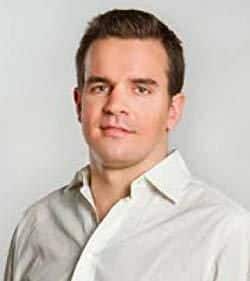
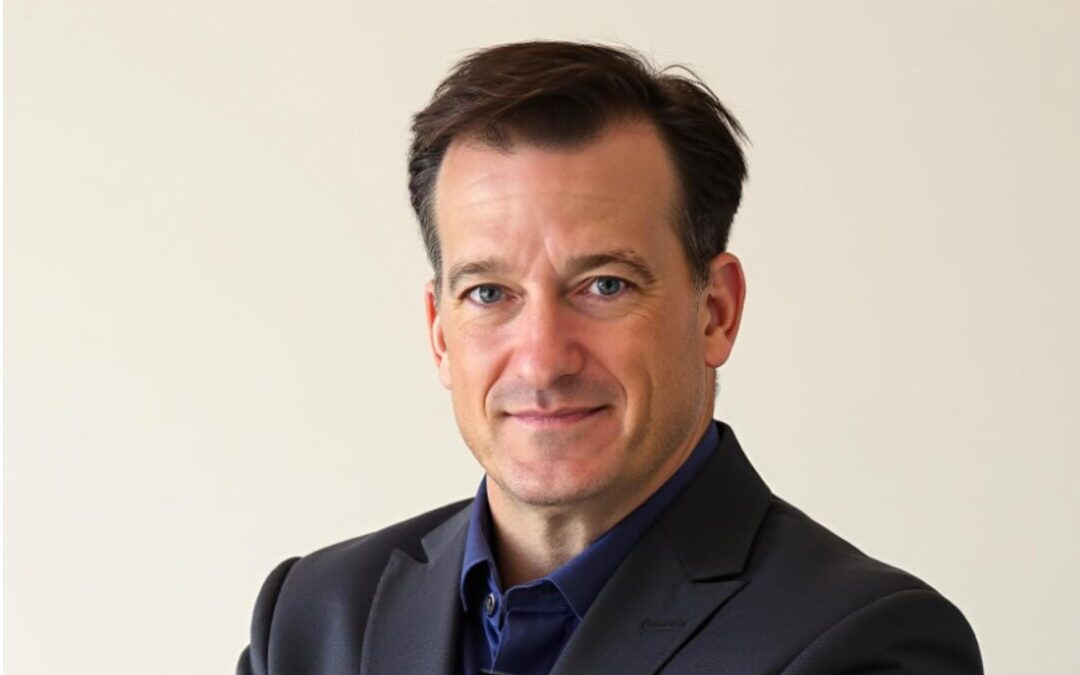
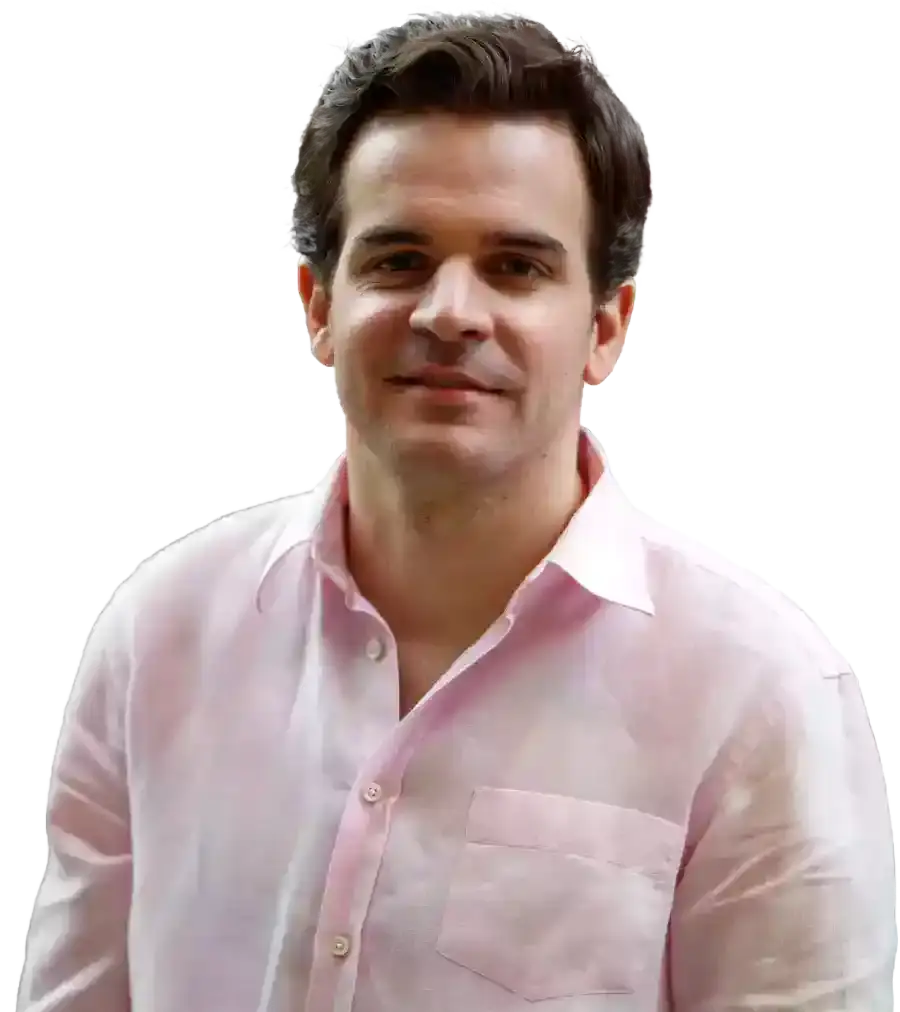
What happens when doors don’t open? For Fred Voccola, the answer was simple: build your own door.
From getting rejected for internships to building and exiting multiple companies—and eventually scaling one into a multi-billion-dollar powerhouse—his journey is about perfecting timing and a deep understanding of the fundamentals of business.
Fred’s not a story about luck; it’s a story about necessity, discipline, and learning the hard way. In this exciting interview, he touches on down cycles, starting a company during a downturn, and taking it all the way to a great outcome. His latest venture is Simpro Group.
Listen to the full podcast episode and review the transcript here.
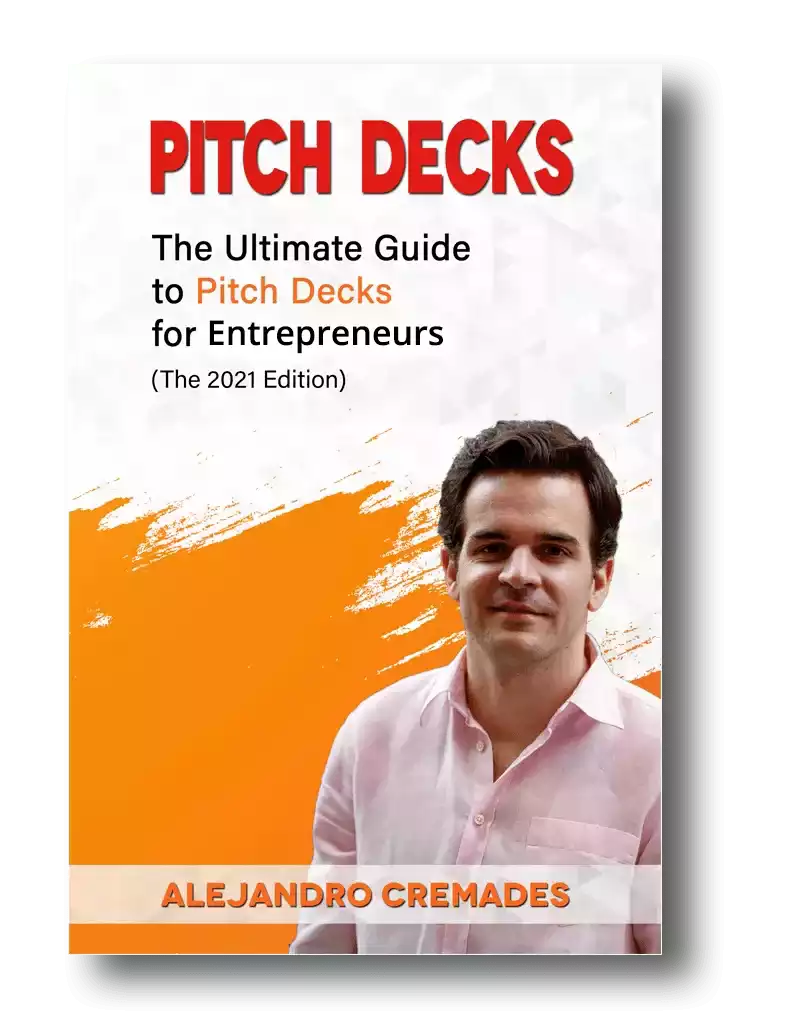
*FREE DOWNLOAD*
The Ultimate Guide To Pitch Decks
The Early Lesson: When No One Hires You, Hire Yourself
Fred grew up in New Jersey—an environment he describes as competitive by default. “It’s the most densely populated state in the U.S. You have to fight for everything,” he says. That mindset became critical early on.
Fred went to college on a scholarship, playing sports. But, while many of his peers pursued careers on Wall Street, he couldn’t even land an interview for an internship. So he did what great founders often do when options disappear—he created one by starting a small software company.
Before even graduating and still in his senior year of college, Fred sold it. He was 20 at the time. Looking back, he admits he could have negotiated a much better deal. However, the world was a different place in the early 1990s. But that sale wasn’t the real value; the real value was visibility.
Why the First Exit Matters More Than the Money
Understanding the full lifecycle of a company—from inception to exit—is one of the most powerful advantages a founder can have. At just 21 years old, Fred experienced something most entrepreneurs don’t see until much later—if at all. That exposure compressed decades of learning into a few years.
As Fred sees it, the biggest lesson he learned was necessity. He couldn’t get a job, so he had to find a way to put things together. Necessity is also one of the greatest motivational tools for innovation. It gave him the ability to understand a problem, create a value-driving solution, and execute it.
Back then, there were no venture firms, as Fred points out. Technology-centric venture firms had possibly around $200M in total assets under management (AUM), unlike today. Founders had to build a real company with real customers and real revenue to make it work.
Seeing the Inside of Public Markets (Before They Changed)
After the acquisition, Fred stayed close to the business as it scaled and eventually went public. This was the early 90s—long before modern regulatory frameworks and oversight like the Sarbanes-Oxley Act. Back then, public markets were fundamentally different.
At the time, IPOs were about accessing capital—not liquidity. There were no private sources of capital, so companies went public at much earlier stages. Growth expectations were aggressive but simpler.
The company went public with roughly $20–$40M in revenue—something almost unthinkable today. That experience gave Fred a front-row seat to how capital markets truly function. For him, it was an incredible experience that accelerated his professional learning and career maturity by 20 years.
Raise Capital Smarter, Not Harder
- AI Investor Matching: Get instantly connected with the right investors
- Pitch & Financial Model Tools: Sharpen your story with battle-tested frameworks
- Proven Results: Founders are closing 3× faster using StartupFundraising.com
The Dot-Com Bubble: A Brutal Lesson in Fundamentals
Fred’s next chapter came during the dot-com boom. He joined a web hosting company—one of the hottest sectors at the time —giving him the opportunity to experience Silicon Valley and the East Coast. Internet applications were in their nascent stage and almost non-existent in the mid-1990s.
The company raised hundreds of millions of dollars to aggressively build infrastructure and data centers. It scaled revenue quickly, but unfortunately, it ignored the fundamental principle of financial responsibility.
Although the company reached a recurring revenue of over $50M to $60M within a couple of years, it wasn’t enough. “We didn’t think about customer acquisition costs. We didn’t think about capital efficiency. We just spent,” as Fred reveals. The result was predictable.
When the bubble burst, the business collapsed. Instead of a massive exit, they sold under distressed conditions—what Fred calls “selling out of bankruptcy.” He made around $500K from the transaction. Had the company been sold a year earlier, it could have exited for $50M.
The Takeaway Most Founders Miss
The biggest lesson from that era wasn’t about timing; it was about discipline. Fred learned that financial professionals don’t always have the answers. They are not always the smartest people in the room—instead, they are trend-chasers.
Instead of creating value, the focus was on raising and spending unlimited amounts of capital to grow exponentially. The right strategy would have been to maintain steady growth at 70% to 80% rather than go to 300%. The company should have generated cash rather than acquired every .com it could.
Fred realized that markets are often driven by trends—not fundamentals. He learned valuable 101 business lessons in revenue and profit generation, and expense management. Instead of focusing on the hype, companies must zero in on value for customers and build a sustainable business.
When those are ignored, even the most well-funded companies fail—a humbling lesson.
Building Through Crisis: 9/11 and the Power of Pivoting
Fred’s next venture—Identify Software—tested him in a completely different way. The company was still searching for product-market fit when the September 11 attacks happened. It was nerve-wracking because it also had offices downtown. Building a business in these uncertain conditions was tough.
Fred retraces his entire journey with Identify Software. He had partnered with Yoki Slonim, the lead founder. Initially, the company scaled quickly from $0 to $45M in revenue. From early 2000 to 2001, they were pivoting every six weeks, trying to work out the value proposition.
During the pivots, the company was earning around $2M to $3M, had $0.5M in the bank, and had 25 to 30 employees. Fred and Yochi were barely breaking even as they tried to transform their amazing technology into a marketable product that could deliver real value to customers.
Amidst A/B testing, they were interacting with 100 customers and prospects when 9/11 happened. The impact was immediate. Offices disrupted, travel shut down, and enterprise sales halted.
At the time, Identify Software’s customers were primarily Fortune 500 companies, and sales relied on in-person meetings. Now, it was forced to pivot and launch an inside-sales motion.
The Pivot That Changed Everything
That single shift had massive implications. Fred and Yochi could reach 50x more customers, which helped them gather feedback faster. As a result, they rapidly iterated on pricing and positioning, eventually finding product-market fit.
The ongoing trend was where .NET and Java were taking over web applications. Identify Software products fit perfectly into the niche, and the business exploded. They became pioneers in application performance management—the only players in town.
The outcome included $21M in capital raised, ~$45M in revenue, and a ~$150M acquisition by BMC. The company had a workforce of ~500–600 employees and was a great acquisition. Fred remained with the newly merged company for the duration of his contract, then stepped away.
Starting a Company in the Worst Possible Moment
In 2008, Fred co-founded Trust Technology Corporation—right as the global financial crisis hit. He had connected with an old friend who suggested they start a business that applied technology to Fred’s sector. The timing couldn’t have been worse—or better.
As Fred began analyzing his friend’s commercial finance company, he identified a subtle inefficiency that could be turned into a significant opportunity. He noted that small and mid-sized businesses use their accounts receivable as the primary source of collateral for their working capital loans.
Insurance companies would insure accounts receivable through trade credit insurance. If the counterparty refused to honor payments after receiving the products, the insurance company would step in and compensate the sellers—an important form of insurance coverage.
When companies needed loans, their lenders would offer them, using their receivables as collateral. These lenders didn’t increase the advance rate on their loans, regardless of whether the products or the receivables were insured. Banks didn’t increase lending despite insurance coverage, either.
Most importantly, claims payment ratios were very low. To address this issue, Fred developed a solution—a SaaS platform that verified compliance with insurance policies—making that insurance usable as collateral. Banks would then increase the lending facility.
10 weeks later, Fred and his cofounder had patented the technology and were ready to market it.
When Crisis Becomes Fuel
Just weeks after launching, Lehman Brothers collapsed, AIG nearly failed, and credit markets froze. Working capital totally dried up.
General Electric, the world’s number one company, was days away from failing to make payroll—not because they weren’t profitable, but because they couldn’t access the capital markets in the form of commercial paper. Suddenly, lenders needed exactly what Trust provided.
The Trust product turned high-risk loans into low-risk ones. Its solution gave lenders—who were scared to lend money to anyone—a guarantee that they’re not lending to a high-risk, mid-sized business. They’re lending against a tier-one-capitalized insurance company. Demand exploded.
Within 18 months, the cofounders exited the business to FGI Risk Services. Fred didn’t predict the crisis, but he recognized the opportunity instantly and jumped in with a solution. That’s the difference. Great founders don’t just react—they interpret.
Lenders loved the Trust product and were soon making it mandatory for every deal they entered into. In retrospect, Fred admits they got lucky with Trust and its timing, but regrets the financial meltdown and the suffering people endured.
He cites an interview he once read with Kelly Slater, the world’s greatest surfer. Asked about his winning strategy, Kelly talked about using his common sense to pick the right wave to surf. That lesson resonated with Fred, and he has applied it extensively throughout his entrepreneurial journey.
From Operator to Platform Builder
After multiple exits, Fred shifted gears. He joined and scaled companies like Nolio (acquired by CA Technologies) and Yodle (sold to Web.com). Retracing his journey, he reveals that he has always been excited about exploring new industries—out of curiosity and not just opportunity
This curiosity-driven approach led Fred to new markets and new playbooks. He bought and started companies through his family office. Starting a company for him is an interesting path, and it usually takes about two or three years to reach the finish line.
Though, Fred points out that in the world of AI, starting a company is a little quicker. Two or three years to get enough scale to make a difference.
A friend had approached the investors backing Identify Software with the offer to build and market a great asset. The company was Nolio. Fred was familiar with the space and dived in because it was a unique challenge. Eventually, it evolved into “super cool technology” and delivered a great outcome.
Fred’s interest in Yodel stemmed from his desire to learn more about the digital world and online marketing. When he came across Yodel, it was one of the leaders in internet applications, such as marketing automation, that were emerging quickly.
Working capital for a new concept for Fred, and he loved the intellectual challenge. Yodel built CenterMark, the dominant platform for franchise management, enabling franchisees to manage their brand and the marketing spend of all their locations.
Scaling Kaseya: Picking the Right Wave
After exiting Yodel, Fred was looking for his next wave to surf. Kaseya became that wave. He noted that small to mid-sized businesses (SMEs) were embracing technology that was changing the global economy faster than anything seen before.
Back in 2013 to 2014, most software applications were used by large Fortune companies, and they were leveraging significant value from the technology. However, SMEs lacked the infrastructure, talent, or maturity to get the same value. All that was changing quickly.
A smaller 20-person company could compete with a 100-person architecture firm by leveraging business applications that had become mission-critical. Fred could predict that it wouldn’t be long before a dentist would have a computer, printer, and applications to run their machines.
When Fred joined Kaseya, the business was struggling. Formally a venture capital firm and now a private equity firm, Insight Partners approached him with an offer to salvage the asset. Fred offered to build a platform for managed service providers.
The objective was to assure small to mid-sized businesses that their applications and systems are always available and secure. Fred estimated that Kaseya could scale to a multi-billion-dollar business.
The Strategy: Build a Platform for the Underserved
Fred repositioned Kaseya to serve managed service providers (MSPs)—the backbone supporting SMB technology. With his team, he developed fantastic technology that offered a powerful value proposition to their customers.
Fast forward 12 to 14 years, and Kaseya has 5,000 employees, has acquired 17 companies in 11 years, and is earning revenue north of $1.7B and profits in the millions. Fred considers it one of the world’s best companies and currently serves as its Vice-Chairman.
Building a Repeatable M&A Engine
Fred discusses in detail how he developed a clear point of view on why most deals fail and what it actually takes to make them work.
Storytelling is everything that Fred was able to master. The key is capturing the essence of what you are doing in 15 to 20 slides. For a winning deck, take a look at the pitch deck template created by Peter Thiel, Silicon Valley legend (see it here), where the most critical slides are highlighted.
Remember to unlock the pitch deck template that founders worldwide are using to raise millions below.
Customer-Centric Approach
For starters, successful M&A starts with absolute clarity on why a company is being acquired. The goal was never to buy a business simply because it was attractive on paper. Instead, the strategy was deliberate and closely aligned with customer demand.
Some of the companies Kaseya acquired were strong standalone businesses, while others were simply the right fit for the platform they were building.
What mattered was whether the acquired product could be integrated into the platform, whether customers genuinely needed it, and whether it could be offered at a more attractive price than competing alternatives.
Fred believed this approach created significant upside. If a company came with, say, $7M in recurring revenue, the real opportunity was not to preserve that number but to expand it dramatically by plugging the product into a much larger ecosystem.
With platform integration, improved distribution, and more competitive pricing, an acquired asset could become much more valuable—potentially generating $50M in recurring revenue. Acquisitions are less about financial engineering and more about solving real problems for customers.
Culture and People: The Non-Negotiables
Another principle he considered non-negotiable was the quality of the people behind the business. Many of the companies Kaseya considered were founder-led. Fred believed that chemistry and shared values mattered just as much as product fit.
He walked away from deals when he felt the people involved had poor ethical standards or lacked a customer-first mindset. In some cases, the issue was not competence but philosophy.
A founder might be obsessed with building interesting technology for its own sake, while Fred wanted organizations that are built around delivering practical value to customers. For him, cultural mismatch was reason enough to pass.
Pricing Discipline: The Margin for Error
Fred also believed strongly in not overpaying. Acquisitions are already difficult, and paying a premium leaves little room for mistakes. In his view, most deals fail because execution is hard, and if the price is too high from the start, even a small misstep can destroy the investment thesis.
Fred’s team aimed to pay fair prices, but always with discipline. Buying well created flexibility. It gave them room to absorb mistakes, work through integration issues, and still come out ahead. That mindset, he believes, was a major reason they were able to go 17 for 17 with acquisitions.
The Datto Acquisition: A High-Stakes Integration
One of the most significant examples was the acquisition of Datto, Kaseya’s biggest competitor. It was a massive deal, valued at roughly $6.2B, and it brought together two head-to-head rivals, each with around 3,000 employees. The integration was inevitably complicated.
There were cultural tensions, years of competitive history, and plenty of friction that came with combining two companies that had spent a decade battling each other. Yet Fred considers it an enormous success because the core principles still hold.
The company did not have to do the deal; the price was reasonable relative to the opportunity, and the integration created meaningful long-term value. Even with the difficulty, the acquisition proved highly accretive and continues to pay dividends.
Stepping Back and Reflecting
Eventually, Fred decided to step down as CEO of Kaseya, while remaining involved as vice chairman. By his own account, 2024 was a difficult year personally, and after years of working 90-hour weeks, he felt the need to step back and reassess.
During that period, Fred fulfilled a promise to his father and wrote a book on artificial intelligence titled The Coming Disruption: How AI-First Will Force Organizations to Change Everything or Face Destruction.
The process of writing it required extensive research, and as he immersed himself in the field, he became even more convinced that AI would fundamentally reshape industries worldwide. That conviction was informed not only by research but also by experience.
Kaseya had already been working at the forefront of AI, particularly in cybersecurity, long before large language models became widely accessible to the public. Fred had seen firsthand how machine learning and AI could change operational performance.
But once public LLMs emerged, he felt the scale of disruption would be far greater than most people understood. Writing the book became both an intellectual exercise and a way to articulate just how sweeping that change might be.
The Simpro Opportunity: When Curiosity Meets Conviction
That perspective ultimately led Fred to Simpro. At first, he was not even sure he wanted to take on another operating role. He was already focused on other ventures, including PrivaMedis, a medical business run through his family office that uses AI to reshape personalized preventative medicine.
But when Simpro came onto Fred’s radar through Level Equity, his interest quickly intensified. The more he studied the business, the more obvious the opportunity became.
To him, Simpro represented one of the clearest examples of a company that could use AI not just to improve, but to completely transform an industry in a positive and highly profitable way. Fred saw Simpro as riding two powerful waves at once.
The first was AI itself, which he believes will destroy some software categories while dramatically strengthening others. The second was the structural growth in trades and commercial contracting.
Across the Western world, aging infrastructure is creating sustained demand for maintenance, repair, and service work. At the same time, the market remains highly fragmented, filled with businesses that are operationally complex but technologically underserved.
Simpro, with more than $300M in revenue and around $100M in EBITDA, already had scale. But in Fred’s view, the real upside lies in becoming the AI operating platform for the entire field service economy.
Elevating the “Second Responders” of the Economy
Fred describes trade businesses as society’s second responders. Reflecting back on the September 11 attacks, he remembers how first responders were rightly honored, but also how quickly society needed people in the trades to step in and help rebuild, clear debris, and restore function.
In the broader economy, Fred sees tradespeople playing a similarly essential role. They are the people who keep modern life running, such as commercial and large residential contractors across every vertical, including home services and HVAC—anyone with a field service component.
Around 6 million businesses worldwide are such contractors. Yet despite their importance, the average trade business operates at margins of only around 6%, largely because most are small organizations that lack the tools to manage multiple jobs, teams, schedules, and workflows at scale.
That is where Simpro’s AI platform comes in. Fred believes the company can equip contractors with intelligent agents and workflows that dramatically reduce complexity and raise profitability.
In his vision, these businesses will no longer operate like small, overburdened local operators, but with the sophistication of large-scale enterprises. If that happens, profit margins could rise from roughly 6% to closer to 25%.
Over the next five to six years, Fred sees Simpro becoming one of the defining examples of an AI-native software company and, in doing so, transforming the lives of millions of people working across commercial and residential contracting industries.
Advice to His Younger Self
When asked what advice he would give to his younger self before launching a business, Fred’s first answer has nothing to do with work. He would spend more time with his parents, knowing now how uncertain time really is.
On the professional side, Fred’s advice would be to enjoy the ride more. He would not change the mistakes, the missed opportunities, or even the money left on the table, because those experiences shaped him. But he does wish he had allowed himself more joy along the way.
Final Thought
Fred’s journey isn’t about building one great company; it’s about building a repeatable system for identifying opportunity, executing under pressure, and learning faster than the market. And it all started with one simple constraint: He couldn’t get a job. So he built something better.
Listen to the full podcast episode to know more, including:
- Necessity forced Fred Voccola to become an entrepreneur when traditional paths failed.
- Early exposure to a full company lifecycle compounds learning faster than any classroom.
- Ignoring fundamentals in favor of hype can destroy even the fastest-growing companies.
- Speed of iteration—not the initial idea—determines success in product-market fit.
- The best founders don’t predict crises—they recognize and capitalize on them.
- Successful M&A requires discipline in strategy, culture, and pricing—not opportunism.
- The biggest opportunities come from riding the right macro wave at the right time.
SUBSCRIBE ON:
 iTunes
 Google Play
 Stitcher
 TuneIn
 RSS
RSS SoundCloud
 Spotify
Keep in mind that storytelling is everything in fundraising. In this regard, for a winning pitch deck to help you, take a look at the template created by Peter Thiel, the Silicon Valley legend (see it here), which I recently covered. Thiel was the first angel investor in Facebook with a $500K check that turned into more than $1 billion in cash.
*FREE DOWNLOAD*
The Ultimate Guide To Pitch Decks
Remember to unlock for free the pitch deck template that founders worldwide are using to raise millions below.
Podcast: Play in new window | Download
Subscribe: Apple Podcasts | Spotify | TuneIn | RSS | More

Facebook Comments