

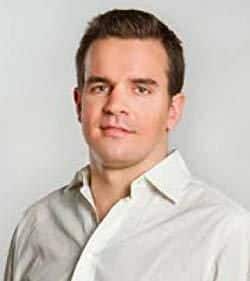
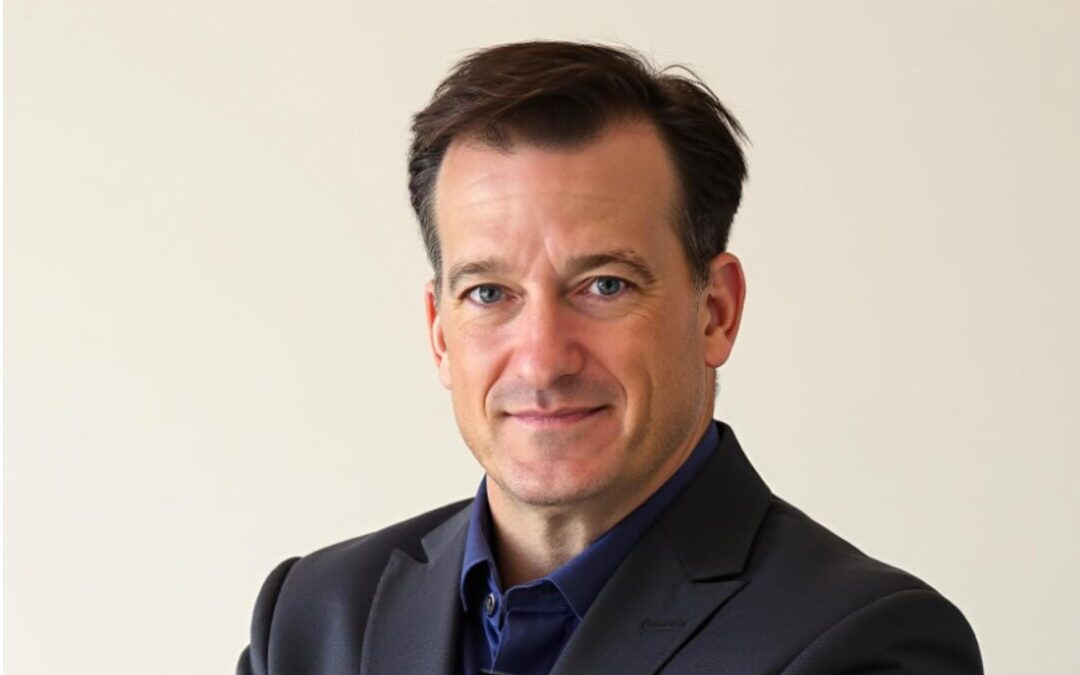
From getting rejected for internships to building and exiting multiple companies—and eventually scaling one into a multi-billion-dollar powerhouse—Fred Voccola’s journey is about perfecting timing and a deep understanding of the fundamentals of business.
In this exciting interview, Fred touches on down cycles, starting a company during a downturn, and taking it all the way to a great outcome. His latest venture is Simpro Group, which has secured funding from top-tier investors, such as Level Equity Management and K1 Investment Management.
In this episode you will learn:
- Necessity forced Fred Voccola to become an entrepreneur when traditional paths failed.
- Early exposure to a full company lifecycle compounds learning faster than any classroom.
- Ignoring fundamentals in favor of hype can destroy even the fastest-growing companies.
- Speed of iteration—not the initial idea—determines success in product-market fit.
- The best founders don’t predict crises—they recognize and capitalize on them.
- Successful M&A requires discipline in strategy, culture, and pricing—not opportunism.
- The biggest opportunities come from riding the right macro wave at the right time.
SUBSCRIBE ON:
 iTunes
 Google Play
 Stitcher
 TuneIn
 RSS
RSS SoundCloud
 Spotify
Keep in mind that storytelling is everything in fundraising. In this regard, for a winning pitch deck to help you, take a look at the template created by Peter Thiel, the Silicon Valley legend (see it here), which I recently covered. Thiel was the first angel investor in Facebook with a $500K check that turned into more than $1 billion in cash.
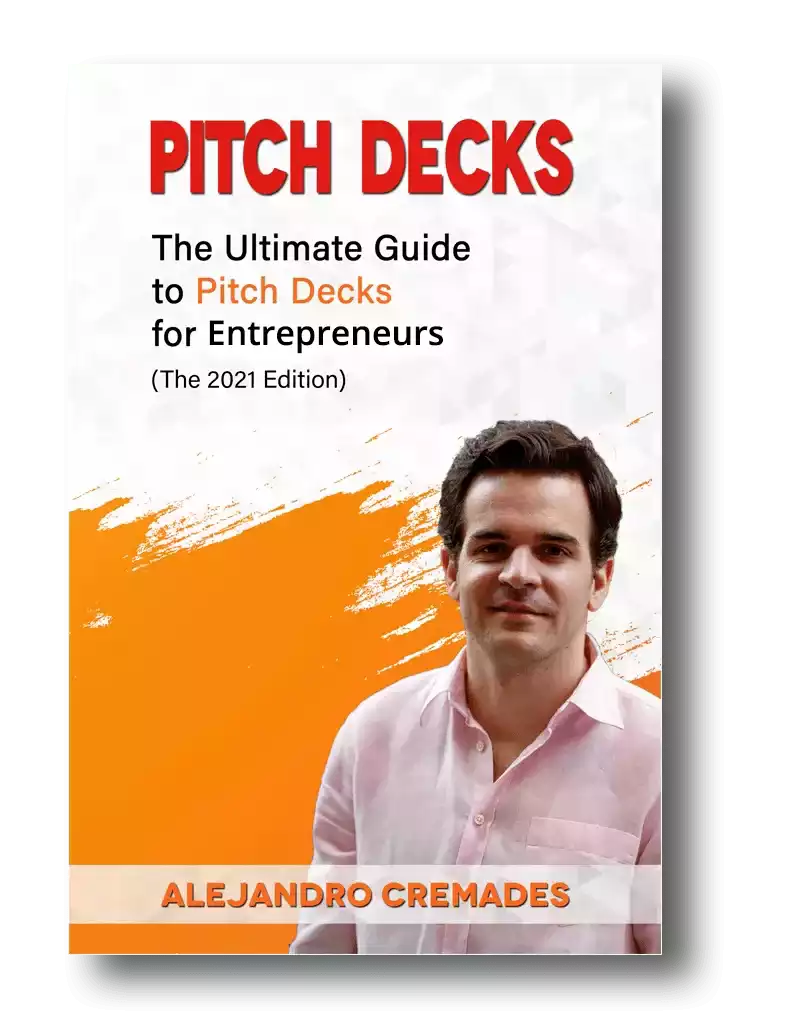
*FREE DOWNLOAD*
The Ultimate Guide To Pitch Decks
Remember to unlock for free the pitch deck template that founders worldwide are using to raise millions below.
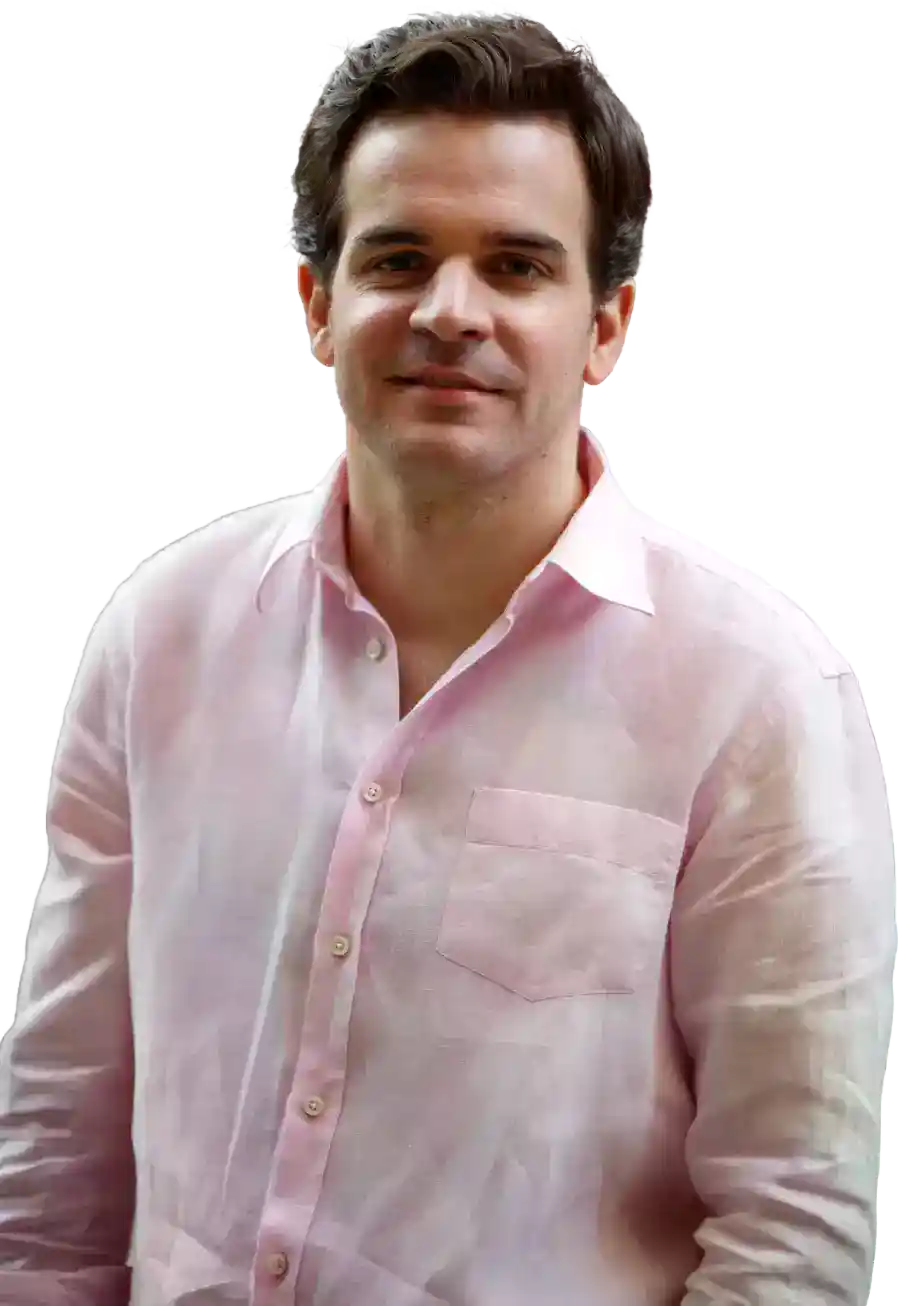
About Fred Voccola:
Fred Voccola is Chairman and CEO of Simpro Group, where he is leading an AI-first strategy to modernize and strengthen the global trades and field service industries. A proven technology entrepreneur, Fred specializes in scaling software companies through disciplined operating models, strategic acquisitions, and durable, profitable growth.
Prior to Simpro, Fred co-founded and served as CEO of Kaseya, transforming it into a global leader in AI-powered cybersecurity and IT management software. Under his leadership, the company scaled to more than $1.5 billion in annual revenue, completed 18 acquisitions and grew to over 5,000 employees worldwide.
Fred, author of the best-selling book, The Coming Disruption, is widely recognized for his expertise in artificial intelligence, cybersecurity, hypergrowth strategy, M&A integration and organizational culture. He is a frequent contributor to leading business publications and speaks regularly on how AI-first operating models are reshaping traditional industries.
Raise Capital Smarter, Not Harder
- AI Investor Matching: Get instantly connected with the right investors
- Pitch & Financial Model Tools: Sharpen your story with battle-tested frameworks
- Proven Results: Founders are closing 3× faster using StartupFundraising.com
Connect with Fred Voccola:
Read the Full Transcription of the Interview:
Alejandro Cremades: Alright, hello everyone and welcome to the DealMaker Show. So today we have an amazing guest who has done it many times. I think that we’re going to be learning quite a bit on building, scaling, financing, exiting—the whole thing. I think you guys are going to enjoy it quite a bit.
Alejandro Cremades: There are different stories here that we’re going to be touching on, whether it’s down cycles, how to go from zero to becoming one of the biggest employers in a city, or even starting a company during a downturn and being able to bring it all the way to a great outcome. So again, brace yourself for a very inspiring conversation. And without further ado, let’s welcome our guest today, Fred Voccola. Welcome to the show.
Fred Voccola: Oh, thanks for having me. I really appreciate it. I’m super excited to be here. I’m a big fan of your show, by the way, so it’s actually really cool for me to be on it. I’m looking forward to talking with you.
Alejandro Cremades: Thank you. So, originally born in New Jersey—give us a walk through memory lane. How was life growing up for you?
Fred Voccola: Yeah, man, New Jersey is great. Anyone on the call from New Jersey—you’re clearly awesome because we are from the greatest state in the world. It’s not really that nice of a place. It’s kind of an interesting state, as many people say. New Jersey is the butt of many jokes for a reason.
Fred Voccola: But I loved it. I grew up in New Jersey. I had the best parents anyone could ever hope for. I was very blessed that way, and I never forget that. I was just so lucky.
Fred Voccola: I have a couple of brothers—two knuckleheads—but I love them to death as well. I was lucky enough to still have many of the same friends from childhood. I was very, very fortunate in where I grew up. It was a great place. And New Jersey is interesting—it’s the most populated state per square mile in the country.
Fred Voccola: So you have to fight for everything in that state.
Alejandro Cremades: Well, talking about fighting and luck, when you were in college, it doesn’t sound like doors were opening when it came to applying for jobs. So you really needed to engineer your own. What happened there?
Fred Voccola: Yeah, so I went to college on a scholarship. I played sports and was lucky enough to be able to go. You know, I thought I wanted to be a Wall Street guy when I was 19 or 20. That was the cool thing to do back then—be a Wall Street guy and do whatever Wall Street guys did. None of us really understood it then.
Fred Voccola: So I applied for internships, and I couldn’t even get an interview. I guess I wasn’t the typical Ivy League, silver spoon kind of kid. So I had to start a company, and I always liked computers.
Fred Voccola: I started a little software company, and one thing led to another. I got really lucky, and in my senior year of college, I was able to sell that company. Now, as I tell many people, if I had known when I was 20 what I know now, I would have sold it for a lot more money and done a lot of things differently. But the world was very different in the early 90s.
Fred Voccola: So I was lucky to sell it, and it was an incredible lesson.
Alejandro Cremades: What visibility did you get there, Fred, when it comes to the full cycle of a company? Because at the end of the day, yes, it’s nice to get more money—we always want more—but an outcome is still an outcome. As a founder, it gives you visibility into what the full lifecycle of a company looks like. That’s a lot of power and knowledge to use for the next one.
Fred Voccola: Yeah, and for me, I think the biggest lesson was necessity. I had to do it. I couldn’t get a job, so I had to find a way to put things together.
Fred Voccola: Necessity is one of the greatest motivational tools for innovation. It created in me the ability to understand a problem, create a solution for that problem, create value for that solution, and go get it.
Fred Voccola: Back then, there were essentially no venture firms. There were maybe around $200 million of total assets under management in technology venture firms. It wasn’t anything like it is today.
Fred Voccola: So you had to build it. You had to build a real company with real customers and real revenue and make it work. It was just a fantastic lesson. I got very lucky.
Fred Voccola: I was lucky with all the people around me, but it was a fantastic lesson.
Alejandro Cremades: Well, the company that bought your business ended up going public and was later acquired by IBM. How was that journey of seeing a company go from private to public?
Fred Voccola: Yeah, so this was a long time ago, and the world was very different. The public markets were very different. What was required to go public was different. There was no Sarbanes-Oxley or anything like that. The capital markets back then were literally there to provide liquidity.
Fred Voccola: Going public was a means of getting access to capital in the early 90s. It wasn’t a liquidity event for shareholders like it is today. Today, there are so many private sources of capital—you don’t need to go public to have almost unlimited access to capital. Just look at what OpenAI is doing.
Fred Voccola: So I got to see the pure definition of what public markets were for, and it was fascinating. I was very young—early twenties, 21 or 22 years old—yet I was exposed to things that many people never see in their careers.
Fred Voccola: I wasn’t the CEO, but I was along for the ride. It was really fascinating. The company went public at around $20–40 million in revenue. Think about that for a second.
Fred Voccola: We were doubling every year, and it was incredibly interesting. It was an amazing experience to see that at such a young age. It probably accelerated my professional learning and career maturity by 20 years.
Alejandro Cremades: So right after this, you got into another company that gave you the opportunity to experience Silicon Valley to a certain degree, even though you were an East Coaster.
Alejandro Cremades: This one was in the web hosting space, and you guys eventually sold it to IBM. It also went through the dot-com bubble, giving you exposure to different market cycles. For people listening who haven’t experienced those cycles, what was the biggest lesson as an operator?
Fred Voccola: During the dot-com era, we were a web hosting company. In the mid to late 90s, web hosting was the sexiest thing in the world. Internet applications were brand new—they didn’t really exist yet.
Fred Voccola: It was a crazy time. We raised hundreds of millions of dollars. We built data centers—just like people are doing today, but we were doing it back then.
Fred Voccola: And we were financially irresponsible, as was the entire industry. How many online pet stores were advertising on the Super Bowl in 1998? It was ridiculous. We burned through hundreds of millions of dollars.
Fred Voccola: Our recurring revenue grew to over $50–60 million in a couple of years, which was great. But we didn’t look at customer acquisition costs. We didn’t think about CapEx.
Fred Voccola: We were just irresponsible because that’s what we were told to do. The lesson I learned was that financial professionals do not have all the answers.
Fred Voccola: They’re not the smartest people in the room. They are trend followers. They are not creating value. It was all about raising more money, spending more money, and growing at any cost.
Fred Voccola: The right answer would have been to slow down, grow at 70–80% instead of 300%, generate cash, and avoid taking on customers that weren’t financially viable. It was a lesson in business fundamentals—revenue, profits, and expense management.
Fred Voccola: Forget the hype. Focus on customer value and building a sustainable business.
Fred Voccola: We did have an exit to IBM, but I wouldn’t call it successful. I probably made around $500,000, whereas a year earlier, we could have sold for $50 million.
Fred Voccola: We basically sold out of bankruptcy. The financial irresponsibility of that era was unlike anything I’ve ever seen.
Fred Voccola: I was young and believed the people from JP Morgan or Goldman Sachs had all the answers. But business is about basics. It was a humbling lesson and a fascinating time.
Alejandro Cremades: So with the next one—Identify Software—you sold it to BMC for around $150 million. One thing that stands out is the uncertainty during that time, especially with events like 9/11.
Alejandro Cremades: You had offices in the city, and it must have been nerve-wracking to build a business under those conditions while dealing with external shocks. How was that experience?
Fred Voccola: Yeah, so a gentleman named Yoki Sloan really created Identify Software, and he brought me along for the ride. We went from zero to about $45 million in revenue pretty quickly.
Fred Voccola: In the early days, around 2000–2001, we were pivoting every six weeks trying to figure out our value proposition.
Fred Voccola: Right in the middle of all those pivots, we had no money. We were doing $2–3 million in revenue, had about half a million dollars in the bank, and 25–30 employees. We were living hand to mouth, trying to turn amazing technology into a product that people actually needed.
Fred Voccola: So we tried everything. We pivoted, ran A/B tests, talked to hundreds of customers and prospects—just trying to find the right fit.
Fred Voccola: Then 9/11 hit. Our offices downtown were destroyed, and a lot of people we knew were impacted. I grew up in New Jersey, and we lost friends. It was personally very tough.
Fred Voccola: At that time, airlines were shut down, and people were afraid to travel. No one wanted to get on planes. But our business depended on traveling to meet Fortune 500 customers.
Fred Voccola: So we were forced to pivot to an inside sales model. Today, that’s standard, but in 2001, it was unheard of.
Fred Voccola: That pivot allowed us to talk to 50 times more customers and prospects, understand the market faster, and iterate quickly.
Fred Voccola: We repriced our solution, found product-market fit, and everything clicked. There was a trend where .NET and Java were taking over web applications, and we fit perfectly into that niche.
Fred Voccola: The business exploded, and we created the first application performance management solution in the world.
Fred Voccola: And we were number one in the market, the only player in town. And this was before recurring revenue really hit software. We had raised, I don’t know, $20 million or $21 million in total, and we sold for $150 million. We all made a lot of money.
Fred Voccola: It was a great acquisition. It was really the beginning of learning how to scale because we got to around 500–600 people. But most importantly, it showed the value of rapid pivots because we got it wrong the first three or four times.
Alejandro Cremades: Talking about rapid pivots, right after that you started Trust, and you guys launched the company in 2008.
Alejandro Cremades: In terms of timing, that was probably one of the most challenging moments to start something. So tell us how Trust came about.
Fred Voccola: It’s a great story. After Identify, I stayed at BMC for a couple of years as part of the deal. I ran a big part of the organization. After my contract ended, I stepped back and asked myself, “What do I want to do?”
Fred Voccola: A buddy of mine in financial services said, “Why don’t we start a business and apply technology to the market I’m in?” I wasn’t sure at first, but I said, “Alright, I’ll take a look.” This was right before the financial crisis hit.
Fred Voccola: I spent time with him and his commercial finance company, and very quickly we found a lot of inefficiencies. One of those inefficiencies was a massive opportunity.
Fred Voccola: The opportunity was in how small to mid-sized businesses finance themselves. Most of them use accounts receivable as collateral for working capital loans.
Fred Voccola: There are insurance products called trade credit insurance that insure accounts receivable. If a counterparty doesn’t pay—for example, if you sell to a distributor and they refuse to pay—the insurance steps in and covers it.
Fred Voccola: It’s an important product. But lenders didn’t increase their lending rates whether receivables were insured or not. That didn’t make sense to me. If companies like AIG or COFAS were guaranteeing payment, why weren’t banks lending against those balance sheets? Why were they only advancing 50%?
Fred Voccola: The issue was that those insurance policies were difficult to comply with, and claims payment ratios were low. Banks knew this, so they didn’t trust the insurance.
Fred Voccola: So we built a SaaS product—early days of SaaS—that monitored a company’s compliance with their credit insurance policy. If they were compliant, we would notify the bank, and the bank would increase the lending facility.
Fred Voccola: That might not sound like much, but ten weeks after launching—after patenting the technology and going to market—Lehman Brothers collapsed, AIG went under, and the financial crisis hit. Working capital completely dried up.
Fred Voccola: General Electric, one of the most stable companies at the time, was days away from missing payroll—not because it wasn’t profitable, but because it couldn’t access capital markets.
Fred Voccola: Our solution gave lenders confidence. Instead of lending to high-risk mid-sized businesses, they were effectively lending against tier-one insurance companies.
Fred Voccola: Our product flew off the shelves like nothing I’ve ever seen. We couldn’t keep up. We got incredibly lucky with the timing, even though it was a terrible moment for the economy.
Fred Voccola: We captured the entire market and exited the company to FGI Global about 18 months later. It was a great run.
Fred Voccola: I wouldn’t even call it a pivot. We recognized the opportunity and acted quickly. Lenders loved us and started making our solution mandatory for every deal.
Alejandro Cremades: After Trust, as they say, once an entrepreneur, always an entrepreneur.
Alejandro Cremades: Instead of starting another company, you joined businesses like Nolio, which was sold to Computer Associates, and Yodle, which also had an exit. Why join instead of building again from scratch?
Fred Voccola: Yeah, it’s interesting. I have a family office, and I’ve both started and acquired companies. Starting a company is an interesting journey—it usually takes two to three years to get enough scale to matter. In the AI world, it’s a bit faster now, but generally that’s the timeline.
Fred Voccola: We got very lucky with Trust. The financial crisis was like gasoline to our fire. I hate saying that because people suffered, but it worked in our favor.
Fred Voccola: A friend introduced me to the investors behind Identify. They had a great asset in Nolio and asked me to come in, fix it, build it, and sell it. It felt like a different kind of challenge.
Fred Voccola: I knew the space, and we had a really nice outcome. It was a super cool technology. At that time, I didn’t have a new idea I wanted to build from scratch, and I didn’t want to spend months exploring a new industry.
Fred Voccola: Later, with Yodle, I wanted to learn the digital world—marketing automation and internet applications. Yodle was one of the leaders in that space.
Fred Voccola: It was a fascinating business. I had done fintech before without knowing anything about it, and I enjoyed that intellectual challenge.
Fred Voccola: At Yodle, we built a platform called CenterMark, which is still dominant in franchise management—helping franchisees manage their brand and marketing spend.
Fred Voccola: That business exploded, and we exited to Web.com. It worked out well. In both cases, it was driven by curiosity and the desire to learn something new.
Alejandro Cremades: Another big chapter was Kaseya. There are some incredible stats—5,000 employees and around 15 acquisitions in 11 years.
Alejandro Cremades: How did that opportunity come about, and how did you scale it to those heights?
Fred Voccola: There’s a lot to unpack there. The Kaseya journey was—and still is—an incredible journey. It’s one of the best companies in the world, and I’m very proud of what we built. I’m now vice chairman of the board, no longer CEO.
Fred Voccola: I like to look at macro trends. I often use this analogy: the greatest surfer, Kelly Slater, once said the first thing you do to win is pick the right wave.
Fred Voccola: That resonated with me. In every business I’ve been part of, I’ve tried to ride the right wave. At Identify, it was web applications. At Trust, it was financial infrastructure. At Kaseya, it was the rise of small and mid-sized businesses leveraging technology.
Fred Voccola: Around 2013–2014, most software was used by large enterprises. Small businesses didn’t have the infrastructure or expertise to benefit from it. But that was changing fast.
Fred Voccola: Suddenly, a 20-person company could compete with a large enterprise by using software. These tools became mission-critical.
Fred Voccola: If a dentist’s systems go down today, they can’t operate. They can’t bill, schedule, or even perform procedures because everything is digital.
Fred Voccola: That trend was obvious to me, and Kaseya was positioned to ride it. The company was struggling when I joined—it was shrinking.
Fred Voccola: Insight Partners approached me. They had acquired the asset and asked what I thought. I told them we could build a platform for managed service providers that ensures small businesses’ systems are always available and secure.
Fred Voccola: I believed it could become a multi-billion-dollar business, and they said, “Let’s do it.”
Fred Voccola: The first couple of years were tough. The company was in trouble. But we built a strong value proposition with great technology.
Fred Voccola: Fast forward 12–14 years, and the company is doing over $1.5–$1.7 billion in revenue, with hundreds of millions in profit—probably around $700 million.
Fred Voccola: It became one of the most valuable software companies in the world.
Alejandro Cremades: And what about M&A? Seventeen acquisitions is a lot, and as they say, most acquisitions fail.
Alejandro Cremades: What would you say were the three biggest lessons to ensure M&A success?
Fred Voccola: Great question. Number one is knowing why you’re buying a company. We had a very deliberate M&A strategy.
Fred Voccola: We didn’t just buy great companies. We bought companies that were great for us and aligned with what our customers needed.
Fred Voccola: We focused on products that could be integrated into our platform—products customers would buy—and we knew we could offer them at a lower price than competitors.
Fred Voccola: So if we acquired a company with $7 million in recurring revenue, we knew we could scale it to $50 million because of our distribution and pricing advantages.
Fred Voccola: It’s very deliberate. The second thing is: don’t buy a jerk. Most of the companies that we bought were founder-led. There were a couple of deals that I said no to because I could not get along with the people we were buying. The people we were buying had the wrong kind of ethical standards, or they didn’t feel the same way about being a customer-first organization—one that is all about the customer and delivering value for the customer.
Fred Voccola: They might have been technologists who wanted to build cool technology for the sake of tech, and they didn’t care about the customer, or there were various other reasons. And the third thing is: don’t overpay. If you pay a premium multiple for someone, there’s not a lot of room for error.
Fred Voccola: And as you stated, it’s hard. Most don’t work because it ain’t easy. And if it were easy, everybody would freaking do it. So if you pay a top multiple for someone, you leave no wiggle room for error.
Fred Voccola: You don’t. So we didn’t pay—we paid fair market. We paid fair prices for everyone, but we were always buying things at bargains because it gave us the wiggle room that if we messed up,
Fred Voccola: the investment thesis of buying that company didn’t blow up. And we went 17 for 17 with acquisitions. We got really good at it because we followed those principles, and we didn’t have to do anything.
Fred Voccola: You know, we were never in a position where we had to buy someone. No, never let that happen. So that’s how we managed it. And one of our deals—we bought our biggest competitor. We were a private company, and a company called Datto was a public company.
Fred Voccola: They were our largest competitor. And we paid like $6.7 billion for them. That’s a huge amount of money, but it’s a pretty low multiple. And, you know, we bought them and it was hard. We had 3,000 employees. They had 3,000 employees. We were head-to-head competitors. So we had hated each other for a decade.
Fred Voccola: And, you know, there were cultural conflicts and it got messy, but the acquisition worked and it was incredibly successful because we stuck to the principles. We didn’t have to do it.
Fred Voccola: When I say we hated each other, the companies hated each other, but the teams didn’t. We obviously got along quite well pre- and post-deal.
Fred Voccola: And the third piece was we got it at a very, very reasonable price. So the integrations and all the parts that made it hard were incredibly accretive on that deal. That’s still paying great dividends for us.
Alejandro Cremades: So what about today? You decided to step down. You’re still there as the vice chairman, but right now you’re with Simpro. You took over Simpro. What’s the deal with Simpro? Why Simpro out of all things?
Fred Voccola: Yeah, so 2024 was a tough year personally for me, and a lot of stuff happened. I was doing 90-hour weeks, and I was like, I’ve just got to step back a bit in life.
Fred Voccola: So I promised my dad I would write a book. And so I wrote a book on artificial intelligence—AI.
Fred Voccola: It’s called The Coming Disruption, how AI is going to change everything. And for those who have written a book, you do a ton of research. I was always a nerd in school, so I kind of liked that stuff, right?
Fred Voccola: And I learned so much. At Kaseya, we were—and are—at the forefront of AI. In the early days of Kaseya, we were super early in leveraging large language models, machine learning, even before LLMs were quote-unquote public LLMs. By the nature of the cybersecurity stuff we were doing, we really took advantage of it. And it was fascinating to see the power of it.
Fred Voccola: Then when the quote-unquote public LLMs came out, I was like, wow, this is going to change everything. So as I started researching for this book, I didn’t realize just how much the world was going to change.
Fred Voccola: And I was like, wow. So I wrote about it, and it was just a great experience. And where Simpro comes into play—I wasn’t sure if I was going to work again. I had started and then later, through acquisitions, bought a couple of assets to build a big medical business called Priva Medicine, which I run out of my family office, and which is leveraging AI to change how personalized preventative medicine is done.
Fred Voccola: Just a fascinating, fascinating business. But Simpro was interesting. A buddy of mine, Ben Levin—he runs Level Equity—said, “Fred, we’ve got this great asset called Simpro.” And I’m like, alright, I’m not sure if I want to go do this again. I’m running my life as it is. And as I looked at Simpro, my eyes became saucers.
Fred Voccola: And the entrepreneur came out, to your point again, right? Once an entrepreneur, always an entrepreneur—you can’t get rid of it. And especially given how much focus and research I’d spent for six or nine months prior looking at and researching AI, I’m like, this is the absolute best example of an organization that can completely disrupt the world in a positive way.
Fred Voccola: Make a ton of money doing it only because of AI. If it wasn’t for AI, then Simpro would be a very, very good company.
Fred Voccola: Most software companies are at risk with AI. Simpro—it’s like pouring gasoline on the fire. And the macro wave that we’re riding is the wave of the trades and the wave of commercial contractors.
Fred Voccola: Those markets and that industry—those verticals—are just exploding because our infrastructure is aging in the Western world. It’s aging and needs to be maintained and supported. And that’s just what’s happening. It’s also a very, very segmented and fragmented market.
Alejandro Cremades: Well, I want to ask you something there, just to dig deep on it. I mean, obviously now the numbers that you guys have—we’re talking about $300+ million in revenue and $100 million in EBITDA, which is fantastic.
Alejandro Cremades: Imagine you go to sleep tonight, Fred, and you wake up in a world where the vision of Simpro is fully realized. What does that world look like?
Fred Voccola: Every single commercial contractor and large residential contractor across every vertical industry—not just HVAC and home services and things like that, but anyone with a field service component, which is like 6 million businesses around the world—
Fred Voccola: they’re all using our AI operating platform. Here’s why they use it. These businesses today are the second responders of society. I remember this from thinking about 9/11.
Fred Voccola: The first people down there were the police, the firemen—God bless them—the healthcare workers, the military. But there was a call, and I remember I responded to it, and I knew nothing about it. They needed metal workers, anyone in the trades, anyone, because we were trying to dig people out, because we thought there were thousands of people buried under all this rubble.
Fred Voccola: They were the second people there. In our society, for us to survive the way that we live in our modern world, these tradespeople are the ones who deliver it. And the average trade business runs at a 6% profit margin.
Fred Voccola: That’s it. It’s terrible. And there are a lot of reasons for it, but the number one reason is that most of these businesses are under a hundred employees and they don’t have the ability to manage the complexity of multiple jobs, multiple days, and multiple people.
Fred Voccola: Our platform—our AI operating platform—does that for them. It gives them agents so they can now look more like Verizon than Fred’s HVAC contractor.
Fred Voccola: And we get their profit margins to around 25%. When I look five or six years down the road, I think that Simpro is one of the cornerstones of what’s called an AI-native software company.
Fred Voccola: And the entire worldwide commercial contracting industry—all three dozen verticals of it—are running at 15% to 25% profit margins because of us.
Fred Voccola: And we’ve changed the lives of millions and millions of people who work in that industry.
Alejandro Cremades: So we’re talking about the future here, but I want to talk about the past, Fred, with the lens of reflection. My God, I can’t believe that we’ve covered so much already. But imagine I put you into a time machine and I bring you back in time. I bring you back to the moment where you are, let’s say, in university. And essentially, you’re able to give that younger Fred one piece of advice before launching a business. What would that be and why, given what you know now?
Fred Voccola: Spend more time with your parents because you don’t know how long you’re going to have them. Number one, that’s independent of freaking work or any of that stuff. The piece of work advice I would give myself—
Fred Voccola: enjoy the ride. You know, I wouldn’t do anything different. I’ve made tons of mistakes, man. Tons of mistakes. I cost myself tons of money, made tons of mistakes, but enjoy the ride more because it’s always about focusing on tomorrow, tomorrow, tomorrow—what’s next? Instead of being like, you know what?
Fred Voccola: Tomorrow, we’re going to crush tomorrow. Take a deep breath and actually say, we just won. Let’s celebrate the win for an hour. It’s hard to do, but yeah—enjoy it. Enjoy the grind.
Fred Voccola: Realize you’re enjoying the grind. I mean, I still do this because I love it. And I’m learning that. If I had recognized that in my late teens and early twenties, I would have had more joy in my life as I was doing this.
Alejandro Cremades: You know, that’s so profound because people focus more on the finish line than the journey of getting there, which is really the most incredible thing to embrace.
Alejandro Cremades: I guess for the people that are listening, Fred, that are listening right now and would love to reach out and say hi and learn more about Simpro, what can you tell them?
Fred Voccola: So if you want to learn about Simpro or reach out, you can reach out to me on Twitter. You can reach out to me on LinkedIn. Thecomingdisruption.com is my personal website about AI. And you can reach out to me at Simpro.
Fred Voccola: It’s simprogroup.com. Anybody out there that wants to change their contracting business—we are the solution for you, my friends. But I’d love to hear from you. And this has been outstanding. That’s how to reach me.
Alejandro Cremades: Amazing. Well, Fred, thank you so much for being on the DealMaker Show today. It has been an absolute honor to have you with us.
Fred Voccola: Oh, it’s been an honor to be here, my friend. Thank you for having me. And I look forward to hearing from you again real soon.
*****
If you like the show, make sure that you hit that subscribe button. If you can leave a review as well, that would be fantastic. And if you got any value either from this episode or from the show itself, share it with a friend. Perhaps they will also appreciate it. Also, remember, if you need any help, whether it is with your fundraising efforts or with selling your business, you can reach me at al*******@**************rs.com
Podcast: Play in new window | Download
Subscribe: Apple Podcasts | Spotify | TuneIn | RSS | More
Facebook Comments