

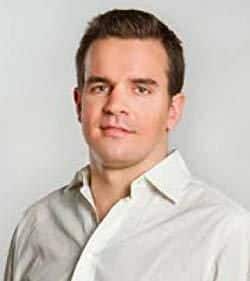
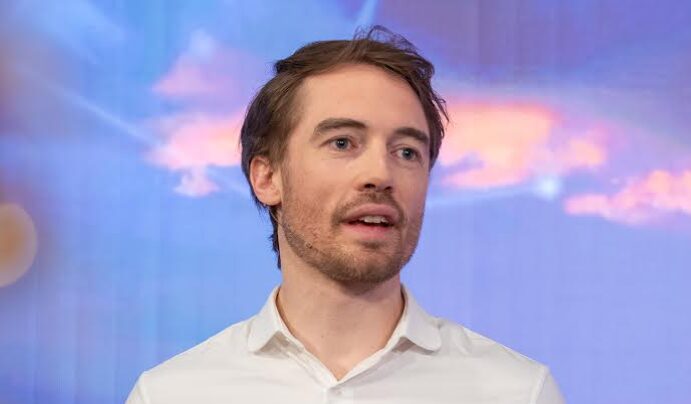
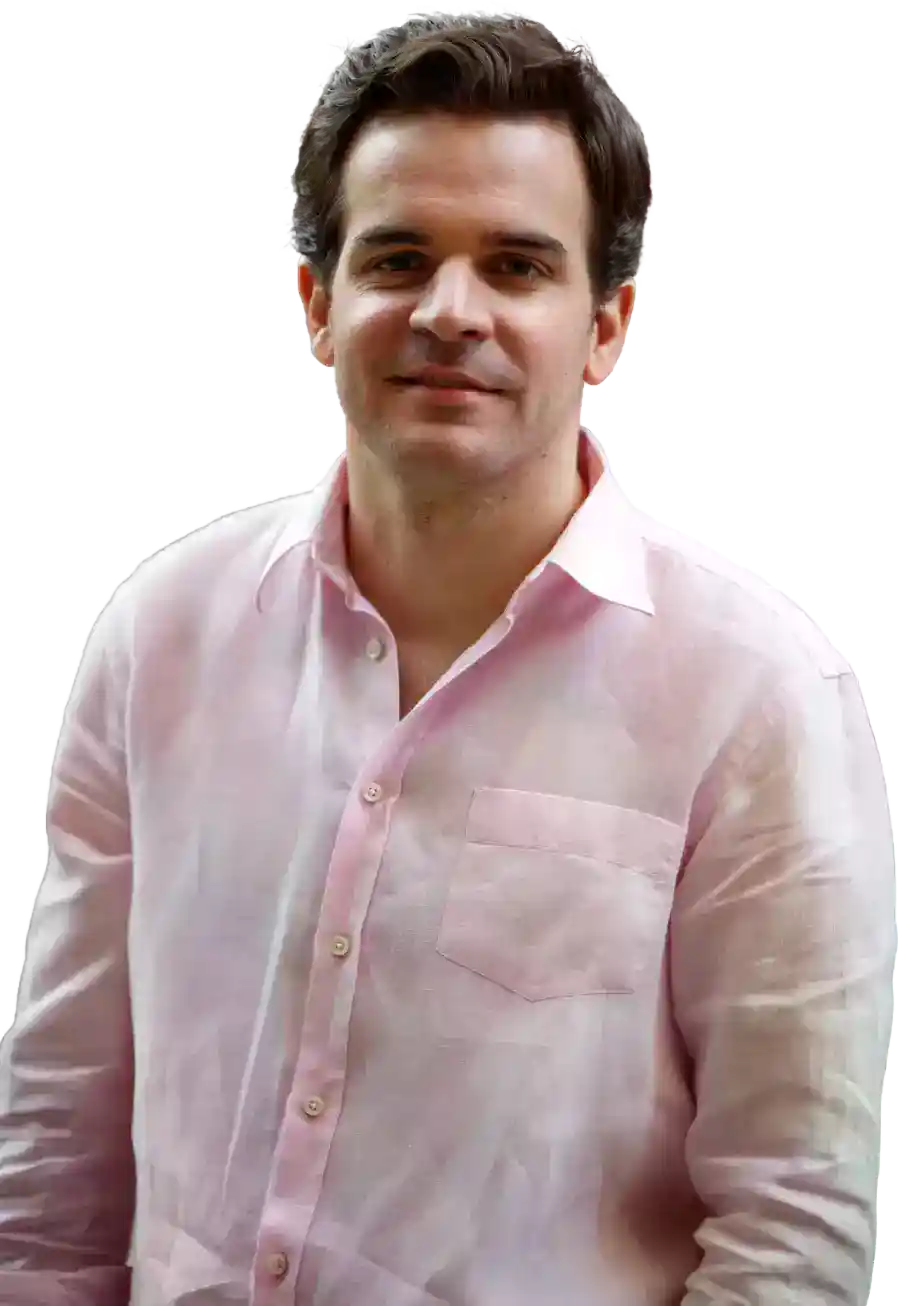
When Simon Bushell reflects on his journey, it doesn’t start in a boardroom or a lab—it starts outdoors. He was born in Fiji, briefly lived in the Netherlands, and grew up in a small village in England, spending much of his childhood outside.
That early exposure to nature quietly shaped a worldview that would later define Simon’s career: a deep conviction that climate change is the most important problem humanity needs to solve. He grew up determined to make the world a better place. But conviction alone doesn’t build companies.
What followed was a decade-long journey of experimentation, pivots, setbacks, and ultimately, scale—culminating in Sympower, a company tackling one of the most complex challenges in the energy transition.
Listen to the full podcast interview and review the transcript here.
*FREE DOWNLOAD*
The Ultimate Guide To Pitch Decks
Why Energy Became the Core Obsession
His interest in green energy and climate change was consistent throughout Simon’s growing years. However, after studying science at Cambridge, he found himself at a crossroads. Like many high-performing graduates, he didn’t have a clear path forward.
What Simon did have was clarity on one thing: climate change was the defining problem of our time. But, at the time, he was unsure about the best solutions and wanted to learn more. Rather than diving into a predefined career track, he chose to understand the problem first. And that led him to energy.
Energy, in his view, sits at the center of everything. If you can transition the global energy system—from fossil fuels to renewables—you unlock progress across nearly every other major global challenge. Without solving the energy problem, solving anything else becomes almost irrelevant.
That insight became the foundation for everything that followed.
Learning the System from the Inside
Simon’s first step into the industry came through consulting, where he worked as a technical energy advisor helping commercial and industrial clients reduce energy consumption and transition away from fossil fuels. This experience opened up perspectives on problem-solving from the inside.
The work ranged widely—from designing combined heat and power plants to improving efficiency in supermarkets. More importantly, it gave Simon critical advantages. His company was a fairly small business with just around 40 people and had recently been acquired by a big business.
Being at the receiving end of the acquisition taught Simon several valuable lessons. But, despite the technical complexity and importance of the work, he felt a growing frustration—his individual impact felt limited. The pace of change was too slow. That realization became the trigger.
Simon brought his dedication to making an impact to Sympower. He wants everyone to solve problems with the objective of delivering value to the world every day.
The Leap Into Entrepreneurship
There was no dramatic “eureka” moment. Instead, the transition happened almost casually. After encouraging Georg Rute, a friend, to start a company, Simon received a call about a month later: “Do you want to do this with me?” It took him 30 seconds to say yes.
Simon quit his job, moved to Estonia, and began building what would eventually become Sympower. The early days were as raw and scrappy as startup stories get. Operating out of Georg’s parents’ one-bedroom apartment in Tallinn, the setup was simple.
Simon’s bedroom doubled as an office, and the kitchen served as a workspace. And, fittingly for Estonia, a sauna became the meeting room. The initial idea focused on consumers—helping households reduce electricity bills through demand response by rescheduling their power use.
On paper, it made sense. In practice, it didn’t scale. So, a year down the line, Simon and Georg pivoted to working with much larger customers—commercial and industrial customers, similar to those Simon had worked with in his previous job.
The reasoning was simple—scaling would be quicker by targeting larger companies than doing it one household at a time. At this point, the duo began recruiting their team and raised their first round of funding.
Raise Capital Smarter, Not Harder
- AI Investor Matching: Get instantly connected with the right investors
- Pitch & Financial Model Tools: Sharpen your story with battle-tested frameworks
- Proven Results: Founders are closing 3× faster using StartupFundraising.com
Building the Core Business Model
At its heart, Sympower solves a fundamental problem. Electricity supply and demand must be perfectly balanced at all times. That means the electricity produced needs to be exactly matched by the amount consumed at any given time.
Historically, this balancing act was handled by gas-fired power plants adjusting output in real time. They would constantly adjust how much electricity they produce to match the amount being consumed in a country.
But as the world transitions to a renewable or mostly renewable electricity system, like wind and solar—sources that are inherently variable—that model breaks down. Balancing supply and demand becomes much more complex.
Sympower steps in to replace that function by turning flexible energy assets into active grid-balancing resources. The company optimizes industrial assets, distributed energy assets, and battery energy storage systems (BESS) to charge, discharge, or shift consumption at the most valuable moments. By doing so, they help stabilize the grid.
Utilities pay Sympower for this service, and Sympower shares that revenue with its customers. It’s a model that sits at the intersection of software, infrastructure, and energy markets—complex, but incredibly powerful.
When the Business Model Breaks Overnight
Even with early traction, the journey was far from linear. At one point, Sympower had a pilot project lined up with a grid operator. Everything was ready—contracts, funding, execution. Days before signing, the deal flipped.
For Simon and Georg, it forced a complete reset—back to first principles. Fortunately, this crisis coincided with joining Rockstart, an accelerator program, providing the space and structure to rethink the business from the ground up. The duo also moved from Estonia to the Netherlands.
The Next Big Pivot: Households to Industry
As Simon points out, pivots are scary but necessary because you have to adjust to market needs, and listening is key. The cofounders began assessing whether they were targeting the wrong customers.
When transitioning from residential to commercial and industrial customers, the duo pitched a few projects to big companies. Initially, it looked like they were moving in the right direction. However, the deals would fall through at the last minute because of weak economics.
It felt like pushing against a system that wasn’t ready to accept the solution. At the same time, something unexpected was happening. When Simon and Georg began experimenting with larger commercial and industrial customers, traction came much easier.
Their first breakthrough came with greenhouses in Finland, where word of mouth began driving organic growth. What started as a gradual shift became a decisive pivot. The cofounders stopped all activities on the residential customer side.
Scaling the Company: Raising Capital and Complexity
Over time, Sympower raised approximately $80M. The funding journey followed a familiar arc. Simon partnered initially with early-stage angel investors whom they met through the accelerator program. Next, they raised money from local impact investors in the Netherlands.
More recently, later-stage institutional investors, including US and European funds, and a Dutch pension asset manager, have backed Sympower. But one theme stood out: relationships mattered more than pitch decks.
Most investors who eventually backed the company had been in conversation with Simon and his team long before investing. This was especially critical given the complexity of the business, which is hard to understand.
As Simon explains, when you initially pitch to investors, you get one of two reactions—either curiosity and a desire to go deeper and understand it more, which then leads to building a relationship from there.
Alternatively, investors say, “This sounds a bit complicated. We’d rather focus on what we’re good at, maybe a typical B2B SaaS.” Simon understands their perspectives.
Storytelling is everything that Simon was able to master. The key is capturing the essence of what you are doing in 15 to 20 slides. For a winning deck, take a look at the pitch deck template created by Peter Thiel, Silicon Valley legend (see it here), where the most critical slides are highlighted.
Remember to unlock the pitch deck template that founders worldwide are using to raise millions below.
Sympower operates within a layered ecosystem that takes time to understand, making prior relationships critical to build confidence. Another nuance was geographic. European investors, particularly in the Netherlands, have a different mindset compared to US investors.
European investors tend to prioritize tangible metrics—revenue, traction, and present performance. In contrast, US investors are often more comfortable underwriting future potential. Sympower navigated this by aligning with investors who understood both the long-term vision and mission, and the market.
Building the Organization
As the company scaled to around 150 employees, hiring became a strategic challenge. Different stages required different types of people. Some early team members grew with the company, evolving into new roles over time.
Others eventually left to start their own ventures—part of the natural lifecycle of startup talent. Sympower adopted a distributed model early on, with teams spread across multiple countries; some were also working remotely. Each operating model had advantages and disadvantages.
As Simon explains, the coordination required strong documentation practices so new recruits could get up to speed quickly, even if they worked remotely. They also developed a culture designed for asynchronous work.
While not without challenges, it enabled access to talent in Europe and supported expansion into new markets.
The Hard Lessons of Expansion
At one point, Sympower pursued an aggressive expansion strategy—targeting up to 20 countries across Europe. However, it didn’t work. The company found itself spread too thin, with limited depth in each market. The lesson was clear: breadth without focus kills scale.
Simon and his team shifted their strategy to fewer countries, but with deeper market penetration. In some cases, this meant walking away from markets where they already had revenue—a difficult but necessary decision. Today, expansion is more disciplined.
Simon talks about the new strategy they’ve developed for expansion. Before entering a new geographic location, they start by targeting a customer base that matches their ambitions for that location in terms of scale.
The Vision: A Smarter, Cleaner Energy System
If Sympower succeeds at its mission, the impact goes far beyond efficiency gains. It enables a world where renewable energy can scale without instability, so that dependence on fossil fuels like oil and gas decreases dramatically, which, in turn, is beneficial for geopolitical and cost reasons.
Simon reiterates that his driver is from an environmental perspective. Through Sympower, he would want to enable people to be more active participants in the energy system, thanks to increasing awareness.
For instance, Sympower’s industrial clients are becoming more conscious of their electricity consumption and are exploring ways to reduce usage, increase efficiency, and source energy locally.
Thus, Simon envisions the overall system being greener, cleaner, cheaper, and more local. Consumers are more conscious on both sides of the system and are attempting to drive climate change initiatives themselves, rather than being told what to do by the authorities.
As Simon points out, he has been pushing this change for 10 years, which translates into 200 years in corporate terms. Sympower has raised $80M to date and now employs over 150 people—a truly remarkable feat.
The Founder’s Realization: Focus Is Everything
After a decade of building, Simon’s advice to his younger self is surprisingly simple: Focus. But not just in the abstract. Entrepreneurs find it difficult to focus because they are enthusiastic and eager to say yes to the next exciting opportunity that arises.
Entrepreneurship is very binary, and founders can be in one of two phases.
- Default Yes: Explore, experiment, say yes to opportunities
- Default No: Ruthlessly test and filter, focusing only on the highest-impact actions
The mistake most founders make is living in between. Without a clear focus, execution suffers. With it, everything compounds.
Growing as Fast as the Company
Scaling a company is one challenge. Scaling yourself is another. For Simon, two factors made the difference. The first is curiosity. He considers himself extremely lucky to have mentors, angel investors, and board members guiding him through the various stages of the company-building.
Every day brought new situations Simon had never encountered before. Instead of pretending to have the answers, he leaned on those around him—gathering input, then making decisions with conviction. Continuously asking questions and learning from others’ experiences helped him get ahead.
The Long Game
Ten years into the journey, Sympower stands as a testament to persistence. What started in a cramped apartment has grown into a multi-country operation with significant capital, real customers, and meaningful impact. But perhaps the most important takeaway isn’t the scale—it’s the process.
There were no shortcuts. No single breakthrough moment. Just continuous iteration, hard decisions, and a relentless focus on solving a problem that truly matters. And in the world of energy—and climate—that’s exactly what’s required.
Listen to the full podcast interview to know more, including:
- Climate change became Simon Bushell’s defining mission, and energy became the lever he believed could unlock the biggest impact.
- Sympower’s journey shows that conviction matters, but market feedback determines where a startup can actually scale.
- The pivot from households to commercial and industrial customers turned a promising idea into a viable business.
- Sympower’s evolution from demand response into BESS optimization shows how the company has adapted to the grid’s changing needs as renewables, storage, and flexibility markets mature—helping battery asset owners maximize revenues across balancing, wholesale, and ancillary markets while supporting grid stability and decarbonization.
- Raising capital for complex infrastructure businesses requires long-term investor relationships, not just polished pitch decks.
- Expansion without depth can weaken execution, which is why Sympower shifted from many countries to fewer, deeper markets.
- Simon’s biggest lesson is that founders must know when to move from “default yes” experimentation to “default no” focus.
SUBSCRIBE ON:
 iTunes
 Google Play
 Stitcher
 TuneIn
 RSS
RSS SoundCloud
 Spotify
Keep in mind that storytelling is everything in fundraising. In this regard, for a winning pitch deck to help you, take a look at the template created by Peter Thiel, the Silicon Valley legend (see it here), which I recently covered. Thiel was the first angel investor in Facebook with a $500K check that turned into more than $1 billion in cash.
*FREE DOWNLOAD*
The Ultimate Guide To Pitch Decks
Remember to unlock for free the pitch deck template that founders worldwide are using to raise millions below.
Podcast: Play in new window | Download
Subscribe: Apple Podcasts | Spotify | TuneIn | RSS | More
Facebook Comments