

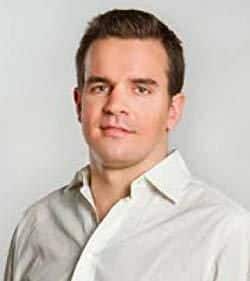
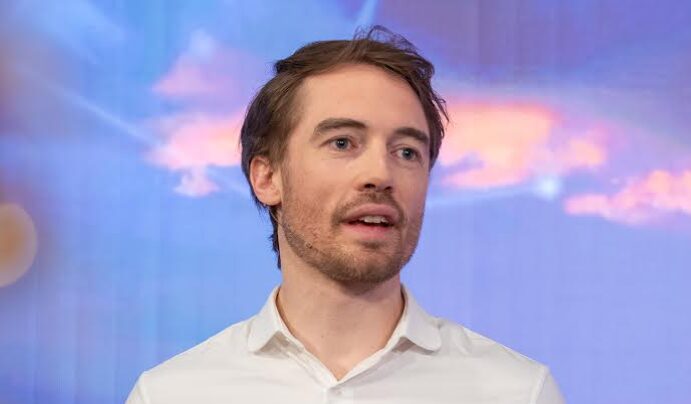
When Simon Bushell reflects on his journey, it doesn’t start in a boardroom or a lab—it starts outdoors. That early exposure to nature quietly shaped a worldview and a deep conviction that climate change is the most important problem humanity needs to solve.
Simon’s company, Sympower, has secured funding from top-tier investors, such as European Investment Fund, European Innovation Council, Rockstart, Activate Capital Partners, and Rubio Impact Ventures.
In this episode, you will learn:
- Climate change became Simon Bushell’s defining mission, and energy became the lever he believed could unlock the biggest impact.
- Sympower’s journey shows that conviction matters, but market feedback determines where a startup can actually scale.
- The pivot from households to commercial and industrial customers turned a promising idea into a viable business.
- Sympower’s evolution from demand response into BESS optimization shows how the company has adapted to the grid’s changing needs as renewables, storage, and flexibility markets mature—helping battery asset owners maximize revenues across balancing, wholesale, and ancillary markets while supporting grid stability and decarbonization.
- Raising capital for complex infrastructure businesses requires long-term investor relationships, not just polished pitch decks.
- Expansion without depth can weaken execution, which is why Sympower shifted from many countries to fewer, deeper markets.
- Simon’s biggest lesson is that founders must know when to move from “default yes” experimentation to “default no” focus.
SUBSCRIBE ON:
 iTunes
 Google Play
 Stitcher
 TuneIn
 RSS
RSS SoundCloud
 Spotify
Keep in mind that storytelling is everything in fundraising. In this regard, for a winning pitch deck to help you, take a look at the template created by Peter Thiel, the Silicon Valley legend (see it here), which I recently covered. Thiel was the first angel investor in Facebook with a $500K check that turned into more than $1 billion in cash.
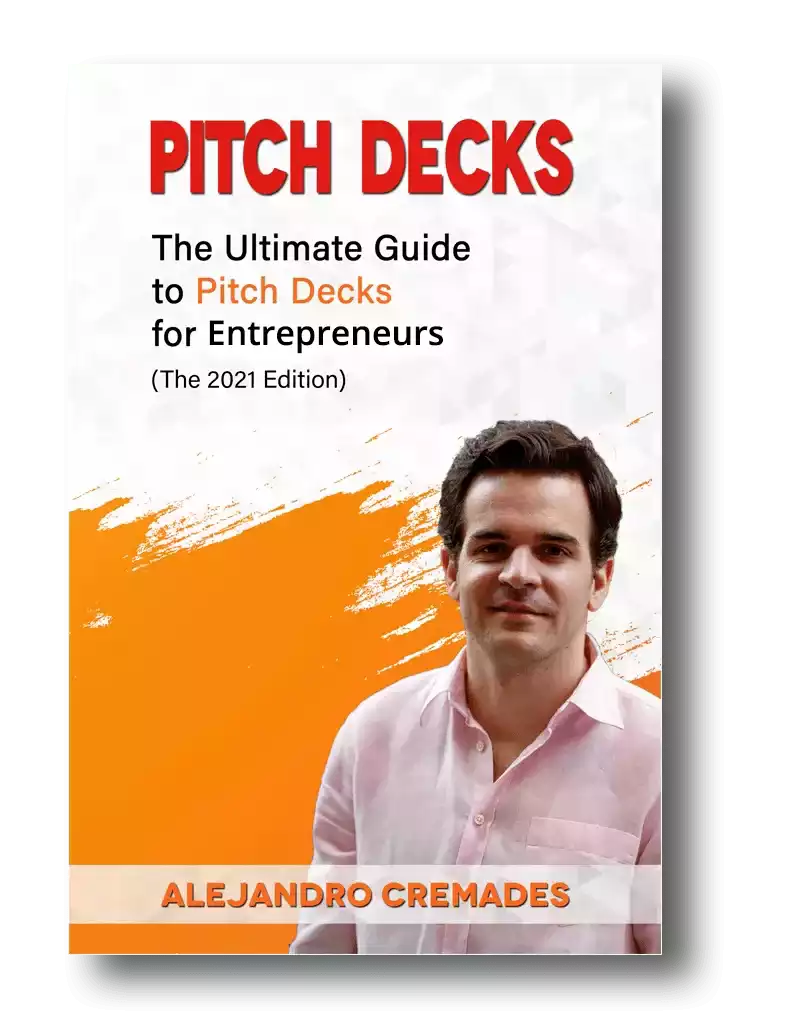
*FREE DOWNLOAD*
The Ultimate Guide To Pitch Decks
Remember to unlock for free the pitch deck template that founders worldwide are using to raise millions below.
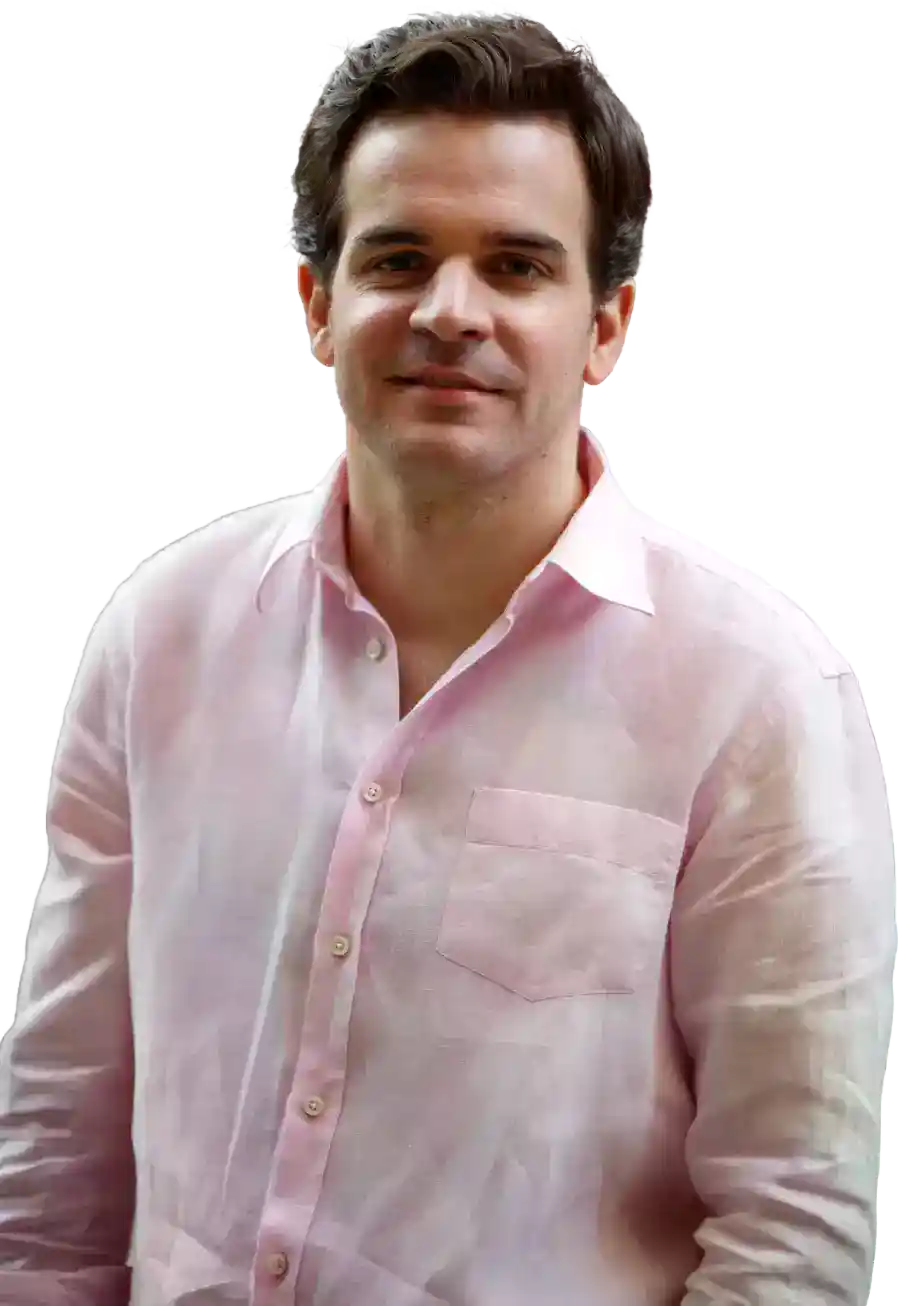
About Simon Bushell:
Simon Bushell, based in Amsterdam, NH, NL, is currently a Founder and CEO at Sympower. He brings experience from previous roles at Imperial College London, Ameresco, Freelance and NUCO Travel.
Simon holds a 2013 – 2014 MSc in Sustainable Energy Futures @ Imperial College London. With a robust skill set that includes Microsoft Excel, Team Leadership, Research, Teamwork, Data Analysis and more.
Raise Capital Smarter, Not Harder
- AI Investor Matching: Get instantly connected with the right investors
- Pitch & Financial Model Tools: Sharpen your story with battle-tested frameworks
- Proven Results: Founders are closing 3× faster using StartupFundraising.com
Connect with Simon Bushell:
Read the Full Transcription of the Interview:
Alejandro Cremades: All righty. Hello, everyone, and welcome to the DealMaker Show. Today, we have an amazing founder. We’re going to be talking about clean and sustainable energy, and quite the story of how he has been able to build his business: the building, the scaling, the pivoting.
Alejandro Cremades: He’s been all over the world, too. I think that is really going to let you all know what kind of perspective that gives you when it comes to execution. Anyhow, we have quite the inspiring conversation in front of us. So, without further ado, let’s welcome our guest today, Simon Bushell. Welcome to the show.
Simon Bushell: Thanks, Alejandro. Great to be here.
Alejandro Cremades: Originally, you were born in Fiji, but then the Netherlands, the UK—you moved quite a bit. So give us a walk through memory lane. How was life growing up for you?
Simon Bushell: Yeah, I was born in Fiji, where my mom was working for a couple of years. I didn’t spend that much time there, but then I was briefly in the Netherlands before spending most of my life growing up in the UK.
Simon Bushell: I guess my formative years were in a very small village in the middle of England, where I was outside a lot of the time. I think that’s kind of part of what got me interested in sustainability and trying to prevent climate change from getting too bad and making the world a better place.
Alejandro Cremades: In your case, one of the things that is interesting is energy. Energy has been something consistent, whether you were at Imperial, at Cambridge, or right after. I mean, quite the collection of academia references as well, but energy. You were talking about growing up outside and being outside quite a bit.
Alejandro Cremades: What about energy really caught your attention?
Simon Bushell: So, after my first studies at Cambridge in sciences, I had absolutely no idea what I wanted to do, to be perfectly honest. I spent some time trying to figure out what it was I wanted to do with my life.
Simon Bushell: I really thought that, for me, climate change is the biggest and most important problem that we have. I see it as the overarching problem. I think there are a lot of other really important problems to solve in the world. But if we don’t solve climate change, then there’s kind of not much point in solving the rest. As I didn’t know much about what the solutions were, I wanted to find out more. I really see the energy problem as the absolute key to solving climate change. The energy system, renewables, and that whole transition are, I think, the most important things we can do to solve climate change.
Alejandro Cremades: So, talking about this, after the studies, you went into consulting a little bit. Tell us about consulting. What was that experience for you? How were you thinking about problem tackling, and what kind of perspective or lessons did it give you from the space as a whole?
Simon Bushell: I was a quite technical energy consultant, helping commercial and industrial customers find different ways to save energy and move away from fossil fuels. That included everything from building big combined heat and power plants to energy efficiency in supermarkets, and all sorts of different things.
Simon Bushell: I guess it gave me good exposure to those sorts of customers and the problems they have. It was a fairly small business, about 40 people, that had just been acquired by a big business in the US. So, it was also interesting to be on the receiving end of an acquisition, and I think there were plenty of lessons learned there as well.
Simon Bushell: I think that, after a while, I felt frustrated by the lack of impact I was having, both in the traditional sense of the word impact—I wanted to make more impact on the energy transition—but also in terms of the impact I was making as an individual in the company. I think that was one of the drivers to then go and found a business.
Simon Bushell: It’s also something I’ve brought with me into Simpower. I really want everyone at Simpower to feel like they are making an impact. They should feel they are able to make an impact both on the world, but also on the problems we’re solving and the problems they’re solving as individuals every day.
Alejandro Cremades: So what was that moment where you were like, “Okay, I’m going to go at it”? Because, as you said, you’ve been at it now for 10 years, but Europe, people say, has obviously developed quite a bit in the last, I would say, 10 to 15 years.
Alejandro Cremades: Before, you either became a banker, a lawyer, or a consultant—not an entrepreneur. So that was quite the decision for you to really branch out on your own and start something from nothing.
Simon Bushell: I wish there was some kind of amazing eureka moment, but it wasn’t quite like that. A friend of mine had—well, I actually persuaded him that he should start a company. About a month after he started, I was already thinking, “Okay, this consulting thing isn’t quite working for me. What am I going to do next?” About a month after he started, he called me up and said, “Hey, don’t you want to do this with me?” It took me about 30 seconds to decide to say yes.
Simon Bushell: Then I quit my job and moved to Estonia to start working with him on what eventually became SimPower.
Alejandro Cremades: So how did it become SimPower? Walk us through what the early days were like and what actions needed to happen for you guys to bring it to life.
Simon Bushell: The early days were almost too cliché a startup story. We were lucky enough to have George’s parents’ apartment in Tallinn, which was a one-bedroom apartment. The other room was my bedroom, the office, our kitchen, and all the rest of it. But it was Estonia, so we had a sauna, which was the meeting room.
Simon Bushell: But yeah, we started off trying to build a product for consumers—basically, a consumer demand response product, which is all about helping consumers reduce their electricity bills by having them shift when they use electricity.
Simon Bushell: That took us through the first six to nine months or so, from a bedroom in Tallinn.
Simon Bushell: Then, after about a year or so, I think we pivoted to working with much bigger consumers. We started working with commercial and industrial customers, the type of customers I had been working with in my previous job, really because we saw that it was just a way to scale a lot quicker than going household by household.
Simon Bushell: That’s also when we started to hire our first employees and raise our first funds, and so on.
Alejandro Cremades: For the people who are listening, so they get it, what ended up being the business model of SimPower? How do you guys make money?
Simon Bushell: The problem we solve is that the grid needs to be balanced at all times. That means the electricity that is produced needs to be exactly matched by the amount of electricity that is consumed at any one time.
Simon Bushell: That problem used to be solved by the big gas-fired power plants, which basically constantly adjust how much electricity they produce to match how much we’re consuming in a country. If we want to move to a fully renewable electricity system, or even a mostly renewable electricity system, not only are those gas power plants that are doing that balancing disappearing, but they’re being replaced by renewables and wind, which makes the whole balancing problem a lot harder. So, effectively, we replace that balancing aspect of those gas-fired power plants using either demand-side resources, which was our first business model, or batteries, which we’ve moved into over the last couple of years. With both of those, we’re essentially adjusting how much electricity those commercial and industrial machines produce, or how those batteries charge and discharge, in order to help keep the whole grid in balance. We get paid for doing that, and then we share some of that revenue with the customers. So that’s the basics of what we do.
Alejandro Cremades: You were talking about it earlier, the pivot that you guys did. Pivots are scary, but they’re also necessary because you’ve got to adjust to whatever the market is telling you, and listening is key.
Alejandro Cremades: At what point did you guys realize—make us insiders there, because there are a lot of people probably listening now who are in the early days, in the trenches, figuring out how to get to product-market fit and how to get to scale.
Alejandro Cremades: How was that for you guys? What was that thought process and that journey to the moment when you were like, “I think maybe we’re going after the wrong people here”?
Simon Bushell: Yes. I think there were a few stages in the beginning, moving from residential to commercial and industrial. We had a couple of times where we had some very interesting projects that we had been pitching, and they looked like they were really going in the right direction with, for example, big energy companies.
Simon Bushell: Then, right at the last minute, we would figure out together that the economics didn’t work. It kind of felt like we were pushing against something that was not really working and not really wanting to be accepted by the people we needed to accept it. Then I think we very quickly saw that, as we started to move to bigger customers, it was just going a lot easier. Our first customer group in Finland was actually greenhouses, and we found that there was quickly a word-of-mouth effect that meant they were doing the sales for us. So I think that was more of a steady shift. At some point, it was obvious that it was going much more easily than the first one, so we stopped all activities on the residential side of things.
Alejandro Cremades: What was the moment like when you guys were like, “I think we’ve hit a nerve here. We’re onto something”?
Simon Bushell: Well, in the very early days, we had this pilot project with a grid operator all locked and loaded. We had some money lined up to fund it. We really thought we had hit onto something. Then, like days before everything was going to be signed, they came back to us and said, instead of the grid operator paying us 10 euros a month, we had to pay them two euros a month.
Simon Bushell: So the entire business model got completely flipped on its head, which obviously meant that it didn’t work anymore. That was the moment when we had to go back to the drawing board and think, “Okay, how are we going to do this?”
Simon Bushell: We were actually lucky enough at that point that it was timed very well with starting an accelerator program, which is also why we eventually moved from Estonia to the Netherlands. That was really a moment to rebuild, rethink what we were doing, and figure it out again.
Alejandro Cremades: So talk to us about raising money. You guys have raised about 80 million bucks. How has the journey been, raising the money, going through the motions, the different financing cycles, and how that adjusted to the life cycles that you guys have also unlocked? Talk to us about raising money as well.
Simon Bushell: I guess, in some ways, it has been quite a typical journey in the sense that we had a group of angel investors at the very beginning, most of whom we met through both the accelerator programs and other programs we were in. Then we raised from local Dutch impact investors.
Simon Bushell: More recently, we raised from a US venture fund, a Spanish one, and also very recently, last year, from a pension fund asset manager here in the Netherlands as well. So we’ve seen quite a lot of different types of investors. I think one thing, or a couple of things, have stuck with me. Almost all the people who have eventually invested in us have been people that I, or we as a company, had built some kind of relationship with a long way before they actually invested in us. I guess that’s something you hear from lots of people, but especially in our case, where our business model and the market we’re in are quite complex to understand.
Simon Bushell: And you see that, when you initially pitch to investors, you kind of get one of two reactions. Either there is curiosity, wanting to go deeper, wanting to understand it more, and then building up a relationship from there, or it is more of, “Okay, this sounds a bit complicated for us. We’d rather focus on what we’re good at, which is maybe B2B SaaS, the typical B2B SaaS type, or whatever.” And that’s nothing against those types of investors. They know what they’re good at. But I think what we found is that you need to build up that relationship.
Simon Bushell: You need to help build up that understanding of both what we do and the complex ecosystem we operate in, in order to build that confidence over time.
Alejandro Cremades: Now, in the Netherlands, where you are, the mindset is a little bit different from the mindset that you will probably see in the US when it comes to raising money. Because in the US, it’s all right to go for the future, to really raise on something that perhaps is not as tangible and as visible.
Alejandro Cremades: In Europe, where I’m also from, there is a lot of emphasis around revenue, around the present, and around what you have right now. How have you guys been able to deal with that and also get the right people for the right reasons on board?
Simon Bushell: That’s absolutely true, what you said, and we’ve experienced that as well. I think what has been key for us is, as I mentioned in the beginning, a lot of impact investors and people in the energy transition as well. These are people who understand the role that we’re playing, or the role we’re trying to play in the energy sector. They can see that longer-term vision without us necessarily having to pitch it for them. Of course, we have to do that as well, but they understand the role we play. Therefore, of course, what we have now, the tangibility of that revenue and so on, has been really important. But I think there has been an ability to see that vision a bit more as well than maybe is typical in the Netherlands. So I think finding those aligned investors who want to achieve the same thing as we do has been absolutely critical.
Alejandro Cremades: Now, part of the growth that you guys have experienced has been building up the operation. You guys have about 150 employees. For a company like SimPower, how do you think about human resources, getting the right people at the right stages, and the typical breakdown that you would experience when building the business, in terms of where the most amount of effort and muscle is needed?
Simon Bushell: Yes. People are obviously key, and I think what you said there is really true. You need different people at different stages of the business. There are a few people at SimPower who have been with us since almost the very beginning and have grown and found new roles along the way, which is absolutely fantastic.
Simon Bushell: But then you see the majority of people who joined early have gone on to found their own startups or find something else at a bit smaller stage as well.
Simon Bushell: We operate in quite a distributed model. We do have offices, but we are distributed across lots of different countries in Europe and have some people working remotely and so on, which I think definitely has advantages and disadvantages. But I think, for us, having done that from almost the very beginning has been very helpful. Just having that as a mindset and a culture in the company—that we do operate remotely, all meetings can be joined remotely, and we’re good at making sure things are documented and written up—means that people who are joining can get up to speed quickly, even if they’re not in the office, and so on and so forth.
Alejandro Cremades: So you guys are now, as we’re talking about scale, in about four countries. Talk to us about what has been the biggest lesson around getting that playbook really well polished on how to go to a different location and execute.
Simon Bushell: Yes, it’s been quite a journey for us because, a few years ago, we actually had quite a different strategy. We were aiming to go into about 20 different countries in Europe, but in a much less deep way in each market. Over the last few years, we have gradually changed our strategy to go into much fewer countries, but much deeper in each country.
Simon Bushell: We’ve also been in some countries where we had revenue, but then decided to pull out. I think one of the lessons learned there is that there’s no point in doing things by halves. For example, we’re based in the Netherlands, and we had a business in the Netherlands for a few years, but it was never really our focus. We were focused on building the business in the Nordics, which is our core market. Because the Netherlands never got the focus, we never really scaled it. I think we were reluctant to let that opportunity and that revenue go. But in hindsight, we probably should have made the decision much earlier: either we properly invest in this market and give it the attention it deserves, or we stop.
Simon Bushell: Since then, we have been trying to make that kind of decision much more quickly. We’ve really focused on just a small number of markets. I think we’re really trying to make sure that when we do go to our next geography, we start with a launching customer that will actually bring that country to a scale that will be able to match our ambitions in that country.
Alejandro Cremades: So let’s say you go to sleep tonight, Simon, and you wake up in a world where the vision of SimPower is fully realized. What does that world look like to you?
Simon Bushell: Well, as a starting point, that would enable a huge amount more renewables in the system. So we would be a lot less dependent on oil and gas than we are at the moment, which, obviously, for geopolitical and cost reasons, would be fantastic.
Simon Bushell: But also, my driver is from an environmental perspective. I think that what SimPower also does is enable people to be more active participants in the energy system. This means that people are getting much more conscious. When I say people here, I mean the industrial clients that we have. They’re getting much more conscious about their electricity consumption. They are working on different ways to reduce usage, use energy in a more efficient way, use it locally, and so on and so forth. So, as well as the overall system being more efficient, greener, cleaner, cheaper, and more local, you also have a more conscious consumer on the other side that is really part of that system and trying to drive the change themselves, rather than just being told what to do by governments or whatever.
Alejandro Cremades: Obviously, the amount of time that you’ve pushed this is really remarkable. Ten years is like 200 years in corporate, right? It’s unbelievable. A lot of lessons learned, wins, ups, downs, you name it. I guess, if I were to bring you back in time, maybe to that moment where you were a consultant and thinking about doing something of your own, and let’s say I was able to bring you to have a conversation with that younger Simon, and you were able to give your younger self one piece of advice before launching a business, what would that be and why, given what you know now?
Simon Bushell: I think it’s extremely clichéd, but focus. It’s the one lesson that everyone tells you, and it’s the one lesson that I think is really hard as an entrepreneur to actually listen to. As entrepreneurs, we want to say yes to things and follow the next exciting opportunity, and so on and so forth.
Simon Bushell: The way I see it, it’s kind of very binary. You have to be in one of two phases. In one phase, you’re default yes, and almost from one day to the next, you’re in default no. In default yes, you are saying yes to those opportunities. You’re testing what’s out there. You’re seeing what opportunities there are.
Simon Bushell: But then I think you need to make this really conscious decision to go into that default no phase, where anything that comes in, you’re saying no unless it is the perfect possible opportunity. And yeah, I think that’s definitely me to blame for that. We have too often been somewhere in between, and then you can’t have that real laser focus on the opportunity ahead of you and execute on that very, very well. I think we’re doing it a lot better in the last few years, but I think if we could go back in time and have that real laser focus in those default no moments, it might have changed some things along the way.
Alejandro Cremades: Obviously, for you, it was your first company and first business. You have to make sure that the company is not outpacing you. What you’ve built is tremendous, right? I mean, 150 employees, $80 million raised, and what you guys are doing across all these different regions where you are now present.
Alejandro Cremades: What do you think has helped you along the way to educate yourself and grow yourself, so that you made sure you kept the same speed as the company?
Simon Bushell: It’s two things. It’s curiosity and the people around me. I have been extremely lucky to have, at different stages of the company, different people around me: mentors, angel investors, board members.
Simon Bushell: All sorts of different people who I have been able to lean on and turn to for advice. I kind of always say, every day that I wake up, it’s the biggest company that I’ve ever built. It’s the most number of employees, and so on and so forth. I’ve always gone into that with a very open mind. I don’t know what the best thing to do is because I’ve never been in this situation before. What I can do is ask around me, ask people who have been in this situation before, and gather advice.
Simon Bushell: Then, obviously, eventually it’s me making the decisions. It’s me deciding where we’re going. But yeah, leaning on those people I’ve been lucky enough to have around me and doing so with curiosity: What is out there? What are the options? How do other people do things? How have things worked well in some places and not worked well in others? And just continue asking questions.
Alejandro Cremades: I love it. Simon, for the people who are listening and would love to reach out and say hello or learn more about SimPower, what can you tell them?
Simon Bushell: Yeah, please do get in touch, especially if you’re in the energy sector, where we are growing in the Nordics, in Greece, and across Europe. We would love to hear from you, either via our website, simpower.net, or you can find me on LinkedIn, of course.
Simon Bushell: We would love to chat and exchange ideas.
Alejandro Cremades: Amazing. Well, Simon, thank you so much for being on the DealMaker Show today. It has been an absolute honor to have you with us.
Simon Bushell: Thank you, Alejandro. Thanks for the time.
*****
If you like the show, make sure that you hit that subscribe button. If you can leave a review as well, that would be fantastic. And if you got any value either from this episode or from the show itself, share it with a friend. Perhaps they will also appreciate it. Also, remember, if you need any help, whether it is with your fundraising efforts or with selling your business, you can reach me at al*******@**************rs.com
Podcast: Play in new window | Download
Subscribe: Apple Podcasts | Spotify | TuneIn | RSS | More
Facebook Comments