

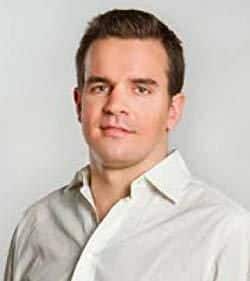

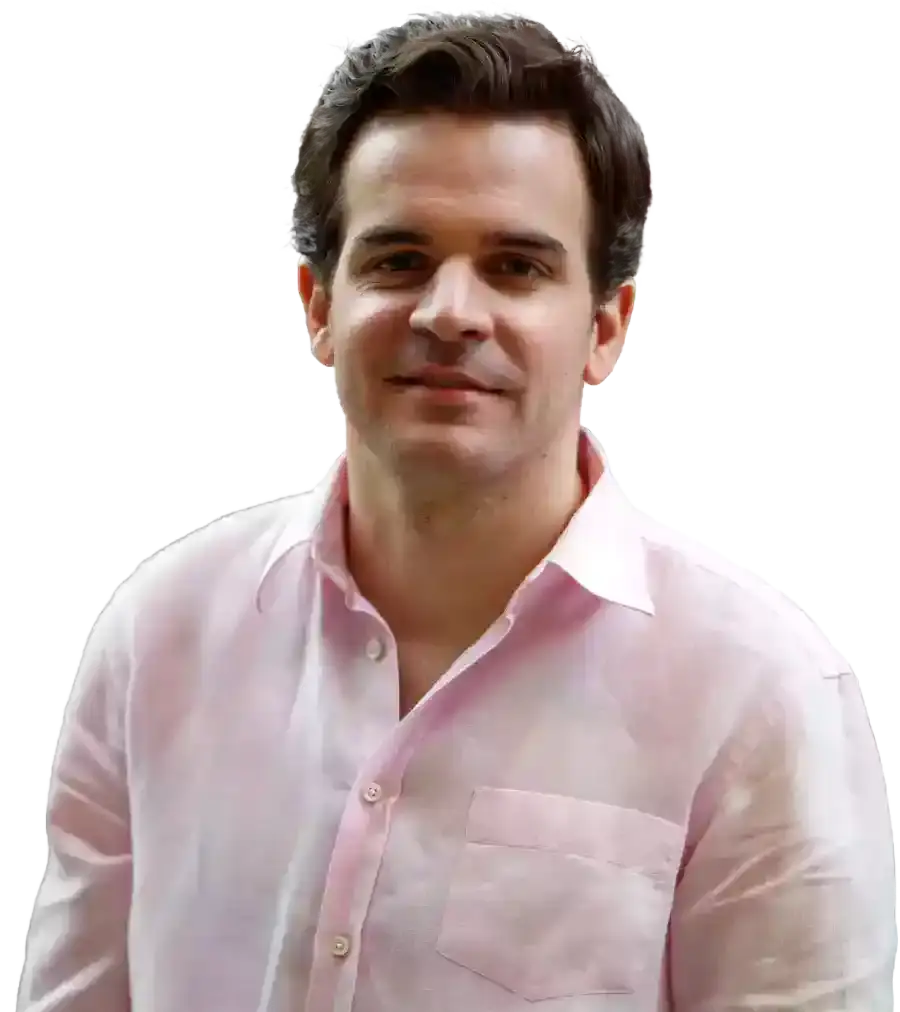
Michael Mandel’s entrepreneurial path began inside one of the most relationship-driven and data-fragmented industries in the world: commercial real estate.
As a broker, Michael saw firsthand how valuable deal information was still being exchanged through phone calls, informal networks, and Monday morning meetings. Instead of accepting that inefficiency as “just how the industry works,” he recognized it as an opportunity.
That insight became the foundation for CompStak—a data platform built to bring transparency, structure, and scale to commercial real estate decision-making.
Listen to the full podcast episode and review the transcript here.
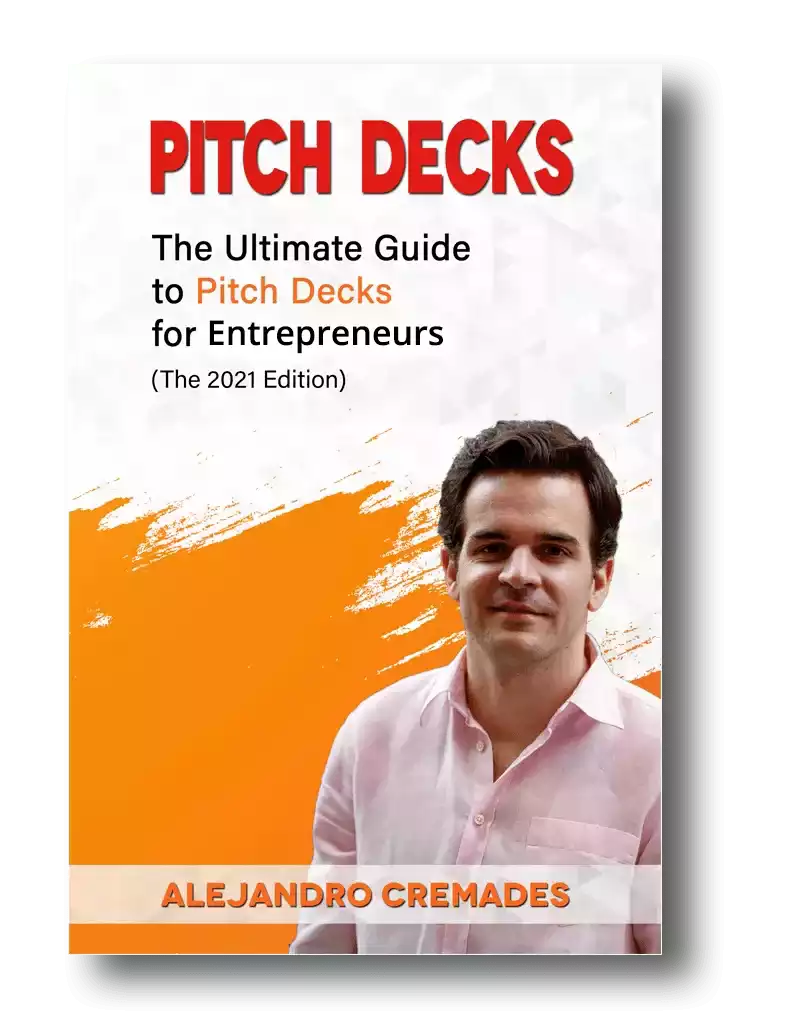
*FREE DOWNLOAD*
The Ultimate Guide To Pitch Decks
Early Roots: A Builder From Day One
Michael grew up in Cherry Hill, New Jersey, just outside Philadelphia, in a household where building companies were part of the fabric. His father, a lawyer running his own practice, modeled independence. His grandfather was also an entrepreneur. But for Michael, the drive went deeper.
It wasn’t just about following a path—it was about building. From an early age, Michael knew two things. He wanted to create something meaningful, and he didn’t want to work for someone else. There was also a third motivation—one he openly admits: He wanted to be rich.
Inspired by figures like Bill Gates, Michael wasn’t chasing incremental success. He wanted to build something big.
Babson and the Reality Check of Entrepreneurship
After his schooling in Boston, Michael chose Babson College, one of the world’s top entrepreneurship schools, with a clear plan: graduate and immediately start a company. He was determined to use his time at Babson to learn everything about starting a business. But reality didn’t cooperate.
At the time, building scalable tech startups as a student wasn’t nearly as feasible as it is today. This was pre-cloud infrastructure, before platforms like Amazon Web Services and Thiel Fellowship made it easy to launch and scale.
Just putting a website on the cloud and scaling was not straightforward, and servers were expensive. The kinds of things students could build were unlikely to make a huge difference in the world, unlike today, when building a tech company is certainly more viable for a student.
Michael didn’t want to build something small or a lifestyle business. In hindsight, he acknowledges a key lesson—ambition without exposure to real-world dynamics can lead to naïve execution. Instead of launching immediately, he chose to learn first.
Learning Before Leaping: From Music to Real Estate
Michael’s first role was in commercial music production, working closely with a founder—essentially acting as a right-hand operator. The goal wasn’t the industry itself; it was to help people with identity through sound—a unique proposition.
But within a year, Michael pivoted into commercial real estate brokerage—a move that would ultimately define his career. It would lead him to start CompStak. Interestingly, the path to becoming a commercial real estate broker was not as easy as taking a job.
The only way to get a job was to have contacts and be part of the industry network. Michael ended up working at Grub & Ellis by leveraging connections. At the time, the company was starting Grubhub to get junior brokers going.
Raise Capital Smarter, Not Harder
- AI Investor Matching: Get instantly connected with the right investors
- Pitch & Financial Model Tools: Sharpen your story with battle-tested frameworks
- Proven Results: Founders are closing 3× faster using StartupFundraising.com
Why Commercial Real Estate Brokerage
Michael wanted to work in commercial real estate brokerage because he liked its tangible nature. From his perspective, buildings can be seen and touched. Buildings in Manhattan are large and valuable, which is appealing to him.
Further, as Michael says, “(commercial real estate brokerage) is as entrepreneurial a career as you can have without truly being an entrepreneur.” It is fully commissioned—you eat what you kill. The top successful commercial real estate brokers in New York City can earn a seven-figure revenue.
There are no limitations to their potential and growth opportunities—another factor that appealed to Michael. However, he did not intend to remain a broker forever; he intended to eventually start a business. At the same time, he had student loans to pay.
Further, Michael lived in New York City, where the rent is expensive. He wasn’t in a luxurious position like many of his friends, nor could he count on family support. Then, he started getting involved with data centers. That’s when he came across a problem that sparked CompStak.
The Insight That Sparked CompStak
Looking back, Michael underscores that he had always been looking for viable opportunities. He found that the commercial real estate brokerage and the commercial real estate industry are still incredibly antiquated.
Finding pathways to change and revolutionize in some capacity is always available. Michael compiled a list of innovative ideas to transform the industry, and one of them inspired CompStak.
As a broker, Michael participated in weekly meetings every Monday, where brokers exchanged deal data—known as “comps.” The process was inefficient. They spent hours discussing deals, and information was shared verbally. As a result, data was fragmented across networks.
To prepare, Michael would call brokers on Sunday nights, manually trade information, and compile insights for Monday meetings. He was handling office deals in New York for creative firms, tech companies, and media companies, as well as data center work.
Monday morning meetings and conversations centered on traditional New York City office deals, law firms, banks, financial firms, hedge funds, and private equity in Midtown. However, this data wasn’t relevant to Michael. And then one day, the obvious question hit: “What are we doing?”
Why was an industry built on data relying on conversations instead of systems? Why not create an industrywide database so key players could quickly access the information they needed, rather than making phone calls? Essentially, move data from offline to online.
What CompStak Does
That moment led to the founding idea behind CompStak Exchange, which uses a credit system to turn an offline, relationship-driven data exchange into a scalable digital platform.
CompStak’s membership includes commercial real estate brokers, fee appraisers, and real estate brokerage research professionals. They share data on CompStak. Originally, they were sharing just lease comps.
But now, by leveraging CompStak, they can share lease comps (detailed records of commercial lease transactions), sales comps (detailed records of sales transactions), and property data.
They earn credits for sharing that data, which acts as a virtual currency. Then, they can use those credits to get other data.
The Business Model: A Data Flywheel
CompStak’s core innovation was simple—but powerful. It introduced a “give-to-get” model in which users contribute deal data (lease comps, sales comps, property data) — approximately two records for every one the user contributes.
They earn credits in return, which can be used to access other data. This created a self-reinforcing system—a free platform for contributors. As a result, more contributors → more data, more data → more value, and more value → more contributors.
Revenue comes from selling aggregated data via subscriptions to real estate investors, lenders, asset managers, consultants, accounting firms, law firms, and government agencies. As Michael explains, a huge breadth of companies can leverage this data.
However, it is primarily used for real estate investment decisions, lending decisions, asset management, tax assessment, tax avoidance, and more. It’s a classic marketplace dynamic—but applied to proprietary data.
Overcoming Resistance: Changing Behavior in a Legacy Industry
The biggest early challenge wasn’t technology; it was trust. Brokers were skeptical about sharing valuable information. They had concerns about the data being exposed publicly on the internet and about capitalizing on the returns.
Michael tackled this the hard way—one conversation at a time. He leaned on credibility because he was a broker himself, understood the incentives, and reframed the behavior. Instead of asking users to do something new, he showed them that they were already sharing data—just inefficiently.
CompStak simply improved the process by making the data available online in a structured, searchable, and more valuable way.
Raising $80M: From Storytelling to Metrics
CompStak went on to raise over $80M, but the journey wasn’t smooth. In the early days, venture capitalists and angel investors questioned the opportunity. They wanted to know if the commercial real estate is big enough and how it fits into social/mobile trends.
Michael explained that real estate is the second-largest asset class in the world. At the time, the tech world was obsessed with “SoLoMo” (Social, Local, Mobile), driven by companies like Foursquare. Investors wanted to evaluate assets according to what they considered viable.
Commercial real estate data wasn’t exactly trendy. Further, Michael was a first-time founder, and raising funding wasn’t easy, given the several challenges. His approach to fundraising was grounded in two principles.
- Treat Fundraising Like Sales: Iterate on the pitch constantly, sort through practical and impractical feedback, tweak the pitch accordingly, and address objections systematically. Most importantly, refine messaging over time.
- Build Unshakable Conviction: Investors didn’t understand the market, so Michael had to become the authority. As he says, “If you don’t believe you’re the expert, no one else will.”
Storytelling is everything that Michael was able to master. The key is capturing the essence of what you are doing in 15 to 20 slides. For a winning deck, take a look at the pitch deck template created by Peter Thiel, Silicon Valley legend (see it here), where the most critical slides are highlighted.
Remember to unlock the pitch deck template that founders worldwide are using to raise millions below.
The Evolution of Fundraising and the Long-Term Vision
Michael highlights a critical insight many founders miss. Fundraising changes dramatically by stage. At the early stage, it’s all about the story, vision, and team. However, at a later stage, it’s about metrics, traction, financial performance, and other measurable aspects.
Raising the first $500K is fundamentally different from raising a Series B or C. As the company matures, narrative matters less, and data matters more.
At full maturity, Michael envisions CompStak as the definitive data layer for commercial real estate. He would like to see it embedded across all workflows and trusted by all major stakeholders, including users and customers, brokers, appraisers, investors, lenders, and governments.
But more importantly, CompStak will not just be a vendor—but a partner, and that distinction matters. Users should feel they are getting full value for the money they pay for the platform.
Weathering Cycles: The Reality of Real Estate
CompStak has grown through major macro cycles, including financial volatility, COVID disruptions, and interest rate swings. But Michael’s perspective is clear—everything is cyclical. He refers to a piece of advice Larry Silverstein once gave—never sell real estate or commercial real estate.
The land resources on the planet are limited, and “there’s never not going to be a good opportunity in real estate.” However, there will be cycles. History consistently proves that “dead” sectors come back. For instance, retail rebounded after e-commerce fears, and office survived post-9/11 predictions.
Similarly, real estate continues to evolve. His contrarian insight—when consensus says something is dead, that’s often when opportunity is greatest. You just have to have patience.
The Founder Mindset: Conviction + Curiosity
If there’s one thread running through Michael’s journey, it’s conviction, believing in the opportunity despite rejection, and staying the course through uncertainty. He attributes his success to making the best decision with whatever information he had on hand.
Michael also believes in intellectual curiosity, a commitment to constant learning, diving deep into the industries that interest him, and relentlessly questioning the status quo. When entering real estate, he subscribed to every industry publication, read everything daily, and built domain expertise quickly
On entering tech, Michael did the same. There were no shortcuts.
Final Advice: What He’d Tell His Younger Self
Michael doesn’t offer a single piece of advice—because there isn’t one. But the themes are clear. Maintain conviction, stay adaptable, be open to different paths, and immerse yourself deeply in whatever you pursue. And perhaps most importantly: Use rejection as fuel—not a signal to stop.
Listen to the full podcast episode to know more, including:
- Spotting inefficiencies in legacy industries is often the fastest path to building category-defining companies.
- Conviction matters most when investors and the market don’t yet understand your vision.
- Fundraising is a sales process that improves through iteration, feedback, and persistence.
- Early-stage success is driven by storytelling, while later-stage growth depends on metrics and traction.
- Building trust—not technology—is often the hardest challenge in transforming traditional industries.
- Markets are cyclical, and the best opportunities emerge when consensus believes a sector is “dead.”
- Intellectual curiosity and deep immersion are critical to making better decisions as a founder.
SUBSCRIBE ON:
 iTunes
 Google Play
 Stitcher
 TuneIn
 RSS
RSS SoundCloud
 Spotify
Keep in mind that storytelling is everything in fundraising. In this regard, for a winning pitch deck to help you, take a look at the template created by Peter Thiel, the Silicon Valley legend (see it here), which I recently covered. Thiel was the first angel investor in Facebook with a $500K check that turned into more than $1 billion in cash.
*FREE DOWNLOAD*
The Ultimate Guide To Pitch Decks
Remember to unlock for free the pitch deck template that founders worldwide are using to raise millions below.
Podcast: Play in new window | Download
Subscribe: Apple Podcasts | Spotify | TuneIn | RSS | More
Facebook Comments