

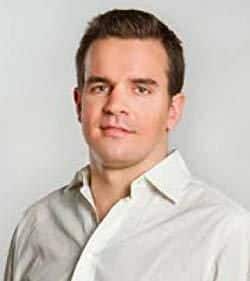
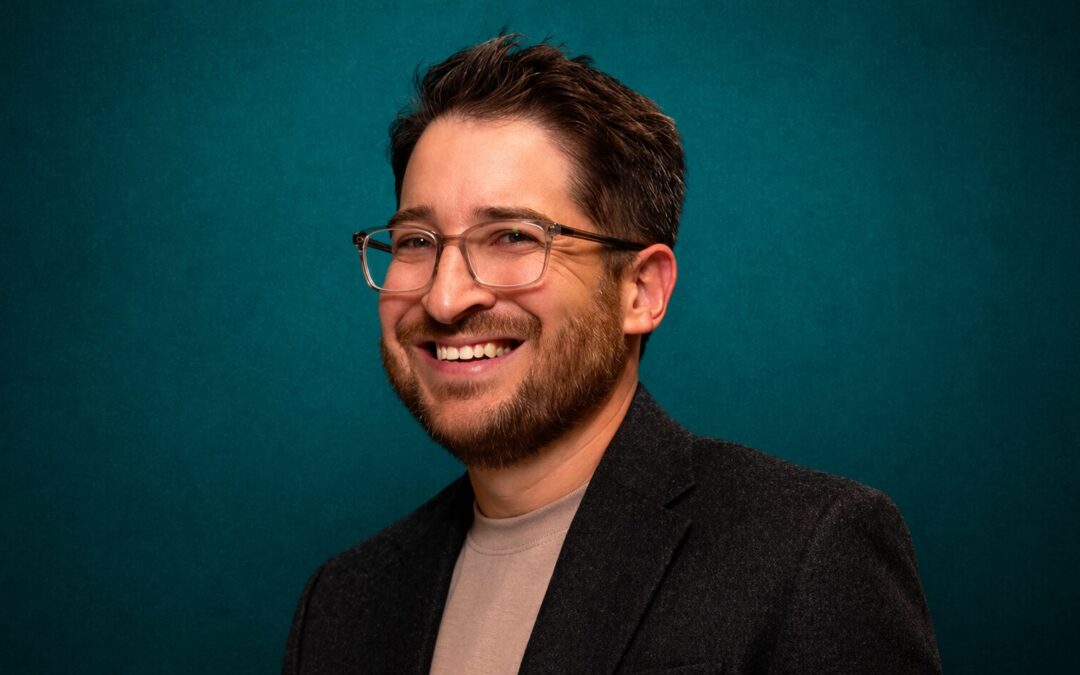
Michael Mandel’s entrepreneurial path began inside one of the most relationship-driven and data-fragmented industries in the world: commercial real estate. The insights he gathered became the foundation for CompStak, which has raised funding from top-tier investors such as 500 Global, Founder Collective, Camber Creek, Global Brain Corporation, and Canaan Partners.
In this episode, you will learn:
- Spotting inefficiencies in legacy industries is often the fastest path to building category-defining companies.
- Conviction matters most when investors and the market don’t yet understand your vision.
- Fundraising is a sales process that improves through iteration, feedback, and persistence.
- Early-stage success is driven by storytelling, while later-stage growth depends on metrics and traction.
- Building trust—not technology—is often the hardest challenge in transforming traditional industries.
- Markets are cyclical, and the best opportunities emerge when consensus believes a sector is “dead.”
- Intellectual curiosity and deep immersion are critical to making better decisions as a founder.
SUBSCRIBE ON:
 iTunes
 Google Play
 Stitcher
 TuneIn
 RSS
RSS SoundCloud
 Spotify
Keep in mind that storytelling is everything in fundraising. In this regard, for a winning pitch deck to help you, take a look at the template created by Peter Thiel, the Silicon Valley legend (see it here), which I recently covered. Thiel was the first angel investor in Facebook with a $500K check that turned into more than $1 billion in cash.
*FREE DOWNLOAD*
The Ultimate Guide To Pitch Decks
Remember to unlock for free the pitch deck template that founders worldwide are using to raise millions below.
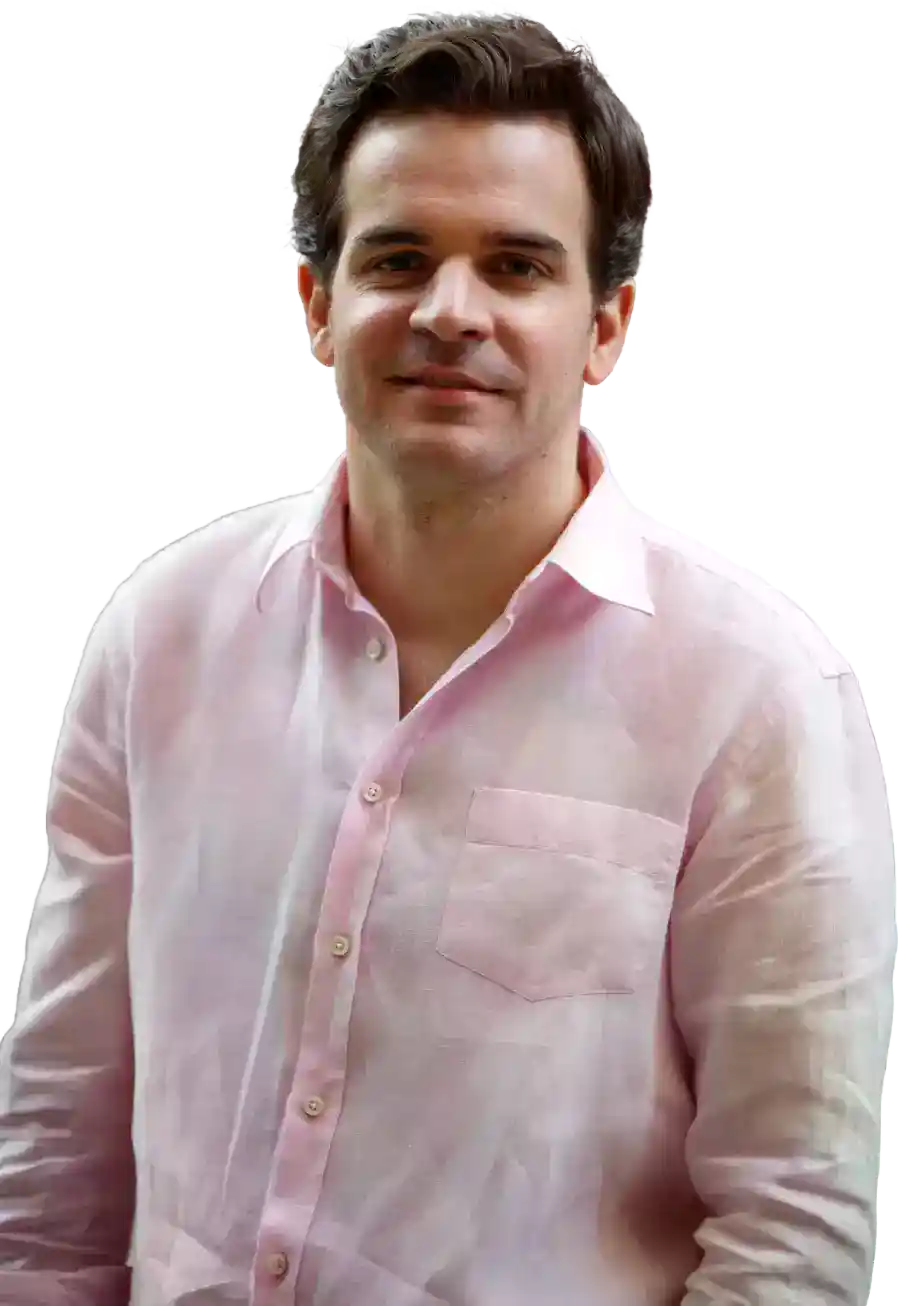
About Michael Mandel:
A former NYC commercial broker, Michael Mandel founded CompStak to fix the inefficiencies of data sharing in the CRE industry. Michael is a regular speaker on the future of commercial real estate, real estate technology, and data transparency.
He graduated from Babson College in 2005, where he led the Babson Entrepreneurial Exchange and was a member of the world’s first live-in business incubator, the e-tower.
Raise Capital Smarter, Not Harder
- AI Investor Matching: Get instantly connected with the right investors
- Pitch & Financial Model Tools: Sharpen your story with battle-tested frameworks
- Proven Results: Founders are closing 3× faster using StartupFundraising.com
Connect with Michael Mandel:
Read the Full Transcription of the Interview:
Alejandro Cremades: All right. Hello, everyone, and welcome to the DealMaker Show. So today we have an amazing founder—a founder that is building, scaling, financing—you name it, all of the above. We’re going to be talking about cycles, the ups, the downs—quite incredible—and the way that they’ve been weathering the storms coming their way. And again, we’re going to be talking about an industry that they’ve been shaping quite a bit.
Alejandro Cremades: Brace yourself for a very inspiring conversation. And without further ado, let’s welcome our guest today, Michael Mandel. Welcome to the show.
Michael Mandel: Thank you for having me. Happy to be here.
Alejandro Cremades: So originally born and raised there in the New Jersey area, in Cherry Hill—give us a walk through memory lane. How was life growing up for you?
Michael Mandel: Growing up was great. Cherry Hill is in the Philadelphia area, so I’m a big Philadelphia Eagles fan. Great place to grow up. I’m the youngest of five kids, so never a dull moment. It’s a good place to be.
Alejandro Cremades: So you went to school in Boston, and you went there to Babson. Babson is one of the top universities when it comes to brewing founders. There are so many founders coming out of there.
Alejandro Cremades: Where did the whole entrepreneurial thing hit you? When did you develop that? Did you have anyone in the family? Obviously, from there, you went to work for somebody else before going at it on your own, but it sounds like you already had that seed planted.
Michael Mandel: Yeah, I pretty much always wanted to be an entrepreneur. Maybe when I was a little kid, for a minute, I thought I wanted to be a lawyer. My dad’s a lawyer, but he was also a sole practitioner, so he was an entrepreneur in that regard. And his father before that was an entrepreneur.
Michael Mandel: But yeah, I guess I always kind of felt like I wanted to be an entrepreneur. When I was a little kid, part of it was that I wanted to build things. Part of it was that I’ve always had a real problem with authority, so the idea of working for someone else never really resonated with me.
Michael Mandel: And I wanted to be rich. When I was a little kid, I was like, I want to be super rich. Bill Gates was my idol when I was a kid. But I would say the biggest thing has really just been a motivation to build something.
Michael Mandel: That’s always what has driven me.
Alejandro Cremades: So why finish Babson and not go at it right away? Why did you go and work for somebody else?
Michael Mandel: I don’t think I ever really considered not going to college. That seemed like a no-brainer and never felt like an option. I think now it’s become more common for entrepreneurs to try to start things without going that route, with programs like the Teal Fellowship, but that didn’t exist when I went to college.
Michael Mandel: I went to Babson because it was known as number one in the country for entrepreneurship. I went in fully intending to start a business. I thought I would use my time at Babson to learn everything I needed and start something before I left or right after graduating.
Michael Mandel: I never thought I was going to have a job after college. I thought I would come up with an idea at Babson and start it right away. That didn’t happen.
Michael Mandel: I think that was a little naive. At the time, it wasn’t easy to build the kind of business as a student that could become a big company.
Michael Mandel: Now things are different. Back then, it was pre-Amazon Web Services. Even putting a website on the cloud wasn’t straightforward, scaling wasn’t straightforward, and server costs were high. Everything was harder.
Michael Mandel: So while today it’s more viable to start a tech company in school, back then, the kinds of businesses you could build as a student weren’t likely to make a huge impact.
Michael Mandel: And I didn’t want to build something small. I didn’t want a lifestyle business—I wanted to build something big. If I had to do it again, I’d probably focus more on getting internships and real-world experience while still planning to start something, but not being as Pollyanna about launching immediately.
Alejandro Cremades: But even after Babson, you still waited a bit. You went into commercial music production, helping people with identity through sound, which sounds quite unique. Why delay it?
Michael Mandel: That opportunity came from meeting a founder, and I wanted to learn from a founder. I got to be the right-hand man to a founder.
Michael Mandel: I thought it was a super interesting business. I didn’t end up loving the industry, so I only did that for about a year and then moved into commercial real estate brokerage.
Alejandro Cremades: And how did you get into commercial real estate? Because that played a pivotal role in your career, especially leading to starting CompStak.
Michael Mandel: It’s a good question, because at the time you couldn’t apply for a job as a commercial real estate broker. There were no job postings—it was 100% relationship-driven.
Michael Mandel: You had to network your way in. I got in through my brother-in-law’s brother, who worked at CBRE, who introduced me to his cousin at Grubb & Ellis.
Michael Mandel: I ended up working at Grubb & Ellis. They were starting something called the Grub Hub to get junior brokers going. I wanted to be in commercial real estate because I liked the tangibility—you can see and touch buildings. They’re big, valuable, and in Manhattan—it felt exciting.
Michael Mandel: Also, it’s as entrepreneurial a career as you can have without being an entrepreneur. It’s fully commission-based—you eat what you kill. Top brokers in New York can make seven figures, and there’s no cap on your potential.
Michael Mandel: But I never intended to be a broker forever. I always planned to start a business. At the same time, I had student loans and was living in New York City, paying rent. I wasn’t in a position where I could rely on family support, so I needed to sustain myself while figuring out what to build.
Alejandro Cremades: So eventually, while in commercial real estate, you got exposed to a problem that led to CompStak. Walk us through that sequence.
Michael Mandel: I was always looking for opportunities to start something. Commercial real estate was—and still is—incredibly antiquated.
Michael Mandel: There were opportunities everywhere if you were looking. It’s such an old-school, relationship-driven industry that applying new approaches could create real change. I kept a list of ideas and chose CompStak because it felt like the best one.
Michael Mandel: Ultimately, as a broker, I was constantly trading data with other brokers.
Michael Mandel: Every Monday morning, we had meetings where brokers would sit around a table for hours talking about deals. I had to bring comps—deal data—every week.
Michael Mandel: So I’d spend Sunday nights calling brokers, trading information, gathering comps, and preparing for Monday.
Michael Mandel: I was mostly doing deals for creative firms, tech companies, and media companies, plus data centers. But most conversations in those meetings were about traditional office deals—law firms, banks, hedge funds—mostly in Midtown, while I was focused on Midtown South.
Michael Mandel: So most of it wasn’t relevant.
Michael Mandel: And then I thought—what are we doing? We’re wasting hours talking about random deals.
Michael Mandel: Why not just create a database where everyone can access the data they need, instead of playing a game of telephone?
Michael Mandel: That was the idea—take an offline process and move it online in a more efficient way.
Alejandro Cremades: So what did CompStak become? What do you do, and how do you make money?
Michael Mandel: It’s essentially that original idea. We built an exchange—CompStak Exchange—that uses a credit system.
Michael Mandel: Members—brokers, appraisers, researchers—share data. Initially, it was lease comps, but now it includes lease comps, sales comps, and property data.
Michael Mandel: They earn credits for sharing data and use those credits to access other data.
Michael Mandel: It’s a give-to-get model. You can take out as much as you put in—roughly two records for every one contributed. The platform is free for contributors.
Michael Mandel: Then we monetize by selling subscription access to aggregated data.
Michael Mandel: We sell to investors, lenders, asset managers, government agencies, consultants, accounting firms, and law firms. It’s used for investment decisions, lending, asset management, tax assessment, and more.
Alejandro Cremades: There was resistance early on—both around sharing data and the perception that this market wasn’t viable. How did you navigate that?
Michael Mandel: Sure. Yeah. Well, when we were starting the company, there was resistance on both fronts. There were people who were like, you know, why should I share my information? You’re just going to take my information and put it all over the internet, you know?
Michael Mandel: Dealing with that was really just like hand-to-hand combat. It was me having conversations with every single person who was going to contribute and explaining to them why this works for them—explaining that, no, I’m a broker, I get it, I understand how you feel. Let me explain why this is going to work for you.
Michael Mandel: Let me explain why, by the way, this isn’t any different than what you were doing before. You were already sharing this information.
Michael Mandel: Now you’re just sharing it online instead of offline. And by the way, we’ve made the process better because instead of sharing random information for random information, now you can share random information with us but get exactly what you need in return. So it’s actually a better paradigm than what you were dealing with.
Michael Mandel: And then from the standpoint of raising money, we were trying to raise money originally when I was still working as a broker in 2011. Then we kind of officially launched CompStak at the beginning of 2012 and finally successfully raised money in 2012.
Michael Mandel: But that whole time, it was talking to angel investors and VCs and whatnot. And the common question was, is commercial real estate a big enough market?
Michael Mandel: And we were like, are you kidding? It’s the second largest asset class in the world. Real estate generally is probably the number one asset class in the world. What do you mean, is it big enough?
Michael Mandel: And the other thing is, at the time—for people who remember back then in tech—the hot thing was called SoLoMo. Do you remember that? Social, Local, Mobile.
Michael Mandel: Foursquare was the hottest company, and Twitter was really hot. And everybody was asking, how could you integrate this into Foursquare?
Michael Mandel: And we were just like, no, probably not. Maybe, but not really. Investors wanted to see everything through the paradigm of what was hot at the time, and commercial real estate was definitely not what was hot.
Alejandro Cremades: I hear you on that. Now, for you guys, the capital raise—you’ve raised about $80 million. Walk us through the journey of going through the motions, especially as a first-time founder. It’s not easy to raise money, given the challenges you mentioned. How was the experience of going through all the different financing cycles?
Michael Mandel: Yeah. Well, look, raising money is sales. And luckily, I came from a sales background, so I was used to a lot of rejection, and I was decent at sales.
Michael Mandel: But that said, it took about a year of trying to sell CompStak to investors before we raised a penny.
Michael Mandel: And really, it was all about making the pitch, getting feedback, understanding which feedback was bullshit and which feedback to take, and constantly tweaking and refining.
Michael Mandel: Whatever objections you kept hearing, you needed to come up with answers so that you wouldn’t hear them again the next time—fewer and fewer objections each time.
Michael Mandel: That’s an important part of it.
Michael Mandel: The other important part is having absolute conviction that you are the expert in what you’re doing.
Michael Mandel: Everybody was asking if commercial real estate was a big enough market because they didn’t know anything about it. So I had to build conviction and say, you know what, I’m the expert here. Let me explain why you’re wrong and why this is the right opportunity.
Michael Mandel: And as I’ve said to a lot of entrepreneurs, there are two ways to deal with rejection.
Michael Mandel: One is to give up and say, this isn’t worth it. And sometimes that’s the right move—sometimes the feedback reflects that the idea isn’t as strong as you thought.
Michael Mandel: The other way is to let that rejection fuel you—to anger you to the point where you want to prove everyone wrong.
Michael Mandel: I took that approach and used it as fuel to keep going.
Michael Mandel: But raising money—we talk about $80 million—it’s very different at each stage.
Michael Mandel: Raising the first $500,000 is very different from raising the next $500,000, which is very different from raising a few million. Series A is different from B, and B is different from C.
Michael Mandel: Over time, it becomes much more about traction, revenue, and measurable metrics.
Michael Mandel: In the early days, it’s about storytelling—how well you present the vision and convince people the team is right.
Michael Mandel: Later on, it’s about financial returns and presenting clear, nuts-and-bolts metrics.
Alejandro Cremades: And talking about this from the investor side, you guys now have around 150 employees. All of them are buying into a vision.
Alejandro Cremades: If you were to go to sleep tonight and wake up in a world where the vision of CompStak is fully realized, what does that world look like?
Michael Mandel: I would say in that world, we’re the leader in commercial real estate data.
Michael Mandel: We’re relied on by anyone who needs data in commercial real estate—period.
Michael Mandel: And we’re fully integrated into the workflows of different users and customers—brokers, appraisers, investors, lenders, governments.
Michael Mandel: The entire commercial real estate world relies on our data every day.
Michael Mandel: And I hope that when that happens, people like us and respect us. That they don’t see us as a necessary evil, but as a partner—and that they feel they’re getting full value for what they’re paying.
Alejandro Cremades: In your case, you’ve also dealt with some pretty wild cycles—COVID impacting commercial real estate, interest rates, and more. So where do you see the commercial real estate sector heading?
Michael Mandel: It’s a broad question. But look, the wealth of the richest people in the world has been built on real estate.
Michael Mandel: In New York City, one of the most prominent owners is Larry Silverstein. Someone once asked him what advice he had for his children taking over his real estate empire, and his answer was: never sell.
Michael Mandel: The reality is there’s only so much land, and it’s not going away. There will always be opportunity in real estate. But there will always be cycles. Everything is cyclical—you just have to wait it out.
Michael Mandel: Whenever people say something is dead, that’s usually when you should be investing in it.
Michael Mandel: Before COVID, people said retail was dead. Then during COVID, they said it was really dead. They were wrong—retail came back strong.
Michael Mandel: After 9/11, people said no one would want to be in tall buildings anymore. But today, the highest rents are in the tallest buildings on the highest floors.
Michael Mandel: Everything comes back around. You just need patience.
Alejandro Cremades: I love that. That’s so profound. Thank you for sharing.
Alejandro Cremades: Now let’s shift to reflection. Imagine I take you back in time—to when you were a broker, right before starting your entrepreneurial journey.
Alejandro Cremades: If you could give your younger self one piece of advice before launching a business, what would it be?
Michael Mandel: One piece of advice? I don’t think it would be just one. There would probably be hundreds or thousands.
Michael Mandel: But looking back, maintaining conviction was absolutely the right move, and I would encourage myself to keep that.
Michael Mandel: Although I don’t know if I would start the exact same business—I might encourage myself to explore something different. But hindsight is always 20/20.
Alejandro Cremades: A thousand percent. As a first-time founder, the learning curve is steep.
Michael Mandel: When it comes to education and growing at the pace of CompStak, what did you put around yourself to make better decisions?
Michael Mandel: Intellectual curiosity is critical. It’s one of the key things we screen for in employees.
Michael Mandel: You need to constantly learn and question what’s going on around you.
Michael Mandel: When I wanted to get into commercial real estate, I subscribed to every trade publication and read everything daily so I knew what was happening.
Michael Mandel: When I got into tech, I read books like Venture Deals and all the relevant blogs about fundraising and building in tech.
Michael Mandel: You have to immerse yourself in the industry. There are no shortcuts.
Michael Mandel: Even now, with AI creating shortcuts, you still need the foundational understanding to think critically about those shortcuts.
Michael Mandel: So it’s about defining your goal and identifying the resources that will help you learn what you need to achieve it.
Alejandro Cremades: For people listening who want to reach out or learn more about CompStak, what’s the best way?
Michael Mandel: Sure. You can email me at mi*****@******ak.com. My X handle is Michael A. Mandel, and I’m M Mandel on LinkedIn. CompStak is just CompStak everywhere—C-O-M-P-S-T-A-K.
Michael Mandel: You can find us at CompStak.com or on X. It’s not hard to find us.
Alejandro Cremades: Amazing. Well, Michael, it’s been a true honor to have you with us on the DealMaker Show. Thank you so much for your time.
Michael Mandel: Thank you so much for having me.
*****
If you like the show, make sure that you hit that subscribe button. If you can leave a review as well, that would be fantastic. And if you got any value either from this episode or from the show itself, share it with a friend. Perhaps they will also appreciate it. Also, remember, if you need any help, whether it is with your fundraising efforts or with selling your business, you can reach me at al*******@**************rs.com
Podcast: Play in new window | Download
Subscribe: Apple Podcasts | Spotify | TuneIn | RSS | More
Facebook Comments