

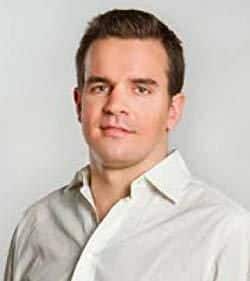
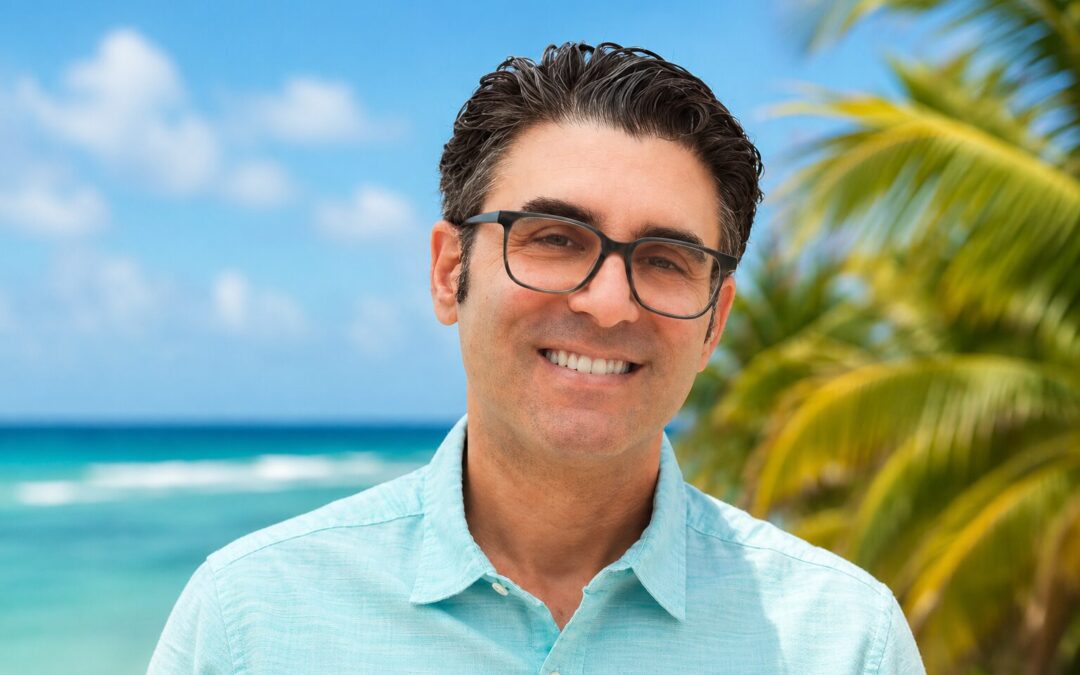
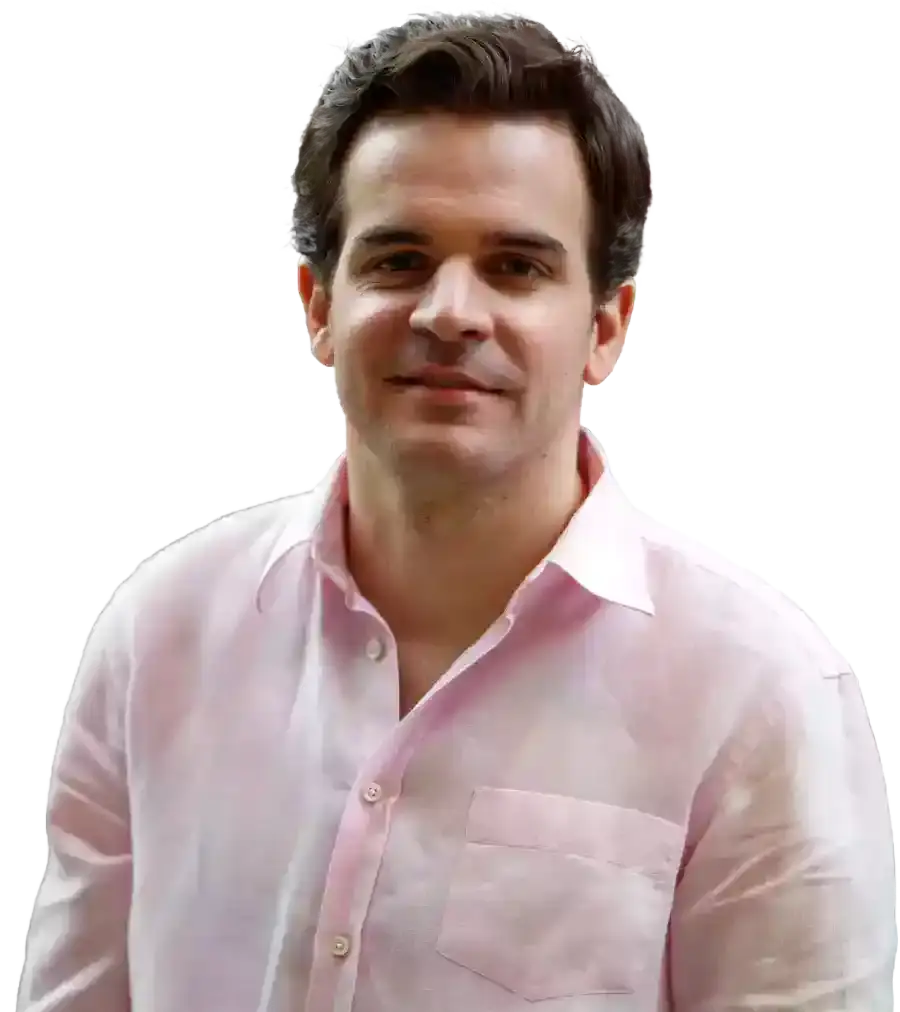
Frank Rotman’s journey is one of rare breadth—spanning early artificial intelligence (AI) research, hypergrowth fintech operations, venture investing at scale, and now a return to building from the ground up.
Frank’s story offers a uniquely integrated perspective on what it truly takes to create enduring companies. This is not just a career narrative. It’s a blueprint for how great founders think, operate, and evolve across cycles.
Frank is also the author of the bestseller, Arrowproof, which gives aspiring founders a peek behind the trenches into the realities of building companies.
Listen to the full podcast episode and review the transcript here.
*FREE DOWNLOAD*
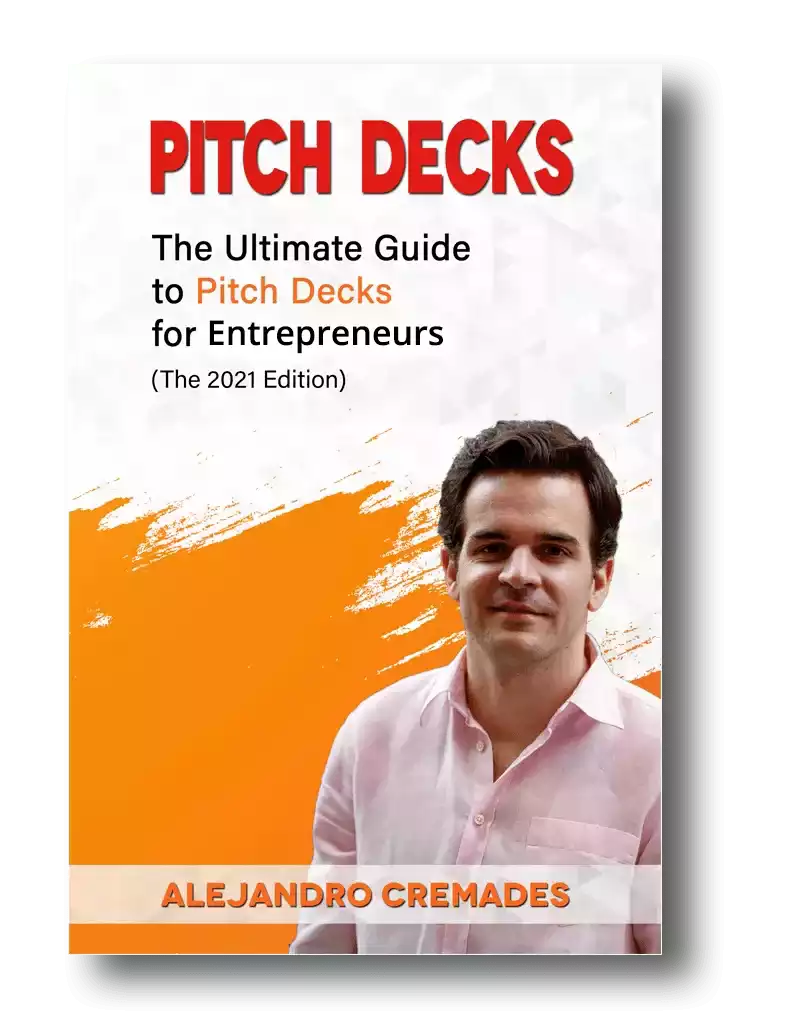
The Ultimate Guide To Pitch Decks
Early Foundations: Discipline, Curiosity, and AI Before It Was Cool
Frank’s upbringing in Philadelphia in the 1970s was grounded in discipline and intellectual rigor. With a father who was a teacher, he absorbed foundational principles early on: work hard, stay accountable, and take credit only for what you’ve truly earned.
That mindset carried into his academic path at the University of Virginia, where Frank pursued applied mathematics and statistics as an undergraduate. Later, he did systems engineering for a graduate degree, diving into operations research and solving difficult, big problems through computation.
Long before AI became a global obsession, Frank was already immersed in it—working on early neural networks. His role as a research assistant at NASA’s Jet Propulsion Laboratory, contributing to the Mars Explorer mission, placed him at the forefront of applied AI.
While Frank jokes about being called a “rocket scientist,” his work was deeply technical—writing algorithms and tackling complex computational challenges rather than building hardware.
This early exposure shaped how he would later approach business: as a system to be modeled, optimized, and scaled.
Capital One: Learning to Build Inside a Rocket Ship
Frank’s transition into finance came unexpectedly. Recruited directly out of school by Richard Fairbank and Nigel Morris, he joined Signet Bank, which would become Capital One—not for his financial expertise, but for his raw analytical talent.
At the time, Capital One was pioneering an “information-based strategy,” using data and analytics to disrupt traditional banking. In the beginning, Frank was unsure about why Richard and Nigel needed him on board.
Then Frank learned that they wanted to apply his raw talent against a problem that had never been solved before. For him, the appeal wasn’t the industry—it was the people and the problem. He was excited about not knowing things, which was actually more important than knowing things.
What followed was a 12-year immersion in one of the most explosive growth stories in fintech history. Frank was one of the first analysts to be hired, and he joined when the organization was small and experimental. By the time he left, it had scaled to 40,000 employees.
Raise Capital Smarter, Not Harder
- AI Investor Matching: Get instantly connected with the right investors
- Pitch & Financial Model Tools: Sharpen your story with battle-tested frameworks
- Proven Results: Founders are closing 3× faster using StartupFundraising.com
What Rapid Scaling Looks Like
As Frank recalls, the company doubled headcount year after year. As he points out, in the startup world, it’s one thing to go from 50 to 100 people. But when you’re going from 1,000 to 2,000 to 5,000 to 10,000 to 20,000, you’re adding massive numbers of people every year.
At the time, the company needed a huge workforce to man the call centers and provide customer support—a different era entirely, unlike today, when you can build a company with fewer people. However, Capital One was constantly reinventing itself.
The entire organizational structure was continually being rebuilt to keep pace because of the number of people being added. New communication pathways, divisions, and products needed to be created. This wasn’t incremental growth—it was continuous reinvention.
Inside that environment, adaptability became survival. Roles changed constantly. Responsibilities expanded overnight. Those who clung to titles or rigid definitions of their work were quickly outpaced. Everyone reported on the mission, growth, and the pursuit of something that hadn’t been done before.
Frank describes it as showing up every day to an overwhelming workload, solving what you could, and returning the next day to do it again—always in service of the mission.
When Growth Breaks the System: A Near-Death Lesson
Hypergrowth doesn’t just create opportunity—it exposes fragility. Frank experienced this firsthand through a decision that nearly broke the company. He candidly admits to four errors in judgment calls.
While leading a business unit responsible for 100% of Capital One’s earnings at the time, Frank made a strategic call to aggressively scale customer acquisition. The result was explosive—monthly onboarding surged from 40,000 customers to 750,000 in a single month.
The infrastructure wasn’t ready. Unlike today’s cloud-native world, scaling required physical processes such as manual application handling, card production, and compliance checks. The system buckled under the pressure, and the company scrambled.
Frank recalls how they had to process applications, ship plastics to customers, and ensure compliance with concerns about timely and precise deliveries. They created emergency overnight shifts with teams working overnight to process applications at scale.
Team members had to open envelopes, scan data, and complete data entries. Vendors were pushed to accelerate production even as compliance risks mounted. Frank concedes that he saw the market opportunity and wanted to capitalize on it.
What looked like a growth win nearly became a systemic failure. The lesson was clear. Identifying opportunity isn’t enough—execution capacity must match ambition. In high-growth environments, a single judgment call can cascade into existential risk.
From Operator to Investor: Building QED Investors
Frank continued working at Capital One for 12 years before briefly returning to operations and launching a student-lending company. But it wasn’t long before he reunited with Nigel Morris to explore a new path: venture investing. This led to the creation of QED Investors.
Nigel wanted to diversify this time, leveraging the skills they had built over the years to serve as many customers as they could. On his part, Frank had loved working at startups—particularly during the early days of Capital One. He wanted to be close to the startup world, its energy and excitement.
Frank and Nigel’s approach was unconventional from the start. They wanted to help very young founders with no experience building startups. The duo would use their operating skills to help them “navigate the challenges of cracking the code and then scaling the business.”
The key advantage was that being investors was unlike consultancy, where they would deliver a report and move on to the next client, not knowing what happened to the company. As investors, Frank and Nigel would get paid only if their advice was good and the company did well.
They loved the alignment of helping founders navigate the idea maze and scale real companies. The duo took a year or two to flesh out their investment thesis. They launched in 2008, during the global financial crisis, when venture funding for financial services was minimal.
Timing-wise, it seemed like the worst possible moment. However, Frank and Nigel focused exclusively on financial services—before “fintech” was even a defined category—which quickly became an edge. Over time, QED scaled into one of the most successful fintech venture firms globally.
Putting it into perspective, Frank explains that in 2008, ~$1B in venture capital was deployed in financial services opportunities. At its peak, this figure was over $140B. By the time fintech eventually established itself as a category and name, QED was ready for the early wave.
Astounding Metrics
As Frank reveals, the cofounders began with their own capital rather than external limited partners (LPs). That’s because they were unsure if they were good investors, and didn’t really have anything to sell to the LPs—except perhaps their experience.
The duo wanted to add value to the ecosystem, but because its scope was limited, they chose to experiment with their own capital. A number of years down the line, they gained confidence that the ecosystem actually valued their skills and that those skills were valuable to the founders.
The successes were starting to roll in when Frank and Nigel realized the opportunity was growing beyond their capital base. They were now confident of their business model and thus decided to bring in outside capital to make it work. The numbers were crazy:
- $4.5 billion in assets under management
- 250+ portfolio companies
- 20+ unicorns
- 10+ IPOs
What began as an experiment evolved into an institutional powerhouse. One of QED Investors’ success stories is Credit Karma, which became a poster child for a great company that emerged from the FinTech 1.0 Wave.
Frank and Nigel now approached some limited partners who were interested in their story and willing to back it with capital. This support triggered the establishment of other funds as well.
As Frank reveals, the most recent fund is ~$1B in capital, split between early-stage and growth, signaling that they continue to invest in the FinTech category globally.
Storytelling is everything that Frank was able to master. The key is capturing the essence of what you are doing in 15 to 20 slides. For a winning deck, take a look at the pitch deck template created by Peter Thiel, Silicon Valley legend (see it here), where the most critical slides are highlighted.
Remember to unlock the pitch deck template that founders worldwide are using to raise millions below.
What Makes a Founder Investable?
After evaluating hundreds of companies, Frank distilled the factors that separate compelling founders from the rest. His framework centers on five critical components:
- A compelling problem statement: The opportunity must be grounded in a large, genuine, unsolved issue—not a manufactured gap.
- A coherent solution statement: Even if it evolves, the founder must clearly connect the problem to a plausible solution. When the two align perfectly, that’s the making of an interesting business. As Frank underscores, if the founder can’t articulate this combination of a problem and a solution statement, they probably haven’t thought about the space enough to be investable.
- A credible go-to-market motion: Understanding how customers will be reached and acquired is essential—even at an early stage. Frank asks whether the founder will need to build product awareness or if there’s latent demand that only needs to be tapped. He also asks them how they intend to build awareness and grow the franchise.
- Founder and founding team market fit: Why is this team uniquely positioned to solve this problem, and do they know how the industry works? Domain insight matters. Frank delves into whether the team has the expertise or will need to build expertise around their ideas.
- A compelling vision of destination: Building a startup is inherently difficult—so the outcome must justify the effort. Frank asks: Can they paint a picture of a financial outcome, a financial machine, and the customer base they’re actually serving? Is the anticipated future worth the hurdles and problems they’ll encounter every day?
This framework isn’t about perfection—it’s about clarity of thinking. It’s a bit about the vision, the founder’s market fit, their ability to articulate the problem they’re tackling, and how they plan to find customers.
As Frank explains, if the founder can put all that together, then that’s probably a company and a founder worth investing in.
The Nubank Story: Obsession as a Signal
One of QED’s most notable investments was in Nubank, founded by David Vélez, with a current market cap of around $72B. Frank’s first encounters with David didn’t involve a pitch—they involved obsession. He has an interesting story to tell about his association.
Frank recalls meeting David when the latter was an investor at General Atlantic’s Latin American arm. At the time, QED Investors was working out its deal flow and locating startups worth backing.
Frank and Nigel had partnered with several private equity and venture firms, requesting information about financial services. They offered to help the generalist PEs and VCs with due diligence and funding as co-investors. General Atlantic was one of them.
While working together on diligence trips across Latin America, David repeatedly returned to one idea. The credit card system in Brazil was fundamentally broken. He analyzed it relentlessly, complained about it constantly, and carried the problem with him everywhere.
At the time, it was almost excessive. In hindsight, it was the signal. David had identified a gap in the market. LatAm banks had terrible products and weren’t serving their customers. For instance, they lacked the ability to set up automatic payments for credit cards and would charge unfair interest.
Years later, David left General Atlantic and went to Stanford for his MBA. He then joined Sequoia and Doug Leone. Eventually, David built Nubank into a company worth tens of billions of dollars. The insight wasn’t just intellectual—it was deeply personal and persistent.
For Frank, this reinforced a key pattern: the best founders don’t just identify problems—they become consumed by them.
Returning to the Builder’s Seat: 37Maru
After 18 years at QED, Frank made a surprising decision—he stepped away from venture investing to return to operating. This led to the creation of 37Maru, a platform for building new ventures. The move puzzled many. Venture capital is often seen as the “endgame” for experienced operators.
But for Frank, the pull of building was stronger. He describes operating as something intrinsic to him—solving problems, assembling teams, and creating from zero. It’s not just a role; it’s an identity. 37Maru is just a holding company for the things he wants to actually build and work on.
Today, Frank is actively building a new company (not yet publicly announced), focused on tackling what he calls “financial nihilism.” The ambition is long-term, with a 10–15 year horizon.
Arrowproof: Teaching Founders How to Think
Alongside his return to building, Frank authored Arrowproof—a culmination of over a decade of advice arising from his experiences as an investor and an operator. The book is an encapsulation of the lessons he has imparted on X and LinkedIn under the pseudonym, FinTech Junkie.
Frank reveals that much of the advice came from his conversations with founders, having navigated investments in multiple companies. His writing style is agnostic and diagnostic—collapsing things down into atomic units and then building them back up.
Frank teaches people how to think about problems—not just give them answers. This strategy has led him to build an interesting group of followers who appreciate the hard truths he reveals. Far from the glamor and excitement of the venture capital industry, he unmasks it for what it truly is.
Frank warns readers not to get caught up in the success stories. He doesn’t play the part of a cheerleader and talk about how great the startup world is. Instead, he helps them recognize the reality with sober eyes. In short, from the perspective of a founder who has been in the trenches.
Instead of a traditional business book filled with frameworks, Frank chose a narrative approach. The story follows two first-time founders—Achilles and Tortoise—guided by an advisor named Al (a proxy for Frank himself). Through their journey, readers experience the realities of building a startup.
The feedback has been consistent. “The book feels real,” readers comment. It captures the emotional and strategic complexity of building a company in a way most business books don’t.
As Frank explains, there’s a sense of realism about how the system really works, about what a startup feels like to actually be built from the ground up, what happens when you encounter resistance from the market, or what happens when you’re dealing with investors that might not be happy with some of the decisions that you’re making.
This is a very realistic story, even though the characters are fictional. And Al is an advisor who has been there and done that, and is really trying to teach readers how to think so they become better and better and better founders—not just by giving them the answer.
The Founder Reality: It’s Not for Everyone
When asked what advice he would give his younger self, Frank resists offering a simple answer. Instead, he reframes the question. Building a company isn’t universally desirable—and that’s okay. Essentially, there are two kinds of people, and not both are startup builders.
Some people are comfortable working in a structured organization that assigns them tasks, allowing them to succeed and improve their skills by repeating them. They prefer to have someone else deal with the problems.
Others enjoy solving problems and view them as challenges they look forward to overcoming. They spend every stray moment of their days thinking about the problem. They go to bed at night, looking forward to waking up and tackling the problems on their desks again.
These people are obsessed with the problem and know that, given enough time, they and their team will find solutions. They figure out how to get a “yes” every day and don’t let the “no’s” deter them. Startup building is for this latter group. Problems consume them and their days.
Closing Thought
Frank Rotman’s journey underscores a powerful truth: building and investing are not separate disciplines—they are deeply interconnected ways of understanding how value is created.
From early AI research to fintech hypergrowth, from venture scale to returning to the trenches, his career reflects a continuous loop of learning, applying, and rebuilding.
Perhaps the most important takeaway is this: the best founders—and the best investors—aren’t just chasing opportunities. They’re relentlessly trying to understand how the world works, and then reshaping it accordingly.
Listen to the full podcast episode to know more, including:
- Great founders combine curiosity, discipline, and the ability to solve unfamiliar problems from first principles.
- Hypergrowth requires constant reinvention because the company that works today may break tomorrow.
- Opportunity alone is not enough; execution capacity must match ambition.
- The best investors evaluate founders on problem clarity, solution thinking, go-to-market insight, market fit, and vision.
- Founder obsession is often the strongest signal that a problem is real and worth solving.
- Building and investing are deeply connected disciplines rooted in understanding how value is created.
- Startups are not for everyone; they are for people who are energized by problems, uncertainty, and relentless iteration.
SUBSCRIBE ON:
 iTunes
 Google Play
 Stitcher
 TuneIn
 RSS
RSS SoundCloud
 Spotify
Keep in mind that storytelling is everything in fundraising. In this regard, for a winning pitch deck to help you, take a look at the template created by Peter Thiel, the Silicon Valley legend (see it here), which I recently covered. Thiel was the first angel investor in Facebook with a $500K check that turned into more than $1 billion in cash.
*FREE DOWNLOAD*
The Ultimate Guide To Pitch Decks
Remember to unlock for free the pitch deck template that founders worldwide are using to raise millions below.
Podcast: Play in new window | Download
Subscribe: Apple Podcasts | Spotify | TuneIn | RSS | More

Facebook Comments