

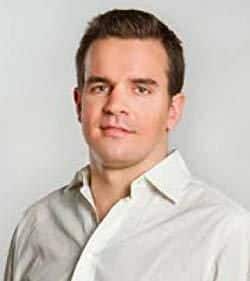
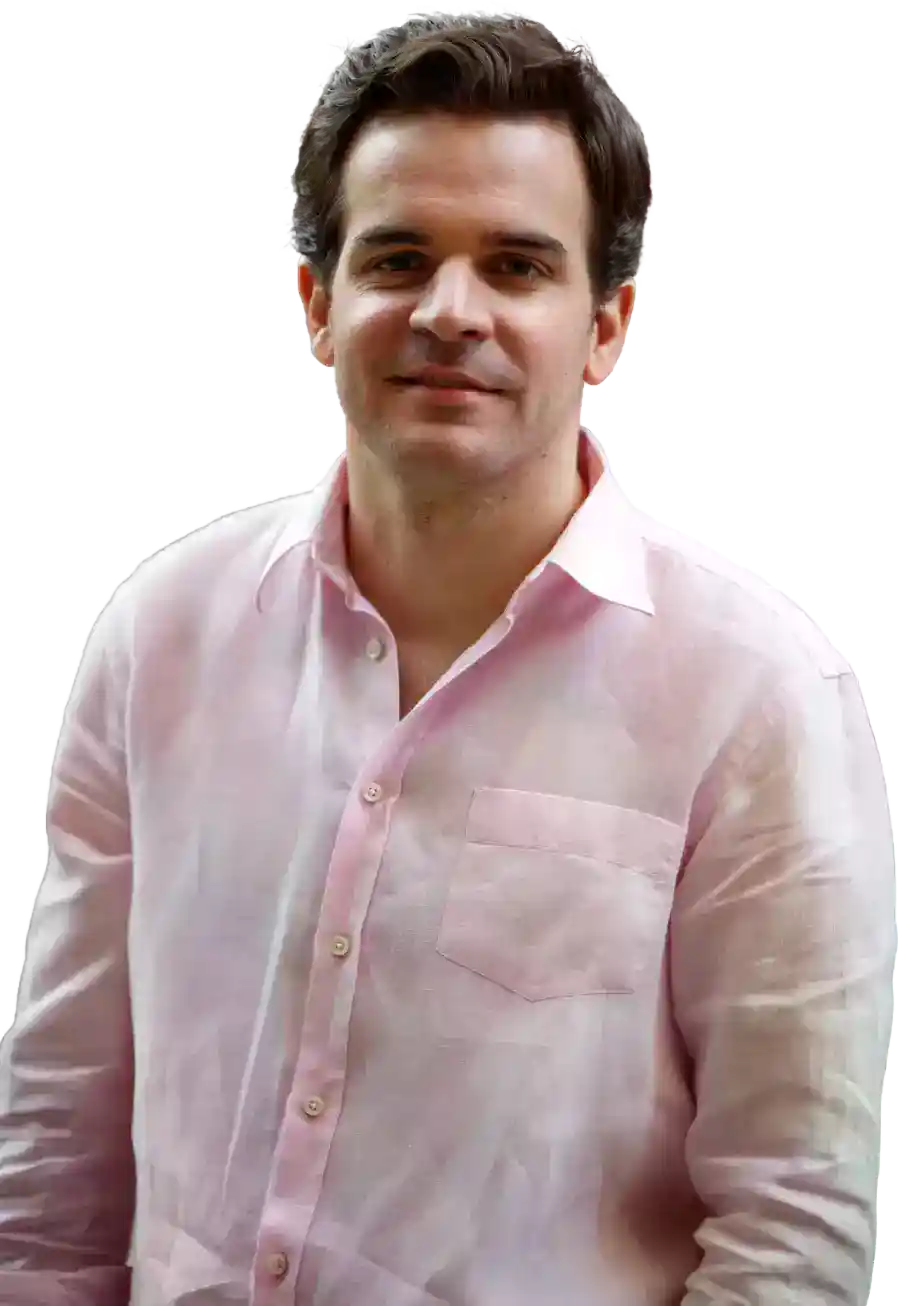
Frank Rotman’s journey is one of rare breadth—spanning early artificial intelligence (AI) research, hypergrowth fintech operations, venture investing at scale, and now a return to building from the ground up.
Frank is also the author of the bestseller, Arrowproof, which gives aspiring founders a peek behind the trenches into the realities of building companies.
In this episode, you will learn:
- Great founders combine curiosity, discipline, and the ability to solve unfamiliar problems from first principles.
- Hypergrowth requires constant reinvention because the company that works today may break tomorrow.
- Opportunity alone is not enough; execution capacity must match ambition.
- The best investors evaluate founders on problem clarity, solution thinking, go-to-market insight, market fit, and vision.
- Founder obsession is often the strongest signal that a problem is real and worth solving.
- Building and investing are deeply connected disciplines rooted in understanding how value is created.
- Startups are not for everyone; they are for people who are energized by problems, uncertainty, and relentless iteration.
SUBSCRIBE ON:
 iTunes
 Google Play
 Stitcher
 TuneIn
 RSS
RSS SoundCloud
 Spotify
Keep in mind that storytelling is everything in fundraising. In this regard, for a winning pitch deck to help you, take a look at the template created by Peter Thiel, the Silicon Valley legend (see it here), which I recently covered. Thiel was the first angel investor in Facebook with a $500K check that turned into more than $1 billion in cash.
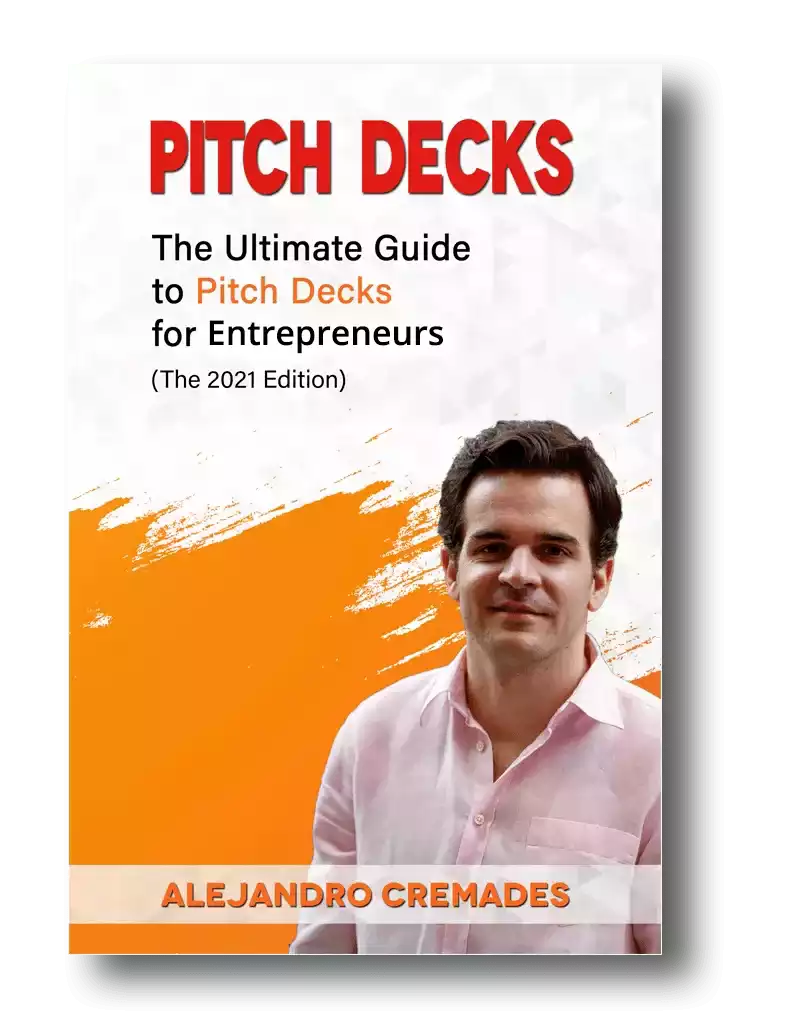
*FREE DOWNLOAD*
The Ultimate Guide To Pitch Decks
Remember to unlock for free the pitch deck template that founders worldwide are using to raise millions below.
About Frank Rotman:
Frank Rotman is co-founder and partner emeritus at QED Investors. Prior to QED Investors, he was one of the early architects who helped create what became Capital One. In his 13-year Capital One journey, Frank was responsible for many “firsts” that helped lay the foundation for what Capital One is today.
Frank is based out of Manakin Sabot, Virginia. He graduated from the University of Virginia with degrees in Applied Mathematics (B.S.) and Systems Engineering (M.S.).
Raise Capital Smarter, Not Harder
- AI Investor Matching: Get instantly connected with the right investors
- Pitch & Financial Model Tools: Sharpen your story with battle-tested frameworks
- Proven Results: Founders are closing 3× faster using StartupFundraising.com
Connect with Frank Rotman:
Read the Full Transcription of the Interview:
Alejandro Cremades: Alrighty, hello everyone, and welcome to the DealMaker Show. So I’ve got to tell you that I’m really excited about the guest that we have today. You know, not only an incredible operator, but also an investor and a friend—someone that I’ve known for many years now.
Alejandro Cremades: And I think that the conversation today is going to be quite inspiring. I mean, he’s had the opportunity to invest in some of the biggest companies that you can think of when it comes to fintech. And now he is going at it again as a founder.
Alejandro Cremades: But then also, he’s written a book that is going to be quite the guide for founders that are behind the trenches and that really want to know what it takes and what the journey looks like. So again, brace yourself for a really inspiring conversation.
Alejandro Cremades: And without further ado, let’s welcome our guest today, Frank Rotman. Welcome to the show.
Frank Rotman: Well, happy to be here.
Alejandro Cremades: So originally born in Philly in the 70s—so give us a walk through memory lane. Frank, how was life growing up for you?
Frank Rotman: Growing up was great. I mean, I had a father who was a teacher, so I learned a lot from him—lessons about constantly working hard and only taking credit for the things that you actually did. Don’t take credit for things other people did. So it was a great, great life growing up. You know, Philadelphia in the 1970s was just a place to be that led me to other big, great things.
Alejandro Cremades: Now, one thing that is really remarkable is you went to the University of Virginia and started to get your feet wet in everything related to AI. Obviously, back then, you didn’t have the hype that you have today, which is crazy. But how did you stumble upon all of this stuff that you were doing, and what did it look like back then?
Frank Rotman: It was very different back then. So I studied applied mathematics and statistics as an undergraduate, and my graduate degree was in systems engineering, which back then was about operations research and solving some very difficult, big problems that computation could take care of. So I was studying artificial intelligence in the early days of neural nets, the early days of just trying to power your way through some problems that were hard to solve. And my school was paid for by the Jet Propulsion Laboratory, where I was a research assistant helping them with their Mars Explorer mission.
Frank Rotman: So it’s funny—people call me a rocket scientist, but I never actually built anything with my hands. It was much more being a code monkey back then, working on some of the early AI algorithms to see if they could help with the Mars Explorer mission.
Alejandro Cremades: So eventually Capital One—the opportunity comes knocking, and you joined one of the first rocket ships in the world of fintech, I would say, or financial services. But how did the opportunity come about? Because obviously there, at Capital One, you had the opportunity to work closely with the co-founders.
Frank Rotman: Yeah, I mean, it was interesting because in school, I didn’t learn a thing about finance. I didn’t take a single business class. Everything was about engineering, math, artificial intelligence, and computer science.
Frank Rotman: And I was recruited directly out of college by Rich and Nigel, the two co-founders of what eventually became Capital One. They were actually at Signet Bank at the time. So I was recruited into Signet Bank because meeting with Rich, meeting with Nigel, and meeting with some of the early guard people that were on this mission to build an information-based strategy—with a bank wrapped around it—sounded really interesting to me. And I just kept scratching my head, saying, why do they want me?
Frank Rotman: Like, I don’t know anything about anything. And they said, well, we really want to do things differently. And the talent that you have is really raw talent, and we want to apply it against this problem that’s never been solved before.
Frank Rotman: So it was much more about being attracted by the people I was going to work with and the problems that we were going to try to solve. And we were all going to figure them out together. So it was a very interesting time where not knowing things was actually more important than knowing things because we were trying to build things from the ground up.
Alejandro Cremades: And 12 years—I mean, I’m sure that 12 years, you know, in dog years, doing that is like 100-plus if you were in corporate. But how was that? Because that was truly a rocket ship. And what did it feel like to be inside that rocket ship, being able to experience that level of explosive growth as well?
Frank Rotman: Yeah, it’s hard to explain to people who haven’t been part of a growth story like that. But to put it in perspective, I was one of the first analysts hired into Signet Bank, which then spun out Capital One and IPO’d it.
Frank Rotman: And by the time I left, there were 40,000 people in the organization. So you go from this tiny little organization to something very big. And in the early days, we were basically doubling our headcount or even more every year.
Frank Rotman: And in the startup world, it’s one thing to go from 50 to 100 people. But when you’re going from 1,000 to 2,000 to 5,000 to 10,000 to 20,000, you’re adding massive numbers of people every year. And it was in an era where you needed a lot of people because there were call centers and a lot of customer support. It’s a different world than today, where you can build a company with fewer people.
Frank Rotman: But we were constantly reinventing ourselves. Every year, you were re-orging the company because of the number of people that had just been added. You had to have new ways of communicating through the organization.
Frank Rotman: You had new divisions being created all the time, new products coming up out of nowhere. And all I can say is you showed up every day knowing you had so much on your desk that you just had to power through it—and then show up the next day and do it again.
Frank Rotman: So it was one of these growth stories where everyone reported to the mission. Everyone reported to growth. Everyone reported to trying to achieve something that hadn’t been achieved in the market before.
Frank Rotman: And you figured it out together. So you really needed to be flexible. You needed to understand that what you do today is not what you’re going to do tomorrow. And if you were comfortable with that and able to grow quickly, you did incredibly well.
Frank Rotman: And if you were worried about your title or the work you were doing today and protecting it, you probably weren’t going to be there in a year because the company was going to outgrow you. So it was crazy times, but great times.
Alejandro Cremades: And how was it like to be part of a story like that where, as I’ve heard many times, when your company is growing at that level, it feels like you’re in a race car and many of the pieces are kind of wobbly—and it’s easy to make mistakes? And I’m sure that many of those mistakes put you on the brink of potentially being fired. So what was that like?
Frank Rotman: Well, I actually almost did get fired a couple of times. And it was four mistakes—gigantic mistakes—that affected the company. I didn’t do them on purpose. Things were moving very quickly, and you’re making judgment calls.
Frank Rotman: And when you’re in charge, if you make a poor judgment call, bad things can happen. So I happened to be in charge of a particular business unit that was delivering basically 100% of the company’s earnings at the time.
Frank Rotman: And I remember making a judgment call that ended up backfiring in a very big way and almost blew up the company. Of all things, I ended up putting a solicitation out that turned a business that was growing at about 30,000 to 40,000 accounts a month into onboarding 750,000 accounts in a single month. And to go from originating 40,000 customers in a month to onboarding 750,000 customers in a month—the infrastructure wasn’t ready for it.
Frank Rotman: And when the customers started pouring in, we were on the verge of breaking. And it’s not like today where you can just add infrastructure by snapping your fingers and getting more cloud capacity.
Frank Rotman: We had to actually process applications. We had to ship plastics to people. And there are compliance concerns with how quickly and how accurately you can do it. So when all this volume came pouring in, I literally almost broke the company.
Frank Rotman: And we ended up having to have a third shift and a fourth shift of people working overnight in order to process applications—opening envelopes, scanning things, data entering them, and figuring out how to call in favors with vendors to get plastics coming in. And we were on the verge of being out of compliance.
Frank Rotman: So these are the types of things that happen when you make some poor judgment calls. It was all for the right reasons—I saw the opportunity and wanted to take advantage of a market opportunity—but the infrastructure wasn’t ready for it, and we almost blew up.
Alejandro Cremades: Now, after 12 years of being on the Capital One journey, you decided to turn the page and go into the operator role again with another company. But it didn’t take long until Nigel snatched you back to work together again. So walk us through the sequence of events there, because it’s quite the shift—going from being an operator, which is all you knew at that point, to suddenly seeing yourself more on the investment side of things.
Frank Rotman: Yeah, so Nigel left Capital One in 2004. I left in 2005, and I actually left to build a student lending company. I did that for a few years, and just like you said, it wasn’t long before I was back together with Nigel again.
Frank Rotman: And it was interesting—we wanted to work together. We knew we worked well together at Capital One. And I knew I had another life in me, and Nigel had another life in him from a business perspective.
Frank Rotman: We just sat down and figured out what we could do together. And Nigel liked the idea of being promiscuous and not just focusing on one thing. He wanted to use the skills we had built over years to help as many people as we could.
Frank Rotman: I loved working at a startup. I loved the early days of Capital One as well, and I said, whatever we do, I want to be close to the startup world because that’s where the energy and excitement are.
Frank Rotman: So after putting our heads together, we thought, why don’t we try our hand at becoming investors? That way, we could help lots of very young founders who had never done this before. And we could apply our operating skills and hopefully help them navigate the challenges of cracking the code and scaling the business.
Frank Rotman: And the beauty of being an investor is that once you give them your money, they can’t kick you out. So it’s not like being a consultant where you deliver a report and don’t know what happens—you just move on to the next client.
Frank Rotman: Here, you only get paid if your advice is good and the company does well. And we really loved the alignment of being an investor with early founders to help them navigate the idea maze and scale into real companies. So that’s what we started.
Frank Rotman: And we’ve been doing that for a long time.
Alejandro Cremades: And what a time to start that—with quite the thesis—because you started in 2008. You had the financial crisis hitting, and you decided to invest in companies in the financial services space, more on the fintech side of things. So how did you really decide to hone in on that thesis?
Alejandro Cremades: Why that thesis? I mean, it was way before fintech exploded, which has been unbelievable in terms of growth in recent years. You were able to catch that wave quite early. So how did you hone into that investment thesis like that?
Frank Rotman: I wish I could say we were smart. I think it was more that we were hammers in search of nails. We knew one thing in the world, which was building financial service companies. And we just said that’s where our advice will come from—that’s where our experience set is.
Frank Rotman: And it just so happened that 2008 was probably, on paper, the worst time to start a venture firm focused on financial services opportunities. To put it in perspective, in 2008 globally, there was somewhere in the neighborhood of a billion dollars of venture capital deployed against financial service opportunities.
Frank Rotman: And if you look at the peak, which was in the timeframe, it was over $140 billion. So these were very different times. It was very early in building what became known as fintech. It didn’t even have a name back then.
Frank Rotman: We thought of them as financial services companies, but fintech eventually established itself as a category and a name, and we were there for the early wave.
Alejandro Cremades: And the numbers are crazy. I mean, just for the people who are listening, $4.5 billion in assets under management, 250 companies invested in, 20 companies worth over a billion, and 10-plus companies that did an IPO. I mean, it’s just unbelievable. How was the journey of going through all these different funds and getting it all the way to $4.5 billion? Because I think that, too, as an investor, I’m sure that going through those different stages and having more capital under the umbrella also changes and institutionalizes more of the operation itself.
Frank Rotman: Yeah, well, the incarnation of QED started with basically our own capital. We did not have outside LPs. And it was because we didn’t know if we were going to be any good as investors.
Frank Rotman: We had nothing to sell to LPs, except that we thought we were pretty experienced and we thought we had something to add to the ecosystem. But it wasn’t a big ecosystem, and we weren’t investors. So we decided to just give this a try with our own capital to see if we could get it to work.
Frank Rotman: And it took us a number of years before we were confident that the ecosystem actually did value our skills and that our skills were valuable to the founders. And the successes were just starting to roll in when we realized that the opportunity was growing bigger than our capital base.
Frank Rotman: Right. So we ended up becoming confident in the business model at the same time that we realized the opportunity was growing and we needed outside capital to make it work.
Frank Rotman: So we had a couple of early successes that were starting to take off when we raised outside capital, Credit Karma being one of them, which was a poster child for a great company that emerged from the FinTech 1.0 wave.
Frank Rotman: And we approached some LPs, found a few LPs that were willing to listen to our story and back us, which was fantastic. Eventually, that fund turned into another fund and turned into another fund.
Frank Rotman: And the most recent fund is about a billion dollars worth of capital split between early stage and growth, continuing to invest in the category globally.
Alejandro Cremades: So out of all the companies that you’ve seen, because we talked about 250 companies that you have invested in, but there are so many that you’ve seen in order to actually have those investments happen.
Alejandro Cremades: If you had to, let’s say, share with all of us the three main ingredients that are an absolute must, that need to be checked for a founder in order for you guys, or for you, to be excited about potentially making an investment, what do those look like?
Frank Rotman: Yeah, the elements are actually pretty similar.
Frank Rotman: And I break it into five core components, not just three, when you really think about it. The first one is they have to have a very compelling problem statement. What they’re attacking can’t be a manufactured problem. It needs to be a real problem out there in the world, something that is unsolved and something that is actually quite large.
Frank Rotman: The second, they have to show up with a solution statement. And yes, it’s going to change over time. But every business you build is a pairing between a problem statement and a solution statement. And when those two things go together incredibly well, and you just feel it and know it, that’s the making of a really interesting business. And again, it will change over time. But if the founder can’t articulate this combination of a problem and a solution statement, they probably haven’t thought about the space enough to be investable.
Frank Rotman: The third one is really the go-to-market motion, which, even though when you’re backing early-stage companies, they don’t know exactly how they’re going to find the customers, it’s actually a way of probing how well the founder knows the market they’re in.
Frank Rotman: And the go-to-market motion really helps you dig under the covers and really have a conversation about whether this is going to be a business where you’re going to have to build awareness for your product. Is this a business where there’s already latent demand for the product, and you just have to tap into it? How does the founder think about building awareness and growing this franchise? Because if you can’t find customers, it doesn’t matter how good the problem and solution statement is.
Frank Rotman: The fourth one is really about founder and founding team market fit. The knowledge base. Why should you trust this founder with this problem? Do they have domain expertise? Are they going to have to build domain expertise around this?
Frank Rotman: And some of the most impressive founders have just been in and around the space long enough that they know the difference between how an MBA would tear apart the industry and only get some of it right, and how the industry actually works.
Frank Rotman: And the founder market fit really ends up telling you a lot about that. And then the fifth is really about whether they can create a destination. Can they paint a picture of a destination?
Frank Rotman: One that everyone would be jealous of owning a piece of. Can they paint this picture of a financial outcome, a financial machine, and a customer base that they’re actually serving? However they view the future, it has to be compelling enough to be worth all of the headaches.
Frank Rotman: It has to be worth eating glass every day as the founder and encountering problems every day. Because one of the things that I’ve learned is that building a small business is just as hard as building a big business. So you might as well be able to describe a big one.
Frank Rotman: And if you can’t describe a big one, then you have to rethink what you’re doing and why. So it’s a bit about the vision, the founder market fit, their ability to describe the problem that they’re tackling, and how they’re going to find customers. And if you can put all that together, then you probably have a company and a founder worth investing in.
Alejandro Cremades: Talking about a founder worth investing in—David Beleth, Nubank. I mean, now a lot of people are talking about Nubank, right? It’s a very relevant player now. I think they’re even coming to the U.S., from what I’ve seen recently.
Alejandro Cremades: A company that you guys invested in that is now, I think, with a market cap of about $72 billion. I mean, it’s just unbelievable, the type of growth that they’ve experienced starting out of Brazil. I guess, how was that?
Alejandro Cremades: The experience, too, of meeting David Beled, and how did that investment, for example, come to fruition for you guys?
Frank Rotman: So it’s an interesting story. I met David when he was at General Atlantic. So he was an investor at General Atlantic. He was on their Latin American team. And when QED was still figuring out where we were going to find our deal flow and where the companies were going to come from,
Frank Rotman: We partnered with a number of private equity and venture firms, saying, look, whenever you find anything in financial services—because a lot of these firms are generalists—but if you find something in financial services, give us a call.
Frank Rotman: Happy to ride shotgun on diligence and help you however we can. And all we ask is that if we like the company and you like the company, we co-invest in it together.
Frank Rotman: So General Atlantic was one of those firms, and David was at General Atlantic. And I ended up going on a number of diligence trips with David in South and Central America. I remember looking at a credit bureau with him in Colombia.
Frank Rotman: We were out in the hills of Mexico City looking at a couple of microfinance companies, and that was really interesting. We looked at an insurance company in Brazil together.
Frank Rotman: So we had been on a number of diligence trips together. And what’s really interesting is that even in those early days, all he could talk about was that someday, someone was going to build a credit card company in Brazil because of how bad the credit card industry was in Brazil. The banks had terrible products. They weren’t serving their customers. He saw the gap in the market.
Frank Rotman: And he actually, I hate to say it, wouldn’t shut up about this. He was obsessed about this. He would constantly take his credit card out and say, do you realize that if I’m one day late, they end up charging me 4% that month? And he’s a great customer. They didn’t have the ability to set it up for automatic payment. So when he was traveling, if he didn’t think about his credit card in advance, he could end up getting screwed by his credit card company.
Frank Rotman: And it was funny for those of us who were with him on a lot of these trips. We were like, we get it, Daveed. The credit card industry in Brazil is broken. We will find a founder someday who is going to tackle this, and it’s going to be a big opportunity.
Frank Rotman: And it ends up he left General Atlantic. He went to Stanford for his MBA and then ended up joining Sequoia. And what’s funny is, if you hear Doug Leone talk about it, David wouldn’t shut up about this with Doug Leone either at Sequoia.
Frank Rotman: And eventually, Doug told him, you need to just go build this thing yourself. And next thing you know, David is in our offices at QED, sharing with us on a whiteboard the infrastructure he wants to build and the business he wants to build.
Frank Rotman: And that’s really where it began as Nubank, because he had been thinking about this and obsessing about it for years.
Alejandro Cremades: That’s unbelievable. And what a story. Now, for you, 18 years at QED, and all of a sudden, you decide it’s time. And then 37 Maru is born.
Alejandro Cremades: So tell us about what the trigger was and what you’re up to nowadays with 37.
Frank Rotman: So about a year ago, I announced that I was leaving QED. A lot of people called me crazy. They say the venture job is what you do after you’ve been an operator, not before you’re an operator.
Frank Rotman: But the siren call of being in the operator seat had been calling for a while. I love giving advice to founders, but at the end of the day, I feel like being an operator is in my blood.
Frank Rotman: Actually building things from the ground up, cracking the code, and managing the teams—it really is more about who I am than being an investor, even though I was an investor longer than I was an operator.
Frank Rotman: So it had been calling me for a while. 37maru is just a holding company for the things that I want to actually build and work on. It was my statement to the world that I wasn’t retiring. And basically, it’s a pretty purple website with some interesting themes on it that people can look at to understand the things that I’m actually thinking about.
Frank Rotman: One of the ideas that’s on there, which is really about attacking financial nihilism, is a theme that I’ve thrown myself into really heavily. I actually have a company that I am CEOing myself that I’m going to be throwing the next 10 or 15 years of my life into. It’s been funded. It has not been announced. So I’m busy hiring my ride-or-die team for that.
Frank Rotman: But in the past year, another thing that I did was write a book, and I think we’re going to talk about that a bit. And that was really an encapsulation of all of my advice from being an operator and the advice from being an investor, and it really tells a pretty interesting story.
Frank Rotman: But it’s been an interesting year of making that transition from being an investor back to being an operator again.
Alejandro Cremades: So let’s talk about Arrowproof. I mean, obviously, we are excited to hear whenever you announce what’s coming. We’re going to keep an eye out to see what that’s going to be. I’m sure there’s going to be great stuff coming out of 37 Maru, especially this company that you’re right now almost about to announce.
Alejandro Cremades: But tell us about Arrowproof. Why did you feel it was time to put something like Arrowproof together? And what can people expect when they pick it up and read it?
Frank Rotman: Yeah, so for the better part of probably 10 or 12 years at this point, I’ve been writing promiscuously on Twitter—so I guess X now—as well as on LinkedIn.
Frank Rotman: And a lot of the advice that I’ve been giving under the name FinTech Junkie, which is how I’m known on Twitter. But under FinTech Junkie, I’ve been writing a lot of advice that seems to have landed really well with founders and in the VC ecosystem.
Frank Rotman: And a lot of that advice was written after having many, many conversations with founders and having navigated investing in lots of companies. The style of what I would write was very agnostic. It was very diagnostic.
Frank Rotman: It was collapsing things down to atomic units and then building them back up, almost teaching people how to think about problems, not just giving them the answers. And I’d built up a pretty interesting following of people who just loved when I put this advice out there because it was almost speaking truth.
Frank Rotman: You know, it wasn’t getting caught up in all the excitement about the venture industry. It was seeing it for what it was. It wasn’t getting caught up in all the success stories and just being a cheerleader and saying how easy everything was or how great everything was in the startup world.
Frank Rotman: It was really trying to see things as they were in reality and see them with sober eyes. And I thought about all this advice that was out there and took stock of it.
Frank Rotman: And it ends up that it was about four to five books’ worth of content. Just all of these long-form, almost essays that I had put out and long-form tweets that I had put out.
Frank Rotman: And I figured it was time to do something with this. And the thought was, why not actually write a book? And when I thought about books and business books, I said, I could write a book with all of these frameworks in it.
Frank Rotman: But that would be boring, right? Like, what would make this more engaging and interesting? And I decided that I would write the book as a narrative, with the main characters being two first-time founders.
Frank Rotman: It’s actually Achilles and Tortoise. And there’s an advisor to them. It’s actually a character named Al, and Al is me and the advice that I’ve been giving on Twitter.
Frank Rotman: And I wrapped the story around them building this startup from the ground up and the advice that they ended up getting from Al, and all of the problems that they encountered along the way.
Frank Rotman: And not to give away the plot, but it’s not a story of everything going right. It’s a much more realistic story of things going right for a while and then all of the problems that you end up encountering as founders.
Frank Rotman: And, you know, the complexity of actually making decisions in order to solve those problems. So it’s a really interesting story. It is a narrative, so it’s easy to read.
Frank Rotman: And the people who have been reading it and giving feedback on it and putting reviews up on Amazon—it’s been flattering because people are really enjoying it.
Alejandro Cremades: Are you seeing a pattern in what perhaps is the impact or the shock that people get when they read it? Like, is there a pre and post, from before you read the book to after you’ve already read the book, especially if you’re a founder that is behind the trenches? What can they get from it?
Frank Rotman: There’s a sense of realism about how the system really works, about what a startup feels like to actually be built from the ground up, what happens when you encounter resistance from the market, or what happens when you’re dealing with investors who might not be happy with some of the decisions that you’re making. This is a very realistic story, even though the characters are fictional.
Frank Rotman: And I’ve heard this from some of the founders who have read this. They said this was one of the most realistic views of what it’s like and the feelings of what it’s like to be in that founder seat when you’re going through these big decisions because you really get into the heads of the characters, right?
Frank Rotman: Achilles and Tortoise feel real. You know, they are founders. They just happen to be fictional characters. And Al is an advisor who has been there and done that and really is trying to teach them how to think so they become better and better and better founders, not just trying to give them the answer.
Frank Rotman: So there have been nothing but great comments coming back, and people have been enjoying it.
Alejandro Cremades: So for anyone who is listening right now and would love to pick up a copy, where can they do so?
Frank Rotman: Amazon is probably the best place to find it. It’s just named Arrowproof. There’s a Kindle version, there’s a paperback, and there’s a hardback version. So whatever works for you.
Alejandro Cremades: So let’s say, Frank, I bring you back in time. Okay. So I bring you back, let’s say, to 2005. So it’s a hell of a rewind back into your journey.
Alejandro Cremades: And let’s say I put you back to that moment where you were an operator. You were leaving Capital One. You were thinking about starting a company that was in the early days.
Alejandro Cremades: Knowing what you know now, with all the experience that you’ve been able to get, whether it’s on the operator side or on the investor side, what would be that one piece of advice that you would give to that young Frank about what it takes to start and build a company?
Frank Rotman: Yeah, I wish there were a single piece of advice. The reality is, starting a company and building a company is not for everyone, and that’s okay.
Frank Rotman: For the people who it is for, it’s actually pretty magical, and you can’t imagine not doing it. But if you can imagine doing something else, like if you’re actually very comfortable in an organization with a lot of structure that basically gives you the work, and you know how to do the work, and you can succeed by just doing the same thing better and better and better over time, but you’re comfortable having someone else kind of queue up the problems for you, then bigger companies might be your thing.
Frank Rotman: But if you like solving new problems every day, if problems don’t intimidate you, and you just see them as challenges to overcome; if you can obsess about something where every spare moment of your day, you can’t help but have your stray thoughts turn toward whatever that problem is—
Frank Rotman: If you go to bed at night wondering how fast the night’s going to go so you can wake up in the morning and get to the problems that you have on your desk. There’s this level of obsession about the problems that you’re actually facing and the fact that you just know that if you put the time in, you and your team are going to figure out how to solve the problems. You don’t let things get in your way.
Frank Rotman: You figure out how to get to yes every day, and you don’t let no’s deter you. The startup might be for you. But it really isn’t for everyone because it does end up consuming so much of your mind share, so much of your day.
Frank Rotman: You know, you have so many problems that you have to face every day. Things are going wrong more than they’re going right. But when you put the pieces together, there’s no feeling like it if you’re the type of person who likes that type of thing. Not everyone does.
Alejandro Cremades: I love that. So Frank, for the people who are right now tuning in and would love to reach out, to say hi, maybe to learn more about what you’re up to, or to follow what you’re going to be doing, what can you tell them?
Frank Rotman: Well, I’m easy to find on Twitter at fintechjunkie. Also, my email is easy to find as well. You could find it on the 37 Maru website. So feel free to go there and check out some of the things that I’ve been digging into and obsessing about. But feel free to contact me there.
Frank Rotman: Yeah, but at the end of the day, this is my third act, right? The third act of my career. And if people are interested in building something, if people are interested in joining the journey that I’m on, just contact me. Happy to reach out and respond.
Alejandro Cremades: And one thing that I’ll say, and I’ll share this with the audience, is that, Frank, I’ve known you for many years. And today, I remember when I was a founder for the first time and obviously super uneducated. I mean, the way that you’ve always treated me has been unbelievable.
Alejandro Cremades: And one thing that I’ll say, with my heart in my hand, is that you are one of the nicest guys in the world of venture. So I’m sharing this so that the people who are listening, if they are hearing this and they’re like, hey, I would love to get in touch with Frank, I’m just sharing this with you all. Frank is truly one of the greats. So Frank, thank you so much for joining us on the DealMaker Show today. It has been an absolute honor to have you with us.
Frank Rotman: It was great to be here.
*****
If you like the show, make sure that you hit that subscribe button. If you can leave a review as well, that would be fantastic. And if you got any value either from this episode or from the show itself, share it with a friend. Perhaps they will also appreciate it. Also, remember, if you need any help, whether it is with your fundraising efforts or with selling your business, you can reach me at al*******@**************rs.com
Podcast: Play in new window | Download
Subscribe: Apple Podcasts | Spotify | TuneIn | RSS | More
Facebook Comments