

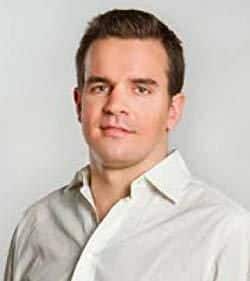
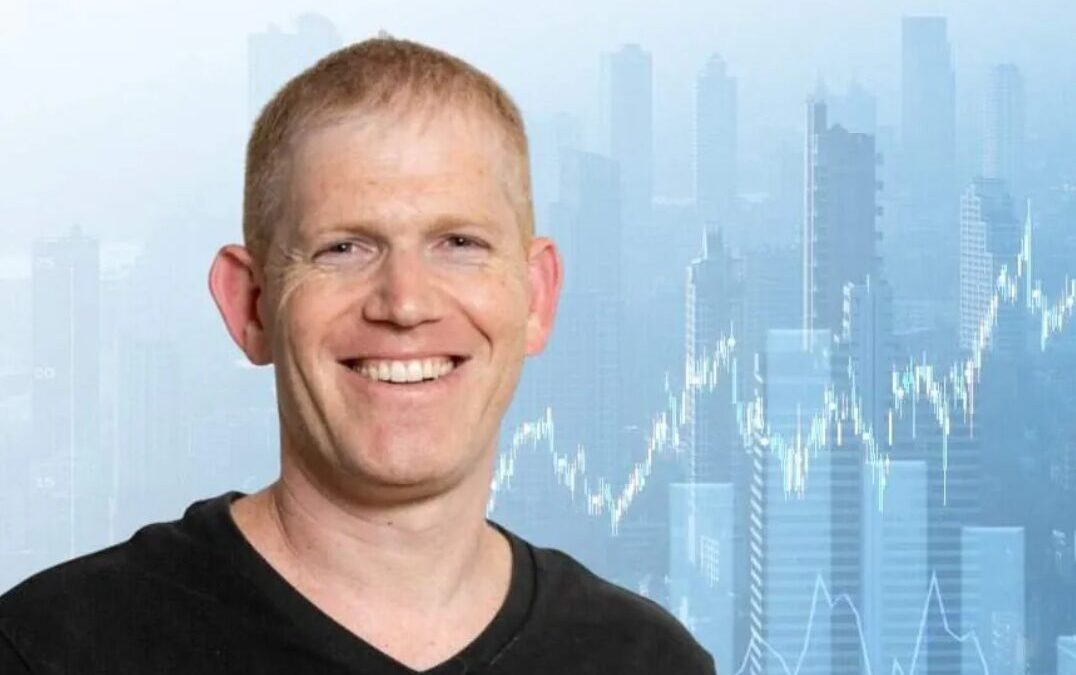
Yoav Regev’s entrepreneurial path began with 25 years in the military and culminated in the founding of a category-defining cybersecurity company, Sentra. Today, he stands at the crux of resilience, people, and an obsession with solving one of the most basic problems in technology: securing data.
Yoav’s story—from Israel’s elite military ecosystem to co-founding Sentra, a company at the forefront of data security posture management—offers a powerful lens into how world-class founders think about building, scaling, and navigating uncertainty.
Listen to the full podcast episode and review the transcript here
*FREE DOWNLOAD*
The Ultimate Guide To Pitch Decks
From “Startup Nation” To The Frontlines Of Cyber
Like many founders from Israel—often referred to as “Startup Nation”—Yoav’s journey began in an environment shaped by responsibility at an early age. He was born in Israel and raised between quiet northern regions and the bustling Tel Aviv area.
Yoav entered mandatory military service in 1997, expecting a typical few-year commitment, though this duration typically depends on the position. Instead, he stayed for 25 years in the “cyber” area of computers, today referred to as cybersecurity.
What kept Yoav there wasn’t routine—it was two things: challenges and the people. The Israeli military system, particularly in technical and intelligence roles, places individuals in high-stakes environments early. Here, they work with the best people in the sphere.
Yoav explains—you’re not just solving theoretical problems; you’re dealing with real-world consequences of important missions—often under pressure. Over time, this creates something far more valuable than technical skill. It builds resilience.
At the end of every three-year stint, as Yoav recalls, he would encounter a new challenge he wanted to dive into.
Resilience: The Hidden Asset That Transfers To Startups
For Yoav, resilience wasn’t something innate—it was built through years of operating under pressure, making decisions where outcomes truly mattered. When you’re working in environments where mistakes have real consequences, you develop the ability to operate under uncertainty, he says.
Yoav learned to be comfortable with high-pressure decision-making, to handle challenges in new environments, and to combine his personal capabilities with teamwork.
Ironically, despite spending decades in intense military environments, Yoav discovered that entrepreneurship introduces a different kind of pressure. In startups, the pressure never turns off. You’re thinking about the company 24/7—even when things are going well.
That constant mental load is one of the defining differences between founders and everyone else. Founders are constantly thinking about what they can do better and faster, Yoav discovered.

Raise Capital Smarter, Not Harder
- AI Investor Matching: Get instantly connected with the right investors
- Pitch & Financial Model Tools: Sharpen your story with battle-tested frameworks
- Proven Results: Founders are closing 3× faster using StartupFundraising.com
Knowing When To Turn The Page
After 25 years, Yoav reached what he describes as a “peak” moment. He was leading exceptional teams, working on meaningful missions, and operating at the highest level. So he asked a simple but critical question: “Is there a better next step for me here?”
When the answer became “no,” the decision was clear. It was time to move on. What’s interesting is that, at the time, starting a company didn’t feel obvious or inevitable. It was only in hindsight that the dots connected.
This is a recurring theme in founder journeys—clarity often comes after the fact, not before.
The Birth Of Sentra: When A Category Doesn’t Exist Yet
Sentra didn’t start with a fully formed product idea; it began with a conviction Yoav and his three cofounders shared. The foursome, Yoav, Asaf Kochan, Ron Reiter, and Yair Cohen, strongly believed that data and security are the two pillars of the modern world.
Before AI became mainstream, Yoav and his co-founders realized that any meaningful technological advancement would depend on access to data and the ability to secure it. From there, they explored multiple directions until one moment stood out.
While brainstorming in Tel Aviv, Yoav’s co-founder, Yair, suggested: “Let’s build DSPM—Data Security Posture Management.” There was just one problem—the category didn’t exist. When they searched for “DSPM,” nothing came up.
Today, DSPM is a recognized space and a very basic requirement. But at the time, the cofounders were operating in a vacuum—no clear competitors, no established demand, and no validation.
That moment—when you define something before the market does—is rare. It’s not just about building a product; it’s about shaping a category. The four cofounders realized they were going to solve a major problem in data security. They felt like they had hit on the product-market fit.
For Sentra, that became the foundation—just conviction.
The Early Days: Rejection, Doubt, And Persistence
As Yoav points out, in conventional startup building, you start with two key parameters. One, you define a problem that a potential customer is seeking a solution to. The second is checking out the solutions competitors are developing.
When you combine the two parameters, you have a real business that has real competition and real customers. At this point, you can discuss the problem, the solution, and product-market fit. However, building Sentra was an entirely unusual scenario.
Yoav and his cofounders faced skepticism early on. Prospective customers told them, “I’m not sure I need this,” “I don’t think you can solve this,” and even, “This isn’t a real category; it’s ridiculous, it’s irrelevant.” Some of those conversations were blunt—even dismissive.
But this is where founder psychology matters. Yoav highlights a critical principle: You will hear countless “no’s”—your job is to filter, adapt, change yourself to the right specific position, and keep going. Listening is important. Adjusting is necessary. But losing conviction is fatal.
And as one of Yoav’s investors told him: “You won’t need to ask when you have product-market fit—you’ll feel it.” Customers start pulling the product instead of you pushing it.
Raising $100M+: Every Round Resets The Game
From the outside, raising over $100M can look like a smooth trajectory. In reality, each round is a completely new challenge. Yoav frames it simply: Everything you haven’t done is hard. Everything you’ve done feels easy—afterward.
Each stage comes with different expectations, but Yoav underscores the importance of working with the best people, employees, colleagues, founders, and investors.
- At the seed stage, founders must prove the team, prove the problem, and show potential—the ability to solve it.
- The Series A is an entirely different ballgame. Questions center on execution, defining growth strategy, and explaining decisions. Once again, founders must prove they have the right teams and are building the right company.
- At Series B and beyond, investors expect founders to demonstrate traction with real metrics, provide customer validation, and show scalability.
Every round resets the bar. You’re constantly preparing for the next challenge, as Yoav points out. Today, Sentra has scaled to a workforce with over 100 employees.
Storytelling is everything that Yoav was able to master. The key is capturing the essence of what you are doing in 15 to 20 slides. For a winning deck, take a look at the pitch deck template created by Peter Thiel, Silicon Valley legend (see it here), where the most critical slides are highlighted.
Remember to unlock the pitch deck template that founders worldwide are using to raise millions below.
The Vision: Making Data As Safe As Aviation
Asked about his vision for Sentra, Yoav believes that organization needs to leverage data, which is the new asset, the new oil, and the new money. He wants organizations to manage their data speedily, but also very responsibly.
As Yoav underscores, in today’s world, data faces many challenges, such as breaches and other blockers. He describes Sentra’s long-term vision through a compelling analogy. In aviation, safety is non-negotiable.
Airplanes don’t fall out of the sky because systems were designed with safety and security at their core. He wants the same for data. Organizations should be able to move quickly, leveraging their tools and environment, without worrying about data.
Sentra can enable organizations to fully understand, manage, and secure their data. At the same time, security shouldn’t slow you down—it should enable speed.
AI: Threat Or Accelerator?
AI represents a fork in the road for most companies. According to Yoav, there are only two outcomes. Either AI destroys your business, or it accelerates it. For Sentra, it became a major tailwind. That’s because AI is fundamentally a data problem. As organizations adopt AI, they face new challenges.
From the onset, Sentra has integrated AI into its product, resolving AI issues for customers and developing AI readiness, which is the main driver and accelerator for attracting them. As Yoav explains, discussing AI is an uncomfortable issue for customers.
They are unsure whether they should deploy more AI agents and whether those agents are secure. Understandably, integrating AI comes with risks. Through Sentra, Yoav and his team assist businesses and other organizations with positioning AI agents strategically to enhance operations.
Building A Company Across Cultures
Sentra operates across Israel and the US, which presents a common yet often underestimated challenge: culture. Many founders try to enforce a single, uniform culture. Yoav learned that this doesn’t work. He stresses that every office has different people and different interactions.
At Sentra, they ensure unity and consistency as the culture evolves, and this evolution is never-ending. Yoav doesn’t believe his Israeli background should set the tone for Sentra’s culture. For example, there is a huge difference between the go-to-market and the R&D in Israel and the US.
In the US, G2M teams are predominantly remote—not all of them operate within the office premises. But R&D teams in Israel may operate in an in-office, highly collaborative environment. The magic happens when you understand the very specific cultures of each of these teams.
The only uniform principles across the board, regardless of location, are winning and transparency.
Advice To Founders: Move Faster Than You Think
Looking back, Yoav offers two pieces of advice to his younger self.
- Run Faster: Even if you think you’re moving fast, you’re not. Speed is a competitive advantage in every dimension. There’s nothing to lose. It’s better to fail fast, adapt, and not overthink.
- Build Around Leaders: Without strong leaders, scaling breaks. With them, it compounds. Scaling a company isn’t just about product; it’s about the right leaders who can help you scale.
Final Thoughts
Yoav Regev’s story highlights a pattern seen in many exceptional founders. High-pressure spaces create resilience; category creation requires conviction before validation; product-market fit is felt before it’s measured; and scaling depends more on people than on the product.
And perhaps most importantly, the difference between success and failure often comes down to how fast you move—and how long you persist.
Listen to the full podcast episode to know more, including:
- Resilience is built under pressure, not inherited.
- Category creation often begins before the market has language for it.
- Product-market fit becomes obvious when customers start pulling instead of founders pushing.
- Rejection is part of the process, but conviction must survive feedback.
- Every funding round resets the proof that founders must deliver.
- AI is either a threat or an accelerator, depending on how well companies manage data.
- Scaling depends on speed, strong leaders, and a culture anchored in transparency.
SUBSCRIBE ON:
 iTunes
 Google Play
 Stitcher
 TuneIn
 RSS
RSS SoundCloud
 Spotify
Keep in mind that storytelling is everything in fundraising. In this regard, for a winning pitch deck to help you, take a look at the template created by Peter Thiel, the Silicon Valley legend (see it here), which I recently covered. Thiel was the first angel investor in Facebook with a $500K check that turned into more than $1 billion in cash.
*FREE DOWNLOAD*
The Ultimate Guide To Pitch Decks
Remember to unlock for free the pitch deck template that founders worldwide are using to raise millions below.
Podcast: Play in new window | Download
Subscribe: Apple Podcasts | Spotify | TuneIn | RSS | More



Facebook Comments