

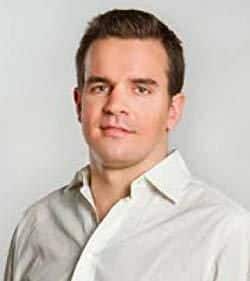

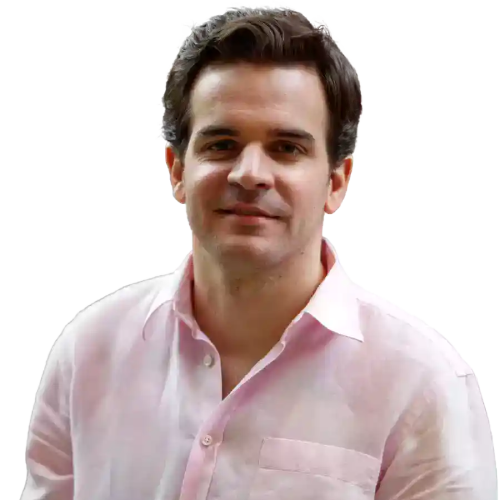
Yoav Regev’s entrepreneurial path began with 25 years in the military and culminated in the founding of a category-defining cybersecurity company, Sentra. Today, he stands at the crux of resilience, people, and an obsession with solving one of the most basic problems in technology: securing data.
Sentra has secured funding from top-tier investors, such as Bessemer Venture Partners, Munich Re Ventures, Zeev Ventures, Moore Strategic Ventures, and INT3.
In this episode, you will learn:
- Resilience is built under pressure, not inherited.
- Category creation often begins before the market has language for it.
- Product-market fit becomes obvious when customers start pulling instead of founders pushing.
- Rejection is part of the process, but conviction must survive feedback.
- Every funding round resets the proof that founders must deliver.
- AI is either a threat or an accelerator, depending on how well companies manage data.
- Scaling depends on speed, strong leaders, and a culture anchored in transparency.
SUBSCRIBE ON:
 iTunes
 Google Play
 Stitcher
 TuneIn
 RSS
RSS SoundCloud
 Spotify
Keep in mind that storytelling is everything in fundraising. In this regard, for a winning pitch deck to help you, take a look at the template created by Peter Thiel, the Silicon Valley legend (see it here), which I recently covered. Thiel was the first angel investor in Facebook with a $500K check that turned into more than $1 billion in cash.

*FREE DOWNLOAD*
The Ultimate Guide To Pitch Decks
Remember to unlock for free the pitch deck template that founders worldwide are using to raise millions below.
About Yoav Regev:
Yoav Regev has extensive work experience in both the private and government sectors. He is currently the Co-Founder and CEO of Sentra, a role he has held since August 2021.
Prior to this, Yoav spent over two decades working for the Israeli Military Intelligence – Unit 8200. He held the position of Head of Cyber Department (Colonel) from June 1997 to February 2021.
Yoav earned a Bachelor of Applied Science (B.A.Sc.) degree in Mathematics and Computer Science from Bar-Ilan University in the years 2001 to 2004. Following this, he pursued a Master’s degree in Computer Science from Bar-Ilan University, which he completed between 2004 and 2006.
Raise Capital Smarter, Not Harder
- AI Investor Matching: Get instantly connected with the right investors
- Pitch & Financial Model Tools: Sharpen your story with battle-tested frameworks
- Proven Results: Founders are closing 3× faster using StartupFundraising.com
Connect with Yoav Regev:
Read the Full Transcription of the Interview:
Alejandro Cremades: Alrighty, hello everyone, and welcome to the DealMaker Show. So today we have another founder from Startup Nation. We’re going to be talking about going from the army, where he was for 25 years, to becoming a founder, to really pushing big time on the cybersecurity side of things, and really combining not only the data side of things but also the security side of it. We’re going to be talking about resilience, building, scaling,
Alejandro Cremades: financing, hitting product-market fit, getting the first customers, and all of that good stuff that we like to hear. So brace yourself for a very inspiring conversation. And without further ado, let’s welcome our guest today. Joab Regev, welcome to the show.
Yoav Regev: Thank you very much. Thank you for having me.
Alejandro Cremades: So I wanted to ask you—originally born in Israel, in Startup Nation—give us a walk through memory lane.
Yoav Regev: Let’s do it.
Alejandro Cremades: How was life growing up for you?
Yoav Regev: Oh, it was fantastic. So I was born in Israel, and very fast my parents took me to the north, to a very quiet place like nowhere. That was a great time.
Yoav Regev: And then we came back to the center of Israel, the Tel Aviv area. And, you know, the rest is history. When I started in the army, I thought it was going to be a very short time, like any Israeli as part of the mandatory service.
Alejandro Cremades: How long is it typically?
Yoav Regev: So the mandatory service is three years, and it depends on the position. I was in a position in the cyber area—computers. By the way, we didn’t call it cyber.
Yoav Regev: When I started, it was 1997. It was something different. There was no word like cyber. It’s between three to six years, and after 25 years, I decided it was the right time to move on.
Alejandro Cremades: That’s amazing. Now, what do you think kept you there for so long? Because, I mean, you were there for 25 years—that’s like five times the typical mandatory service.
Yoav Regev: Exactly. So if I need to choose, I would say two things. Number one is the challenge, and number two is the people.
Yoav Regev: Because in Israel, it’s a very unique system for the army—you serve with the best people. So for 25 years, and of course there are new people every year, you work together with the best people.
Yoav Regev: And this is something that you cannot compare to any other organization or country. It’s very unique.
Yoav Regev: And now, you can connect the dots only backward. I’m not sure I could tell you that 30 years ago, but now I can say for sure that it was the people. When you combine that with the biggest challenges and such an important mission,
Yoav Regev: every few years I asked myself what I really wanted to do, and I decided to take the next challenge for the next two or three years. It wasn’t like I thought about it from the beginning.
Yoav Regev: But every few years, I found it fascinating and a great place to be. And when I felt that this was the end, I said, okay, let’s move to the next challenge.
Alejandro Cremades: So how do you think that being in the army, especially for so long, built the resilience side of things?
Yoav Regev: Oh, that is a great question. So resilience is something that, on one hand, people say you’re born with.
Yoav Regev: But I believe it’s something that you build along the way. Now we can see it in other people, but specifically when you start doing something at that age,
Yoav Regev: that is so important—and sometimes it’s about life—you know that if you don’t do it in the right way, it’s going to be a big messy situation. And you understand that.
Yoav Regev: Over the years, you learn how to deal with that kind of pressure and that kind of mission, and how to combine your personal capabilities with others, like teamwork, all under pressure and sometimes 24/7.
Yoav Regev: All those things that we are very familiar with—from reality and from movies—when combined over a long time, stay with you.
Yoav Regev: And maybe this is the number one thing that I took from the army, besides the people and the network: the resilience to deal with pressure, new environments, and new challenges.
Yoav Regev: And I can tell you, I thought before I ended my service that I was under pressure and that it was the whole world. But when I moved into the startup area to become an entrepreneur, I realized there’s a huge difference.
Yoav Regev: You live your company 24/7.
Yoav Regev: You think about it all the time. And you’re under pressure even when everything is going well. Even when you have the best situation, you skip the growth mode and move to the next step—what’s next, what can we do more, better, faster.
Yoav Regev: Amazing.
Alejandro Cremades: So then what do you think needed to happen after 25 years for you to feel like maybe there’s something else for you to explore, maybe it was time to turn the page?
Yoav Regev: So without getting into details, during my last position I understood that this was the peak. I was running amazing people, great missions.
Yoav Regev: And I asked myself, could I find a better position here?
Yoav Regev: And when I understood the answer was no, I said, let’s move on to the next one.
Yoav Regev: And again, retrospectively, when you connect the dots backward, it’s easy to say that starting a company was trivial. But I can tell you it wasn’t.
Yoav Regev: In real time, when I started, I saw so many different things to do, so many positions, so many places to go.
Yoav Regev: But now I understand that I felt it was the right thing to do.
Alejandro Cremades: So then talk to us about Centra. Why Centra? Obviously, four co-founders, the idea of security and data coming together—how did everything come together?
Yoav Regev: So from the beginning, first of all, it’s about the people. We started as four founders, and we understood we wanted to do something together. That was the first decision.
Yoav Regev: And we knew it was going to be something around data and security, because those are the pillars of the world.
Yoav Regev: At the end, if you want to build something important for the world—even before AI—you need data, and you need to secure it.
Yoav Regev: It’s easy to say now, but we thought about many things. We just loved data and we loved security.
Yoav Regev: And even today, we sometimes debate: are we more data or more security? And we find ourselves exactly at the meeting point between them.
Yoav Regev: If you want to push the world, push technology, push AI—you need data security.
Yoav Regev: And just to think about it, AI is a data problem.
Yoav Regev: I can say that now, but I couldn’t say it four or five years ago. Now we can see it—it’s here and everywhere.
Yoav Regev: The seed round was easy. What about the A? Okay, the A round is something very, very different. And it is. Again, now they ask you many more questions about, hey, why did you do that?
Yoav Regev: How are you planning to do that? What about the growth? What about the pace? And you need to prove again, from the beginning, that you are the right team and the right company to do it.
Yoav Regev: So that’s the next one. After that, the B round is pretty much the same. Now they speak about numbers, and they are going to speak with customers. You know, when you do a seed round, you say, okay, no problem. It’s about the team.
Yoav Regev: But when you do the B round, when you run after the B round, hey, let’s speak with customers. Let’s understand why they love you, why they want to keep working with you, and so on. So every time, it’s a big challenge and very different. And you need to prepare yourself for a very different story and very different parameters.
Yoav Regev: And yes, so it’s great. And I’m looking forward to the next one.
Alejandro Cremades: So then, in terms of raising capital and also bringing in all these investors, then bringing employees, because, I mean, you have over 100 employees.
Alejandro Cremades: What has been, or even better than that, the vision that you’re pushing toward now and that they’re all really excited about, the future that you’re living into? If you were to go to sleep tonight and wake up in a world where the vision of Centra is fully realized, what does that world look like?
Yoav Regev: So I want organizations—I believe that organizations should leverage data. It’s all data. Data is the new asset, the new oil, and the new money. And I want to let organizations deal with data as fast as they can and in a very, very responsible way, because it’s all about the data. And today, there are so many blockers and so many problems, challenges, and breaches.
Yoav Regev: You know, we say to ourselves, for the aviation space, just think if airplanes were falling down, you and me, we would not use them, right? So many years ago, smart people decided to make security and safety a huge part of aviation. And now we live in a world where airplanes are pretty safe.
Yoav Regev: I want to get the same feeling with data, where organizations can feel that they have the tool, the environment, and the option to really move fast without failing, without thinking about the breach. And I believe we can do it. We can let them understand the data, manage the data, and, of course, secure the data.
Yoav Regev: And this is only the basic for the business. So we are here to ensure the business can run as fast as you want. That’s our vision.
Alejandro Cremades: So in that regard, too, how has it been with the AI side of things, and how have you guys adapted to AI over time?
Yoav Regev: Yeah, AI is a great, great challenge. And I believe you can be in one of two options. The first one, it can kill your company.
Yoav Regev: The second one, it can accelerate it. And I’m very happy that we are on the second one because, as I said before, AI is a data problem, and AI is going to be everywhere.
Yoav Regev: It’s a way of life. It’s day-to-day for everything. And I’m not going to start the conversation about whether it’s going to replace something or not, but it’s huge for sure.
Yoav Regev: And for us, from day one, we have used AI internally in the product to create the product based on that.
Yoav Regev: That was the easy part, let’s call it. But what we could change along the way is how we can support AI and how we can solve the AI problem for customers.
Yoav Regev: And now this is the number one, or the main driver, to work with us, what we call AI readiness. And this is, for us, a huge accelerator.
Yoav Regev: By the way, when we speak about AI, there is what I like to call an uncomfortable moment.
Yoav Regev: Many people, me, I believe also you, my kids, there is kind of an uncomfortable moment because what is AI for me? Do I need to use it more? Is it secure?
Yoav Regev: Is it a kind of risk for my job? People have a lot of questions about it. And I want to leverage that moment for organizations and push them to the right place.
Yoav Regev: And so for us, to take that moment and help you take it to the right position, it’s great for business. It’s great to change their life and their way of life as part of the organization.
Alejandro Cremades: So I guess the question here, too, is, you’re talking about people, and we were talking about people before. You have two offices. So you have one in New York and then also in Israel.
Alejandro Cremades: How is it to have different offices? Because, I mean, the culture, right? People talk about the culture of the company, but ultimately, the culture is going to be different from one office to the other. It’s like satellites, right? Every office has different people, different interactions, and different things. How do you guys go about making sure that you have that unity and consistency as the culture is evolving?
Yoav Regev: Yep. Great question because it’s something that never ends. It’s not something that I solved or didn’t. And so it’s something I did yesterday, I do today, and I’m sure that next week it’s going to be with us again and again. And I agree. One of the things that I learned at the beginning, I thought, okay, let’s have one culture. Let’s try to push everything because, again, my history came from a very specific place where it was much, let’s call it, easier to have one culture.
Yoav Regev: And what I learned along the way is that there is the culture of the company, but it is based on a few different cultures, based on, as an example, Israel and the US.
Yoav Regev: But also, there is a huge difference between go-to-market and R&D. So you need to combine a few different subcultures, and you don’t want to change them.
Yoav Regev: You want something very specific for R&D. In Israel, they come to the office four days per week. Here in the US, it’s mostly remote. We have people all around; not all of them are going to the office. Part of them are just, you know, from the field. So I believe the magic happens when you understand that, on one hand, there is a very specific culture for each of those parts.
Yoav Regev: However, you need to take a basic culture for the company. As an example, winning. Okay? As an example, truth.
Yoav Regev: Those kinds of things that you want, very transparent. And that’s part of our culture. It doesn’t matter if you work from home. It doesn’t matter if you’re from go-to-market.
Yoav Regev: Winning, transparency, those kinds of things are so important to everyone. So the basic is for all of us. On top of that, there are very different cultures.
Alejandro Cremades: So let’s say, Joaf, I put you into a time machine and I bring you back to that moment where you were leaving the army, which was all you knew at the time.
Alejandro Cremades: And let’s say I give you the opportunity to show up and give that younger Joaf one piece of advice before launching a business. What would that be and why, given what you know now?
Yoav Regev: So I’m going to take it to two. One thing is going to be run fast. People told me about it, but now I know that you need to execute even faster.
Yoav Regev: So that’s tip number one. That’s the most important part to do. Run fast. And I would like to say run faster because, even if you think you run fast, you need to run faster. That’s number one. It’s a bit generic, but there is nothing to lose. It’s much better to fail fast and change than to think about things too much.
Yoav Regev: Run fast. On top of that, if I have one more, it’s about the leaders. You need to find the leaders that will run with you everywhere.
Yoav Regev: Those are the most important people because, with them, you can scale. At the end, it’s the question of scaling. It’s not a question, although yeah, you need to build an amazing product. Yeah, you need to find product-market fit. But to scale, to take it, that’s a huge, huge challenge.
Yoav Regev: And that you can tell only if you scale your people, if you find the right leaders that can help you scale.
Alejandro Cremades: I love that. So, for the people that are listening and would love to reach out, say hi, and learn more about Centra, what can you tell them?
Yoav Regev: So just unsure how to contact me.
Alejandro Cremades: You got it. Or to learn more about Centra.
Yoav Regev: Okay, the best is you have at central.io. Please send me an email. I would be more than happy to talk. And, of course, you can go to our website if it’s from the other part and learn more, contact us.
Yoav Regev: We would love to speak with you.
Alejandro Cremades: Amazing. Well, Joab, thank you so much for being on the DealMaker Show today. It has been an absolute honor to have you with us.
Yoav Regev: That was great. Thanks a lot.
*****
If you like the show, make sure that you hit that subscribe button. If you can leave a review as well, that would be fantastic. And if you got any value either from this episode or from the show itself, share it with a friend. Perhaps they will also appreciate it. Also, remember, if you need any help, whether it is with your fundraising efforts or with selling your business, you can reach me at al*******@**************rs.com
Podcast: Play in new window | Download
Subscribe: Apple Podcasts | Spotify | TuneIn | RSS | More
Facebook Comments