

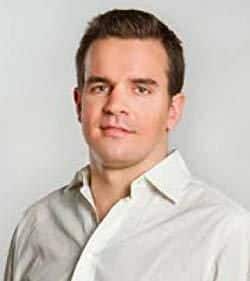
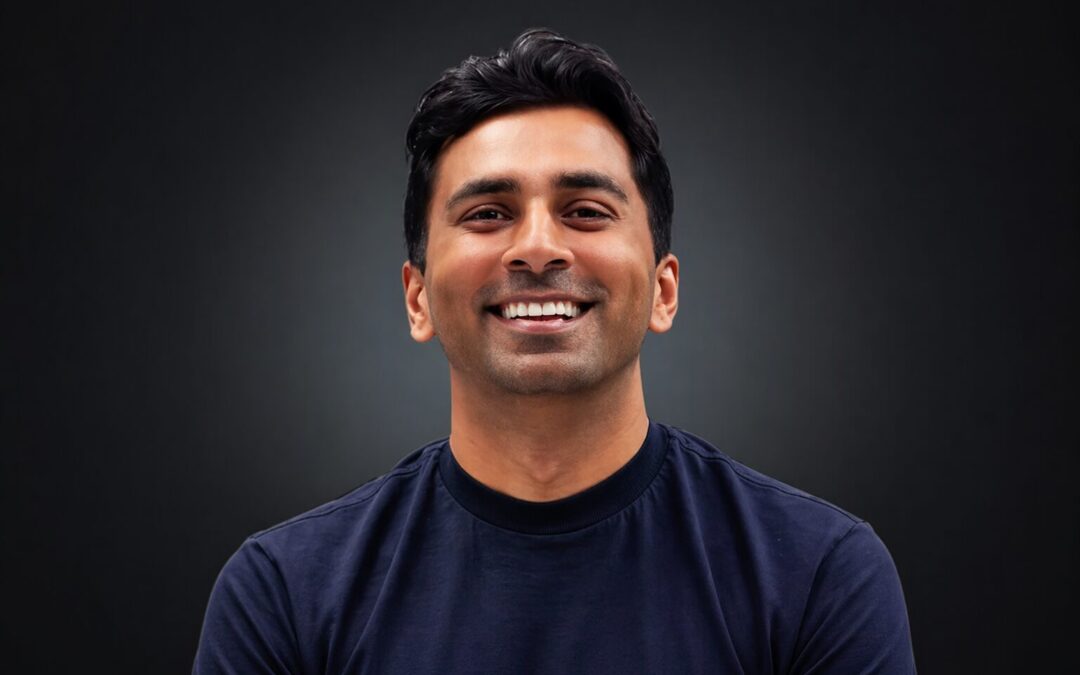
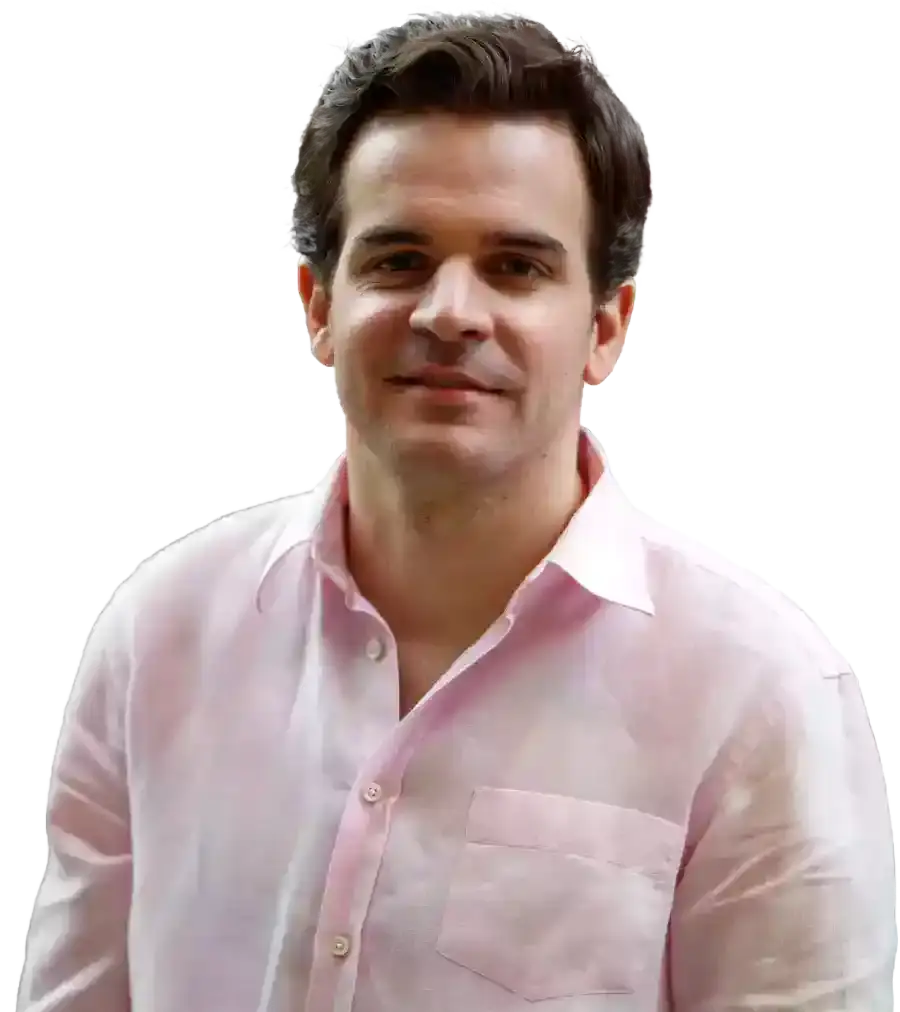
What does it really take to move from building a company to backing the next generation of founders? For Bilal Baloch, the journey isn’t just a shift in role—it’s a complete rewiring of perspective.
From growing up in immigrant communities in East London to building and exiting a company, and now investing out of Abu Dhabi in some of the most ambitious AI startups globally, Bilal’s story is a masterclass in pattern recognition, discipline, and understanding how the world truly works.
This is not just about venture capital; it’s about how global systems—education, geopolitics, technology, and capital—intersect to create opportunity.
Listen to the full podcast episode and review the transcript here.
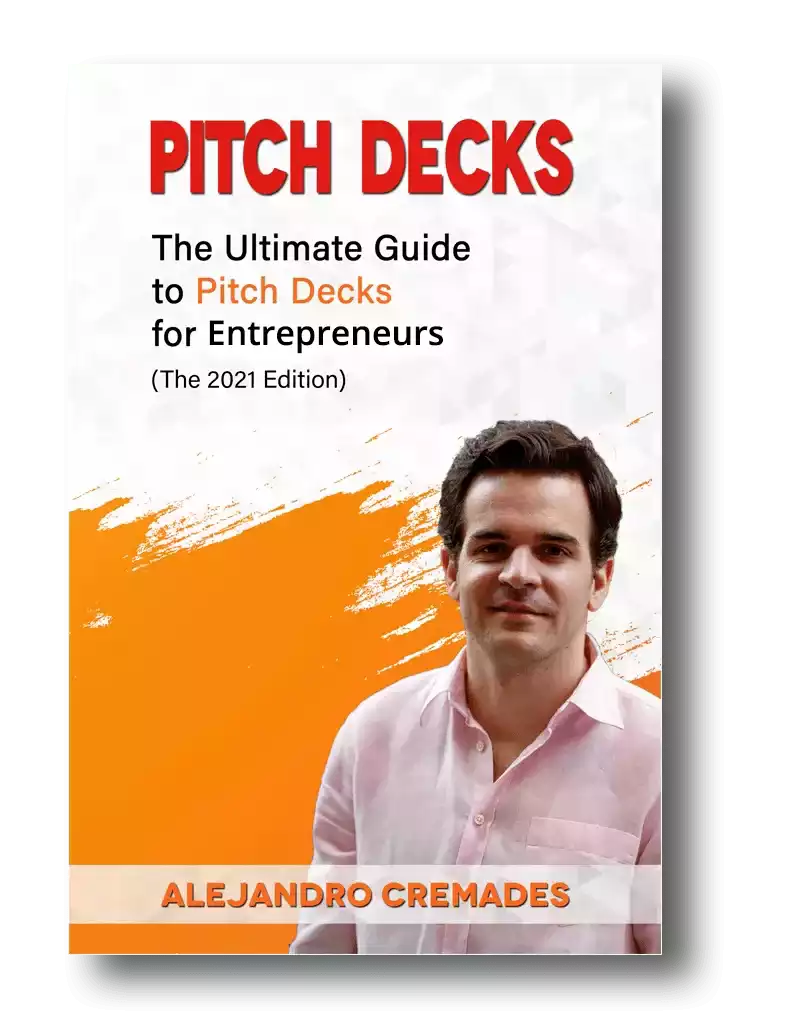
*FREE DOWNLOAD*
The Ultimate Guide To Pitch Decks
Growing Up in a World of Ideas, Not Just Circumstances
Bilal’s early life in East London shaped far more than his worldview—it became his first real education. Surrounded by immigrant families from South Asia, the Caribbean, and Africa, conversations weren’t small talk; they were about raw politics, business, and global events.
That environment created something powerful; early exposure to how different communities interpret opportunity and risk. Bilal also imbibed and absorbed different cultures, foods, and languages. That first introduction to how the world works transformed into lessons he carried into daily life.
Bilal’s experiences instilled a deep belief that education was the ultimate lever for upward mobility. An idea often attributed to Malcolm X—that education is the passport to the future—was not theoretical in his household. It was a mandate. This led him through an elite academic journey.
The Academic Journey
Bilal was fortunate to receive a full scholarship for his undergraduate studies at the London School of Economics. He studied philosophy, logic, and scientific method, which gave him the frameworks for structured thinking. Sharpening these analytical skills would help him later in academia, tech, and consulting.
Next, Bilal went on to do his Master’s at Tufts’ Fletcher School, “a great window into international affairs, particularly from the American perspective,” as he remembers it. This education was very valuable, given how acutely foreign policy impacts the world of finance and business.
Bilal then did his PhD at Oxford, focused on financial crises and decision-making. He learned how governments in growth markets respond to credibility crises. He would later transform these lessons into a book called When Ideas Matter, which he published with Cambridge University Press.
Teaching on the faculty at the Lauder Institute at the Wharton School of Business forced Bilal to simplify complex ideas into actionable insights. He recalls the real pleasure of teaching some brilliant students who were as interested in business as in international affairs.
This combination created a rare advantage—the ability to connect theory and academic research to execution in the real world, regardless of the sphere in which Bilal was working, whether consulting, business building, or investing.
Raise Capital Smarter, Not Harder
- AI Investor Matching: Get instantly connected with the right investors
- Pitch & Financial Model Tools: Sharpen your story with battle-tested frameworks
- Proven Results: Founders are closing 3× faster using StartupFundraising.com
Consulting as a Bridge to Global Pattern Recognition
Bilal’s transition into consulting wasn’t random—it was strategic. He entered the world of global macro consulting, advising decision-makers on the buy side, including hedge funds, CEOs, corporates, and government institutions.
Bilal offered guidance on geopolitical risk and how markets globally interact to create openings or closures for investments and business opportunities. This wasn’t traditional consulting, and it enabled him to leverage his deep regional expertise in the Middle East, the Gulf, and South Asia at a monumental time of change in those regions.
Bilal’s insights were specifically valuable because of their timing. India was undergoing structural reforms, and a behemoth like Saudi Arabia awoke and began liberalizing its economy. UAE institutions matured and experienced some of the fastest growth in sovereign AUM in history.
Global macro consultancy has gained traction due to today’s awareness that geographical and development variables are intimately tied to business outcomes—a trend that Bilal expects to continue.
The Birth of Enquire AI: Fixing Broken Intelligence Systems
Looking back on his entrepreneurial journey, Bilal credits his background with inspiring him. He recalls growing up essentially on the floors of London’s markets—Camden Town, or Aldgate East. His dad was a traditional market trader dealing in a range of merchandise, so startups are in his DNA.
However, entrepreneurship didn’t come from inspiration alone—it came from frustration. Bilal and his co-founder identified a fundamental flaw in consulting: Access to high-quality, real-time market intelligence that could be translated into actionable insights for clients was too slow and too biased.
The duo also realized that getting salient market intelligence was subject to confirmation biases, which is very natural in human networks.
This leads to very partisan attitudes about what’s going to happen in a particular country with an election outcome, or about which way a sovereign wealth fund is likely to invest amid geopolitical pressures between, say, the US and China.
Bilal and his cofounder wanted to build a faster, more objective, and more diversified mechanism for decision-makers to access local market intelligence. Accordingly, they disintermediated the consulting model—before ChatGPT and Claude existed.
The vision—to make intelligence faster, more objective, and more accessible. Thus, the duo built a platform that enabled businesses and decision-makers to access worldwide experts who would otherwise be inaccessible.
These experts were not necessarily well-known entities or had fancy degrees. Their expertise came from hands-on experience working on the ground in their specific sector or market.
Bilal and his cofounder used cutting-edge machine learning (ML) techniques and AI to verify, qualify, and connect insights to decision-makers.
The Reality of Building a Startup (That No One Talks About)
Bilal draws a powerful comparison between building a startup and doing a PhD. He points out that the entrepreneurial journey is imbued with mystique and seduction in our zeitgeist, whether in movies, TV shows, books, or even at the dinner table.
As with pursuing a PhD, when building a startup, you start with an original idea that likely does not exist in the market. As a result, no one initially believes in it. You work long periods with little or no pay, and the journey is often lonely.
This cuts through the romanticism of startups because behind the headlines—fundraising, innovation, exits—there’s a different truth. Execution is messy, slow, and emotionally demanding. But one lesson stood out above all: founders, especially selling to enterprises, get sales wrong. And folks don’t see it behind the curtain.
Early on, Bilal underestimated the importance of hands on sales and business development. Like many founders, they tended to focus on the product, the scale of the disruption, and how much capital they needed raise. They delegated sales to experienced hires.
But that’s backward thinking. The founder must be the first and best salesperson, as Bilal learned. That’s because they understand the product best and can learn directly from customer behavior.
As a result, they can shape how the market perceives the solution, making the ultimate difference between traction and stagnation. Eventually, a part of Enquire AI was acquired.
Why Abu Dhabi—and Why Now
After exiting Enquire AI, Bilal made a pivotal move to Abu Dhabi—not just geographically, but strategically. He recognized early signals that something significant was happening in the region from the entrepreneurial standpoint. Some of the patterns were starting to solidify.
Many companies in the ecosystem were building strong products and gaining external validation. Companies such as Careem, Souq.com, Tamara, and Tabby were proving that large-scale tech businesses could emerge from the region.
Bilal also zeroed in on the quality of capital. He noted that the region has always had easily available capital. But now it was becoming more sophisticated, engaged, and globally connected. Investors were actively looking to participate in founder journeys.
They were relevant on the cap tables of top tech companies and in the right rooms when vying for allocations for startups and futuristic ventures. This combination created a rare environment—an ecosystem where capital, talent, and policy aligned.
Most venture vehicles were semi-government or government spin-outs, attached to a development organization.
Building a Venture Platform from the Ground Up
At Shorooq, Bilal joined one of the first truly private VC funds out of Abu Dhabi. What made it unique and interesting to him was that it was perhaps the only purely private VC fund born and bred out of Abu Dhabi. It was also the first to be regulated by ADGM, the main Abu Dhabi regulator and economic free zone.
Venture capital, as Bilal explains, is not passive. It requires the muscle and institution needed to identify and compete for the best founders.
VCs must demonstrate that they can add value and observe what’s happening around the corner in a particular industry or sector to bet on the right founders. Most importantly, they should have the grit to make decisions with incomplete information. Capital is not enough to digest all that for investors.
Bilal compares it to counterinsurgency. In his opinion, winning deals is about winning trust, not just deploying capital. Investing is about identifying local trends and accounting for multiple variables. And doing so with aggression and surgical force. And Shorooq is a prime example of that.
The Shorooq Inception
Bilal joined the two cofounders of Shorooq – Mahmoud Adi, an Emirati, and Shane Shin from Korea. Their disparate backgrounds illustrate what the present-day UAE is all about—bringing people together.
Mahmoud and Shane were earlier working in Palo Alto at GlobalFoundries, a semiconductor company owned by Mabadala. They reasoned that it made more sense to take the risk in their home market rather than the safer, shinier work at a massive tech company owned by a UAE sovereign wealth fund in Silicon Valley.
From a $5M starting point, Shorooq scaled to over $1B in AUM. But the real story is how.
Bilal credits its success to the risk appetite, self-awareness, strength, and muscle it invested in finding opportunities early and funding them early. Thus, the fund has the backing of more sovereign wealth funds than any other fund worldwide.
As Bilal underscores, at Shorooq, they are gritty and agile, but also globally ambitious, looking to invest not just in the region, but around the world.
Betting on the Infrastructure Layer of Economies
Bilal retraces the very interesting approach behind Shorooq’s transition from $300M to $1B AUM. He concedes that even today, it isn’t easy to activate sovereign players or family offices to support venture capital.
They are more inclined to support private equity firms and traditional assets such as real estate. But Shorooq has a USP that interests them.
Storytelling is everything that Bilal was able to master. The key is capturing the essence of what you are doing in 15 to 20 slides. For a winning deck, take a look at the pitch deck template created by Peter Thiel, Silicon Valley legend (see it here), where the most critical slides are highlighted.
Remember to unlock the pitch deck template that founders worldwide are using to raise millions below.
Although Shorooq has earned accolades for its fundraising journey, in Bilal’s view, they have only scratched the surface as yet.
Shorooq still has a long way to go, but its success to date has been driven by securing one deal at a time. It has demonstrated the value that technology brings to the emergent ecosystem. Initially, instead of chasing hype, the fund focused on foundational bets.
For instance, payment rails, open banking, AI for compliance and security, supply chain innovation, and food systems—basically the infrastructure layer across finance, food, and cybersecurity. Bilal explains the reasoning behind the bets they made—different variables came together.
- As is the case in most markets undergoing tech disruption, incumbents were not quick enough to embrace digital transformation.
- Regulators and decision-makers were very front-footed on wanting technology and AI to be a key part of the future of their economy. There was no resistance to digital transformation.
- The region has an abundance of capital.
By making those bets early and finding those founders early, Bilal and his cofounders have shown sovereign wealth funds, family offices, and other LPs that backed Shorooq that building highly valuable and innovative tech companies in the Middle East, North Africa, and South Asia is doable.
Technological Impact on the Economies of These Countries
In fact, these companies have a very distinct and impactful role to fill in the economies of those countries. A perfect example is Tamara—a buy-now, pay-later platform equivalent for the region. At Tamara, they didn’t just replicate a model like Klarna.
Instead, they tweaked the model toward Sharia-compliant finance, focusing on interest-free systems and avoiding usury in financial mechanisms and architectures. Interestingly, they rolled out the platform and sold it in a market where, historically, 90%+ of people have used debit cards or cash for purchases.
Tamara not only innovated the model, but it also introduced credit behavior in debit- and cash-dominated markets by trying to change consumer behaviors of what it means to consume and spend. Tamara’s main competitor, Tabby, is another platform modeled along the same lines.
These companies effectively shifted how consumers engage with financial products. This is more than innovation; it’s behavioral transformation at scale.
As Bilal underscores, the attraction and seduction of building a unicorn, getting to a valuation of $1B, $2B, $3B, and beyond, earning revenue worth hundreds of millions, and building great tech, is more about fundamentally shifting the way societies respond and behave.
In most developed markets, innovation responds to what they see in the market. But in many respects, the opposite is happening in growth markets. And that is incredibly exciting.
AI Is Different This Time—And It’s Global
Bilal has started the Global AI Fund within Shorooq. As he sees it, major transformations are happening in the AI space. Companies like Anthropic and OpenAI are raising significant capital rounds, which is impacting valuations worldwide and contributing to the hype across this segment.
Undoubtedly, the best founders, the best innovations, and the most cutting-edge AI applications are emerging from Silicon Valley in the US.
However, having spent the last 18 months traveling across Europe, Asia, and other regions, Bilal noted that, unlike previous paradigm shifts in hardware, software, and mobiles, AI is global from the outset.
Agentic AI companies that can disrupt entire industries are built on those open-source models; others are emerging from Frankfurt or Seoul. And, these transformations are occurring in weeks and months, not years. Bilal notes this as a historical moment—a truly remarkable global feature.
Investing in AI
Accordingly, Bilal is investing in AI companies worldwide. Bilal reveals that he is looking at valuations, round sizes, competition, and round allocations at scales he has never seen before—as an operator or as an investor. But having said that, he asks: What do investors bring to the table beyond capital? Because winning on a check size is no longer enough.
His travels to different locations worldwide have taught Bilal that founders and local players know and understand the ecosystem better than he does. It would be presumptuous and inauthentic of him to step in and offer funding. He has to offer more than just capital.
Thus, Shorooq’s Global AI Fund is backed by Presight, part of G42, the world’s largest AI holding company outside the US and China. It mainly operates and builds businesses, especially in critical global sectors such as space, defense, and energy.
One of the funds in their ecosystem is MGX, a juggernaut that offers minimum $500M checks and is on the cap tables of some of the world’s leading AI companies. The second is the Shorooq Global AI Fund, which funds startups at the pre-seed stage.
How the Shorooq Global AI Fund Assists Startups
The Shorooq Global AI Fund offers not just funding but also a multidimensional support system for founders.
- The fund encourages founders to think beyond their home markets—to focus on other markets of interest where their products and technologies can flourish. For instance, markets in the Middle East, South Asia, and North Africa. These locations have a potential customer demographic aged 18 to 35, numbering in the hundreds of millions. Institutions and customers are ready and waiting to leverage technology. The Shorooq Global AI Fund can help open that market for founders.
- The second advantage is access to growth capital. Bilal reveals that 40% of Shorooq’s limited partners co-invest with them. When founders are ready to raise larger checks and secure more sophisticated global capital on their cap tables, the fund can help. Bilal and his team facilitate conversations because they are trusted partners to those funds and entities.
- The third advantage is access to critical AI architecture, such as compute and talent, that is arguably global today. The UAE and the region specifically are the third rail on AI today, beyond the US and China. And that kind of access—regulatory, compute, and others—is very important for AI founders building today—especially if they’re building in ecosystems where regulation has not been so favorable.
What Top AI Founders Get Right
Bilal looks for three core traits in AI startups:
- Deep Domain Expertise: Shorooq’s Global AI Fund is looking for founders and management teams—with the expertise, experience, and technical know-how—running AI companies that can dominate and go deep in a particular vertical. For example, companies like Candid Intelligence are niche AI firms that solve specific problems in industries such as construction and energy.
- Global Thinking from Day One: Bilal focuses on startups with a clear pathway to becoming a global company, because that’s where his value-add comes in. He wants to help open up markets, customers, and capital at the global stage.
- Thoughtfulness About the World: Bilal understands that more thoughtful founders are considering the repercussions and the impact AI will have on the society and economy around them. That thought process, in his opinion, is a proxy of serious people who aren’t building in a vacuum and will potentially go on to build the world’s biggest companies.
Bilal cites examples of founders like Elon Musk and Brett Adcock, who are thoughtful about their businesses being a part of a much larger ecosystem of people, commercial activity, laws, and regulations. This factor shows that they think deeply about the future of human development.
That’s what makes them special entrepreneurs. As Bilal sees it, this thought process doesn’t need to be just the domain of successful, experienced people—he wants to see some light of it early on. That’s the kind of pattern recognition skills he has developed by being on the other side of the table.
The One Piece of Advice Every Founder Needs
After seeing both sides—builder and investor—Bilal’s advice is simple, but often ignored: Obsess over your customer. Not occasionally, but constantly, because products evolve and founders eventually work out how to secure capital and fundraise.
These journeys are messy and chaotic, but founders get there. The only real signal of success is how deeply you understand your users. Founders who stay close to their customers build better products, pivot faster, and create lasting businesses. Everything else is noise.
The Bigger Picture
Bilal Baloch’s journey underscores that success in today’s world isn’t about choosing between academia, entrepreneurship, or investing—it’s about integrating them.
From understanding how global systems operate to building and backing companies that reshape entire economies, his perspective reveals a simple truth: those who combine deep thinking with relentless execution—and stay closest to their customers—are the ones who ultimately create lasting impact.
Listen to the full podcast episode to know more, including:
- Early exposure to diverse perspectives sharpens instincts about risk and opportunity.
- Academic rigor, when applied correctly, becomes a powerful tool for real-world decision-making.
- Depth of expertise in a specific region or sector creates outsized value in global markets.
- Startups are less glamorous than they appear—execution is messy, slow, and often lonely.
- Founders must lead sales early on, as customer insight is the ultimate competitive advantage.
- The Middle East’s startup ecosystem is rising fast due to aligned capital, policy, and talent.
- In AI, the winners will combine domain depth, global ambition, and a thoughtful view of long-term impact.
SUBSCRIBE ON:
 iTunes
 Google Play
 Stitcher
 TuneIn
 RSS
RSS SoundCloud
 Spotify
Keep in mind that storytelling is everything in fundraising. In this regard, for a winning pitch deck to help you, take a look at the template created by Peter Thiel, the Silicon Valley legend (see it here), which I recently covered. Thiel was the first angel investor in Facebook with a $500K check that turned into more than $1 billion in cash.
*FREE DOWNLOAD*
The Ultimate Guide To Pitch Decks
Remember to unlock for free the pitch deck template that founders worldwide are using to raise millions below.
Podcast: Play in new window | Download
Subscribe: Apple Podcasts | Spotify | TuneIn | RSS | More

Facebook Comments