

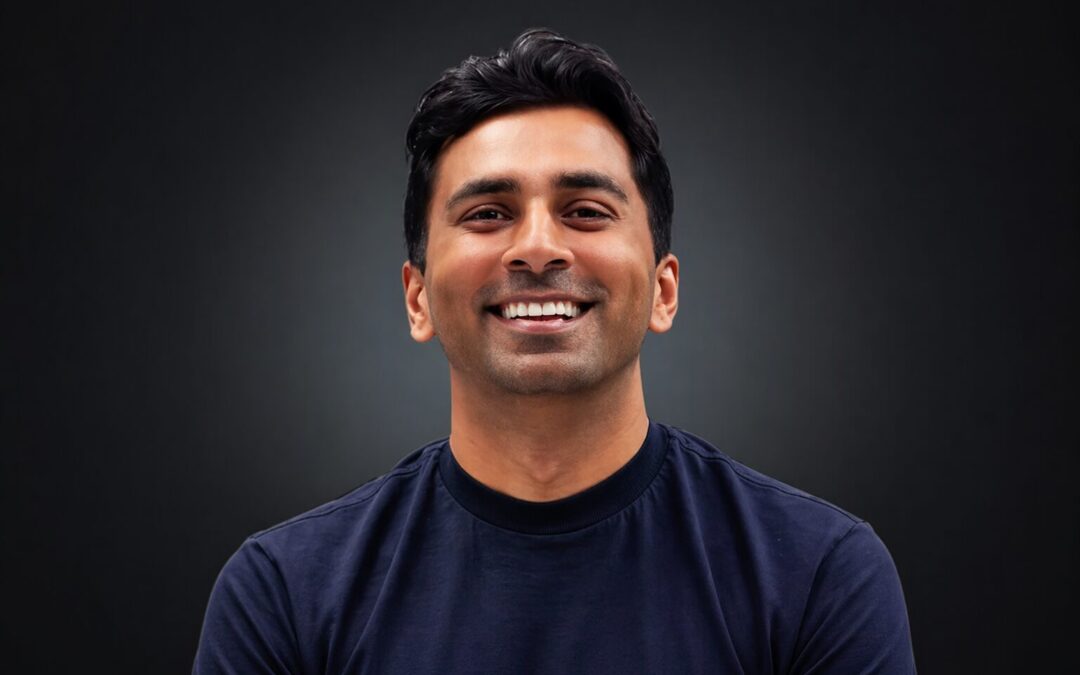
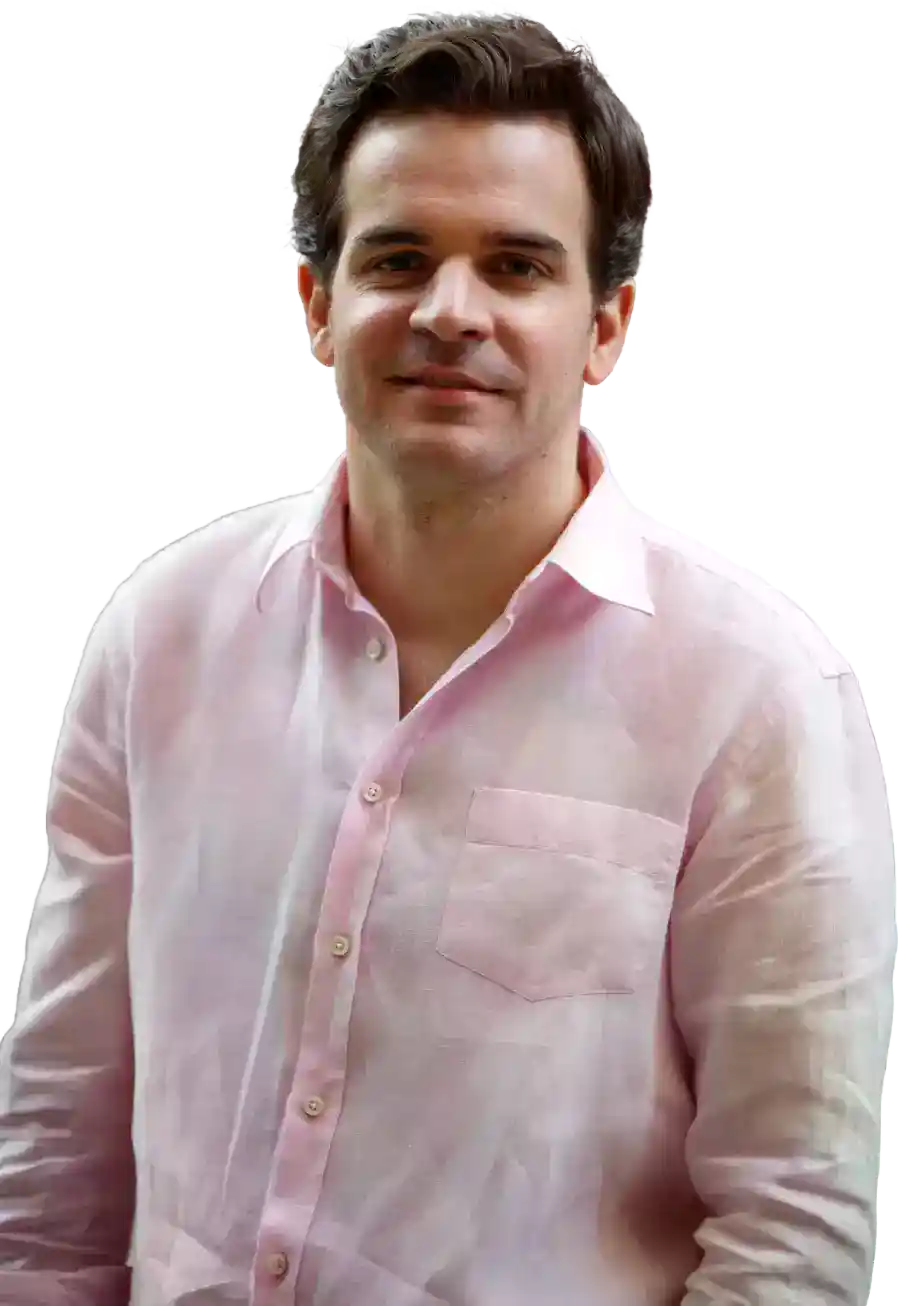
What does it really take to move from building a company to backing the next generation of founders? For Bilal Baloch, the journey isn’t just a shift in role—it’s a complete rewiring of perspective.
Bilal is now investing out of Abu Dhabi in some of the most ambitious AI startups globally, through Shorooq and Global AI Fund. Shorooq has received backing from top-tier investors including Select Venture Equity and Nour Nouf Ventures. Shorooq’s Global AI Fund is backed by Presight, part of G42, the world’s largest AI holding company outside the US and China.
In this episode, you will learn:
- Early exposure to diverse perspectives sharpens instincts about risk and opportunity.
- Academic rigor, when applied correctly, becomes a powerful tool for real-world decision-making.
- Depth of expertise in a specific region or sector creates outsized value in global markets.
- Startups are less glamorous than they appear—execution is messy, slow, and often lonely.
- Founders must lead sales early on, as customer insight is the ultimate competitive advantage.
- The Middle East’s startup ecosystem is rising fast due to aligned capital, policy, and talent.
- In AI, the winners will combine domain depth, global ambition, and a thoughtful view of long-term impact.
SUBSCRIBE ON:
 iTunes
 Google Play
 Stitcher
 TuneIn
 RSS
RSS SoundCloud
 Spotify
Keep in mind that storytelling is everything in fundraising. In this regard, for a winning pitch deck to help you, take a look at the template created by Peter Thiel, the Silicon Valley legend (see it here), which I recently covered. Thiel was the first angel investor in Facebook with a $500K check that turned into more than $1 billion in cash.
*FREE DOWNLOAD*
The Ultimate Guide To Pitch Decks
Remember to unlock for free the pitch deck template that founders worldwide are using to raise millions below.
About Bilal Baloch:
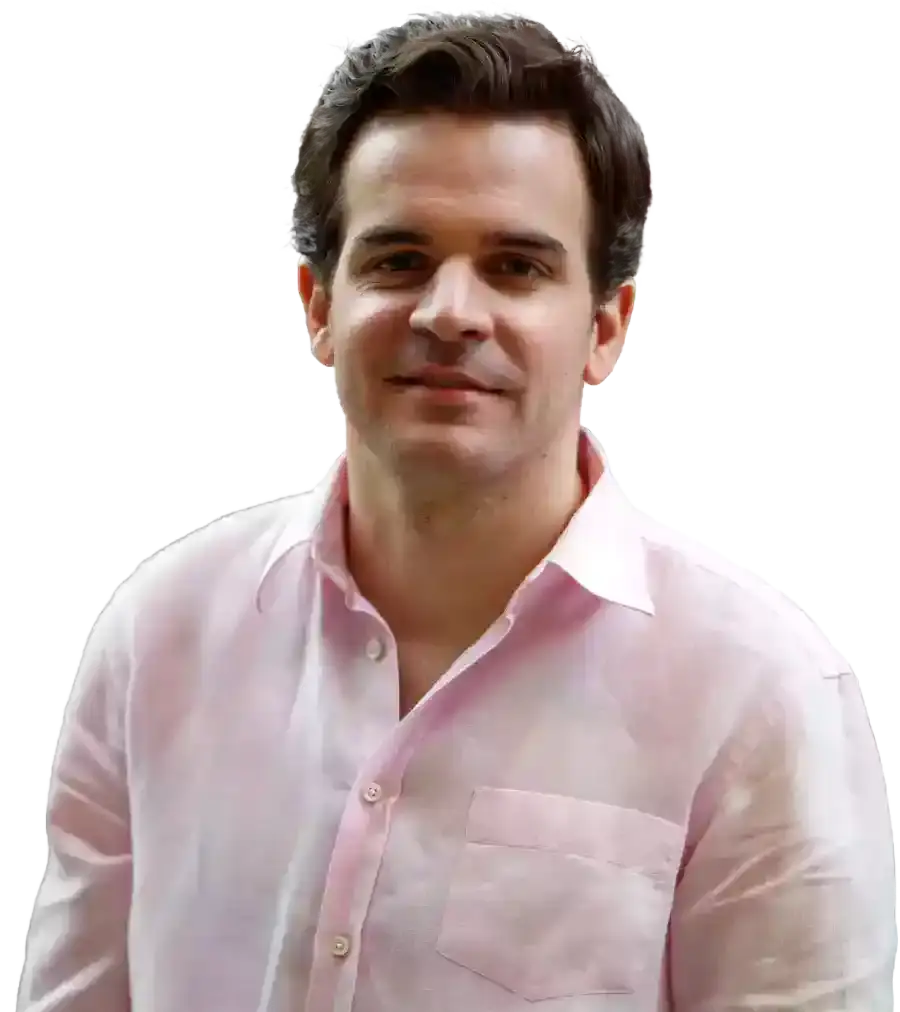
Dr. Bilal Baloch leads Shorooq’s AI investments as well as the value creation and strategy practice.
As Co-Founder and former Co-CEO of Enquire AI—a venture-backed software company leveraging artificial intelligence to deliver expert insights globally (exited to Uzabase)—Bilal brings over 15 years of experience at the intersection of technology, consulting, and academic research.
Bilal has advised governments and investors on complex policy issues and helped founders scale their businesses by blending strategic vision with practical execution.
Author of When Ideas Matter (Cambridge University Press, 2021) and former faculty at the Lauder Institute-Wharton School of Business, Bilal holds a doctorate from the University of Oxford, a master’s from The Fletcher School at Tufts University, and a bachelor’s from the London School of Economics.
Bilal currently sits on the board of the Georgetown Baratta Center for Global Business in Washington, D.C.
Bilal is also a co-inventor of the patented technology underpinning the Enquire AI platform. In his spare time, Bilal enjoys watching his beloved Liverpool, cooking, and attending live comedy.
Raise Capital Smarter, Not Harder
- AI Investor Matching: Get instantly connected with the right investors
- Pitch & Financial Model Tools: Sharpen your story with battle-tested frameworks
- Proven Results: Founders are closing 3× faster using StartupFundraising.com
Connect with Bilal Baloch:
Read the Full Transcription of the Interview:
Alejandro Cremades: Alrighty, hello everyone and welcome to the DealMaker Show. So today we have an amazing founder turned investor. We’re going to be talking about the journey of going from one side of the table to the other. And then we’re going to be talking about all of the good stuff too when it comes to investing, and what’s happening as well in the Middle East with the venture space. So again, a lot of good stuff, a lot of pattern recognition, things that work, things that don’t work.
Alejandro Cremades: I think you’re all going to find the conversation quite inspiring. So without further ado, let’s welcome our guest today, Bilal Baloch. Welcome to the show.
Bilal Baloch: Thank you for having me, Alejandro.
Alejandro Cremades: So originally, you were obviously with parents that were immigrants in England. And I’d love to hear, how was childhood and day-to-day life growing up over there?
Bilal Baloch: Yeah. Well, look, I’m a big fan of what you’ve been doing here and the stories you’ve been pulling out and telling. So glad to be here and sharing this with your audience. So I grew up in the UK.
Bilal Baloch: I grew up in East London, which is not too dissimilar to growing up in Queens, New York, or Dearborn in Michigan.
Bilal Baloch: You’re around a sea of immigrants from all over the world. And I grew up in a period where most of those immigrants were from former colonies of the UK—Pakistan, South Asia generally, the Caribbean, and parts of Africa.
Bilal Baloch: And so it was an incredible place to grow up, to imbibe and absorb different cultures, different foods, and different languages. It also allowed me to learn how different communities think about the world, right? Anyone who has spent time in first-generation immigrant communities in the UK or the US will know you can’t have a meal without talking about politics, business, or what’s happening in the world.
Bilal Baloch: And so I’d say, in many respects, it’s your first education—your first real education into seeing how the world works. And I take some of those lessons into my daily life even today.
Alejandro Cremades: Now, one of the things that I wanted to ask you about is, it sounds like you kind of took this academic route. I mean, it was quite a collection of universities that you attended—London School of Economics, Tufts. I mean, really spectacular. So what got you into that path, and how did you suddenly switch gears and go into consulting?
Bilal Baloch: Yeah, so look, I think the headline answer is just having a chip on your shoulder. But the more detailed answer is that it’s born out of your first question about growing up in an immigrant community.
Bilal Baloch: You know, the focus is always on education.
Bilal Baloch: I think there’s an old quote attributed to Malcolm X about education being your passport into the future. And that was very much something that was focused on in my household, and I think in many households like it.
Bilal Baloch: So further study was always something that was inevitable rather than optional. I did my undergrad at the London School of Economics, and I was very fortunate to have a full scholarship.
Bilal Baloch: I studied philosophy, logic, and scientific method, which is a handful. But I think, especially now when I look at the impact of AI, it really gave me the frameworks on how to think.
Bilal Baloch: And so whether I went into academia, tech, or consulting, the sharpening of analytical skill was something that was taught to me early on. I then did my master’s at the Fletcher School at Tufts, which was a great window into international affairs—especially from the American perspective.
Bilal Baloch: It was really valuable, especially given how foreign policy, in my view today, impacts the world of finance and business in very acute ways.
Bilal Baloch: And then I went on to do my PhD at Oxford, really because I became very passionate about studying finance, crises, and especially financial crises and decision-making.
Bilal Baloch: My PhD at Oxford was on how governments in growth markets respond to crises—credibility crises—which then became a book called When Ideas Matter, published with Cambridge University Press.
Bilal Baloch: And that was my entry into teaching. That’s when I became a professor at the Lauder Institute at the Wharton School of Business, where I led the Middle East program and had the real pleasure of teaching some brilliant students who were equally interested in business and international affairs.
Bilal Baloch: So the red thread, Alejandro, is really wanting to go deeper into questions that animate me.
Bilal Baloch: Always having education and further education drilled into me from a young age by parents and community, and then also seeing a clear link between academic research and real-world applications—whether that’s consulting, building a company, or investing.
Bilal Baloch: I think building that academic muscle can really help you in the real world, even though people think you just sit in an ivory tower pontificating all day.
Alejandro Cremades: So then for you, consulting—tell us about consulting. Because I think that when it comes to problem-solving, consulting really gives you an edge in being able to grab big problems, break them into smaller ones, and then execute along those lines.
Alejandro Cremades: But how do you think it helped you frame problems and think about execution?
Bilal Baloch: An excellent question. So I think it’s worth mentioning upfront that I did a very specific type of consulting called global macro.
Bilal Baloch: As a global macro consultant, you’re advising decision-makers—typically on the buy side, often CEOs, hedge funds, and some corporates—on geopolitical risk and how global markets interact to create openings or closures for investments and business opportunities.
Bilal Baloch: And so in that world, what becomes very important is the depth of your expertise, especially geographically.
Bilal Baloch: That was my entry into consulting—having expertise in the Middle East, the Gulf, and South Asia, at a time when India was going through structural reforms, Saudi Arabia was beginning to liberalize its economy, and UAE institutions were maturing rapidly.
Bilal Baloch: We saw some of the fastest growth in sovereign AUM in history, and so the demand for my expertise was quite salient.
Bilal Baloch: So to answer your question more directly, the learning was in having depth in a specific sector or geography and translating that into actionable guidance for customers.
Bilal Baloch: And I think this type of consulting has only grown because there’s a recognition today that geopolitical and development variables are intimately tied to business and investment outcomes.
Alejandro Cremades: And then Inquire AI—at what point does the itch of entrepreneurship come knocking?
Bilal Baloch: So there are two parts to that answer. One is that the itch of entrepreneurship was always there.
Bilal Baloch: I grew up essentially on the floors of London markets—Camden Town, Brick Lane, Gate East. My father was a traditional market trader selling everything from t-shirts to souvenirs.
Bilal Baloch: So the desire to build and sell is in my DNA.
Bilal Baloch: The shift to entrepreneurship came from a disruption we saw in global macro consulting. Your business depends on the quality and speed of market intelligence.
Bilal Baloch: And what we realized was that getting to high-quality, actionable insights was too slow and too biased.
Bilal Baloch: Human networks are naturally prone to confirmation bias, which leads to very partisan views on things like elections or investment decisions in geopolitics.
Bilal Baloch: We wanted to build a faster, more objective, and more diversified way for decision-makers to access local market intelligence.
Bilal Baloch: So we disintermediated the consulting model—this was pre-ChatGPT.
Bilal Baloch: We built a platform where decision-makers could directly access experts around the world—not necessarily those with fancy degrees, but those closest to the action.
Bilal Baloch: And we used machine learning and AI at the time to verify, qualify, and connect insights.
Bilal Baloch: It was a fantastic journey—lots of mistakes, lots of wins, and many learnings on how to start and scale a company.
Bilal Baloch: And I’m not just talking about the likes of Careem, which is the equivalent of Uber in the region and was subsequently bought by Uber, or Souq.com, but others such as Tamara,
Bilal Baloch: Tabby, Lean, Immensa, Pure Harvest—the list goes on and on. And so clearly, something was happening in the region from an entrepreneurship standpoint.
Bilal Baloch: Then you shift gears and think about the capital, but also the quality of capital. Now, the region has always had an availability of capital. But when that capital starts to get more sophisticated and is actively looking to be part of the journeys of founders,
Bilal Baloch: is relevant and present on the cap tables of top tech companies, and is in the right rooms when it comes to fighting for allocation for startups and the best tech companies of the future, you begin to get a sense again that something different is happening here. Risk capital, as I’d put it, is really beginning to take shape.
Bilal Baloch: So I’d say those two factors were the main professional drivers. And I was very fortunate to land at Shorooq in doing so.
Alejandro Cremades: So then let’s talk about Shorooq. How did the opportunity of Shorooq come to you? Walk us through that thought process of, “Hey, now I’m going to become an investor.” It’s quite a change in course of direction here.
Bilal Baloch: Yeah. What makes Shorooq unique and what attracted me to Shorooq is that it is one of, and perhaps the only, purely private VC fund born and bred out of Abu Dhabi.
Bilal Baloch: It was also the first one to get regulated in ADGM, which is the main Abu Dhabi regulator and economic free zone. Why is that important? Well, Alejandro, you’ve had some wonderful guests on your show, and I’m sure you’ve picked this up between the lines.
Bilal Baloch: Capital is not enough to find and invest in the best founders, right? You need the muscle and the institution to go out and fight for the best founders.
Bilal Baloch: You need to fight to show them that you can add value. You need to observe and see what’s happening around the corner in a particular industry and sector so you can bet on the right founders. You need to have, for lack of a better phrase, the gut to deploy risk capital that early, when information is so thin and, in many respects, lacking, to fully understand what’s happening in a particular sector or company.
Bilal Baloch: Capital is not enough to digest all of that when you’re an investor. And so while the region has always had the availability of capital, and venture vehicles that are semi-government or government spin-outs, or attached to a development organization, etc., I think it has to be your bread and butter, your daily grind,
Bilal Baloch: to be a VC, especially an early-stage VC. And so, to borrow a framework from the world of defense and security, being a venture capitalist often means you have to conduct counterinsurgency.
Bilal Baloch: You have to go and win hearts and minds. You have to identify local trends and absorb a lot of different variables.
Bilal Baloch: And only then can you start to really get to the best deals. Shorooq is a prime example of that. They started life in 2017 with two of my partners who founded the firm. One is an Emirati and one is a Korean, which sounds like a pub joke, but it’s also illustrative of what the UAE is about, which is bringing together people from disparate backgrounds and cultures. They met, funnily enough, working in Palo Alto for GlobalFoundries, which is a semiconductor company owned by Mubadala, and said, “Hey, why are we here working for a massive tech company owned by a UAE sovereign wealth fund in Silicon Valley?”
Bilal Baloch: “Let’s go and do this and take the risk in our own home market.” They started investing out of sub-$5 million. Today, fast forward seven years, and we oversee a billion dollars in AUM and counting.
Bilal Baloch: I would argue that is all down to the strength and muscle that we have in finding opportunities early and backing them early. That has led us to getting the support of all the sovereign wealth funds in the region. I think we’re backed by more sovereign wealth funds than any other fund in the world.
Bilal Baloch: And I think that is because we are on the ground. We’re gritty and agile, but at the same time, we’re globally ambitious and looking to invest not just in the region, but around the world.
Alejandro Cremades: That’s a very interesting approach too, especially as you guys have gone from $300 million to $1 billion. At the stage you’re at, it’s not that easy to really activate those sovereign players to come in. Typically, you see them more in private equity, or big funds.
Alejandro Cremades: What do you think they saw in you guys that really got them to say, “Hey, we want to get involved here?”
Bilal Baloch: Yeah. And again, maybe this is another episode or a different conversation over coffee, but it’s very hard. And while we get applauded a lot for our fundraising journey, I think we’re only scratching the surface.
Bilal Baloch: Today still, the notion of venture capital, the economic logic of venture capital returns, and risk capital in general, are not fully imbibed, I would argue, by most markets and countries outside of the US, especially in growth markets like the GCC. So just to be clear, I think
Bilal Baloch: it’s taken a lot of hard work, a lot of convincing, and a strong track record to get to this point. But I think there’s a long way to go. How have we done it? I think one deal at a time.
Bilal Baloch: One deal at a time, and really showing the value that technology brings to an emergent ecosystem. If you think about our early investments and our early bets, they are at what I would call the infrastructure layer of an entire economy.
Bilal Baloch: Payment rails, open banking systems, AI for KYC and criminal activity,
Bilal Baloch: companies that are trying to change the way supply chains function, food security, and the infrastructure layer of what’s needed in areas like finance, food, and cybersecurity.
Bilal Baloch: These are the bets we made. Why has that been important? Because a few different variables came together. Number one, the incumbents were, quite frankly, not quick enough to digitally transform.
Bilal Baloch: That is a story well told in most markets where tech disruption happens. The second, and this is somewhat unique to the region, is that regulators and decision-makers were very front-footed on wanting technology and AI to be a key part of the future of their economy.
Bilal Baloch: So they did not step in to thwart digital transformation. And the third is the abundance of capital. By making those bets early and finding those founders early, we were able to show sovereign wealth funds that have backed us, but also family offices and other LPs that have come in since, that you can actually build not just…
Bilal Baloch: highly valuable and innovative tech companies in the Middle East, North Africa, and South Asia.
Bilal Baloch: But actually, they have a very distinct and impactful role to fill in the economies of those countries, right? So let me just give you one example of one of our companies, Tamara. Tamara is the buy now, pay later equivalent for the region. For those listeners who have used the likes of Klarna and others, it is very similar.
Bilal Baloch: Now, they tweaked the model in very important ways to make it Sharia compliant. For those of your listeners who aren’t aware, most Muslim-majority countries in the region have a very strong and deep culture around Sharia when it comes to Islamic finance, with a focus on interest-free systems and avoiding usury when it comes to financial mechanisms and architectures.
Bilal Baloch: Tamara was not only able to transition what is a traditional buy now, pay later tool to make it Sharia compliant. They were also able to roll that platform out and sell it in a market where, historically, 90% plus of people have mainly used debit cards for purchases. I mean, can you wrap your head around what that means when you compare it to markets like Europe and the US when it comes to debt-to-income ratios?
Bilal Baloch: So not only are you innovating on the model, you’re also trying to change the behaviors of what it means to consume and spend. And it’s not just Tamara. Tabby, which is Tamara’s main competitor and another fabulous company, has done that as well. Today, we have buy now, pay later being adopted by the banks,
Bilal Baloch: because they historically haven’t fully understood what credit would look like for a consumer class in these markets.
Bilal Baloch: So all that is to say is that building unicorn companies in growth markets today, the attraction and seduction is not just getting to a valuation of a billion, two billion, three billion and beyond, building businesses that are doing hundreds of millions in revenue, and building great tech. You are fundamentally shifting the way societies respond and behave.
Bilal Baloch: And that is coming after the innovation. Usually, in most developed markets, the innovation responds to something they see in the market. But we’re seeing, in many respects, the opposite happening in growth markets. And that is incredibly exciting.
Alejandro Cremades: So you started the Global AI Fund within Shorooq. And obviously, when it comes to AI, there’s just so much going on right now. It’s a crazy world. I mean, Anthropic, OpenAI, the crazy rounds that they’re doing—obviously, that’s impacting valuations all across the board too, and the hype across this segment.
Alejandro Cremades: What are you seeing in the market as a whole, especially since you’re doing it from a global lens? What are you seeing in the market, and where are things going?
Bilal Baloch: So, there is no doubt that the best founders, the best innovation, and some of the most cutting-edge applications for AI are still emerging out of the US, and very specifically Silicon Valley.
Bilal Baloch: Having said that, I have spent the last 18 months in Europe and Asia, traveling the whole world. What’s exciting is that, unlike the previous paradigm shifts around hardware, software, and mobile, this one seems to be global from day one.
Bilal Baloch: And what that means is that an open model can be built in Silicon Valley, but
Bilal Baloch: agentic AI companies that can disrupt entire industries, built off those open-source models and others, can emerge out of Frankfurt or Seoul.
Bilal Baloch: And all of this is happening in a matter of weeks and months, not years. I think sometimes we don’t have a full recognition of lived history, and this is a historical moment. So that would be my first observation: the pace at which this is a global…
Bilal Baloch: global feature is really remarkable. And that’s great for me because I’m investing globally, right? I’m happy to invest in AI companies in Singapore, New York, London, or Karachi. Now, you mentioned valuations.
Bilal Baloch: There is no denying that they feel inflated, and they certainly feel as though something very new and different is happening. I mean, you’re talking about $2 trillion IPOs and, just today or yesterday, the news of Jeff Bezos announcing his new company,
Bilal Baloch: the first time he’s going to be active in an operator role in an AI company, coming out of the bat swinging on a $40 billion valuation, right? No bricks on the ground, as they say.
Bilal Baloch: So the valuations, the round sizes, and the competition, Alejandro, to get allocation in rounds is something I’ve certainly not seen before, both as an outside observer and now as an active investor.
Bilal Baloch: Having said that, I think it begs the question then: what can you bring to the table beyond capital? And that’s where, at least from our side, we come in. Because I make no bones that I’m not going to necessarily win on check size alone.
Bilal Baloch: Right. If I go into all the different countries and cities around the world that I mentioned, in all of them, there are local players that know that ecosystem better than I do, know those founders better than I do, and have been tracking some of those companies and founders for longer than I have.
Bilal Baloch: And it would be presumptuous and inauthentic for me to turn up and say, “Take my money.” So what do we bring? Our Global AI Fund is backed by G42. G42 is the largest AI holding company in the world outside of the US and China.
Bilal Baloch: They mainly operate and build businesses and companies, especially in very critical global sectors like space, defense, energy, and so on and so forth.
Bilal Baloch: There are two funds in their ecosystem. One is MGX, which is a juggernaut and does minimum $500 million checks, and has been leading rounds and sitting on the cap tables of some of the world’s leading AI companies.
Bilal Baloch: And the other fund is ourselves. I come in much earlier, at the pre-seed stage. And what that enables us to do is not just invest, but say to founders that, “Look,”
Bilal Baloch: AI is global from day one. You should be thinking not just about your home market, but also other markets of interest where your product and your technology can flourish.
Bilal Baloch: And the Middle East, South Asia, and North Africa are one of those regions, right? You have hundreds of millions of people. Most of them are between 18 and 35. There are institutions and customers ready and waiting to leverage your technology.
Bilal Baloch: And we can open that market for you, certainly help to do it. The second is access to growth capital. 40% of my LPs do co-investments with us.
Bilal Baloch: If we invest in you at the pre-seed stage, there will come a time when you will want to raise much bigger rounds and bring in much bigger checks, and get more sophisticated global capital into your cap table.
Bilal Baloch: We can help facilitate those conversations because we are a trusted partner of those funds and entities. And then the third is access to architecture like compute and talent that, arguably today outside of the US and China,
Bilal Baloch: the UAE and the region specifically is the third rail on AI. And that kind of access—regulatory, compute, and others—is very important for AI founders building today, especially if they’re building in ecosystems where regulation has not been so favorable to them.
Alejandro Cremades: So as you’re looking at companies now in the global AI space, I guess the question that comes to mind is, what are the three things that are an absolute must for you?
Bilal Baloch: That’s a very good question.
Bilal Baloch: So the first is domain depth. The kind of AI companies that we’re looking for are, in the main, ones that can really dominate and go deep in a particular vertical.
Bilal Baloch: And for that, we’re looking for founders and management teams that have the experience, the technical know-how,
Bilal Baloch: and the obsession to really go deep on a particular industry and sector. And within it, very deep but slim layers of challenges and problem sets.
Bilal Baloch: I mean, I can give you some examples. We’ve invested in companies like Candid Intelligence. Candid Intelligence is solving for a critical but huge layer within the industrial construction and energy space, which is EPCs and the bidding process, where tens of millions of dollars are often lost in bids.
Bilal Baloch: And they’ve built a verticalized AI tool that is able to help these bids go through on time, be far more reliable, and far more in line with regulatory expectations. Huge market, massive problem, but what many would call boring AI.
Bilal Baloch: That’s what I’m looking for. And I’m looking for the right experts to do it. So that’s one.
Bilal Baloch: The second is I’m looking for companies that are global from day one. And what I mean by that is market growth naturally has to be sequenced, right? That is what a sober founder does.
Bilal Baloch: But I want to be able to see that you have a clear pathway to being a global company, because that’s also where my value add comes in.
Bilal Baloch: I don’t want to sit there and be dumb capital on a cap table. I want to be able to add value, and I want to be able to help open up markets and open up opportunity. And that is much more likely to happen with a management team and a founder that is very serious about expanding into Asia, expanding into the Middle East, expanding into Africa, and taking advantage of the fact that AI is quite frankly an arms race, and it’s a global one.
Bilal Baloch: So that’s second. And then the third is something that I think doesn’t get mentioned a lot when it comes to investing in early-stage companies.
Bilal Baloch: That is a team and a management team that is, for lack of a better phrase, really looking to make a positive impact on the world that AI is going to leave behind. I see that some of the more thoughtful founders are thinking about the repercussions and the impact that AI is going to have on society and the economy around them.
Bilal Baloch: And that thoughtfulness, for me, is a proxy of serious people who are not just building in a vacuum and will go on to build some of the world’s biggest companies.
Bilal Baloch: Take, for example, someone like Elon Musk or Brett Adcock, right? When you speak to these people or hear them, what makes them different is that they are very thoughtful about their businesses as part of a much larger ecosystem of people, commercial activity, laws, and regulation.
Bilal Baloch: And they think deeply about the future of human development. And they’re not unique, right? They are, of course, wonderful and special entrepreneurs.
Bilal Baloch: But that kind of thinking doesn’t need to be just the domain of those that make it. You want to see some light of that early on as well.
Alejandro Cremades: This is so profound, Bilal. I guess the question that comes to mind is, after all the stuff that you’ve seen now on the other side of the table—because you get to really see what works, what doesn’t, and you get to build that pattern recognition—
Alejandro Cremades: if you had the opportunity of seeing that younger Bilal, coming out of consulting ready to rock with his first business, with Inquire AI,
Alejandro Cremades: and you had the opportunity of giving that younger self one piece of advice before launching the company, what would that be and why, given what you know now?
Bilal Baloch: Excellent question.
Bilal Baloch: Look, first of all, there’s a lot of advice I would give to that person. But then I wouldn’t have learned from all the mistakes that allow me to work so closely with my founders today. I think I alluded to it earlier, and I’d emphasize it again, which is: products find their way.
Bilal Baloch: Alejandro, products find their way. Founders find their way to capital and fundraising. These journeys are messy and chaotic, but you get there.
Bilal Baloch: What you don’t have an opportunity to do—and there is an Overton window of sorts for this when you’re an early-stage founder—is to really be close and live and breathe how your customers think and how your customers use products like your own.
Bilal Baloch: Because that is the only saving grace for whether your product works. And if it doesn’t work, to be able to pivot in another direction. And if none of the above is working, to be able to build relationships that may give you an opportunity and inspiration to build something completely new.
Bilal Baloch: That only happens when you are ground zero and in the trenches with your customers. And I can sometimes see why founders don’t do it, or fall into the trap of not doing it.
Bilal Baloch: But if founders were obsessive about one thing, and that was it, we would see a lot more successful companies emerging across the ecosystem.
Alejandro Cremades: I love that. Now, Bilal, for the people that are listening—which I’m sure is quite a few founders tuning in—what would be the best way for them to get in touch, be able to reach out and say hello, and perhaps even learn more about the type of stuff and investments that you guys are doing at Shorooq?
Bilal Baloch: Yeah. So I’m weirdly obsessive and I check all my LinkedIn messages. I may not always reply, but I read all of them. And I’m also one of those people who likes to read and ruminate on cold emails. So if you want to reach out to me on email, my email address is bbaloch at sharuk.com. If you have something to pitch or just want to get in touch, reach out.
Alejandro Cremades: I love it. Well, Bilal, thank you so much for being on the DealMaker Show today. It has been an absolute honor to have you with us.
Bilal Baloch: Thank you. The pleasure is all mine.
*****
If you like the show, make sure that you hit that subscribe button. If you can leave a review as well, that would be fantastic. And if you got any value either from this episode or from the show itself, share it with a friend. Perhaps they will also appreciate it. Also, remember, if you need any help, whether it is with your fundraising efforts or with selling your business, you can reach me at al*******@**************rs.com
Podcast: Play in new window | Download
Subscribe: Apple Podcasts | Spotify | TuneIn | RSS | More
Facebook Comments