


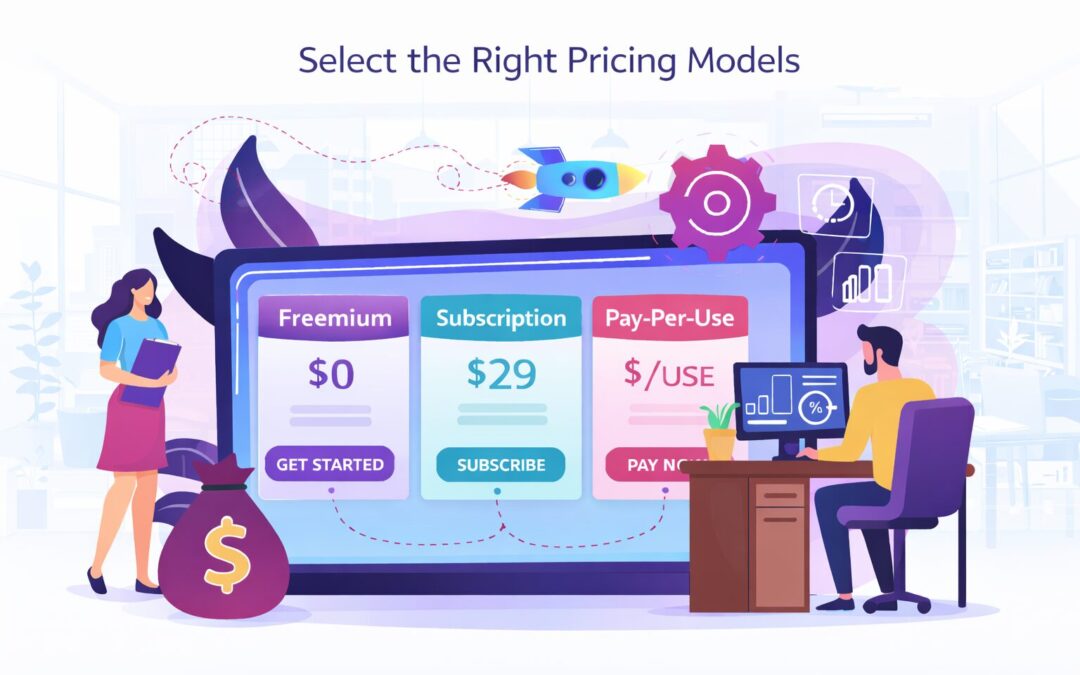
How would you select the right pricing models for sustained startup growth? Optimal pricing is essential to ensure revenue and profitability, which in turn impacts long-term scalability. This is why investors are keenly interested in your pricing structure, as it influences the returns they can expect.
Every founder must thoroughly analyze the market and competitors before determining a reasonable price for the company’s products. Don’t forget that it’s one of the main aspects investors note in the business model slide of your pitch.
Several factors influence how you price a product, such as unit costs and the expected profit per unit. Using these numbers, you’ll develop an overall pricing strategy that makes sense to customers when compared against similar products. Pricing is dynamic, and balancing costs vs. profits is crucial.
You’ll explore various pricing models before selecting the one that delivers the highest returns to the company. That’s how you’ll unlock higher revenue, capture significant market share, and ensure customer retention that ultimately drives growth.

*FREE DOWNLOAD*
The Ultimate Guide To Pitch Decks
Understanding What a Pricing Model Is
A pricing model is the strategy you’ll adopt to calculate the price of the products you offer customers. This model must align pricing with your target market, customer needs, sector, product category, and long-term company goals.
Production costs aside, you must account for customers’ perceived value of the product, industry benchmarks, and competitors’ pricing. It’s about balancing the company’s revenue and profit goals with a price that customers will pay.
You’ll start by calculating the per-unit manufacturing costs and the minimum price required to break even. Next, you’ll add the profits you’re expecting. To select the right pricing model for sustained startup growth, analyze the core strategies companies use.
Commonly-Used Pricing Models
Here’s a quick look at the most common pricing structures companies adopt:
Basic Pricing Structures
- Cost-based pricing: Also known as markup pricing, this is the most basic pricing approach. You’ll add up the total production cost per unit. Next, you’ll add a percentage markup to the cost, based on the expected profit margin, to arrive at the final selling price. The formula is (Total Production Cost) × (1 + Desired Profit) = Selling Price. Typically, startups that have developed disruptive technologies to lower production costs leverage this strategy to overtake competitors.
- Value-based pricing: This model assesses the value customers derive from the product to determine a dollar value. The benefits and positive outcomes from the product’s use drive its pricing. Ultimately, it’s about how well the product resolves the customers’ pain points, or the savings users can generate by leveraging the product’s usage in a home or work environment.

Raise Capital Smarter, Not Harder
- AI Investor Matching: Get instantly connected with the right investors
- Pitch & Financial Model Tools: Sharpen your story with battle-tested frameworks
- Proven Results: Founders are closing 3× faster using StartupFundraising.com
Introductory Pricing Structures
- Freemium model: This strategy gained traction when platforms such as LinkedIn and Dropbox adopted it. You’ll offer customers the free version of the product with limited features so they can test its suitability. The objective is to maximize the number of users who sign up and adopt the product. Once they derive sufficient value from it, they may be interested in upgrading to the paid version. This version will have advanced features for pro users. Some companies also offer customers freemiums, but only for a limited period. Once the initial trial period ends, users must upgrade to the paid version.
- Penetration pricing: This strategy is suitable for startups launching new products in highly competitive markets. Your objective here is to capture market share quickly while creating the necessary buzz to attract clients.
- Competitive pricing: This approach uses competitors’ pricing as the benchmark, disregarding production costs and customer expectations. You’ll set a price tag that matches or is lower than what your competitors charge for their products.
- Premium pricing: This model aims to create an impression of exclusivity among customers. The product’s introductory price is higher than market standards to signal its superiority to similar products. The idea of purchasing a status symbol prompts customers to pay the item’s perceived value. Each time you launch new versions, you’ll discount the prices of older ones, as Apple does. This strategy, also known as price anchoring, involves setting a baseline price for the product.
- Price skimming: When a company uses the skimming approach, it prices its products at premium levels to create hype. Typically, startups developing an innovative product, such as a game or technology, leverage this strategy. As the hype subsides, the company gradually lowers prices to sustain sales.
Pricing Models Tailored for Customer Needs
- Subscription-based pricing: This approach involves users paying a recurring fee for the product or service. The fee can be annual, monthly, or quarterly, allowing customers to access the product. Payments are not one-time, but they are made over time. The key advantage is that it lowers the barrier to entry and generates revenue while delivering lifetime value (LTV). You’ll add upgrades and new features, consistently increasing value. Sectors such as SaaS, financial services, and legal services are great examples.
- Usage-based pricing: This pricing model charges customers based on their use of the product or service. They can pay only for the value they derive from the product, and only while they are using it. Enterprise-level SaaS, per-seat pricing, and carrier mobile phone packages are examples.
- Dynamic pricing: This pricing structure is flexible and aligns with changing market conditions. This is why it is also known as surge or demand pricing. The company adjusts prices based on supply and demand, customer behavior, and competitor pricing. A cab company raising rates during rush hour when demand peaks is a good example.
- Tiered pricing: Understanding your customer demographics helps you select the right pricing models for sustained growth. With tiered pricing, you’ll offer different versions of the product with varying features that appeal to a range of customer needs. Users who need advanced features can pay for pro tiers, while those who need only basic features can continue with the starter versions. This strategy enables you to serve a diverse customer base and deliver exactly what they need, such as pro versions for business and enterprise needs and basic versions for individual users.
Portfolio Pricing – Playing on Customer Psychology
Companies with a broad product portfolio benefit from this pricing model, offering highly competitive prices to gain customer loyalty. But their real profit margins come from impulse purchases of additional products made by customers while browsing the store.
These companies also benefit from bulk purchases during the Holidays and other events. Think retail stores like Walmart or e-commerce stores like Amazon and Etsy.
Pricing Add-Ons
Companies that use the add-ons approach sell their core products at low or competitive prices. Their actual profits come from add-ons that customers must purchase to continue using the core product. This pricing model is also known as the “Razor and Blades” model, or Captive Product pricing.
Here, the company focuses on developing an anchor and leverages the “lock-in” effect. For instance, printers. Users must purchase toner and 3B printing filament, which are not exactly cheap.
Other top examples include video game consoles like Sony (PlayStation) and Microsoft (Xbox), and coffee machines. Users must purchase new games and coffee pods to continue using them.
Keep in mind that storytelling is everything in fundraising. In this regard, for a winning pitch deck to help you here, take a look at the template created by Peter Thiel, Silicon Valley legend (see it here), that I recently covered. Thiel was the first angel investor in Facebook with a $500K check that turned into more than $1 billion in cash.
Remember to unlock the pitch deck template that founders worldwide are using to raise millions below.
How to Select the Right Pricing Models for Sustained Startup Growth
Selecting the right pricing structure is undoubtedly about maintaining a consistent revenue stream that investors appreciate. However, it can also be about projecting the brand’s value. A price that is too low signals that the product quality is inferior or that it lacks essential features and utility.
On the other hand, if the price is too high, the brand could lose out to more economical competitors. Before you choose the right structure, understand that pricing is an ongoing process that should be consistently refined.
Keep your finger on the market pulse by conducting regular research and gathering information on new trends and launches. You’ll also watch competitor activities and how their pricing evolves. Start by hiring a marketing team to monitor the market and optimize pricing as needed.
You’ll also adopt the right pricing models, ensuring they are easy to adopt and understood by every department. For instance, marketing executives should be able to explain them to customers as they make the final purchase decision.
Also, explore adopting hybrid pricing strategies, particularly if you have a diverse product portfolio and customer demographics. Again, you’ll align each model with customer needs and the value they derive from the product.
Consider testing different pricing options with customers to determine the right fit. They should find it convenient to make payments and accept deliveries. On the other hand, you need a system that streamlines financial processes and accounts receivable management.
Marketing and pricing teams typically work together to maximize sales and consequently, revenue and profits. If you’re looking for more information about how to create a marketing plan, check out the video below:
Begin by Researching the Target Customer Base
The sustained success and growth of your company rely solely on customer interest in its products. As long as they derive sufficient value, they will be open to making purchases that drive your revenue. Your pricing structure should align with that value—the best way to determine it is to ask customers.
What are customers looking for? Have you achieved the ideal product-market fit that can prompt brand loyalty and repeat purchases? Interacting with your users through surveys and interviews will give you an overview of their expectations. Also, monitor social media and reviews for feedback.
You’ll ask about their perceptions of quality and how the product meets their needs. Also, ask about the advanced product features they’re looking for. This information will help you expand your product portfolio for rapid growth and determine the optimal pricing.
Keep in mind that once you build trust and loyalty, customers will be willing to pay premium prices for products. Ultimately, it’s about serving them and their pain points with top-notch solutions.
To select the right pricing models for sustained startup growth, consider asking long-term clients about their needs. What is the payment structure that works best for them?
Would they prefer to pay for the product upfront with a one-time payment? Or would they prefer to subscribe on an annual basis? If you’re providing enterprise-level software, offer per-seat payment terms that could be more cost-effective for them.
Accordingly, you’ll devise customized pricing models for long-term client retention and confidence.
Next, Research Competitors’ Strategies
Conduct a comparative analysis of your competitors’ pricing strategies and profit margins, and match them against your own. Your objective is not to underprice your products just to grab a market share. It’s to understand the ongoing market standards and customer buying trends.
You’ll set pricing based on value creation, considering how your product’s performance stacks up against the competition. Factor in manufacturing costs, including materials, labor, and know-how.
If your product’s features and quality are significantly superior, you may consider charging a premium price. However, also evaluate the comparable functionality and if the higher prices make sense.
Aside from competitor pricing models, you’ll also assess customer purchasing trends and usage patterns. If buyers express interest but negotiate aggressively or wait for limited-period discounts, you could consider lowering prices. Always infuse flexibility and adaptability into the models you pick.
Also Run an Internal Analyses
Your pricing structure should account for the brand’s unique selling proposition (USP). Ensure you monetize it effectively and that it provides value to customers. Even if your product is a one-time purchase, you’ll work out the lifetime value (LTV) buyers derive and price it accordingly.
Your internal analysis should center on the business model and the company’s intended future growth trajectory. If you’re developing a premium product, pricing should cover ongoing research and development to enhance features and maintain that edge.
However, if you’re manufacturing fast-moving consumer goods (FMCG), your objective will be to capture the largest market share possible. You’ll set your pricing so customers consistently prefer your brand over competing offerings.
In Conclusion!
When you select the right pricing models for sustained startup growth, remember that flexibility is the key. You need to continually research the market, competitive landscape, and customer needs, and refine your pricing structure accordingly.
Also, periodically run simulations and models to assess the impact of your strategies on brand loyalty and long-term sales. That’s how you can ensure sustained growth and scalability.
You may also find our free library of business templates interesting. There, you will find every single template you need to build and scale your business completely, all for free. See it here.



Facebook Comments