



Building a startup is rarely a straight line. But in Isaiah Granet’s case, it’s closer to controlled chaos. His path was marked by pivots, near-bankruptcy moments, unconventional decisions, and a relentless obsession with building.
From sleeping on a closet floor in San Francisco to betting his company on a $1M GPU commitment with only $400K in the bank, Isaiah’s journey traces the path of hiring non-traditional talent, adapting to unfavorable capital markets, and operating with urgency when the odds are stacked against you.
This is the story of how Isaiah built Bland—a voice AI company redefining how businesses and consumers interact over the phone—and what founders can learn from the unconventional path that got him there.
Listen to the full podcast episode and review the transcript here.
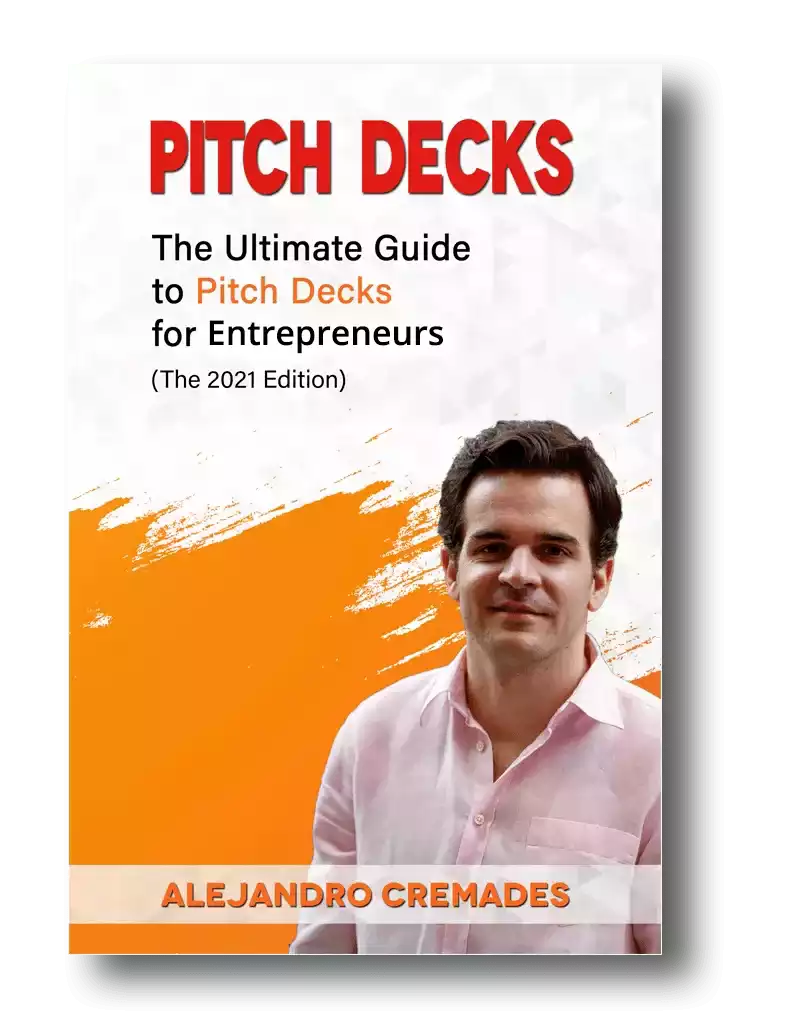
*FREE DOWNLOAD*
The Ultimate Guide To Pitch Decks
Early Signals: Building Before It Was Cool
Isaiah grew up in San Diego in a supportive, education-focused household. But even early on, there were signs of a builder mindset. He started and ran a nonprofit for kids with special needs that lasted over a decade. Its objective? To help kids with developmental disabilities play sports.
While most kids were focused on school and sports, Isaiah was already learning community values and how to organize, lead, and create impact. That instinct only deepened in college at Washington University in St. Louis.
Initially focused on marketing and economics, Isaiah had a moment that completely changed his trajectory. During a sophomore year marketing class, a visiting Google engineer demonstrated early AI capabilities—showing how ads could be generated automatically.
That single demo triggered a realization: the world was about to change fast. Isaiah immediately switched to computer science and economics. From that point on, he became obsessed with building—challenging himself to ship a new project every weekend.
This self-imposed cadence didn’t just sharpen his technical skills; it wired Isaiah to operate with speed and consistency. He fell in love with building.
COVID: The Unexpected Catalyst
For many, COVID was disruptive. For Isaiah, it was transformative. For the first time in his life, the usual pressures—academic competition, career progression, structured timelines—came to a halt. That pause created space. Instead of drifting, he leaned into it.
Isaiah used the time to build, explore, and think more deeply about what he actually wanted to create. Looking back, he credits this period as a key catalyst behind his entrepreneurial path and, ultimately, the founding of Bland. This time was incredibly valuable for him as a person.
From Stability To Chaos: Sleeping On A Floor In San Francisco
After graduating, Isaiah made a decision that most would consider reckless. He rejected the traditional career path and joined an extremely early-stage startup with just $50K in pre-seed funding from an angel investor. Initially, he was supposed to move to New York.
But, shortly after, Isaiah doubled down—abandoning plans to move to New York and relocating to San Francisco instead. There, he found himself living in a hacker house with 21 other pre-seed and seed founders. The house had seven bathrooms, but he didn’t have a room.
No room and no bed. Just a closet floor, Isaiah recalls. But what he gained was far more valuable: proximity to people who were just as obsessed with building as he was, and San Francisco’s incredible energy.
That environment accelerated his ambition and led to a pivotal connection—Sobhan Nejad, his future co-founder.
Raise Capital Smarter, Not Harder
- AI Investor Matching: Get instantly connected with the right investors
- Pitch & Financial Model Tools: Sharpen your story with battle-tested frameworks
- Proven Results: Founders are closing 3× faster using StartupFundraising.com
First Attempt: A Startup That Didn’t Work
Isaiah and Sobhan quit their jobs with no funding and no clear plan. They started a healthcare company and began the grind of angel fundraising. It took 40 investor meetings just to get a single “yes.” They raised less than $300K and were weeks away from running out of money entirely.
The duo came close to being homeless, with no money, and moving into Sobhan’s mom’s garage. Isaiah views the situation as motivating because it pushed them to work harder. So, they pushed forward and eventually got into Y Combinator—a milestone many founders view as a turning point.
But instead of unlocking momentum, it exposed a deeper problem. Isaiah and Sobhan didn’t have product-market fit. The breaking moment came during what they thought would be a major enterprise deal.
After 10 meetings, the duo realized the customer fundamentally misunderstood their product—and had no interest in what they were actually building. Isaiah recalls that the customer was a multi-chain clinic group with 10 locations throughout California.
The cofounders were looking at a $110K contract, which would have taken them to the next stage of their company development. But it became increasingly clear that the group’s CTO and CEO believed they were buying an entirely different software product than the one Isaiah and Sobhan were selling.
That’s when reality hit. Three-quarters into YC, they shut the company down.
The Pivot: From Frustration To Breakthrough
After shutting down their first startup, Isaiah went through a brief but intense period of uncertainty. Then a simple, almost trivial problem sparked the next idea. A restaurant near his home only accepted phone orders. Frustrated, he wondered: could AI make that call for him?
This was back in July, 2023, well before anyone was doing anything with voice AI. Isaiah spent 8–12 hours hacking together a solution using early tools—connecting speech-to-text, text-to-speech, and telephony systems. The result was far from perfect. It had five seconds of latency. But it worked.
More importantly, it was the most fun Isaiah had experienced in months. That was the signal of product-market fit. In August 2023, they went all-in on voice AI.
Rejection At Scale: 180 “No’s” After YC
If this were a typical startup story, the pivot would lead to immediate success. It didn’t. At YC Demo Day, Isaiah and Sobhan ranked in the bottom 10% of their batch. They were supposed to raise $3M to $4M in seed funding. However, they had no traction and had just pivoted.
Over the next three weeks, Isaiah faced one of the most brutal fundraising cycles imaginable—180 investor rejections. The feedback was consistent: voice AI wasn’t the future. Many investors believed everything would shift to text, but a handful offered a small amount of money.
Instead of adjusting to investor narratives and getting disheartened, Isaiah stayed anchored in his conviction. They kept building.
Early Traction: Scrappy Customers And Hard Lessons
With limited resources, Isaiah and his cofounder started small. They charged a per-minute fee and focused on enabling users to use the AI voice setup to perform tasks. Their key customer base was developers, but later, the duo started targeting businesses.
These were the early days of voice AI, and the cofounders had very little money in the bank. They were working crazy hours and looking for users who could replace their business’s phone calls.
Isaiah and Sobhan essentially started by getting $500-a-month customers with very small voice use cases, but did whatever they could to make them successful. The duo started building a little momentum, but kept running into latency issues.
As Isaiah explains, latency is the time gap from when the user or the person on the phone stops talking to when the AI replies. A 4–5-second delay in conversations made the product feel unusable, like a worse version of a phone tree. That constraint forced a bold decision.
Resolving the Latency Issue
Isaiah and Sobhan realized that if they wanted to sell to enterprises, they would have to address latency or response time. They would also have to sell security and reliability. Thus, they stopped relying on third-party models like OpenAI and chose to build their own infrastructure.
Then the duo made an even riskier move. They decided to train their own models using open-source technology, which was a crazy idea at the time. This was way before DeepSeek was even remotely a thing. They committed $1M to GPUs—with only $400K in the bank.
It was a high-stakes bet on solving latency and controlling their own technology stack. Isaiah and his team strongly believed no one was going to build the tech for them—they would have to do it themselves.
Breakthrough And Hypergrowth
The gamble paid off. In early 2024, Isaiah and his team solved the latency problem in a meaningful way. What followed was explosive growth. They raised a $3.3M seed round from Upfront Ventures and went from pre-seed to Series B.
Storytelling is everything that Isaiah was able to master. The key is capturing the essence of what you are doing in 15 to 20 slides. For a winning deck, take a look at the pitch deck template created by Peter Thiel, Silicon Valley legend (see it here), where the most critical slides are highlighted.
Remember to unlock the pitch deck template that founders worldwide are using to raise millions below.
As Isaiah recalls, in around 10 months, they not only raised their seed round but also went from near-zero revenue to $500K in a single month. Shortly after, by the end of March, they hit $1M in monthly revenue. Then came an unconventional growth move.
At this point, Isaiah and his team had ~$3.5M in the bank. They spent $1M—nearly a third of their capital—on a marketing campaign designed to go viral, including billboards, influencers, and newsletters. It worked. They generated another $1M in revenue within a month.
Within 10 months, the company scaled from pre-seed to Series A round, backed by Max and Andy at Scales Ventures. They also had a Series B, raising over $56M. The company has recently raised its next round as well.
The Counterintuitive Move: Firing 50% Of Customers
At the peak of momentum with $2M in revenue, Isaiah made one of the most unusual decisions in startup scaling. He fired half of his customers. On the surface, the company looked like a breakout success, but internally, the signal was different. They had attention-market fit—not product-market fit.
Many customers were trying the technology and using the platform. But Bland wasn’t really winning deals because of business value. Customers were signing up for low-value or misaligned use cases, such as spam calls or reselling options as white-labelers, which Bland didn’t support.
Isaiah and his team didn’t have big enterprises—their target customer base. They cut 50% of customers, reduced revenue below $1M, and refocused entirely on enterprise use cases where they could deliver real value. Instead of optimizing for revenue, they optimized for alignment.
This reset allowed them to build a stronger, more durable business. Interestingly, their investors, Scale Venture Partners, supported their decision.
Isaiah’s takeaway—Never be shy to do what you have to do to win. He considers it his mantra and has it in big letters on the wall of the Bland AI offices. He strongly believes that, especially in AI, you have to be willing to walk away from what you have to get to where you need to go.
Rethinking Talent: Hiring For Hunger, Not Credentials
As Isaiah points out, had they been a successful Y Combinator alumni, they could have had the privilege of picking the best engineers on the planet. They could have leveraged their business and pulled talent from Stanford, Harvard, and Google.
However, Isaiah’s situation was different. Because they weren’t a “top” YC company early on, he couldn’t compete for elite talent in traditional ways. So he changed the hiring model. Instead of prioritizing pedigree, he prioritized energy, curiosity, and drive.
One of their first engineers had worked on a factory floor and managed a Taco Bell before teaching himself to code. He had been at it for three months before Isaiah hired him. He noted that they had never before met anyone more excited about shipping and building really cool things.
That energy carried forward. The next hire was a marketing hire who had dropped out of the University of Arizona. Next, a student who was on an internship from NUS, the Singapore University.
Essentially, Isaiah built a team of people who didn’t have prestige or background but were scrappy, young, and hustling. Even today, he loves hiring really young, hardworking, ambitious people who don’t have credentials.
Isaiah extended this philosophy into their business development program, hiring entry-level talent and allowing them to prove themselves. The results were striking. Since the start of the BDR program at Bland AI, 20% of hires have become forward-deployed engineers.
Another 10% moved into marketing, 20% into account executive roles, and some into rev ops, operations, and finance—creating a dynamic internal talent pipeline.
As Isaiah explains, they have a pool of young, ambitious people who come in, work really hard for six months, and then figure out where they fit in the organization. And it’s worked amazingly.
Vision: Not Just Automation, But Preference
Bland isn’t trying to automate simple tasks like handling phone calls and checking store hours. The goal is much more ambitious. They want to handle complex, high-stakes conversations—such as guiding a patient through a medical procedure over a 45-minute call.
For instance, walking a 90-year-old woman through putting on a blood pressure cuff, taking the reading, troubleshooting, and helping them understand the reading to know whether they need emergency medical attention.
The vision is not just about efficiency for businesses: it’s about customer preference. They want users to choose AI interactions over human ones because every experience is better, regardless of how complex or difficult it is.
Leadership And Learning In Hypergrowth
A crucial piece of advice that Isaiah would give himself was first taught at YC; he didn’t really grasp what it meant at the time. In retrospect, Isaiah understands that many people fail at their startups and their early-stage and late-stage growth companies.
That’s because they forget that their job is not to figure out the entirety of the future. Their job is just to solve the level they’re playing at right now. Analyzing what went wrong with his first healthcare startup, Isaiah realizes that he should have understood that he didn’t need to play 4D chess to win.
All he needed to do was figure out what customers needed at that moment and how to deliver it to them—it’s that simple. While there are sometimes strategic steps we need to take, most of the time it’s about stepping back and considering how to drive value in the situation.
What is the value? How do we provide it? That’s the fundamental formula for winning every single time, as Isaiah has discovered.
Operating in a Hypergrowth Environment – How it Works
Asked about what it means to operate within a hypergrowth environment and to learn continuously, Isaiah credits the exceptional match that Sobhan has been as a cofounder. The underlying culture they have instilled in the company is that no one gets into trouble for criticism.
The core principle is to encourage people to raise their hand and speak up when something is not working—even if the cofounders are not performing well. Isaiah and Sobhan are constantly course correcting and second-guessing their decisions.
Isaiah and his team operate with the assumption that something is always broken. Instead of ignoring problems, they surface them aggressively, seek external input, and iterate quickly.
They regularly consult experienced founders—including leaders from companies like PayPal—to stress-test their thinking. This combination of humility, urgency, and holding themselves accountable enables them to keep pace with the company’s growth.
Isaiah underscores that at Bland AI, they want people who are ambitious and hardworking. They welcome people and are aggressively hiring in San Francisco to scale at an equally aggressive pace. Each entrant will be set up with the right toolkit to work and succeed, Isaiah commits.
Bland AI is not on a mission to raise the most money that it can possibly raise; it’s on a mission to deliver the best possible phone calls. Isaiah and his team are hyper-focused on building their own technology from the ground up, and have a lot of fun while they’re doing it.
Final Thoughts
Isaiah Granet’s journey challenges many conventional startup narratives. You don’t need early validation—you don’t need elite credentials—you don’t need investor consensus.
What you need is conviction, speed, and the willingness to make uncomfortable decisions—whether that’s pivoting mid-program, committing capital you don’t have, or firing half your customers to build the right business.
Because in the end, building a great company isn’t about following the playbook; it’s about rewriting it.
Listen to the full podcast episode to know more, including:
- Conviction beats consensus—Isaiah kept building despite 180 investor rejections and skepticism around voice AI.
- Product-market fit matters more than attention—firing 50% of customers helped refocus on real value.
- Scrappiness outperforms pedigree—hiring non-traditional talent created a high-performing, hungry team.
- Big bets drive breakthroughs—committing $1M to GPUs with limited cash enabled solving latency and scaling.
- Speed of iteration wins—shipping constantly and adapting quickly turned failure into momentum.
- Solve the problem in front of you—success comes from delivering immediate customer value, not over-strategizing the future.
- Great companies are built by rewriting the rules—not by following conventional startup playbooks.
SUBSCRIBE ON:
 iTunes
 Google Play
 Stitcher
 TuneIn
 RSS
RSS SoundCloud
 Spotify
Keep in mind that storytelling is everything in fundraising. In this regard, for a winning pitch deck to help you, take a look at the template created by Peter Thiel, the Silicon Valley legend (see it here), which I recently covered. Thiel was the first angel investor in Facebook with a $500K check that turned into more than $1 billion in cash.
*FREE DOWNLOAD*
The Ultimate Guide To Pitch Decks
Remember to unlock for free the pitch deck template that founders worldwide are using to raise millions below.
Podcast: Play in new window | Download
Subscribe: Apple Podcasts | Spotify | TuneIn | RSS | More


Facebook Comments