



From sleeping on a closet floor in San Francisco to betting his company on a $1M GPU commitment with only $400K in the bank, Isaiah Granet’s journey traces the path of hiring non-traditional talent, adapting to unfavorable capital markets, and operating with urgency when the odds are stacked against you.
Isaiah’s venture, Bland AI has secured funding from top-tier investors, such as Y Combinator, Emergence Capital, Team Ignite Ventures, Scale Venture Partners, and Upfront Ventures.
In this episode, you will learn:
- Conviction beats consensus—Isaiah kept building despite 180 investor rejections and skepticism around voice AI.
- Product-market fit matters more than attention—firing 50% of customers helped refocus on real value.
- Scrappiness outperforms pedigree—hiring non-traditional talent created a high-performing, hungry team.
- Big bets drive breakthroughs—committing $1M to GPUs with limited cash enabled solving latency and scaling.
- Speed of iteration wins—shipping constantly and adapting quickly turned failure into momentum.
- Solve the problem in front of you—success comes from delivering immediate customer value, not over-strategizing the future.
- Great companies are built by rewriting the rules—not by following conventional startup playbooks.
SUBSCRIBE ON:
 iTunes
 Google Play
 Stitcher
 TuneIn
 RSS
RSS SoundCloud
 Spotify
Keep in mind that storytelling is everything in fundraising. In this regard, for a winning pitch deck to help you, take a look at the template created by Peter Thiel, the Silicon Valley legend (see it here), which I recently covered. Thiel was the first angel investor in Facebook with a $500K check that turned into more than $1 billion in cash.
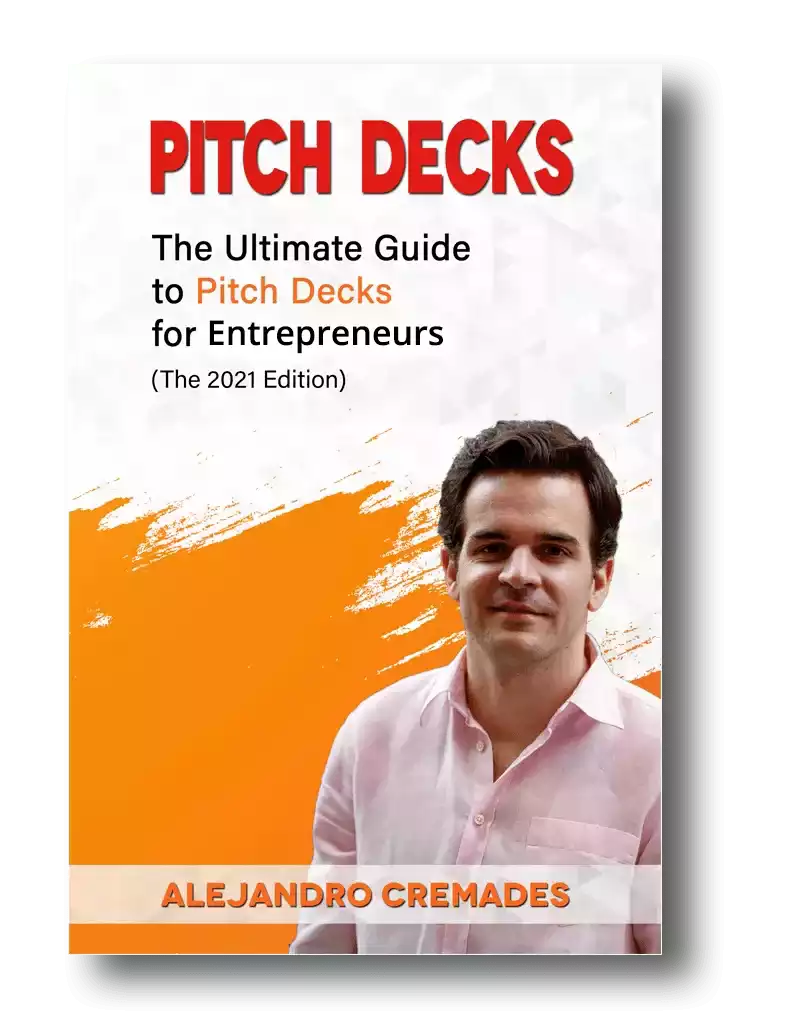
*FREE DOWNLOAD*
The Ultimate Guide To Pitch Decks
Remember to unlock for free the pitch deck template that founders worldwide are using to raise millions below.
About Isaiah Granet:
Isaiah N. Granet, Co-Founder and CEO of Bland, is a startup founder and engineer whose background blends technical execution with early entrepreneurial experience and long-standing social impact work.
Prior to launching his current venture, Isaiah participated in Z Fellows and Y Combinator, built engineering experience at Lantern, and founded San Diego Chill, a nonprofit that raised over $2.5 million to help children with developmental disabilities access sports, earning national recognition and continuing today with his involvement at the board level.

Raise Capital Smarter, Not Harder
- AI Investor Matching: Get instantly connected with the right investors
- Pitch & Financial Model Tools: Sharpen your story with battle-tested frameworks
- Proven Results: Founders are closing 3× faster using StartupFundraising.com
Connect with Isaiah Granet:
Read the Full Transcription of the Interview:
Alejandro Cremades: All righty. Hello, everyone, and welcome to The Dealmaker Show. Today we have a founder whose story is pretty unbelievable, and I think you’re all going to really enjoy it. We’re going to be talking about how to hire nontraditional people, how they went about raising money when things were not coming the right way—especially after graduating from a program like YC, where you think money is going to be thrown at you.
Alejandro Cremades: And again, going viral too. In their case, they fired like 50% of their customers after their Series A, which is quite remarkable. But really good stuff—the building, the scaling, the financing, you name it. Quite an inspiring conversation that we have in front of us.
Alejandro Cremades: And without further ado, let’s welcome our guest today, Isaiah Granet. Welcome to the show.
Isaiah Granet: Thank you, Alejandro. It’s a pleasure to be here. Thank you for having me.
Alejandro Cremades: So, originally born and raised in San Diego. Give us a walk through memory lane. How was life growing up for you?
Isaiah Granet: Yes. Well, I have two loving parents, and I have an older and a younger brother. The reason I like to say I started a company is that I didn’t get enough attention as a kid, so I had to do something that would let me get more. But I had a really great childhood. I played ice hockey, which is nontraditional for growing up in San Diego, but I got a chance to experience some unique things, including starting and running a nonprofit for kids with special needs when I was growing up. That was a 501(c)(3) that I ran for about 10 years and that still goes today. I had a really positive childhood oriented around education, community, and basic values that I think every kid should get.
Alejandro Cremades: And in that regard too, when it comes to education, it’s quite interesting how you blended computer science and economics as part of your degree. Then, obviously, you shifted a little more toward marketing. Tell us, how did those interests develop for you to pursue them?
Isaiah Granet: Yeah, when I went to college, I attended Washington University in St. Louis. When I first came to school, I was a marketing and economics major. I loved marketing—I still love marketing. I distinctly remember, this is well pre-ChatGPT, I was in a sophomore year marketing class and an engineer from Google came in.
Isaiah Granet: He pulled up this demo and said, “Hey, we have this thing called AI that can now generate ads for you.” He showed live how, for a fake dog food company, they could generate an image, copy, and everything they needed. I saw this live in front of me as a demo, again well before ChatGPT, and I said, “Oh no, the world is going to change really, really fast.” I actually switched my major from marketing to computer science right then and there. Completing an additional degree in two years is pretty tough, but I just fell in love with being able to build.
Isaiah Granet: What I would do is challenge myself to build a project every weekend. Every single weekend, I tried to ship something new, and it really taught me that in everything you do, practice makes perfect. I fell in love with computer science. I fell in love with building.
Alejandro Cremades: So for you, COVID was quite disruptive. You were in university, probably having a good time, and then all of a sudden you find yourself back in San Diego doing everything remotely. I’m sure that was quite disruptive for everyone in your year.
Isaiah Granet: Yeah, it was obviously a world-changing event. But I think for me and for a lot of people in my age group, it gave us this interesting opportunity where, for the first time in our lives, we had very little pressure to do anything. Generally, growing up in a high school that pushes you to be academically competitive, then in a competitive university, or even in a tough job market, you don’t have a lot of free time.
Isaiah Granet: I don’t do great with boredom or free time, so don’t get me wrong. But what was so special about this time with COVID was that I had the chance to really step back and build, and to focus on things other than school or career progression in a way that I never would have had otherwise. I can credit a fair amount of Bland’s founding, and the fact that I worked at a startup after university, to that moment in time where everything went from full speed to a full stop.
Isaiah Granet: That was just incredibly valuable for me as a person.
Alejandro Cremades: So how do you go from finishing your degree to all of a sudden sleeping on a floor in San Francisco? That sounds quite crazy.
Isaiah Granet: It sounds crazy to everyone outside of San Francisco. I think a lot of your listeners, and people inside San Francisco, have heard this kind of story before. Coming out of college, I decided I didn’t want a “real job,” so to speak.
Isaiah Granet: I joined a startup that had just raised about $50,000 of angel money. It was still pre-seed and very early. I was supposed to move to New York, but at the very last second, I said, “I can’t move to New York and be serious about being in tech.”
Isaiah Granet: So I packed my bags, pulled out of a lease—my roommates were very unhappy with me—and moved to San Francisco. I found myself sleeping on the floor of a hacker house with 21 other guys. There were seven bathrooms, which everyone likes to ask about. It was 21 other pre-seed or seed founders, and I literally didn’t have a room. I was in a closet on the floor with no bed.
Isaiah Granet: I fell in love with the energy of San Francisco because it was the first time in my life that everybody else was just as excited to create as I was.
Alejandro Cremades: So how do you go from working at that startup to deciding, “You know what, I’m going to go for it on my own”?
Isaiah Granet: I think I just had a constant burning desire to build. The startup was really great, and they’ve gone on to do good things, but it wasn’t for me. I had met my co-founder while living in that hacker house, and we decided to quit our jobs with no plan, no funding—nothing. We started a healthcare company, which was totally unrelated to AI voice, what we do now, and we tried to raise angel money.
Isaiah Granet: I think it took us 40 first meetings before we got our first “yes.” We were able to raise just under $300,000. We were basically three weeks away from being homeless—completely out of cash and having to move into my co-founder’s mom’s garage.
Isaiah Granet: Which is very motivating, by the way. When you are faced with that, it really pushes you to work harder. We ended up pursuing this healthcare idea and got into YC with it.
Isaiah Granet: You think that’s the beginning of the end—in a good way—meaning from there it’s all downhill and you’ll be able to build a great business. But it was actually the beginning of the end in a bad way. Our company was failing, and we didn’t have product-market fit or traction. About three-quarters of the way through YC, we decided to completely shut down the idea.
Alejandro Cremades: Wow. What was that realization where you said, “Let’s pull the plug”?
Isaiah Granet: This is a really brutal story. We were 10 meetings deep with a multi-chain clinic group that had 10 locations throughout California. We thought this was going to be a $110,000 contract, which for a pre-seed company is pretty significant—it gets you to the next stage.
Isaiah Granet: We had gone back and forth through maybe 10 meetings, and we showed up to what we thought was the final buying meeting. Throughout the meeting, it became increasingly clear that the CTO and CEO of the group thought they were buying a completely different product than what we were selling.
Isaiah Granet: We realized they had zero interest in what we were actually offering. They wanted something entirely different and had completely misunderstood our product. That’s when we realized this wasn’t working.
Alejandro Cremades: So what happened after that?
Isaiah Granet: What followed was really tough. For someone who had been moving nonstop post-college, we hit a wall. There were about two weeks where we had no idea what we wanted to do.
Isaiah Granet: We explored different ideas, and I wasn’t really in the mood to talk to anyone. There was a restaurant on my street that I loved, but it only took phone orders.
Isaiah Granet: I thought to myself, “I bet I could get GPT to call this restaurant.” This was around July 2023, well before anyone was doing anything with voice AI. I spent about 8 to 12 hours trying to connect speech-to-text, text-to-speech, and Twilio.
Isaiah Granet: I finally made it work, and it was terrible—it had about five seconds of latency. But it was the most fun I had had doing anything in a long time. I got really excited about it, and we dove headfirst into voice AI in late August 2023. From there, we decided we were going all in on voice.
Alejandro Cremades: So how did you go from that to product-market fit and feeling like you were onto something?
Isaiah Granet: I wish it were one of those stories where you pivot and immediately succeed, but it wasn’t. At YC Demo Day, where you’re supposed to raise your $3–4 million seed round from firms like A16Z or Sequoia, we were in the bottom 10% of our batch. We had just pivoted and had no traction.
Isaiah Granet: I ended up getting rejected by about 180 investors over three weeks. We raised almost no money, except for a few small checks from investors who are quite happy now.
Isaiah Granet: The consistent feedback we heard was that voice wouldn’t be around in two years—that everything would move to text. I still have a stack of rejection emails from VCs saying that phone calls would disappear.
Isaiah Granet: It was disheartening, but we pushed through it.
Alejandro Cremades: So for people listening, what ended up being the business model? How do you make money?
Isaiah Granet: We charged per minute and initially focused on developers. The goal was to let anyone use voice AI to do anything.
Isaiah Granet: Coming out of YC, we decided to go after businesses. We had very little money—just me and my co-founder working crazy hours—and we started finding companies where we could replace phone calls.
Isaiah Granet: We began with $500-a-month customers who had small use cases. I did whatever it took to make them successful. We built some momentum but kept running into latency issues.
Isaiah Granet: For anyone unfamiliar, latency is the time between when a person stops talking and when the AI responds. At the time, it was four to five seconds, which made conversations painful. It felt like a worse version of a phone tree, so people didn’t want to use it.
Isaiah Granet: We realized that if we wanted to sell to enterprises, we had to solve latency. We also needed to offer security and reliability. So we made a crazy decision—we stopped using OpenAI, Anthropic, and other models and decided to build our own using open-source technology.
Isaiah Granet: This was way before anything like DeepSeek. Then we made an even bigger bet—we committed $1 million to GPUs when we only had about $400,000 in the bank.
Isaiah Granet: We went all in on solving latency ourselves because we believed no one else was going to build it for us.
Alejandro Cremades: That’s unbelievable. Now, as you were alluding to, I believe the total amount raised is $100 million. Did I get that right?
Isaiah Granet: A little over $100 million. Yeah.
Alejandro Cremades: Okay. Now, what was the journey of raising that money and going through the different cycles? Because I know, too, and you were talking about it, that coming out of YC was not that easy when it came to raising money.
Isaiah Granet: Yeah, you know, we’ve never had it easy when raising money. That’s something I’ve just gotten used to. When we came into 2024, we had this really big breakthrough where we solved the latency problem in a really unique way. We ended up raising a seed round. So in 2024, we went from pre-seed to Series B.
Isaiah Granet: In about 10 months. I don’t know if that’s a record, but we think it is, or at least some kind of pre-AI record. We raised $3.3 million from Upfront Ventures, and then we got to about $500K of revenue out of nowhere by February of 2024. Then we hit $1 million by the end of March.
Isaiah Granet: Then we had this really big moment where we basically put, at this point, we had about $4 million in the bank, or $3.5 million in the bank.
Isaiah Granet: We spent about $1 million on a marketing campaign to put up billboards and buy a bunch of influencer and newsletter spots to try to get us a lot of attention. So, we more or less bet a big chunk of the company on going viral, and it ended up working. It actually drove us another $1 million of revenue in about a month.
Alejandro Cremades: But one thing that is even crazier is how you guys went about firing customers. What happened there?
Isaiah Granet: Yes. So right after this viral campaign, where we put up these billboards that said, “Still hiring humans,” we went into raising our Series A. We had a great partner come in, Scale Ventures. I’ll give a shoutout to Max and Andy, our partners there. They’re phenomenal.
Isaiah Granet: Part of why I shout them out is because of what comes next in this story. We were at $2 million of revenue, and we looked like a really hot company. But when you looked under the hood, you started to realize we didn’t have product-market fit.
Isaiah Granet: What we actually had was attention-market fit. We had a lot of people paying attention to us, and because of that, people were trying our technology. But we weren’t really winning deals because we were driving business value. We had a lot of people trying to do spam calls, which we really don’t support, and white labelers—people who said, “Hey, I want to take your platform, slap my logo on it, and then resell it.” We didn’t have the big enterprises we really wanted to sell to, so we fired 50% of our customers. We went under $1 million of revenue.
Isaiah Granet: That allowed us to reset and focus. We said, “Hey, we’re actually going to get really tight on who we want to sell to.” And Scale Venture Partners, I’ll give them a shoutout, did not blink. Most venture funds, I think, would have been horrified to find that out, but they were actually really on board. It’s one of the things that I tell any younger founders or earlier-stage founders I talk to: you should never be shy about doing what you have to do to win.
Isaiah Granet: We have it in big letters on the wall in our office here: “For what can be, you must let go of what is.” We fundamentally believe that here, especially in AI, you have to be willing to walk away from what you have to get to where you need to go.
Alejandro Cremades: Now, you were talking about the office phase and the culture. The way that you guys think about team is very nontraditional. That’s also the way you think about business development and things like that. So talk to us about this a little bit.
Isaiah Granet: Yeah, when you are coming out of YC and you’re a hot company, you have the privilege of picking the best engineers on the planet if you want.
Isaiah Granet: You can go to them and say, “Look at my business. Look at the upside of our equity.” You can pull from Stanford, from Harvard, from Google, from wherever you want. When you’re in the bottom 10% of YC like we were, you cannot do that.
Isaiah Granet: You have to get more creative about who you hire. For us, our first engineer actually came from Taco Bell. I’m not going to say his name.
Isaiah Granet: We found him because of his GitHub. He had been doing some work on voice AI, and we had a meeting with him. He explained to us that his background was that he had worked on a factory floor, and then he had worked as the manager of a Taco Bell. Then he had figured out how to get an IT job by teaching himself how to code, which is where he had been for about three months when we met him.
Isaiah Granet: The thing we noticed, though, was that we had never met a person who lit up more about shipping, building things, and building really cool things. That energy carried forward. Then our next hire was a marketing hire who had dropped out of the University of Arizona.
Isaiah Granet: Then we hired a student who was on an internship from NUS, the Singapore university. Essentially, we started building this team of people who did not have this prestige or background, but who were really scrappy, young, and hustling. To this day, what we focus on is that we love hiring really young, hardworking, ambitious people who don’t have credentials. My favorite example of this is our business development team, which is an entry-level job.
Isaiah Granet: We will hire just about anybody who is ready to show up and work hard. Since we began our BDR program, I think about 20% of them have become forward-deployed engineers. Another 10% have gone into marketing, 20% have moved to account executive roles, and some have gone into rev ops, operations, and finance.
Isaiah Granet: We’ve basically had this pool of young, ambitious people where we say, “Come in, work really hard for six months, and then come back and let’s figure out where you’re going to fit in this organization.” It has worked amazingly.
Alejandro Cremades: Obviously, all these people, whether investors or employees, are always betting on a vision. So if you were to go to sleep tonight and wake up in a world where the vision of Bland is fully realized—a beautiful world—what does that world look like?
Isaiah Granet: That’s a great question. It would be a scary world for me because I don’t know what I’d do all day. But what I care about the most is that Bland’s job is not to handle the simple phone calls.
Isaiah Granet: When I say simple, I mean, “Where’s my order?” or “When does your restaurant close?” Those are cool, and we do some of them. What we want to do is handle the long, complex, urgent, high-risk phone calls.
Isaiah Granet: My favorite example is that we will do 45-minute-long calls where we walk a 90-year-old woman through putting on a blood pressure cuff, taking the reading, troubleshooting, and helping them understand that reading to know whether they need emergency medical attention or not.
Isaiah Granet: Those are the kinds of phone calls that Bland does. What I think our mission is, is that we don’t just want to make AI a tool for efficiency for businesses. We want consumers to love us, and we want people to prefer us.
Isaiah Granet: Sort of the Ferrari of voice AI, so that every experience, no matter how complex and no matter how difficult, we can handle.
Alejandro Cremades: One thing that I like to ask you is this: it has been a tremendous journey with Bland and mega hypergrowth. It’s unbelievable what you’ve shared.
Alejandro Cremades: Imagine if I brought you back in time. I put you into a time machine and bring you back to the moment when you were thinking about launching something of your own. Maybe to that moment where you were in the closet, sleeping on the floor, and you’re able to show up and tell that younger self one piece of advice before launching a business. What would that be and why, given what you know now?
Isaiah Granet: I mean, that’s really difficult. I think—
Isaiah Granet: One piece of advice, if I could go back in time and give it to myself—
Isaiah Granet: I think I would tell myself that your job is just to solve the level that you’re on right now. This was told to us by YC, and I don’t think I fully grasped it.
Isaiah Granet: So many people fail at their startup, their early-stage or late-stage growth companies, because they forget that their job is not to figure out the entirety of the future. Their job is just to solve the level they’re playing right now.
Isaiah Granet: I think early on, part of what I got wrong with our healthcare company and part of my struggle as a leader was understanding that I don’t need to be playing 4D chess to win. In order to win, what you need to do is figure out what your customers need at that moment and how to deliver it to them.
Isaiah Granet: It’s actually just that simple. Sometimes there are strategic steps, things, and games that you can play. But for the vast majority of the way we’ve gotten to where we are, it has been by stepping back and saying, “How do we drive value in the situation?”
Isaiah Granet: Then, how do we drive that value? What is it, and how do we do it? That has actually basically been the formula that wins every single time.
Alejandro Cremades: One of the things that I like to ask you here is, as a first-time founder, what you’ve been able to accomplish is really inspiring. You’re also a young guy. It’s really, really inspiring what you’ve been able to accomplish. I’m wondering, being in a hypergrowth environment like this, you obviously want to keep learning and keep the pace so that you avoid what happens in many stories, where the company ends up outpacing the founders and creates an environment that is not very pleasant. For you, in order to keep up and continue learning, how have you gone about that?
Isaiah Granet: Great question. One of the things that I feel so fortunate about is that my co-founder Saban has been the perfect match for me. What he forces every single day is that we have a very big value at Bland called “say the ugly thing out loud.”
Isaiah Granet: What we encourage everybody at the company to do is understand that you will never get in trouble if you raise your hand and say, “This thing is not working,” or “I am not doing this thing well,” or “This is the ugliest thing.” It is a really core principle.
Isaiah Granet: I think it starts by always assuming that you’re sort of wrong about everything. I don’t mean second-guess yourself on every decision. What I mean is assume that what you’re doing today has something wrong with it and constantly ask yourself, “What is that?” So, my co-founder Saban and I, as a constant exercise, are always asking, “What is wrong?”
Isaiah Granet: Once we have a feeling in our gut of what’s wrong, we have a team of mentors that we basically ask questions to relentlessly. This includes the founder of Twilio, the founder of PayPal, a lot of YC investors, and people who have built amazing companies that we go to.
Isaiah Granet: Sometimes we get great replies, sometimes we get no replies, and sometimes we get advice that we disregard. But we’re constantly asking, “What is the ugliest thing we’re not addressing right now? How do we say those words out loud to hold ourselves accountable?” Then, once we know what that problem is, how do we go talk to a person who we think has been through it?
Alejandro Cremades: I love that. So, for the people who are listening and would love to reach out, say hi, and learn more about Bland, what can you tell them?
Isaiah Granet: Yes, reach out and email me. I’ll make sure that we share any contact details after the show. The big thing is that we want people who want to be here, who are ambitious and hardworking. Now, if you’re listening to this and you think you could be a great customer, please also reach out, and we’ll immediately try to get you set up with the right tools and the right toolkit to get you successful. For the people who might be listening and thinking this is a place where they’d want to work or learn more—
Isaiah Granet: We’re aggressively hiring and aggressively scaling up here in San Francisco, and we want to do something to change the world. We’re not on a mission to raise the most money that we can possibly raise. We’re on a mission to deliver the best possible phone calls.
Isaiah Granet: We’re hyper-focused on that. We’re building our own technology from the ground up, and we have a lot of fun while we’re doing it.
Alejandro Cremades: I love that. Well, hey, thank you so much for being on The Dealmaker Show today. It has been an absolute honor to have you with us.
Isaiah Granet: I appreciate you taking the time, Alejandro.
*****
If you like the show, make sure that you hit that subscribe button. If you can leave a review as well, that would be fantastic. And if you got any value either from this episode or from the show itself, share it with a friend. Perhaps they will also appreciate it. Also, remember, if you need any help, whether it is with your fundraising efforts or with selling your business, you can reach me at al*******@**************rs.com
Podcast: Play in new window | Download
Subscribe: Apple Podcasts | Spotify | TuneIn | RSS | More



Facebook Comments