

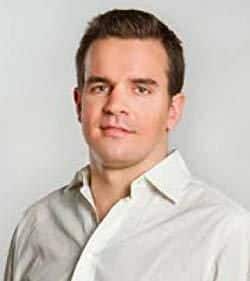

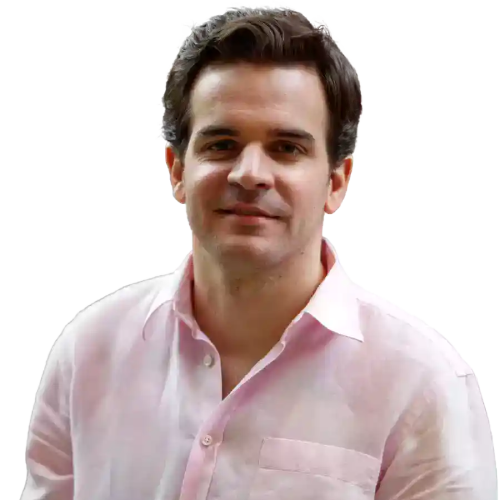
Some founders dream of billion-dollar outcomes. Others quietly stack experiences, industry by industry and skill by skill, until their time arrives. Michel Tricot is the latter.
Before co-founding Airbyte and raising $185M, Michel helped build two companies that sold for $300M and $115M, respectively. Yet, his story isn’t about overnight success. It’s about relentless curiosity, global perspective, and a deep belief that data should move as freely as ideas.
Michel’s path from the Swiss mountains to Silicon Valley, from harvesting tobacco to architecting a petabyte-scale system, shows that true entrepreneurs aren’t born; they’re forged through grit, learning, and the refusal to ignore an itch to build.
Listen to the full podcast episode and review the transcript here.
*FREE DOWNLOAD*
The Ultimate Guide To Pitch Decks
Early Roots: Mountains, Movement, and Machines
Michel was born in Switzerland, a childhood painted with alpine slopes and early mornings on skis. Frequent moves from Switzerland to Strasbourg to Paris shaped more than geography.
As he recalls, “When you move a lot, you get less attached to places and more to the people around you. It tightens your bond with family.”
Tech didn’t enter through a classroom. It entered through obsession. A family friend had a room full of computers where Michel dove into Prince of Persia, Tetris, and hacking experiments long before he owned a machine himself. He did his middle school in France.
To buy his first computer, a second-hand device, Michel worked summers on farms, harvesting tobacco. This wasn’t a kid dabbling in programming. It was someone building a foundation for a lifelong craft.
When faced with the choice between studying medicine or computer science, the decision was clear: Silicon-based machinery over human machinery. And, it paid off.
Princeton, Brain Imaging, and the First Taste of America
While studying engineering in France, Michel earned a six-month internship through Siemens in partnership with Princeton. Here, he worked with a researcher on cutting-edge computer vision for brain segmentation. He wasn’t just coding; he was helping improve surgical decision-making.
As Michel says, “It could detect disease in the brain from specific modalities. That was a very fun moment.” The product was designed for sale to hospitals and helped map the different areas of the brain by their functions.
Landing in New York for the first time and experiencing the towering architecture, wide roads, and neon energy lit the spark. The American dream wasn’t a slogan. It was a destination. Visa challenges briefly sent him back to Europe, but instead of doors closing, a new one opened: FactSet.
There, Michel entered the world that would ultimately define his entrepreneurial destiny–data at scale. “That’s where I learned what it means to collect data at scale, prepare it, and make it actionable for the end user,” he remembers.
At the time, Michel was shuttling between New York and Paris, and his work focused on data for traders and quantitative analysis.
Raise Capital Smarter, Not Harder
- AI Investor Matching: Get instantly connected with the right investors
- Pitch & Financial Model Tools: Sharpen your story with battle-tested frameworks
- Proven Results: Founders are closing 3× faster using StartupFundraising.com
Silicon Valley Calling: Moving to San Francisco and Joining LiveRamp
Michel was keen to return to San Francisco and the Bay Area in the US. His reasoning was that it was where tech was happening and where talent was headed. Thus, on December 31, 2010, he and his fiancée made a life-shifting decision: Move to San Francisco.
The duo was determined to change something in their lives. Michel remembers calling a few of his college mates with whom he had worked on a school project. One of them had joined Rapleaf (then LiveRamp). That’s where Michel decided to go.
Three suitcases. No guarantees. A vision. That’s what he and his fiancée had.
In 2011, Michel joined LiveRamp as one of the first 25-30 employees. They had an initial, reactive product, but had started to pivot into the ad tech space. Soon, they began moving data between different advertising platforms to target online users better.
As Michel explains, they weren’t doing anything advertising-related; they were simply moving pieces of information so that online advertising was customized for the audience that consumed it. They were actually processing petabytes worth of data.
At the intersection of exploding mobile adoption and a new ad-supported internet model, Michel learned what hypergrowth really means. He progressed from manufacturing data to managing large-scale data with the assistance of a small team.
The $300M Exit and Valuable Lessons Learned
Michel quickly realized, “Small teams of driven people can do wonders. LiveRamp made bets on young talent and let us do ambitious things.” He saw three fundamental truths:
- Timing matters: The right place at the right moment in the mobile and internet boom. People were leveraging this new business model, which offered free content. However, users had to watch some ads, and LiveRamp provided the ad display.
- Talent compounds: Motivated builders reshape markets. Humans can make the ultimate difference in the company they’re building and accomplish marvelous things if they can understand where the company is going.
- Bet on people early: Great companies aren’t staffed; they are cultivated. LiveRamp made the strategic decision to hire lots of young people and give them the chance to take on ambitious projects. The company excelled at managing teams and organizations.
LiveRamp was later sold to Acxiom for $310M, and alumni went on to build dozens of companies. Michel took notes.
rideOS, $115M Exit, and World Tour in Startup Training
After LiveRamp, Michel planned to start his own company, but opportunity knocked again. A former Uber team launching rideOS invited him to join. Self-driving tech was emerging, and big automakers were listening. The company signed major deals with key US car manufacturers.
However, six months in, Michel told the CEO that his founder journey was still ongoing. Instead of pushing back, the CEO accelerated his growth. He suggested that he and Michel work together so Michel could build on the skills he had gained at LiveRamp.
- The CEO took him on global partnership tours to China, Japan, Germany, and France, among other countries.
- Taught him high-stakes fundraising.
- Gave Michel exposure beyond engineering.
“I hit every wall possible. That’s how you learn,” Michel recalls. rideOS was later sold for $115M. He had the one final piece of the puzzle: a hands-on CEO apprenticeship. It was time.
Side-by-side, Michel continued to work on the technical aspect–making data actionable for end users. He also continued to grab every opportunity to learn outside his comfort zone and domain of experience. He had taken away great lessons from the acquisition and was ready to apply them.
Enter Airbyte: The Data Movement Revolution
In July 2019, after a decade of building at the frontier of data systems, Michel finally hit “go.” He gave himself a month to reset, then spent months brainstorming and validating ideas, many of which were outside his expertise. He brought in team members from LiveRamp and his now co-founder.
Lesson learned? “Only explore markets you deeply understand. Don’t waste cycles elsewhere,” Michel says. By January 2020, Airbyte was incorporated and accepted into YC. Then COVID hit. Everyone was home. Everyone needed better data movement.
As Michel explains, they created what they called a data movement platform, which enabled them to connect to any systems, extract data from them, and make it available to downstream systems. Their end goal: to make data universally available.
The platform would pull data from systems and send it to places where it could deliver value. Initially, Michel and his team focused primarily on analytics and loading data into data warehouses.
Over the past year and a half, they have also been involved in bringing more data and building context for agentic systems. Most importantly, the platform is open source, which means it has a large community of users who are both users and contributors to the project.
Leveraging COVID and Zoom Calls to Understand Pain Points
Initially, Michel spent a lot of time on user discovery, and here, COVID became a blessing. People were bored at home, leading to increased activity on LinkedIn. Everyone was trying to connect with specific roles and titles on the platform.
At the time, Michel and his team were targeting data engineers, directors, and other professionals with similar profiles. They organized 200 to 250 Zoom calls over the course of a few months, spending 15 to 30 minutes on each, just trying to understand their day-to-day pain points.
Michel and his team took notes on Google Drive, creating courses as they went along, narrowing the information down according to their objectives. That’s a strategy they maintain to this date and have integrated it into the Airbyte culture.
Michel and his team connected with the community, asking users about their pain points and the “magic wand solution” that can solve those problems. Next, they incorporated the feedback into the product.
However, as the open-source project completely took off, Michel encountered a new challenge. He had a highly efficient but small team, which was quickly getting swamped by all the community interaction.
Raising the Series B Funding Round to Scale Airbyte
Although community engagement was a positive sign, it also meant that the team was spending too much time on the community and not enough on building the product. It was now time to scale the company. To do that, Michel needed to raise their Series B funding round.
The signals were strong and the time was right, even though the product was still immature. However, as Michel realized, people were going above and beyond to make it work for their use case. The pain points that Airbyte solved were so acute that anything was better than what they were doing.
Michel breaks open-source startup phases into two phases:
1) Project-Market Fit
- Open-source traction.
- Users love the idea.
- They install, hack, and contribute.
- But monetization is not yet defined.
2) Product-Market Fit
- A clear, urgent pain.
- Users tolerate imperfections because value is non-negotiable.
- Revenue follows pull, not push.
At this point, monetization becomes a different story because user expectations are changing. Founders need to be very intentional about the use case they want to serve. In open source, they don’t know how people are using their products.
Michel had initially built Airbyte to enable users to put more data into warehouses. But some people were using it for cache hydration or for additional use cases that did not align with Airbyte’s monetization roadmap.
The Transition: From Project-Market Fit to Product-Market Fit
Michel’s solution was to narrow down the number of use cases. However, they also built more support to deliver the exact value that users wanted. Their killer unlock? Data sovereignty.
In an AI era, control and privacy aren’t features; they’re religion. Michel told users, “We can connect to every single system, but we can also connect to the most sensitive system that you might have, and you will never have to share any information with a third party about the data you’re moving.”
People could just move their data, access a simple platform, and remove all the pain of building all these different pipelines. That was the main use case for why people were using Airbyte OpenSource. Demand skyrocketed, prompting fundraising.
In retrospect, Michel points out that if you’re wondering whether you have product-market fit, you likely don’t. In the early stages of building the product, accept that it will have deficiencies. Focusing on creating a perfect product will delay the launch.
However, you have a win if customers accept that pieces are missing and are willing to work around them–simply because it addresses an acute pain point. Users are open to a product that will improve and evolve over the next year or two. It’s as though the customer is fuelling the energy.
Raising $185M: Discipline Over Dollars
Michel raised almost all rounds within a year, including seed, Series A, and Series B. Overall, the business was very similar to what it had been a few months ago. This made the process a lot simpler.
Storytelling is everything that Michel Tricot was able to master. The key is capturing the essence of what you are doing in 15 to 20 slides. For a winning deck, take a look at the pitch deck template created by Peter Thiel, Silicon Valley legend (see it here), where the most critical slides are highlighted.
Remember to unlock the pitch deck template that founders worldwide are using to raise millions below.
The challenge wasn’t securing capital. It was not losing discipline. “Just because you have money doesn’t mean you spend it. You earn the right to scale,” Michel says. His playbook:
- Create experimentation hygiene.
- Commit only when the experimentation is validated.
- Choose investors who understand open source.
- Protect long-term user base before monetizing aggressively.
As Michel explains, project-market fit involves building a large user base that deploys the platform to move data around. However, this strategy also entails creating a substantial user base, as just 10% to 20% of users are likely to become paying customers.
Michel points out that open source is costly in terms of time and product development. They also needed to convince investors about the potential for returns. At the same time, open source isn’t just a business model; it’s a community flywheel. Michel embraced it.
The Data Future Michel Is Building and Lessons Learned
Airbyte’s endgame? A world where AI agents autonomously discover, extract, and leverage data across an organization, without endless manual wrangling. “Accessing data should be a no-brainer. I want intelligent agents deciding what data to move and integrate into their processing.”
In other words, turning every company into a data-driven machine, without the need for armies of engineers to manage and integrate data.
Asked about lessons he would give to his younger self, Michel says, “Don’t explore markets you don’t understand. Stay where you have depth.” And for founders:
- Let users write your roadmap.
- Depth > breadth early on.
- Speed matters, but learning matters more.
- Find pain so sharp that users will climb walls to solve.
Airbyte isn’t just a startup. It’s the culmination of a decade-long apprenticeship in data, ambition, and human-first leadership. As Michel’s vision plays out, the next era of data won’t be moved by scripts, but by autonomous intelligence unlocking organizational gold.
Listen to the full podcast episode to know more, including:
- Michel’s decade-long experience across multiple startups, culminating in $415M worth of exits, prepared him to build Airbyte with deep operational and technical insight.
- He learned that founders should explore markets they truly understand. His success with Airbyte came from staying rooted in his expertise: large-scale data systems.
- At LiveRamp, rideOS, and Airbyte, Michel proved that small groups of motivated, mission-aligned people can outperform larger organizations by focusing on clarity and ownership.
- Michel distinguishes between community traction and monetizable demand, understanding that open-source success (project-market fit) must evolve into business value (product-market fit).
- Airbyte’s growth accelerated when it offered enterprises full control over their data, solving one of the most pressing privacy and compliance concerns in the AI era.
- Raising $185M didn’t mean scaling recklessly. Michel emphasizes experimentation hygiene, investor alignment, and measured growth before expanding aggressively.
- From hacking as a teen to building data platforms, Michel’s story shows that curiosity, humility, and relentless learning are the real superpowers behind sustainable entrepreneurship.
SUBSCRIBE ON:
 iTunes
 Google Play
 Stitcher
 TuneIn
 RSS
RSS SoundCloud
 Spotify
Keep in mind that storytelling is everything in fundraising. In this regard, for a winning pitch deck to help you, take a look at the template created by Peter Thiel, the Silicon Valley legend (see it here), which I recently covered. Thiel was the first angel investor in Facebook with a $500K check that turned into more than $1 billion in cash.
*FREE DOWNLOAD*
The Ultimate Guide To Pitch Decks
Remember to unlock for free the pitch deck template that founders worldwide are using to raise millions below.
Podcast: Play in new window | Download
Subscribe: Apple Podcasts | Spotify | TuneIn | RSS | More

Facebook Comments