


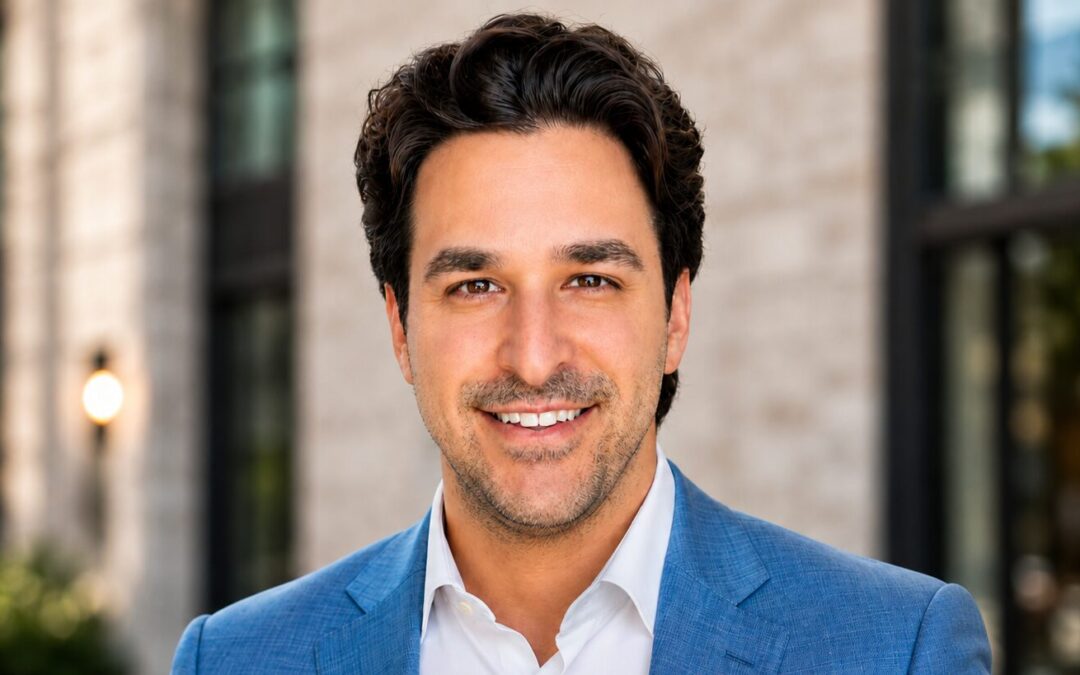
David Dorfman’s path to entrepreneurship often begins with a simple observation: something is broken, inefficient, or unnecessarily difficult. The first emerged in his sister’s dental office, where patients spent significant time filling out forms with information that had already been provided.
Years later, a conversation at a backyard barbecue exposed another overlooked problem affecting millions of Americans—billions of dollars sitting unclaimed in government accounts. Those two moments would ultimately lead David to build two very different businesses.
The first became YAPI, a dental software platform that transformed patient experiences and ultimately achieved an eight-figure exit. The second became Blue Navy Recovery, a company helping individuals and organizations reclaim money they never knew they had.
David’s journey offers valuable lessons about bootstrapping, resilience, product-market fit, customer obsession, and the power of staying curious.
Listen to the full podcast episode and review the transcript here.

*FREE DOWNLOAD*
The Ultimate Guide To Pitch Decks
Growing up with an Obsession for Automation
David was born and raised in Orange County, Los Angeles, Southern California, surrounded by tech, innovation, and entrepreneurial energy. While many children simply accepted the world as it existed, he constantly questioned why things worked the way they did.
As technology became more prevalent, David became fascinated with automation. Computers, software, and the internet seemed capable of eliminating repetitive tasks and giving people back their most valuable resource—time.
This fascination with efficiency would eventually become the foundation of his entrepreneurial career. Rather than seeing technology as a novelty, David viewed it as a tool to eliminate friction.
Whether it was note-taking, project management, schoolwork, or business operations, David believed that many manual processes could be streamlined through software.
A Family Crisis Creates an Unexpected Opportunity
The origins of YAPI can be traced back to a family dinner in 2008. During that dinner, David’s father announced that he had been laid off from Toshiba. At the same time, David’s sister had just completed dental school and an MBA program at USC.
She was preparing to open her first dental practice, and shared a frustration common among dentists at the time. Patients would spend a large amount of time sitting in waiting rooms, filling out forms and paperwork that the practice already had.
There was no elegant solution for digitizing and automating patient intake. The timing seemed just right. The iPad was about to enter the market. David’s father suddenly had free time, while David, having just graduated from high school, was preparing to get into college.
Building the Initial YAPI Prototype
What started as a casual family conversation quickly evolved into a fun weekend project—to enable the practice to take on more patients and have them in the operatory rather than sitting in the front office.
David and his father secretly built a simple prototype of a patient intake form that would ingest data already in their system. Patients could review and update their information digitally, and all changes could be reflected in the system.
After several weeks of development, they surprised David’s sister by sending her an iPad loaded with the software. The initial reaction was overwhelmingly positive. Soon, the family realized they had identified a genuine market need.
Raise Capital Smarter, Not Harder
- AI Investor Matching: Get instantly connected with the right investors
- Pitch & Financial Model Tools: Sharpen your story with battle-tested frameworks
- Proven Results: Founders are closing 3× faster using StartupFundraising.com
From One Dental Office to a Real Business
Perfecting the full product from automating the intake forms to understanding what forms are required. and going from intake forms to consents and various treatment plans took several months as well. The first version of the product solved a single problem: patient intake.
David’s sister actively participated in dental communities like The Dental Town and online forums, including Facebook, sharing her experience with the software. She talked about her struggles and the solution that had been built for her.
Other dental practices became interested and volunteered to test the solution. These early users became what many founders would describe as champion customers.
They provided continuous feedback that helped transform a simple intake application into a comprehensive workflow platform for dental offices of all different sizes. But once dentists began using it, they quickly pointed out additional inefficiencies.
Further, since David worked at his sister’s dental office, he could identify the areas where the product helped and the gaps that still existed. Questions emerged, such as:
- How do we know when patients arrive?
- What documents do they still need?
- How do we know what payments need to be made?
Rather than building software based on assumptions, David and his family listened closely to customer feedback. They started building an entire suite of software solutions to address gaps in David’s sister’s office and the champion offices.
The Difficult Reality of Bootstrapping
The early years were far from glamorous. David’s family invested significant time and energy into building the company, but revenue remained limited. His father’s severance package and his mother’s long hours working at a hospital helped keep the family financially stable.
After three years of effort, David’s mother began questioning whether the project made sense. Many founders encounter similar moments. When a startup is consuming resources without generating meaningful revenue, even supportive family members can lose confidence.
But David and his father remained convinced that they were solving a real problem. The difference was important. They were not chasing a trendy opportunity. They were addressing an operational pain point they observed firsthand in dental practices every day.
That conviction kept the duo moving forward despite uncertainty as they worked on client feedback. David recalls how they would go to dental trade shows and have people pass by their booth. It took a few years for people to really recognize them and that they were still around, providing value.
Winning Customers through Relentless Customer Focus
In the beginning, YAPI charged a one-time fee. The company desperately wanted customers, sign-ups, and feedback, so it intentionally kept pricing simple. It also started to become a topic of conversation in online communities and Facebook groups, with inquiries coming in.
One particularly creative strategy helped accelerate adoption. At the time, many dental offices relied on Topaz signature pads. YAPI offered to purchase those devices from customers and replace them with iPads. This significantly reduced friction.
That option gave dental offices a compelling reason to try the platform. Customer referrals became a powerful growth engine. The company’s reputation was built not just on software functionality but also on exceptional customer experiences, hands-on support, and responsiveness.
Every new feature emerged from actual customer needs rather than internal assumptions. Ultimately, David and his dad built a product that enabled customers to fill out iPad forms before they arrived at the dental office. They could immediately enter the operatory rather than sit in waiting rooms.
The Subscription Model that Changed Everything
A pivotal moment arrived when David realized the company’s revenue model was limiting growth. The one-time fee structure created constant pressure to acquire new customers simply to maintain operations. New sign-ups were needed to fund development and growth costs.
The team needed predictable recurring revenue. The solution was transitioning to a SaaS subscription model. Instead of charging thousands of dollars upfront for setup and integration, YAPI introduced affordable monthly subscriptions starting at around $150 per month—with no contracts.
The impact was immediate. Removing large implementation fees lowered barriers to entry and dramatically increased customer adoption. Customers could easily absorb the upfront fee, thereby allowing YAPI to build a recurring revenue stream.
In turn, it enabled David to predictably hire and scale the team. Most importantly, YAPI now provides a return on investment to every one of its clients. As David points out, their first 15 to 25 clients are still with the company today.
This shift transformed YAPI from a project into a scalable software company. As David recalls, they knew they were offering value. All they needed to do was to prove it by getting their foot in the door of dental offices.
The YAPI Business Model
As David explains, YAPI started out with an ordinary paperless plan and a monthly subscription, gradually extending to new features. They included online scheduling, insurance verification, and the proprietary patient dashboard—one of its most powerful innovations.
The dashboard provided a real-time, bird’s-eye view of an entire dental office. Staff could instantly see where patients were located in which operatory, how long they had been waiting, special medical considerations, such as allergies to, say, latex, and other operational bottlenecks.
The result was improved efficiency, better patient experiences, and increased practice productivity. YAPI ultimately evolved into an operating system for modern dental practices. Next, David and his team started to extend their product lines.
As adoption accelerated, YAPI expanded beyond digital forms to offer three main plans.
- The entry-level Base Plan was a simple paperless solution.
- The Bundled Plan included automated patient communications, such as reminders and reactivation notices.
- The Works Plan was an all-inclusive package featuring insurance verification, online scheduling, and additional advanced tools.
Clients could select the package they needed and pay monthly, with no contract. Several competitors entered the fray, getting clients to sign multi-year contracts with a 15-day opt-out policy that had to be sent in via mail. YAPI combated that with a very transparent policy.
Scaling to More than 125 Employees
As customer demand grew, so did the organization. YAPI expanded across North America and eventually surpassed 125 employees. The company developed teams dedicated to product development and customer support.
Then COVID happened. At the time, YAPI had three offices and 120 employees. David had to figure out how everyone could transition from working in an office to working from home. Clients called to cancel their subscriptions to economize on office overheads.
Considering that dental services were shut down, they didn’t need YAPI. David saw they were going to lose significant business, so he developed a strategy. Rather than forcing customers to continue paying, YAPI took a different approach.
Turning COVID into a Growth Opportunity
The company allowed clients to pause payments while keeping the software installed. They didn’t have to pay unless they were using the software. David knew that allowing them to uninstall would make it much harder to get them back.
This decision preserved customer relationships and reduced churn. YAPI also transitioned all its employees successfully to a remote model and developed COVID-friendly ideas. David and his team focused on solving the new problems dental practices faced. They quickly launched:
- Contactless check-ins from parking lots
- Parking lot arrival notifications
- Contactless payments
- Payment plans and payment-on-file capabilities
- Virtual consultations and digital treatment plans
- Remote communication tools
As dental offices reopened against the risk of bankruptcy, these capabilities became essential. However, patients were reluctant to touch clipboards, pens, or payment terminals. Practices needed new ways to operate safely.
As David points out, patients were super scared of dental offices because they had to have a doctor working in their mouths—in very close contact. It was unlike treatments like, say, physical therapy, where maintaining a six-foot distance rule is doable. This factor became an apex point for YAPI.
What initially appeared to be a crisis became a major growth catalyst. Word spread quickly among dental offices seeking solutions, and YAPI experienced a significant influx of new customers.
The Eight-Figure Exit
By 2021, consolidation within the dental technology industry was accelerating. Several strategic buyers and investors, including names like Henry Schein and Patterson, were acquiring software solutions. M33 was one of the several that expressed interest in acquiring YAPI.
David and his family received multiple offers. However, they were looking for more than the highest price. They wanted a partner who respected the company’s mission and would allow the founders to continue building. That ultimately led them to M33 Equity.
Looking back, David recalls wanting investment backing that would enable him to deliver 5x to 10x the value they were contributing to the industry. Thus, David and his dad met with the 33 founders and the starter-founder-centric acquisition firm they were building.
The firm aligned with David’s family’s vision and wanted to retain the leadership team rather than simply absorb the business. The result was an eight-figure acquisition in 2021—a major inflection point for them.
For David’s family, the moment was deeply emotional. His father and sister were finally able to retire and enjoy the rewards of years of sacrifice. However, they would continue to build and execute on their vision.
Acquisition-Driven Growth
The resources they now had available enabled YAPI cofounders to hire an engineering team, including a head of product, a CFO, and a COO. Up until now, they had been building a paper plane. Now, it was a normal plane with stability that allowed them to plan out further routes.
That day at the family dinner table when they inked the deal is truly memorable. Everything that they had worked hard for was finally coming to fruition.
For David, it represented proof that persistence through difficult years can eventually produce extraordinary outcomes. The experience reinforced one of his most important beliefs: Just because something is not working today does not mean it will not work tomorrow.
The people who are most successful see through those hard times and have the grit to keep working hard, keep building, and keep pursuing their passion. It was a new chapter for David to now transition this company into a large enterprise organization.
A Barbecue Conversation Sparks Another Startup
Many entrepreneurs spend years searching for startup ideas. David found his next one at a barbecue. A friend described a frustrating experience involving money he believed had disappeared from his Chase account.
After extensive investigation, he discovered that inactive accounts can be transferred to the state controller’s office as unclaimed property. Recovering those funds proved extraordinarily difficult. The process required paperwork, documentation, and mailing physical signed papers.
Any errors meant that applicants had to restart the process from scratch. David’s friend went through a two-year ordeal to get back his entire life savings and investment accounts. The experience intrigued him. He began researching the issue and made a surprising discovery.
One in seven Americans has unclaimed funds that they are unaware of. David himself, his dad, and his sister’s dental office each had unclaimed property as well. Even more astonishing, approximately $72B sits in unclaimed property databases across the United States.
The problem was not shrinking—it was growing rapidly. Around 10 years ago, this figure was $40B.
Building Blue Navy Recovery
Rather than simply observing the opportunity, David took action. Using California’s unclaimed property database, he and his team began manually identifying people who might be owed money. He started by building a proof of concept without investing too much in creating a name at first.
Inspired by the Navy he saw in San Diego, David decided to name the company—Blue Navy Recovery. Initially, they called individuals directly and charged a success fee only after successfully recovering funds. The early results were encouraging.
Within months, the company had completed dozens of successful recoveries and identified clear market demand. David and his team started to see common trends—most people didn’t know anything about money.
To scale operations, David built an outbound calling team and hired talent in the Philippines. Today, Blue Navy Recovery contacts approximately 20,000 people every week to notify them about their unclaimed funds.
Unlike many businesses that must convince customers to buy something new, Blue Navy Recovery simply helps people reclaim money that already belongs to them. That creates a unique value proposition.
Changing Lives Through Financial Recovery
One of the company’s most memorable success stories involved a widow who had recently lost her husband. Following his death, financial uncertainty forced her to consider selling her home and relocating her family.
Although she was the executor of her husband’s trust and will, she was clueless about the money in his investment account. When Blue Navy Recovery contacted her, they informed her about approximately $500K in forgotten assets connected to her late husband.
Initially, she assumed it was a scam. After verification through local authorities, she realized the money was real. The recovered funds allowed her to keep her home, maintain stability for her children, and avoid a disruptive relocation during an already difficult period.
For David, moments like these illustrate the true impact of the business. Recovering money is important. Helping families preserve stability during difficult moments is even more meaningful.
The Blue Navy Recovery Business Model
David explains how Blue Navy Recovery makes money. The company takes a percentage of the funds it successfully collects, ranging from 10% to 25%, depending on the case size. The 25% enables them to help cases that are much smaller.
In some states, the state acts as an intermediary. It may have caps and limits that Blue Navy must comply with. Basically, Blue Navy takes a percentage only when the client gets paid successfully. There are no upfront charges, so there’s no risk for the clients.
David reveals that they have successfully recovered over $8M for around 1000 clients. In March 2026, the company was accepted into the Techstars Accelerator Program at USC. Here, they built a model to estimate how they could achieve the next milestone.
Storytelling is everything that David was able to master when pitching to the program. The key is capturing the essence of what you are doing in 15 to 20 slides. For a winning deck, take a look at the pitch deck template created by Peter Thiel, Silicon Valley legend (see it here), where the most critical slides are highlighted.
Remember to unlock the pitch deck template that founders worldwide are using to raise millions below.
From Service Business To Technology Platform
Until then, Blue Navy Recovery had relied heavily on an outbound sales product. However, participation in the Techstars accelerator program helped David rethink the model. The company began transitioning toward a technology-driven platform and a product sales motion.
Today, users can enter a phone number into the Blue Navy Recovery platform. The system automatically searches multiple state databases for every address associated with that number, along with other relevant information, and identifies potential claims.
The platform has already processed hundreds of cases monthly for individual users and continues to scale rapidly. The company is also expanding into enterprise markets.
Large organizations, universities, businesses involved in mergers and acquisitions, bankruptcies, and dissolutions, and corporations with complex organizational structures often have significant amounts of unclaimed property.
Blue Navy Recovery helps these institutions identify and recover those assets as well, often in the form of simple refunds and checks that parent companies and child entities overlook.
More Case Studies – Recoveries Transform Lives
David cites the example of a large Southern Californian university. Blue Navy Recovery identified nearly $2M in donations and refunds it has overlooked over the years.
Blue Navy has recently announced its first HR benefit for Techstars employees: a monthly monitoring service. Every month, every employee at Techstars will receive a free report on all unclaimed funds owed to them and their immediate family members. Blue Navy will help them recover their money.
David cites another example. A woman who came to work at Techstars didn’t get her last paycheck from Facebook. When she started her new job, she was informed about the missing money, and Blue Navy helped recover it.
Building A Household Name For Lost Money Recovery
David’s long-term vision is ambitious. He wants Blue Navy Recovery, recently rebranded as Claimio, to become the trusted brand Americans associate with finding lost money.
Rather than allowing unclaimed funds to remain hidden in state databases, he envisions a future in which individuals are continuously informed about their assets.
Considering inflation and rising prices, money is becoming increasingly important and needs to be accessible to everyone. The mission is straightforward: Return every possible dollar to its rightful owner.
Final Thoughts
For aspiring founders, David Dorfman’s message is clear: Stay humble. Stay curious. Keep solving real problems. A lot of information and viable opportunities are often hiding in plain sight. You’ll come across vulnerable situations in people’s lives and find solutions to help them.
David’s story demonstrates that great companies often emerge from overlooked frustrations. The first came from a dentist struggling with paperwork. The second came from a friend struggling to recover forgotten assets.
In both cases, David identified a problem, remained curious, listened carefully to customers, and built solutions that created measurable value. His entrepreneurial path also highlights another important lesson. Success rarely happens overnight.
YAPI required years of persistence before gaining traction. Blue Navy Recovery is now following a similar path of continuous iteration and innovation.
Listen to the full podcast episode to know more, including:
- Real businesses are often built by solving problems experienced firsthand.
- Customer feedback can be the most valuable input for your product roadmap.
- Subscription revenue creates predictability and scalability.
- Crisis periods can become growth opportunities when founders adapt quickly.
- The right acquisition partner matters as much as valuation.
- Curiosity can uncover massive, overlooked markets.
- Persistence through difficult years often separates successful founders from everyone else.
SUBSCRIBE ON:
 iTunes
 Google Play
 Stitcher
 TuneIn
 RSS
RSS SoundCloud
 Spotify
Keep in mind that storytelling is everything in fundraising. In this regard, for a winning pitch deck to help you, take a look at the template created by Peter Thiel, the Silicon Valley legend (see it here), which I recently covered. Thiel was the first angel investor in Facebook with a $500K check that turned into more than $1 billion in cash.
*FREE DOWNLOAD*
The Ultimate Guide To Pitch Decks
Remember to unlock for free the pitch deck template that founders worldwide are using to raise millions below.
Podcast: Play in new window | Download
Subscribe: Apple Podcasts | Spotify | TuneIn | RSS | More
Facebook Comments