

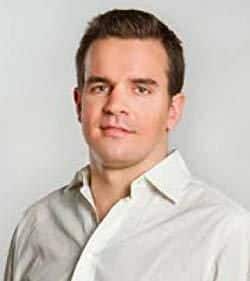
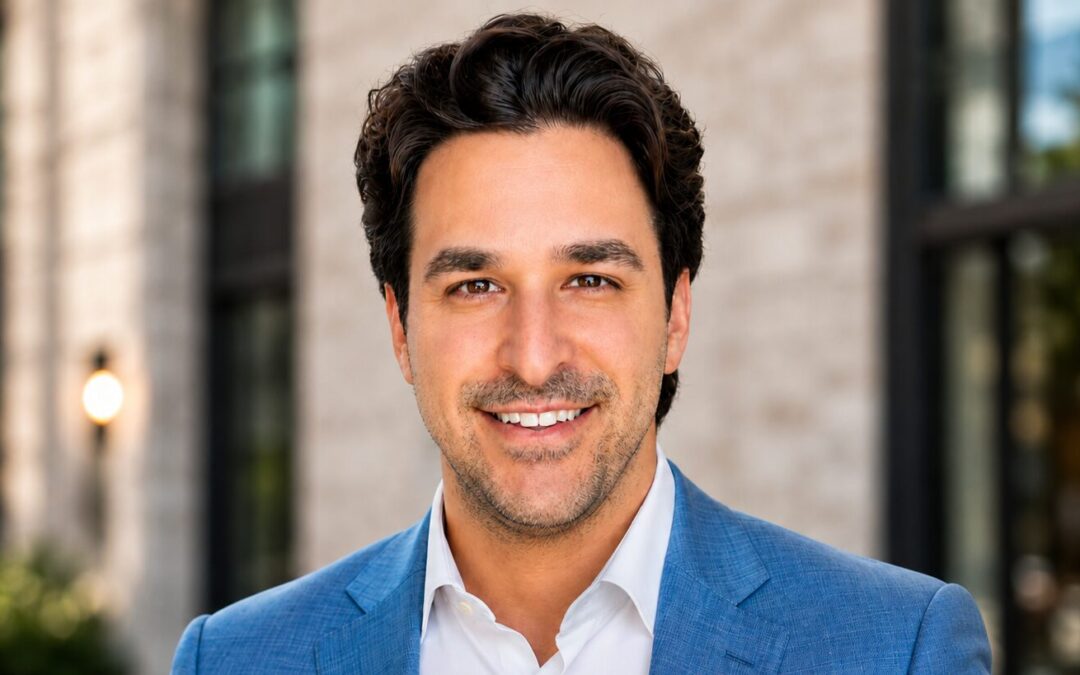
David Dorfman’s path to entrepreneurship often begins with a simple observation: something is broken, inefficient, or unnecessarily difficult. His first company, YAPI, a dental software platform transformed patient experiences and ultimately achieved an eight-figure exit.
The second became Blue Navy Recovery, a company helping individuals and organizations reclaim money they never knew they had. Blue Navy Recovery is backed by Techstars accelerator.
In this episode, you will learn:
- Real businesses are often built by solving problems experienced firsthand.
- Customer feedback can be the most valuable input for your product roadmap.
- Subscription revenue creates predictability and scalability.
- Crisis periods can become growth opportunities when founders adapt quickly.
- The right acquisition partner matters as much as valuation.
- Curiosity can uncover massive, overlooked markets.
- Persistence through difficult years often separates successful founders from everyone else.
SUBSCRIBE ON:
 iTunes
 Google Play
 Stitcher
 TuneIn
 RSS
RSS SoundCloud
 Spotify
Keep in mind that storytelling is everything in fundraising. In this regard, for a winning pitch deck to help you, take a look at the template created by Peter Thiel, the Silicon Valley legend (see it here), which I recently covered. Thiel was the first angel investor in Facebook with a $500K check that turned into more than $1 billion in cash.
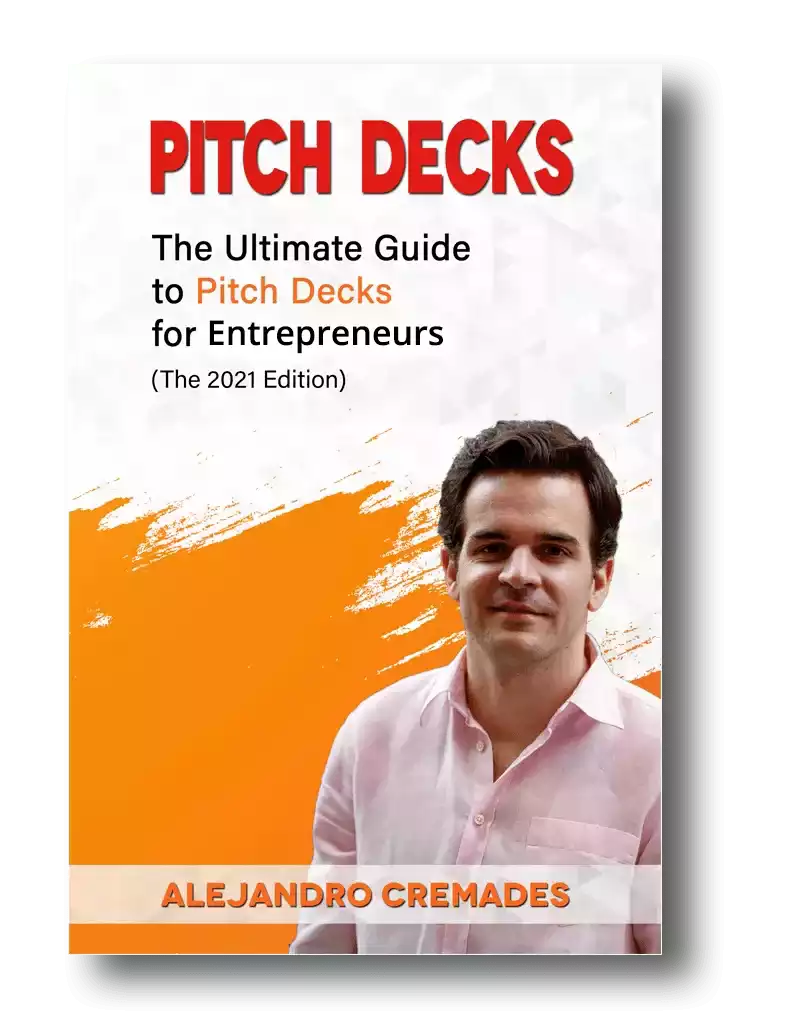
*FREE DOWNLOAD*
The Ultimate Guide To Pitch Decks
Remember to unlock for free the pitch deck template that founders worldwide are using to raise millions below.
About David Dorfman:
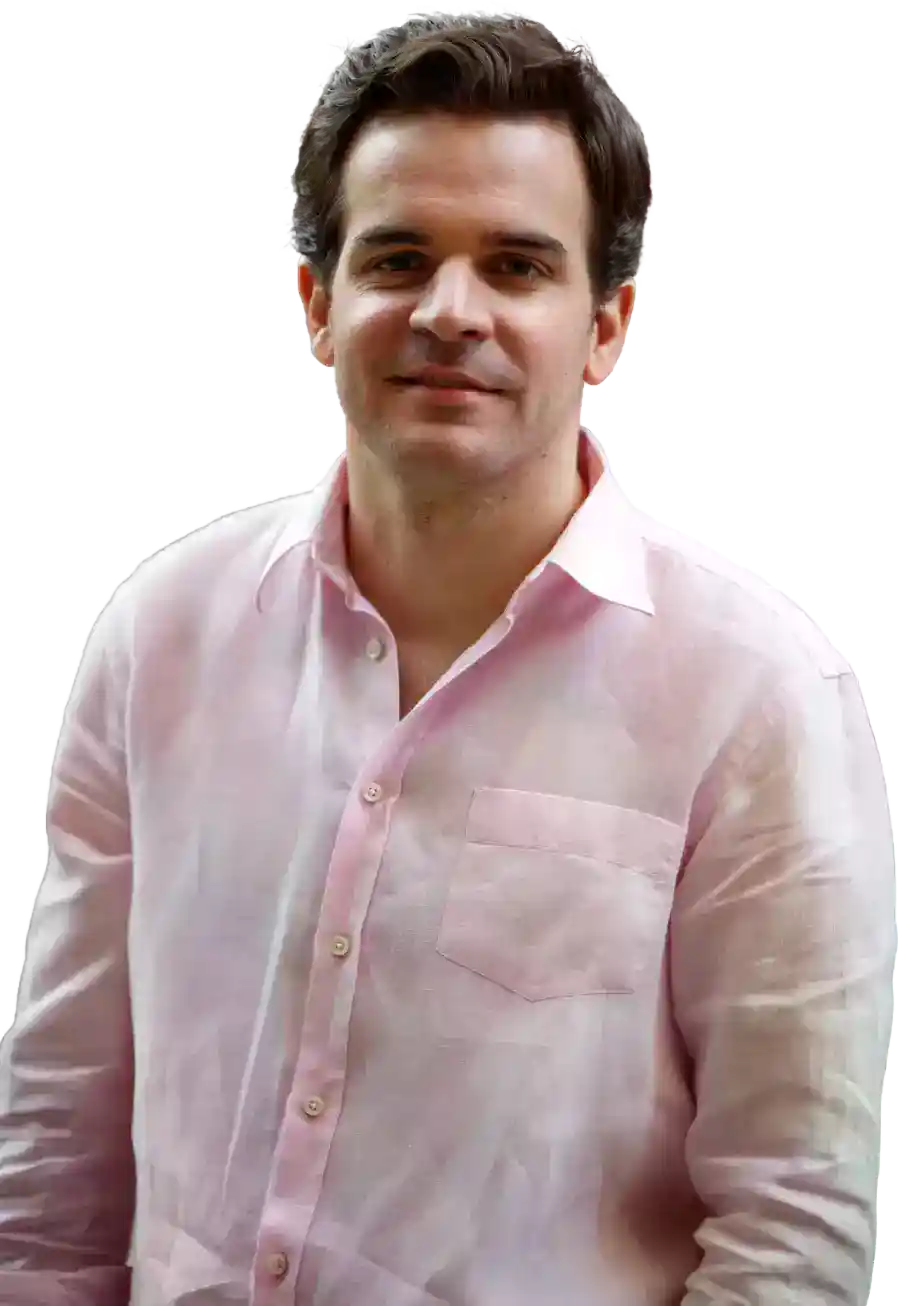
David Dorfman is a serial entrepreneur and technology innovator best known for founding YAPI, a dental software platform that helped modernize patient intake, communication, and practice management for dental offices across North America.
Growing up in Southern California, David developed an early passion for automation and using technology to solve everyday inefficiencies. In 2008, he co-founded YAPI with his family to address inefficiencies in patient intake and office operations.
Built entirely through bootstrapping, YAPI grew to serve thousands of dental practices, expanded to more than 125 employees, and ultimately achieved an eight-figure exit to M33 Equity in 2021.
Following the successful acquisition, David founded Blue Navy Recovery, a company dedicated to helping individuals, businesses, and organizations locate and recover lost, forgotten, or unclaimed funds held by state governments.
David is passionate about solving overlooked problems, leveraging automation, and building businesses that create meaningful impact for customers and communities.
Raise Capital Smarter, Not Harder
- AI Investor Matching: Get instantly connected with the right investors
- Pitch & Financial Model Tools: Sharpen your story with battle-tested frameworks
- Proven Results: Founders are closing 3× faster using StartupFundraising.com
Connect with David Dorfman:
Read the Full Transcription of the Interview:
Alejandro Cremades: Alrighty, hello everyone, and welcome to the DealMaker Show. Today, we have a really awesome founder. He’s now on his second startup, and the last one had quite a successful outcome. It was really fully bootstrapped, which is the way that he likes to do it.
Alejandro Cremades: It involved private equity. But again, I think he’s really quite the founder when it comes to automating things and figuring things out in order to streamline processes. We’re going to talk about how they thought about building the first one. It took them three years to ramp things up.
Alejandro Cremades: Also, we’ll cover some of the stories around what they’re doing now with their current business, but most importantly, what you guys like to hear about: building, scaling, financing, and exiting. So let’s welcome our guest today.
Alejandro Cremades: And without further ado, David Dorfman, welcome to the show.
David Dorfman: How’s it going, Alejandro? It’s nice to be here. Thanks for having me.
Alejandro Cremades: So originally born in California, in Los Angeles, give us a walk down memory lane. How was life growing up in Orange County for you?
David Dorfman: Yeah, born in Los Angeles, grew up in Orange County. It always feels like a bubble, people say, but it’s definitely great. There is a lot of interesting talent in the area. A lot of my friends started different startups and businesses.
David Dorfman: So it’s a great area to grow up in. But I think, ultimately, California is the tech capital of the world. So it’s always nice to be there.
Alejandro Cremades: How did you get that bug of wanting to automate things? Where did that come from?
David Dorfman: I guess early on as a child, I always wondered why things were the way they were. It felt like things were outdated. When computers came around, the internet came around, and keyboards came around, it felt like a lot of the things that we were doing day to day could be replaced or automated to bring back more of our time so that we could focus on what’s important.
David Dorfman: So everything from schoolwork to note-taking to project management in my life eventually led to how we started our first company by automating my sister’s dental office.
Alejandro Cremades: I mean, that was quite the year, 2008. Your father loses his job, your sister starts a dental office. How do you find yourself in the middle of it, pushing and doing things with them?
David Dorfman: Yeah, it’s actually a funny story. It was a dinner conversation where my dad told everyone in the family that he was getting laid off from Toshiba. At that same conversation, my sister was talking about opening up her first dental practice after she finished dental school and earned her MBA at USC.
David Dorfman: She kept telling us that there was this hole in the market. There was no solution to automate patient intake. At the time, half of the time patients spent at the office was sitting in the front office filling out information they had already provided.
David Dorfman: At that same time, there were discussions about the iPad coming out. We thought, since my dad now had some free time and I had just graduated high school and was heading into college, what could we do as a fun side project to help my sister take in more patients and have them spend time in the actual operatory instead of sitting in the front office?
Alejandro Cremades: So how does that go from a fun conversation at dinner and a weekend project to all of a sudden building a business?
David Dorfman: It started with my dad and me spending a few weeks building a very simple prototype and understanding her requirements. Ultimately, we surprised her. She had no clue that we were building something. One day, my dad called her and said, “Hey, why don’t you check this out? We sent you an iPad. Go ahead and take a look and tell us what you think.”
David Dorfman: Ultimately, it was a very simple patient intake form that would ingest data already existing in their system and allow the patient to review and update any changes. All of those changes would then be updated back into their system.
David Dorfman: It took us months to perfect the product, going from automating intake forms to understanding what forms were required and expanding into consents and different types of treatment plans as well.
David Dorfman: She was also very vocal in the communities she belonged to. She was part of a community called Dental Town, which is now on Facebook. She was talking about her struggles and sharing the solution that she had us build for her.
David Dorfman: That garnered interest from other dental offices that wanted to try it. Ultimately, we found a few champion offices that provided us with as much feedback as possible so we could understand what worked not just in her office, but in offices of all sizes.
Alejandro Cremades: What was it like working with family? How was that experience?
David Dorfman: It’s the best thing and the worst thing at the same time, right? When you work with family, you know they always have your back and your best interests in mind. But when it comes to discussions, there are no limits in some conversations.
David Dorfman: Through those conversations at the dinner table, what was nice is that it never really felt like work. It was something we were passionate about.
David Dorfman: Figuring issues out and solving problems became part of everyday life. Luckily, I was working at my sister’s dental office during the summers, so I was seeing firsthand how this helped and where the remaining gaps still existed.
David Dorfman: Just because we built an iPad product, the next question became, how do we know when a patient has arrived? How do we know what documents they need to fill out? How do we know what payments they need to make? So we started building an entire suite of software solutions based on the gaps in my sister’s office, along with feedback from all of our champion offices.
Alejandro Cremades: How do you go from three years of building, where your mom is saying, “Guys, what are you doing? Maybe you should get a job,” to all of a sudden making money and building a self-sustaining business? How do you make that transition?
David Dorfman: That’s a great question. When my dad got laid off, he received a package that allowed him to access certain funds sooner because of the layoff. Meanwhile, my mom was working double time, overtime, holidays, and everything else at the hospital.
David Dorfman: It got to a point where my mom told us that this wasn’t really working out after a year. It definitely hit our ego. But at the same time, we knew what we were doing was a real necessity.
David Dorfman: It wasn’t like we had found some interesting opportunity to make money, like selling courses or something. We knew there was an actual gap in dental offices. So we kept pushing. We kept getting feedback from clients. We attended dental trade shows, and people would pass by our booth. It took a few years for people to recognize that we were still around and still providing value.
David Dorfman: At the time, it was a one-time fee. We were desperate for customers. We wanted people to sign up, so we offered a small one-time fee. Ultimately, we just wanted their feedback on how we could provide more value in their practice.
David Dorfman: It got to the point where we became a topic of conversation in online communities and Facebook groups. People started reaching out and asking, “What is this that you offer for intake forms?” Slowly, we began replacing the old Topaz signature pads in offices. We had a program where we would buy their signature pads for the same price they originally paid and replace them with iPads.
David Dorfman: Over time, by providing amazing customer experiences, hands-on support, and really listening to our clients’ needs, we created a very good end product. In the beginning, it was almost like building a paper airplane while flying it, figuring out what we needed to build next. Ultimately, we ended up with a product that allowed patients to fill out iPad forms and online forms before they even came to the office, so they could immediately be brought into an operatory instead of sitting in a waiting room.
Alejandro Cremades: What was that moment like when you all realized, maybe we should put aside what Mom is telling us about getting jobs and really double down on this?
David Dorfman: When we were selling through a one-time fee model, we constantly needed new customers to pay for development and growth costs. We realized we needed to pivot to a monthly subscription model that customers could more easily digest while also providing us with a continuous revenue stream.
David Dorfman: That recurring revenue would allow us to predictably hire, scale our team, and provide a better return on investment to our clients.
David Dorfman: When we got our first 15 to 25 clients, some of whom are still with us today, we started thinking about how we could make it easier for customers to sign up without thousands of dollars in setup fees, integration fees, and one-time charges.
David Dorfman: Once we pivoted to a subscription model, we immediately saw an influx of customers. We were offering plans for as little as $150 per month, with no contracts and no commitments. We were very confident in what we were offering.
David Dorfman: We knew we were providing value. All we had to do was prove it by getting our foot in the door.
Alejandro Cremades: So for the people listening, what ended up being the business model? How did you guys make money?
David Dorfman: We offered a monthly subscription. In the beginning, we had a basic paperless plan. Then we started extending into new features. We introduced online scheduling, insurance verification, and what became our bread and butter: the patient dashboard.
David Dorfman: If you imagine a bird’s-eye view of the office, you remove the roof and can see every patient in every operatory, how long they’ve been there, and other important information. At a glance, you could see which patients needed premedication, which siblings were in which chairs, and instantly know details like who had a latex allergy.
David Dorfman: Without reviewing an entire case, we provided a complete snapshot of everything happening in the office.
David Dorfman: We continued expanding our product line. We had three primary plans. The base plan got customers in the door with paperless solutions. Then we expanded into reminders, reactivations, and automated patient communications through our bundled plan. Finally, we offered what we called the Works Plan, which included everything under one roof, including insurance verification, online scheduling, and the full suite of services.
David Dorfman: Based on the package selected, pricing varied. Everything was month-to-month with no contracts. Many competitors were locking customers into multi-year agreements with complicated cancellation policies that required physical mail notifications. We wanted to combat that with a transparent and customer-friendly policy.
Alejandro Cremades: Obviously, you were able to build this into significant scale. I mean, more than 125 employees across product, customer support, and operations as you expanded across North America.
Alejandro Cremades: One thing that happened, though, was that while you were experiencing this growth, COVID came knocking and brought everything to a screeching halt because people were no longer going to dental offices out of fear. What happened, and how did you navigate those murky waters?
David Dorfman: We had three offices and more than 120 employees. Overnight, we had to figure out how everyone could transition from working in an office to working remotely. The last thing we expected was all of our clients calling to cancel their services in order to reduce overhead.
David Dorfman: Everyone thought they weren’t going to need YAPI. They might as well shut their service down. Ultimately, we thought we were going to lose a lot of our business because of that. So we offered a free extension to all of our customers. They didn’t have to pay us unless they were using the software. But we didn’t want them to actually uninstall it because we knew that once we let them go, it would be a lot harder to get them back.
David Dorfman: We were able to transition all of our employees to remote work, and we started creating different ideas for COVID-friendly dental offices.
David Dorfman: For example, patients could check in from the parking lot and be notified when it was time to enter the office instead of waiting in the waiting room.
David Dorfman: Ultimately, offices started to struggle because they thought this would be very quick. There was that six-week stay-at-home idea, but offices were no longer able to pay their bills or rent. They started to think, “Okay, now I really need to go back into the office and reopen because otherwise I’m going to have to file for bankruptcy.”
David Dorfman: As they reopened, they realized that no one wanted to touch a clipboard. No one wanted to touch a pen. No one wanted to hand a credit card to anyone because of COVID. So it almost became viral overnight and a necessity for offices to reopen safely.
David Dorfman: We started building features like contactless payments, payment on file, payment plans, treatment plans, remote check-ins, and virtual consultations, which ultimately allowed offices to create an amazing experience for patients returning to the office.
David Dorfman: Dental offices were one of those places where patients were especially scared because you have a doctor working in your mouth. It’s very close contact. It’s not like physical therapy, where you can maintain a six-foot distance. So this became a very important inflection point in our business.
David Dorfman: Ultimately, when offices were reopening, they were all discussing with one another, “What are you doing to make your patients feel safe in the office?” One of those answers was YAPI.
David Dorfman: As a result, we had a huge influx of new customers coming in, and we continued building more and more products to help clients make their patients feel safe.
Alejandro Cremades: So what was that moment like when you were finally able to navigate through all of this and things started getting back to normal? Eventually, M33 comes knocking.
Alejandro Cremades: All of a sudden, that transitions into an acquisition. Quite the ride and really coming full circle. Make us insiders. How did that come about, and why did you decide to pull the trigger on it?
David Dorfman: During that time, there was a lot of consolidation happening in the industry. Large companies like Henry Schein and Patterson were acquiring software companies that provided solutions within the dental industry.
David Dorfman: M33 had been knocking on our door for a while. They reached out with an acquisition offer. They already owned several patient communication companies, although not specifically in dental, but in other verticals.
David Dorfman: We also had several other offers on the table, but we were looking for someone who wanted to support us as founders rather than simply capture more market share. We built this company to help the industry, and we didn’t want it to go back to the way things were.
David Dorfman: It was a very interesting inflection point in our lives. My dad wanted to retire at some point, so this was an opportunity for him as well. At the same time, we wanted to continue providing more value at scale.
David Dorfman: It became clear that we needed strong financial backing if we wanted to increase the value we provided to the industry by five or ten times.
David Dorfman: Ultimately, we met with the M33 founders, and they were a very founder-centric acquisition firm. They wanted to keep the original founders involved. They wanted us to continue building what we were building and execute on our vision.
David Dorfman: In 2021, we completed an eight-figure exit to M33 Equity.
David Dorfman: I was able to stay on during the transition while my dad and sister were finally able to retire and enjoy life. For me, it marked the beginning of a new chapter. The question became, “How do we take this to the next level?”
David Dorfman: It was a very exciting point because all of a sudden we had resources that had never been available to us before. We could hire an engineering team, bring in a head of product, a CFO, and a COO instead of just my dad, my sister, and me sitting around a table trying to figure everything out ourselves.
David Dorfman: Instead of building a paper airplane while flying it, we were now in a real airplane with stability and the ability to plan our future routes.
Alejandro Cremades: What was the family dinner like the day you signed the deal?
David Dorfman: It was a very touching moment. It was emotional. It felt like sending your child off to college. Everything that you had worked so hard for was finally coming to fruition.
David Dorfman: My mom was happy because she finally saw all the hard work she had put in, working overtime and double shifts, pay off. For me, it was one of the biggest lessons of my life.
David Dorfman: Just because something isn’t working out right now doesn’t mean it won’t work out in the long term. The people who become the most successful are the ones who push through those difficult periods. They have the grit to continue building, continue working hard, and continue pursuing their passion.
David Dorfman: It was an amazing dinner. It was emotional from every angle. It also represented a new chapter for me as I transitioned the company into a larger enterprise organization.
Alejandro Cremades: In your case, during that time, you went to a barbecue and met someone who ended up becoming pivotal. He told you about an experience he had with Chase.
Alejandro Cremades: That was ultimately the sequence of events that led you to Blue Navy Recovery. Walk us through that sequence. What happened?
David Dorfman: Every conversation at a barbecue is great, in my opinion. I was at one of my good friends’ barbecues, and he was telling me about an experience he had after returning from his Polytechnique master’s program in Paris.
David Dorfman: He went to Chase, and they kept telling him they had no record of his account. He believed he had left his checking, savings, and retirement accounts there. When you leave money at a bank, you assume it’s safe. That’s why you leave money at a bank.
David Dorfman: Ultimately, he found out that after three years of inactivity, banks are required by law to send those funds to the state controller’s office as unclaimed property.
David Dorfman: He told me about the frustrations of trying to recover that money. The process was opaque. It wasn’t clear which documents were required or how the entire process worked. He had to mail physical signed documents to the state’s office.
David Dorfman: After a year, he discovered he had submitted the wrong documents and had to start all over again. What should have been a simple process turned into a two-year ordeal to recover his life savings and investment accounts.
David Dorfman: That immediately caught my attention because when I looked into it, I found that I had unclaimed property, my dad had unclaimed property, and my sister’s dental office had unclaimed property.
David Dorfman: I also discovered that one in seven adults in America has unclaimed funds they don’t know about.
David Dorfman: There is approximately $72 billion in unclaimed property today. Just ten years ago, that number was $40 billion. The problem is growing rapidly, and most people don’t even know they have money waiting for them.
David Dorfman: Then the next question becomes, “How do I get this money back?”
Alejandro Cremades: So what happened next? After being exposed to this, what did you do about it?
David Dorfman: We gained access to California’s database of unclaimed funds and started exploring what we could do. We decided to build a proof of concept and not spend too much time worrying about a name.
David Dorfman: We were in San Diego, we saw the Navy, blue is my favorite color, and we were helping people recover money. So we decided on Blue Navy Recovery.
David Dorfman: We started calling people personally. We wanted to see if we could help people recover money. We weren’t going to charge anything upfront. We would simply take a success fee.
David Dorfman: We closed our first deal, then our second deal. A few months later, we had completed around 20 recoveries. We started seeing traction and common trends. Most people had absolutely no idea that this money existed.
David Dorfman: We hired a call center and sourced our own talent in the Philippines. We were able to exponentially scale our outbound calling operation.
David Dorfman: Today, we’re calling around 20,000 people every week and notifying them about their unclaimed funds.
David Dorfman: If you listen to those calls, it’s amazing because you’re telling people that they have money they never knew about or had completely forgotten. In many cases, they haven’t thought about that money for years.
David Dorfman: Now we’re able to help them get it back.
David Dorfman: It’s not like we’re trying to convince them to buy a new Nike shoe, a lifestyle product, or a cryptocurrency. We’re simply helping return money to its rightful owners.
Alejandro Cremades: What happened, for example, with the woman who lost her husband?
David Dorfman: One of my most memorable stories involves a woman who unexpectedly lost her husband. He was the primary income earner in the household, and she was preparing to sell her home.
David Dorfman: She was looking for a new house in a different city, and her daughters would have had to switch schools and make new friends.
David Dorfman: Then we called her and informed her that we had found approximately half a million dollars in an account she didn’t know existed.
David Dorfman: So we built a platform where individuals and businesses can come online. They can enter just their phone number, and with that phone number, we immediately search across all the states using every address that we can find associated with that phone number.
David Dorfman: And we compile all the documents. It’s been going very well. We’ve done over 500 cases in the last month, and it’s been something that has been scaling amazingly.
David Dorfman: We’re also entering the enterprise market. So we’re now working with a large university here in Southern California. We’ve identified nearly $2 million of donations and refunds that they have missed over the years. We see that this started out as a consumer problem because that’s really where it hurts individuals. But there’s also a lot of unclaimed property for businesses and enterprises, such as those involved in mergers and acquisitions, bankruptcies, dissolutions, and even simple refunds and checks. In most large organizations that have parent companies and child entities, a lot of money gets lost.
David Dorfman: And the last thing that we’re proud to announce is our first HR benefit. Through Techstars, we’re launching a monitoring service for all their employees as an HR benefit. Every month, every employee of Techstars will receive a free report of all the unclaimed funds owed to them and their immediate family members, and we will help them recover all those funds. We had a lady whom we had already helped. She never received her last paycheck from Facebook.
David Dorfman: And when she came to Techstars and started working there, we immediately notified her about that last paycheck that she never received. We were able to help her recover that money as well.
Alejandro Cremades: So let’s say you were to go to sleep tonight, David, and you wake up in a world where the vision of Blue Navy Recovery is fully realized. What does that world look like?
David Dorfman: Yeah, so it looks like a time where people know exactly what money they have sitting with the state. They are completely aware of the assets that the states are holding for them, and they know that we are going to help them, that we will always have their back. We’re going to be continuously monitoring for any new unclaimed property, and they know us as a household brand for finding any lost money that’s been left behind.
David Dorfman: As everyone knows, with gas prices and inflation, money is becoming increasingly important, and everyone could use a little more of it. We just want to be able to return every dollar back to every American pocket.
Alejandro Cremades: So now let’s say I put you into a time machine and bring you back to that moment in 2008 when you’re coming out of that dinner with your sister and your dad, thinking about this new idea that you guys just had. Let’s say you’re able to show up at that dinner right now. You’re able to bring yourself back in time, butterfly effect and all, and sit down at that table.
Alejandro Cremades: What would be that one piece of advice that you would give to your younger selves, given everything you know now, before launching a company?
David Dorfman: Yeah, honestly, probably stay humble and stay curious. I think a lot of people miss a lot of information and opportunities in their lives because they think something is perfect. Take something as simple as unclaimed property. When I tell most people about it, they don’t even know that this industry exists. They don’t know about things like this.
David Dorfman: And I think when you stay curious, you get to hear about people’s vulnerable situations in life, which gives you an opportunity to help them.
David Dorfman: Staying curious also allows you to create solutions that you never would have imagined creating. When we first started YAPI, we would have never thought that we would be building COVID solutions for telehealth. When we first started Blue Navy, we never thought that we would have a platform where people could come and search for themselves and their loved ones.
David Dorfman: So really, it’s stay open, stay humble, and stay curious.
Alejandro Cremades: I love it. David, for the people that are listening and would love to reach out and say hi, what is the best way for them to do so?
David Dorfman: Yeah, so you can email me at [da***@******vy.org](mailto:da***@******vy.org” data-original-string=”5p+fIHPXQjsEHGDd4tl+kA==abcLwa2tMPn8N5ynKQ0Da8E0oC/HYpcIe8AeQTvQ6qEcfU=” title=”This contact has been encoded by Anti-Spam by CleanTalk. Click to decode. To finish the decoding make sure that JavaScript is enabled in your browser.). I’m always happy to talk about partnerships or if you’d like us to do a free check for your organization, your loved ones, or yourself.
David Dorfman: You can also check us out at bluenavy.org. Happy to discuss. And you can also find me on LinkedIn as well.
Alejandro Cremades: Amazing. Well, David, it has been an absolute honor to have you with us. Thank you so much for being on the DealMaker Show today.
David Dorfman: Thank you, Alejandro. It’s been a pleasure.
*****
If you like the show, make sure that you hit that subscribe button. If you can leave a review as well, that would be fantastic. And if you got any value either from this episode or from the show itself, share it with a friend. Perhaps they will also appreciate it. Also, remember, if you need any help, whether it is with your fundraising efforts or with selling your business, you can reach me at al*******@**************rs.com
Podcast: Play in new window | Download
Subscribe: Apple Podcasts | Spotify | TuneIn | RSS | More
Facebook Comments