



Entrepreneurship stories often follow a familiar script: raise venture capital, scale fast, chase growth, and exit. Andrew Alex took a different route—one that’s increasingly relevant in today’s market.
Instead of relying on institutional capital, he bootstrapped his way to building Spendbase into a $40M+ revenue business, guided by a simple but powerful principle: build products that deliver real value, and customers will sell them for you.
What makes Andrew’s journey especially compelling is not just the financial outcome, but the operating philosophy behind it.
Listen to the full podcast episode and review the transcript here.
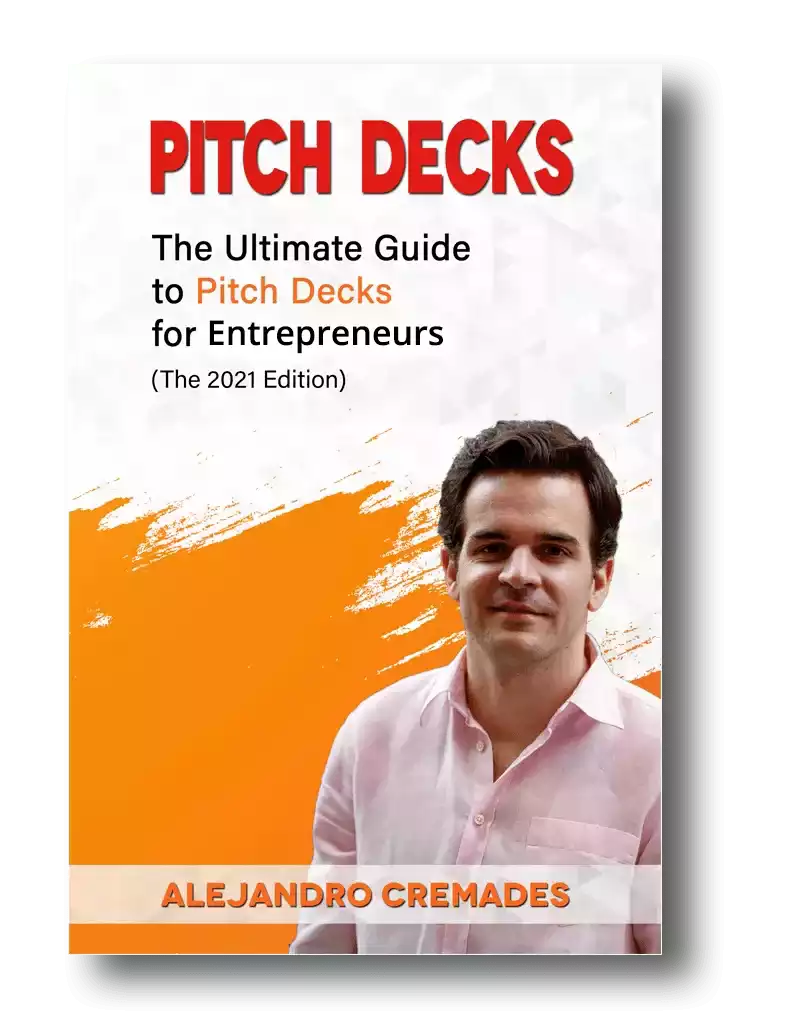
*FREE DOWNLOAD*
The Ultimate Guide To Pitch Decks
From a Small Ukrainian Town to Global Ambitions
Andrew’s early life in Ukraine was far from glamorous. Growing up in a small town near Kyiv, viable opportunities were limited, and the environment lacked stimulation. He describes it bluntly: there simply wasn’t much to do. Everything changed when he moved to Kyiv.
The energy, the scale, and the exposure to a bigger world reshaped Andrew’s ambitions. But even then, he quickly realized that traditional education wasn’t aligned with his goals. He dropped out of university and started working early.
That early hustle at the postal office— packing and delivering parcels, riding through the city with headphones on—mattered. It wasn’t about the job itself; it was about developing independence, discipline, and an instinct for action over theory.
The Shift From Marketing to Product Thinking
Andrew’s first real career step was in product and marketing, working at MyWall, an advertising agency with major brands like MasterCard. It was a valuable experience—but also a frustrating one. He noticed something fundamental—marketing cannot fix a bad product.
You can push demand temporarily, but if the product doesn’t solve a real problem, growth doesn’t sustain. But if you make a product customers need, you don’t really need to do marketing. All you need to do is tell them about the product, and they will buy it.
That realization became a core principle in everything Andrew built afterward—don’t optimize messaging; optimize the value proposition to make customers come to you. This mindset later shaped Spendbase’s entire go-to-market strategy.
Learning Both Sides: B2B and B2C at Scale
His time at Conductor exposed Andrew to enterprise B2B—large contracts, long sales cycles, and slow product iteration. Conductor is a platform for search engine optimization for enterprises, and it gave him the opportunity to travel to New York, USA, for the first time.
Inspired by the spirit of entrepreneurship, the startups and founders, and the skyscrapers of New York, Andrew transitioned to B2C, running mobile products such as VPN apps with over 80 million users. The contrast was stark.
In B2B, you have high-value deals with check sizes of $100K, $500K, and higher. However, they also have slower feedback loops. But on the B2C side, Andrew encountered rapid experimentation, metric extraction, and data-driven decision-making.
This dual experience gave him a rare advantage—the ability to combine enterprise-level value creation working with large customers with SMEs and consumer-level speed and iteration. That combination became a defining edge later.

Raise Capital Smarter, Not Harder
- AI Investor Matching: Get instantly connected with the right investors
- Pitch & Financial Model Tools: Sharpen your story with battle-tested frameworks
- Proven Results: Founders are closing 3× faster using StartupFundraising.com
Timing the Market: Building a Recruitment Business During the Boom
In 2020, capital was abundant and offered at 0% interest. Companies were raising at extreme valuations in multiples of 100x and 150x, and hiring demand exploded. Andrew spotted the opportunity—the idea for Storypoint.
Instead of competing for capital, he built a recruitment business—essentially selling “shovels during a gold rush.” It worked initially, but it wasn’t fulfilling. Andrew realized he didn’t want to be in the services business forever. He wanted to build products.
In retrospect, Andrew considers his decision to redirect his energies to be timely. Although the company would still have been growing today, AI is transforming how companies recruit talent. Recruitment is a lucrative business with huge commissions, but only for executive-level hires now.
The Birth of Spendbase: Solving a Problem He Lived
The idea for Spendbase came from a frustration Andrew experienced firsthand. Companies were wasting massive amounts of money on unused subscriptions. Employees left, but the tools remained active, resulting in costs that accumulated silently. So he built a subscription management tool.
Andrew tested the tool on early adopters. But that wasn’t the real breakthrough. The real opportunity emerged when customers revealed a bigger problem. They weren’t just overspending on SaaS—they were overspending on cloud infrastructure.
That insight led to the evolution of Spendbase into a FinOps platform, helping companies optimize spend across AWS, GCP, Azure, Alibaba Cloud, Huawei, and various local storage providers.
At the time, most startups and founders were raising capital, but Andrew didn’t really feel comfortable about fundraising just yet. He wanted the product to be successful, to be responsible for himself, and to prove its success.
With this objective in mind, Andrew bootstrapped the venture for the first two years, using funds from his earlier business, which he was gradually winding down.
The Business Model That Changed Everything
Instead of charging traditional SaaS fees and delivering zero value, Andrew made a contrarian move. He rejected subscription pricing for products that a majority of companies may not be using, but paying for anyway. Instead, Spendbase operates on a value-based pricing model.
Andrew strongly believes that when you deliver something, you should get paid only for the results. Thus, the company takes 25% of the savings it generates for customers. This aligns incentives perfectly. If customers don’t save money, Spendbase doesn’t get paid.
A pure performance-driven model, it forces discipline internally. As Andrew puts it, if they stop delivering value, revenue disappears immediately. He cites examples of AI tools experimenting with this pricing model, where users aren’t paying per API call but for the resolved ticket the API call created.
Why He Rejected Venture Capital
Despite building a fast-growing company, Andrew chose not to raise institutional VC funding—only a small friends-and-family SAFE of ~$1M. Spendbase was generating $40M+ in revenue, and when it raised a SAFE round, it had 50 employees.
Storytelling is everything that Andrew was able to master. The key is capturing the essence of what you are doing in 15 to 20 slides. For a winning deck, take a look at the pitch deck template created by Peter Thiel, Silicon Valley legend (see it here), where the most critical slides are highlighted.
Remember to unlock the pitch deck template that founders worldwide are using to raise millions below.
Andrew’s reasoning is strategic. He wanted full control over the company’s direction without worrying about being kicked out. Further, he didn’t want pressure to exit based on 10-year fund timelines, and he wanted to build something long-term, not optimized for liquidity events.
Andrew acknowledges that venture capital drives innovation—especially in deep tech—but for his business model, independence was more valuable than speed.
The Reality of Bootstrapping: Discipline Over Optionality
Bootstrapping isn’t romantic; it’s operationally brutal. Andrew describes moments where cash flow was tight as vendor payments were delayed. Every product decision carries real risk, and that forces a different operating cadence. Each initiative must have a high probability of success (~70–80%).
When introducing a new product or feature, Andrew and his team needed to be 80% confident of its revenue-generating potential. They had to be cautious with the capital they invested, such as $100K or $200K, since there was no other source of funds. Unlike VC-backed startups, there’s no safety net.
As Andrew points out, founders today have several different sources of capital, such as venture-based credits, revenue-based financing, factoring, and more. This capital drives more revenue and has its own multiplier on the money.
Sales Mastery: From Introvert to Revenue Driver
One of the most important transformations in Andrew’s journey was personal. He started as someone uncomfortable with sales—more analytical, more product-focused. But bootstrapping forced a shift. No sales meant no business. Thus, he had to transition to mastering sales.
Over time, Andrew moved from avoiding customer conversations to spending 90% of his time selling. He altered his mathematical thinking and broke out of his comfort zone of numbers on the laptop. Eventually, he was balancing product and customer engagement.
Today, Andrew’s philosophy aligns closely with the Y Combinator mantra: Build and talk to customers. That’s it.
Turning Angry Customers Into Revenue
One of the most revealing stories from Andrew’s journey illustrates this perfectly. His team accidentally tried to recruit an employee from one of their own clients. A clear mistake—and a potentially damaging one. The client was understandably upset.
But instead of avoiding the situation, Andrew leaned into it. He addressed the issue directly and rebuilt trust in the conversation by focusing on understanding the client’s deeper needs. By the end of that same call, the client not only stayed but also purchased two additional products.
That moment captures a key entrepreneurial skill—the ability to convert tension into opportunity. And convert angry customers into upsells and new annual recurring revenue. Andrew also underscores the importance of efficient distribution as crucial for success.
The Future: AI Agents Replacing “Busy Work”
Andrew’s next focus is on building AI agents to automate routine business operations. The vision is ambitious but grounded. At present, Spendbase is recording employee workflows, identifying repeatable processes, and training AI agents to execute them automatically.
Initially, they feed all the available information to the AI, which transcribes it. Next, other AI agents make plans based on the transcription and work out what automation needs to do. Side by side, other engines implement the automations. The goal is to eliminate what he calls “monkey jobs.”
Jobs that are repetitive and monotonous, such as copy-pasting emails and passwords, entering data into Google Sheets, filling out vendor forms, and writing 150-page contracts. Andrew believes up to 80% of this work can be automated, freeing humans to focus on higher-value thinking.
Humans can thus spend more time interacting with customers to understand their experiences with the product and identify areas for improvement.
Lessons for Founders
Andrew’s journey challenges many default assumptions about building startups. Not every company needs venture capital. Not every product needs aggressive marketing. Not every growth strategy needs to burn cash.
What matters is alignment between product and real customer pain, pricing and delivered value, and execution and discipline. If there’s one takeaway, it’s this. The strongest businesses aren’t the ones that raise the most—they’re the ones that create undeniable value.
And when you get that right, even your most difficult customer conversations can turn into your biggest growth moments. At the same time, if a product idea isn’t worth it and has no takers, it’s advisable to stop wasting time on it and move on to experimenting with new concepts and markets.
Listen to the full podcast episode to know more, including:
- Building products that deliver real value reduces the need for aggressive marketing and drives organic demand.
- Bootstrapping forces discipline, where every decision must have a high probability of generating revenue.
- Value-based pricing aligns incentives by tying revenue directly to customer outcomes.
- Mastering sales is non-negotiable without an external capital buffer.
- Combining B2B depth with B2C speed creates a powerful competitive advantage.
- Handling difficult customer situations well can turn conflicts into expansion revenue.
- The future of companies lies in automating repetitive work so humans can focus on higher-value thinking.
SUBSCRIBE ON:
 iTunes
 Google Play
 Stitcher
 TuneIn
 RSS
RSS SoundCloud
 Spotify
Keep in mind that storytelling is everything in fundraising. In this regard, for a winning pitch deck to help you, take a look at the template created by Peter Thiel, the Silicon Valley legend (see it here), which I recently covered. Thiel was the first angel investor in Facebook with a $500K check that turned into more than $1 billion in cash.
*FREE DOWNLOAD*
The Ultimate Guide To Pitch Decks
Remember to unlock for free the pitch deck template that founders worldwide are using to raise millions below.
Podcast: Play in new window | Download
Subscribe: Apple Podcasts | Spotify | TuneIn | RSS | More



Facebook Comments