

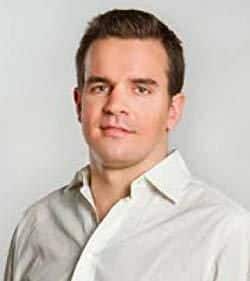

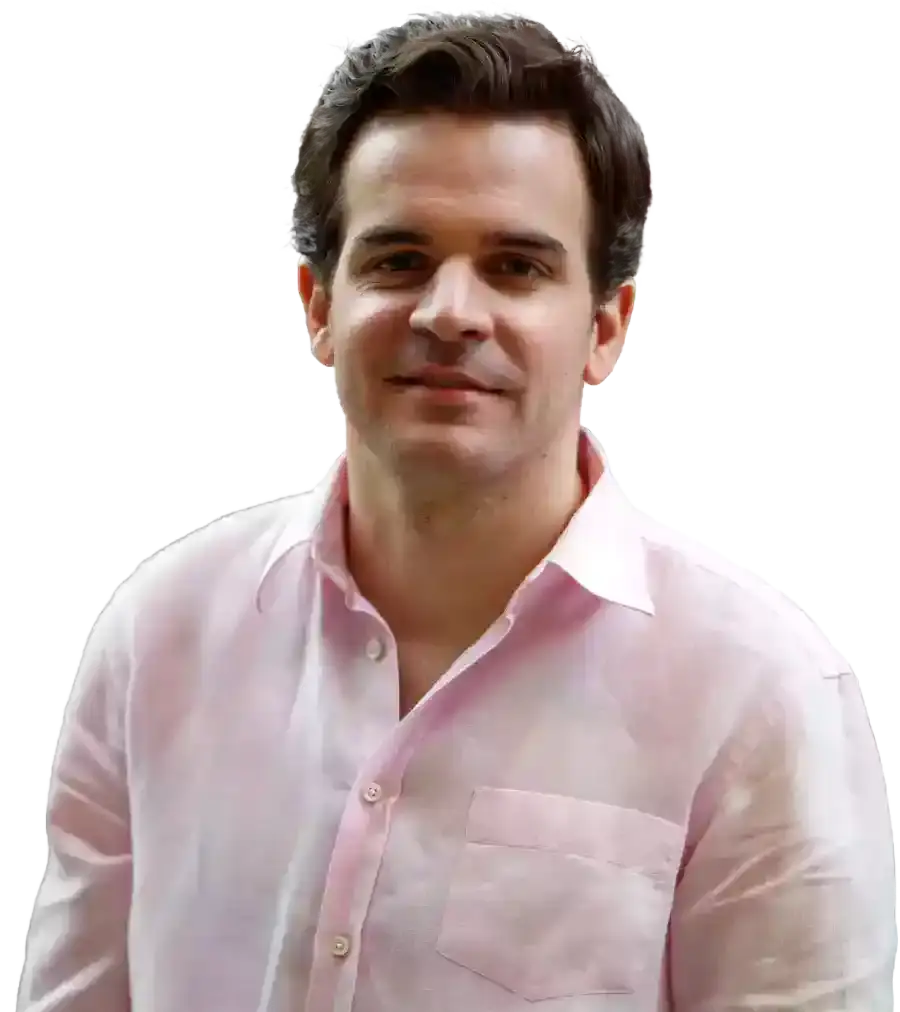
Instead of relying on institutional capital, Andrew Alex bootstrapped his way to building Spendbase into a $40M+ revenue business, guided by a simple but powerful principle: build products that deliver real value, and customers will sell them for you.
In this episode, you will learn:
- Building products that deliver real value reduces the need for aggressive marketing and drives organic demand.
- Bootstrapping forces discipline, where every decision must have a high probability of generating revenue.
- Value-based pricing aligns incentives by tying revenue directly to customer outcomes.
- Mastering sales is non-negotiable without an external capital buffer.
- Combining B2B depth with B2C speed creates a powerful competitive advantage.
- Handling difficult customer situations well can turn conflicts into expansion revenue.
- The future of companies lies in automating repetitive work so humans can focus on higher-value thinking.
SUBSCRIBE ON:
 iTunes
 Google Play
 Stitcher
 TuneIn
 RSS
RSS SoundCloud
 Spotify
Keep in mind that storytelling is everything in fundraising. In this regard, for a winning pitch deck to help you, take a look at the template created by Peter Thiel, the Silicon Valley legend (see it here), which I recently covered. Thiel was the first angel investor in Facebook with a $500K check that turned into more than $1 billion in cash.
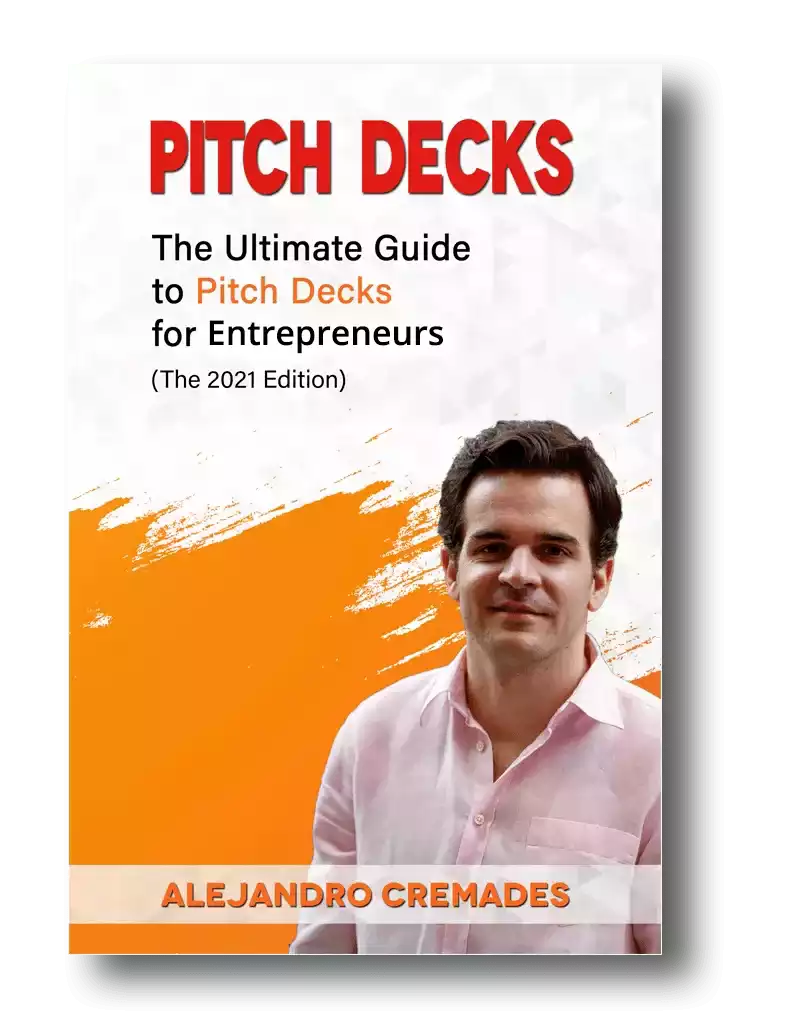
*FREE DOWNLOAD*
The Ultimate Guide To Pitch Decks
Remember to unlock for free the pitch deck template that founders worldwide are using to raise millions below.
About Andrew Alex:
Andrew Alex is an experienced professional with a diverse background in various roles. He is currently serving as the Co-Founder of KOLO since March 2022 and is also as the Founder of Spendbase since February 2022.
Prior to this, Andrew held the position of Co-Founder at Partnerway starting from August 2021. He was also the Co-Founder & Board Member of Storypoint from February 2021.
Before venturing into entrepreneurship, Andrew worked as a Product Manager at Aura from January 2020 to November 2021 and at Conductor from June 2018 to January 2020. He has also served as the Head of Marketing at TechMagic from April 2016 to June 2017 and as the Head of Product at MyWall from December 2015 to April 2016.
Andrew started his career as a Web Analyst and Strategy Intern at Aimbulance from September 2014 to May 2015. His extensive work experience showcases his skills and expertise in various domains.
Andrew attended the Kyiv academy of media arts from 2014 to 2015, where he studied digital marketing. He then pursued a Bachelor’s degree in marketing at Kyiv National Economics University.
Additionally, Andrew obtained various certifications including the HubSpot Inbound Certification in March 2017, the Google Digital Workshop in 2016, and the AdWords certification in December 2014.
Raise Capital Smarter, Not Harder
- AI Investor Matching: Get instantly connected with the right investors
- Pitch & Financial Model Tools: Sharpen your story with battle-tested frameworks
- Proven Results: Founders are closing 3× faster using StartupFundraising.com
Connect with Andrew Alex:
Read the Full Transcription of the Interview:
Alejandro Cremades: Alright, hello everyone and welcome to the DealMaker Show. Today we have an awesome founder—someone who has done it all. But the beauty here is that he’s more on the bootstrapping side of things, unlike many founders we’ve had who raise crazy amounts of money. He took a different route, and I think it’s quite inspiring. We’re going to be talking about everything they’re rolling out and how they are turning angry customers into buying more products—things like that. I mean, it’s unbelievable. So quite the story. Brace yourself for an inspiring conversation ahead of us. Without further ado, let’s welcome our guest today, Andrew Alex. Welcome to the show.
Andrew Alex: Thanks, Alejandro, for having me.
Alejandro Cremades: So you were born in Ukraine, in a small city near Kiev. Give us a walk through memory lane, Andrew. How was life growing up for you?
Andrew Alex: My early life wasn’t so fun, I would say. When you’re raised in the middle of a third-world country—I love my country—but childhood wasn’t very exciting. Living in a small city, there was nothing to do. So yeah, the most fun started when I moved to the bigger city, the capital, Kiev. Life there was much more enjoyable.
Alejandro Cremades: You were there for about 10 years, but you were also having quite a bit of fun because you even decided to drop out of university. Why did you drop out? What was happening?
Andrew Alex: Well, I started working early. Around second grade, I was working at the postal office, packing packages and delivering parcels door to door.
Andrew Alex: It was fun. I loved putting my headset on, listening to music, and biking through the city. But at the same time, it’s not something you would want to do long term. I ended up building my career in marketing first. I found it more interesting to work at a marketing agency than to sit in university listening to professors. Unfortunately, education in Ukraine has maybe two or three great universities, and the rest is more like post-Soviet-style education—some good math basics, but overall, in non-tech fields, it’s not very strong.
Alejandro Cremades: Product and marketing ended up being the focus of your career before you started building your own company. Out of all things, what caught your attention when it came to product and marketing? How did that serve you later on?
Andrew Alex: I started my career in an advertising agency, working on ads for big brands like MasterCard and others. But I needed more impact on the product itself. Marketing is great, but if you’re marketing a product that people don’t want, you can’t really sell it. You might sell to a small percentage, but it’s much better to build a product people actually want. Then you don’t need to sell hard—you just need to tell them about it, and they will naturally buy it. That’s the idea I still follow today. I build products without the need to push sales aggressively—just communicate the value proposition, and customers will come.
Alejandro Cremades: So here you are in the corporate world, making a living in product marketing. How does that transition into becoming an entrepreneur?
Andrew Alex: I was working in marketing, then I got bored and transitioned to a company called Conductor, which builds an SEO platform for enterprises. It was a lot of fun. It was also my first time traveling to New York—I was 21, dreaming about the U.S.
Andrew Alex: When I visited New York for the first time, seeing the skyscrapers, the spirit of entrepreneurship, the startups, and founders—it really inspired me. I then moved into B2C for a while, running VPN apps with over 80 million users.
Andrew Alex: That was a completely different experience from B2B. In B2B, you deal with large contracts—$100K, $500K—and slow-moving deals and product development. But on the B2C side, everything is faster. You run experiments, analyze metrics, and make decisions based on data.
Andrew Alex: So the experiences were completely opposite. I had the best of both worlds—working with large enterprise customers and with SMBs and consumers. That helped me later in building my own company.
Andrew Alex: In 2020, it was a wild time with 0% interest rates. Everyone was raising at huge valuations—100x, 150x multiples. Money wasn’t an issue. That led to a hiring boom, and I ended up starting a recruitment agency. When everyone is digging for gold, you sell shovels. That was fun for a while.
Andrew Alex: But then I got bored again and wanted to build products. We ended up creating a subscription management tool for companies.
Andrew Alex: This came from a frustration in my previous work. People would leave companies, but the companies would keep paying for tools those employees used—sometimes for years, not months. So we built a tool to solve that. It worked well with early customers.
Andrew Alex: At that time, everyone was raising money, but I didn’t feel comfortable doing that. I wanted to prove to myself that I could build something successful and take responsibility for it.
Andrew Alex: So I financed everything out of my own pocket, using profits from my previous business for the first two years.
Andrew Alex: I gradually wound down the previous business because I didn’t have time for both. If I had more time, it could have grown, but today AI is replacing many roles, and recruitment is not the best business anymore—except maybe for executive hiring, where commissions are still high.
Andrew Alex: So overall, it was a good decision. For the first two years, we financed everything internally. Then, by listening to customers and solving their problems, we realized they were not only overpaying for subscriptions but also for cloud services.
Andrew Alex: That led us to build a FinOps platform to help companies save money on cloud infrastructure across AWS, GCP, Azure, Alibaba Cloud, Huawei, and other providers.
Alejandro Cremades: So Spendbase ended up being quite a hit for you as a founder. For people listening, what is Spendbase? What’s the business model? How do you make money?
Andrew Alex: That’s a great question. I was thinking about a famous idea—what’s one thing everyone is wrong about, and you’re right? I saw that most companies use SaaS pricing while delivering little value. Customers sign up, get minimal engagement, and often forget about subscriptions that auto-renew.
Andrew Alex: I prefer value-based pricing—getting paid only when you deliver results. Some companies are experimenting with this. For example, Intercom has models where you pay per resolved ticket rather than per API call.
Andrew Alex: So we chose a model where we take 25% of the savings we generate for the customer. It’s a win-win. If we don’t deliver value, we don’t get paid.
Andrew Alex: That motivates us to continuously deliver results. If we stop creating value, revenue stops immediately, and we must fix things quickly.
Alejandro Cremades: The way you’ve built Spendbase is remarkable. You haven’t taken institutional money—just a friends-and-family SAFE of about $1M. Now the company is doing over $40M in revenue. When you raised that SAFE, you had around 50 employees. Why not raise from institutional investors? Why take this path?
Andrew Alex: I have a vision for building something remarkable—something different from other companies. Venture capital often comes with expectations tied to fund timelines, like exits within 10 years, and that’s not where I want to end up.
Andrew Alex: I also don’t want to be in a situation where I get pushed out of my own company. That happens. Venture capital is great and drives innovation—as we see with companies like Anthropic and OpenAI—but you need to know your investors well.
Andrew Alex: I’m not someone deeply embedded in the VC ecosystem in San Francisco. I’m just a guy from Ukraine. So I chose a different path.
Andrew Alex: In the past, investors in Ukraine were very different—sometimes risky—but things have improved a lot in the last 10–15 years. Now there are good funds.
Alejandro Cremades: When it comes to bootstrapping, we’ve talked about the upsides—control, no pressure to exit—but what are some downsides?
Andrew Alex: Honestly, there aren’t too many. One downside is that we had tough moments over the past four years—situations where cash flow was tight and payments to vendors were delayed.
Andrew Alex: When you’re building something new, you’re making bets, and you can’t afford many mistakes. For every idea we pursue, we need to be about 80% confident it will generate revenue. We’ve had around 70–80% success with our initiatives.
Andrew Alex: When launching new products or features, that level of confidence is critical.
Andrew Alex: About 70% of them are successful and generate money. In the early stage, that was super important because we would invest, I don’t know, like $100K or $200K, and we didn’t have any other money. So the new products had to drive revenue. If we ended up in a situation where two or three bets didn’t work out, we probably would have been in quite a bad situation where we would need to wind down some operations, maybe not all of them.
Andrew Alex: Yeah, but I think capital creates much more opportunity. Right now, founders have access to so many different types of funding. You can have venture funding, credits, venture-based credits, revenue-based financing, factoring, and startups like Pipe and others that give you money.
Andrew Alex: That helps you drive more revenue. Essentially, you’re driving more revenue for them, and you have a multiplier on your own money. Yeah, it’s just growing the industry.
Alejandro Cremades: One thing that is really amazing about bootstrapping is that you have to master sales because you’re really living without extra oxygen from investors. It’s like one move in the wrong direction, and you’re in trouble. It’s a thin line. You have to master sales. Obviously, I’m sure your background in marketing and product came in handy, but there are some crazy stories, too. I know there’s a story with a customer who was not very happy about hiring. I think this really exemplifies the way you guys have gone about mastering the art of sales. So tell us what happened with that angry customer when you guys were hiring an employee from them.
Andrew Alex: Yeah, I think it wasn’t always so smooth. Before starting my entrepreneurial journey, I was a nerd. I was afraid of talking to customers and making sales. I saw sales as really hard, and it didn’t feel like my type of thinking because I’m more of a mathematical person.
Andrew Alex: I was happy just calculating numbers and sitting on the laptop. That was it.
Andrew Alex: But after the first couple of calls with clients, when I was forced to do that and the clients agreed, I thought, “It’s not that bad. I can do sales.” Then, in two years, my job transitioned fully from building the product to spending 100% of my time dedicated to sales, or maybe 90% or so. Right now, I’m probably 50-50. I got back to building, especially with cloud and all of those automations.
Andrew Alex: It’s much easier. Right now, I’m 50% building and 50% talking to customers. It’s like the YC playbook, and those are the two things you really need.
Andrew Alex: I fully agree. But, you know, we have a great customer of ours. They’re a good friend and partner, but our recruiters didn’t know that they were our client, and they ended up interviewing their salesperson. So, you know, it’s quite bad.
Andrew Alex: It’s a bad situation when you’re making an offer to the employee of your client, and it’s just bad business ethics from our side.
Andrew Alex: It wasn’t a pleasant conversation with the client, but we ended up figuring everything out. At the end of the call, they were interested in buying two new products that we were launching.
Andrew Alex: So when you’re an entrepreneur, you need to make magic, converting angry customers into upsells and new annual recurring revenue.
Andrew Alex: That’s a skill every entrepreneur should know.
Alejandro Cremades: Oh, for sure. This is everything. Distribution. Without distribution, there’s nothing. So I want to ask you this. Imagine you go to sleep tonight, Andrew, and you wake up in a world where the vision of SpendBase is fully realized. What does that world look like to you?
Andrew Alex: Well, I think we have our new product for AI agents for businesses to automate their day-to-day routines. Right now, what we are building internally is essentially recording all of the day-to-day flows that our employees have.
Andrew Alex: Then, from that, we are extracting the workflows they do. Then we are feeding all of that information to the AI, which transcribes it. Then there are other agents that make plans based on the transcription of what automation needs to be done. Then we have other engines implementing those automations. So we live in a world where people are not wasting their time on monkey jobs, you know, like when they
Andrew Alex: go to work each day, hate their job, and just need to copy and paste emails and passwords and all of those things into Google Sheets.
Andrew Alex: Or, for example, filling out all of those forms they need to fill out for vendors or writing 150-page contracts. Right now, I think 80% of that work should be automated. You just need to have a great vision of what your customer needs, talk to your customer all day, see why they are not satisfied, and figure out what we can do more in our product to meet their needs.
Alejandro Cremades: So we’re talking about the future here, but I want to talk about the past with a lens of reflection. Let’s say I bring you back in time to the moment when you were still doing product and marketing for other companies.
Alejandro Cremades: You have the opportunity to chat with that younger Andrew, and you can give that younger Andrew one piece of advice before launching a company. What would that be and why, given what you know now?
Andrew Alex: Yeah, I think the main thing is not to waste time on non-important things. Right now, from my experience, we are launching everything 10 times faster, etc. So, don’t pursue ideas that are not worth it. Don’t pursue super small things, like doing custom jobs for clients that don’t scale. You need to go after really big markets and big ideas. Life is too short to spend it on the wrong things. What is the worst thing that can happen? You launch something.
Andrew Alex: If you’re trying to launch something that solves a big problem and you fail, but you put in all your effort, you won’t feel bad. You’ll just say, “I tried my best. It didn’t work out. Now I can try new things.”
Alejandro Cremades: I love that. Andrew, for the people listening who would love to reach out, say hi, and learn more about SpendBase, what is the best way for them to do so?
Andrew Alex: I think you can message me at an****@*******se.co, or LinkedIn would be best. Andrew Alex on LinkedIn. Yeah, that’s true.
Alejandro Cremades: Amazing. Well, Andrew, thank you so much for being on the DealMaker Show today. It has been an absolute honor to have you with us.
Andrew Alex: Yeah, thank you so much for having me.
*****
If you like the show, make sure that you hit that subscribe button. If you can leave a review as well, that would be fantastic. And if you got any value either from this episode or from the show itself, share it with a friend. Perhaps they will also appreciate it. Also, remember, if you need any help, whether it is with your fundraising efforts or with selling your business, you can reach me at al*******@**************rs.com
Podcast: Play in new window | Download
Subscribe: Apple Podcasts | Spotify | TuneIn | RSS | More
Facebook Comments