



Yuval Golan’s is a story of how a kid from Startup Nation became a global entrepreneur, survived geopolitical gray zones, navigated China, COVID, capital markets, and ultimately built a platform designed to fix one of the most broken systems in the world: cross-border real estate ownership.
Yuval’s company, Waltz, has secured funding from top-tier investors like Setpoint Capital, Aleph, and TLV Partners.
In this episode, you will learn:
- Value isn’t granted, it’s created—Yuval’s first “startup” started at six when allowance ended, and hustle began.
- The Israeli “zero-BS” mindset (question authority, challenge assumptions, build anyway) becomes a durable founder advantage in messy markets.
- Leaving home expands opportunity. Living across Europe turned travel into perspective and relationships into a compounding global network.
- China proved that upside often lives where your mental model is outdated, but visibility in opaque systems can carry real personal risk.
- COVID exposed how broken supply chains and institutions really are, and decisive founders can create impact by executing when others freeze.
- Waltz exists because institutions don’t fear foreigners; they fear unstandardized data and compliance gaps—standardization plus KYC/AML unlocks capital.
- Fundraising is context-dependent: equity rewards narrative clarity and founder-market fit, while warehouse debt demands audited performance, governance, and proof of zero delinquency.
SUBSCRIBE ON:
 iTunes
 Google Play
 Stitcher
 TuneIn
 RSS
RSS SoundCloud
 Spotify
Keep in mind that storytelling is everything in fundraising. In this regard, for a winning pitch deck to help you, take a look at the template created by Peter Thiel, the Silicon Valley legend (see it here), which I recently covered. Thiel was the first angel investor in Facebook with a $500K check that turned into more than $1 billion in cash.
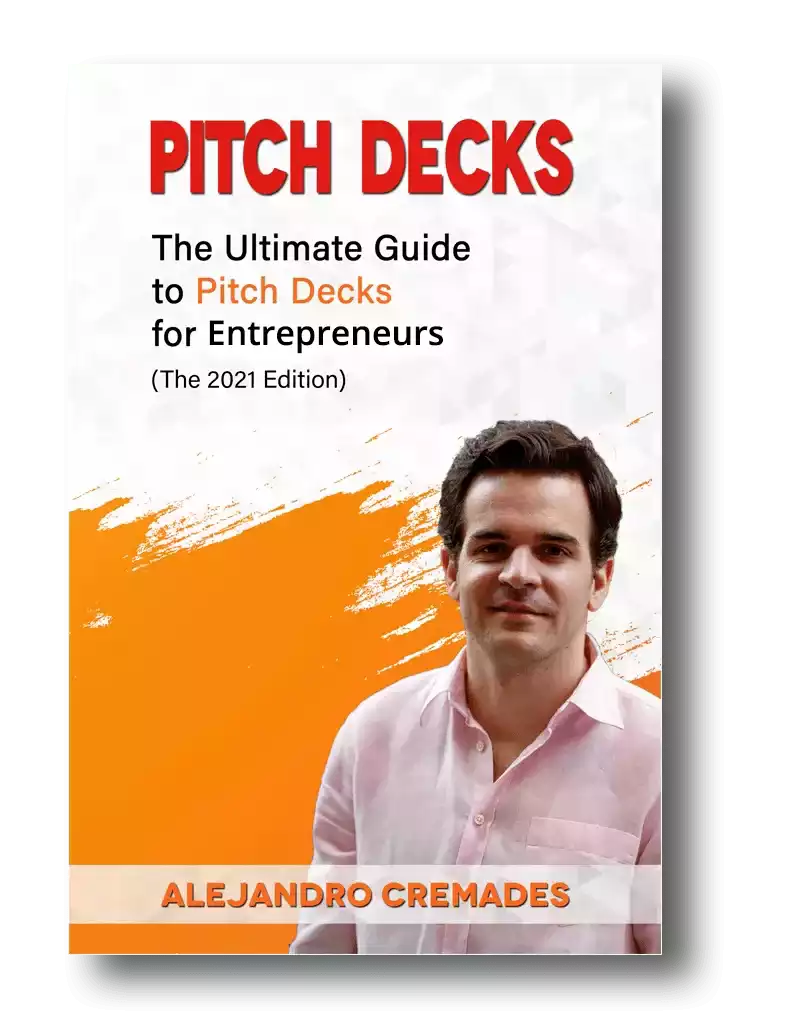
*FREE DOWNLOAD*
The Ultimate Guide To Pitch Decks
Remember to unlock for free the pitch deck template that founders worldwide are using to raise millions below.
About Yuval Golan:
Yuval Golan is the Founder and CEO of Waltz, a Fintech-Proptech-Wealthtech startup providing foreigners with a simple, remote experience to invest in, purchase, and financially manage U.S. residential real estate.
Golan was recently featured in Bloomberg, Yahoo Finance, Forbes, The Washington Post, Inman, and HousingWire, and quoted in and other leading international media outlets with over 2.5 billion impressions globally.
In addition to global news coverage, he has received accolades such as The 2024 Inman Best of Proptech, The Miami Israel Collective Community Recognition Award, and The FiNext Leadership Visionary Award.
Golan has managed operations generating billions of dollars in revenue across 18 countries across Europe, the Middle East, Asia and the Americas. His expertise spans M&As, leveraged buyouts, venture capital, and real estate investment, with a portfolio of properties in the U.S., Europe, China, and Israel.
He is an experienced executive in business development, consulting, finance, fund-raising, operations and sales (B2C, B2B, B2G, G2G). He was previously the CEO of Unique 1 Asia International, which provided strategic consulting and project management services.
Golan is a global citizen who holds a BS in Economics and Business from Utrecht University and Luiss Guido Carli University, and a Joint Executive MBA from the Kellogg School of Management at Northwestern University and Peking University.
In addition to his formal education, he is a global citizen who holds multiple passports and is fluent in several languages.

Raise Capital Smarter, Not Harder
- AI Investor Matching: Get instantly connected with the right investors
- Pitch & Financial Model Tools: Sharpen your story with battle-tested frameworks
- Proven Results: Founders are closing 3× faster using StartupFundraising.com
Connect with Yuval Golan:
Read the Full Transcription of the Interview:
Alejandro Cremades: All right. Hello, everyone, and welcome to the DealMaker Show. Today we have a really amazing founder joining us—an Israeli founder from Startup Nation. You know we love those. They’re really amazing. I love the approach. I love the way they build. The zero-BS mentality is just incredible. I love Israeli founders.
We’re going to be talking about amazing stories—building, scaling, financing, traveling all over the world, and some crazy stories from being in other countries. So brace yourself for quite an inspiring conversation.
Without further ado, let’s welcome our guest today, Yuval Golan. Welcome to the show.
Yuval Golan: Hey, Ale. I hope I don’t disappoint after all that warm intro. Since it’s recorded, I’m definitely sending it to my mother with all these compliments.
Alejandro Cremades: I love it. I love it. Now, born in Israel—born and raised there. Give us a walk through memory lane. How was life growing up for you?
Yuval Golan: Life was pretty funny and fun. Israelis, as you said, no bullshit. We always challenge authority, always ask questions, and always have three opinions on the same thing.
When I was growing up, there’s a funny story about why I became an entrepreneur. My mom would tell me, “You’re out of allowance. No more allowance.”
I said, “What do you mean? I want to buy more toys. I want to do more things.” And she told me, “Get a job.”
When I was six, I literally went to the commercial center next to my house and looked for a job.
When they wouldn’t accept me, I just sold my toys, made money, and then started delivering flowers, meat, and other stuff when I was six to eight years old. These days it would be illegal underage labor, but back then it was fine.
Alejandro Cremades: That’s incredible. Now, you’re a world traveler. You’ve been in Italy, the Netherlands, and obviously after serving in the Israeli Air Force, which everyone pretty much has to do.
Being in Europe and outside of Israel—traveling around the world—what did that open up for you in terms of perspective?
Yuval Golan: I think each and every one of us loves our home country, and some of us are also nationalistic. But one thing I always learned—also from my family—is: how can you really appreciate where you’re from if you haven’t explored anywhere else, lived in other countries, or befriended people locally?
My idea was to leave only for a year and a half. I got a job in Italy, and then I said, “Okay, I’ll stay for school.” After that, I did a one-year exchange in the Netherlands.
At that time—2009—there were no smartphones, and the best DJs in the world were Dutch. So you can imagine partying in the Netherlands, then Finland, and other places.
I got to know so many people. All these people went to school, built their careers, and spread around the world. Suddenly, you have a network of amazing people. Everywhere feels like home, and everyone gains different experiences. It’s mind-blowing.
Alejandro Cremades: You were in Europe for a while, but it sounds like your brother invited you to a wedding, and that changed the course of things for you.
Yuval Golan: Yeah. My brother called me in 2009 and said he was getting married to his girlfriend in mainland China.
As an ignorant Israeli who had only learned about the West, I imagined rice fields and people wearing big hats. Then I arrived in Beijing, Hong Kong, and Shanghai, and I saw Ferraris, Lamborghinis, and skyscrapers—right in the middle of a global economic crisis.
I was like, “What the hell? No one told me about this.”
I decided I was leaving Europe and setting up a company there because the market was so big. Not because Europe wasn’t great—it was amazing—but I saw an opportunity.
I didn’t have much money, and it was 2009. I had only a little savings. So I moved somewhere with no foreigners, where no one spoke English, but the market was big enough.
I moved to a place called Hainan—about the size of Belgium, with only 10 million people—and set up my first business.
Alejandro Cremades: That’s amazing. How do you go from that to that crazy night-sleeping story?
Yuval Golan: I set up a pretty awesome services business. Initially, it focused on go-to-market work for foreign companies, and later on some M&A services.
I also set up the first electronic music festival in China, completely unrelated to anything else, because I wanted to have fun.
Suddenly, this twenty-something-year-old guy who is not Chinese gets to know famous people, politicians, and others. In a province with only 300 foreigners—most of them English teachers—people started to worry. China is a wonderful place, but they worry if you do things that don’t follow the book.
One day, I went home on my e-bike—it’s very normal there, like in Tel Aviv. I told my friend I was going to take a nap because it had been a hard week, Friday evening, and then we’d go out.
I woke up at 2 a.m., which never happens. I went to the living room, where I usually leave my laptop and phones so I can disconnect from work while sleeping.
The laptop was missing. Two phones were missing. But my passport and wallet were still there.
As a crazy Israeli, I started looking around. Who came in? How did they get in? The doors were locked. The windows were closed.
I was like, “What the hell is going on?”
Luckily, I had just replaced my computer that week, so I had another one. I emailed my friends and said, “If you don’t hear from me within seven days, I’ve probably been taken.”
Now let’s rewind a week earlier. I got a call from an office we usually cooperated with. They said they wanted to come for coffee. I said, “Okay, great.”
They came, and I asked what they wanted to drink. They ordered the exact same prepared drink as the previous visit. That made me suspicious—something felt off.
I went back to the office to check the security cameras. The hard drive was burned.
The week before that, I got a call from the visa office asking for a service-level review. They never ask for service-level reviews.
I called the consul general, who was a buddy, and said, “If you don’t hear from me, I’ve been taken.”
I went there. The person I knew opened the door. Three people were waiting. The door locked behind me.
One asked questions. One laughed. One wrote notes.
They asked, “What’s your relationship with the embassy and the consulate?”
I said, “I just spoke to them.”
They asked, “Why do you know so many people?”
I said, “I don’t know. I’m just nice.”
They asked about my military service. I said, “Everyone serves in the military.”
Basically, it felt like they were saying, “If you’re Mossad, we know how to get to you while you’re asleep.” Sorry for my French—that’s scary as fuck.
After that, I moved to a hotel for two years because I wanted to make sure I was safe.
Alejandro Cremades: Wow. That’s unreal.
Yuval Golan: I was also able to research where they came from. Normally, they always find thieves if they want to. This specific thief—they couldn’t find. And my laptop never showed up. So you know who took it.
Alejandro Cremades: No kidding. How did you decide it was time to leave China?
Yuval Golan: China was an amazing place. I’m very thankful. They gave me great opportunities. The business went well—self-funded, profitable, all good.
By 2017, I realized East-West relations weren’t heading in the right direction. I decided to do an EMBA between the U.S. and Peking University.
By Q4 of 2019, I had a strong gut feeling it was time to leave.
In December 2019, I sold my apartment in Hainan, put my Shanghai apartment into storage, and planned to return after winter.
Then winter came—the Game of Thrones winter.
I realized the largest exporter of everything was shutting down. No logistics. No construction workers. No materials.
That meant a real estate shortage, leading to inflation, leading to higher interest rates.
I went on a real estate buying spree and failed in six countries due to forex issues, lack of loans for foreigners, or compliance.
I succeeded in Greece—it took seven months.
I also looked at New York. Everyone said New York was dead. But I looked at the skyline—BlackRock, Blackstone, JPMorgan, Goldman. It wasn’t going anywhere.
We bought 80 condos among friends in Williamsburg, betting that people would move to the outskirts. It took eight months to close—and that became my new company.
Alejandro Cremades: You’re skipping some great stories—Uzbekistan and Brazil.
Yuval Golan: You caught me. I try to avoid those.
When I left China, I wanted a break. Breaks give you time to think. Entrepreneurs should always take time off after building or selling a company.
We went to Niseko in Japan, which has amazing powder, food, everything.
Then COVID started. My mom warned me, as always. I went anyway.
While there, Chinese friends called me saying there was a pandemic and they needed help getting medical equipment.
I called my entire network. Most people lied—claiming they had millions of masks stuck somewhere.
I decided to handle it myself. I went on a global flight spree.
I managed to secure 11.5 million masks and donated the profits to the Red Cross, orphans, hospitals, and children.
Someone tipped me about a storage unit in Uzbekistan. I flew there. No one spoke English. They switched cars multiple times, drove eight hours into the mountains, and took me to a shady factory.
They said, “Mask, mask.” I said, “This is underwear.”
The guy with me was ex-Russian special forces. He said, “Get the fuck out.” Two vans blocked the road as we escaped.
I told him, “Take me to the nearest airport.” It was also my birthday.
Yuval Golan: I’m not spending it with you. I want to be on the nearest plane.
Yuval Golan: Now, this is where the international network comes in. My former EMBA colleague—he’s from Kyrgyzstan—says, as I write him a message just in case I’m there, “Yuval, my buddy from Moscow University will save your ass. You don’t know him, but he owes me. Just text him if there’s an emergency.”
Yuval Golan: A guy that I don’t know buys me a business class flight from the nearest airport to get back to Tashkent.
Yuval Golan: Then he says, “Yuval, I heard you’re alone on your birthday. I don’t know you, but you’re a friend of Igor. We’re going to celebrate your birthday. I’m going to pick you up from the airport. All expenses paid.” And I’m like, wow.
Alejandro Cremades: That’s amazing. That’s amazing. So now let’s fast forward—you’re with Waltz, right? Let’s talk about Waltz. You landed in New York, you look around—Blackstone, and they own those apartments, all this real estate.
Alejandro Cremades: Especially given what you discovered by traveling and seeing your experiences in other countries, like Greece and so forth, it sounds like that led to the idea of solving the problem with Waltz. For the people listening, what did Waltz end up being, and what’s the business model? How do you guys make money?
Yuval Golan: Great question. Thank you, Alec. Basically, what happened is I went to research why the market is so broken.
Yuval Golan: In simple words, think: I’m an Israeli going to buy in Spain, right? I’m not in the system. They don’t know anything about me. Even if I claim to be who I am—let’s say you work at Google—locally I work at Google Israel, my documents are different, my tax returns are different.
Yuval Golan: So I said, okay, I want to speak to all the heads of securitization on Wall Street to understand what they’re afraid of.
Yuval Golan: For the people that don’t understand what securitization is, go watch The Big Short.
Yuval Golan: In simple words, a few people take mortgages, and then someone takes more mortgages, and they pool them and sell them in the secondary markets.
Yuval Golan: So I went to people at Blackstone, BlackRock, Nomura, Citi, and I asked them, “What are you all afraid of?”
Yuval Golan: They said, “Basically, the loans are different. The foreigners—we don’t understand them. But if we had data, we would understand them, and we would have the ability to buy it if it’s all standardized.”
Yuval Golan: I said, “Okay, great. So if I standardize everything for you in a language or a way you understand, you will buy my loans, right?” And they said yes—but they told me to check with regulators what they are afraid of.
Yuval Golan: So we went to a lot of regulators to understand what they’re afraid of. They said they’re afraid of people who don’t pass KYC, which is identity verification, and AML, which is anti-money laundering—drug dealers, armament traffickers, and all these things.
Yuval Golan: I said, “Okay, if I clear that, will you allow me to do business?” And they said, “Yeah, of course.”
Yuval Golan: Then I went to people like you and me and asked, “What are you looking for?” And they said, “I want an end-to-end solution like Amazon.”
Yuval Golan: “I’m busy. I’m a deal maker. You told me you did 300 deals, right? Your time is money. I want to click here, get this shit done for me, and I’ll pay a premium.”
Yuval Golan: “Just leave me alone. Don’t call me. Don’t bring me into a signing,” right?
Yuval Golan: Sounds like an easy task, but real estate is a $50 trillion industry in the U.S., full of layers.
Yuval Golan: So I researched every single step—like 10,000 mini steps. And I’ll tell you what the solution is today.
Yuval Golan: Let’s say Ali wants to buy an apartment in New York. His realtor refers him to Waltz—or you find us on Meta or Google.
Yuval Golan: We’ll do your KYC within 30 seconds. We’ll check the property you want to buy using data and everything, and tell you the property is qualified—using big data plus a lot of information we have.
Yuval Golan: We’ll do your anti-money laundering when you upload your documents within a few minutes to clear you.
Yuval Golan: Then we can open for you a U.S.-based entity—with all the docs, tax optimization, and everything—within 30 seconds.
Yuval Golan: Now we do two things. You’re based somewhere around the world—Spain, Singapore, London, etc.—and you need to move currency, right? That will cost you a lot of money.
Yuval Golan: The outbound bank will tell you, “Hey, what is this money?” The inbound bank will say, “Hey, what is this money?”
Yuval Golan: So we set up for you, with APIs, two accounts—one in your home country and one in the U.S. With API, we fully control the compliance.
Yuval Golan: You wire your currency, we clear it, we do your currency exchange, we do your wires, and the money gets to America because you already cleared it—no questions asked.
Yuval Golan: We then deploy an appraiser to make sure your property exists and what the value is.
Yuval Golan: We originate a loan that is sold to the secondary markets directly—BlackRock, Apollo, hedge funds, and others.
Yuval Golan: Then you find out you don’t have an SSN. You heard about an amazing company like Lemonade or State Farm. They will not sell you insurance.
Yuval Golan: We have a subsidiary that will sell you insurance. The loan is being closed.
Yuval Golan: We sell the loan into the pool in the secondary markets. But Ale—the busy guy—doesn’t want to talk to anyone.
Yuval Golan: So he stays on my platform for banking, insurance, wires, and in the future debit cards, a CPA—everything you need—which is very fragmented and compliance-ready.
Yuval Golan: We do it for you. No pain for you. We have repeat clients. People refer their friends. It’s pretty awesome.
Alejandro Cremades: That’s unbelievable. You guys have raised $20 million. How has the journey been of raising money? You have $20 million, and you also have the warehousing facilities. Talk to us about the journey of raising that, and what the difference is between raising equity and raising the warehouse facilities.
Yuval Golan: Two parts.
Yuval Golan: Luckily, my seed round happened during the best time to raise money—late ’21, early ’22. That was a pretty awesome round.
Yuval Golan: My second raise has been during the toughest time in history—early 2024—when interest rates were as high as possible, the world was shaking, fintech was down, proptech was down—everything was down.
Yuval Golan: That was as challenging as hell. The idea was to build a good storyline. What is the problem you’re solving? What is the team? And what does the history say about the future?
Yuval Golan: What is the total addressable market, and how do you nail it?
Yuval Golan: All these things together tell the story to the VC that you can get shit done, and they believe in you. That’s kind of the equity raise.
Yuval Golan: Another thing is that I raised during COVID, and I told all my angel investors and my former partner: I don’t do Zoom meetings for the first one. I want to meet the people I’m going to marry.
Yuval Golan: I want to be sure I’m in the room, having fun and laughing. Because if they’re anal—no—I don’t want their money.
Yuval Golan: I’m a second-time founder with a self-funded fund. This should be fun. They should be amazing partners.
Yuval Golan: Now, for debt raising—not venture debt—warehouse line basically means I buy money and I sell money, just like a bank.
Yuval Golan: Those guys are serious. They do a lot of diligence.
Yuval Golan: Not only that—they want to see a track record. They want to see your audited financials. They want to see that you know what you’re doing, and that you do a lot of it with no delinquencies, because we’re a lender.
Yuval Golan: They want to see your tape. They want to see your performance. They want to see your projections. They want to see every single thing, because they’re a financial institution.
Yuval Golan: Once we nailed the process—which we did initially—I was building this company in a way that it would be ready for M&A or an IPO, because that’s what I used to do as well.
Yuval Golan: ESG, women and men equality, building a data tape, building all the corporate orders, policies, and all these financials.
Yuval Golan: So when someone does due diligence, they’ll be like, “Wow. This is not a startup”—or it’s a startup that is run like a conglomerate, but moves fast.
Alejandro Cremades: That’s unbelievable. Obviously, it’s been quite the journey already. But with investors, there’s the expectation of an amazing vision—the future you’re living into has to be exciting.
If you were to go to sleep tonight and wake up in a world where the vision of Waltz is fully realized, what does that world look like?
Yuval Golan: Some people say CEOs should rest sometimes. So if one day I can take a holiday and everything works automatically—with no compliance issues, no AML issues, no funding issues, no problems—I don’t know what I’ll do with myself.
Yuval Golan: Probably I’ll say I’ll do another startup or build another division.
Yuval Golan: But that world would be one where users trust us enough that they don’t need to speak to a sales agent, because we’re big enough.
Yuval Golan: The puffin—that is our logo—will be recognized just like Apple.
Yuval Golan: People onboard automatically. There are no escalations. It’s all automatic.
Yuval Golan: You and I can sit, have a drink wherever you want around the world, have a meal, and I’ll show you: “Hey, look at the dashboard. Look what’s happening here.”
Yuval Golan: That would be the dream scenario.
Alejandro Cremades: Now we’re talking about the future. I want to talk about the past, with a lens of reflection.
Let’s say I give you the opportunity to go back in time. You’re sitting on that airplane on the way to China to launch your first business, and you can sit next to your younger self and give one piece of advice before launching a business. What would that be, and why, given what you know now?
Yuval Golan: Don’t do it alone. Do it with one of your best friends—best, best, best friends.
Yuval Golan: Then you have a shoulder to cry on, someone to trust, someone to work with.
Yuval Golan: Do it with someone you know—someone you went through crises with.
Yuval Golan: Do it with someone you love, someone you love to argue with, and someone you can enjoy.
Yuval Golan: That’s one thing.
Yuval Golan: The second thing is: usually when older people give you advice—stop being a schmuck and listen—they probably know something better.
Yuval Golan: Yes, you want to prove yourself. I learned a lot and listened a lot, but I could have listened more.
Yuval Golan: My late-20s self listened even more.
Yuval Golan: I could have listened earlier.
Yuval Golan: And I should have listened to—sorry for mentioning this again—my mom.
Alejandro Cremades: I love it. Wow.
Yuval Golan: She speaks seven languages, and I was such a moron because I could have spoken seven native languages—or six—when I was a kid, instead of wasting time on that as an adult.
Yuval Golan: That would have opened a lot of doors earlier.
Yuval Golan: What else? I think that’s kind of it.
Alejandro Cremades: Those are big.
For the people listening who would love to reach out and say hi—what’s the best way for them to do so, to learn more about Waltz?
Yuval Golan: I’m one of those people—if you reach out to me on LinkedIn and ask for help, I actually answer, unless they want to sell me SEO services or some other stuff, which always happens.
Yuval Golan: You know: “SEO, you want to do this marketing?”
Alejandro Cremades: I know the feeling. Oh my God.
Yuval Golan: “What is your first challenge?” Blah, blah, blah.
Yuval Golan: I’ve asked so many people for help and they helped me, so I always pass it on—just like I told you with the COVID story.
Yuval Golan: So reach out on LinkedIn. I’m Yuval Golan. There are many of us, but I’m the one with the birds.
Yuval Golan: If you want to publish my email after this, you’re welcome to. If it’s helpful, we can do that as well.
Yuval Golan: The Waltz email is uvalgetwaltz.com.
Yuval Golan: You can edit it out if you think it’s too much, but reach out—recruiting, advice, investment, starting a business, crazy stories.
Yuval Golan: I think that’s kind of it.
Alejandro Cremades: Amazing. Well, Yuval, it has been an absolute honor to have you with us. Thank you so much for taking the time. I really appreciate it.
Yuval Golan: Thank you, Ale. Thanks everyone for listening. Hopefully I didn’t bore you. And if I did, I’m sorry.
*****
If you like the show, make sure that you hit that subscribe button. If you can leave a review as well, that would be fantastic. And if you got any value either from this episode or from the show itself, share it with a friend. Perhaps they will also appreciate it. Also, remember, if you need any help, whether it is with your fundraising efforts or with selling your business, you can reach me at al*******@**************rs.com
Podcast: Play in new window | Download
Subscribe: Apple Podcasts | Spotify | TuneIn | RSS | More



Facebook Comments