

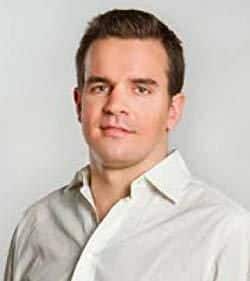
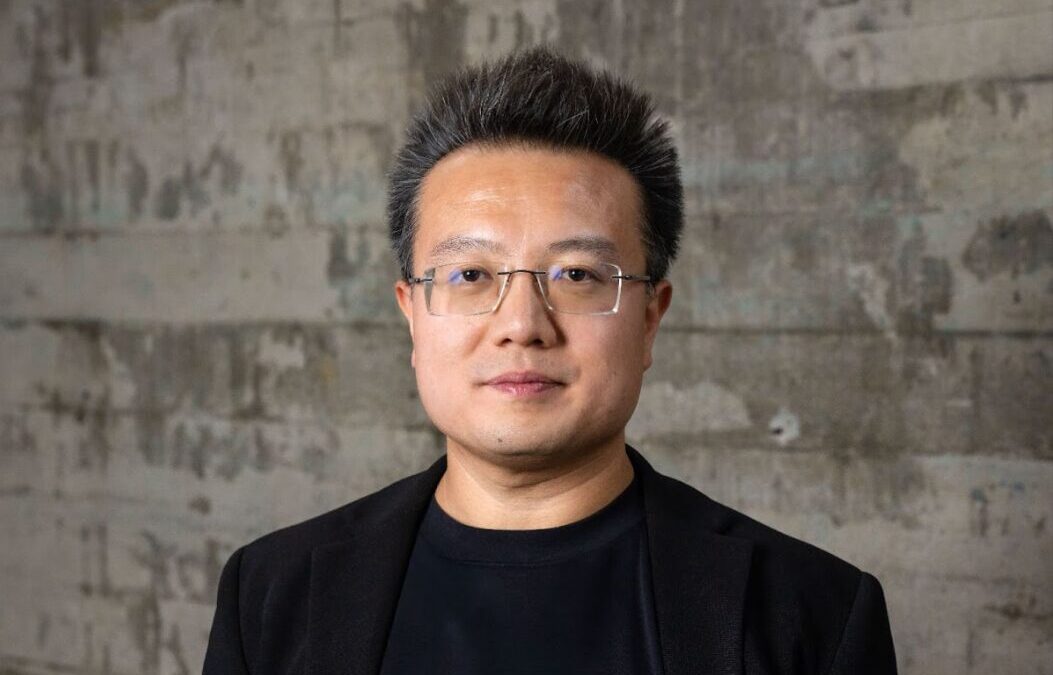
Most startup stories follow a familiar arc—an idea, early traction, a grind toward product-market fit, and eventually, scale. Wen Sang’s journey breaks that pattern. After building, scaling, and exiting his first company, he went on to start another startup, Genspark.ai.
Wen’s company has secured funding from top-tier investors like Emergence Capital, SBI from Japan, and LG.
In this episode, you will learn:
- Wen Sang’s journey shows that the leap of faith often starts before validation, with his wife being his first investor when no one else would.
- Transitioning from engineer to founder reinforced that building companies is about people, not just solving technical problems.
- Surviving near-death moments and COVID-19 highlighted that cash-flow positivity builds resilience and flexibility in crises.
- Genspark’s explosive growth demonstrates that product quality and real value drive word-of-mouth faster than paid marketing.
- Wen’s fundraising philosophy underscores that great investors are defined by trust, shared worldview, and long-term alignment—not just capital.
- His long-term vision reveals that AI’s true potential is to free humans from busy work, unlocking creativity, strategy, and frontier innovation.
SUBSCRIBE ON:
 iTunes
 Google Play
 Stitcher
 TuneIn
 RSS
RSS SoundCloud
 Spotify
Keep in mind that storytelling is everything in fundraising. In this regard, for a winning pitch deck to help you, take a look at the template created by Peter Thiel, the Silicon Valley legend (see it here), which I recently covered. Thiel was the first angel investor in Facebook with a $500K check that turned into more than $1 billion in cash.
*FREE DOWNLOAD*
The Ultimate Guide To Pitch Decks
Remember to unlock for free the pitch deck template that founders worldwide are using to raise millions below.
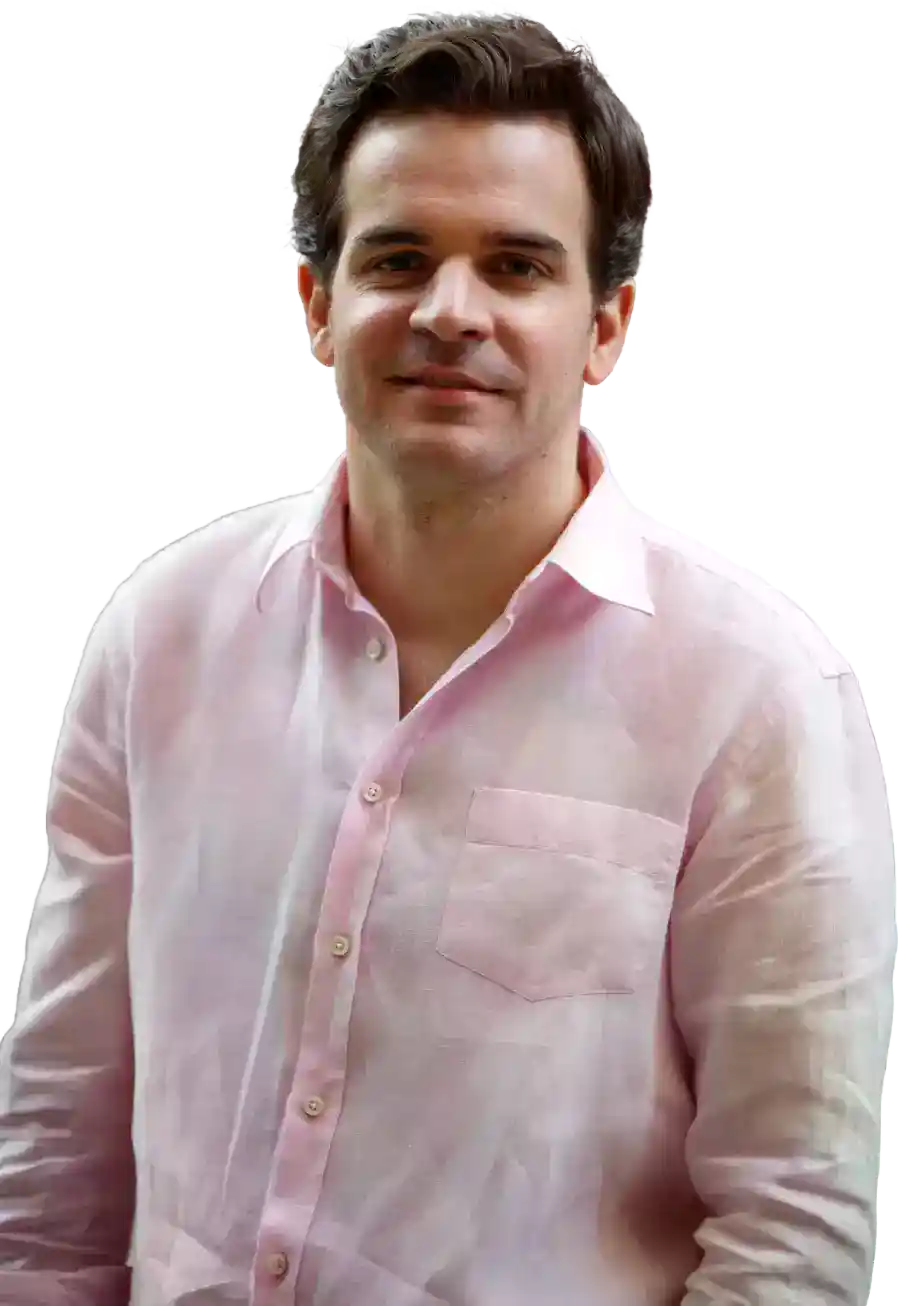
About Wen Sang:
Wen Sang is the Co-Founder and COO of Genspark.ai, a Palo Alto-based AI company building agents for knowledge workers. Following the April 2025 launch of its Super Agent suite, Genspark rapidly attracted over 2 million users and achieved $36M ARR within 45 days.
This explosive growth enabled the company to secure $60M in seed funding plus an additional $100M Series A over 18 months.
Both OpenAI and Anthropic recently published case studies recognizing Genspark as a strategic partner and world-class AI agent technology company, highlighting their no-code personal agents and innovative use of cutting-edge AI models.
Previously, Wen founded and led Smarking, a Y Combinator and Khosla Ventures-backed enterprise SaaS company that was acquired by JustPark in 2022. Wen holds a PhD in Mechanical Engineering from MIT. Outside work, Wen is an avid swimmer, golfer, and devoted family man.
Raise Capital Smarter, Not Harder
- AI Investor Matching: Get instantly connected with the right investors
- Pitch & Financial Model Tools: Sharpen your story with battle-tested frameworks
- Proven Results: Founders are closing 3× faster using StartupFundraising.com
Connect with Wen Sang:
Read the Full Transcription of the Interview:
Alejandro Cremades: Alrighty, hello everyone and welcome to the DealMaker Show. So today we have a really exciting founder. We’re going to be learning a lot. He’s a tremendous founder. He’s done it before—built it, scaled it, raised for it, exited. I mean, you name it.
Alejandro Cremades: We’re going to be talking about going from zero to $150 million ARR in 10 months. Let that sink in. And obviously, things that have happened along the way, how he went about his previous company too—he also went through the full cycle.
Alejandro Cremades: So again, brace yourself for a very inspiring conversation. And without further ado, let’s welcome our guest today, Wen Sang. Welcome to the show.
Wen Sang: Hello everyone, I’m Wen, co-founder and COO at Genspark.ai. Super excited to be here, and thank you so much, Alejandro, for the opportunity.
Alejandro Cremades: Amazing, Wen. So, born and raised in China—give us a walk through memory lane. How was life growing up for you?
Wen Sang: Just like billions of other Chinese kids, I guess. So yeah, I mean, I was born and raised in China. It’s a place called Shanxi. If you drive south from Beijing for six hours, you get to my hometown. You open the door—360 degrees—it’s all mountains.
Wen Sang: And people love noodles in my hometown. Yeah.
Alejandro Cremades: That’s amazing. So tell us, how did you get into engineering, problem-solving, numbers, and things like that?
Wen Sang: For sure. Since college, I’ve been trained as an automotive engineer because at that time, automotive was the industry to get into.
Wen Sang: Then by 2010, I got the opportunity to come to the States to do my PhD at MIT, at the MIT Sloan Automotive Lab.
Wen Sang: I was burning gasoline like how other folks would burn diesel to make the engine a lot more efficient. I did that for three years and graduated from MIT.
Wen Sang: During that time, I would say MIT has this really amazing environment. They bring in successful entrepreneurs. At the time, I remember Drew Houston came back to give a talk.
Wen Sang: And a lot of others as well. It was just so inspiring that I discovered another path to make an impact. That was when entrepreneurship got into my mind.
Wen Sang: Eventually, I started my first company after MIT. It was an enterprise SaaS company. We sold software to municipalities, commercial real estate owners, and so on.
Wen Sang: It was started in Boston, but by 2015, we moved to Mountain View to go through Y Combinator.
Alejandro Cremades: Well, before you even get there—we can’t walk over the fact of who your first investor in SmartKink was. Who was your first investor?
Wen Sang: So, fun story. I was a first-time founder, had no track record, and I was an engineer by training. I tried raising money in Boston.
Wen Sang: Boston has a lot of big investors, and many of them were like, “Okay, give me your five-year financial projection.” I was like, I’m just getting started here. I don’t even know if I would believe it myself. But that was kind of the vibe there. So I couldn’t raise money in Boston.
Wen Sang: And now my wife—at the time, my girlfriend—she was like, “Oh, you poor guy.” She wrote the first check to me. My wife was my first angel investor.
Alejandro Cremades: That’s amazing. So you were talking about location. You were in Boston, having trouble raising money, and then you decide to move and go to Y Combinator.
Alejandro Cremades: What got you through that thought process? Because moving is a big deal. You’re coming from China, now you’re in Boston, pursuing the American dream. You’re all in. Your now-wife is also investing. Thank God that had a good outcome since you guys were acquired.
Alejandro Cremades: But you’re in Boston, and things are not unfolding the way you hoped for on the financing. Walk us through why moving to the Bay Area, why Y Combinator. Walk us through that thought process.
Wen Sang: I guess on the one hand, I was young and ignorant enough to take risks in the world.
Wen Sang: A lot of immigrant founders here in the U.S. would understand this—you need a permit, a visa, or a green card to start a company or even work here. And that is a whole process.
Wen Sang: Most people go through jobs and so on. But at the time, when I got started, I was on a student internship visa. I was like, you know what—either we make it, or we go big or go home. That was the mentality.
Wen Sang: But then it was almost impossible to raise money in Boston. We got really lucky that year because Y Combinator sent one of the partners to scout companies in Cambridge.
Wen Sang: I was eating free ramen noodles at the MIT Entrepreneurship Center, just trying to get by. Initially, I landed my first job as a mechanical engineer near Boston, but then I decided I could see my next 10 years—and I was done with that. So I quit.
Wen Sang: That year, I made about $10,000. All my classmates were in oil, gas, or Wall Street making big dollars. So that was the beginning of my journey.
Wen Sang: Then I heard about this Y Combinator partner visit. We got connected through MIT alumni mutual connections. Some folks had gone through YC and made introductions.
Wen Sang: We eventually met at a coffee shop in Harvard Square. We hit it off really well. At the time, I was building a sales proposal for Boston Logan Airport, and it revealed a whole new world to this investor. He said, “You should apply for YC.”
Wen Sang: I said, okay—I’ve heard about it. So we applied. At the time, Sam Altman was still the president. We went through the process. It was exciting. They flew us over to Mountain View for the interview.
Wen Sang: It was intense. But we were fortunate—we got a lot of help along the way from YC alumni and MIT alumni. Eventually, we got in.
Wen Sang: My original plan was to move to Mountain View for three months for the program and then move back to Boston because I loved Boston.
Wen Sang: But three months later, the weather in Mountain View was so good—always in shorts and short sleeves. I thought, it’s going to be hard to go back to five months of winter in Boston.
Wen Sang: So we stayed. And more importantly, the fundraising environment in Boston was very different from Silicon Valley. Silicon Valley is Silicon Valley for a reason. There’s only one Silicon Valley in the world.
Alejandro Cremades: What do you think you learned? There are a lot of immigrant founders listening who are wondering—how did you go about being intentional with building your network?
Alejandro Cremades: Once you joined Y Combinator, it sounds like things accelerated. So how did you go about being intentional with building your network?
Wen Sang: That’s a great question, Alejandro. I don’t know—I honestly don’t think I had the consciousness to build a network early on as a grad student.
Wen Sang: For people trained as engineers, the mindset is just to solve problems. Whatever problem is in front of me—that’s the focus.
Wen Sang: There’s good and bad in that, but I was just solving one problem at a time. At the same time, I was willing to help when people came to me. I guess somehow that karma comes back around.
Wen Sang: I don’t know, honestly.
Alejandro Cremades: And then, you’re a trained engineer—how did you transition from the technical side to the business side? That’s not easy.
Wen Sang: That was hard. That was really hard.
Wen Sang: Ben Horowitz wrote this book, The Hard Thing About Hard Things. Later on, I read a chapter about engineers transitioning into business roles. It’s a real transition.
Wen Sang: The mindset is very different. As an engineer, you’re trying to solve problems. But in the business world—especially in my last company—it was door-to-door sales to government officials, real estate folks, property owners.
Wen Sang: It’s very different. You have to learn how to work with people, motivate teams, and understand human factors in everything.
Wen Sang: It wasn’t easy. My learning journey was full of hard lessons. My head got bumped everywhere I went—that’s how I survived.
Alejandro Cremades: I hear you. That’s the way it is. So for people listening—what were you doing with SmartKink? What was the business model?
Wen Sang: Yeah. So when I got to Boston, for the first time in my life, I saw a yard sale. I had never had a car before, even though I worked on engines.
Wen Sang: At the yard sale, I saw a car—it was $2,000. I thought, finally, I can afford a car. So I bought it and started driving around, feeling excited—but I couldn’t park it.
Wen Sang: Boston’s roads were built for horse carriages, not cars. There were so many one-way streets. I thought, this is a problem. We’ve been driving cars for years, and we still can’t park them properly.
Wen Sang: I went deep into the problem and realized that we’ve overbuilt parking. Each vehicle has more than four parking spaces, yet people are still circling. About 30% of urban traffic is caused by searching for parking.
Wen Sang: The issue is digitization on the supply side. It’s not a lack of demand.
Wen Sang: So the idea was to digitize the supply and eventually integrate with platforms like Google Maps to help consumers find parking more easily.
Wen Sang: Step one was digitizing the supply. We asked—who controls these spaces? Airports, hotels, universities, hospitals, cities, municipalities, commercial real estate owners.
Wen Sang: We sold them software solutions—business intelligence, dynamic pricing, online parking passes—to help them operate more efficiently and make more money.
Wen Sang: We helped optimize pricing, operations, staffing, and more. In return, they digitized their parking supply.
Wen Sang: It was an enterprise SaaS model. But it was hard—door-to-door sales.
Alejandro Cremades: No kidding. Now obviously the outcome was successful—you got to the finish line. Walk us through the acquisition. How did that develop? And what was your biggest lesson once you reached the finish line as a founder who experienced the full cycle?
Alejandro Cremades: What was that for you? What level of clarity did that give you into the entrepreneurial journey as a whole?
Wen Sang: Yeah. When I was working on it, heads down, I was not seeing the rest of the world. But eventually, by the fourth or fifth year we were in business, people started reaching out.
Wen Sang: Every March, somehow, people would reach out and say, “Hey, are you ready to sell?” There were PE firms, there were other companies in the industry.
Wen Sang: And we were always like—Michael Werner and I were just saying, “Hey, we see big opportunities here. We want to keep working on it. It’s an absolutely worthy problem. We believe that every human being deserves more time on meaningful things than searching for parking.” So that was kind of the mission.
Wen Sang: We went on and on, but then, obviously like everybody else, we went through a near-death experience back in 2018. We came back up, turned around the operations, and released the second product. That was a success.
Wen Sang: Then 2020 came. The whole industry, by April, just disappeared. That was some scary times. But thank God we were cashflow positive as a company at the time.
Wen Sang: So we survived. Not only did we survive, we gave credits to our clients to help them survive so that we could all come back together later.
Wen Sang: Eventually, I think it was early 2022, the whole world had, to a certain extent, largely recovered. And some other folks reached out—one of them was ParkHub slash JustPark, who later on acquired us—saying, “Hey, you guys have built something amazing.”
Wen Sang: At that time, we had built a network of about 2,500 parking properties across North America with real-time transactions. That was probably the largest real-time data network in the parking industry.
Wen Sang: We sat down and talked about this, me and my co-founder. On the one hand, we knew we could keep going because we were cashflow positive and the business was growing.
Wen Sang: But it would probably be another five or six years before we saw the company get to the next level. On the other hand, to be honest, both of us had been at it for a while.
Wen Sang: I had my first child in 2021. And after almost eight or nine years, I wanted to stay married.
Wen Sang: Family is important. It can’t be ignored. So it was largely a personal decision that my co-founder and I made—we needed to get some life as well.
Alejandro Cremades: Yeah, no kidding. I mean, your wife was probably like, “Hey, I want my liquidity event. We’ve been at it long enough.” Good stuff.
Wen Sang: Yeah, I mean, there were tensions.
Alejandro Cremades: Good stuff. Yeah, no kidding. Now, obviously, that gave you full visibility and clarity. You stayed with the acquirer for about a year.
Alejandro Cremades: But I want to talk about now the wildest journey you’ve experienced as an entrepreneur—and that is Genspark.
Alejandro Cremades: How do you land on the journey, on the rocket ship of Genspark? How do you meet the co-founders? How did the team come together? Tell us how you landed with Genspark.
Wen Sang: For sure. Funny story. After my last company, a friend of mine was starting a podcast and asked if I could be her first guest and share my story.
Wen Sang: So I said, yeah, sure, let’s have some fun. We did that. Then Eric, now my co-founder and CEO, had moved back to Silicon Valley. He was a long-time Microsoft veteran.
Wen Sang: He had also started a company from scratch to a $5.5 billion valuation, leveraging the last generation of AI technologies like deep learning. He moved back to the Valley toward the end of 2023, around the time I came out of the acquiring company.
Wen Sang: He listened to the podcast and reached out to the host, who is a mutual friend, asking for an intro. So we got together at a Starbucks in Santa Clara.
Wen Sang: We were both trying to figure out what was next. I was taking time off to spend with family, and he wanted to reconnect with people in the Valley, especially in the investor world.
Wen Sang: I connected him with some great investors I had worked with or spoken to over the past 10 years. At the same time, we hit it off really well and became friends.
Wen Sang: We went on a trip to L.A. The Cybertruck had just come out, so we drove it, shot some guns, watched a boxing match with a couple of other friends. Just fun stuff.
Wen Sang: Then I tried something new, and it didn’t work out. He came to me and said, “Hey, we’re building something amazing at Genspark. Let’s do this together.”
Wen Sang: I said okay. On one hand, my wife was scolding me after I had watched TV at home for a month—she told me to go do something.
Wen Sang: On the other hand, one thing I learned from the past 10 years is that it doesn’t matter what you do—doing it with the right people is extremely important.
Wen Sang: If you find the right people to work with, that’s the best thing that can happen. It’s not just about the what. The why matters, but the who matters just as much.
Wen Sang: I liked my interactions with Eric. I spoke to other team members, and it was clear this was a team with ambition, competence, great work ethic, humility, and just genuinely nice people.
Wen Sang: So I thought—these are my kind of people. That’s what drove the decision.
Wen Sang: At that time, we were still figuring things out. It wasn’t the rocket ship it is today. But for me, it was about the who.
Alejandro Cremades: So what is Genspark today? For people listening—what are you building?
Wen Sang: Genspark is a Palo Alto-based technology company. We build AI agents for over 1 billion global knowledge workers.
Wen Sang: What we mean by that is—think about it. In the past, human beings were the production engines.
Wen Sang: When it comes to building a financial model, writing an email, crafting a document, building a presentation—it’s always hands-on, word-by-word, pixel-by-pixel.
Wen Sang: That has been the world.
Wen Sang: Now, with Genspark Superagent, you don’t have to do that anymore. You don’t have to learn 20, 30, or 40 tools—from Microsoft Suite to Google Suite, Slack, Notion, Salesforce—you name it.
Wen Sang: You just command your Genspark Superagent.
Wen Sang: For example, you can say: “Research Nvidia stock over the past 12 months. Give me projections for the next 3, 6, 9, and 12 months in best, worst, and most probable cases. Build a full financial model with discounted cash flow analysis. At the same time, create a full investment memo for a $10 million purchase. Then generate a five-page slide deck in this format. Also, create a one-minute video and a three-minute podcast walkthrough.”
Wen Sang: You can ask the Superagent to do all of that and spin up multiple agents simultaneously.
Wen Sang: Then you go grab a coffee. When you come back in five minutes, it’s done.
Wen Sang: It may not be perfect, but it’s 80–90% there. So humans no longer have to spend 80% of their time on busy work like copying and pasting.
Wen Sang: Instead, we can focus on thinking, being creative, being strategic—working like a boss.
Wen Sang: Our vision is for everyone to work like Jamie Dimon at JP Morgan or Jensen Huang at NVIDIA. These people are not typing presentations—they’re thinking, strategizing, and creating the future.
Wen Sang: That’s how we believe people should work, and we want to make that accessible to everyone.
Alejandro Cremades: This sounds incredible. And what’s wild to me is that you went from zero to $150 million ARR in 10 months. That’s insane.
Wen Sang: I know—it’s unbelievable.
Alejandro Cremades: Walk us through that moment when things caught fire. When did you hit that nerve?
Wen Sang: It’s been a process. This is actually the second product we launched. We launched Genspark Superagent in April 2025.
Wen Sang: We believed that with AI breakthroughs, not only could you get personalized information—you could actually get real work done. That was the hypothesis.
Wen Sang: We built it for people like us—knowledge workers. We had no expectations. We were just experimenting.
Wen Sang: Within 45 days, we reached about 2 million users. That’s when we realized—there’s something here.
Wen Sang: We kept releasing new AI agents every one to two weeks. Today, we have around 30 agents optimized for different use cases.
Wen Sang: We learned that output quality matters most. If people can get what they need in one prompt versus struggling through multiple prompts, they will stick.
Wen Sang: We focused on making output quality enterprise-grade. Once we did that, growth became like wildfire.
Wen Sang: Within five months, we reached $50 million ARR. By nine months, $100 million ARR—all through word of mouth.
Wen Sang: We shared updates on X, YouTube, LinkedIn—but that was it. People just started telling each other.
Wen Sang: After crossing $100 million ARR, we said, okay—this is real. Let’s pour fuel on the fire. We started testing SEO and even decided to invest in a Super Bowl ad.
Wen Sang: Before the Super Bowl, by the end of January, we were already at $155 million ARR. That’s when we knew—it’s really working.
Alejandro Cremades: Give us an example of one of your most popular agents.
Wen Sang: There are many, but here’s one.
Wen Sang: A power user I spoke to—Matthew, based in Michigan—builds websites for local businesses. He charges $6,000 to $7,000 per site.
Wen Sang: Previously, he hired developers on Upwork or offshore, paying $2,000 to $3,000, with weeks of coordination and overhead.
Wen Sang: Now, he just commands Genspark’s AI developer.
Wen Sang: Hey, Jazzbark, here’s my requirement. Here’s the restaurant or whatever business. Do research on it and build me this website on Shopify, or just a direct website. This is the style I want.
Wen Sang: And then he still charges them $6,000, $7,000, and it takes a couple hours. He no longer has to pay out $2,000, $3,000. He pockets all the margin. And yeah, it’s like he can cater to 5 to 10x more clients at the same time. He has no more overhead, no more management, no more coordination back and forth.
Wen Sang: Another gentleman, Scott—he’s a sixth-generation Texan. He’s based in Dallas. What he does is he is a consultant slash broker for local restaurants to secure bank loans.
Wen Sang: In the past, his business model was pretty simple. He would help restaurants secure $1 million, $2 million dollars for, I don’t know, a patio project or something.
Wen Sang: And then they would pay him $20,000 to $40,000 as a fee, right? So in the past, he would hire folks to count the foot traffic in the restaurant, and he would do market research to put it together. And then he would hire a CPA firm analyst to put together a financial model—basically to tell the bank, “Hey, we’re going to pay your money back timely,” and so on, reliably.
Wen Sang: And then he would build the presentation, and then he would walk into the bank with his clients to secure the bank loan. But today—and that typically takes weeks, if not months, right, back and forth—he would hire those people out of the $20,000 to $40,000 he would make. He would have to pay out probably $10,000 to these folks.
Wen Sang: Now, he no longer has to do that at all anymore. Like, he would just say, “Hey, Jenspark, here’s the restaurant. Do research. Here’s the zip code. Do research on this market and give me the full market analysis.”
Wen Sang: And then, “Hey, Jenspark, build me the financial model. Here are the historical P&L and balance sheets and so on. Build me the financial model for this restaurant, for this bank loan.”
Wen Sang: And then, “Hey, Jenspark, build me the presentation.” He would still look through everything, polish up the work. He would still walk into the bank meeting together with his clients, secure them $1 million, $2 million dollars, and still get paid his fee.
Wen Sang: But instead of spending weeks, this is like days. And he gets to cater to 5x more clients at the same time, beating his competition left and right because he can lower the fee a little bit for his clients. And he gets to work more, earn more, with a lot less management and headache.
Wen Sang: It’s just amazing. People make money off this.
Wen Sang: And in that case, he would use AI slides, AI sheets, AI docs, maybe even a podcast.
Alejandro Cremades: It’s beautiful.
Wen Sang: So… one of the household-name consulting firms with a major office in Chicago—they cater to manufacturing businesses with hundreds of billions of dollars in market cap.
Wen Sang: They build software applications, solutions—complicated stuff—for their dealerships and so on. But in the past, whenever they needed to build a prototype, they would send it to their developer center in Europe and go back and forth for months.
Wen Sang: And then spend, I don’t know, a quarter million dollars on a prototype. Now, a handful of analysts and consultants sitting in their Chicago office can put it together in two or three days.
Wen Sang: And they can offer three prototypes to their clients to let them choose, and charge them way less. Of course, still a good amount, but way less than before. And the clients are happy. They’re happy. They’re working a lot faster.
Wen Sang: It’s not weeks or months—it’s days. The whole economy has changed. Not only the production part, but also the coordination part.
Alejandro Cremades: That’s amazing. Now, obviously, with this crazy growth, you need to support it. And it’s really spectacular—the rate and speed at which you guys have been able to raise money. Walk us through that too.
Wen Sang: Because obviously this is not your first rodeo. You know what it takes, what it looks like, and what to have from investors that can really add value—not the tourist capital that is out there.
Wen Sang: Every investor says they add value, and that’s not really the case, right? We know that as founders. So walk us through the journey of supporting growth with capital from the right people.
Wen Sang: At the end of the day, when it comes to capital, although there’s a lot of diligence work, it’s a trust-based decision, right?
Wen Sang: The seed round was raised by Eric, my co-founder, who built a company before this from zero to $5.5 billion. And he built amazing trust and relationships with investors—for example, in Singapore. That’s where our seed round was from.
Wen Sang: They know that, “Hey, Eric, you can build this new thing. What you work on may change, but we trust you.” You’ve shown it. It’s that.
Wen Sang: Our A round was led by iPodX Capital here in Silicon Valley, who was also one of the earliest investors in my last company. And yeah—I mean—it’s all trust.
Wen Sang: And then our B round was backed by investors like Emergence Capital Partners, who put the first checks into generational companies like Salesforce, Box, Zoom, and so on.
Wen Sang: They looked at us and were like, “Wow, this is exactly how we look at the future of work. This is exactly how the world is going to move,” based on our shared worldview.
Wen Sang: In those situations, it’s not about conviction. It’s really just people discovering each other. And then instantly you know, “Hey, we’re thinking about this exactly the same way,” right?
Wen Sang: So it’s the same with other investors of ours—like SBI from Japan, LG Tech Ventures, Upana Capital, Solza Ventures, Tomasics, Pavilion Capital. Underneath it all, it’s human trust based off shared values, shared worldview, history of working together, and so on.
Alejandro Cremades: And how much capital have you guys raised to date in total?
Wen Sang: As of today, we raised $460 million.
Alejandro Cremades: What does it mean—value—when it comes to receiving that from an investor as a founder?
Wen Sang: You mean valuation of our company?
Alejandro Cremades: No, no—value. But let’s not talk about valuation. If you want to talk about valuation, that’s fine too, but I don’t know how sensitive you guys are about that.
Alejandro Cremades: When an investor says, “We add value,” right—because everyone says that—what is ultimately value received from an investor?
Wen Sang: I’ll be bluntly honest here, okay? Number one value investors add is obviously capital. Being able to support the round and help the company get well-capitalized to the next stage of growth—that’s number one.
Wen Sang: When it comes to Emergence Capital Partners, they’ve done this for many years, many times, with many successful companies under their belt. That speaks volumes.
Wen Sang: Once you see the track record, and you see how you share the vision, it becomes natural. It’s like business partners getting together—you discover each other and it’s natural to work together.
Wen Sang: We want people who share our worldview, who look at the world the same way, and have the same belief in how the world is going to move.
Wen Sang: For example, there’s a lot of fear out there saying AI is going to take away everybody’s job. We don’t look at the world that way at all. Neither does Emergence Capital Partners.
Wen Sang: We look at it as productivity going up for all human beings collectively. Total production goes up. This is a major movement. And we want to play an important role in it—help as many knowledge workers as possible capitalize on this technology and become super humans. That’s how we look at the world, and that’s how we got together.
Wen Sang: When it comes to LG and SBI, Beyond Capital—both of them have amazing… and the same goes with Tomasics and Pavilion Capital.
Wen Sang: We’re very lucky that day one, we’re a global company. Our users are from all over the world. Our top five markets are the U.S., France, Japan, Korea, and India.
Wen Sang: LG clearly has an amazing market pull in South Korea. And SBI is a major player in Japan. We have so many users there. We just did a major launch event in Japan to announce our Tokyo office, and they helped us a lot in understanding what’s important and how to do things.
Wen Sang: They have a bank, so we set up a bank account with them. When you’re a customer of your own bank, that’s just great.
Wen Sang: And with Social Ventures, they have amazing LPs in the corporate world. Our volume was going up quickly and we needed customer support, and we didn’t know how to hire local folks fast. They said, “Don’t worry—one of our LPs, actually three of our LPs, are in the BPO world.”
Wen Sang: They introduced us to all three. We had great conversations, partnered with one of them, and now we’re in action—they’re already helping out.
Wen Sang: At the same time, they said, “Can we explore the opportunity to purchase Genspark for Business—the enterprise plan—for our companies?”
Wen Sang: The BPO folks were interested. One intro turned into two or three things that were mutually beneficial for everyone.
Wen Sang: That’s the kind of investors we have today. We’re fortunate, obviously. But the reason we got there is because in the beginning, in those conversations, we discovered we shared the same worldview.
Wen Sang: And naturally, the people they raise money from likely share the same worldview too. It’s core values. And naturally, we all wanted to figure out how to work together.
Wen Sang: And yeah—it’s full circle. It’s just amazing.
Alejandro Cremades: That’s unbelievable. And obviously, I also saw that you guys passed the unicorn status in November, so in no time after getting started with the company. So well done, and congratulations to the whole team.
Alejandro Cremades: Now, you were talking about vision earlier, and I want to dive deep into that real quick. Let me ask you this: you go to sleep tonight, and you wake up in a world where the vision of GenSpark is fully realized. What does that world look like?
Wen Sang: Oh my God, that’s such an amazing question, Alejandro. So, a perfect-world scenario: we want to see a world where, because Jspark autopilots all your busy work, every human being is able to forget about copying and pasting information and instead focus on what can be done, what can be possible, and use the creative and strategic juice of your brain.
Wen Sang: Then we see a world where everybody’s role gets expanded a lot more. What I’m capable of doing—or what anyone is capable of doing today—becomes 10x, 100x.
Wen Sang: And because of that, the amount of communication or coordination we have to do is short-circuited. It’s simpler, faster, easier.
Wen Sang: Instead of most of us working on things just to produce more to support day-to-day lives, that part of work gets, to a certain extent, done without us even thinking about it.
Wen Sang: And many of us will be able to work on much bigger, much more significant stuff.
Wen Sang: I see a world where we do universe exploration—like what Elon Musk talks about. He’s clearly on the frontier of the moon, Mars, and beyond the solar system.
Wen Sang: But my view—and I think our collective view—is: if all human beings, if us collectively, no longer have to worry about the day-to-day, no longer have to worry about producing enough just to survive…
Wen Sang: To the extent that we have so much abundance, so much so that everybody is really taken care of from a living and life perspective, then we go above and beyond to get onto bigger things. We explore the universe. We try to figure out how the world actually works. And technology advancement and science advancement are really going to be on boosters.
Wen Sang: That’s kind of what—I mean, this is like what I would do in my dream, as you asked.
Alejandro Cremades: I mean, after listening to you, I’m ready to run through a wall of bricks. My God, that’s beautiful. So profound.
Wen Sang: Yes, truly. From a biological standpoint, we all have this supercomputer in our brain, right? It costs so little energy, but it can do so much.
Wen Sang: And we probably have only tapped, I don’t know, 1% or 5% of its potential.
Wen Sang: Why can’t we do more? Why can’t we accomplish more? Why can’t we go on to bigger and more amazing things? Well, a big part of the reason is that we’re tied to technology and day-to-day small tasks.
Wen Sang: We have to do that to survive as human beings, as humanity. But if we could get freed from that, because it is taken care of, then our nature is absolutely to go to the moon, to go to Mars, to go beyond the solar system—100%.
Wen Sang: Who wouldn’t want to be an Elon Musk? Let me ask you that.
Alejandro Cremades: Everybody. Every founder.
Wen Sang: Yeah, having that option versus not—it’s clear. But collectively, I see this potential opportunity.
Wen Sang: If we could do what we’re trying to do here—to free everybody from mundane day-to-day work—then I believe all of us have that potential to be pushing the frontier for humanity.
Alejandro Cremades: Wow, that’s unbelievable. Now, Wen, we’re talking about this future, but I want to talk about the past—with a lens of reflection.
Alejandro Cremades: Let’s say I put you into a time machine and bring you back to that moment when you were coming out of MIT, about to go into this journey of bumping your head all over the place—wearing a helmet, like you said.
Alejandro Cremades: And let’s say you’re able to stop that younger version of yourself, just coming out of MIT and thinking about becoming an entrepreneur. You’re able to give that younger self one piece of advice before launching a business.
Alejandro Cremades: What would that be and why, given what you know now?
Wen Sang: So many things I would tell that version. But the biggest thing would probably be this:
Wen Sang: As a trained engineer, it’s great that your strength is problem-solving. You can solve any problem in front of you, and you will run through walls to make things happen.
Wen Sang: But at the same time, it’s extremely important to pay attention to and be aware of the actual human beings involved. The center of the world is always human beings—it’s not just the problems.
Wen Sang: What I mean is, when it comes to solving problems, it’s not only important to understand the what, but also the why—why this problem exists.
Wen Sang: And when you solve it, what is the best path to solve it? Is it just bluntly solving the problem right in front of you? Or are there other factors—especially human factors—that caused this problem?
Wen Sang: Most of these are related to how human beings work, how they think and feel, and what they care about.
Wen Sang: When it comes to different stakeholders and different parties, there may be highly efficient, highly effective, highly leveraged solutions beyond a pure engineering approach.
Wen Sang: That is what I would say to my younger self.
Wen Sang: To put it plainly, for my last company, I still believe the problem was absolutely worth solving. But the path we chose was a rather hard one.
Wen Sang: It’s good that we accomplished certain things, but I would say that with the same amount of time and energy, there could have been even bigger results—not just financially, but in terms of impact.
Wen Sang: Could we have enabled faster adoption of the technology and made the world a better place more efficiently? There are better pathways—you just have to be open to them, mindful of them, and aware of them.
Wen Sang: The human factor is always the most important. Pay attention to what people want, not just what you want.
Alejandro Cremades: I love that. So Wen, for the people listening who would love to get in touch, say hi, or learn more about Genspark—what would you tell them?
Wen Sang: First, please try jenspark.ai. And if you don’t get value within 10 minutes, send Alejandro a message.
Alejandro Cremades: You’re going to get me in trouble here. Come on.
Wen Sang: We’ll talk.
Wen Sang: But yeah, we’re absolutely always open to honest product feedback. We’d love to learn from you.
Wen Sang: I believe we all share the same vision for our communities—that we all deserve more freedom, and more time for meaningful things instead of being tied to mundane work day to day.
Wen Sang: So if you’re thinking about that as well—on one hand, we want you to try our product. On the other hand, we’re hiring around the globe.
Wen Sang: If you want to join our mission, we would love to have you. Please reach out.
Alejandro Cremades: Amazing, Wen. Well, thank you so much for being on the DealMaker Show today. I really enjoyed the discussion. It’s been a true honor to have you with us. Thank you.
Wen Sang: Thank you so much, Alejandro, for the amazing opportunity. I really enjoyed our conversation. Hopefully, we can do it again when we make more progress.
*****
If you like the show, make sure that you hit that subscribe button. If you can leave a review as well, that would be fantastic. And if you got any value either from this episode or from the show itself, share it with a friend. Perhaps they will also appreciate it. Also, remember, if you need any help, whether it is with your fundraising efforts or with selling your business, you can reach me at al*******@**************rs.com
Podcast: Play in new window | Download
Subscribe: Apple Podcasts | Spotify | TuneIn | RSS | More
Facebook Comments