

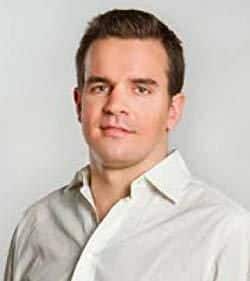
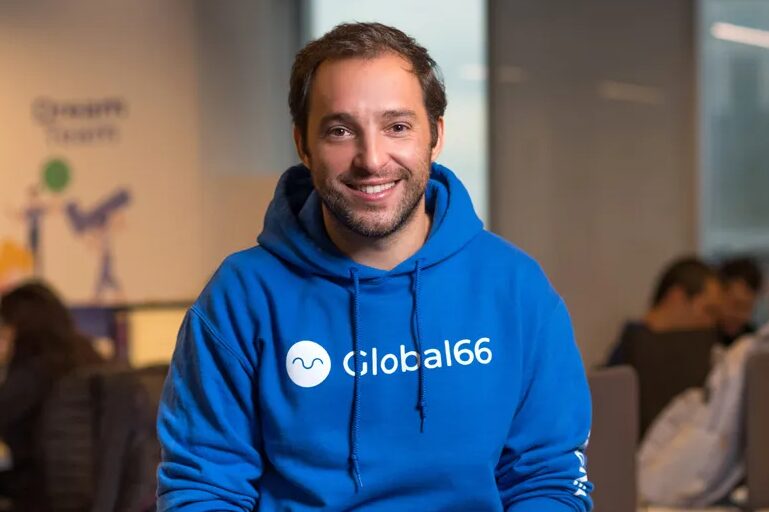
Tomas Bercovich’s entrepreneurship path was never a straight line. All through, it has been a sequence of experiments, pivots, hard decisions, and compounding lessons; each one sharpening his instincts for what truly matters when building enduring companies.
Global66, Tomas’s latest venture has secured funding from top-tier investor, Quona Capital.
In this episode, you will learn:
- Entrepreneurship compounds through experimentation, failure, and hard decisions—not linear success.
- A global mindset is built by living globally, not by thinking locally with international ambitions.
- Startups fail when they sell the “cherry on top” instead of solving a core, painful, and urgent problem.
- Lean operations are a strategic advantage—especially when competing against well-funded incumbents.
- Knowing when to step aside can be as important as knowing when to double down.
- Decisive leadership in downturns means acting once, acting fast, and communicating transparently.
- The biggest companies are built by tackling massive industries with structural pain, not incremental convenience.
SUBSCRIBE ON:
 iTunes
 Google Play
 Stitcher
 TuneIn
 RSS
RSS SoundCloud
 Spotify
Keep in mind that storytelling is everything in fundraising. In this regard, for a winning pitch deck to help you, take a look at the template created by Peter Thiel, the Silicon Valley legend (see it here), which I recently covered. Thiel was the first angel investor in Facebook with a $500K check that turned into more than $1 billion in cash.
*FREE DOWNLOAD*
The Ultimate Guide To Pitch Decks
Remember to unlock for free the pitch deck template that founders worldwide are using to raise millions below.
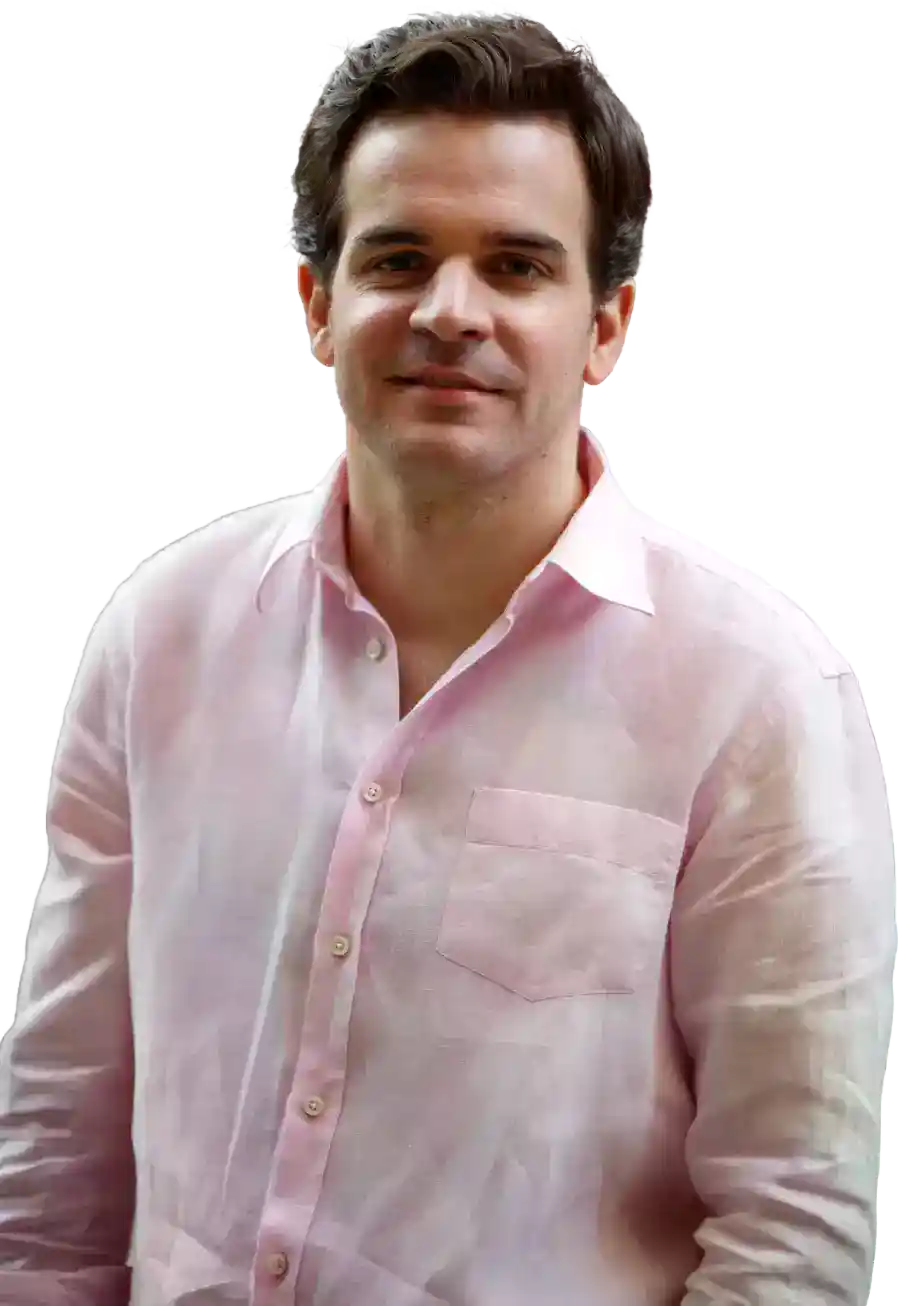
About Tomas Bercovich:
CEO of Global66, Bercovich studied Civil Engineering at the Pontificia Universidad Católica de Chile and completed an exchange program at Warwick Business School in the United Kingdom. He later attended Columbia Business School in New York, where he participated in a program for entrepreneurs.
Tomas’s first significant venture was ZhetaPricing, a startup that applied revenue management algorithms to optimize movie ticket sales. In 2010, he co-founded Cuponatic, a discount platform that successfully expanded to Chile, Peru, Colombia, and Mexico.
In 2018, together with Cristóbal Forno, Tomas founded Global66, a fintech company aiming to democratize access to financial services in Latin America. Global66 offers services such as international money transfers, currency exchange, and global accounts for individuals and businesses.
The company has grown rapidly, operating in countries including Chile, Colombia, Peru, Mexico, Argentina, Ecuador, and the United States. To date, it has registered over 1.4 million users and processed transactions worth more than one billion dollars.
Raise Capital Smarter, Not Harder
- AI Investor Matching: Get instantly connected with the right investors
- Pitch & Financial Model Tools: Sharpen your story with battle-tested frameworks
- Proven Results: Founders are closing 3× faster using StartupFundraising.com
Connect with Tomas Bercovich:
Read the Full Transcription of the Interview:
Alejandro Cremades: Alrighty, hello everyone, and welcome to the DealMaker Show. Today we have a really exciting founder joining us. He’s doing quite remarkable work out of Chile, where they have their headquarters. We’re going to be talking about everything you can think of when it comes to fintech—building, scaling, financing, and going from one startup to the next.
I mean, he has four startups under his belt, so think about that. Pretty unbelievable. This is quite the conversation and quite inspiring, so brace yourself for the next 30 minutes or so that we have in front of us. Without further ado, let’s welcome our guest today, Tomas Bercovich. Welcome to the show.
Tomás Bercovich: Thank you, Alejandro. Happy to be here.
Alejandro Cremades: So, born and raised in Chile, Tomas, give us a walk through memory lane. How was life growing up for you?
Tomás Bercovich: Yeah. I’m from the bottom of the world—a small, thin, long, and beautiful country. The south of Chile is one of the most amazing places in the world. I had a very happy life here, in a family of immigrants.
My grandparents escaped from Europe, from what today is Ukraine, many years ago. We’re a family of entrepreneurs. When they arrived in Chile, they had nothing, so the only option was to start their own company.
I grew up with that mentality—the founder’s mentality—all the time. I started here, then studied for a semester in the UK, and later studied in New York at Columbia University as well. I’ve been able to live a pretty global life, living and traveling all around the world, which is something I love.
I’m also happy to be doing what I love, which is building companies, building teams, and impacting people’s lives. That’s the summary.
Alejandro Cremades: One interesting thing about your background is that you had the opportunity to gain a different perspective. You went to the UK for a semester, and you also studied in New York at Columbia, where you did your MBA.
What do you think opened up for you by being exposed to what was happening outside of Chile and Latin America? How did that expand your worldview?
Tomás Bercovich: To think global, I think you have to live global in some way. The experiences I’ve had—like living in the UK twice, actually. We even started Global 66 from the UK and lived in London for two years—allowed me to meet different people and entrepreneurs, understand different cultures, and realize that there’s a whole world outside.
That helps you start thinking about how to build global companies. I think it helped a lot to see the world and also to share experiences during my degree at Columbia University. It was entrepreneurs from all around Latin America, and being able to talk to them was eye-opening.
You realize that it doesn’t really matter where you’re from, where you do business, or what industry you’re in. In the 80/20, we all face the same types of challenges and problems. Of course, there are specific things for each country and industry, but overall we all have to deal with capital raising, operations, technology, and so on.
So I’d say it’s fundamental to live abroad and travel.
Alejandro Cremades: Another interesting aspect is your family background—immigrants and entrepreneurs. You saw that early on. Why did you decide to go work for someone else before starting your first company?
Tomás Bercovich: I actually started doing things very early. When I was about 10 years old, I went to a retail shop to ask for a job and started working. Then I was a waiter. Then I became a DJ when I was around 13 years old.
When I finished university, I wanted to work in the US, but no company wanted to hire me and send me from Chile to the US. So I decided to work for a company where I could learn. I became kind of the right-hand person, doing very basic things—sending invoices, whatever.
That gave me exposure to everything that happens in a business. At the same time, I started my first company in parallel. I worked nights and weekends until we felt we had the opportunity to really go for it. Then I quit and started working full-time on my company.
In the end, I was basically an entrepreneur almost all the time.
Alejandro Cremades: Your first company was in the cinema industry, focused on pricing and revenue management. How was that first ride? As they say, you either succeed or you learn. You ended up winding down the operation. What was the biggest lesson from that experience?
Tomás Bercovich: There were many lessons, but the most important one is that you shouldn’t sell the cherry on top of the cake. What we were selling was a revenue management solution for the cinema industry.
At that time, cinemas were just starting to sell tickets online. They were still figuring out how to sell online at all. We were trying to sell something much more advanced—revenue management, pricing, and capacity optimization—on top of that.
The priorities of management were elsewhere. Revenue management could increase revenues and profits, but they had many things to solve before that. It was also a complicated industry, and not that big compared to something like financial services.
So I was selling something that only made sense once everything else was already in place. Today, my view is that you need to go after bigger industries and sell a problem that is truly painful for people or businesses. That gives you a much higher chance of success.
Alejandro Cremades: After that came Couponati. How did that transition happen? It sounds very different—from cinemas to coupons, like a Groupon-style business.
Tomás Bercovich: Yes and no. With Setup Pricing, we optimized cinema capacity so they could generate more revenue. What Couponati did was optimize and increase sales—not just for cinemas, but also for spas, beauty centers, entertainment centers, and more.
In the end, the objective was similar: help companies optimize their infrastructure and sell more. One was a SaaS software company, and the other was an e-commerce company, but the underlying idea was related.
What happened is that Setup Pricing started winding down after a large Mexican client copied our system, pushed us out, and then bought the cinema company that was our biggest customer. So we focused more on Couponati.
The transition was actually quite smooth. We didn’t have to let anyone go. The entire Setup Pricing team moved to Couponati. One company was winding down while the other was growing fast. It was a good transition.
Alejandro Cremades: With Couponati, you built something meaningful—operating in four countries and becoming profitable. What was that journey like?
Tomás Bercovich: It was a roller coaster. The company grew very fast, but there was a lot of competition. Some players came into Latin America with hundreds of millions of dollars, others with tens of millions. We raised just one million.
We had to be extremely lean and efficient. That paid off because many competitors had very high fixed costs, and the business model didn’t support that. We ended up acquiring three players in the region. Many others went bankrupt or shut down.
During the pandemic, companies with high fixed costs died. Groupon in Latin America was one of them. We were also very close to dying, but we managed to survive. After COVID, we became profitable again, and for the last three years the company has been profitable.
Today it operates in four Latin American countries. It was an industry that grew very fast and then adjusted. It wasn’t a huge industry, but Couponati is probably the largest of its kind in Latin America.
Alejandro Cremades: The next venture was EasyTech. This one was different because you ended up selling to your partners. What happened there?
Tomás Bercovich: Setup Pricing incubated different companies. After revenue management, we did Couponati, and then we partnered with two friends to build EasyTech.
One of them had a server solution, and I contributed another solution. These two guys, Pato and Cristian, managed the company from scratch. I wasn’t involved in day-to-day management from the beginning.
In the end, it made sense that they owned the company. They were the ones building it. We had a very friendly relationship, and they asked us to sell the business to them. It made total sense. We sold, they continued to do very well, and everyone was happy.
Alejandro Cremades: Now to Global 66. You’ve done three startups, across different industries, with ups and downs. Why Global 66?
Tomás Bercovich: Because the pain in the financial industry in Latin America is huge. We believe that technology can help millions of people and businesses make their financial lives easier, cheaper, and more global.
In the US, there are about 330 million people and more than 5,000 banks. In Latin America, there are 660 million people and fewer than 300 banks. That’s about 35 times more banks per person in the US. Europe is similar to the US.
This lack of competition means banks in Latin America are among the most profitable in the world. ROEs in the US are around 8–10%. In Europe, under 5%. In Latin America, 18–20% and higher. That translates into expensive pricing.
The world has also changed. Our grandparents were more local—they were born, lived, and died in the same place. Today, people are global. You buy from Amazon or AliExpress, you travel, you study abroad, you have friends everywhere.
Businesses are the same. My grandparents built local businesses and never thought about expanding abroad. Today, entrepreneurs think globally from day one. Even if you don’t expand globally, you still have cross-border needs—paying freelancers, imports, AWS, Google, getting paid by US customers.
Banks and incumbents are very bad at cross-border products. They’re expensive and full of friction. We believe technology can solve this by offering a global account for individuals and businesses.
Today we provide local accounts, US accounts, and European accounts. People can pay and get paid globally at a much lower cost than banks charge. It’s a truly global account that makes life much easier.
Alejandro Cremades: And how do you guys make money, Tomas?
Tomás Bercovich: Most of our revenues come from the spreads. So, any transaction you do between different currencies, you will pay a small spread, which is much cheaper than the incumbents. That’s our main revenue stream.
Alejandro Cremades: What happened? I know that being able to make decisions—and doing them at the right time—is key. I know in 2022 there was something quite uncertain that happened at the same time. Tell us what happened in that year.
Tomás Bercovich: Yeah. When the crisis exploded, we were burning like 700k per month, and we were very frustrated. We had grown from 40 people pre-pandemic to 300 post-pandemic.
Post-pandemic, the company became very bureaucratic. Before, with two or three people, we made a decision and moved fast. Now it was a meeting with 15 people and nobody made a decision. It was crazy.
I remember on a Sunday night, I read a paper—I don’t remember if it was Sequoia or Andreessen—and it said something like: the founders that make the tough decisions faster will come out stronger from this crisis.
That day, I called Cristóbal, my co-founder, and I said, “You know what? We have to let go of a lot of people in the company.” In the end, we ended up letting go like 90 people.
We were one of the first to do it. Many companies started to let go of some people, and many of them did it two, three, four times. That is very painful for everybody, and the team that stays becomes unstable and everything. So we did it once—very fast and very deep.
Two or three months later, the company was performing much better, and we started growing much faster with 90 people less.
Being able to make the tough decisions—of course, after analyzing things and everything—but making them fast and deep, and doing it once, at least for us, paid very well.
Alejandro Cremades: What about communication? During times like that, where it’s make it or break it for the company—but most importantly for the culture, and for the people who are staying.
Tomás Bercovich: Communication is key. Most people think it’s very basic and obvious, but in the end, it isn’t. In times like this, the strategy was very consistent: let’s do it one time, very deep, and let’s commit to the team that it will be one time.
Of course, other people could be let go later because of performance or whatever, but we did it one time. One morning, everybody was let go. Then we got the whole company together and said, “Hey guys, we have to do this because of this, this, this, and this reason.”
It was a one-time thing. Now it’s very painful for everybody—call your friends who were let go—and now this is the team that stays. We need you all focused, and let’s go, and let’s kill it together.
Of course, everybody was very shocked. But as time passed, they started to realize the company was performing better, communication flew better, and they started seeing that other companies were letting go of people one time, then two times, then three times.
So yeah, I think we handled that pretty well at the time.
Alejandro Cremades: For a company like Global 66, it’s quite capital-intensive, right? Especially at the beginning, with registrations, licenses, and all of that. How much have you guys raised to date? And what has the experience been like going through the motions of raising money?
Tomás Bercovich: We’ve raised a little bit north of 20 million. We still have around 40% of that in cash. We’ve been able to build this company—if you compare us to any similar company probably in the world—and we must be one of the most efficient companies in terms of how we’ve used capital, and the size we have today relative to how much money we’ve raised.
Of course, we’ve made a lot of mistakes, but on this, I think we’ve done pretty well. We haven’t raised since 2021. We’ve been profitable for the last two years.
Raising capital is something you need to do to build a company. There are founders who focus on raising money and let others build the company. We see it the other way around. We raise as little “gap money” as we can, and we spend as little time as possible raising money.
We are all-in on operations—building processes, building the team, building the talent. I think it’s mostly about that. And yeah, we maybe won’t raise any more money in the history of Global 66. I don’t know, but it’s a highly probable possibility.
Alejandro Cremades: Amazing. Obviously, when you’re raising money—for investors, and even with customers or employees—vision is everything, right? Because it’s all about the future you’re living into.
So if you go to sleep tonight and wake up in a world where the vision of Global 66 is fully realized, what does that world look like?
Tomás Bercovich: Global 66 should be the global account for Latin American people and businesses. It should impact millions of people in Latin America and millions of businesses, who would be able to do their financial life very easily, no matter where they are, no matter what they want to do, and no matter the currency they want to operate in.
So, really having a big, big impact on people and businesses in Latin America.
Alejandro Cremades: We’re talking about the future, but I like to talk about the past with a lens of reflection. Doing this four times is remarkable, and you’ve picked up so many insights and lessons.
Let’s say I put you into a time machine and bring you back to that moment when you were about to give notice at the company where you were an employee. You give your notice, you’re walking out of the building, and you’re venturing into the unknown—becoming a founder for the first time.
If you could show up right there with that younger Tomas and give him one piece of advice before launching a business, what would it be and why, given what you know now?
Tomás Bercovich: I’ll tell you what my boss told me at that time, which I think was a very wise piece of advice. Then I’ll tell you what I would add.
When I told him I was leaving, he wasn’t happy. He asked me what I was going to do, and I told him the idea for SetupRise. He didn’t say anything about it, but I saw in his face that he didn’t like what I was going to do.
He told me this: what you’re doing today is 50% of the road, of the job. Starting is 50%. The other 50% is keeping your eyes wide open to see if what you’re doing is the right path, or if you have to pivot and go for something else.
That was exactly it. We started Setup Pricing. We incubated Kubernetes and it started to grow very fast. From Kubernetes, I met my co-founders for Global 66. One thing started to lead to another, but it’s about keeping your eyes wide open.
What he should have said—because his face said it—and what I would tell the younger me is: choose an industry that’s big enough, and where you are sure, or pretty sure, you can solve a big problem for the customer.
Don’t sell the cherry on the cake. Sell something that’s really a pain for the customer. And that’s Global 66. That’s one of the reasons I believe this can be a very big company—if we do all the things right, bring in the right talent, and everything.
We’re in the biggest industry in the world, the financial industry, and there’s a huge pain for both people and businesses in doing cross-border transactions and their financial life in the end.
So yeah, that’s what I would tell the younger me.
Alejandro Cremades: I love it. Tomas, for the people listening who would love to reach out, say hi, and perhaps learn more about Global 66, what would you tell them?
Tomás Bercovich: You can follow us. You can download our app. You can onboard today from 60 different countries. You can fund your account through stable coins today, and in many countries in Latin America directly through an ACA transaction. In a couple of months, we’ll have more surprises.
So you can get to know our product there. You can follow us on LinkedIn. You can follow me on LinkedIn too. We’re pretty active because we believe there’s a huge opportunity in communicating constantly—what we’re doing, the products we’re launching, how we build the company, and how we build the culture. So yeah, happy to have all you guys touching base there.
Alejandro Cremades: Amazing. Well, Tomas, thank you for being on the DealMaker Show today. It has been an absolute honor to have you with us.
Tomás Bercovich: Thank you, Ali. Very interesting and fun conversation.
*****
If you like the show, make sure that you hit that subscribe button. If you can leave a review as well, that would be fantastic. And if you got any value either from this episode or from the show itself, share it with a friend. Perhaps they will also appreciate it. Also, remember, if you need any help, whether it is with your fundraising efforts or with selling your business, you can reach me at al*******@**************rs.com
Podcast: Play in new window | Download
Subscribe: Apple Podcasts | Spotify | TuneIn | RSS | More
Facebook Comments