

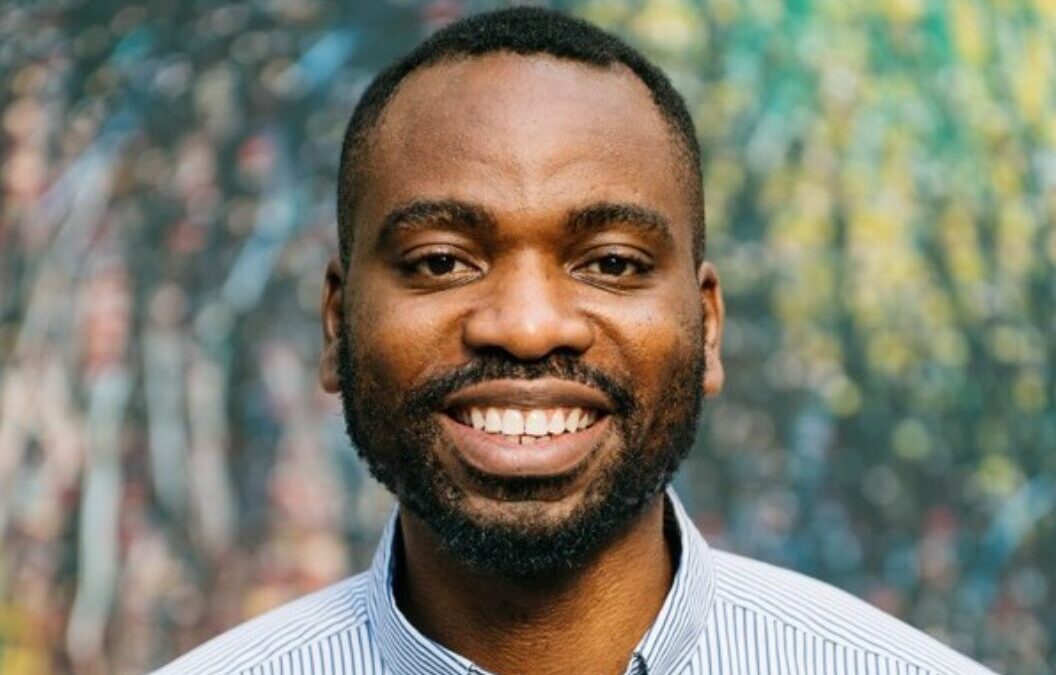
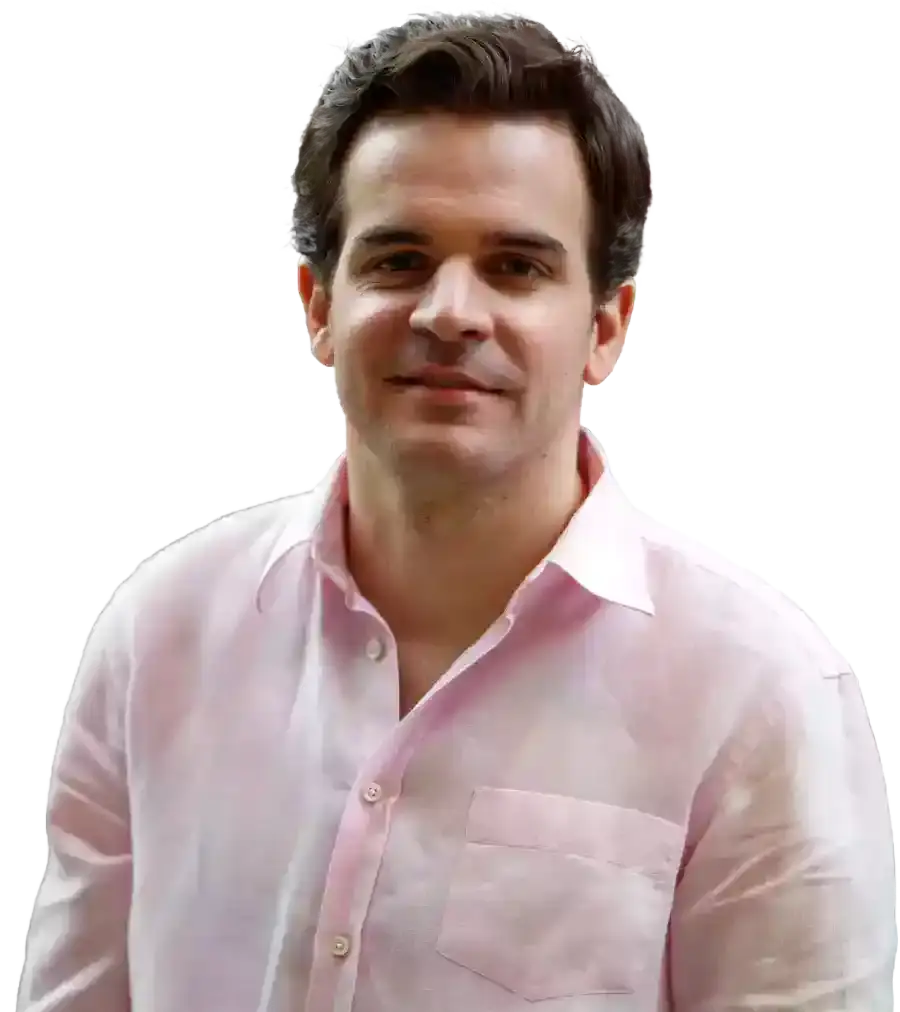
For Tikue Anazodo, founder and CEO of Kudos, his entrepreneurial journey began long before Silicon Valley—long before Google, Microsoft, Affirm, or Shopify. It started in Lagos, Nigeria, in an environment where entrepreneurship wasn’t a career choice. It was a necessity.
Tikue appeared on the Dealmakers Podcast to discuss building, scaling, and raising funding for his company, Kudos. Kudos has secured funding from top-tier investors like QED Investors and Patron.
In this episode, you will learn:
- Growing up in Lagos, where entrepreneurship is survival-wired, Tikue learned to solve problems by building, not waiting for systems to work.
- Starting computer science at Columbia without prior coding experience forced a steep ramp that became his unfair advantage in learning speed and a builder mindset.
- Microsoft and Google taught him what “real scale” requires: process, legal rigor, risk management, and fast iteration driven by massive data signals.
- Google Pay and Affirm revealed the core insight behind Kudos: most wallets optimize for merchants, while consumers need a wallet that optimizes for them.
- Kudos used a smart wedge (a best-card-at-checkout extension) to iterate toward the bigger vision of a “self-driving,” proactive wallet.
- The product promise is frictionless value: don’t change how people spend, just make every purchase return more money via rewards, offers, and agentic actions.
- Tikue’s fundraising and growth lesson is leverage: build monetization earlier, earn trust through strong execution, and raise capital to accelerate—not as oxygen.
SUBSCRIBE ON:
 iTunes
 Google Play
 Stitcher
 TuneIn
 RSS
RSS SoundCloud
 Spotify
Keep in mind that storytelling is everything in fundraising. In this regard, for a winning pitch deck to help you, take a look at the template created by Peter Thiel, the Silicon Valley legend (see it here), which I recently covered. Thiel was the first angel investor in Facebook with a $500K check that turned into more than $1 billion in cash.
*FREE DOWNLOAD*
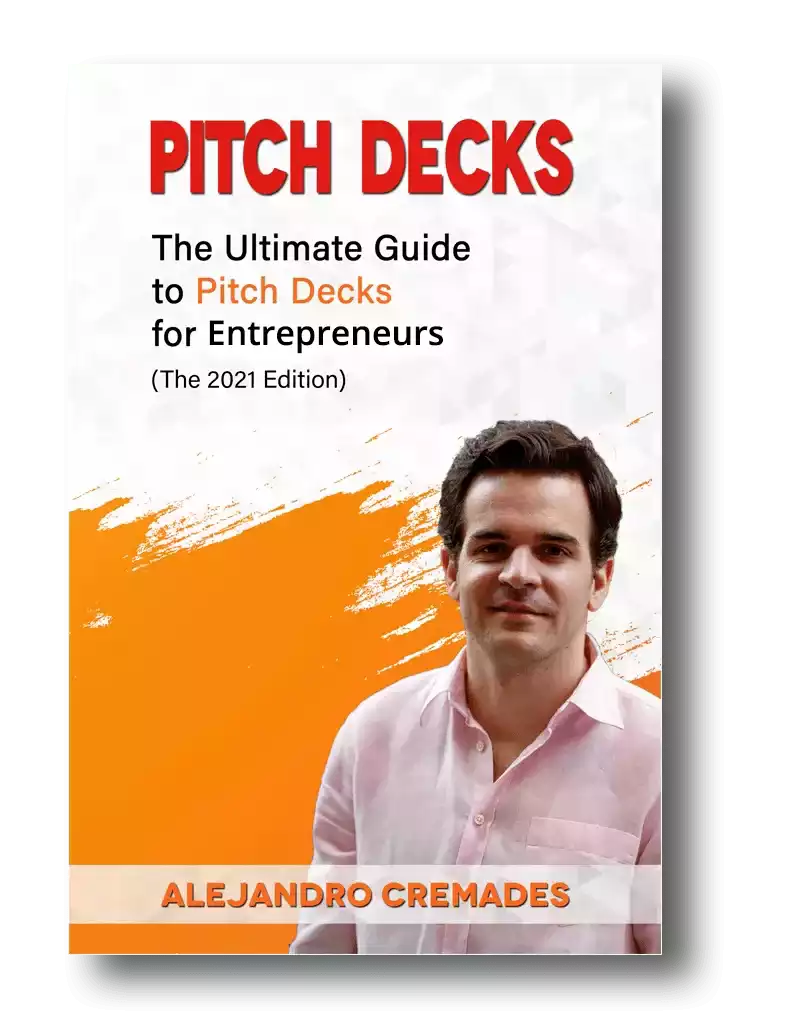
The Ultimate Guide To Pitch Decks
Remember to unlock for free the pitch deck template that founders worldwide are using to raise millions below.
About Tikue Anazodo:
Tikue Anazodo, based in United States, is currently a Co-Founder and CEO at Kudos. Tikue Anazodo brings experience from previous roles at Affirm, Google, Antik Watches and Microsoft. Tikue Anazodo holds a 2009 – 2013 Columbia University in the City of New York. With a robust skill set that includes Java, Team Leadership, Teamwork, Software Development, Program Management and more.
Raise Capital Smarter, Not Harder
- AI Investor Matching: Get instantly connected with the right investors
- Pitch & Financial Model Tools: Sharpen your story with battle-tested frameworks
- Proven Results: Founders are closing 3× faster using StartupFundraising.com
Connect with Tikue Anazodo:
Read the Full Transcription of the Interview:
Alejandro Cremades: Hello, everyone, and welcome to the DealMaker Show. Today, I’m very excited about the founder joining us. He’s someone who has been around the block when it comes to understanding how truly successful companies operate across different domains.
Alejandro Cremades: Now, he’s doing it on his own with a startup he has launched. We’ll be talking about building, scaling, financing—you name it. So brace yourself for a very inspiring conversation. Without further ado, let’s welcome our guest today, Tikue Anazodo. Welcome to the show.
Tikue Anazodo: Thanks for having me.
Alejandro Cremades: So, originally from Nigeria, Tikue. Walk us through memory lane. What was life like growing up for you?
Tikue Anazodo: Life was great. I grew up in Lagos, Nigeria, went to boarding school—an American boarding school growing up—and then ended up in the U.S. in 2009, where I came to study computer science at Columbia.
Alejandro Cremades: That’s amazing. How do you land at Columbia? I mean, New York City is quite far from Lagos. What was the thought process there?
Tikue Anazodo: Yeah, it was quite interesting. I picked Columbia specifically because at the time I was also writing a book that I ended up self-publishing. I wanted to be in the publishing capital of the world while also studying computer science. It was a weird combination of things I was looking for, and Columbia was the best school for that.
Alejandro Cremades: How was it being exposed to innovation, ambition, and all of that? Because through Columbia, you really had the opportunity to get into tech and start working with some very well-known companies globally.
Tikue Anazodo: Yeah, it was a really great opportunity for me. Coming from Nigeria and going to Columbia University, I was exposed to a lot of smart people. For context, I had never written a line of code before college. A lot of people studying computer science in my year had been coding for many years.
Tikue Anazodo: I got really excited about building things and working with people who were building things. Columbia was also a good segue into Silicon Valley because there were a lot of Silicon Valley-type companies interacting with us, like through the application development initiative at Columbia University.
Tikue Anazodo: It was a great way to see and understand what I could do with technology.
Alejandro Cremades: In terms of technology and problem-solving—since you studied computer science—where do you think that problem-solving spirit comes from for you?
Tikue Anazodo: Growing up in Nigeria, over 80% of people are entrepreneurial. It’s not like the U.S., where many people have traditional jobs. In Nigeria, most people start some form of business to make an income.
Tikue Anazodo: That mindset was naturally embedded in my life. Everyone around me wasn’t employed at a company—they started companies.
Tikue Anazodo: The technology aspect was exciting because the first time I started interacting with computers and the internet, I realized you could build something that wasn’t localized. You could build something, put it on the internet, and people around the world could use it.
Tikue Anazodo: Most of the software I used in Nigeria was built by people in the U.S. Understanding that I could build software used by people who weren’t around me was a new concept growing up, and something I wanted to lean into.
Tikue Anazodo: When I studied computer science, I didn’t really know what it meant to write code, but I knew it was a scalable way to conceptualize the entrepreneurship I wanted to pursue.
Alejandro Cremades: Before starting Kudos, it’s unbelievable the caliber of companies you worked at—Microsoft, Google, YouTube, Affirm, Shopify. What were you trying to do? Were you preparing yourself to become an entrepreneur by covering every angle, or what was the thinking?
Alejandro Cremades: It took time and experience to get comfortable with the unknown. What was that journey like, and why did it take so long to get started as a founder?
Tikue Anazodo: There’s a simple component and then everything I learned along the way. First, I was an immigrant, so it was more straightforward to work at big companies that would sponsor my green card.
Alejandro Cremades: Oh yeah, I know the feeling.
Tikue Anazodo: That was part of it. But beyond that, I wanted to learn how different things worked at scale. At Microsoft, I worked on IPTV products used by tens of millions of people and learned what it meant to deploy software at that scale.
Tikue Anazodo: At Google, I helped launch Google Pay’s online product. You learn that at big companies, you don’t just build software and launch it. You have to earn the right to deploy at scale.
Tikue Anazodo: There are internal processes, legal implications, and edge cases you have to think about. That sharpened how I think about product.
Tikue Anazodo: It was also a great way to get feedback at scale. When millions of people use something instantly, the data signals help refine product decisions.
Tikue Anazodo: Google had some of the most world-class product people I’ve ever worked with. Many of them later went on to start companies across Silicon Valley.
Tikue Anazodo: Being around intelligent people, deploying products at scale, and learning about problems I wanted to solve all contributed. A lot of what we built at Kudos was inspired by my time at Google Pay and Affirm.
Tikue Anazodo: My co-founder worked at the same companies over the last 10 years. We looked at similar problems from different angles.
Tikue Anazodo: At Google Pay and Affirm, I learned that most wallets were designed to help merchants drive conversions, not to truly work for consumers. I wanted to build a wallet that helped people earn and save money without effort.
Tikue Anazodo: That journey helped me understand scale, iteration, and feedback—and it shaped how we approached Kudos.
Alejandro Cremades: Let’s talk about Kudos. You had exposure to regulatory hurdles when building products like this. What were the immediate steps to bring Kudos to life?
Tikue Anazodo: We started Kudos in 2021. When we left Affirm, we raised funding right away from Max Levchin, founder of Affirm and PayPal, along with QED and a few other firms.
Tikue Anazodo: We launched an alpha version within two months and started getting feedback. Initially, Kudos was a shopping extension that helped you pick the best card at checkout.
Tikue Anazodo: We always knew the destination was a self-driving wallet that handled money automatically. The checkout extension was our wedge into that problem. Over time, we iterated toward the product we have today.
Alejandro Cremades: What does the product look like today? What’s the business model?
Tikue Anazodo: We make money in three ways. The first is merchant commissions through a product called Kudos Boost. When you shop at about 15,000 partner stores like eBay or Expedia, you get extra cash back.
Tikue Anazodo: We pass 100% of that back to the consumer. It’s similar to Rakuten or Honey—about a third of our team actually worked at Honey at PayPal.
Tikue Anazodo: The second model is recommending financial products, especially credit cards, aligned with your spending habits. Many users already have good credit and high spend, but Kudos analyzes spending and shows opportunities.
Tikue Anazodo: For example, if you spent $5,000 on rent, we might say, “If you had the Bilt card, you would’ve earned this much.” Or if you spent $7,000 dining, we show cards that could’ve earned you $300 more.
Tikue Anazodo: The third model is premium subscriptions, launched about a month ago, and growing fast. These are agentic, “do-it-for-me” features that automatically help users earn and save money.
Tikue Anazodo: One feature we launched is automated offer activation. Credit cards have hundreds of offers that users must manually activate. Kudos activates them for you, reminds you to use them, and users save about $750 per year on average.
Tikue Anazodo: We’re also launching bill negotiation. If you have a high Xfinity bill, instead of calling yourself, we deploy a voice agent to negotiate for you. Early testing shows average savings of about $250 per year.
Tikue Anazodo: The subscription pays for itself by unlocking money automatically.
Alejandro Cremades: What was the turning-point moment when you realized you were onto something?
Tikue Anazodo: With consumer products, Y Combinator talks about how founders expect everyone to care when they launch—but usually nobody does.
Tikue Anazodo: About two years ago, we scaled rapidly from 5,000 to 100,000 users after launching Kudos Boost. Giving users 100% of merchant rewards was the first big breakthrough.
Tikue Anazodo: What we learned was that people wanted easy ways to earn and save money. Any incremental value mattered.
Tikue Anazodo: More recently, launching premium subscriptions and card-linked offers has been another explosive moment—because it’s simply money people would’ve otherwise missed.
Tikue Anazodo: People typically don’t take advantage of those benefits, but it doesn’t change the way they currently spend today. That’s the thing we’ve started to hone in on very aggressively as a business. We’re not trying to change the way you spend. We’re just trying to make sure that, based on the way you spend, every time you spend, you get more money back.
Alejandro Cremades: You were talking before about capital raising—whether it was Max Levchin, co-founder of Affirm or PayPal, or, for example, QED. How has the journey of raising money been? Going from raising from individuals to institutionals—how has that been for you?
Tikue Anazodo: Yeah, it’s been… it hasn’t been a straight path, definitely. The $20 million that we’ve raised has been over four years. We raised a little bit of capital every year: $4 million in the first year, $3 million in the second year, $10 million in the third year, and then $3 million in the fourth year.
Tikue Anazodo: Part of it is that when we raised in 2021, the market had certain expectations for what the next round would be—what the milestones for the next round were. But over the last four years, every year those expectations have changed.
Tikue Anazodo: You go into 2022 and the market was anti-fintech, anti-consumer. So the bar to be a successful consumer company went really high. We were very fortunate that in 2022 we raised a bridge from our existing investors.
Tikue Anazodo: Our existing investors have been a very big part of our story through this journey. QED wrote a really small check in our first round, a slightly bigger check in our second round, and then led our Series A two years ago.
Tikue Anazodo: QED ended up leading our Series A. When we had that big inflection point two years ago, we were about to go to market. QED was already an existing investor, and they preempted the Series A. Then last year we did a small bridge, and right now we are closing a strategic round.
Tikue Anazodo: One thing we’ve had to change our mindset on—which I think is healthy—is that when we started, we thought very aggressively about the next milestone and what we needed to do to get there. That’s important to think about.
Tikue Anazodo: But over time, we started spending a lot more time thinking about how we build a business that actually takes off. When I say “takes off,” I mean this concept of being perpetually on the runway.
Tikue Anazodo: Keiraboy said it on a podcast, and I thought it was really interesting: most businesses in startup land only think about runway. But at some point, you want to take off—where the business has a path to cash-flow positivity, and you’re able to dictate the terms on which you raise a round. That’s the mindset we’re in as a business right now.
Tikue Anazodo: All the revenue levers are now kind of in place. In the first two to three years, we really focused on building a great product and figuring out how to grow it.
Tikue Anazodo: In the last year and a half, we’ve started focusing on building the monetization engine, and that’s working. That’s what we’re focused on scaling going forward, so that even as we think about future rounds of capital, we have a lot more leverage.
Tikue Anazodo: Our business doesn’t necessarily need the capital, but the capital is fuel that accelerates something that works really well.
Alejandro Cremades: This is super interesting. Obviously, when these people invest, they’re investing in a vision. They’re betting on you guys.
Alejandro Cremades: If you were to go to sleep tonight and wake up in a world where the vision is fully realized—obviously that world is beautiful—what does that world look like?
Tikue Anazodo: For Kudos, it’s really the true self-driving wallet. You close the Kudos app, and when you open it up, it tells you that Kudos has gone to get money for you.
Tikue Anazodo: Kudos has detected that your bill is higher than it should be, and Kudos deployed an agent to negotiate it down, and you have $200 in savings. Or Kudos has seen you’ve been spending a lot at a store—like you’re buying a lot from Nike, or you’re buying a lot of furniture—and our agents go negotiate a better rate for you, so you get more cash back at Nike.
Tikue Anazodo: Those are the kinds of things we want—your wallet being proactive as opposed to reactive. That’s what we’re building toward right now.
Alejandro Cremades: Now imagine I put you into a time machine and bring you back in time.
Alejandro Cremades: I bring you back to 2021, when you were thinking about doing something on your own. You’re coming out, you’re giving your notice, and you can give that younger self one piece of advice before launching a business. What would it be, and why, given what you know now?
Tikue Anazodo: I would think about monetization earlier. We had a strategy for monetization, but because we were a consumer product, the goal was: let’s figure out scale, and then we’ll layer on monetization.
Tikue Anazodo: I would probably charge for the product from day one, because I think it gets you to optimize toward building a product that people explicitly want to use. And you can layer on all the other business models.
Tikue Anazodo: I think we did it in reverse. We wanted to build something, figure out what people cared about, then scale it, and then we layered on the merchant business model, the issuer business model, and then we layered on premium.
Tikue Anazodo: Part of that journey is that we acquired a lot of users that were not the right users for Kudos. If you’re optimizing around people just registering, or using it for a number of days, some of those people don’t necessarily love the product you’re building.
Tikue Anazodo: The best way to figure out who loves your product is to charge them for it. That’s what I would do differently. I would optimize toward charging people super early in the product lifecycle so we’re building the highest-value things for those users.
Alejandro Cremades: They say your network is your net worth. You and I were both immigrants in this country, and it’s not easy to come here and build relationships from nothing. It’s a new country, a new place.
Alejandro Cremades: There are probably people listening to us outside the U.S.—maybe in Nigeria, maybe in Spain, you never know—either thinking about coming here, or thinking about giving their notice at work and building a startup from nothing, or even just building a business from nothing.
Alejandro Cremades: How would you tell them to be intentional about building their networks?
Tikue Anazodo: I would say, especially in the early phases, you want to, one, say a lot of yes—because saying yes sometimes puts you in the right rooms.
Tikue Anazodo: There’s value in being strategic, but not seeming calculated. What I mean by that is: a lot of the best relationships that later made fundraising easier came from me interacting with people and creating value for them.
Tikue Anazodo: When it came time to fundraise, it was a straightforward conversation. This is a person who has created value in ways we understand, we can underwrite, and we believe this person will create a lot of value in the business they build.
Tikue Anazodo: So, be very intentional about creating value for the people you’re around.
Tikue Anazodo: Another useful thing is being around the right people. Going to Columbia definitely helped with being around a lot of the right people. And going to Silicon Valley helped too.
Tikue Anazodo: I don’t live in the Bay Area anymore, but I lived there for about nine years. I don’t think I would have been able to build Kudos without living in San Francisco for nine years, because there’s a lot of symbiosis from being around people who are building things and people who are funding things.
Tikue Anazodo: Another thing I always say is that the relationships you build while you’re in a job are very important. You want to do your best possible job in the job you’re doing.
Tikue Anazodo: A big part of my fundraising being simple was that Max Levchin was one of my boss’s bosses at Affirm, and I did a great job at what I did at Affirm.
Tikue Anazodo: All my previous managers and execs were angel investors in Kudos. A lot of introductions into the venture capital ecosystem came from execs at companies I had worked at in the past, because venture is a trust-based business.
Tikue Anazodo: Someone is wiring millions to you after meeting you two weeks ago. The trust needs to be baked into something with more tangibility. For me, that tangibility was that I did a reasonably good job at the companies I worked at, and I didn’t burn relationships.
Tikue Anazodo: So when it was time to raise capital, people believed that what I was going to do next would be at least as good, or better, than what I had done before.
Alejandro Cremades: We were talking earlier about problem-solving. With Kudos, you have two major uncertainties: building a hyper-growth company is uncertain as it is, and on top of that you’re operating in a heavily regulated segment.
Alejandro Cremades: How have you balanced both and kept pushing forward no matter what?
Tikue Anazodo: This is one of those areas where working an actual job before starting Kudos helped a lot. Google Pay was heavily regulated, but Affirm was insanely heavily regulated because it’s also a lending business, not just a fintech business.
Tikue Anazodo: Everything I did had to go through multiple layers of legal.
Tikue Anazodo: There are basic things we think about every time we build a product. UDAP is one of the biggest things in fintech—being careful not to be deceptive in the claims you make.
Tikue Anazodo: Fintech products can make extreme claims like “we guarantee you will save $500,” but we try not to. We work within a framework we understand, and we work closely with legal counsel on launches that could be outside the boundaries.
Tikue Anazodo: At the same time, as a startup, we have to be more flexible than Affirm or Google can be. Over the years, we’ve had to figure out how to navigate that boundary.
Tikue Anazodo: Here’s a concrete example. A lot of our growth comes from investing heavily in content on TikTok and Instagram, but we work with card issuers that are heavily regulated.
Tikue Anazodo: Those issuers restrict us from mentioning card names or showing card art in the videos we make.
Tikue Anazodo: When we started TikTok, the most viral videos were us talking about specific credit cards—like, “Look at the Amex Platinum and all the benefits.” But once we came under issuer compliance restrictions, we had to pivot how we talked about credit cards.
Tikue Anazodo: For instance, we’re allowed to say “the big blue bank,” but not “Chase,” when we’re talking about Chase cards on Instagram. It’s tough, but it still gets similar engagement.
Tikue Anazodo: We also had to build an automation flow where people interested in learning more reply to our Instagram posts, and then automation sends them the details directly to their inbox. Those details can’t be said directly in the videos.
Tikue Anazodo: I knew the implications of operating on the wrong side of the law or regulation. As we’ve gotten deeper into compliance restrictions, we’ve had to stay nimble as a startup while also staying within all the compliance required in our industry.
Alejandro Cremades: Amazing. Tikue, this is absolutely amazing. For people listening who would love to reach out, say hi, or learn more about Kudos, what would you tell them?
Tikue Anazodo: You can shoot me an email: tquitjoinkudos. And yeah—especially if you have any questions about the product, you can shoot me an email directly.
Alejandro Cremades: Amazing. Well, Tikue, it has been an absolute honor to have you with us on the DealMaker Show today. Thank you so much.
Tikue Anazodo: Thank you. Thanks, Alejandro.
*****
If you like the show, make sure that you hit that subscribe button. If you can leave a review as well, that would be fantastic. And if you got any value either from this episode or from the show itself, share it with a friend. Perhaps they will also appreciate it. Also, remember, if you need any help, whether it is with your fundraising efforts or with selling your business, you can reach me at al*******@**************rs.com
Podcast: Play in new window | Download
Subscribe: Apple Podcasts | Spotify | TuneIn | RSS | More

Facebook Comments