


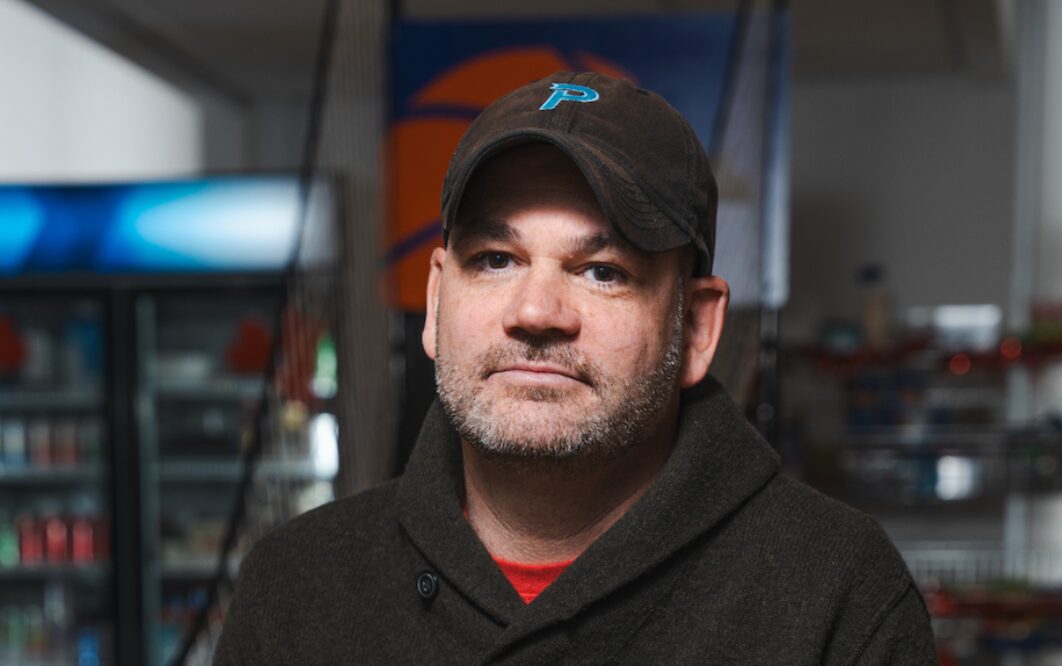
Entrepreneurship didn’t start for David Metz in a pitch deck or a startup accelerator; it started at the dinner table. Growing up on Long Island, New York, David watched his parents run an irrigation business.
The family wasn’t talking about “runway” or “unit economics,” but the lessons were far more visceral. There were years when Christmas presents were skipped to keep an employee on payroll. Hard tradeoffs weren’t theoretical; they were normal.
Risk wasn’t something to be debated; it was something you lived with. That upbringing shaped how David would later approach building companies, raising capital, choosing partners, and defining success.
Today, as the founder and CEO of Prizeout, a fintech platform that powers rewards and monetization programs for financial institutions, David has raised over $64M and built a company on the brink of profitability. But his journey there was anything but linear.
Listen to the full podcast episode and review the transcript here.
*FREE DOWNLOAD*
The Ultimate Guide To Pitch Decks
Entrepreneurs Are Both Born and Made
David believes entrepreneurship is part nature, part nurture. Some traits, especially risk tolerance, aren’t learned. You either have them, or you don’t. But understanding what sacrifice looks like, what ownership feels like, and how responsibility compounds over time? That’s learned through exposure.
Growing up in a blue-collar town, David didn’t know doctors, lawyers, or executives. Entrepreneurship was the only path he saw. What many people view as “crazy risk,” he saw as normal behavior.
That perspective would later enable him to weather failures, pivots, and uncertainty without flinching, especially given that 9 out of 10 startups fail, as David points out.
From Division I Lacrosse to the Startup Locker Room
Before startups, David was an athlete. He played Division I lacrosse, and the sport’s competitiveness left a permanent imprint. Today, he compares closing deals and hitting milestones to the adrenaline of winning games, but what he misses most isn’t the field; it’s the locker room.
That sense of camaraderie, shared goals, ambition, and collective accountability is something David has deliberately recreated at Prizeout. He views a startup team as the modern-day version of a sports team: everyone has a role, everyone shows up prepared, and winning occurs only when the group functions as a unit.
The First “Startup” Before He Knew What One Was
David’s first entrepreneurial venture didn’t have an LLC, a board, or legal compliance. In college, during the late-1990s market boom, he worked for a financial advisory firm, when the stock market was going through a tumultuous period.
David navigated the challenges exceptionally well and convinced financial advisors to give him, a 19-year-old, access to their Ameritrade accounts—before he had any knowledge about how hedge funds worked. In exchange, he kept 20% of the profits.
It was wildly informal—and definitely against every SEC rule imaginable—but it taught David foundational lessons: how to sell trust, how to execute under pressure, and how to handle tough conversations when trades didn’t go well.
At the time, David had zero experience, but it became his first entrepreneurial journey. He didn’t have an LLC, but was doing sophisticated trading by simply learning on the job. Without realizing it, David was learning what it meant to manage other people’s money and expectations.

Raise Capital Smarter, Not Harder
- AI Investor Matching: Get instantly connected with the right investors
- Pitch & Financial Model Tools: Sharpen your story with battle-tested frameworks
- Proven Results: Founders are closing 3× faster using StartupFundraising.com
Flugpo, Craigslist, and Surviving the 2008 Crash
After working on Wall Street, David launched Flugpo, an online classifieds platform with social trust features layered onto the Craigslist model. As he recalls, in the mid-2000s, Craigslist was the go-to platform for everything, from reaching the fire department and selling a couch to going on a date.
At its peak, Flugpo reached over 1.5 million listings, primarily in New York. Then 2008 hit. Funding vanished overnight, and the company exited for a nominal sum via an acquihire. While the outcome wasn’t a financial home run, it was decisive.
David had crossed the point of no return. He could never go back to working for someone else. More importantly, he learned that not all exits are failures. Getting to the finish line—however imperfect—is still an outcome, and the lessons compound.
As David points out, acquihires today are driven by substantial returns because many deals are structured around AI, a new industry. Back then, acquisitions centered on the assets and people, though acquirers didn’t keep everyone on the payroll.
However, today, acquihires can be highly profitable because the skills people have, particularly in AI, are extremely valuable. Merger and acquisition deals worth $300M are being executed, a drastic change from the time David sold Flugpo.
The Hidden Cost of Building With Family
David later launched a board game company with his brother, selling over 30,000 units. On paper, it was working. In reality, it surfaced as one of the hardest lessons of his career. At some point, success shifts the conversation—from creativity to money, from experimentation to long-term expectations.
David faced a choice: maximize the opportunity or preserve the family relationship. He chose family. Entrepreneurship and family, he learned, operate in different emotional systems. When work enters the home, boundaries erode.
Home should be a sanctuary, not an extension of the office. Walking away was painful—but it was the right decision. Thousands of homes today still have their board games—and David considers that a significant win.
FleetWit, IP Risk, and the Pivot That Changed Everything
David’s next company, FleetWit, was a skill-based trivia gaming app where users wagered money on their knowledge. The game had hundreds of categories, from sports to history, and one of the most popular, Harry Potter. FleetWit scaled quickly, doing roughly $1M in Gross Merchandise Value (GMV).
Then Warner Bros. sent a cease-and-desist because they were using its intellectual property. When copyrighted categories like Harry Potter and Friends were removed, customer acquisition costs spiked. Growth slowed. But inside the problem was an insight that would change David’s trajectory.
Winners withdrew their earnings via digital gift cards. At the same time, David was spending heavily on Facebook ads to acquire users. He realized something critical: brands like Nike or Olive Garden were effectively acquiring customers for free through gift card withdrawals.
That insight led to a bold decision. David shut down FleetWit and transferred all investor equity to the new venture, even though he wasn’t legally required to. That venture became Prizeout.
Prizeout: Turning Cost Centers Into Profit Centers
Prizeout started as an alternative withdrawal method for gaming platforms, using gift cards to monetize the process. Instead of PayPal or ACH, users could withdraw winnings as digital gift cards—with a bonus. Win $100, get $110 at Nike or $120 at Cheesecake Factory.
Partners benefited too, as Prizeout paid them a share of the revenue. Where withdrawals were traditionally a cost center, Prizeout turned them into a profit through revenue sharing. For some partners, that meant millions in incremental revenue.
Over time, this model evolved into full-scale rewards programs for financial institutions, including major credit unions.
A Different Philosophy on Fundraising
David has raised approximately $64M, but he’s not a fan of traditional VC fundraising. Not because VCs are bad, but because early-stage companies need empathy more than theory. In his opinion, early in their entrepreneurial journey, founders need to partner with people who have felt their pain.
Storytelling is everything that David Metz was able to master. The key is capturing the essence of what you are doing in 15 to 20 slides. For a winning deck, take a look at the pitch deck template created by Peter Thiel, Silicon Valley legend (see it here), where the most critical slides are highlighted.
Remember to unlock the pitch deck template that founders worldwide are using to raise millions below.
David prefers raising from former founders, operators, family offices, and strategic partners—people who’ve lived through near-death moments, not just studied them. As he sees it, entrepreneurs raise funding to align with the typical company life cycle, which matures every 18 to 24 months.
At that point, companies need other things in parallel to the financing cycle, such as know-how and networks. David focuses on the value his investors bring to the table, other than just capital. He wants partners who invest and thus have real skin in the game and actually use the products.
In Prizeout’s Series C, the round was led by 21 credit unions, many of them active partners with $30B assets under management (AUM). Capital and distribution arrived together. Incentives were aligned, though, as David concedes, different models may require different forms of funding.
But now that Prizeout is close to profitability, it is in a position to control its own destiny. Even so, David understands the importance of funding when conditions are uncertain. Having money in the bank, even though you don’t need it, is preferable to needing funding and not having it.
If that happens, companies lose leverage, and that factor is reflected in the terms they accept and other aspects of fundraising. David’s operates on two core principles. Firstly, always raise double what you actually need. And secondly, become profitable quickly.
The Stories That Matter When Things Get Hard
David values investors not just for introductions, but for perspective. He raises from people who understand the entrepreneurial journey and can drive real value for the company. What is he looking for? Two things:
- Intros: Once an investor writes a check, they have the inherent motivation to help. An investor writing big checks will likely have a significant network that David proactively leverages.
- Advice: As the CEO, David understands that he has two jobs—one is working internally with his employees. The second is working externally with the board and his investors, who are also entrepreneurs.
Hearing stories of founders who risked their homes, brought their spouses into bank meetings, and still pushed forward despite the risks creates a powerful realization: you’re not alone. David learned that the investors who had money did not have an easy path to making that money.
That emotional validation—the reminder that struggle is part of the path—is often more valuable than capital itself.
His Vision And Advice for His Younger Self
David describes Prizeout today as a gifted three-year-old: capable of impressive things but still needing care. His long-term goal isn’t control—it’s obsolescence. Success, to him, is walking into work one day and realizing the company doesn’t need him anymore.
The ultimate dream? Years after an exit, former employees gather at a bar, sharing stories of the companies they’ve built and the careers they’ve launched—because Prizeout was their springboard.
If David could give 21-year-old David one piece of advice, it wouldn’t be tactical. It would be simple: start earlier. In your 20s, you need very little. A futon and ramen are enough. As life accumulates responsibilities, risk becomes heavier.
Entrepreneurship rewards early experimentation—and the only real way to learn is by doing.
In Conclusion
David Metz’s journey isn’t a highlight reel. It’s a compounding story of sacrifice, pivots, integrity, and long-term thinking. And it’s a reminder that the most durable companies aren’t built by chasing shortcuts—but by people willing to learn the hard way, again and again.
Listen to the full podcast episode to know more, including:
- Early exposure to sacrifice made risk feel normal, which became David Metz’s operating system as a founder.
- Entrepreneurs are both born and made: risk tolerance is innate, but resilience and ownership are built through lived experience.
- The “locker room” matters: winning in startups comes from team chemistry, shared accountability, and competitive execution.
- Trust is a founder skill: from managing others’ money at 19 to leading companies, credibility is built by performing under pressure.
- Not all exits are failures: even an acquihire can be a finish line that compounds into future leverage and better judgment.
- Family + business blurs boundaries fast, so protecting relationships can be the highest-ROI decision you make.
- Prizeout was born from a pivot insight: turn a withdrawal cost center into a profit center, then fund growth with investors who bring empathy, distribution, and real skin in the game.
SUBSCRIBE ON:
 iTunes
 Google Play
 Stitcher
 TuneIn
 RSS
RSS SoundCloud
 Spotify
Keep in mind that storytelling is everything in fundraising. In this regard, for a winning pitch deck to help you, take a look at the template created by Peter Thiel, the Silicon Valley legend (see it here), which I recently covered. Thiel was the first angel investor in Facebook with a $500K check that turned into more than $1 billion in cash.
*FREE DOWNLOAD*
The Ultimate Guide To Pitch Decks
Remember to unlock for free the pitch deck template that founders worldwide are using to raise millions below.
Podcast: Play in new window | Download
Subscribe: Apple Podcasts | Spotify | TuneIn | RSS | More



Facebook Comments