

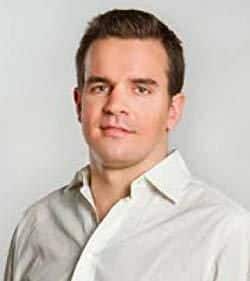

While many startup founders begin as engineers, product builders, or early-stage operators, John Howard took a very different path. His entrepreneurial journey began in unexpected places—the structured, high-stakes world of investment banking and private equity.
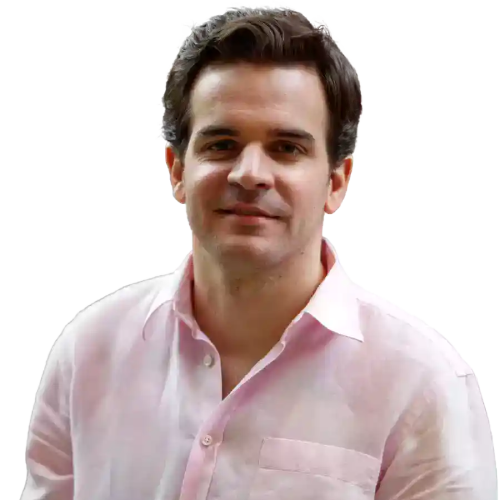
Eventually, John transitioned to building startups. Today, he is the founder of Croissant, a fintech-enabled commerce platform that is rethinking how consumers shop, earn value, and make purchasing decisions.
The road to founding Croissant was shaped by years of observing financial systems, building companies from within private equity, and identifying opportunities where technology—and increasingly AI—could transform consumer behavior.
This is the story of how John went from growing up in a book-loving household in Boston to helping build billion-dollar investment strategies at KKR, and ultimately launching a startup aimed at reshaping modern commerce.
Listen to the full podcast episode and review the transcript here..
*FREE DOWNLOAD*
The Ultimate Guide To Pitch Decks
Growing Up Between Books and Opportunity
John’s story begins in Valladolid, Spain, where he was born. However, Spain was only the starting point of his journey. His parents returned to the United States when he was just three months old, and he grew up in Boston.
John’s upbringing was deeply influenced by his parents, both of whom were educators. As a result, the household environment revolved around curiosity, reading, and intellectual exploration. Growing up in Boston’s inner city and attending public schools shaped John’s early worldview.
Education played a central role in his life, and that foundation led him to Vanderbilt University in Nashville. Interestingly, Vanderbilt wasn’t initially an obvious destination for him. The idea came from a favorite English teacher who encouraged him to apply, believing it would be a strong fit.
That teacher turned out to be right. At Vanderbilt, John not only received an excellent education but also met someone who would play a pivotal role in his personal life—his future wife. The two began dating during college and have since built a life together.
Looking back, John’s senior year at Vanderbilt was particularly memorable. Because he had already secured a job offer after graduation, he used his final year to explore intellectually rather than to focus strictly on career preparation.
John asked friends which professors were the best on campus—regardless of subject—and filled his schedule with those classes. As a result, he found himself studying everything from art history and Russian literature to geology and astronomy.
It was a year dedicated to curiosity and exploration before entering the demanding world of finance.
Entering the High-Stakes World of Investment Banking
As John reveals, he took a “somewhat formulaic track out of school.” He did a standard summer analyst investment banking program while at Vanderbilt. He recalls interviewing with recruitment agents on the campus as a 21-year-old, dressed in a tie and suit, and landing the job.
After graduating from Vanderbilt, John began his professional career at Bank of America Merrill Lynch in a summer internship program. Like many ambitious finance graduates, he entered the leveraged finance team—one of the most demanding and active desks on Wall Street. The role was intense.
Long hours, tight deadlines, and last-minute demands were part of the daily routine. It was common for senior bankers to request entirely new presentations just minutes before major calls with clients.
Despite the pressure, John describes the experience as invaluable, as he was invited back full-time.
As a 22-year-old analyst, John was suddenly sitting in rooms with CEOs, management teams, and investors, making critical decisions about mergers, acquisitions, and capital structures. Watching how they financed their business and returned capital to shareholders was a huge privilege.
For someone from a family of educators who had not previously been exposed to the financial world, it was a remarkable learning experience. Rather than simply surviving the workload, John treated the role as an opportunity to absorb as much knowledge as possible.
He paid attention to how deals were structured, how executives made decisions, and how capital flowed through global markets. That exposure would later prove crucial for his entrepreneurial journey.
In retrospect, John remembers being impressed by Graham and Dodd and the Howard Marks letters on value investing. He loved the ethos of matching patterns and putting capital behind conviction, and wanted to get an investing role, being especially drawn to special situations investing.
Raise Capital Smarter, Not Harder
- AI Investor Matching: Get instantly connected with the right investors
- Pitch & Financial Model Tools: Sharpen your story with battle-tested frameworks
- Proven Results: Founders are closing 3× faster using StartupFundraising.com
Moving Into Private Equity at KKR
As is the standard practice, three months into the job, John recruited for private equity and hedge fund roles. Private equity firms had started calling, and he started taking interviews. He joined KKR, one of the world’s most prestigious investment firms.
At the time, KKR’s credit and special situations business was still developing. The firm was expanding its focus beyond traditional buyouts to include distressed loan portfolios, public securities, private credit, and emerging financial platforms.
At 24, John joined the special situations team in 2014. For a young investor, the role offered extraordinary exposure. The team evaluated opportunities across asset classes, geographies, and industries.
The idea here was that banks had been major credit providers to small businesses and consumers in ways that existed pre-crisis but didn’t exist post-global financial crisis. Private capital was increasingly moving into that space. Where the banks used to be, there was now a gap and a void.
KKR could buy companies and loan portfolios in that void and start things. John had been doing just that in the two years he had been at the firm. But in 2016, it doubled down by formalizing it and raising a big fund around it.
Building a $2.25B Investment Strategy
In 2016, KKR hired a new partner, Dan Pietrzak, to lead the initiative. John was invited to move to London as Pietrzak’s first hire for the strategy. Together, they launched an inaugural $2.25B specialty finance fund.
At just 26 years old, John found himself responsible for deploying a massive pool of capital across Europe, Asia-Pacific, and the United States.
He ultimately played a role in deploying roughly half of the fund’s capital, focused on opportunities where traditional financial infrastructure was inefficient, outdated, or broken.
As John recalls, even during his time at KKR, he was inspired to be a builder and participate in companies from their inception. A few projects he handled fueled his builder mentality and spirit, helping shape the founder in him.
As John points out, the interesting thing about the specialty finance fund they raised is that the mandate is very sector-specific. It was all financial services, but it was stage agnostic. It included the earliest-stage operating platforms to stage publicly listed companies and everything in between.
Within that sector, John was looking at a new space and strategies to play the investment thesis. One particularly compelling opportunity emerged in the UK auto lending market.
Building Companies From Scratch Inside Private Equity
In the United States, auto lending is typically supported by large dealership networks and competitive financing options. But in the UK, the market looked very different. Small dealerships often relied on intermediaries and brokers who charged significant fees.
As a result, borrowers who could borrow at maybe 5% in the US were paying interest rates as high as 15%—far above comparable loans in the U.S. Rather than simply acquiring an existing lender, John proposed building a new company from scratch.
Investing in the Concept and Materializing it
KKR initially invested £30M ($39.71M)to start the business, through a combination of operating equity and asset funding. Over the next five years, KKR deployed £230M ($304.45M) in equity to scale the company into the leading non-bank auto lender in the UK.
The company eventually grew to more than 600 employees and generated hundreds of millions in revenue. For the first six months, John worked closely with the leadership team—effectively embedded inside the company as it launched.
This hands-on experience was unusual for a private equity investor but profoundly influential for John. In the initial six months, he lived inside the business alongside the CEO, the Chief Risk Officer, and the gentleman responsible for winning dealer partnerships—the first three hires.
It awakened the builder mindset that would eventually push him toward entrepreneurship.
Repeating the Playbook in the U.S.
John recalls how he got hands-on experience in building a business, which was unusual for an investor. Typically, investors are not involved this closely with their investment portfolios. But for John, it was a fantastic experience to bring the project to life as a mid-20s person.
John later replicated this “build-from-scratch” model in the United States. He helped launch Toorak Capital Partners, a platform focused on residential transition loans—financing for real estate investors who renovate and flip homes.
These loans differ from traditional mortgages because they support short-term property projects rather than long-term home ownership. As John points out, borrowers don’t take 30-year mortgages to buy a house they intend to sell within a year.
It’s a commercial-purpose mortgage backed by the home’s value, with a draw capacity to complete projects. Like the auto lending business in the UK, the market lacked modern infrastructure.
John partnered with an experienced mortgage executive who had previously built a similar platform for Blackstone. Together, they launched Toorak and scaled it rapidly. Once again, John approached the investment committee and obtained the first check for the new platform.
KKR ultimately invested $500M of equity into the business, which became the largest capital provider and technology platform in the residential transition loan space.
John recalls traveling from his home base in London to cities across the US, such as Greenville, South Carolina, and Denver, Colorado, and selling these originators on why they should use Toorak’s tech, operate a capital stack, and build from scratch.
Toorak quickly became the largest provider of capital operations, services, and tech to the specialist mortgage space in the US—a great success story. These experiences reinforced John’s passion for building companies rather than simply investing in them.
Helping Transform KKR Itself
After several successful years in London, John moved back to New York. At KKR, his strong performance led to another major opportunity: helping shape the firm’s long-term growth strategy. By this time, he had been with KKR for more than seven years.
John joined the corporate development team at the general partner level and helped lead one of the most significant acquisitions in the firm’s history. He helped KKR think about expanding as a firm to become bigger and better at what it did.
KKR acquired Global Atlantic, a large insurance company that brought roughly $150B of assets under management into the firm. The acquisition fundamentally changed KKR’s business model by dramatically expanding its permanent capital base.
Following the integration of the acquisition, John returned to a more traditional investment role, focusing on fintech and payments investments. He led FinTech and related payments investing out of the North America buyout fund during his last 18 months at the firm.
It was during this period that the idea for Croissant began to take shape.
The Idea Behind Croissant
Throughout his career as a fintech investor, John had always been in financial services and fintech-focused, living in New York and London and investing across the world. He noticed a pattern.
Most financial innovation focused on the liability side of consumers’ balance sheets—helping people borrow money more easily through credit cards, loans, buy-now-pay-later products, and other funding mechanisms.
Very little innovation and funding was happening on the asset side. Croissant was designed to change that. Rather than encouraging impulse consumption through debt, Croissant promotes what John calls “intentional commerce.”
The idea is simple: encourage consumers to buy higher-quality products that retain their value over time, are more rewarding to own and purchase, and are a better financial choice.
Croissant aims to educate and reward customers for making the right decisions by working with great partners across all sectors.
How Croissant Works
Croissant operates as a digital ecosystem that connects consumers with premium brands. Users can earn Croissant credit in two main ways. From reselling items they own, and from earning 10% rewards while shopping with partner brands.
This benefit becomes material to shoppers, as they spend $700 per checkout, translating into $70 of incremental credit credited back to their account every time they shop.
These credits can then be used to shop within Croissant’s network of premium retailers. Some users accumulate hundreds or even thousands of dollars of universal Croissant currency in credit, creating a powerful incentive to shop within the platform’s ecosystem.
Croissant’s value-added services bring in a uniquely high-value, luxury, or premium shopper. The company has created a dense database of ideal shoppers for the types of brands it works with.
It also empowers them to spend hundreds or thousands of dollars, thanks to the 10% reward and the payments for their resale activity. John reveals that people’s accounts now hold $160M in collection value, and they are looking for places to spend it.
Brands can install the Croissant checkout widget to take advantage of that spend. So now brands are increasingly installing Croissant as a checkout option, allowing consumers to come and spend with them.
The Business Model
Croissant generates revenue through several mechanisms. First, the company earns affiliate commissions when users shop with partner brands. When users come to take their credit and shop at its partners, it gets attribution for sending that customer to them.
Second, Croissant provides brands with a unique financing option. Because it can predict future purchase volume from its user base, it sometimes pre-purchases future revenue from brand partners.
For example, Croissant might estimate that $3M of purchases will occur through its platform over the next year. The company could pay the brand $2.1M upfront in exchange for those future purchases, earning a spread on the transaction.
When brand partners participate in that pre-funded revenue, Croissant makes a larger spread on the store credit discount at which it was purchased. This structure provides brands with non-debt capital while giving Croissant a profitable financial position.
Financing the Business
Croissant’s model is capital-intensive. The company purchases inventory from users who sell items on the platform and pays them in store credit. Although Croissant has refined the system, capital is tied up for a few months while the platform owns the items and liquidates them.
As John underscores, that’s only a small part of the business. At any given point in time, a few million dollars are outstanding. The larger chunk of capital intensity relates to the credit Croissant pre-purchases from brands, buying upfront the right to future revenue.
This pre-purchased revenue can add up to millions, or, for some larger brands, tens of millions. To support this structure, Croissant uses a mix of equity capital and asset-backed lending facilities to generate the working capital it needs to cover costs.
So far, the company has raised over $52M in combined debt and equity financing.
Storytelling is everything that John was able to master. The key is capturing the essence of what you are doing in 15 to 20 slides. For a winning deck, take a look at the pitch deck template created by Peter Thiel, Silicon Valley legend (see it here), where the most critical slides are highlighted.
Remember to unlock the pitch deck template that founders worldwide are using to raise millions below.
The Vision for Croissant
John’s long-term vision is to build a ubiquitous commerce network of the best brands and retailers, where Croissant, as a redemption option, is everywhere. In this future, Croissant becomes a standard checkout option across premium retailers.
Consumers earn and redeem Croissant credit across a broad ecosystem of brands—from luxury fashion houses to high-end retailers. Instead of buying impulsively and accumulating debt, consumers would make more intentional purchases while being rewarded financially.
John explains that at Croissant, they are attempting to build a worldwide network in which every premium shopper thinks more intentionally, chooses higher-quality items, and adopts the intentional commerce mindset Croissant is trying to pioneer.
Lessons for Founders
Reflecting on his entrepreneurial journey, John emphasizes two key lessons. First, startups are always harder than they appear. Many founders begin their journey believing their vision will unfold quickly. In reality, building a company often takes far longer than expected.
Second, humility is essential. John recalls a conversation with a successful founder who once joked that he made “80% wrong decisions.” The point wasn’t literal accuracy but perspective.
If a company takes 10 years to build but could theoretically be built in two years with perfect hindsight, then most decisions along the way were imperfect. The key is learning quickly and adapting.
John encourages young founders to channel the fact that they don’t know everything and that they’re about to learn a lot.
Final Thoughts
John Howard’s journey illustrates how entrepreneurship can emerge from unexpected backgrounds. From investment banking to private equity, from billion-dollar funds to startup building, each stage of his career contributed to the mindset that ultimately led him to found Croissant.
By combining financial insight, operational experience, and AI-driven technology, Croissant aims to reshape the relationship between consumers, brands, and value creation in modern commerce. And if John’s career trajectory is any indication, the journey of building Croissant is only just beginning.
Listen to the full podcast episode to know more, including:
- John Howard’s path to entrepreneurship began in investment banking and private equity rather than the typical engineering or startup background.
- His time at KKR exposed him to inefficiencies in financial infrastructure, shaping the investment insights that later inspired his startup ideas.
- Building companies from scratch inside private equity gave John hands-on operational experience that awakened his builder mindset.
- Launching and scaling platforms like the UK auto lender and Toorak Capital proved that technology could modernize outdated financial markets.
- Croissant was born from the observation that fintech innovation focused on consumer debt rather than helping consumers build asset value.
- By combining AI, resale-value insights, and rewards, Croissant promotes “intentional commerce” in which consumers buy higher-quality items that retain their value.
- John’s biggest lesson for founders is that startups take far longer than expected and success requires humility, rapid learning, and constant adaptation.
SUBSCRIBE ON:
 iTunes
 Google Play
 Stitcher
 TuneIn
 RSS
RSS SoundCloud
 Spotify
Keep in mind that storytelling is everything in fundraising. In this regard, for a winning pitch deck to help you, take a look at the template created by Peter Thiel, the Silicon Valley legend (see it here), which I recently covered. Thiel was the first angel investor in Facebook with a $500K check that turned into more than $1 billion in cash.
*FREE DOWNLOAD*
The Ultimate Guide To Pitch Decks
Remember to unlock for free the pitch deck template that founders worldwide are using to raise millions below.
Podcast: Play in new window | Download
Subscribe: Apple Podcasts | Spotify | TuneIn | RSS | More

Facebook Comments