

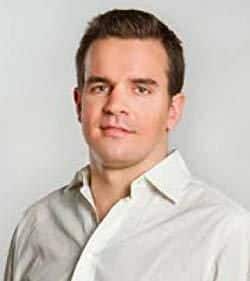
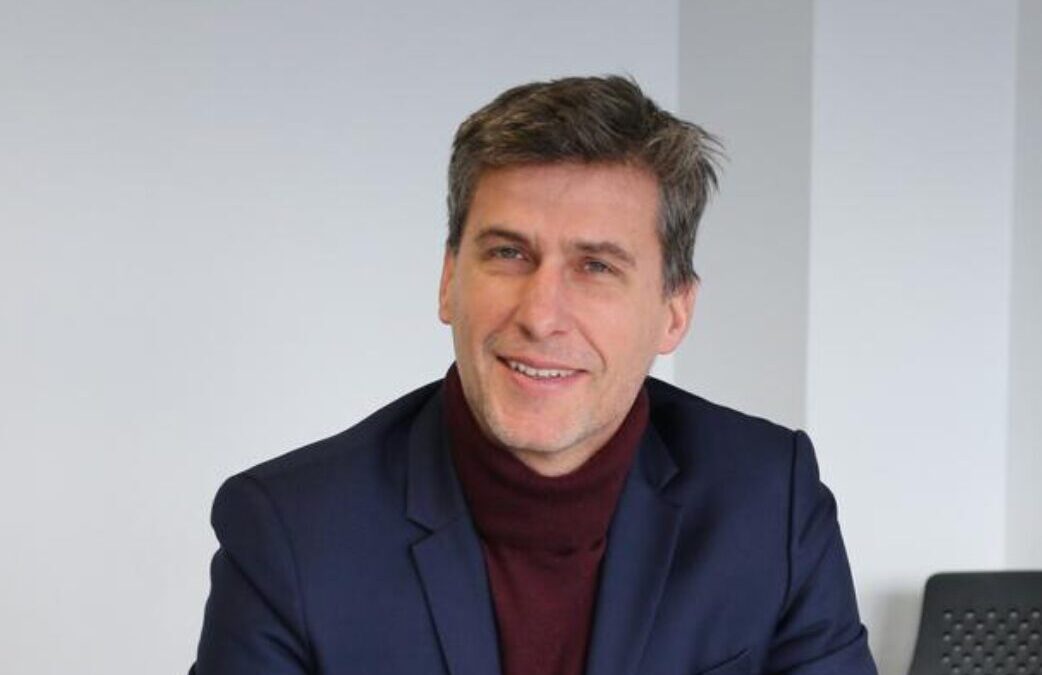
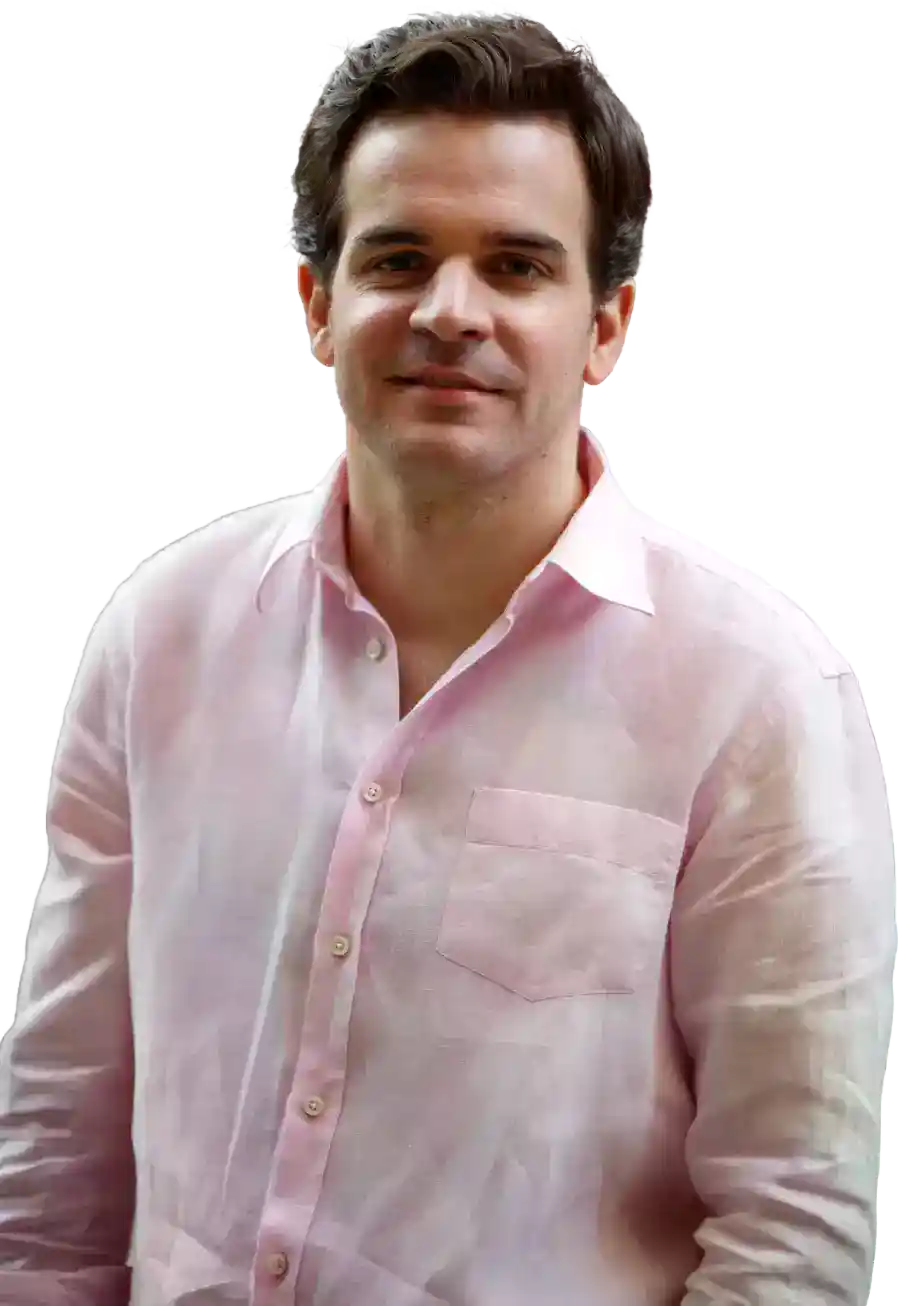
Pierre Brossollet’s entrepreneurial story is not one of sudden inspiration or overnight success. It is the result of decades spent mastering complexity, navigating contradictions, absorbing failure, and ultimately choosing to act when conviction outweighed comfort.
Today, Pierre is the founder and CEO of Arverne, a geothermal energy company that has raised €220M ($258M), employs 250 people, has gone public, and is now pursuing more than €3B ($3.53B) in projects by 2030.
But the roots of this ambition stretch back long before boardrooms, capital markets, or renewable energy became the mission. Let’s dive into this riveting blog to learn more about Pierre’s journey.
Listen to the full podcast episode and review the transcript here.
*FREE DOWNLOAD*
The Ultimate Guide To Pitch Decks
A Childhood Shaped by Discipline, Movement, and Engineering
Pierre grew up in France in a family defined by structure and service. His father served in the Navy SEALs, which meant constant relocation and exposure to different countries, cultures, and ways of life.
That early instability was not easy, but it opened Pierre’s mind and gave him a global perspective before adulthood. He was one of five siblings, a position he describes as quietly formative. “You’re never really in the right place,” he says. “The big of the smalls, the small of the bigs.”
Even this, in retrospect, shaped Pierre’s relationship with adversity and identity. Engineering was not a rebellious choice. It was tradition. In France, elite engineering schools represent excellence, rigor, and continuity, especially in families tied to the military.
Pierre followed that path not out of curiosity, but inheritance, because that’s what his father and grandfather had also done. To enter the Navy, you have to first become an engineer. Yet beneath the formality, a genuine passion for technical things and problem-solving took root.
Falling Into Energy and Never Leaving
Pierre’s entry into oil and gas was accidental. While studying civil engineering, he selected an offshore specialization almost at random. “Like Obélix falling into the magic potion,” he says, “I fell into oil and gas, and I never left.”
After graduating, Pierre joined Total, one of the world’s leading energy companies. Over the next decade, he worked in business development across Asia, Africa, and South America, building deep expertise in subsurface exploration, drilling, and large-scale energy operations.
But what left the strongest impression was not technical mastery; it was contradiction. Oil and gas have been among humanity’s most significant technological breakthroughs. Yet Pierre also witnessed firsthand its devastating impact on the planet. This paradox stayed with him.
Pierre began asking a question that would eventually reshape his career: How can we use this expertise to serve the energy transition, but without perpetuating the problem?
Learning the World Before Trying to Change It
Living abroad forced Pierre to do more than execute projects. He had to learn people, along with languages, customs, values, and traditions. As a result, he learned to speak several languages to acclimatize himself, and respect became foundational.
When Pierre returned to France after nearly 15 years abroad, accompanied by his wife and five children (all born in different countries), he felt something rare in corporate life. “I had learned what life is,” he remarks. That clarity made it impossible to remain unchanged.
After 10 years at Total, Pierre decided to shift gears. Looking back, he talks about his experience at an amazing company like Total, where he gained deep expertise in the oil and gas sector.
Raise Capital Smarter, Not Harder
- AI Investor Matching: Get instantly connected with the right investors
- Pitch & Financial Model Tools: Sharpen your story with battle-tested frameworks
- Proven Results: Founders are closing 3× faster using StartupFundraising.com
The Mentor Who Changed Everything
Pierre’s pivot began when he met Jean Francois Hénin in Indonesia, a free-thinking executive running a gas company outside rigid corporate hierarchies.
Jean-François offered Pierre something Total never could: real responsibility and the management of an entire country operation in South America. But more importantly, he modeled a different approach to leadership.
Jean-François was not a manager. He was a leader comfortable with risk, guided by conviction, and deeply human. He believed one individual could change outcomes, even in capital-intensive industries.
Over ten years of working alongside him, Pierre absorbed crucial lessons. He learned that even in energy, which is a complex, expensive, regulated industry, individual leadership still matters.
He also learned that if you strongly believe in something and are willing to invest effort in it, you can convince others of its merits. When the company was sold, Pierre knew he would not stay on. He had reached the moment where ownership of his future was unavoidable.
Starting With Nothing—and Building Confidence
Pierre did not found Arverne with capital or safety nets. He started with nothing, no money, no guarantees, no institutional backing. He raised his first €100K ($117.6K), then €1M ($1.18M), and kept going. Five years later, Arverne had raised over €200M ($235M).
Storytelling is everything that Pierre Brossollet was able to master. The key is capturing the essence of what you are doing in 15 to 20 slides. For a winning deck, take a look at the pitch deck template created by Peter Thiel, Silicon Valley legend (see it here), where the most critical slides are highlighted.
Remember to unlock the pitch deck template that founders worldwide are using to raise millions below.
Pierre took the company public and now has a project to raise more than €3B ($3.53B) by 2030. His path was all about confidence, resilience, faith, expertise, and relentless work. He emphasizes that leadership alone is insufficient; you must also master the technical file, the details, and the execution.
Faith without work is an illusion. Pierre points out that had he remained in a big organization, he might not have realized himself. People can grow in large organizations and learn skills, but they cannot reach their full potential.
Reusing Oil & Gas, But Without Oil & Gas
Arverne’s business model mirrors oil and gas almost exactly, except the output is entirely different. The same processes Pierre has learned over 20 years apply: exploring, drilling wells, conducting exploration seismic, and building and operating plants.
But instead of extracting hydrocarbons, Arverne produces geothermal heat. That heat comes from hot water beneath our feet, which is local, sovereign, continuous, and carbon-free. For instance, you don’t have to produce barrels of oil in Indonesia and then transport them to, say, Paris.
In some regions, the water even contains dissolved metals like lithium, enabling zero-carbon extraction without traditional mining systems. It is a return to simplicity involving producing energy where it is consumed. And this is produced exactly as oil and gas were produced.
Despite its enormous potential, geothermal remains largely invisible. You need to explore and get licensing, and in countries like France, the process isn’t easy. Arverne’s mission is to change that.
Growth, Capital, and Going Public
Entrepreneurship, Pierre admits, is emotionally brutal. Confidence and doubt coexist daily. Sleep disappears. Pressure never fades. Early on, he realized Arverne could not remain small; it had to be autonomous in its operation. This industry demands scale.
That realization forced bold decisions, including acquiring a drilling company from Vinci, a civil work group, funded entirely through vendor credit, without spending a euro up front. Pierre recalls how he was agile in the processes he used to grow. He also attracted some prominent angel investors.
Momentum built, and context helped. COVID exposed the fragility of supply chains, and the war in Ukraine underscored Europe’s energy dependence. Suddenly, geothermal was not theoretical; it was strategic. Pierre quickly realized he would have to raise millions of euros in capital.
However, he was determined to approach fundraising exactly as he had acquired his drilling company — with agility, a sound mindset, and plenty of audacity. As an entrepreneur, he was also keen to connect with the right people and to have faith.
The final inflection point came unexpectedly: a meeting with the founders of a SPAC searching for a transition-energy target. Timing, scale, and story aligned perfectly. One year later, Arverne went public.
“If someone had told me a year earlier that we would raise €200M ($235M), I would not have believed it,” Pierre recalls wryly.
Failure as a Teacher, Not a Stigma
Pierre’s relationship with failure is deeply personal and deeply European. Talking about resilience when raising funding, he points out that entrepreneurs will face rejection. Potential investors may or may not believe in your ideas, and that’s totally fine.
Pierre reminisces about building 10 Rue Royale, a luxury showroom, right after leaving Total. At the showroom, clients would design their own jewelry. Pierre had invested all the money he had received from Total, but the venture went bankrupt quickly.
In France, failure does not signal experience; it signals exclusion. Banks blacklist you. Institutions close doors. After that venture, Pierre tried and failed to acquire another company, but eventually completed a deal. As he says, “At the end of the day, it was useful for my career progression.”
Yet each failure forced reflection and conclusions. Pierre would ask himself, “Why this decision?” “Why that hire?” and “Why this structure?” He doesn’t believe in a success story without failure; it’s like in politics.
A Vision Bigger Than One Company
Pierre’s ultimate vision extends beyond Arverne. He wants France and Europe to reclaim energy sovereignty and independence, speed up decision-making, and unlock innovation trapped under administrative weight.
Pierre strongly believes that Arverne and similar companies can be much more efficient because they use the same tools and equipment as those in Asia and the US. He is exceptionally confident of France’s ability to create great things like the Eiffel Tower and the efficiency of its people.
Pierre is convinced that they can develop technologies, but they cannot remain stuck between global powers without their own solutions. Geothermal is one of those solutions. It is local, scalable, and underutilized. Arverne is his contribution, but not the end goal.
Pierre’s vision is to provide France and Europe with energy freedom that is not only economical but also offers other benefits. This is why he is confident that Arverne will be successful.
Leadership: Humility and Magnanimity
Pierre does not pretend to have solved the art of leadership. He studies it daily, driven by his dedication to managing his company efficiently and making it a success, and accelerating his business model.
Inspired by the philosopher Alexandre Havard, Pierre defines leadership by two virtues, humility and magnanimity. A leader does not manage projects; that is a manager’s role. A leader advances people by trusting in their potential to deliver.
Trust, example, and character matter more than communication skills or charisma. Leadership is lived, not declared, nor is it a black-and-white exact science.
Advice to Founders: Fail Better, Believe Harder
Pierre’s advice to aspiring entrepreneurs is simple and uncompromising:
- Fail better like Stan Wawrinka’s tattoo: “Ever tried. Ever failed. No matter. Try again. Fail again. Fail better.”
- Ignore the voices saying it’s impossible. They will be everywhere, both inside and outside your company.
If you believe deeply enough, you can convince everyone, including your own leadership team.
Pierre Brossollet’s story is not about leaving oil and gas; it is about reusing mastery for something better. It is about patience, failure, conviction, and leadership rooted in humility. Above all, it is a reminder that even in the most capital-intensive industries, one individual’s belief applied over decades can still change the system.
Listen to the full podcast episode to know more, including:
- Pierre Brossollet’s success was built over decades by mastering complexity, embracing failure, and acting once conviction outweighed comfort.
- Deep expertise in oil and gas became an advantage, not a liability, when repurposed to accelerate the geothermal energy transition.
- Global exposure and cultural adaptability shaped Pierre’s leadership mindset long before he became a founder.
- True entrepreneurial confidence is earned step by step through resilience, technical rigor, and relentless execution.
- Arverne proves that capital-intensive, regulated industries still reward bold leadership, agility, and unconventional financing paths.
- Failure is not a detour but the mechanism through which judgment, clarity, and long-term success are forged.
- Leadership, in Pierre’s view, is grounded in humility and magnanimity, with a focus on advancing people rather than managing projects.
SUBSCRIBE ON:
 iTunes
 Google Play
 Stitcher
 TuneIn
 RSS
RSS SoundCloud
 Spotify
Keep in mind that storytelling is everything in fundraising. In this regard, for a winning pitch deck to help you, take a look at the template created by Peter Thiel, the Silicon Valley legend (see it here), which I recently covered. Thiel was the first angel investor in Facebook with a $500K check that turned into more than $1 billion in cash.
*FREE DOWNLOAD*
The Ultimate Guide To Pitch Decks
Remember to unlock for free the pitch deck template that founders worldwide are using to raise millions below.
Facebook Comments