

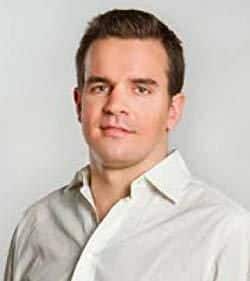
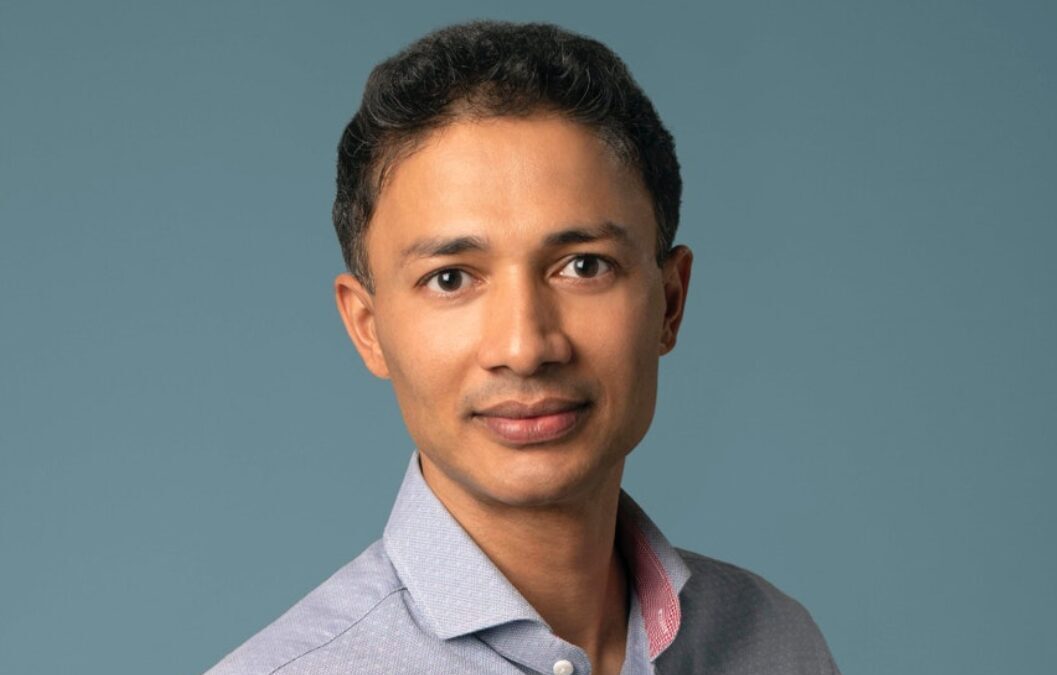
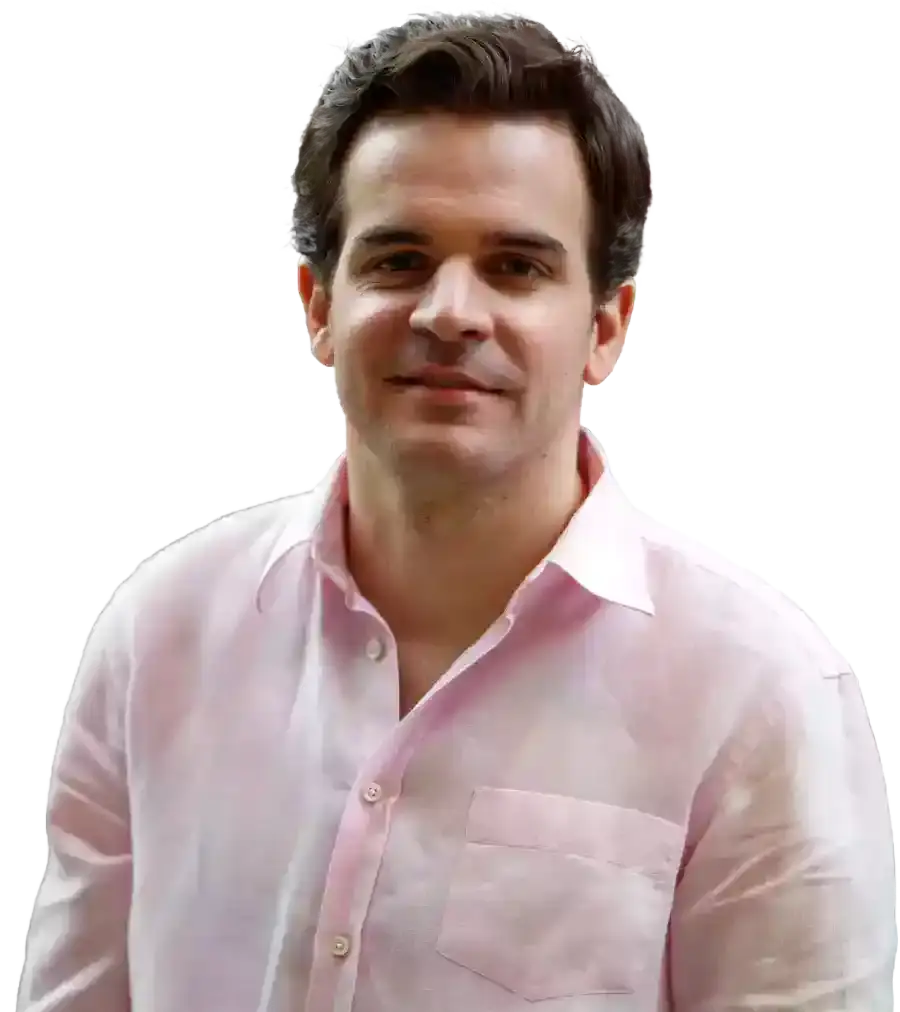
Some founders plan every move years in advance. But Sudheesh Nair, the co-founder and CEO of TinyFish, thrives in the chaos of serendipity, making the right choices with the data at hand, learning quickly, and never looking back.
TinyFish has secured funding from top-tier investor Amit Agarwal at ICONIQ.
In this episode, you will learn:
- Sudheesh Nair’s journey from a small Indian town to leading billion-dollar companies shows the power of clarity, conviction, and adaptability in entrepreneurship.
- His decision-making philosophy—acting quickly with available data rather than waiting for perfect information—became the cornerstone of his leadership style.
- At Nutanix, Sudheesh learned to “pick the biggest bully,” listen deeply to customers, and stay laser-focused amid noise, scaling it to a $20B public company.
- At ThoughtSpot, he led a bold pivot from on-prem BI to cloud-native AI analytics, demonstrating how reinvention fuels longevity in tech.
- With TinyFish, Sudheesh is reimagining the web through enterprise-grade AI agents that operate online like human researchers, automating reasoning and discovery.
- His disciplined fundraising approach—prioritizing investor quality over valuation—reflects a builder’s mindset focused on endurance rather than hype.
- Sudheesh believes AI’s rise rivals the Industrial Revolution, unlocking reasoning power at scale, and reminds founders to ignore the noise and build enduring value.
SUBSCRIBE ON:
 iTunes
 Google Play
 Stitcher
 TuneIn
 RSS
RSS SoundCloud
 Spotify
Keep in mind that storytelling is everything in fundraising. In this regard, for a winning pitch deck to help you, take a look at the template created by Peter Thiel, the Silicon Valley legend (see it here), which I recently covered. Thiel was the first angel investor in Facebook with a $500K check that turned into more than $1 billion in cash.
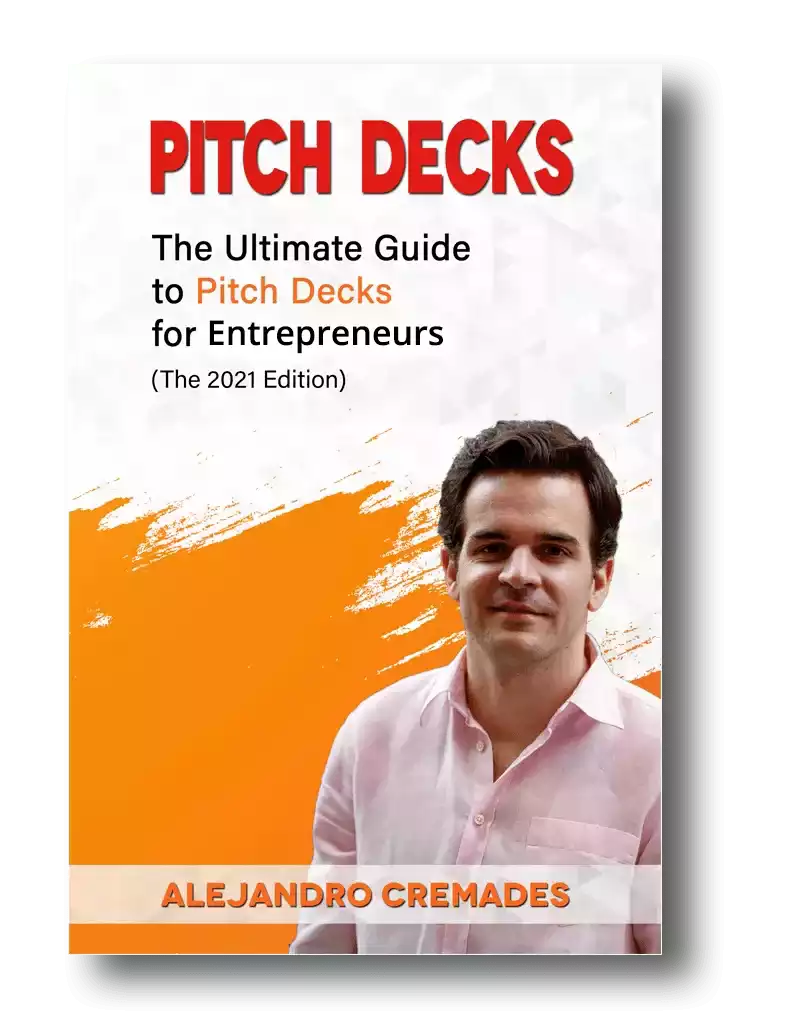
*FREE DOWNLOAD*
The Ultimate Guide To Pitch Decks
Remember to unlock for free the pitch deck template that founders worldwide are using to raise millions below.
About Sudheesh Nair:
Sudheesh Nair is a seasoned technology executive and the Co-founder and CEO of TinyFish, an enterprise AI company that develops web agents to automate complex online workflows. He previously served as the CEO of ThoughtSpot and the President of Nutanix.
Raise Capital Smarter, Not Harder
- AI Investor Matching: Get instantly connected with the right investors
- Pitch & Financial Model Tools: Sharpen your story with battle-tested frameworks
- Proven Results: Founders are closing 3× faster using StartupFundraising.com
Connect with Sudheesh Nair::
Read the Full Transcription of the Interview:
Alejandro Cremades: Alrighty, hello everyone, and welcome to the DealMaker Show. So today we have an amazing, amazing guest, you know, a guest that has seen, you know, quite a bit, you know, when it comes to the startup world. And, you know, we’ve actually had a bunch of people that have been in some of the companies that he has also been involved with, but now he’s at it, you know, he’s really doing it with his own company. We’re going to be talking about the building, the scaling, the financing, also, you know,
Alejandro Cremades: you know, whether there is hype or not in this AI world right now. We’re going to be digging into that, as well as how to be calibrated by VCs, also how to listen or how not to listen for the right advice, and many other things that I think are going to make the episode today super exciting. So without further ado, let’s welcome our guest today, Sudish Nair. Welcome to the show.
Sudheesh Nair: Alejandro, thank you so much. Love your radio voice. We were speaking in normal voice and then the recording stopped and started, and suddenly the radio voice comes out.
Alejandro Cremades: There we go. There we go. Ready for action. So, Sudish, in your case, give us a walk through memory lane. How was life growing up there in India?
Sudheesh Nair: It was good. Look, I think sometimes we overestimate what it takes to be happy. I kind of feel like we are all… the water level keeps rising, and what it takes to make us happy keeps going up.
Sudheesh Nair: But I grew up in a very normal lower-middle-class family. Didn’t have a lot of money or resources, but a very stable family, loving parents, a brother that sometimes I loved, sometimes we used to fight, phenomenal friends, and good education.
Sudheesh Nair: No real adversity, obviously. You know, growing up in the 80s and 90s in India, it’s nothing like the India of today. TVs and all of those things, the resources, luxury, social media — none of those existed. US was… honestly, US was nothing but, I think, probably Miami Vice, and soon after that, maybe Baywatch.
Sudheesh Nair: That’s all I knew about the US. Happy times.
Alejandro Cremades: Now, in your case, it sounds like serendipity has been a big one. And when you were there in India, there was one of the teachers that you really had a connection with.
Alejandro Cremades: And eventually, a recommendation to take an interview changed the course of everything. So tell us about this.
Sudheesh Nair: Yeah, Alejandro, I think sometimes, you know, we overestimate the power of planning and analysis and then miss out on, like, really the opportunity that’s in front of us.
Sudheesh Nair: My life has always been about taking the choice right in front of us. If there is an A–B fork, I’m really good at taking on the fork that I think is the best with the given data that I have.
Sudheesh Nair: And the only thing that comes as part of the package is that you have to make sure that you don’t regret the fork you took. And also make sure that if it is a wrong fork, you don’t spend too much time thinking about why it was wrong, but spend just enough time to figure out what went wrong and then correct. So, going back to the story, when I was in college, you know, there was a campus interview happening that was not for the sessions that I was taking, but there was a teacher who said, “You should go talk to this company.”
Sudheesh Nair: And she missed me by, let’s say, five minutes. If she had missed me by that, I would not have taken that road. And that road led me to the US. And I can tell you so many stories where the ability to make quick decisions with the most amount of analysis you can do with the given data has helped me.
Sudheesh Nair: And to date, when it comes to company building, whether it is product or engineering or go-to-market, I often prefer decisions made with the data that is present versus waiting too long for all the pieces to come together.
Sudheesh Nair: And today, with AI, it has become a necessity as well.
Alejandro Cremades: A thousand percent. So tell us about coming to the U.S. because obviously the U.S. has been pivotal in your career.
Sudheesh Nair: Yeah. I think… I don’t know. For me, I’ve traveled a lot, Alejandro, as part of, you know, both Nutanix and ThoughtSpot growth, worldwide growth.
Sudheesh Nair: And one of the best things that happened for me is the opportunity to travel to pretty much all continents and a lot of countries. I would say still maybe 100 countries I haven’t visited, but probably covered most of the others.
Sudheesh Nair: And sometimes people ask, “Which country is best?” and I honestly don’t have an answer. Every country has something unique that is beautiful about them.
Sudheesh Nair: At the core of it, I found that all people are the same. They’re all looking for safety, love, and belonging. The US — particularly the Bay Area — and I’ve spent most of my adult life in the Bay Area, so it is a bubble. I’m very aware of it.
Sudheesh Nair: Within the bubble of the Bay Area, I found home because it is one of those places where two things that I value were cherished. First is, this is a place where people not just appreciate but value failures.
Sudheesh Nair: Like, I can’t imagine any other place where people would say, “Oh, you failed? Fantastic. Come talk to me more. Let’s do more of it.” Second is, pretty much everyone belongs in the Bay Area.
Sudheesh Nair: Now, when I say that, often sometimes people are like, “Oh, I had this experience or this happened to me.” And that is all true. In fact, if you look carefully, if I were to spend time looking at all the things happening in my life, I would also find a lot of places and times where things did not go well for me, or I was not in the most advantageous position. But somehow, when I look back in life, I’ve been nothing but grateful for being in the area where you can fail, you can try again. Everyone sort of gives you the shot — it doesn’t matter
Sudheesh Nair: you know, which school you went to, what accent you have, how tall you are. That’s been my experience. Maybe I choose to only see that, but that has served me well because when I go anywhere in the world, I feel the same way.
Sudheesh Nair: But when I take that San Francisco airport exit and land after a long trip and take 280 down south, I feel like, okay, I’m driving home.
Alejandro Cremades: So in your case, again, serendipity coming across and connecting with one of the co-founders of Nutanix was a big one for you. Because obviously from there, Nutanix, then ThoughtSpot. So it’s been kind of like part of the Nutanix, let’s say, mafia.
Alejandro Cremades: So I guess in your case, how did you guys connect, and walk us through the sequence of events that needed to happen for you to be part of that early team of what is today a $20 billion dollars company?
Sudheesh Nair: Yeah, so Dheeraj Pandey, Mohit Aran, Ajit — they were the founders of Nutanix, and I was one of the first guys after that. Dheeraj ran the company for most of its existence until, I think, close to 2020.
Sudheesh Nair: Ajit and Mohit left after the first year or so. So when you think of it, I met Mohit and Ajit in the early years of my US experience in an early-stage startup.
Sudheesh Nair: We all went in different directions. And then the way it worked was Dheeraj reached out to me when I was, I think, in a parking lot trying to chase a deal for another company that I was working at.
Sudheesh Nair: And he said, “We are going to start something.” And I said, for me, it’s always been about people. And I always found… Mohit and Dheeraj I knew very well. I didn’t know Ajit at that time.
Sudheesh Nair: And I knew that between them, there is a piece that I could add that they didn’t have, and they could do things that I couldn’t do. So it was all about team. So we came together. We were also very young and we didn’t know what we were doing.
Sudheesh Nair: And in a sense, that was one of the best things that happened because when you don’t know what you’re doing, you’re willing to try. You’re not ashamed if you fail. You’re swinging at every ball that is coming your way.
Sudheesh Nair: And Nutanix was competing against VMware. At that time, VMware was like this behemoth. And we just went with extreme courage. And we never held anything back.
Sudheesh Nair: And that is a lesson that sort of stuck with me — that if you fight like you have a lot to lose, you will lose. And Nutanix was an example of building out of nothing.
Sudheesh Nair: We took the company public in 2016. And that was another example. 2016 was not a great year to take a company public, because I don’t know if you remember, times were pretty bad for IPOs.
Sudheesh Nair: In fact, Nutanix was, I think, one of the first tech IPOs of that year.
Sudheesh Nair: Even then, it was a questionable decision whether to take the company public at that time or not. But I was running the go-to-market, and it was clear that customers wanted to see a separation between private companies and public companies to invest for a larger scale.
Sudheesh Nair: And Dheeraj and I — we were not the kind of people who overanalyze things as well. If it is the right thing to do for the customers, let’s go do it. It also happened to be the right thing for the employees and investors, but it’s a long journey to build lasting value in a company.
Sudheesh Nair: Two years later, it was a $10 billion dollars business. And now it’s like a 20-plus-billion phenomenal execution story. Now, the learning process there…
Alejandro Cremades: So I guess as part of that learning process and then looking back to now — because now you’re building your own thing, and we’re going to talk about that in just a little bit — but what would you say were the three key things that allowed such a successful story like Nutanix to really crystallize?
Sudheesh Nair: Great question. I don’t think I’ve ever really thought about it in three, but I will tell you, I always think in three. So maybe let me try to quickly capture. The first one, I would say, is that you have to pick the biggest bully in the room to compete with.
Sudheesh Nair: If you’re competing and you feel like you don’t have… you know, sometimes people ask you, “Who are you competing with?” And when the answer is “no status quo” and all of those BS, that means you’re probably not competing for the right kind of market. Because you may think that you don’t have a competitor,
Sudheesh Nair: but the customers are always trying to figure out how to shift the dollars. Like, when they’re paying you, they’re trying to see which one they should not pay. So there has to be somebody. And if you are competing, you might as well pick the largest company.
Sudheesh Nair: And for us, it was VMware. Second — and on the same token — you should not assume that… people are smart. You should never assume that the customers are dumb.
Sudheesh Nair: A lot of startup companies have this way of thinking like, “We need to go teach the customers.” Customers may not understand the technology pieces. They may not see behind the curve, but they often understand what it takes to solve problems.
Sudheesh Nair: And customers will be telling you in their own ways, and you have to listen. And one of the things that I found — the second lesson — is that you have to compete everywhere, not just in the US.
Sudheesh Nair: The US is fantastic — it is the largest market, early adopters — but there are smart people everywhere. Opportunities are not evenly distributed, but talent is. So be unafraid to compete everywhere, even as a startup, is something that I’ve learned. Now, that means that you have to put the infrastructure behind it — support, references, all of that.
Sudheesh Nair: The third thing is that you have to pick your battles in the sense that startups usually die out of indigestion, not starvation. When you are building something, you know, competitors are always… other startups are coming up, other VCs are making noise, and when you log into Twitter and LinkedIn, you keep thinking, “Oh my God, the world is ending if you don’t do this.”
Sudheesh Nair: “This customer will buy that if you don’t do that.” If you are really confident about where you are taking the company, often it is much better to take that one laser-like focus and then execute.
Sudheesh Nair: That doesn’t mean that you should ignore the signals that are coming — you should course correct. But that’s the third thing, which is: you have to figure out how to sort out and filter out the noise that comes as part of building a successful company.
Alejandro Cremades: So after Nutanix, you went with ThoughtSpot, with one of the co-founders too of Nutanix. Now, in this case, you joined a company that had 300 employees, but it sounds like when you joined you were presented with a picture that was a little bit different than what you had perhaps thought.
Sudheesh Nair: Yeah, I wouldn’t say that. So I will tell you — there is another character in this, my career arc, that we don’t usually talk about. He’s a very quiet person. His name is Ravi Matre. He is the founder of Lightspeed, which is one of the largest investment companies, VCs, in the world now.
Sudheesh Nair: So when I started at Nutanix, there were two people involved in Lightspeed. One is Bipul Sinha, who is now the founder and CEO of Rubrik. In fact, he was a key person who brought me into…
Sudheesh Nair: the idea of, you know, building the way we built it fearlessly. And Ravi was the lead investor from Lightspeed for Nutanix, and he was also at ThoughtSpot.
Sudheesh Nair: And Ravi and I had a conversation about ThoughtSpot. ThoughtSpot is this idea that was using AI to deliver BI in a way that was way before its time. So one of the co-founders of ThoughtSpot, Amit Prakash, he was at Google. He’s a brilliant guy, and he’s the one who came up with the idea that we can use natural language to get data insights delivered to business users.
Sudheesh Nair: The only problem is that when the company started in 2012, the data was on-prem and the system was built on-prem. 2018, when I started the ThoughtSpot, the data was already moving, the gravity was moving to cloud.
Sudheesh Nair: So the open conversation between Ajit and Amit and Ravi with me was that we should restart the company essentially as a cloud company. And this was the time Snowflake was really taking off.
Sudheesh Nair: So for me, it was a no-brainer to go apply my operational skills I learned at Nutanix. I was running the go to market for a company that is public. It was already crossed like one plus billion dollars.
Sudheesh Nair: So, for me, it was good to go back and start again. So Ajit and I partnered to start ThoughtSpot again as a cloud company. So 2018 we started, and 2021 we launched the company on Snowflake.
Sudheesh Nair: Soon after that, we follow followed that with Databricks and Google BigQuery. And I was there until 2024. And again, the market came to them because AI became what it is today.
Sudheesh Nair: And ThoughtSpot became the AI platform for BI.
Alejandro Cremades: There were some tough decisions there that it sounds like you guys needed to make, you know, going from 300 employees to under 100 to be able to adjust.
Alejandro Cremades: How do you deal with that? I mean, in the face of leadership and needing to be the leader that you need to be with whatever you have in front of you, I mean, how do you go about that? How are you putting yourself in action to perhaps, you know, remove the emotional side of things and be able to be effective?
Sudheesh Nair: I don’t think you can remove the emotions. I do think emotions are the reason why you do everything you do. And to me, whether it is an underperformer or the company underperformed and you have to have layoffs, it’s a logical decision with a lot of emotions behind it.
Sudheesh Nair: And I don’t shy away from both.
Sudheesh Nair: So, for example, people always talk about, you know, when it comes to layoff or rifts, you should think that you will need to go deeper than you think. And that is an absolute truth, but very difficult to do for operational people.
Sudheesh Nair: So what I’ve done is go with the framework of three things. Number one, make sure that you communicate with extreme clarity. For example, if there is going to be a layoff, you have to make sure that the communication is very clear whether it is going to happen or not.
Sudheesh Nair: And I have this framework that I wrote a long time ago about how communication should be concentric circle.
Sudheesh Nair: You should have the plan with your three or four people in the company. But within 24 hours, that circle should expand from the stiter group to the next group to the next group. That kind of velocity is important because otherwise what happens is the news will have its own life.
Sudheesh Nair: So the first thing is extreme clarity in communicating. Second is decisive action with why we are doing this. And that framework has to be defensible.
Sudheesh Nair: So, for example, if a company is underperforming, that needs to be very clear. It shouldn’t be like, oh, we are underperforming, but we over hired. Lot of CEOs actually talk about, oh, we over hired. If you really over hired and the company is performing normally, that means the CEO should be fired. It’s not the other way. The third thing is that you have to make sure that the people who are affected know that the company was fair. Not nice, not, you know, emotionally supportive — no, be very fair.
Sudheesh Nair: For example, some functions might be affected because the company pivoted, and that doesn’t mean that the people involved in there were not the right people.
Sudheesh Nair: They probably are really good at, but that functions are no longer necessary. Like a company going from on-prem to cloud may not need a lot of on-prem resources for maintaining and supporting. We have to transform.
Sudheesh Nair: Sometimes the market changes, and you have to say, the market changed, but we didn’t plan. And as part of that, you have to be very honest about, you know, if the leadership messed up, instead of simply saying we messed up, what are we going to do about it?
Sudheesh Nair: So those are the three things that you have to do about. And a long time ago, another CEO once told me that you don’t want to be light. And sometimes people take that to the extreme.
Sudheesh Nair: Like, you don’t want to be light doesn’t mean that you have to be a jerk about it. You don’t want to be light and do the wrong thing. You can do the right thing and still be liked, but don’t crave that likeness.
Sudheesh Nair: Don’t crave that adoration that, you know, most CEOs and leaders want to. So those are the sort of emotional thing that you have to remove. And sometimes, you know, some psychopaths really like seeing misery in others. And there are a lot of CEOs and leaders who are that kind of sociopathic nature where they’d like to sort of hurt people. Very, very few of them.
Sudheesh Nair: But most people are not like that.
Alejandro Cremades: So tell us about Tiny Fish, your first real baby that you’ve co-founded here.
Alejandro Cremades: At what point do you realize, hey, I want to take action here and build something on my own?
Sudheesh Nair: Yeah, so tiny fish to me is a story of three streams coming together. There are three co-founders, Shuhal, Keith, and I, and I’ll tell you the three point of views. I’ll clarify how we ended up being who we are.
Sudheesh Nair: So Keith was a Pulitzer finalist journalist for Wall Street Journal and Bloomberg. So he’s a pro at that. Shuhao is a wizard when it comes to browser infrastructure, came from Meta, Distributor System, AI, ML, and Browser.
Sudheesh Nair: And I came from BI and data. Keith, the journalist, his point of view is his entire a profession is getting killed by this kind of intermediation that is happening through Facebook and others, where they control what information should be visible to whom.
Sudheesh Nair: And he was like, this has to change. And if AI can help with that, I want to do something. Shuhao was that browser is going to be the point of view. This is where all the battles will be fought, and we have to make sure that we win that battle.
Sudheesh Nair: And for me, internet is where the most fresh data in Insight always originated, just like water comes out of streams. But the problem is the water is not drinkable until you filter it.
Sudheesh Nair: Data is the same. And the filtering of data is a very expensive. You need to take that, put it into ETL systems to, you know, data warehouse and then BI.
Sudheesh Nair: And by the time you see it, it is very expensive. And number two, its freshness is gone. When we came together, the idea was, is it possible for us to use AI agents on browsers to send them to the internet to bring the fresh data with accuracy as well, at a much lower cost?
Sudheesh Nair: That’s Tinyfish. Tinyfish, we are building a platform for operating the web. And I can talk more about the mission behind it and the vision of how Keith’s idea of disintermediating internet is gonna be so much more pivotal, but that’s the founding story of how three of us came together.
Alejandro Cremades: So talk to us too about the business model. How do you guys make money with Tinyfish?
Sudheesh Nair: Yeah, so making money is very easy if you create value for enterprise customers. So what we have done is it took took a very straight up approach. So what Hennifish does, you can provide natural language interface to build what we call web agents.
Sudheesh Nair: These web agents are operating agents. They, you know, they reason like humans and take browser actions across massive scale. So for… that’s a lot of gobbledygook. Let me simplify this. When you open a browser, Alejandro, you do usually three things: you research, you engage, and you extract. Like, you are trying to find out who is Sudesh, what did he do? You came back and said, oh, Nutanix.spot.
Sudheesh Nair: And then you did some engagement. You probably entered some information into, I don’t know, some website to see what is valuation of the company. And then you extracted that information and turned that into a document. This is what 60% of knowledge workers time is spent on in enterprise companies at massive scale.
Sudheesh Nair: Things like competitive analysis, pricing, supply chain research, up social sentiment, all of these things, website data, and people are going and bringing that data. There are some scraping companies that will give you the data.
Sudheesh Nair: Then you analyze it, then you reason it, you click, add, all of that. What we do, imagine a million browsers were opened up in Amazon that you don’t even see.
Sudheesh Nair: Each one of them have a goal that it needs to accomplish. And one of them, that goal could be like, find my competitors pricing strategies. Find credit risk on this 100,000 candidates that I’m planning to initiate a law.
Sudheesh Nair: Think about the fraud potential of the insurance underwriting I’m doing. I have a clinical research happening and I need 10,000 people and I don’t have an idea how to get to them. So go figure out, look at the profile, their DNAs and all of these kinds of stuff and sort this out to me.
Sudheesh Nair: These agents are able to reason like humans, search, navigate, browse, and then extract that information and comes to you. It is massively disruptive to the enterprise workflow.
Sudheesh Nair: And we are narrowly focused on enterprise use cases. And monetization is very straightforward. The number of agents out there, the number of tokens that it is consuming, all of that turns into value. And we are able to get a percentage of that.
Alejandro Cremades: As we’re thinking about the world of AI too right now, you know, a lot of people are saying that there’s a lot of hype, that there is a bubble in the world of AI. What are your thoughts on that, and why is AI so special too in your eyes?
Sudheesh Nair: Look, I think there have only been a few instances where fundamental unlock of human capabilities have happened, right? And the first was industrial revolution, where you ate and you produced, and that changed because of steam engines. You ate and you can hang back, and the steam engines will produce. So it unlocked human physical powers.
Sudheesh Nair: And then internet was, okay, library, library, library, library, and DARPA came and connected. So silos of information got disrupted, which means the knowledge got interconnected.
Sudheesh Nair: And suddenly a kid in Nigeria can learn university library in Wisconsin within a matter of seconds. So that decoupled knowledge from human domains.
Sudheesh Nair: What has happened with AI, or what is happening with AI, is that how you process that knowledge and turn that into reasoning and execution — that’s AI and agentic AI.
Sudheesh Nair: When you put that together, it’s another unlock because it’s not just about who has the physical prowess. It’s not just about who has access to the knowledge. It’s also about who’s able to reason with it and turn that into wisdom.
Sudheesh Nair: And if there is an unlock, that’s massive. Of course, just like every other wave, there is fraud. But that doesn’t mean unbelievably value-creating opportunities will not be there for companies that are realistic.
Sudheesh Nair: There are fundamentals of company buildings that still matters. Who you hire, who you raise money from, how you set the goals, how not to get caught up in all the brouhaha that goes on with, you know, this company’s multi-billion, this company’s 100 million, all of that kind of nonsense.
Sudheesh Nair: But putting your head down, there are fascinating opportunities to build tectonic shift for the future.
Alejandro Cremades: Now, when it comes to capitalizing the business, you know, you guys have raised about $47 million or so in different tranches, especially with the last one being the Series A. What has been here now the experience, as obviously your first company to go through the journey of raising the money, even though you had been exposed to it on previous rodeos with Nutanix and ThoughtSpot, but what has it been, the experience there of raising this money?
Sudheesh Nair: So we were very lucky. Obviously, you know, most of the talent that you’ve hired came from, you know, Google and Meta, the PyTorch and ML team. Suhao, Keith, and I are a good, experienced founding team.
Sudheesh Nair: So we didn’t have to stress at all when it comes to raising money. We came together and the fundraising happened within a few days, actually, I would say less than five days. So we took the first term sheet that came our way. We thought, before we even started, we had this guideline that it has to be this kind of investor. It has to hit this kind of range of valuation.
Sudheesh Nair: And this is how much we want to raise. So we had clarity. Again, the experience gave us that. It is important to make sure that you don’t over rotate on valuation. You don’t over rotate on raising and, you know, compromise on the quality of the investor.
Sudheesh Nair: So for us, we had clarity on “this is how we want, this is a framework within which.” And the moment we reached out, in fact, ah, there was an incoming. Iconic was an incoming, and the lead investor, Amit Agarwal, he was an operator at Datadog for over 10 years. He was the president there.
Sudheesh Nair: And I always admired Iconic as a firm that did not jump into the hype cycle. They’re not the ones constantly making noise on Twitter and LinkedIn, but they deliver value for founders based on my research. And when Amit reached out, ah, we engaged them, and within a few hours, essentially, we had the term sheet, and the process was extremely, you know, rigorous, but at the same time fair.
Sudheesh Nair: And we had a couple of others who also wanted to lead, but we decided that we’re gonna go with the one who came to us and hit that mark without creating too much back and forth. Because quality of investors, when you’re building a company for the long term, matters — valuation less so.
Sudheesh Nair: Because whatever valuation we get, we are very confident this will be an amazing deal for the investors and for the employees. So that’s right, so we did only one round, Series A, and that is 47 million, and that should give us enough runway for the next three, four years. But having said that, it is important for us to keep building and raising just to reset the valuation, and that’s our plan.
Alejandro Cremades: Now, when it comes to VCs here, just to follow up on that, it sounds like founders are often calibrated wrongly by VCs. Why is that the case?
Sudheesh Nair: Yeah, it is an interesting point of view because, first of all, look, I admire so many young founders jumping into company building. It’s never been the case. So… but the lack of experience can be something that can be very confusing.
Sudheesh Nair: Ah, there are… Gen Z specifically are unbelievably talented when it comes to marketing and creating the brand. And VCs have sort of… there are two groups of VCs in my mind. There is a small portion of VCs who are institutional VCs. I’m talking about enterprise,
Sudheesh Nair: who know that it takes many years to build iconic companies, like large companies that change the company trajectory. Lightspeed, one of them. Iconic usually is in a late-stage growth company, but now they’re entering early stage.
Sudheesh Nair: And Recent does a really good job of that. Sequoia, of course. But what has happened is that these have become platforms, where within these platforms now you have some handful of really good, ah, you know, investors.
Sudheesh Nair: Vinod Khosla — forget his Twitter persona — he’s one of those investors when he says something, I’ll always listen. He’s been on Nutanix and ThoughtSpot. Ravi, extremely quiet and unassuming guy, but one of the best, ah, enterprise VCs that most people don’t know, even though Lightspeed is one of the biggest platforms and he’s actually the founder.
Sudheesh Nair: Then if you look at Andreessen, there’s a guy called Martin Cassado, knows infrastructure really well. The problem is these people are out-noised by the new crop of VCs who jumped in because the assumption is that, you know, engineers who did coding well, but they don’t want to code anymore, they became a product manager.
Sudheesh Nair: And they went to a FAN company like Google or Meta. And in product management, they realized, like, I can communicate well, I can talk to customers, but I don’t want to carry a number, I don’t want to carry any P&L. So I do well as a PM. But at some point, they’re like, now I don’t know what to do because as a PM, there is, like, you know, life is actually hard sometimes.
Sudheesh Nair: And then somehow they become VCs, or a couple of years in the East Coast in investment banking, and they become an associate, they become a VC. I know that saying like that makes it sound like, you know, most of the people who have taken this kind of route to be a VC is bad.
Sudheesh Nair: And it is because it is. For me, VCs who haven’t either operated recently or been through ups and downs of company building for the last couple of decades can serve you poorly if you’re an inexperienced founder.
Sudheesh Nair: So it is very important to work with VCs who understand that this is a long game. Again, I’m assuming that you are actually building a long-game company.
Sudheesh Nair: Sometimes people are just building something quick, a wrapper on GPT, and then sell it and move on to the next thing, that’s fine. But if you’re trying to build an iconic company, you’re trying to build something of a long arc, it matters who you bring in the early stage. Now, growth stage can be different, but early stage, you have to bring quality investors.
Sudheesh Nair: And it is less about the platform. It’s more about the person.
Alejandro Cremades: So as we’re talking there about surrounding yourself with the right people and advice, obviously, that is going to come from it. When should founders listen to advice and when not to listen to the advice?
Sudheesh Nair: Yeah, it is something I always think about. Every time you hear somebody saying something, it is important to take a pause and do three things. Number one, think about what is their motivation.
Sudheesh Nair: Like, why are they saying it? If somebody is advocating for Miami as the next capital and it’s happening constantly, is it possible that they’ve invested in real estate in Miami? Who knows?
Sudheesh Nair: Maybe that’s why. So think about the motivation. Number two, make sure that their experience aligns with what they’re pontificating. Number three, assume that whatever they are saying may not apply to you.
Sudheesh Nair: These three things, think of them as the framework. If you think of them, now you look at the content of what they said. And now what happens is, it is possible that the advice that you are seeing — 7%, 10%, maybe 15% of that — is applicable to you that you should take.
Sudheesh Nair: But the other 90% may not. It doesn’t matter who it is. It could be Steve Jobs or, you know, Henry Ford or Elon Musk. It really doesn’t matter. They are all unbelievably talented people, some of them generational geniuses, but their life experiences, everything is different.
Sudheesh Nair: Sometimes we kind of, like, particularly when we are under stress, when things are not going well, you see something and you’re like, okay, that’s the way to do it. No. And good advisors really talk like Franks Rootman, who was the CEO of Snowflake.
Sudheesh Nair: He does this really well. He will tell you like it is, but he will also tell you, like, this may or may not work for you. A lot of people don’t do that. They’re like, this is it. This has works. This will work.
Sudheesh Nair: And, and, and it is important to know that we are all watching performances that others are putting out on a stage. We don’t know what’s happening in the backstage. You only have backstage pass to one performance — your performance.
Sudheesh Nair: So it feels like your company is having all the problems, others are all doing very well. Nothing is ever as good as it looks from outside or as bad as it looks from inside.
Sudheesh Nair: That takes some time. And when you apply all that, advices are very different, ah, how it hits you.
Alejandro Cremades: I love that. Well, let’s talk about tiny fish here. Let’s say you go to sleep tonight and you wake up in a world where the vision is fully realized. What does that world look like?
Sudheesh Nair: This is my favorite thing. So I’ll tell you, I’ve reached a point in life, I want to build a company that has at least an aspiration to make the world so much better than it is today. And I’ll tell you where it is broken today.
Sudheesh Nair: The entire web that we think of, it is actually divided into two pieces, surface web and deep web. And it’s important to know that when you search on Google, when you ask ChatGPT, it is actually on the surface web only. And surface web is anywhere from 7% to 10% of the entire web.
Sudheesh Nair: 90-plus percentage of the internet is inaccessible. Why is that? Let me tell you. It falls into typically five categories. First one, APIs, like flight pricing.
Sudheesh Nair: When you look for the flight pricing, Alejandro, you can’t search. Why is that? You have to log into an Expedia and then use an API to see the real-time pricing. That’s not something you can search. No one can tell you that unless you execute that workflow.
Sudheesh Nair: Number two, logins. Pretty much everything is behind login now. All the new data is created in social media, for example, Instagram or Twitter and Reddit. They’re all under logins.
Sudheesh Nair: Or if you think about, ah, all the New York Times and everything is going behind logins, even Substack and Medium, all behind logins. So you can’t access any of that. That’s where most of the new data is created. Opinions, everything is going behind that.
Sudheesh Nair: Number, but three, workflows. When you think of a doctor appointment, the website doesn’t change. There is an appointment calendar that doesn’t change. But unless you tell me what kind of doctor, where do you want to go see, what specialty, and all that stuff, you can’t really execute and find that.
Sudheesh Nair: That’s the third one that nobody is thinking about. Then the other one is JavaScript and the hyper-personalization. Your experience on Amazon and mine is very different.
Sudheesh Nair: Why is that? Because it is using retargeting and my cookies to figure out what that website should look for me versus you. Same thing applies to news and everything. And the last one, my favorite, is the long tail of Internet.
Sudheesh Nair: Think of, like, when you search Expedia for hotels, you might see 50,000 hotels, but you’re only going to pay attention to maybe the first page. What if that bespoke hotel, the boutique hotel that you absolutely will love in the mountains of Tokyo or Japan is on the fifth page or 50th page? You will never see them.
Sudheesh Nair: This is the long tail. We call them the tiny fish. What if instead of doing this on the surface, you get to have 100% of the web accessible for your outcome.
Sudheesh Nair: Sounds pie in the sky, but that’s what we are actually made possible in small steps. So what we have done is build these agents that can do everything I just described.
Sudheesh Nair: They can log in, they can execute a workflow, they can click, click, click at massive scale, execute, ah, ah, JavaScript-based execution, or they can look at a website like a human does, or it can look at what a machine does.
Sudheesh Nair: If you send it out, it will not just be in the surface, it go deep. And then it stops doing searching and browsing, because think of searching. Searching is like when you’re lost.
Sudheesh Nair: Doesn’t it, like, outside the context? When you search, it means you’re lost. Browsing means you don’t know what you want, you’re just wandering. What if you have an intentful, goal-driven group of agents that is going and getting you exactly that?
Sudheesh Nair: Next time, when I say, I want this organically grown ethical coffee from Nicaragua, instead of searching and showing up the first 10 items that’s all Starbucks and big chains, what if our agent can go to the 50th page, look at everything, and then find that one small, small family farm that’s been growing coffee for the last four generations, and surface it to me and say, I think this is the one you should go to.
Sudheesh Nair: When you go to tinyfish.ai website, we are highlighting the story of an eight-room hotel that we have surfaced on Google Hotels. Google is our client.
Sudheesh Nair: We have thousands and thousands of small hotel hotels all over Japan. They are surfaced on Google hot Hotels with price and inventory that they just couldn’t have done before. Very fulfilling.
Sudheesh Nair: We want to make the world more outcome driven as opposed to intermediated for commercial exploitation that Google and Chagipita and others are going to build for.
Alejandro Cremades: I love it. So Sudish, for the people that are listening to us now that would love to reach out and say hi and perhaps, you know, learn more about tiny fish, what is the best way for them to do so?
Sudheesh Nair: Go to www.tinyfish.ai and reach out to us and try it. You know, talk to some of our clients and, you know, give us some feedback. We’re just a year-old company, little over a year-old company. There’s a long ways to go, but the speed with which we are innovating, it is… it’s a bright new world out there. Think big.
Sudheesh Nair: I think an opportunity like this, when the wave is cresting, we just so happen to be so grateful that we have opportunity here. This is the time to imagine impossible things and inspire customers, not sell.
Alejandro Cremades: Amazing. Well, Sudish, thank you so much for being on the Dealmaker Show today. It has been an absolute honor to have you with us.
Sudheesh Nair: Alejandro, you are so nice to talk to you. And it’s… it’s fantastic. I love the way you set up these interviews and carry forward amazing conversation. Thanks a lot.
*****
If you like the show, make sure that you hit that subscribe button. If you can leave a review as well, that would be fantastic. And if you got any value either from this episode or from the show itself, share it with a friend. Perhaps they will also appreciate it. Also, remember, if you need any help, whether it is with your fundraising efforts or with selling your business, you can reach me at al*******@**************rs.com
Podcast: Play in new window | Download
Subscribe: Apple Podcasts | Spotify | TuneIn | RSS | More

Facebook Comments