

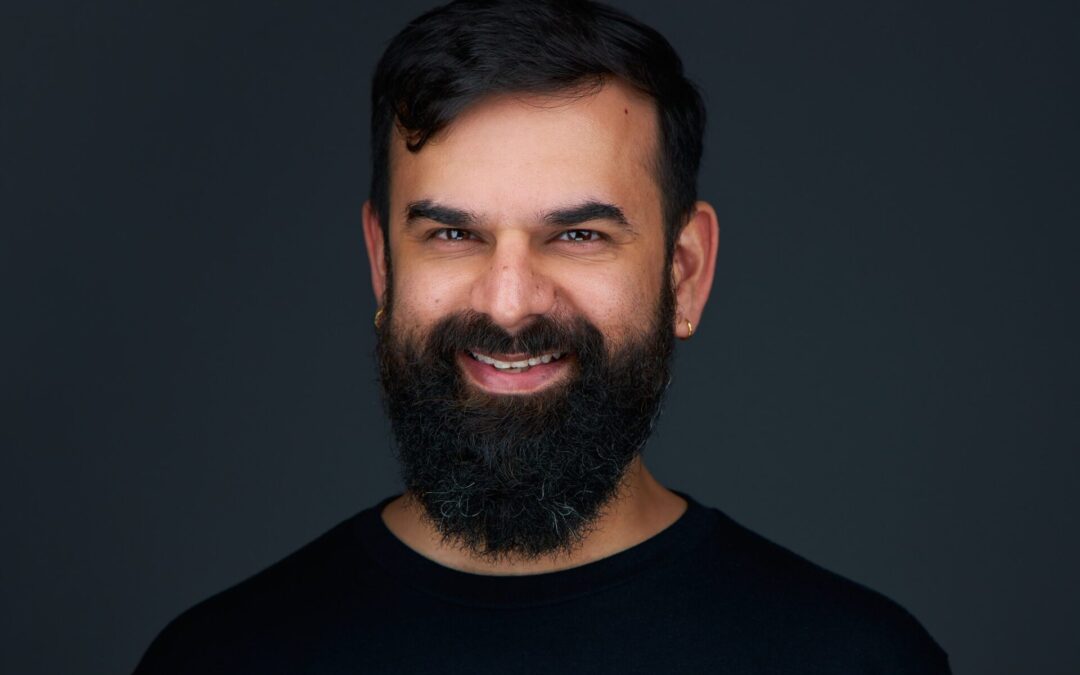
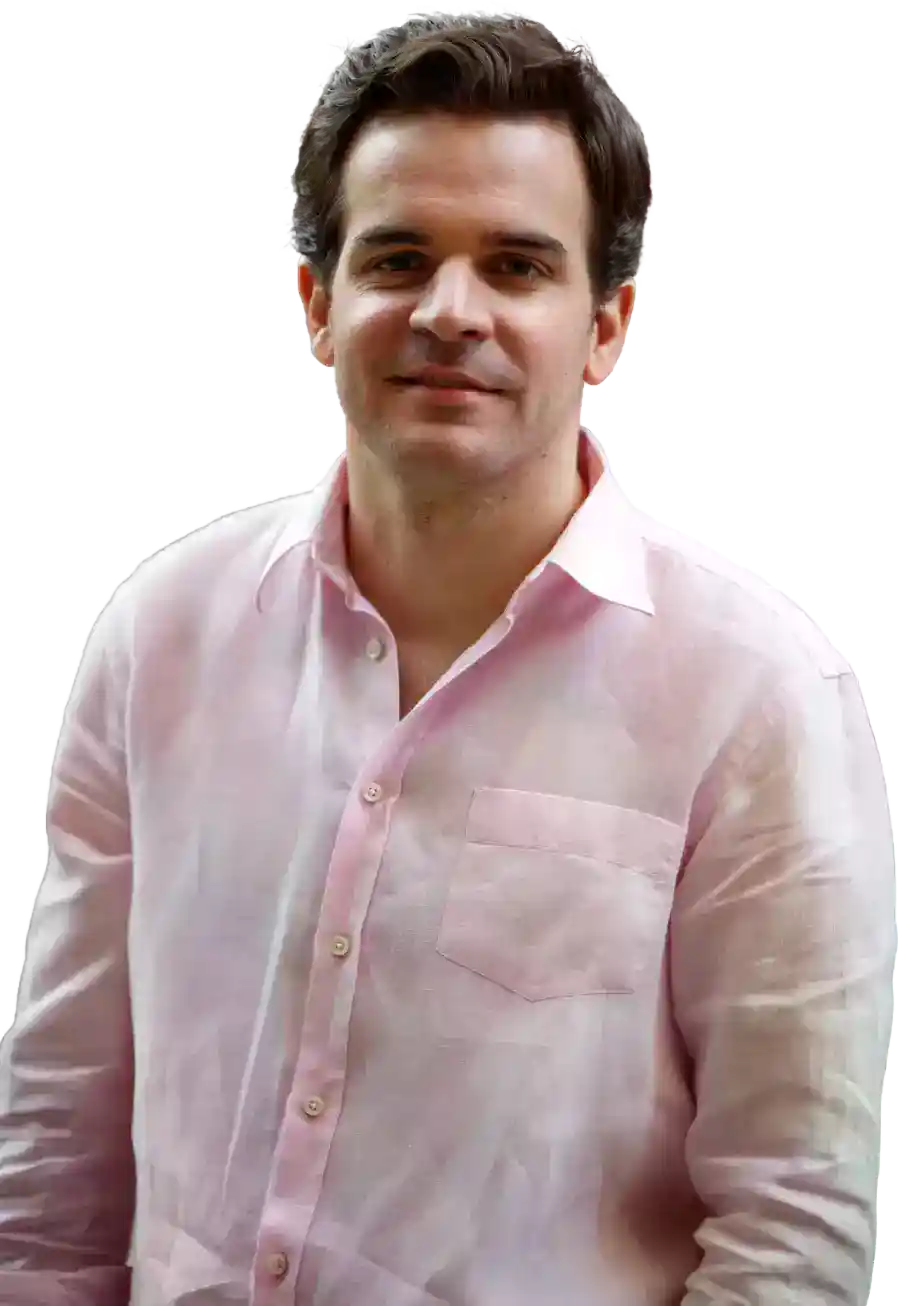
AI and robotics are having a moment. But very few founders are actually building at the intersection of deep tech, real-world deployment, and scalable business models. Gather AI CEO & co-founder Sankalp Arora, PhD, is one of them.
Gather AI has secured funding from top-tier investors like Expa, Xplorer Capital, Tribeca Venture Partners, Bain Capital Ventures, and Smith Point Capital (cofounded by Keith Block, the ex-CEO of Salesforce).
In this episode, you will learn:
- Curiosity compounds into company-building when paired with the selection of real-world problems.
- Deep tech only works when it translates into clear, measurable customer value.
- 175 customer conversations beat assumptions every time in finding product-market fit.
- Proof in the real world converts skeptics faster than any pitch deck ever will.
- Strong pipeline pull is the clearest early signal that a problem is worth solving.
- Conviction during zero-revenue periods is what separates survivors from casualties.
- Winners in AI will be those who own workflows, not just build technology.
SUBSCRIBE ON:
 iTunes
 Google Play
 Stitcher
 TuneIn
 RSS
RSS SoundCloud
 Spotify
Keep in mind that storytelling is everything in fundraising. In this regard, for a winning pitch deck to help you, take a look at the template created by Peter Thiel, the Silicon Valley legend (see it here), which I recently covered. Thiel was the first angel investor in Facebook with a $500K check that turned into more than $1 billion in cash.
*FREE DOWNLOAD*
The Ultimate Guide To Pitch Decks
Remember to unlock for free the pitch deck template that founders worldwide are using to raise millions below.
About Sankalp Arora:
Sankalp Arora, based in Pittsburgh, PA, US, is currently a Chief Executive Officer at Gather AI. He brings experience from previous roles at Gather AI and Carnegie Mellon University.
Sankalp holds a 2014 – 2018 Doctor of Philosophy – PhD in Robotics @ Carnegie Mellon University with a robust skill set that includes Robotics, Artificial Intelligence, Research, Matlab, Machine Learning and more.
Raise Capital Smarter, Not Harder
- AI Investor Matching: Get instantly connected with the right investors
- Pitch & Financial Model Tools: Sharpen your story with battle-tested frameworks
- Proven Results: Founders are closing 3× faster using StartupFundraising.com
Connect with Sankalp Arora:
Read the Full Transcription of the Interview:
Alejandro Cremades: All right, hello everyone, and welcome to the DealMaker Show. So today we have an amazing founder, you know, a founder in robotics. We’re going to be talking a lot about the building, the scaling, the financing, and robotics. My God, there’s quite a lot of…
Alejandro Cremades: …AI and robotics talk going on these days. So quite timely, the episode that we’ve got. Also, they’ve been receiving awards left and right from very recognized media outlets. So you’re really going to be part of and listening to what I think is going to be a very inspiring conversation, where we’re going to be covering how he got into Carnegie Mellon without spending a dime, really surviving COVID, which was kind of crazy for them, and coming from a background of really deep tech, but allowing themselves to bring something to market that is changing people’s lives. So again, a really incredible conversation ahead of us. So without further ado, let’s welcome our guest today, Sankalp Arora. Welcome to the show.
Sankalp Arora: Thank you, Alejandro, for a warm welcome.
Alejandro Cremades: So originally born in Delhi and raised there too. Give us a walk through memory lane. How was life growing up for you?
Sankalp Arora: A lot of fun, I would say. I grew up in a joint family, with all the cousins living around in the same apartment complex, and had a lot of fun playing cricket, soccer, and studying a lot.
Sankalp Arora: I was a nerd growing up, always wanted to make robots. My cousins tell me that since I was five years old, I wanted to make robots. I don’t think I knew what robots were at five years old.
Sankalp Arora: But I was fortunate enough to have followed that path after doing my undergrad at Delhi College of Engineering.
Alejandro Cremades: That’s incredible. So tell us too about engineering and solving problems. I know that obviously there is quite the pressure in India for either becoming a doctor or an engineer. But in your case, engineering—why?
Sankalp Arora: It’s very hard for me to answer why, because since I can remember, I just wanted to make things that move, that can think. So it’s a very natural proclivity, just a neural network being wired like that.
Sankalp Arora: So it just felt like a natural calling.
Alejandro Cremades: Now, coming to the U.S., obviously Carnegie Mellon had quite a pivotal role in your life and career. I mean, you literally got every degree that anyone can think of from the university, which is spectacular. But tell us, coming to the U.S. and Carnegie Mellon, what was that journey like? Because that was incredible for you.
Sankalp Arora: While in my undergrad, I’d been making little robots with whatever little funding the undergrad would allow or enable. But I knew the best school in the world to learn robotics is Carnegie Mellon.
Sankalp Arora: And one of the people that I worked with during my undergrad—we worked on India’s first fully autonomous tank—he referred me to a professor here at CMU.
Sankalp Arora: My family and I didn’t quite have the means to afford an education at Carnegie Mellon. But there was an understanding with my professor, Sanjeev Singh, who said that if you come here and I like your work, I’ll offer you a staff position.
Sankalp Arora: And that will in turn lead to your master’s being paid. So my dad took a loan to fund my flight tickets, and I was here.
Sankalp Arora: Fortunately enough, in those three months, Sanjeev really liked my work and offered me the staff position. And I did my master’s and PhD, both covered by Sanjeev’s lab and the Department of Defense from then on.
Sankalp Arora: The most exciting part of being at CMU is you get to work on stuff that is just unimaginable. So I got to work on the world’s first fully autonomous helicopter, which is like a childhood dream come true as far as projects go.
Sankalp Arora: And then I focused my thesis on how to make robots curious in physical spaces. And an expression of that is in our company, Gather AI, which is gathering data using AI through curious robots.
Alejandro Cremades: So then talk to us too about Gather AI and how it comes together, because this was obviously coming out of some of the work that you were doing at Carnegie Mellon, and also the way that you guys spun it out. So talk to us about how the whole origination of the idea happened and how you went about incubating it and bringing it to life.
Sankalp Arora: I think towards the end of my PhD, I realized that the most direct way to have a positive impact through my inventions on someone’s life is entrepreneurship, where I can actually meet people whose lives my invention impacts in a positive fashion.
Sankalp Arora: And we had just published a few papers around how to make robots autonomous just using cameras, and had gotten interest from some of the largest autonomy companies in the world to license out the technology.
Sankalp Arora: So it seemed like the perfect time to also see if we could have that direct impact on the world. This was my first job ever, so it was quite a bit to learn.
Sankalp Arora: We knew deeply about our domain and space of robot autonomy and curious robots, but very little about the world outside of that.
Sankalp Arora: There’s a CMU incubation program called VentureBridge, Innovation Fellows. As part of that, and with Department of Defense funding, we did customer discovery.
Sankalp Arora: We conducted about 175 customer discovery interviews. We had the hammer and needed to find the right nail, which turned out to be supply chain and supply chain visibility.
Sankalp Arora: We decided that if we could make curious robots to understand what’s happening within the four walls of a warehouse, it’s an urgent need that we could address in a large enough market to have a global impact.
Sankalp Arora: So that’s where the core thesis of gathering data using AI comes from.
Sankalp Arora: The fascinating part was that there were other companies, including YC-funded ones, that had tried this before and failed to materialize the technology as it should.
Sankalp Arora: So whenever we went out to market to raise, most people said that this is not possible because others have tried it and it just doesn’t quite work.
Sankalp Arora: For us, the turning point came when, during those investor interviews, we were also able to get a couple of customers on board to say, “I’ve seen this in my warehouse. If you build it, I’ll buy it.”
Sankalp Arora: Plus, in SF, right near Salesforce Tower, we went to a couple of investor offices and actually ended up flying drones and setting up a mock warehouse in their offices to show them the system working.
Sankalp Arora: And that’s what got us our first funding round. That was back in early 2019, right after my PhD.
Alejandro Cremades: So I guess let’s rewind a bit, just so people get it. What ended up being Gather AI, and how do you guys make money?
Sankalp Arora: We digitize workflows and inventory data within warehouses through cameras that you can buy out of Best Buy, whether it be drones or cameras on forklifts.
Sankalp Arora: By digitizing those workflows, we then offer not just real-time visibility, but the ability for these warehouses to ship more goods on time and in full, while reducing the amount of labor they spend on each item shipped.
Sankalp Arora: A simpler way of saying it is: for most people who click and something appears at their door magically, we enable that to happen on time as promised by the retailer or e-commerce vendor.
Alejandro Cremades: Now, talk to us about the way that you financed the operation. And even before that, what would you say was the first early sign that made you think this had a lot of potential and was going to work?
Sankalp Arora: There are two ways of looking at “working.” One is product-market fit, and the other is the core technology.
Sankalp Arora: What we were building is a world’s first, where no other stack or team can just take a camera and turn it into an effective data gatherer with just software. So we had a lot of faith in our tech capabilities.
Sankalp Arora: Product-market fit really showed itself when we raised in early to mid-2019. We launched a very basic website with no active advertising.
Sankalp Arora: Within the first month, I had about $5 million in pipeline with no outreach—people were reaching out to us saying, “Yes, this is a problem, please solve it.”
Sankalp Arora: It then took us three years to develop the tech. But after we did, those customers expanded to multiple facilities and grew with us.
Sankalp Arora: So landing customers easily and then scaling with them rapidly were two key checkpoints in product-market fit.
Alejandro Cremades: So then talk to us about raising money. You mentioned the first raise in 2019. What is the total amount raised to date?
Sankalp Arora: $74 million.
Alejandro Cremades: So walk us through the different funding cycles.
Sankalp Arora: Our first raise was around $3 million as a pre-seed.
Sankalp Arora: Then we raised a seed round that brought total funding to $10 million. I’ve been fortunate that the people who joined us were also mentors with strong credibility.
Sankalp Arora: The first round was led by Expa, Garrett Camp’s startup lab. The second round was led by Xplorer VC, formed by serial entrepreneurs who sold companies to Amazon, including Kiva Robotics.
Sankalp Arora: Then we raised another $10 million from Tribeca Ventures after COVID settled a bit, because COVID almost broke the company.
Sankalp Arora: A year later, Bain Capital Ventures joined with a $17 million round. Then, about a year and a half later, for Series B, Smith Point Capital joined with a $40 million round, co-founded by Keith Block, the former CEO of Salesforce.
Sankalp Arora: And we are continuing to grow from there.
Alejandro Cremades: You mentioned COVID hit you hard. How did you survive it, and how did you come out stronger?
Sankalp Arora: As COVID was approaching, we didn’t know it was coming. We were negotiating a multi-facility rollout with one of the largest retailers in the world.
Sankalp Arora: We had spent six months on the deal. On Friday, they told me everything was ready and we’d get a signature on Monday.
Sankalp Arora: Over the weekend, COVID lockdown happened. On Monday, they called and said priorities had changed and they couldn’t proceed.
Sankalp Arora: That revenue disappeared overnight. On top of that, all warehouses shut down to external vendors.
Sankalp Arora: For six months, we couldn’t enter any warehouse. We had no new leads and couldn’t do sales.
Sankalp Arora: We survived by relying on the trust and conviction of our investors and employees, and by continuing to invest in product and engineering.
Sankalp Arora: We believed that when things reopened, demand would come back—and it did, because we were solving a real problem.
Sankalp Arora: Our conviction and resilience were really tested during that time.
Alejandro Cremades: So talk to us about the vision. All these investors, your team—they’re betting on a vision.
Alejandro Cremades: If you were to wake up in a world where Gather AI’s vision is fully realized, what does that world look like?
Sankalp Arora: I think in that world, as a customer, you don’t notice much change other than deliveries coming more on time. And instead of same-day delivery, it becomes next-two-hour delivery for you. For the people who are in warehouses, it means they can go home much earlier to their kids just because they’re not running around the warehouse looking for lost things.
Sankalp Arora: For warehouse managers, and even CFOs, it means they have to hold less inventory with them. Because I don’t know if you know this, but if a retailer is running well, they will hold about 5% of their annual revenue in warehouses.
Sankalp Arora: And if a retailer is not running so well, they’ll hold 15% of annual revenue in warehouses. So if you’re a retailer that’s selling $5 billion, you’re holding half a billion dollars of extra inventory in your warehouses, depending on how your logistics is operating.
Sankalp Arora: So you’ll see, when Gather AI’s vision is realized, that these supply chain surprises that keep coming up, whether for geopolitical reasons or for pandemic reasons, become much less disruptive. The supply chain becomes much more resilient to that because people always know how all of these facilities are operating in real time.
Alejandro Cremades: So one thing that I wanted to ask you to do is, as we’re thinking about the future here and we’re thinking about this race happening in robotics, how do you think about the robotics side itself and also the AI LLMs on the other end? I mean, who is ultimately going to be the winner here? The one that gets the robotics right, the LLMs right, or both right? I mean, how does that work? How should people think about that?
Sankalp Arora: OK, I think this has been drilled into me over my past sort of eight years as an entrepreneur. I think the people who will win are the people who deliver value and own the workflow.
Sankalp Arora: So in most desk jobs, those workflows will be owned by large language models, not physical AI. So anything that is white-collar work will mostly be catered to and owned by large-language-model-driven workflows.
Sankalp Arora: Or something in that digital domain, if we get a better architecture than the current transformer, which we decide to name something else.
Sankalp Arora: I think physical AI is still quite young, just because the core principles stay the same. And as a result, in white-collar work, you can have decently close supervision on what your LLM does. And you can deal with the ramifications if it’s wrong, because you can just correct it.
Sankalp Arora: In physical environments, the tolerance for a mistake is much lower and the consequences are much higher, where robot moves can injure people or put their lives at risk.
Sankalp Arora: So as a result, physical AI will have a longer tail, much like autonomous cars have had, which is our first large-scale physical AI as we are fielding as a species. But eventually, most of the things that we do by hand and that are moved around will be taken over by robots.
Sankalp Arora: But I’m less and less convinced that it will be taken over by robots that are humanoid in form. I think there will be specific solutions that optimize the efficiencies of specific kinds of workflows that industry needs.
Sankalp Arora: And then you and I, in physical AI, might have a humanoid butler at home where, more than efficiency, they care about flexibility. But even in that case, you can’t move away from natural language interfaces. So large language models will always be there.
Sankalp Arora: I think physical AI will have a very hard time winning without large language models. But large language models can win by themselves just because they can take away white-collar work and automation.
Alejandro Cremades: So talking about the work, how have you guys thought about building your team, the 75 employees, to really power this?
Sankalp Arora: There are two things that we really care about, other than hiring the best in their domain in the world, which is people who are best at having physical AI that actually works in the environment and not just in the sim or not just in a compute cluster.
Sankalp Arora: One is people who have a lot of customer compassion and believe in the problem they’re solving and how they can help in someone’s life.
Sankalp Arora: As a result, what has ended up happening is we have attracted a lot of people who have experienced this problem themselves, or in some form in their jobs. So we have people from large supply chain companies like Amazon, Walmart, Uber, and people from deep-tech companies.
Sankalp Arora: One of them still tends to be Uber. One of them still tends to be Amazon. But also the likes of autonomous car companies that have an ecosystem here in Pittsburgh.
Sankalp Arora: So the first trait we look for is customer compassion, someone wanting to make an impact on someone’s life in this domain. And the second thing we really look for is someone who can work with high agency and curiosity.
Sankalp Arora: And we have interviews designed for how we filter for those and check for those. And for the 75 of us, you’ll see a collection of people that are really driven to solve someone’s problem and take ownership of solving that problem.
Sankalp Arora: And are curious about building, because building a product like ours takes full-stack machine learning, autonomy, mobile development, customer success, solutions, and sales all working together across the stack.
Sankalp Arora: So you need people who are curious across the stack to really understand each other’s problem. Does that answer your question?
Alejandro Cremades: So that’s fantastic. That’s fantastic. Obviously, you see so many lessons too that you’ve learned along the way, whether it’s from building the company or building the team, especially because you’ve been pushing this for quite some time now, but…
Alejandro Cremades: Imagine if I was able to bring you back in time. Okay, so I bring you back to the days of Carnegie Mellon. And let’s say while you’re getting your PhD and the idea of Gather AI just pops across, let’s say I’m able to bring you back to that moment in time.
Alejandro Cremades: And to that moment where you are also able to tell that younger self and give that younger self one piece of advice before launching the business. What would that be and why, given what you know now?
Sankalp Arora: I think the first and most important thing would be just the confidence that if the mission is right, people will align with you and join you in the journey.
Sankalp Arora: Since I worked just by myself most of the time, and even as a PhD, your thesis has to be your own, even if a large team contributes toward it, it was very hard for me to picture how people would come along on this journey and how people would feel other people’s pain.
Sankalp Arora: Second is, make sure that early hires are really well vetted. Because I think we made some initial hires that I feel like we could have done better on.
Sankalp Arora: So just knowing that upfront. And third is upfront knowing that the money that investors invest is not for keeping in the bank but to be deployed.
Sankalp Arora: I think in the early days, I was too stingy with deploying that money. And that cost the company a bit of momentum.
Alejandro Cremades: I love that. So for the people that are listening that would love to reach out and say hi, what is the best way for them to do so?
Sankalp Arora: Often it’s LinkedIn, actually. It’s very searchable, right? So if you look at Sankalp Arora and Gather AI, or you can reach us through our website. Just say hello at gather.ai, and those emails come to me and we can connect.
Alejandro Cremades: Amazing. Well, Sankalp, thank you. It’s been an amazing, amazing time here that you’ve given us. It’s really an honor that you had the time here to dedicate to us, and I really appreciate you and all this incredible wisdom that you’ve provided us. So thank you so much for being on the DealMaker Show today.
Sankalp Arora: Thank you for having me, Alejandro, and letting me share whatever little I’ve learned.
*****
If you like the show, make sure that you hit that subscribe button. If you can leave a review as well, that would be fantastic. And if you got any value either from this episode or from the show itself, share it with a friend. Perhaps they will also appreciate it. Also, remember, if you need any help, whether it is with your fundraising efforts or with selling your business, you can reach me at al*******@**************rs.com
Podcast: Play in new window | Download
Subscribe: Apple Podcasts | Spotify | TuneIn | RSS | More
Facebook Comments