

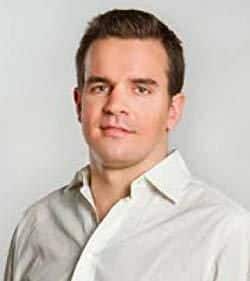
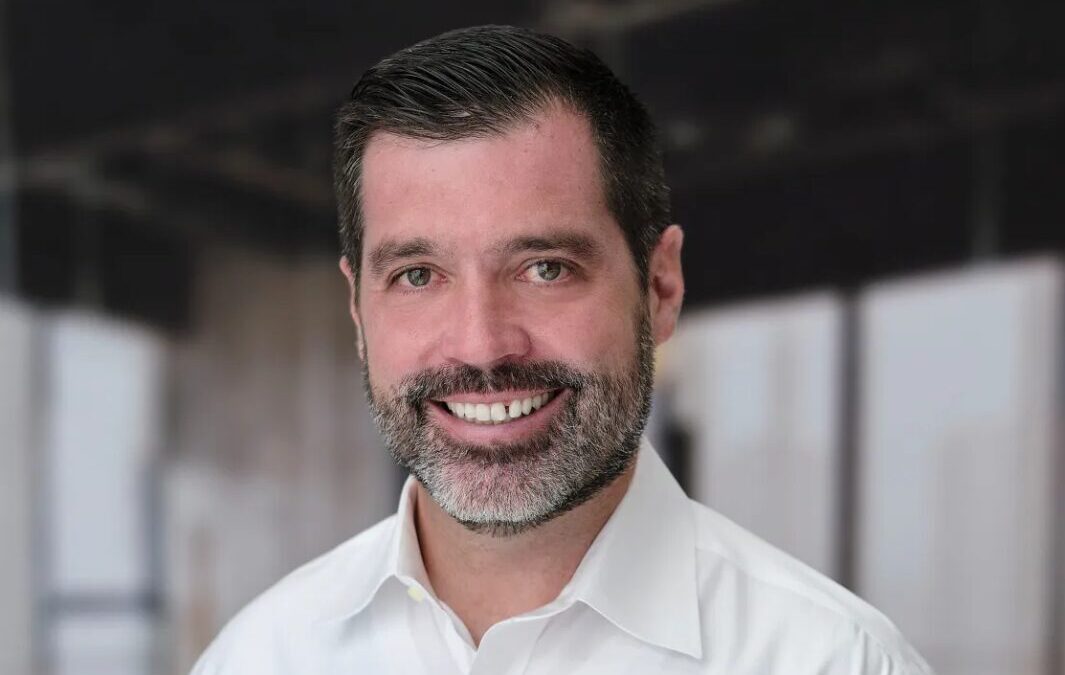
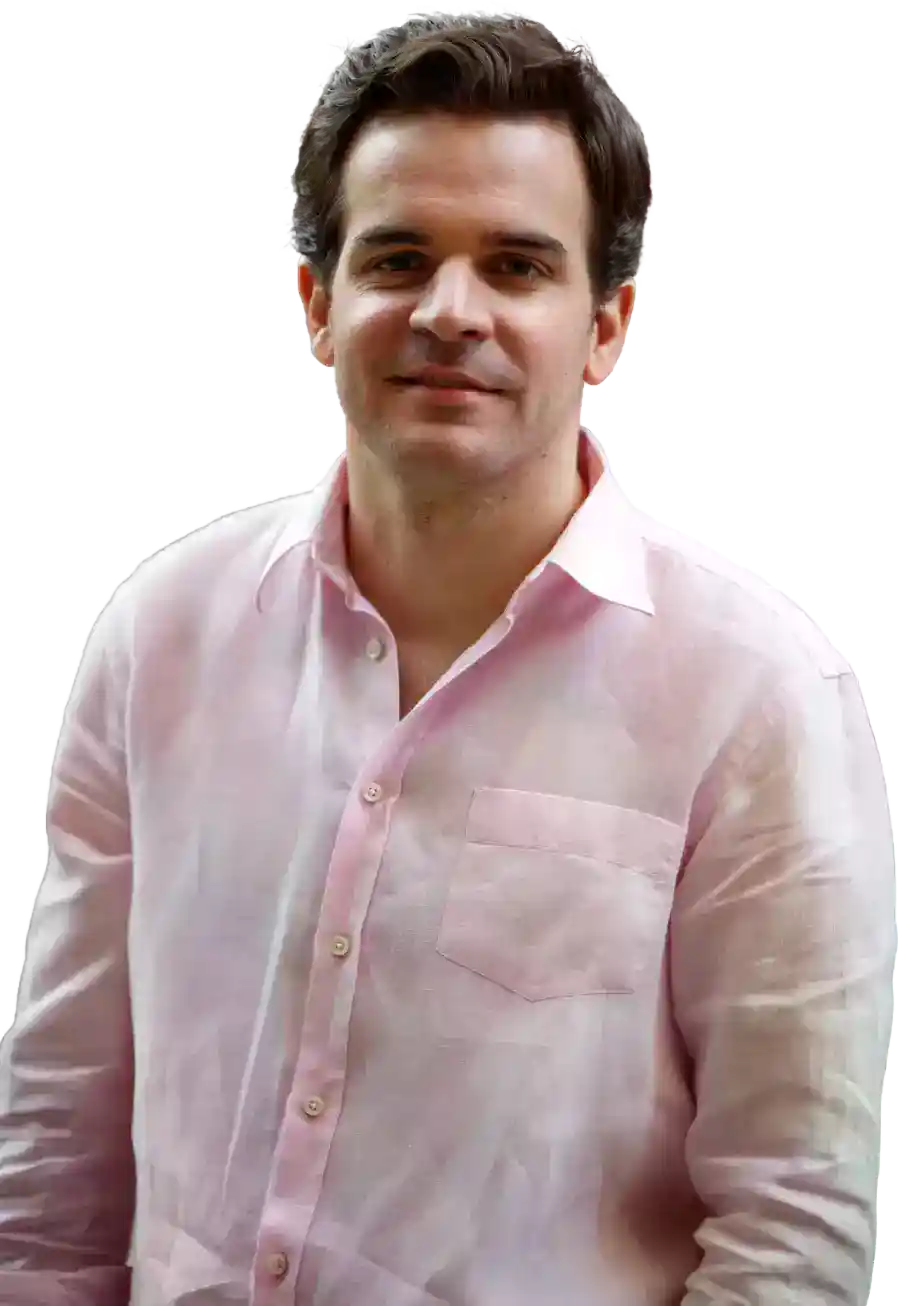
Rylan Hamilton’s entrepreneurial journey is shaped by discipline, risk, curiosity, and a relentless drive to tackle problems on a global scale. Today, as the co-founder of Blue Water Autonomy, Rylan is building fully autonomous ocean-going vessels that can travel across open waters for months at a time.
Blue Water Autonomy has raised funding from top-tier investors like GV, Eclipse Ventures, Riot Ventures, and Impatient Ventures.
In this episode, you will learn:
- Rylan Hamilton’s journey from Harvard to the Persian Gulf and eventually to two major tech exits shows how nonlinear paths can forge remarkable founders.
- His Navy experience instilled extreme ownership, frontline leadership, and a mission-first mindset that became the foundation of his entrepreneurial style.
- Joining Kiva Systems gave Rylan firsthand exposure to scaling robotics, culminating in Amazon’s $775M acquisition and shaping his approach to building companies.
- At 6 River Systems, Rylan leveraged scrappiness and capital efficiency to grow a warehouse robotics startup that Shopify acquired for $450M.
- His latest venture, Blue Water Autonomy, tackles the hard problem of “autonomy on the inside,” enabling ships to operate for months without crews.
- With over $60M raised and Google Ventures behind the Series A, Blue Water Autonomy aims to transform naval and commercial shipping just as SpaceX transformed space logistics.
- Rylan advises founders to aim high, take time for exploration, and choose opportunities worthy of a decade-long commitment.
SUBSCRIBE ON:
 iTunes
 Google Play
 Stitcher
 TuneIn
 RSS
RSS SoundCloud
 Spotify
Keep in mind that storytelling is everything in fundraising. In this regard, for a winning pitch deck to help you, take a look at the template created by Peter Thiel, the Silicon Valley legend (see it here), which I recently covered. Thiel was the first angel investor in Facebook with a $500K check that turned into more than $1 billion in cash.
*FREE DOWNLOAD*
The Ultimate Guide To Pitch Decks
Remember to unlock for free the pitch deck template that founders worldwide are using to raise millions below.
About Rylan Hamilton:
Rylan Hamilton is the cofounder of Blue Water Autonomy, a company which is revitalizing US shipbuilding through designs engineered to scale. It is building the world’s most capable autonomous warships so that the country’s fleet is strong and the nation safe.
Before founding Blue Water, Rylan was the Co-Founder and CEO of 6 River Systems. In his role he is responsible for all operations, engineering, manufacturing, supply chain, and corporate functions. He is focused on scaling the organization with amazing people and making sure customers are highly successful.
Before 6 River Systems (6RS), Rylan was a member of the leadership team at Kiva (now Amazon Robotics), leading the design and deployment organizations at Kiva and Amazon.
He earned a B.S. in Applied Mathematics from Harvard University and M.B.A. with distinction from Harvard Business School in business administration. In 2019, Rylan was selected as a finalist for the New England EY Entrepreneur of the Year Award.
Raise Capital Smarter, Not Harder
- AI Investor Matching: Get instantly connected with the right investors
- Pitch & Financial Model Tools: Sharpen your story with battle-tested frameworks
- Proven Results: Founders are closing 3× faster using StartupFundraising.com
Connect with Rylan Hamilton:
Read the Full Transcription of the Interview:
Alejandro Cremades: All righty, hello everyone and welcome to the DealMaker Show. So today we have an amazing guest joining us. I mean, we’re going to be talking about all the good stuff that we like to hear when it comes to building, scaling, and also exiting.
Alejandro Cremades: You know, his last company was quite a success. One of those 10X, you know, and more, you know, for some other investors. But we’re going to be hearing all the ins and outs. We’re going to be talking about what happened, you know, when he went to the Navy.
Alejandro Cremades: Some of the other stuff like raising money, as well as how to create a vessel, you know, that is autonomous, that goes on its own up in the ocean. And so again, brace yourself for quite the inspiring conversation. And without further ado, let’s welcome our guest today, Rylan Hamilton. Welcome to the show.
Rylan Hamilton: All right. Thanks for having me.
Alejandro Cremades: So originally born and raised in Boston, Massachusetts. So give us a walk through memory lane.
Alejandro Cremades: How was life growing up for you?
Rylan Hamilton: I love growing up in Boston. I actually grew up right next to the Freedom Trail, but I never really did the whole Freedom Trail sort of from start to finish. But it’s a great city, great university. And what I love about the city, and I know you’re from around the greater New York City area, but we have people who work at universities, people who work in technology, we have doctors. It’s just a great environment to grow up in.
Alejandro Cremades: Now, I know that for you, you ended up going to Harvard. And one of the good things there is that you were able to experience and test things out. I mean, one of them, for example, even working in finance, you also got a taste of startups too.
Alejandro Cremades: So tell us, what were you testing there when it came to more of the career side of things? And what kind of sparked the decision on what would be the path to follow after that?
Rylan Hamilton: In my mind, the question is—go back to the 20-year-old Rylan at Harvard. I really didn’t know what I wanted to do. The most common jobs back then were either being in consulting or being in some type of finance role. And so I actually had the opportunity to have an internship in finance in New York City.
Rylan Hamilton: And I surrounded myself with amazing people. I learned a ton, but I realized after that summer that it just wasn’t really the calling for me. I wasn’t kind of designed to be behind a computer from nine to five,
Rylan Hamilton: or even for much longer hours doing spreadsheets all day long. And actually, a couple of weeks after I left that job in New York City, 9/11 happened. And I actually worked in an office that was looking at the World Trade Center, the towers that were there. And so at that moment, it kind of really shook me up. And I said, there’s got to be something else that I want to do with my life. And a year later, I ended up joining the Navy.
Alejandro Cremades: Obviously, you know you had it in the family too. Your father was in the Navy. Your grandfather was too. So tell us, how was that experience for you?
Alejandro Cremades: I mean, that sounds quite like the forming experience, and probably crazy stuff that you experienced.
Rylan Hamilton: Yeah. It definitely was one of the best decisions I’ve ever made in my life. But it wasn’t obvious at the time. So as you mentioned, my grandfather served in the Pacific. My father actually went to the Naval Academy and was on nuclear submarines in the sixties, but he passed away when I was younger. So I didn’t grow up with that kind of legacy around the dining room table. And my adoptive father at the time, when I told him I was considering joining the Navy, he’s like—it just didn’t make sense to him. He’s like, you’re at Harvard right now? Like, no one from Harvard joins the Navy. And I said, well, why do you think it’s a bad idea? Or what are you thinking? And he’s like, well, why don’t you talk to all my friends who are in the Navy and they can give you some career advice. And so I talked to all his friends who’d been in the Navy, and they all said, join the Navy, it’ll be the best decision you ever do. So I kind of jumped into that decision.
Rylan Hamilton: But I had an amazing experience. And so I found myself going from school in Boston, Massachusetts to six months later, I was at officer candidate school in Pensacola, Florida with a shaved head and trying to figure out what this whole experience would be like.
Alejandro Cremades: And obviously going around the world too. So how was that experience of being deployed in some of those areas that were not as pleasant to be in, with all types of crazy stuff around you?
Rylan Hamilton: Yeah. So the first ship that I was on was an amphibious transport ship. And I had just finished, as I mentioned, officer candidate school in Pensacola, Florida, and I flew out to meet the ship in the Persian Gulf. It was just before we invaded Iraq at the time, and it was called Operation Iraqi Freedom. And so here I was on a ship, and the ship was offloading Marines and all their equipment. And then it moved into doing some minesweeping.
Rylan Hamilton: And this was my experience for the first couple of weeks of being on a real Navy ship. And I was just basically drinking from the fire hose, trying to learn how to do this job. In fact, the first day that I was on a ship in the Persian Gulf, the Iranians actually fired some missiles and the whole ship went to general quarters. And so at that time, because I’d just flown in on a helicopter, the ship—I was still in my civilian garment or clothing. And I was basically running around the ship, and an officer grabbed me and said, Ensign Hamilton, it doesn’t look like you know what you’re doing. He grabbed me and pulled me into a room. And that was my first experience of being in the Navy. But I started off in the Persian Gulf, had an experience to go through the Suez Canal, the Panama Canal, and then I ended my Naval career being in the Eastern Pacific doing counter-narco terrorism operations on a frigate.
Alejandro Cremades: I remember reading the book Extreme Ownership. I don’t know if you’ve had the chance to read it, but it’s a phenomenal book.
Alejandro Cremades: I guess one thing that comes to mind now is: what do you think that experience gave you in terms of the top three things that you apply in the way that you approach life and perhaps business?
Rylan Hamilton: Yeah. So ownership is definitely one of them. When you’re on a ship or when you’re in the military, you can’t just necessarily take no for an answer or if something doesn’t work say, I guess it doesn’t work. Like, you’re literally on a ship with your shipmates in the middle of the ocean and you just have to make sure everything works, that the whole team operates cohesively. So ownership’s one.
Rylan Hamilton: The second is leading from the front. You have to be willing to do the job and show people that you’re willing to do whatever it takes. You can roll up your sleeves, you can work the long hours, because if you’re not willing to do that work, why would anyone who was working for you be willing to do that?
Rylan Hamilton: And then the third thing, what I really appreciate from the Navy is—and it’s kind of like being at a startup—I’d call it this wardroom mentality, where when you’re in the Navy, everyone, like, you know what everyone makes, like literally your salary is posted on the wall. So it’s not about getting promoted. It’s not about a bonus or anything. It’s just like, we’re all in this room together. How do we make this work? And what’s the mission that’s important? And so it really removes a lot of the politics and other layers of bureaucracy that you get in bigger companies. And I feel like you have the same sense of camaraderie when you’re at a startup. It’s like, we’re all in this room, titles don’t matter.
Rylan Hamilton: And like, what does it take to make this work? Whereas, you know, sometimes if you work at a big company and people are really— they care about their promotion, they care about the titles, they care about stuff that’s really not as important to the mission.
Alejandro Cremades: So then you got out of the Navy and then you married your college sweetheart. And then you went at it. Now on the professional side of things, you started working at Kiva Systems, which was also quite pivotal for you because the company ended up getting acquired. Then you launched your first company, which was a smashing exit—a smashing success.
Alejandro Cremades: I guess, how was that experience with Kiva Systems? What were you doing? Why did you land there? And it sounds like even though you were employee 200, it was already a rocket ship and you were able to get a glimpse of what the good stuff looks like.
Rylan Hamilton: Yeah. So actually, just before Kiva Systems, I worked briefly at a company called Vistaprint. And they were a global leader actually making marketing material for small businesses, including business cards.
Rylan Hamilton: And so when I started interviewing at Kiva Systems, I was like, this is so cool.
Rylan Hamilton: We’re making mobile robots for warehouse automation. I was like, business cards—like, very good business—but robots are a lot cooler. And so I snuck my way into Kiva Systems. They gave me a job but I had no background in robotics or supply chain. But I just started at the warehouse floor and worked my way up. And as you mentioned, it was a rocket ship by that point. They had a very disruptive technology. E-commerce was taking off. Companies like Toys R Us and Dillard’s and Office Depot were basically buying these systems to help fulfill online orders.
Rylan Hamilton: But while it was a rocket ship, the technology wasn’t yet scalable. And so there were definitely a lot of—the company at that time, basically all the successful deployments were based on heroics. And we had to shift from being heroics—people working a hundred hours plus per week—to something that was more scalable. And within two years, the company was bought by Amazon, which at the time, I think, had a market capitalization of like $40 billion.
Alejandro Cremades: I mean, $775 million, you know, that’s quite an exit for everyone on the team. Now, right after this, you decided to go at it and to finally take ownership of your destiny, of your future, become an entrepreneur.
Alejandro Cremades: I mean, that’s quite a transition coming out of a company like that with Kiva Systems.
Alejandro Cremades: So what do you think needed to happen for you to decide to be like, hey, it’s my time to become an entrepreneur now?
Rylan Hamilton: Well, I hope there—I know there are other entrepreneurs listening to your podcast. But at that time, I actually wasn’t looking to start a company, but I started talking to some other robotics companies and a lot of them actually were in the Boston area. And Boston has become kind of like this hub for consumer and industrial robotics.
Rylan Hamilton: But I realized at the time that the technology that was being used for autonomous vehicles—so the sensors, the GPUs, and some of the same open-source software—could also be used for warehouse robotics. And that, you know, if you look at a technology like Kiva Systems, the robots followed stickers on the ground, they were behind machine guarding, but you could actually transition to where you could basically release the robots from the cage, they’d be collaborative, and they could do some of the same jobs as the Kiva robots do, but at a much lower price point. And so I just had this moment with one of my other co-founders and said, you know what, we’ll kick ourselves if we don’t start this company now. In five years, we’ll just really regret it. And so it was just one of those moments where you said, now’s the time.
Rylan Hamilton: And we were all willing to make a bet and basically take a year with minimal salary to see if we’d get the company off the ground.
Alejandro Cremades: So what ended up becoming the business model for the company—for Six River Systems?
Rylan Hamilton: Yeah, so we basically either sold or leased robotic systems to help automate e-commerce warehouses. And we had customers like XPO who really adopted en masse.
Rylan Hamilton: And we sold the company four years later to Shopify for $450 million. So we raised $45 million. We sold it for $450 million. So it was a great exit for investors, for employees. But I think the thing I’m most proud about is that the technology is now used in over 100 warehouses all throughout the world. And we are one of the leading companies where if you look at the total amount of collaborative autonomous mobile robots that are out there, there’s tens of thousands of robots all throughout the world. So it’s one of the mainstream ways of automating a warehouse today.
Alejandro Cremades: And you were talking about, you talked about the exit, you talked about the amount raised, but I know that raising those $45 million dollars was not an easy journey and an easy path to go through.
Alejandro Cremades: So what do you think, what’s so hard about raising money with this company? And yeah, walk us through what were the financing cycles there that you guys had to endure?
Rylan Hamilton: Yeah, so I think there are two things. First, anytime you start a company and you’re doing the hardware and the software, it’s always hard to raise money. It takes a lot more capital to get early indications of product market fit, especially in robotics where you’re doing, it’s a very complicated problem. And then the second is finding investors with a conviction that believe in what you’re doing, that understand the competition. Because it takes capital to get to a point where you can
Rylan Hamilton: start to scale with your customers. And so for those first couple of years, it just wasn’t easy raising money. We had some great investors and people who had conviction, but I think some founders are out there and you hear the stories and they have dozens of term sheets in front of them and all that, but it was never the case for us.
Rylan Hamilton: We always had a couple of term sheets, but it felt like we really had to work hard to raise money. But what that did is that made us internalize
Rylan Hamilton: how hard it was to raise money, how hard it was to build a company. And we were very thoughtful about all the dollars that we spent. And in some ways we were pretty scrappy. So the first deployment engineers for the company, when we first had our first versions of our robots, were the two co-founders, myself and Jerome. Instead of hiring office managers, instead of hiring engineers, we basically found ourselves driving four hours each way to our first deployment in Pennsylvania from Boston.
Rylan Hamilton: And we said, we’re just going to be really mindful about our capital raise and our resources. And we’re going to do all the early work for getting these systems up and running versus trying to hire people to do those jobs. And so I think that allowed us to be very capital efficient. So we didn’t raise a lot of money relative to what we were able to exit with.
Rylan Hamilton: But I feel like sometimes if you look at some of the current robotics companies that are out there, they’re raising tens of millions, if not hundreds of millions of dollars out of the gate. And I think sometimes there’s a danger there about raising too much money too quickly because you kind of lose that scrappy mentality.
Alejandro Cremades: So let’s talk about the exit. Let’s talk about the exit because a lot of founders are listening now and I’m sure there’s a lot of good information that they can really get inspired by and learn because a lot of people, and you read a lot on raising money and this company raised that, this company raised that, but the exit, really the final moment of really coming together on the life cycle of a business,
Alejandro Cremades: I think that that’s a critical part.
Alejandro Cremades: You know, it’s all about that obviously the journey, but the finish line is ultimately what you’re optimizing for to get the best possible outcome for everyone. Make us insiders. How was that acquisition? You know, that was obviously the buyer there was Shopify and you mentioned it, $450 million.
Alejandro Cremades: Make us insiders. How did that happen? How did that come together?
Rylan Hamilton: So we actually really didn’t know much about Shopify about 12 months before we sold the company. And we weren’t looking to sell the company. What we knew internally is we didn’t want to necessarily sell our company to a traditional automation provider, to a company that historically had deployed automation-like conveyors that were out there because they weren’t really innovative. We thought it would kind of stifle our ambitions.
Rylan Hamilton: So we always thought we’d take the company public. We were raising a Series C at the time.
Rylan Hamilton: We actually had a term sheet for a Series C in our hands. So I think at the time it was about a $50 million Series C. And we met this company called Shopify. And Shopify at the time, so Shopify is basically a company out of Canada. It’s Amazon’s biggest competition that’s out there. They have a different model, obviously, to Amazon, but they power most of the websites outside of Amazon that basically allow merchants to sell things online.
Rylan Hamilton: And at the time Shopify was launching something called Shopify Logistics. And we started jamming with them and we talked about maybe potentially selling some of our automation solutions to Shopify so they could use them internally in their warehouses.
Rylan Hamilton: The conversations were going so well that they really wanted to pull us into their strategic roadmap.
Rylan Hamilton: We said, look, we have like 20 other customers that are out there. We can’t prioritize you, even if you buy hundreds of robots, over all of our other customers. But we really liked their jam. And we said, look, two of us, myself and another co-founder, we’d been at Kiva Systems. We’d seen the acquisition by Amazon.
Rylan Hamilton: And we said, we kind of had this pattern recognition. We said, if you really want to move fast with us, maybe you’d want to acquire us and we could become part of Shopify Logistics. And so I think for your listeners, it’s like, this was not an acquisition where we were searching for a buyer, we found someone, we got pulled into this process. And because we had a Series C in hand, we actually had some leverage to move the process pretty quickly. And within a couple of months, we actually signed an LOI with Shopify and within, I think it was about four months from the time we first met them to the time the deal was closed, we closed that acquisition.
Alejandro Cremades: That’s amazing. What was going through your mind the day that you were signing the papers for $450 million?
Rylan Hamilton: Well, I think people don’t realize that there’s a series of things that you need to sign along the way. And so at first it’s like, oh, you get a verbal and they might want to acquire you. And then you negotiate on the price and then you get an LOI and then you have to negotiate that LOI. And so it basically becomes this protracted period of whether it’s months or sometimes it could be a year of having that early excitement that there could be an exit in hand to saying, you’ve got to basically live with yourself for the next four months until the deal is actually finally closed. We had a great CFO at the time. He was very fit. He was actually a college athlete.
Rylan Hamilton: He actually lost 10 pounds over the summer while we were doing this. And it just shows the amount of stress that you and the leadership team have to absorb to go through a process like that. So there’s a huge amount of relief at the end when you finally close the deal. But it’s not like this overnight thing. It’s not like the first thing that you sign closes the deal. There’s just a lot of stages that you have to go through.
Alejandro Cremades: But without a doubt, quite a life-changing event to get a transaction of that nature. I mean, I think that our listeners would love for me to ask you, what is one thing that you always wanted to do that you were finally able to do once you’ve achieved that type of financial freedom?
Rylan Hamilton: I don’t know. I bought a boat. I love being on the ocean and I love being on the water. And I bought a boat. And actually I bought a boat during COVID, which was 2020 and it wasn’t the best time for a buyer to buy a boat. But it’s something that I always wanted. I got a nice boat and I take my family out on it. So that’s kind of, yeah, I know maybe it’s not the answer you’re looking for, but it’s definitely a little splurge that I had right after the acquisition.
Alejandro Cremades: I love it. I love it. Now, you could have gone on the boat and retired and never come back. But as they say, once an entrepreneur, always an entrepreneur. And that was not the end of your entrepreneurial journey.
Alejandro Cremades: So what happened next?
Rylan Hamilton: So I worked for Shopify for a couple of years. And then when I left Shopify, I kind of found myself on the boat and trying to figure out what I want to do next. I guess I’m at the part time in my career where most of my friends are not retired. And so I didn’t have anyone to play golf with Monday through Friday or to kind of like— and so I just found I had to keep busy. And so I just reached out to the most interesting people that I could find in my network and started having coffees and lunches and Zoom meetings and you name it and started to explore and try to figure out—I didn’t know if I wanted to become an investor.
Rylan Hamilton: I didn’t know if I wanted to start another company. And I didn’t know if I wanted to join another company. But through that process, which was less than a year, I actually started to get the itch again to just go start a company. And I met one of my other co-founders, Austin Gray, and we started this company called Blue the Water Tommy.
Alejandro Cremades: So then tell us about the company, Blue Water Systems. How did it come together? How did you guys decide to get going here?
Rylan Hamilton: Yeah. So I was definitely in exploration mode when I met Austin. Like me, he’d served in the Navy and he was still in graduate school. And he actually had spent the previous summer working at a drone factory in Ukraine on the front lines.
Rylan Hamilton: And he was taking some of the lessons from that factory, and just in terms of how warfare was changing rapidly in Ukraine, and applying it to our Navy. And he said, look, our Navy is kind of being slow in adopting some of these autonomous systems, and especially around attributable systems that can move some of the same payloads that our main warships today carry across the open ocean.
Rylan Hamilton: Our Navy needs to think about platforms that could actually move those payloads across the open ocean, but without people and do it at a much lower price point. And at the time he was very focused on contested logistics and the two of us started meeting once a week and just exploring.
Rylan Hamilton: We talked to as many smart people as we could. People who had been in industry, people who are in the Navy currently, or had just gotten out of the Navy. And we started to get really smart about the space. And where we did is our idea evolved around building a purpose-built autonomous ship for contested logistics, to think about a multi-mission ship that could do many different things within the Navy and focusing on the key enabling technology for that. And after about six months, we both got the conviction to basically start the company and raise some private capital. And so that’s what we did last year in 2024.
Alejandro Cremades: So with Blue Water Autonomy here, what would you say are the toughest things when it comes down to building and putting together a vessel that you’re just throwing out in the ocean that needs to be on its own for months at a time?
Rylan Hamilton: Yeah. So we actually raised our Series A from Google Ventures. And the thing that we love about Google is Google is one of the leaders in autonomy. So everyone thinks about Waymo, which is one of the companies under Google or Alphabet.
Rylan Hamilton: And so if you think about Waymo, and I’ve been in a couple of Waymos, and I think the experience is just amazing. Everyone thinks about autonomous systems, they think about the autonomy on the outside of the vehicle,
Rylan Hamilton: so the sensors that can make sure that the vehicle or the ship can basically localize. It can do waypoint navigation. It can drive around other things. But when you think about an autonomous ship, the hard part is actually the autonomy on the inside of the ship. This is a ship that needs to be out there for weeks or months at a time. And it doesn’t have the opportunity, like a Waymo vehicle, to basically go into a garage at night and be repaired, to calibrate the sensors, to do all that other work. And so when we first started this company, our focus was on: how can you take a ship where if you take a manned ship in today’s Navy, you have 50 engineers,
Rylan Hamilton: basically on the ship. They stand watch, they maintain, and they repair all the internal systems. How can you take those 50 people, take them off the ship, and still have it operate for months at a time? And so that’s where we first started the company. And today we do full-stack autonomy from everything from navigation to engineering autonomy to integrating to different payloads. But because we took this kind of non-conventional approach to solving this problem, I think we got early traction with the Navy.
Alejandro Cremades: Do you think that this time around it was a little bit easier to raise money?
Rylan Hamilton: It definitely was a lot easier to raise money this time around. I think there are probably two reasons. The most obvious reason is I’m a repeat founder and I had a successful exit. And so it makes it a lot easier to get your foot in the door with investors. And I think the second thing is this opportunity is 10x bigger than my last company.
Rylan Hamilton: If you think about what we’re doing at a very basic level, we move payloads across the open ocean, and our aim is to do it at a lower cost. In the same way that SpaceX basically launches payloads into space and has been able to do it at dramatically lower costs, we’re just doing it at the surface of the ocean.
Rylan Hamilton: Because 80% of the world’s GDP moves across the open oceans, there’s just a massive opportunity. Our first customer is the Navy and the U.S. Navy. But our investors saw a much bigger opportunity. So it was easier, it’s been easier, to raise money. And so over the last two years, we’ve already raised over $60 million dollars from investors like Google Ventures and Eclipse and Riot.
Alejandro Cremades: I love it. Now, one thing that I’m sure that there’s a lot of founders listening here is market sizing and how to think about that really when you decide to embark on a journey with launching a new business. How important it is and how should founders think about it?
Rylan Hamilton: Yeah. So I think when you think about an opportunity or starting a company, you should think about where you’re aiming, and you want to make sure that you aim as high as you can, or you’re as ambitious as you can be, because if you’re off a little, that’s okay.
Rylan Hamilton: But if you don’t aim very high, and then you’re off a little, then the market opportunity is a lot smaller and it’s going to be harder to raise money. And so, you know, I think obviously in the early days, as you kind of ideate with your co-founders, figure out what you want to do, you’re always learning, but just try to be ambitious because you only get a couple of times to start a company.
Rylan Hamilton: When you start a company, you also have to have this view that you’re going to be working at that company for the next 10 years. Unlike joining a company where maybe you work for four years—and four years is a good amount of time at any company—
Rylan Hamilton: when you start a company, you don’t have an opportunity just to leave and pass the baton to someone else. You’re in it for a very long amount of time. And so you just have to be very thoughtful. And I think one of the other challenges that people have is that we’re all busy with our careers.
Rylan Hamilton: And then if you’re trying to start a company while also working at another company, sometimes you don’t give yourself enough mental space to think about what’s the best opportunity I want to go work at.
Rylan Hamilton: And so sometimes I think the best companies are when you leave a company, or maybe you get fired or something, and you find yourself kind of unemployed and you just give yourself six months of exploration, because then you can pick the best opportunity for you versus just trying to jump to a startup because it sounds cool and you start working on it.
Rylan Hamilton: So I think if, you know, kind of synthesizing what I just said, think about the best opportunity that you can go work on and give yourself a little bit of time. Don’t just jump to the flashy thing that’s in front of you that seems like a cool idea to go start.
Alejandro Cremades: So going back to Blue Water Autonomy, let’s say you go to sleep tonight and you wake up in a world where the vision of the company is fully realized. What does that world look like?
Rylan Hamilton: So if I think about our first customer, which is the U.S. Navy and Allied navies, we’re all moving across all domains and all services to basically either drone warfare or a hybrid fleet. So for our U.S. Navy today, our Navy has manned ships that perform all the different missions that are important for our national security. But we’re moving to a hybrid fleet where it’s going to be a mix of manned and unmanned ships that are out there.
Rylan Hamilton: And I think about plus or minus 30% of the fleet will be unmanned. And so we really want to push that vision as fast as we can. And so I hope within the next 10 years that a significant portion of our Navy will be these unmanned vessels doing many different missions. And so that’s the first piece. And then the second piece is—and I think it’s a bigger opportunity—you know, I always call it middle mile logistics would be the first big opportunity, where basically if you transport anything via water, the cost of transportation is a fraction of what it costs to transport it over either the road or railway.
Rylan Hamilton: And obviously flying things is a lot more expensive. And so the bigger vision is, you think about all these ships that are out there. It’s a boring, dangerous, and kind of dull job a lot of times standing on a bridge or standing in an engine room watching these ships. And so our vision is really to take these ships, transform them, make them software-defined, and have a bunch of autonomous ships with no people operating all across the globe.
Alejandro Cremades: So we’re talking here from a basically forward-looking approach. I want to talk about the past, but with a lens of reflection. And let’s say I’m able to put you into a time machine and I’m able to bring you back to that moment where now you’re coming out of the acquisition of Kiva Systems.
Alejandro Cremades: And you’re thinking about launching something of your own, but let’s say you’re able to show up right there with your younger self, and you’re able to give that younger Ryland one piece of advice before launching a business. What would that be and why, given what you know now?
Rylan Hamilton: I’d say be ambitious. And really, I actually think the company I started after Kiva Systems, Six River Systems, was a very natural company for me to go start with my other co-founders because I knew the market, I knew the customer, and I knew the technology.
Rylan Hamilton: And being a first-time founder, it felt like something that was definitely achievable.
Rylan Hamilton: You know, there’s a lot of hard work and execution that went into it. I don’t know if that Ryland back right after Kiva Systems could have started Blue Water Autonomy, because when we started Six River Systems, we made mobile robots that were in the tens of thousands of dollars. Now we’re making, at our current company, Blue Water Autonomy, a ton of ships that cost in the tens of millions of dollars. So it takes a lot of capital. And I think all the experiences that I’ve had allow me to do this current company. So I’m not sure if I’d give any advice that necessarily would have changed the direction I would have gone in.
Rylan Hamilton: But, you know, to any founder that’s out there, just say, be ambitious because you only get one chance to decide on the startup and the mission that you want to go on. And so just be very deliberate about what you start. Because once you start it, there’s no turning back. And you’re going to be on that journey for a while.
Alejandro Cremades: I love that. Ryland, for the people that are listening that would love to reach out and say hi, what is the best way for them to do so?
Rylan Hamilton: So I’m on LinkedIn. I don’t have any of those filters, so you can just request to join my professional network. And I’m on there every night, and I just love meeting people from all different types of backgrounds and learning from people.
Alejandro Cremades: Amazing. Well, Ryland, thank you so much for being on the DealMaker Show. It has been an absolute honor to have you with us.
Rylan Hamilton: Oh, this is great. Thanks for having me.
*****
If you like the show, make sure that you hit that subscribe button. If you can leave a review as well, that would be fantastic. And if you got any value either from this episode or from the show itself, share it with a friend. Perhaps they will also appreciate it. Also, remember, if you need any help, whether it is with your fundraising efforts or with selling your business, you can reach me at al*******@**************rs.com
Podcast: Play in new window | Download
Subscribe: Apple Podcasts | Spotify | TuneIn | RSS | More
Facebook Comments