

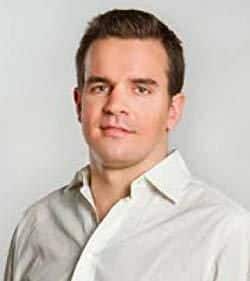
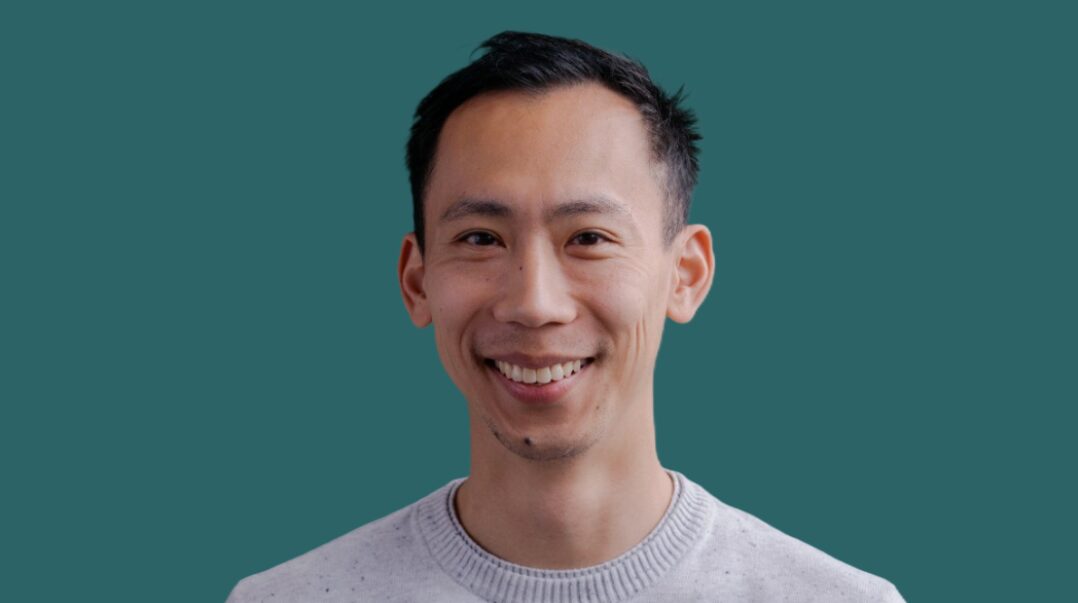
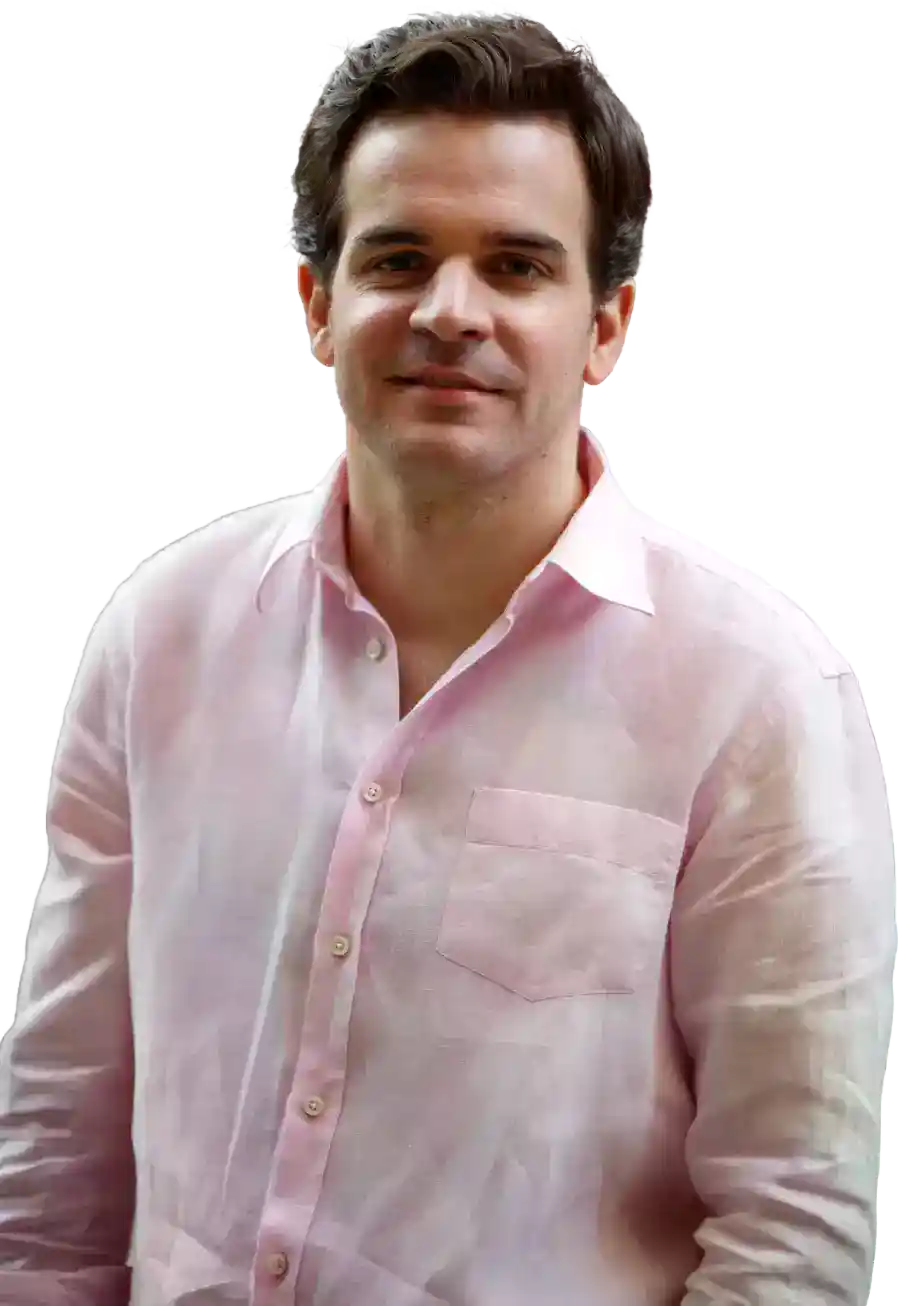
As the co-founder and CEO of Assembled, Ryan Wang sits at the intersection of customer support, AI, and organizational design, an area most companies only confront once growth exposes their cracks.
Assembled grew out of lived experience, deep obsession, and years spent watching what happens when founders care deeply about customers. It has secured capital from top-tier investors like New Enterprise Associates (NEA), Emergence Capital, and Stripe.
In this episode, you will learn:
- Ryan Wang built Assembled to solve the unglamorous scaling gap between a company’s mission and the operational reality of supporting customers at a massive scale.
- Stripe’s early edge came from extreme talent density and a willingness to bet on high-impact people with “wacky” backgrounds rather than pristine résumés.
- Assembled started as “a startup inside a startup” at Stripe, where customer support was treated as a first-class product problem, not a back-office cost center.
- The breakthrough insight was that automation alone doesn’t solve support; workforce productivity and capacity planning (WFM) drive the real cost and handle-time leverage.
- Product-market fit isn’t permanent; Assembled had to reinvent through COVID-driven distributed work, the 2022 efficiency reset, and the AI wave.
- The company’s differentiation is an integrated platform—resource-aware AI agents plus WFM—so decisions about what AI handles versus what humans handle are operationally optimized.
- Raising $71M reinforced a key fundraising lesson: the “best” investor is the one who compounds with you in hard markets through hands-on hiring, GTM rigor, and honest board-level pushback.
SUBSCRIBE ON:
 iTunes
 Google Play
 Stitcher
 TuneIn
 RSS
RSS SoundCloud
 Spotify
Keep in mind that storytelling is everything in fundraising. In this regard, for a winning pitch deck to help you, take a look at the template created by Peter Thiel, the Silicon Valley legend (see it here), which I recently covered. Thiel was the first angel investor in Facebook with a $500K check that turned into more than $1 billion in cash.
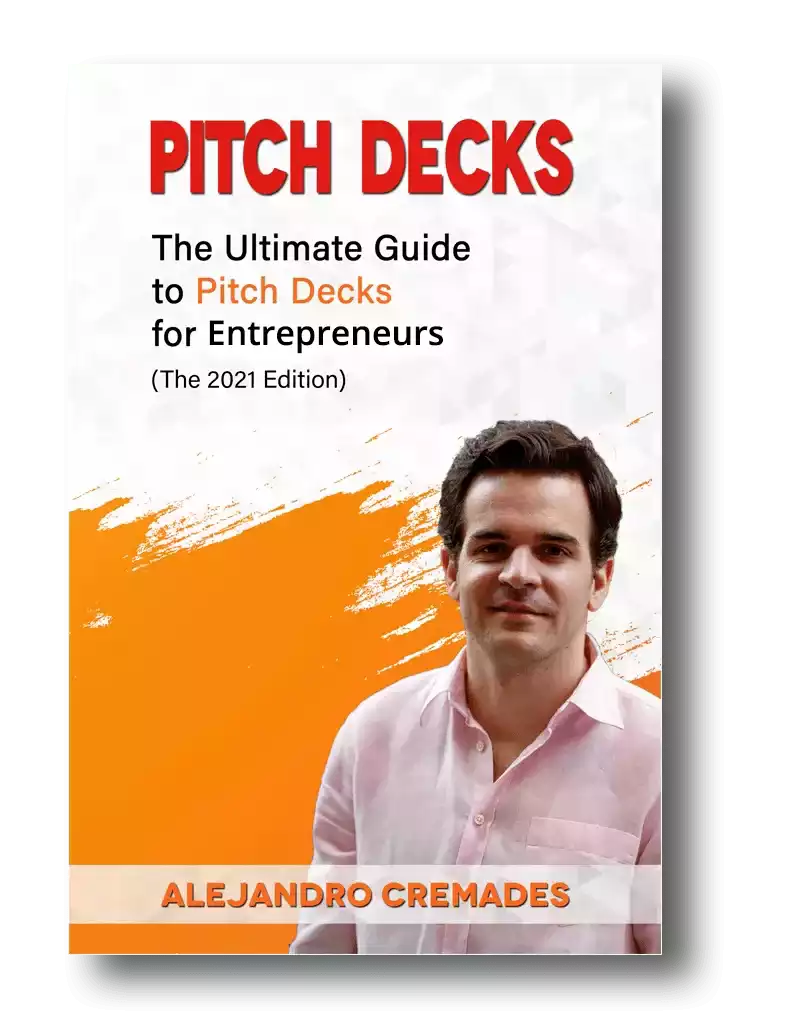
*FREE DOWNLOAD*
The Ultimate Guide To Pitch Decks
Remember to unlock for free the pitch deck template that founders worldwide are using to raise millions below.
About Ryan Wang:
Ryan Wang is currently the founder and engineer at Assembled. He has previously worked as a software engineer at Stripe from March 2014 to November 2017, a senior consultant at The Greatest Good from September 2012 to March 2014, and a research assistant to Professor Emily Oster at The University of Chicago Booth School of Business from June 2008 to September 2010.
Ryan has a Master’s in Statistics from the University of Chicago and a Bachelor’s in Economics with Honors from the same school. Ryan also attended the Illinois Mathematics and Science Academy.
Raise Capital Smarter, Not Harder
- AI Investor Matching: Get instantly connected with the right investors
- Pitch & Financial Model Tools: Sharpen your story with battle-tested frameworks
- Proven Results: Founders are closing 3× faster using StartupFundraising.com
Connect with Ryan Wang:
Read the Full Transcription of the Interview:
Alejandro Cremades: Alrighty. Hello everyone, and welcome to the DealMaker Show. Today we have an amazing founder—someone building in a really exciting segment right now. Everyone is talking about customer support and customer service, and I think they’re absolutely nailing it. They’re building a rocket ship.
Alejandro Cremades: We’re going to be talking about some really interesting topics, so brace yourself for a very inspiring conversation. Whether it’s raising money, building the business, or how they went about picking lesser-known names among the VCs they worked with—and they did this for both their Series A and Series B rounds—you’re going to see why they approached it that way. We’ll also talk about building a startup inside of a startup.
Alejandro Cremades: Really, really good stuff. So again, brace yourself. And without further ado, let’s welcome our guest today, Ryan Wang. Welcome to the show.
Ryan Wang: Yeah, thanks for having me, Alejandro. Really good to be here.
Alejandro Cremades: So, originally born and raised in Chicago, with parents who are immigrants from China. I’m sure it was an amazing upbringing. We’d love to hear—what was life growing up like for you?
Ryan Wang: Yeah, I think there’s something about growing up—so my parents are from coal country in China, Shanxi. And Chicago, I feel like, you know, gritty. A lot of people that come from the Midwest generally, I think, probably really resonate with that feeling.
Ryan Wang: I grew up rooting for the Bears, rooting for the Bulls. The Bulls were very good when I was younger, and then not so good later on. But cold weather, sports town—very humble, gritty type of place.
Ryan Wang: And when I came to Silicon Valley—that was around 2014—it was a bit of a culture shock in many different ways.
Ryan Wang: One of the fun parts about growing up in Chicago was a very interesting educational experiment they ran. I went to this high school called the Illinois Math and Science Academy. It’s a public boarding magnet school, and it was started by this guy, Leon Lederman, who won a Nobel Prize. He ran Fermilab for a while.
Ryan Wang: It was just a magical place for me, and it got me going in a lot of different ways. Before then, I was playing a lot of video games, and after that, I became much more of a student—a self-driven learner—which was really the whole philosophy of the school. It’s paid me back really, really well.
Ryan Wang: It continues to be an institution I really support—public boarding magnet schools in Illinois.
Alejandro Cremades: No kidding. Now, one thing I know is that one of your teachers, Emily, ended up becoming quite the author.
Ryan Wang: That’s right. Yeah. Emily Oster. So the school had a bit of a kooky approach to education. Again, it was very self-driven. On Wednesdays, you didn’t have school—you’d go do a research project.
Ryan Wang: To find a research project, my friend Ryan—also named Ryan—and I emailed every single economics professor at UChicago. Emily was the only one who responded. She was a second-year assistant professor or something like that.
Ryan Wang: I don’t know how she found the time to mentor us on our research project while also churning out research, and then later becoming the world-famous author Emily Oster. I’ll just say she’s an amazing person and incredibly generous, and she saw something in us that maybe we didn’t even see at the time.
Alejandro Cremades: Why consulting, of all things, to get started in your career?
Ryan Wang: Honestly, consulting—I thought I was going to grad school. I thought I was going to be an economist or a statistician. I got a BA/MS in economics and statistics, and consulting was just something to do in between—get a little bit of experience and then go back to research.
Ryan Wang: I ended up working at this kooky consulting company. It wasn’t like a normal one. It was run by Steve Levitt, the Freakonomics author, and Danny Kahneman, the Thinking, Fast and Slow author.
Ryan Wang: I went there thinking, okay, I’ll learn how theory is applied in the real world. But I realized I really liked the real world—consulting with companies and building data-driven pricing algorithms for some of the biggest retailers and car companies in the world.
Ryan Wang: Then I was hooked. From there, I went straight to Stripe because we had done a consulting project around payments. We were working with one of the biggest payments companies in the world. At the same time, my brother was about to join Stripe—they had recruited him right out of MIT.
Ryan Wang: So two things kind of connected. I thought, oh yeah, can you introduce me to Stripe? And he did. He introduced me to Patrick Collison, who I didn’t know much about at the time. I was just in Chicago, thinking, oh cool, I’ll talk to Patrick.
Ryan Wang: And they ended up finding a place for me.
Alejandro Cremades: That was 2014, so it was a very different Stripe. How was that journey?
Ryan Wang: Stripe was an amazing place. Even when I was interviewing, I could tell there was something special going on. I wasn’t plugged into the Silicon Valley atmosphere at the time, but I could still see it.
Ryan Wang: The first person on my team who interviewed me—Michael Manipat—had a PhD in math and had studied genetic algorithms applied to economics. He became my first boss. The intellectual range was incredible. He later became CTO of Notion and has since founded his own company backed by Sequoia.
Ryan Wang: Every single person on my interview panel was like that. My recruiter was Daniela Amodei, who is now the co-founder and president of Anthropic.
Ryan Wang: The talent density, the ideas—it was remarkable. People worked hard, but it wasn’t 996 because you had to be there. It was because there were so many interesting problems and people. I loved being part of that intellectual environment.
Ryan Wang: I was lucky to be there when Stripe was 80 people. I was lucky to see Patrick and John doing customer support themselves, having people over at their apartment near the office to do support rotations.
Ryan Wang: Then I saw it scale to 800 people in just a few years. Obviously, you can’t have the whole company doing support in the co-founders’ apartment anymore. But it was clear how much they cared about support—and that they needed to figure out how to scale it.
Alejandro Cremades: Going from 80 to 800 is insane. What do you think were the key ingredients behind that success?
Ryan Wang: A couple of things. Number one, talent density. I mentioned some of the people I worked closely with, but during my first week, one of the onboarding sessions was led by Greg Brockman. He had just been named CTO at Stripe and later went on to co-found OpenAI.
Ryan Wang: It wasn’t accidental. Talent was everywhere. And it wasn’t just talent in the traditional sense. They valued creativity and unusual backgrounds.
Ryan Wang: I never studied engineering, yet my offer letter said “software engineer.” Greg dropped out of college. My brother hadn’t even graduated yet when they recruited him. They talked to Mike Moritz about someone who hadn’t even finished school.
Ryan Wang: Stripe preferred high-trajectory people with weird backgrounds over traditional experience. Later, as Stripe became Stripe, they brought in people with pristine credentials. But early on, they made some very unconventional bets.
Ryan Wang: So it was amazing talent density, knowing what great looks like, and being willing to look past what was written on paper.
Alejandro Cremades: You’re experiencing incredible success at Stripe. Why take the leap and do it yourself? How did Assembled come knocking?
Ryan Wang: It was very slow, then all of a sudden. I could have easily imagined staying at Stripe for a long time. But this problem just grabbed hold of me—the problem of customer support.
Ryan Wang: I had been part of support rotations with Patrick and John. I came from a machine learning background, working on fraud detection. My co-founder Brian and I—along with my brother John, who later left Stripe—kept asking: how come nobody is applying machine learning to support?
Ryan Wang: This was around 2016 or 2017. We built a system called Lumos. We automated a large volume of tickets by hand-tuning models—this was pre-AI, so everything was built on Hadoop.
Ryan Wang: We automated a lot, but then we talked to Bob Van Winden, who ran support at the time. He told us, “That’s the easy stuff—password resets and basic tickets. That doesn’t represent most of the handle time or cost.”
Ryan Wang: Instead, he said, we should focus on making people more productive—building systems like workforce management. That became Assembled’s first product, because it was software they needed to buy, and there simply weren’t good options available.
Ryan Wang: Ah, and so we just kept working on these problems first within Stripe, and we became obsessed with them. We realized, OK, there’s a lot of breadth to the machine learning challenges. You need to forecast. You’re solving some version of the nurse scheduling problem—building schedules for thousands, and now tens of thousands, of people at a time.
Ryan Wang: We just became obsessed with it, and at some point realized, OK, not only are we obsessed with the problem, but there are also a lot of companies like Stripe. Slack was an early customer. Robinhood was an early customer.
Ryan Wang: And all of them had versions of this story where it’s like they cared so deeply about the customer experience in the early days, but they were growing so fast and everything was breaking. And how do you scale this? How do you scale the great support that existed when it was the founders in the department? So then we realized, OK, we have to go start Assembled.
Ryan Wang: It wasn’t even a choice. We just have to.
Alejandro Cremades: So for the people that are listening, what ended up being Assembled? How do you guys make money? What’s the business model?
Ryan Wang: Well, today it’s the AI platform for customer support. We have many different products. We’re eight years into it. We have AI agents.
Ryan Wang: They automate chat and voice calls. So if you go to Patreon’s chat, you’ll see the Assembled chatbot, and you’ll be talking to them. We have an AI co-pilot.
Ryan Wang: That makes agents at Etsy, at Canva, at a number of really iconic companies—it makes their human agents more productive.
Ryan Wang: It helps them ramp twice as quickly—twice as quickly—with knowledge. And then deep within the bowels—you’ll never see this—there’s workforce management, which is the forecasting, the capacity planning across humans and agents.
Ryan Wang: So what work should go to humans, what work should go to AI agents, and then the kind of real-time operations around that. That’s one of our biggest products and our first product. So it’s everything under the sun in terms of support operations.
Ryan Wang: There are also two flavors of it. We’ve got headcount-based pricing around these workforce management and co-pilot tools.
Ryan Wang: We’ve got usage-based pricing around our AI agent tools. So we’ve got a lot of different speeds at this point.
Alejandro Cremades: So what would you say was that moment where everything clicked, and you guys realized you finally hit product-market fit?
Ryan Wang: We’ve gone in and out of product-market fit, which I think is something people don’t tell you, right? Once you find it, it’s not permanent.
Ryan Wang: And in fact, that may have nothing to do with you, but rather what’s happening out in the world—there’s the market part. So the first version of product-market fit was…
Ryan Wang: We launched in 2020, so it took us two years to get off the blocks. But finally, we launched in 2020. We were so excited. It was March, and then boom—COVID hit.
Ryan Wang: I still have this screenshot of our launch on Hacker News where it was the front page, and you had: “World Health Organization calls COVID a global pandemic.” “Assembled launches.” “World Health Organization calls COVID a global pandemic.” So it took us two years to launch, and we were like, oh no, we’re screwed.
Ryan Wang: And then a month later, it was off to the races because all these businesses started growing.
Ryan Wang: Call centers—where people used to work out of one central location, and it’s called a call center because that’s where you worked—were all of a sudden dispersed. And so you were managing these large distributed teams.
Ryan Wang: You had companies growing really quickly, adding headcount, and they were just like, how do we manage all this?
Ryan Wang: And so we were replacing spreadsheets at a point in time where businesses just had to. Robinhood, Slack, all these companies were blowing up. Casper was an early customer. Grammarly was an early customer. GoFundMe was an early customer.
Ryan Wang: All of them needed to replace their spreadsheets because their support teams were growing so fast, and their businesses were growing so fast.
Ryan Wang: So that’s the first version of product-market fit. The second version was in 2022, when a lot of these companies hit headwinds and they had to get more efficient.
Ryan Wang: And then all of a sudden—oh wait—now you need a tool as well, for a different reason. But we had to repurpose it.
Ryan Wang: We fell out of product-market fit because it wasn’t just riding headcount growth. It was: how are you going to make this team 20, 30 percent more efficient—truly hard-nosed ROI.
Ryan Wang: And then the last version of product-market fit was—it’s no secret that customer support is an obvious application of AI. Everybody knows that.
Ryan Wang: So when we build AI agents on top of our workforce management data, they’re resource-aware AI agents. So it’s different from any other chatbot.
Ryan Wang: It took us some time to figure out, OK—people knew us for workforce management and not AI agents. So we really had to go back to our customer base and say: you know us for this thing. Now we’re these other things. And here’s why we’re better.
Ryan Wang: And it took us some time. We launched this in February, but we had been working on it—tweaking the edges—for probably a year and a half before we launched.
Ryan Wang: And now it’s off to the races, but it took us time to find that product-market fit of: it’s an AI agent, but here’s why it’s part of the Assembled platform.
Alejandro Cremades: Now, obviously, once you hit product-market fit and you’re thinking about scale, you also have to think about supporting the operation financially.
Ryan Wang: So you can fall in and out.
Alejandro Cremades: So the most immediate question that comes to mind is: how did you guys go about raising money? And maybe start by sharing with us how much capital the company has raised to date.
Ryan Wang: Yeah, we’ve raised $71 million—seed, Series A, Series B.
Ryan Wang: I would say we keep learning along the way. And one of the things we learned was the importance of getting the right partner.
Ryan Wang: When we raised our Series A, we were fortunate. We came out of Stripe, and so there were a lot of people who wanted to invest in the ex-Stripe founders.
Ryan Wang: We didn’t have to try as hard as we otherwise would have to put together those early rounds. And we had a lot of different term sheets, great firms, great partners, and great conversations.
Ryan Wang: We were able to vet people—how much do you know about this space? How much do you care about this space?
Ryan Wang: Very early on, the Emergence Capital team was coming to our office—uninvited, by the way—but they were really persistent.
Ryan Wang: They would come to our office. We put together this deck on the entire breakdown of the industry. And we were like, wow, you know so much, and you’re really pushing our thinking.
Ryan Wang: When we got to the end of the Series A process, Emergence was in it. There were a couple other big-name firms that we were really enamored with.
Ryan Wang: And I was thinking—we should go with one of these bigger names because of brand recognition. That’s what engineers inside Silicon Valley care about.
Ryan Wang: But I think the kicker was really: who’s going to be with us for the long term?
Ryan Wang: Emergence Capital has one of these values that we’ve lifted and put into our company as a cultural value, which is “be the best partner.”
Ryan Wang: And when COVID ended, and when ZIRP ended, and when the bubble popped, and we were in there for a Series B, Emergence was still around—and it was the same partner.
Ryan Wang: They were incredibly supportive and still helpful years and years later into the business. Even a couple of weeks ago, we were hiring an executive, and I’m still talking to their talent partner. They’re still deeply involved in the business.
Ryan Wang: I see people who raised from funds that made it super easy—where all you had to do was send a data room and they’d give you a term sheet the next day.
Ryan Wang: And I think it’s true: easy come, easy go.
Ryan Wang: The firms that are around for a long time—ones you might overlook—that have specialized insight, they’ll stick with you. They’ll ride with you. They’ll be helpful for a long period of time.
Ryan Wang: That was my big learning from that process—overcoming the feeling that I had to go with the biggest brand, and instead focusing on who was going to be most helpful.
Alejandro Cremades: And when you say helpful—so that people listening really understand—most VCs say, “Yes, we add value.” Everyone says they add value.
Alejandro Cremades: But on the founder end, what does receiving real value from a VC actually look like? What shapes and forms does that take?
Ryan Wang: Yeah, I think the day-to-day of it really is the stuff you can’t overlook—like going out and hiring executives, going out and interviewing executives.
Ryan Wang: Still to this day, Jake Saper is on our board. He led the Series A from Emergence.
Ryan Wang: If I need to get a candidate in front of him this afternoon, I’ll just text him. I’ll call him. He knows enough about the business to be dangerous—he can help sell the person, or he can tell me: you really need to dig into these couple of pieces.
Ryan Wang: He doesn’t know everything across all executive functions, but he’s seen a lot of it.
Ryan Wang: The other part that’s underappreciated is the operating partners. A lot of the time you see these firms and think, oh, maybe it’s window dressing. It’s just advertising.
Ryan Wang: But no—Tammy Hahn is a talent partner. I’ve learned so much about recruiting from working with her over the years.
Ryan Wang: Or Doug Landis, an early go-to-market partner. I did not know up from down on how to set up sales quota, what to ask of our sales leader, or what the ratios should be of AEs to SDRs.
Ryan Wang: We had all this magical inbound right after our rounds, but then we had to build this machine to do outbound.
Ryan Wang: I just came from a channel partner conference. What even is channel partnership? Why should we think about that?
Ryan Wang: All these people gave me an MBA in fast forward. They were deeply involved in the company.
Ryan Wang: And I think the kicker is—those are the day-to-day useful nuggets. Nobody wants advice, but sometimes you really do need advice in the sense of someone who’s going to tell you you’re wrong, or here’s what we really think and why.
Ryan Wang: Especially once you’re successful, people don’t want to tell you that.
Ryan Wang: My favorite moment working with Jake was a two-hour phone call where we were yelling at the top of our lungs at each other—because we had trust.
Ryan Wang: It was about a pretty impactful direction of the business. One of those decisions you really have to get right.
Ryan Wang: And I appreciated that. I appreciated that he would push me and stay on the phone that long to talk passionately about something that needed to be figured out.
Alejandro Cremades: Obviously, when you get investors on board, they’re betting on a vision, just like employees or even customers.
Alejandro Cremades: So if you were to go to sleep tonight and you wake up in a world where the vision of Assembled is fully realized, what does that world look like?
Ryan Wang: I think for us, customer service is even just the start. Customer service embodies this idea that there’s a difference between building an initial really cool product and scaling it to millions, hundreds of millions, billions of people.
Ryan Wang: We describe customer support as the gap between mission and reality.
Ryan Wang: When Robinhood—we rode with them in 2020, 2021—it was Bitcoin, meme stocks, the business was blowing up. They wrote this really interesting blog post about adding 24/7 phone support.
Ryan Wang: They said, um, our mission is to make investing accessible to everyone. So that was Robinhood’s mission, and you can see how they’re making it happen.
Ryan Wang: But making investing accessible to everyone also means being there for you when you need us. That was the juxtaposition of their mission against customer support. So I think that is really the story of customer support.
Ryan Wang: But then you zoom out a little bit, and there are more functions where, OK, how do you take an idea that’s really successful and scale it to millions and hundreds of millions and billions of people? I give the example of flight all the time.
Ryan Wang: This was the AI of 120-plus years ago now, when the Wright brothers did the first flight. And yet all of us have been there in terms of a similar feeling of frustration to when you’re on a customer support line on hold—like, why is this flight delayed? When is it going to leave?
Ryan Wang: I’ve been from San Francisco to Las Vegas, which flies six times a day, and they didn’t have a crew. How do you not have a crew? How do you not have a crew? Well, it’s a difficult operational problem to scale flight to billions of people.
Ryan Wang: And so I think of Assembled as the technology company that will solve the operational challenges that come after big ideas. Support is just one piece of that, but there are lots of other operational challenges that companies run into when scaling.
Alejandro Cremades: So now let’s say that I bring you back in time. Obviously, you’ve been a while now with Assembled, but let’s say I bring you back to the moment where you gave your notice at Stripe.
Alejandro Cremades: And I’d say you were walking out of the building, and you’re able to stop that younger Brian and you’re able to tell that younger Ryan one piece of advice before launching a business. What would that be, and why, given what you know now?
Ryan Wang: I think the trope that it will be so much harder than you think is so true.
Ryan Wang: We thought we were going to be off and running, and it took us two years to launch. We thought our first big idea was going to hit. It took us eight months to get our first dollar of revenue. We thought, like, et cetera, et cetera, et cetera.
Ryan Wang: I think the ability to say, OK, and here is what we’re doing and why, and we’re going to stick through it for eight years, 20 years, 50 years, and build a generational company—that is just so important.
Ryan Wang: We got lucky in that we were already obsessed with the problem and knew that. But even then, our first product—workforce management—it was like, that’s your first product. Now we have four products.
Ryan Wang: So you have to be able to keep that fire alive that goes beyond workforce management, customer support automation, even AI for customer support, which is a “how.” Twenty years from now, what will that be? It won’t be AI—it will be something else, right?
Ryan Wang: But that durability of the problem is scaling operational challenges that come after big ideas, which we only realized after we were obsessed with customer support. Oh, wait—this is even bigger than customer support.
Ryan Wang: I would go back and say: think hard about that, really commit to it, really figure out why you’re going to do this for a really long time, and make a big impact.
Alejandro Cremades: When you were talking about this—whether you’re waiting eight months to get things going the way you had hoped for—it’s just unbelievable, the journey of being an entrepreneur.
Alejandro Cremades: I’m sure there are a lot of entrepreneurs right now that maybe are in a cloudy phase. Maybe it’s a tough time for them. What would you tell the founders that are listening who are going through a rough patch?
Ryan Wang: You know, I can’t remember who said this. Was it one of the Andreessen guys? There are two feelings that entrepreneurs inhabit: euphoria and terror.
Ryan Wang: And in the same day, in the same hour, you can experience both. It’s so true.
Ryan Wang: But I like to stay grounded. I try to stay grounded just knowing that we have some customers—and again, it’s a luxury of working in customer support—from all over the world.
Ryan Wang: Like 50% of our end users in customer support are outside of the US. They’re in places like the Philippines, India, South Africa, Ireland, the UK.
Ryan Wang: And our fourth customer was Grammarly. Grammarly started in Kyiv. It wasn’t always an SF tech company. The founders were Ukrainian and moved to Canada and were solving their own problem.
Ryan Wang: So we went to Kyiv in 2019 and met all these people—these customer support managers—and got to know them.
Ryan Wang: And then, of course, after that, what happened was just devastating. We kept in touch with folks. And even, I want to say a year ago, one of the managers came to San Francisco and came to speak at our all-hands.
Ryan Wang: I remember taking a walk with her and one of our sales folks. And I asked, so, did your husband come with you? She said, no.
Ryan Wang: She had to take a train to Poland to then fly here, and men aren’t allowed to leave the country. I was like, wow. That puts all of this into perspective.
Ryan Wang: We want to be great. We want to have a big impact. And impact is working with people from all across the world, from all different walks, and giving a platform for what they do.
Ryan Wang: Now she’s started a company. And every day they’re living. They’re just living. There’s everything that’s going on, and they’re pursuing their dreams and their passions.
Ryan Wang: I was like, damn, I am so inspired by that. And for us to be a small part of that—our problems seem small. The euphoria, the terror—that’s more about a scoreboard that somebody else is keeping.
Ryan Wang: We’re talking about impact. And that keeps me grounded—just knowing who we’re working for.
Alejandro Cremades: I love that. So Ryan, for the people listening that would love to reach out and say hi, and learn more about Assembled too, what’s the best way for them to do so?
Ryan Wang: Yeah, I’m on LinkedIn. I’m Ryan Wang. I write about the future of work and connecting support and AI.
Ryan Wang: I’m also just ry**@*******ed.com
, especially if you are a talented engineer, a talented entrepreneur, and you just want to chat.
Alejandro Cremades: Well, Ryan, thank you so much for being on the DealMaker Show today. It has been an absolute honor to have you with us.
Ryan Wang: Thanks for having me.
*****
If you like the show, make sure that you hit that subscribe button. If you can leave a review as well, that would be fantastic. And if you got any value either from this episode or from the show itself, share it with a friend. Perhaps they will also appreciate it. Also, remember, if you need any help, whether it is with your fundraising efforts or with selling your business, you can reach me at al*******@**************rs.com
Podcast: Play in new window | Download
Subscribe: Apple Podcasts | Spotify | TuneIn | RSS | More
Facebook Comments