



What does it really take to build not just one—but multiple successful startups? For Ritik Malhotra, the answer isn’t just about intelligence, timing, or even luck; it’s about process, resilience, and an obsession with building.
In this riveting interview, Ritik talks in detail about how the startup-building ecosystem evolved from the time he built his first venture to when he started his current company, Savvy Wealth. Savvy Wealth has secured funding from top-tier investors, such as Alumni Ventures, Index Ventures, BoxGroup, Thrive Capital, and A*.
In this episode you will learn:
- Rejection is data—130+ “no’s” refined the system that ultimately led to success.
- Building great companies is a repeatable loop: build, test, learn, iterate.
- Product-market fit isn’t found—it’s earned through constant customer feedback.
- Market reality should guide decisions—sometimes selling is smarter than scaling.
- Exposure to different business models expands how founders see opportunity.
- The best companies are built by exceptional teams, not individual effort.
- Enduring businesses come from deep conviction built over years of curiosity.
SUBSCRIBE ON:
 iTunes
 Google Play
 Stitcher
 TuneIn
 RSS
RSS SoundCloud
 Spotify
Keep in mind that storytelling is everything in fundraising. In this regard, for a winning pitch deck to help you, take a look at the template created by Peter Thiel, the Silicon Valley legend (see it here), which I recently covered. Thiel was the first angel investor in Facebook with a $500K check that turned into more than $1 billion in cash.
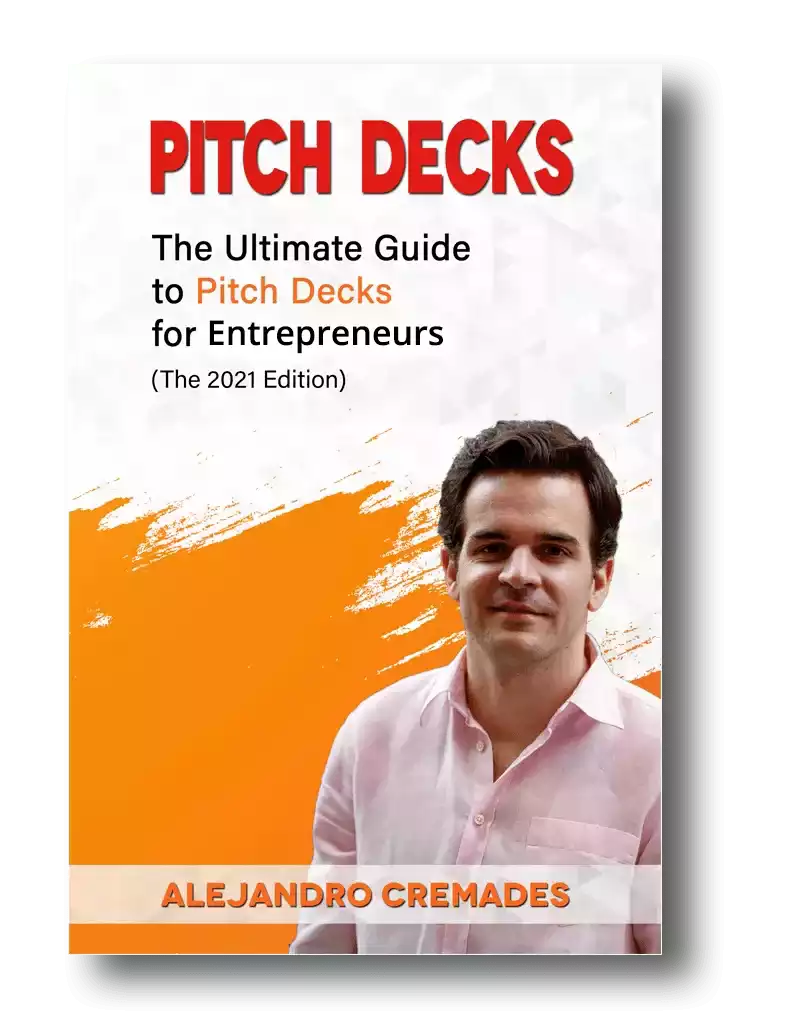
*FREE DOWNLOAD*
The Ultimate Guide To Pitch Decks
Remember to unlock for free the pitch deck template that founders worldwide are using to raise millions below.
About Ritik Malhotra:
Ritik Malhotra is a repeat technical founder with two prior exits (one to Box in 2014 and one to Brex in 2019). Most recently he was Director of Product Management at Brex where he started and built Brex Cash, Brex’s second business line after the corporate card.
Ritik is now building Savvy Wealth, a tech-enabled wealth management firm. He is a Y Combinator and Thiel Fellowship alum and holds a B.S. in Electrical Engineering & Computer Science from UC Berkeley.
Since founding Savvy Wealth, and its affiliate RIA, Savvy Advisors, Ritik has led the development of an AI-driven technology solution that not only simplifies advisors’ day to day, but also reduces friction in client engagement.

Raise Capital Smarter, Not Harder
- AI Investor Matching: Get instantly connected with the right investors
- Pitch & Financial Model Tools: Sharpen your story with battle-tested frameworks
- Proven Results: Founders are closing 3× faster using StartupFundraising.com
Connect with Ritik Malhotra:
Read the Full Transcription of the Interview:
Alejandro Cremades: All righty, hello everyone, and welcome to the DealMaker Show. So today we have a founder who has done it three times now. He’s on his third time, and the last two have been very successful, with quite the outcomes and exits.
Alejandro Cremades: We’re going to be talking about building, scaling, and the way to think about fundraising. What was his journey like? Perhaps the first go at it versus how it is today, given the experience. Also, some of the inflection points and those specific days where things failed, like when product-market fit was hitting or when turning a corner, as well as the importance of team building, intensity, and pace when building things.
Alejandro Cremades: So brace yourself for a very inspiring conversation. And without further ado, let’s welcome our guest today, Ritik Malhotra. Welcome to the show.
Ritik Malhotra: Thanks for having me. Really excited for this.
Alejandro Cremades: So originally born in California, but you moved quite a bit between California and India, and then back to California. How was life growing up for you?
Ritik Malhotra: That’s right. So I was initially born in California, and what I realized is that all roads lead back. I went back to India for a few years—my parents are originally from there—and then we ended up back in the Bay Area when I was about four years old.
Ritik Malhotra: So I spent my entire life in California, mostly around the Bay Area, surrounded by technology. I think that had a huge part to do with just falling in love with what technology can make possible.
Alejandro Cremades: So walk us through growing up there in the ’90s in California, in the Bay Area, seeing that incredible explosion of innovation, and your dad also being in tech.
Alejandro Cremades: I’m sure that getting those insights and experiencing that firsthand helped shape who you are today and your entrepreneurial drive. Tell us about that.
Ritik Malhotra: Absolutely. I think all of these things come together, and a lot of it happens when you’re younger. As a kid, I just fell in love with computers, and I used to spend every free moment—after finishing school homework, playing with friends, and then coming back—learning how I could make software on a computer.
Ritik Malhotra: This inner curiosity of being able to do something with just your hands and your mind was quite impressive, especially seeing what that output could look like.
Ritik Malhotra: So putting that together, I spent the first few years learning how to make websites and putting things on the internet. Ultimately, I ran a few internet businesses back when I was in elementary and middle school.
Ritik Malhotra: It was a great way to learn, and I also caught the entrepreneurial bug. I made enough money online to help pay for college. At that time, I thought, this is so cool and so fulfilling for the mind—if there’s a way I could do this going forward and make it my full-time job, wouldn’t that be amazing?
Ritik Malhotra: And lo and behold, I went to UC Berkeley for college a few years later, where I was studying electrical engineering and computer science. But I ultimately ended up dropping out to say, actually, I want to go build something and pursue that passion.
Alejandro Cremades: So talk to us about your first exposure to making money yourself, and then going through college and deciding to drop out.
Ritik Malhotra: In middle school, doing those internet ventures was my first exposure. There’s something about seeing that you can build something and actually make money, and it ends up—in my case at the time—in a PayPal account from customers I was selling to.
Ritik Malhotra: That ability to see your work come to life was such a powerful driver that I thought, there must be something here.
Ritik Malhotra: Even in college, before dropping out, I started a business over the summer with a few friends. It was less technology-focused and more of a tutoring business where we taught classes on the weekends. It was very profitable and worked really well.
Ritik Malhotra: So there was this mindset of finding product-market fit, whatever that product and market were, to earn dollars. That loop was something I really, really enjoyed.
Ritik Malhotra: When we got to the first startup, the motivation wasn’t just about making money. The actual joy of building something was what I was seeking.
Ritik Malhotra: When we dropped out of school, we applied and were very fortunate to get into Y Combinator and the Thiel Fellowship program.
Ritik Malhotra: Those moments really helped solidify that there is a pathway forward. There’s a level of funding and a level of community that can help make a startup happen.
Ritik Malhotra: That first company was born out of a personal pain point—how do we solve something we ourselves were experiencing? We had a hypothesis that others would have the same issue, related to what is now a much more solved problem around cloud storage.
Ritik Malhotra: At the time, a lot of data sat on cloud storage systems that weren’t easily accessible, especially in large enterprises, because the technology relied on synchronizing files.
Ritik Malhotra: Our thesis was: could we develop a system that, instead of synchronizing files, allows you to access the entire corpus of enterprise data? That would require a completely different technology and file system.
Ritik Malhotra: That’s how we started building the venture. We raised money, hired our friends, and in 2014—about a year before the IPO—we were acquired by Box.
Ritik Malhotra: It made a lot of sense, and we were able to join right before they went public, which is a whole story in itself.
Alejandro Cremades: Tell us about the experience with Stream, because it was your first time going through the full lifecycle of a business. And to get to the finish line with an acquisition by Box on your first company—that’s quite an experience.
Alejandro Cremades: How was that for you?
Ritik Malhotra: It was definitely one of the most formative periods in my journey. Looking back, it’s a classic story of trials and tribulations that every founder goes through.
Ritik Malhotra: When we started, we had gotten into these incubator programs, and a lot of it was ideating and building something—and being completely wrong.
Ritik Malhotra: We had to talk to customers, figure out what we were doing wrong, and build the habit of gathering feedback, building minimal products, testing them, and iterating. That was the first loop.
Ritik Malhotra: Fundraising was completely new. At the time, dropping out of college wasn’t in vogue, and being a 19-year-old with no real experience—just some product feedback and early traction—made it hard to raise money.
Ritik Malhotra: I remember when we were raising our first round—just under a million dollars, which was a lot back then, around 2011 or 2012.
Ritik Malhotra: I probably had 130 to 135 investor meetings through the Y Combinator network. I’d say 120-plus were no’s.
Ritik Malhotra: But that’s fine, because you only need a few people to say yes. Still, it’s a bitter lesson. The ability to be resilient through all those no’s was the most important learning.
Ritik Malhotra: That resilience applies to so many other situations. I remember thinking, if I showed this “report card” to someone, they would have told me to give up long before reaching the finish line.
Ritik Malhotra: But the ability to reframe your mindset, compartmentalize each conversation, learn from it, and still show up strong for the next one—that was the most important skill.
Ritik Malhotra: We eventually got the round done and moved forward.
Alejandro Cremades: And what about your biggest takeaways from fundraising that you applied later?
Ritik Malhotra: The biggest takeaway was exactly that—having a process is critical. You can’t be swayed by a string of no’s.
Ritik Malhotra: You have to treat each meeting as an opportunity to learn. Is there anything you can take from it and apply to the next one?
Ritik Malhotra: It’s about good hygiene in running a process. You’re trying to find the right investors who believe in you and the vision.
Ritik Malhotra: That same learning applied to product development. When building a product, we’d put something minimal in front of users, get feedback, and often hear “no.”
Ritik Malhotra: But what matters is how you use that feedback. It’s the same system—iterating based on rejection.
Ritik Malhotra: I’m glad we went through that process during fundraising, because it’s a cheaper place to learn those lessons. It helped us get better at product development, which eventually led to strong product-market fit and the acquisition by Box.
Alejandro Cremades: Let’s talk about the integration process after the acquisition. Some people call it “vesting and resting,” but how did you experience that transition from startup mode to being inside a larger company, and then deciding to do it again?
Ritik Malhotra: I’ve thought a lot about this. The financial outcome of the exit was just the result, but day-to-day, the real joy was in building—racing to get users, seeing traction.
Ritik Malhotra: That feeling, especially the first time, is hard to replace.
Ritik Malhotra: After selling to Box, we stayed for a few years, integrated the software, and grew the team. Even today, parts of it are still part of their desktop products.
Ritik Malhotra: Seeing real usage of the product, especially at enterprise scale, and watching our hypotheses come true—often faster at Box—was incredibly fulfilling.
Ritik Malhotra: That experience fueled the desire to build something valuable again.
Ritik Malhotra: Y Combinator says it best: make something people want. That never changed—from when I was a kid to the first startup and beyond.
Ritik Malhotra: So after that, I spent some time in between the first and second startup investing in companies because that’s what I thought you were supposed to do. There’s a certain level of enjoyment and intellectual curiosity there, but ultimately I realized that it wasn’t the thing that satisfied my desire to build something and chase that gratifying feeling.
Ritik Malhotra: So I said, well, why don’t we go about it and do it again? We were still very young, had a lot of energy, and got the team together from the first company, along with a couple of other friends, and went at it for a second time.
Ritik Malhotra: This was a company called Elf. This time, unlike many people who might say, okay, we’re going to take some learnings or newly observed behaviors of the world from the first startup or the acquisition and use that as insight for the second company, we intentionally said that we wanted to explore specifically anything to do with money and fintech broadly.
Ritik Malhotra: There was a whole rhyme and reason to that, but it also meant that we were starting over. There were certain startup principles and company-building principles we could carry over, but a lot of the knowledge we had to build up ourselves.
Ritik Malhotra: But I think we applied the same philosophy. Just because something is new, and you might hear a lot of no’s, and our hypotheses might be wrong, doesn’t mean that we can’t apply that same system to iteratively get to a place where we felt happy about building something and also delivering customer value.
Ritik Malhotra: So with that team, we eventually built what you could effectively call ledger and accounting software for banks, casinos, or anyone that needed an internal currency or an internal ledger for tracking their currency.
Ritik Malhotra: That was the product that we found resonated the most in the market. And eventually, in 2019, we sold that company to Brex, I believe, as they were raising their Series C.
Alejandro Cremades: And one thing there that I think is remarkable too is that in between Stream and Elf, you had the opportunity to invest in companies as well. So how do you think that the perspective of understanding the other side of the table helped you become a little more informed, or perhaps gave you a different perspective when it came to executing on Elf?
Ritik Malhotra: I think, in some sense, it helped me the most because I had this notion in my mind that investing in startups is something everyone has to do. I almost thought of it as a progression: you build a startup, and then when you sell it, you get into investing.
Ritik Malhotra: But I realized that’s not the case. It’s just something completely different. And for me, a lot of it was saying, hey, this isn’t something I want to do, at least not right now.
Ritik Malhotra: So it actually gave me a lot of clarity. My mind was no longer distracted. I knew much more clearly that I wanted to go and build something. So that was first and foremost.
Ritik Malhotra: The second thing was that, in my limited time investing in startups, seeing multiple business models and different approaches really opened my eyes. It gave us the confidence to say, hey, we’re going to go and approach fintech as a completely new area, even without prior experience in finance or building fintech products.
Ritik Malhotra: I had seen other people systematically break down, from first principles, how they were going to approach their own fintech ideas. I remember talking to a number of folks back then, so that was learning number two.
Ritik Malhotra: And I think the third was that, by seeing different business models, it also opened our eyes to how we could think differently about business models ourselves. One thing we were pretty adamant about in the first startup was that what we were building had to be something we ourselves would pay for, or something we would build in a very specific way.
Ritik Malhotra: Which ultimately limits your search space quite a bit. So having exposure to other types of businesses and business models let our curiosity attach itself to more and more things, which then expanded that search space as well.
Ritik Malhotra: So those are probably the three biggest things. I’m very grateful for that time period because it drove that level of clarity.
Alejandro Cremades: And with Elf, the acquisition was rumored to be between 15 to 50. I mean, you had the stock volatility there too. But one thing that comes to mind now, with this being the second acquisition you experienced—I mean, incredible, right? Two exits, which is amazing.
Alejandro Cremades: But talk to us about timing when it comes to M&A. Why go through the acquisition process versus maybe raising more money and continuing to push things forward? How do you think nowadays about timing and whether to explore or keep going?
Ritik Malhotra: This is always difficult, and I know it’s case by case. I think the loose framework I have around this is—let me actually talk about the first one in terms of M&A, because I think that one has a lot more science behind it.
Ritik Malhotra: When we were thinking about what we were building in the cloud storage space, that product clearly had value, and we knew why it was differentiated.
Ritik Malhotra: But cloud storage as a category, by 2012 or 2013, was already mature. You had Dropbox, Box, and a number of other entrants that had been pouring money into the category for almost eight years by then. To even survive and get the scale we needed, we would have had to raise $100 million-plus over a pretty short period of time just to compete, because everyone else had gotten scale, pricing was based on storage, and there were all these other factors.
Ritik Malhotra: So when we factored all that in, it was a pretty daunting proposition. Now, I wish I could say that at the ripe age of 19 or 20, whenever we were by that point, we were ready to go do that.
Ritik Malhotra: But I think there was a calculus there where we said: this is an uphill battle in a very mature category. Do we want to take that bet, or would we rather de-risk and take some chips off the table ourselves? Getting a win right now would mean that we still had the energy, and maybe we could go start something again in the future. It would also help de-risk how we’d build a company in the future, and the track record would help with raising money, attracting talent, and so on.
Ritik Malhotra: So that was a calculus based on both the market and our personal desire at that stage in life. I would categorize that as simply asking: where is your personal gumption? Because you need that if you want to build something for the long term versus taking an M&A path.
Ritik Malhotra: I think that’s the most common factor I hear. I’ve talked to so many founders over the years who want advice on M&A, and I always try to pry this out of them because it took me a long time to come to that realization.
Ritik Malhotra: The second factor is, regardless of personal gumption, do you actually want to build something into a multibillion-dollar independent business?
Ritik Malhotra: Or are you seeking something else intrinsically? Do you just love building and want to sell to potential customers? Then the question becomes: is there a one-plus-one-equals-three opportunity?
Ritik Malhotra: A lot of the time, when you read about M&A, you see statements like, hey, we’re joining this company and they’re going to accelerate our growth because they have 10x our customer base and 10x the money. You kind of roll your eyes and think it’s just PR speak.
Ritik Malhotra: But after speaking to so many founders, a lot of them genuinely say, listen, I really enjoyed that phase. If we’re going to continue building this company to a much larger scale, that’s not actually the most exciting part for me. I just want to be the builder.
Ritik Malhotra: So I think it’s perfectly legitimate to take the M&A route if it’s actually going to accelerate the mission of getting that product out to the customers you want to serve. Those are probably the two categories I would say are worth considering.
Alejandro Cremades: So after the transaction with Elf, everything led you to Savvy Wealth, which is the latest baby that you gave birth to. Now, Savvy Wealth is your third company, and by then you had a very good understanding of how to think about markets and validate ideas.
Alejandro Cremades: So why was Savvy Wealth meaningful enough for you as an idea to take action on?
Ritik Malhotra: Savvy was brought to life over a period of about six years of thinking about this problem. And I can tell you, I think the third startup is not for the faint of heart. I’ve told myself, and everyone around me, since we started that this is the third and last, which means we will put every ounce of energy into building this into an enduring company—maybe even take it public one day.
Ritik Malhotra: The idea for Savvy, which is that we build AI for independent financial advisors to help them run and grow their business, was born from a simple concept.
Ritik Malhotra: For the six years before starting the company, I had what you could call the best problem in the world. I went from being a broke college dropout to having life-changing money after selling the company to Box and seeing their IPO happen in 2015.
Ritik Malhotra: And eventually I found myself looking for a financial advisor. That was the advice I had been given. Over that six-year period, I just fell in love with the industry and went deeper and deeper into it. I spoke with more than a hundred financial advisors and learned about their pain points.
Ritik Malhotra: Almost all of them rhymed in the way they complained about how much middle- and back-office work they had to do. They didn’t have access to the technology they would want in order to operate their business and provide the best service to their clients.
Ritik Malhotra: They spent more time on middle- and back-office work than they did with clients. All of these things kept adding up, and I was doing this discovery with no specific purpose at the time. I was truly just following my curiosity.
Ritik Malhotra: Then we had built the business that we sold to Brex and scaled it into a corporate banking and corporate wealth management business. So we understood more and more about the intricacies of building that kind of company.
Ritik Malhotra: And finally, I became a financial advisor myself, even if only on a small scale, to friends and family. I just fell in love with giving advice to others, with lectures and public talks on personal finance that I would give to college students.
Ritik Malhotra: I found myself spending more and more of my brainpower thinking about this problem and wondering why no one had solved it. I looked at so many companies to invest in that were trying to help the independent financial advisor, yet I kept hearing these same complaints.
Ritik Malhotra: I thought they were so helpful and valuable, and such a big part of the American economy. So why don’t we solve it ourselves? That’s really where company number three was born.
Ritik Malhotra: So it was a combination of really falling in love with the industry, falling in love with the problem, and scratching our heads over why no one was fixing it.
Ritik Malhotra: And I had this inner desire where I looked at the first two companies. They had great financial exits at the end and scratched the itch of building something while we were doing it.
Ritik Malhotra: But that elementary school and middle school kid who fell in love with computers might still look at it and say, well, we never built something enduring—something that really stands the test of time, that lasts beyond any one person. Something you create with a bunch of people that just lasts.
Ritik Malhotra: And I thought this is actually a meaningful exercise to go through. And we have a meaningful opportunity here to build for a very large industry that needs technology and can benefit from it.
Ritik Malhotra: And maybe we could build it into a multibillion-dollar company. So that’s how we got started, too, going into number three.
Alejandro Cremades: So I guess for the people listening, to get a sense of Ritik, what ended up being the business model of Savvy Wealth? How do you guys make money too?
Ritik Malhotra: So we make money basically on the assets themselves. What that means is that we realized early on that financial advisors didn’t want to just purchase another piece of software that said, hey, this is some automation or AI software that you can plug into the way that you work. We actually sell this as a fully vertically integrated solution. So we help the advisor move over from a licensing perspective, the regulatory perspective, and all the operations as well.
Ritik Malhotra: So they’re vertically integrated into the platform. They’re 1099’d into the Savvy entity, which means that we’re actually doing everything in the middle and back office, top to bottom.
Ritik Malhotra: So that means the assets being managed are in our system, and we’re effectively charging a fee to the end client, while also splitting that with the financial advisor through some percentage.
Ritik Malhotra: So it’s very different, right? It’s not a SaaS business model. It’s more akin to a business-in-a-box product, and we basically have incentive alignment in that if we’re helping the advisor make more money, that helps our bottom line too.
Alejandro Cremades: So talk to us too about team building here, because after your experiences before, I’m sure that you were very, very careful about the people that you would be bringing in.
Ritik Malhotra: So team building here was an important lesson. I think more and more, after building these companies, and especially also seeing this at Brex as well, where Brex was growing extremely quickly, the amount of care in hiring the best people, finding them, and really finding the right culture fits was such an important lesson. It sounds obvious in hindsight. I think a lot of people will say that teams are everything.
Ritik Malhotra: But I think seeing is believing, and really holding onto what that meant. And it’s funny, I was talking about getting a string of no’s in the early days and building resiliency.
Ritik Malhotra: I think there was a very similar concept here where we had to get all these things done really quickly, and so there was a tendency to say, hey, just hire. But actually saying no and keeping the bar high was an interesting reverse of events. Again, it’s a similar kind of psychology of just saying it’s fine—being patient is actually going to help, because finding the best person is actually worth it.
Ritik Malhotra: And I think if I just take the example of hiring the executive team that’s still here today, some folks—like our CTO—was the first CTO at Karma, or our head of sales was the first head of sales at Compass. These individuals had very strong track records of building these iconic companies from near inception all the way to hundreds of millions of recurring revenue.
Ritik Malhotra: So there was no shortage of options that they had. And I think those are the people that, when I was talking to them, I was learning things and soaking things in during those initial conversations. And I said, these are the people that I would want to be surrounded by.
Ritik Malhotra: We had such good chemistry working together. And I think that was the thinking—let’s build a team with these individuals. And we’ve taken that practice into all these other functions as well. These are just two examples.
Ritik Malhotra: But I firmly think team building is the number one most important thing when you’re building a company for the long term.
Alejandro Cremades: So for the team side of things, just to expand on this, you guys have raised about $105 million from investors.
Alejandro Cremades: I guess you’re also bringing those people on board, whether it’s on the board or whatever that could be. How do you think about vision too, right? I mean, all these employees and investors are really betting on the future that you’re living into.
Alejandro Cremades: If you were to go to sleep tonight and wake up in a world where the vision of Savvy Wealth is fully realized, what does that world look like?
Ritik Malhotra: I think the way that we position this is with our mission statement, which is to make great financial advice easier to deliver. Very easy to understand.
Ritik Malhotra: And what that looks like for us is that, ultimately, if we have done our job, we will have built the full end-to-end operating system for an independent financial advisor to operate their business. This is a business in a box. They have access to all the different financial products and services they need to offer a really compelling experience to their clients. So they don’t have to think about taxes, estate planning, and so on and so forth—all these other things that they need.
Ritik Malhotra: They can focus directly on the client and trust that Savvy behind them is the infrastructure they can rely on for portfolio management, financial planning, and all the other elements.
Ritik Malhotra: And we’ve fully vertically integrated end to end, all the way from collecting paperwork and onboarding down to the actual bare metal via the underlying custody of assets, integrating into the brokerage, and being able to manage them directly, offering banking services, and kind of the full stack.
Ritik Malhotra: So if you put all this together, really the idea is: how do we help the advisor do anything related to money for their end client? And actually, just betting on the advisor being there and building all of these tools and technology to really automate all this for the advisor is how we think that vision plays out.
Ritik Malhotra: So building that superpower suit for them ultimately helps them deliver great financial advice in the best and easiest way, which then helps the maximum number of clients. We think that’s the way the industry works.
Alejandro Cremades: So let’s say I put you into a time machine and bring you back to the moment where you are about to drop out from Berkeley. And let’s say you are right there with that younger Ritik who is coming out of school with a smile, thinking about a world where he’s going to be launching a company. And let’s say you’re able to stop that younger self and give that younger self one piece of advice right there.
Alejandro Cremades: What would that be and why, given what you know now about launching a business?
Ritik Malhotra: To that version of myself, I would try my hardest to instill this one thing that I had heard from the founder of Brex. I think the phrase was: you get no extra points for doing things yourself.
Ritik Malhotra: So you might as well get all the help that you can along the way. And I stand by that very deeply today because I was the exact opposite back then. I thought, you know, I need to do everything myself.
Ritik Malhotra: I need to figure things out and go heads down and learn all these things. And ultimately, no one is keeping track of that. No one keeps track of that scoreboard, but they do see what you’re able to build.
Ritik Malhotra: And I think in many things in life, but especially in company building, there is no such thing as being the sole author. You’re effectively trying to find people around you to co-author the thing that you put out.
Ritik Malhotra: And so being intentional about that, and telling that version of myself that it’s okay—you do not need to do everything yourself, and no one is keeping track of this—actually probably would have been the most impactful thing for me at that time.
Alejandro Cremades: So, Ritik, for the people that are listening and would love to reach out and say hi, what is the best way for them to do so?
Ritik Malhotra: I think you can reach me on LinkedIn. Ritik Malhotra is the name. Also feel free to shoot me an email: Ri***@*********th.com
. First name, R-I-T-I-K.
Alejandro Cremades: Amazing. Well, easy enough. Well, Ritik, thank you so much for being on the DealMaker Show today. It has been an absolute honor to have you with us.
Ritik Malhotra: Thank you. This was a pleasure. I really enjoyed this.
*****
If you like the show, make sure that you hit that subscribe button. If you can leave a review as well, that would be fantastic. And if you got any value either from this episode or from the show itself, share it with a friend. Perhaps they will also appreciate it. Also, remember, if you need any help, whether it is with your fundraising efforts or with selling your business, you can reach me at al*******@**************rs.com
Podcast: Play in new window | Download
Subscribe: Apple Podcasts | Spotify | TuneIn | RSS | More



Facebook Comments