

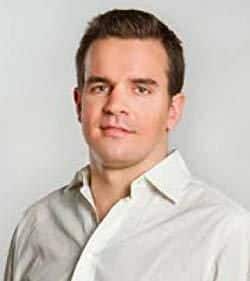
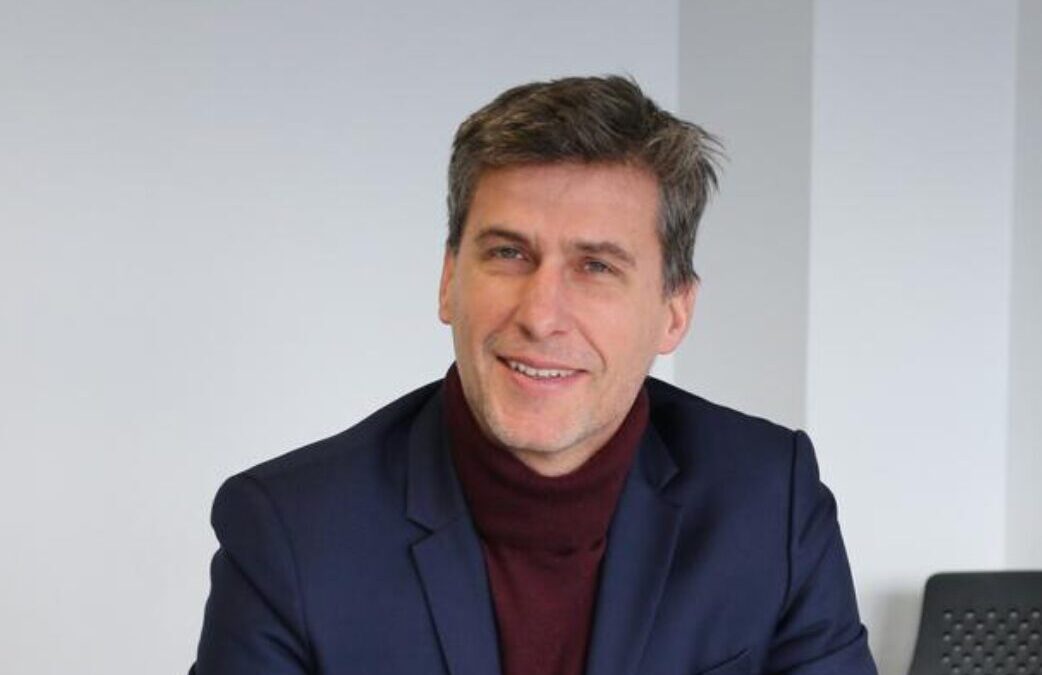
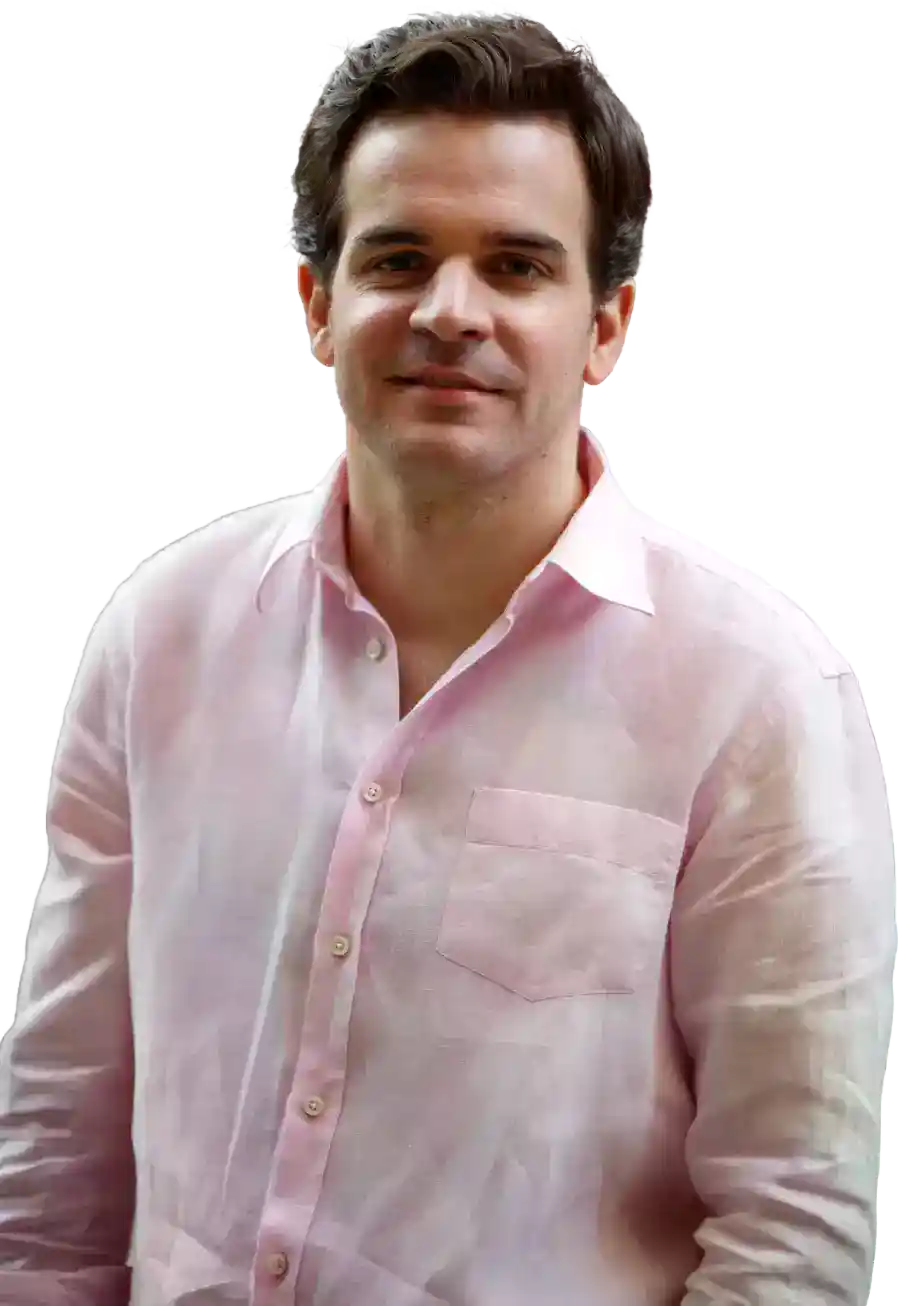
Pierre Brossollet is the founder and CEO of Arverne, a geothermal energy company that has raised €220M ($258M), employs 250 people, has gone public, and is now pursuing more than €3B ($3.53B) in projects by 2030.
But the roots of this ambition stretch back long before boardrooms, capital markets, or renewable energy became the mission. Arverne has secured capital from top-tier investors like Bpifrance, Hydro Energy Invest AS, Equinor Ventures, Renault Group, and ADEME Investissement.
In this episode, you will learn:
- Pierre Brossollet’s success was built over decades by mastering complexity, embracing failure, and acting once conviction outweighed comfort.
- Deep expertise in oil and gas became an advantage, not a liability, when repurposed to accelerate the geothermal energy transition.
- Global exposure and cultural adaptability shaped Pierre’s leadership mindset long before he became a founder.
- True entrepreneurial confidence is earned step by step through resilience, technical rigor, and relentless execution.
- Arverne proves that capital-intensive, regulated industries still reward bold leadership, agility, and unconventional financing paths.
- Failure is not a detour but the mechanism through which judgment, clarity, and long-term success are forged.
- Leadership, in Pierre’s view, is grounded in humility and magnanimity, with a focus on advancing people rather than managing projects.
SUBSCRIBE ON:
 iTunes
 Google Play
 Stitcher
 TuneIn
 RSS
RSS SoundCloud
 Spotify
Keep in mind that storytelling is everything in fundraising. In this regard, for a winning pitch deck to help you, take a look at the template created by Peter Thiel, the Silicon Valley legend (see it here), which I recently covered. Thiel was the first angel investor in Facebook with a $500K check that turned into more than $1 billion in cash.
*FREE DOWNLOAD*
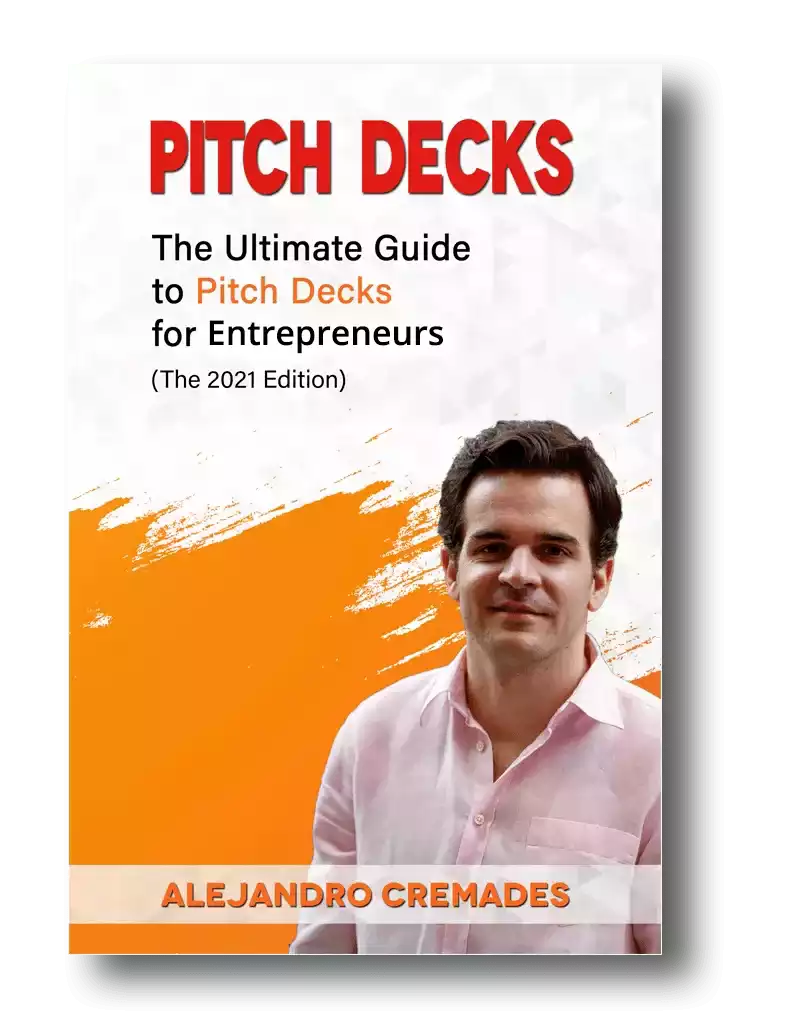
The Ultimate Guide To Pitch Decks
Remember to unlock for free the pitch deck template that founders worldwide are using to raise millions below.
About Pierre Brossollet:
Founder and Chairman and CEO of the Arverne group, Pierre Brossollet has over 20 years of experience in the energy sector in operational, management and executive positions.
After beginning his career at TotalEnergies in operations and R&D, he joined Maurel & Prom, where he held management positions in subsidiaries and operational responsibilities at the Paris headquarters.
Following his departure in 2015, Pierre brought together a large team of talented experts to develop an ambitious and innovative model for producing renewable energy and resources from the subsoil. The Arverne group was founded in 2018 in Pau.
Pierre holds an engineering degree from the École Spéciale des Travaux Publics, which he supplemented with a master’s degree from the French Institute of Petroleum and New Energies. He is also a board member of Section Paloise.
Raise Capital Smarter, Not Harder
- AI Investor Matching: Get instantly connected with the right investors
- Pitch & Financial Model Tools: Sharpen your story with battle-tested frameworks
- Proven Results: Founders are closing 3× faster using StartupFundraising.com
Connect with Pierre Brossollet:
Read the Full Transcription of the Interview:
Alejandro Cremades: Alrighty, hello everyone and welcome to the DealMaker Show. So today we have an amazing founder joining us. We’re going to have the battle of accents. We’re going to have the French, the Spanglish, a little bit of everything. Why not?
But again, we’re going to be talking about building, scaling, financing, and also having a company listed. Why not?
Alejandro Cremades: And they also have a company that has raised 220 million euros and that has 250 employees. So again, a lot of good stuff to cover, whether it’s leadership, relationship with failure, and many other things. I think that you’ll find the conversation today quite inspiring. So without further ado, let’s welcome our guest today, Pierre Brossollet. Welcome to the show.
Pierre Brossollet: Yeah, hi, hello, Alejandro.
Alejandro Cremades: So Pierre, originally from France—obviously we can hear it in the accent clearly—give us a walk through memory lane. I know that growing up, your dad was a Navy SEAL in the Special Forces. You guys got to travel quite a bit.
Alejandro Cremades: But how was life growing up for you?
Pierre Brossollet: Yeah, for me it was, well, I wouldn’t say an easy life, but my father, as you say, moved a lot. So it opened my mind, and I had the chance to see a lot of things growing up until I was 18.
Pierre Brossollet: And here I basically—I don’t like my brothers. I have five brothers and sisters. So home, high school, university, engineering.
Pierre Brossollet: And I jumped into energy and oil and gas, I would say by luck, because I chose an option in engineering school named oil and gas, or named offshore.
Pierre Brossollet: And you know, like Obelix in the magic potion, I fell into that, and I never left. It’s now like a passion. But after graduating in civil work, I joined Total because, you know, in France it’s like the best of the best.
Pierre Brossollet: And I, during tenures…
Alejandro Cremades: But even before that, why engineering? Why the whole problem-solving angle? Where did that come from?
Pierre Brossollet: No, because it was not a tradition, but in France you have this kind of excellence—what we call engineering schools like Polytechnique, like Centrale. We have an idea of excellence that is typically French, and this is more engineering schools than economics or other kinds of schools.
Pierre Brossollet: So that’s why, basically. And by tradition, because my father and my grandfather did this kind of school. Engineering, because when you go to the Navy, you have to go first to become an engineer.
Pierre Brossollet: So it was what I had to do. It was not by curiosity or by open-mindedness or things like this.
Pierre Brossollet: It was basically because I did like my family.
Pierre Brossollet: So nothing magic, nothing very original. But still a lot of interest for technical things and engineering.
Pierre Brossollet: Civil work was a choice that I made personally. And the option of offshore was an option that friends of mine brought me to. I didn’t even know what energy and oil and gas were. And as I said, I fell into that.
Pierre Brossollet: And after that, it was all my life. So this is more than a passion now. I joined Total and spent 10 years all over the world—in operations, in business development in Asia, in Africa, and in South America—which I loved.
Pierre Brossollet: That not only gave me expertise in the subsurface, but also showed me all the potential of our Earth, especially the subsurface, and not only in oil and gas. I also learned this very big paradox.
Pierre Brossollet: I’ve seen this very big paradox of oil and gas, which has reached a lot of technological and technical breakthroughs, but which is a nightmare for the planet today. This paradox made me think at some point that I had better do something else.
Pierre Brossollet: And basically, this is why I switched and decided to found my own company. But this is a long story. At the beginning, it was like, okay, I discovered oil and gas, I discovered subsurface, I discovered the world.
Pierre Brossollet: I discovered the needs of the world, and I discovered a big paradox where I thought that I could help the energy transition with expertise and vision, but not with oil and gas. Definitely, I had to do something else.
Alejandro Cremades: What do you think traveling all over the world with Total gave you in terms of perspective? Being in different countries and experiencing different cultures must have opened up quite a bit for you.
Pierre Brossollet: A lot of things. First, even if my accent shows I’m French and my English is quite bad, you have to learn people. You have to learn traditions of countries. You have to learn languages. That’s why I speak a few languages.
Pierre Brossollet: You have to adapt yourself to the people around you. You have to acclimate yourself. You have to respect people and places.
Pierre Brossollet: On top of expertise, it’s really a different mindset. When I came back after 15 years with my expertise, my wife, and five kids—all born in different countries—I had the feeling that I learned what life is, very simply.
Alejandro Cremades: You were for 10 years with Total and eventually decided to shift gears by joining your mentor. That was quite a pivotal moment before becoming an entrepreneur. How was that journey?
Pierre Brossollet: Definitely. When you are part of a big organization like Total, which is an amazing company in terms of expertise, you learn a lot. But you are part of a very big organization, and I didn’t like that.
Pierre Brossollet: When I met Jean‑François Hénard in Indonesia—he was president of a gas company—I didn’t hesitate one second. He proposed something that even after 10 or 20 years in Total I couldn’t get: the management of a full country in South America.
Pierre Brossollet: But more than that, I was attracted by his personality. He became a mentor. He was a free guy. He was heading the company but not part of networks like we see today.
Pierre Brossollet: He loved risk—good risk. I learned a lot from him. When he decided to sell the company, I decided not to join the next team but to take my own way and create Averne.
Pierre Brossollet: I was deeply influenced by Jean‑François for his mindset. He was a risk taker, and a real leader. I like the difference between leader and manager. He was a real leader.
Alejandro Cremades: When that company got sold, it pushed you into the unknown and toward building your own company. Walk us through that transition and the sequence of events.
Pierre Brossollet: It was a long process. After 10 years at Total, I spent 10 more years in another company. It wasn’t a quick flash where I woke up one day thinking I could save the world with energy.
Pierre Brossollet: It was a long process working with Jean‑François, realizing that even if you do things properly and slowly, there is a chance to bring your own stone to the world.
Pierre Brossollet: Especially in the energy world. Even if it’s complicated and requires a lot of investment, you can still have influence.
Pierre Brossollet: What I learned is that even if you are alone, when you are a leader, you can change things.
Pierre Brossollet: I realized that if you put energy and truly believe in what you do, you can convince everybody. I restarted from nothing. I didn’t have a penny. I raised 100,000, then 1 million, and five years later more than 200 million.
Pierre Brossollet: I became public and now have a project of more than 3 billion euros to raise before 2030.
Pierre Brossollet: It’s about resilience, faith, expertise, and a lot of work. You have to work on leadership and on your dossiers.
Pierre Brossollet: This confidence came from Jean‑François. In big organizations, it’s difficult to become who you really are. With him, after 10 years, I became who I really am.
Alejandro Cremades: For people listening, what is the business model of Averne? How do you make money?
Pierre Brossollet: It’s exactly the same as oil and gas, but for different products. I do the same things I’ve done for 20 years, which gives credibility.
Pierre Brossollet: But now not for oil and gas—for geothermal. My life is now centered on geothermal energy. It’s amazing and could feed the world for decades, but it’s unknown.
Pierre Brossollet: My business is to sell energy—not gas or oil, but heat. Hot water beneath our feet. It’s short circuit and sovereign.
Pierre Brossollet: You produce and use the heat locally. This is simplicity returning to energy. And yet nobody knows it despite its huge potential.
Pierre Brossollet: What I did in oil and gas, I translated to geothermal. You still need to explore and get licenses, and in France, it’s not easy.
Pierre Brossollet: And you need to drill, you need to build plants, and you need to produce the water. And in some regions, this is magic. You have some metals which are dissolved in the hot water. So we just have to extract these metals, like lithium—but not only lithium—to produce it. So you don’t have to go mining. You don’t have to go through traditional mining systems.
Pierre Brossollet: It’s zero‑carbon lithium. So geothermal has this very huge potential, and it is produced exactly as oil and gas was produced.
Alejandro Cremades: Now, in your case, as you were alluding to it, raising €220 million and now having employees and billion‑euro projects—how has the journey been going through the motions of raising all that money and also taking the company public? Walk us through that.
Pierre Brossollet: Well, I passed through all types of emotions. When you start something, of course you have to be confident, and you have to gain more and more confidence in what you do and the reason why you do it.
Pierre Brossollet: But on the other hand, you doubt every day. I lost my sleep becoming an entrepreneur. I doubted a lot. I passed through a lot of emotions.
Pierre Brossollet: But you also have to be conscious that you succeed step by step, that you reach milestones. When, after one year following the creation of Arverne, I decided to acquire my first company—which was a drilling company—it was because I realized that if I wanted to go fast, I had to be autonomous in operations.
Pierre Brossollet: So I decided to acquire a drilling company from a big French group named Vinci, a civil works group.
Pierre Brossollet: That was my first battle and my first win. I did it with a vendor credit, so without spending a dollar or a euro.
Pierre Brossollet: I managed to be agile in the processes I used to grow. I attracted big names like Bouygues as business angels.
Pierre Brossollet: We did this in parallel with a context that became more and more favorable because of COVID and because of Ukraine, where we had to get rid of Russian gas or gas from the U.S. COVID showed that we had to return to short circuits.
Pierre Brossollet: Everything showed that geothermal was one of the solutions for energy in France and in Europe.
Pierre Brossollet: I had my first success in parallel with this favorable context, but I had to realize that I was achieving milestones. I went through a lot of emotions. And when I realized that Arverne would exist only if it became big—because it cannot be small in this sector—everything changed.
Pierre Brossollet: When I realized I had to raise hundreds of millions of euros, I said I would do it the same way I acquired the drilling company from Vinci: with agility and with audacity, to find the right people.
Pierre Brossollet: And by luck—because when you are an entrepreneur, you meet people and connections lead to other connections—I one day met someone who told me, “We have created a SPAC.”
Pierre Brossollet: At the time, there were many SPACs. This transition SPAC was looking for a target, and we found each other.
Pierre Brossollet: I realized it was the perfect vehicle for me to go public, and for them we were the perfect target in terms of size, story, and future. So basically, we got married.
Pierre Brossollet: It’s always about meeting good people, having faith, and making the right connections.
Pierre Brossollet: One year before the SPAC, if someone had told me I would raise €200 million on this project, it would have been hard to believe.
Pierre Brossollet: So again, it’s about resilience, faith in your model, faith in yourself, and meeting the right people at the right moment. That’s the story of all entrepreneurs.
Alejandro Cremades: Talking about resilience, when you’re raising money you face rejection. Some people like what you’re doing, others don’t, and that’s fine.
Alejandro Cremades: But embracing rejection is key. I also find that the culture in Europe is different from the U.S. In Europe, people point at you when you fall. In the U.S., people encourage you to get back up.
Alejandro Cremades: Given that you’ve been executing this in France, what is your relationship with failure?
Pierre Brossollet: Thank you for this question. I have a very particular relationship with failure, even if my career seems linear. It’s not really the case.
Pierre Brossollet: Since I was born, I’ve had the feeling of passing through failures. The first one is that I am the third of five kids.
Pierre Brossollet: Despite what people think, it’s not a good position. As my mother said, I hated it. You are the biggest of the smalls or the smallest of the bigs, never in the right place. I lived that as a failure.
Pierre Brossollet: I always failed to position myself between my two older siblings and the two younger ones. I lived that as a failure.
Pierre Brossollet: Later, when I was expatriated with Total, I didn’t spend my money acquiring apartments. I invested it in entrepreneurs.
Pierre Brossollet: Before creating Arverne, I tried to join a group of entrepreneurs and invested my money. The first company I created was called 10 Rue Royale, a luxury company.
Pierre Brossollet: We had Kenzo on the cap table. It was a showroom where clients designed their own jewelry. But we were not part of that world, and it went bankrupt quickly.
Pierre Brossollet: It was a failure. It was with my brother‑in‑law, and it damaged our relationship. Another failure.
Pierre Brossollet: In Europe, failure stays with you. In the U.S., it’s experience. In France, bankruptcy blocks you. You’re blacklisted by banks and administration.
Pierre Brossollet: When I created Arverne, I failed again trying to acquire a drilling company. I failed first, then succeeded. These failures were useful.
Pierre Brossollet: Failure forces you to question decisions: hiring, strategy, execution. I don’t believe in success without failure.
Pierre Brossollet: Failure makes you stronger. I was built through failure. But in France, you cannot put it on your CV.
Alejandro Cremades: Let’s visualize success. You wake up in a world where Arverne’s vision is fully realized. What does that world look like?
Pierre Brossollet: It looks like France and Europe realizing we are in a bad situation and that we must act. We cannot live in a world dependent on imported gas.
Pierre Brossollet: An ideal world means leadership, decisions, and vision. Today we lack proper diagnostics before making decisions.
Pierre Brossollet: Success means realizing the potential beneath our feet. Geothermal has that potential, but many big companies don’t want to develop it.
Pierre Brossollet: There will be competition, but we need speed, sovereignty, and independence. France has the talent and capability.
Pierre Brossollet: We need to unlock heavy administrative burdens. In an ideal world, we would move faster and lighter.
Alejandro Cremades: You mentioned leadership. What does leadership mean to you?
Pierre Brossollet: I haven’t solved it. I have doubts, fears, but also hope.
Pierre Brossollet: I believe I will succeed because my mission is right. Leadership is about accelerating the company and the model.
Pierre Brossollet: Leadership is central for me. I won’t give lessons on it. The first rule is to stay natural and not force who you are.
Pierre Brossollet: I read a lot about leadership, but I’m still working on it every day.
Pierre Brossollet: I like the ideas of Alexandre Havard on leadership, which is made of virtues. We have to work on this. It is not totally natural. I mean, a leader is a leader, but you have to show it. You have to live your leadership. Leadership is about virtues.
Pierre Brossollet: And especially two virtues.
Pierre Brossollet: Humility is key for leadership. It may sound strange, but humility is one of the keys to leadership, along with magnanimity.
Pierre Brossollet: Excuse my English, but I think it’s the same word. It’s magnanimité in French, but magnanimity in English. These two virtues, for me, are the basis of leadership.
Pierre Brossollet: Humility and magnanimity. If you work on these, you will be a leader, not a manager. A leader is leading people—men and women. A manager is leading things, leading projects, making projects move forward.
Pierre Brossollet: A leader makes people move forward. People have to trust your capacity to reach these virtues.
Pierre Brossollet: Leadership is not black or white. It’s not an exact science. In my opinion, it’s something you have inside yourself, but something you have to work on. You have to show that you are able to be a leader. It’s not just about communicating well or having good ideas. It’s much more difficult than that.
Alejandro Cremades: Let me put you into a time machine, Pierre. Let’s bring you back to the moment you were thinking about starting a business. If you could give that younger Pierre one piece of advice before launching a business, what would it be and why?
Pierre Brossollet: First, fail better. Coming back to Federer—I’m a tennis lover. I love Wawrinka because he’s amazing and he’s from Switzerland. It must have been very hard for Wawrinka to play at the same time as Federer.
Pierre Brossollet: Federer was amazing. Wawrinka played very well, but he failed, basically. He didn’t win a Grand Slam when Federer was there.
Pierre Brossollet: He has a tattoo on his arm. I don’t remember exactly where, but it says: “Ever tried. Ever failed. No matter. Try again. Fail again. Fail better.”
Pierre Brossollet: That’s exactly it. I would say to an entrepreneur starting something: believe in yourself, expect failures, but fail better.
Pierre Brossollet: The second piece of advice is: don’t listen to the people around you who tell you every day that it’s not possible. Especially with my project, Arverne, which could become a multi‑billion‑euro leader in Europe.
Pierre Brossollet: Every day I hear people saying, “No, it’s not possible. We cannot do that.” And practically, they’re right—it’s very complicated.
Pierre Brossollet: Even internally, in my team and my COMEX, people tell me we won’t succeed. You cannot imagine the amount of energy I put every day into convincing my top management that we will succeed.
Pierre Brossollet: So never listen to people who tell you that you cannot achieve your dream or your objective. You will.
Alejandro Cremades: I love it. Pierre, for the people listening who would love to reach out and say hi, what is the best way for them to do so?
Alejandro Cremades: For those listening, what’s the best way to reach you, say hi, and learn more about your brand?
Pierre Brossollet: They can give me a call.
Pierre Brossollet: They can invest money in the company—we are listed. Or maybe I didn’t fully understand the question.
Alejandro Cremades: Do you have an email? Are you on social media? Is there a website they can visit to learn more?
Pierre Brossollet: Yes, of course. I try to be a modern guy.
Pierre Brossollet: We have a website. I speak with the media and investors—we’re a public company, so I talk to investors every day.
Pierre Brossollet: We attend forums and have trips planned in Europe to communicate what we do.
Pierre Brossollet: I also have an email, a LinkedIn profile, and a phone. I’m busy, but people can reach me quite easily.
Alejandro Cremades: Amazing. Pierre, thank you so much for being on the DealMaker Show. It’s been an absolute honor to have you with us today.
Pierre Brossollet: Thank you very much, Alejandro.
*****
If you like the show, make sure that you hit that subscribe button. If you can leave a review as well, that would be fantastic. And if you got any value either from this episode or from the show itself, share it with a friend. Perhaps they will also appreciate it. Also, remember, if you need any help, whether it is with your fundraising efforts or with selling your business, you can reach me at al*******@**************rs.com
Podcast: Play in new window | Download
Subscribe: Apple Podcasts | Spotify | TuneIn | RSS | More
Facebook Comments