

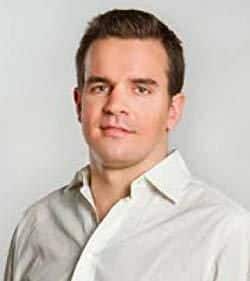
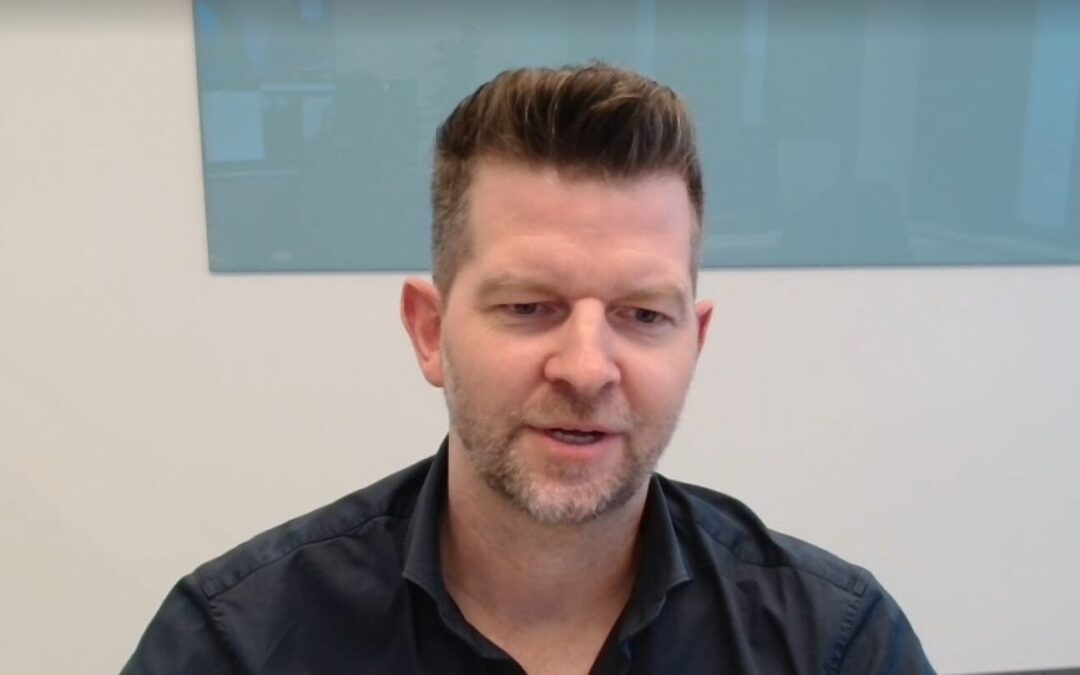
When Philipp Heltewig talks about his journey, he does not describe “building a startup.” He talks about building a real company, one that hits its KPIs, scales globally, survives shocks like COVID, and rides new technology waves like generative AI.
Philipp’s company, Cognigy, was acquired by NICE in a deal valued north of $1B. It secured funding from top-tier investors like Eurazeo, DTCP, Insight Partners, and Global Brain Corporation.
In this episode, you will learn:
- Philipp built Cognigy by focusing on mission-critical customer service use cases, not “nice-to-have” experiments.
- Strategic buyers came to him because he built a real business with KPIs, governance, and category leadership.
- Cognigy survived COVID by making hard focus decisions that later unlocked explosive AI-driven demand.
- Generative AI became an accelerator, not a threat, because Cognigy already had deep enterprise infrastructure.
- Philipp scaled through a partner-first enterprise GTM playbook learned during his Sitecore rocket-ship years.
- Culture was deliberately engineered, with team trips and shared experiences serving as “glue” during growth.
- The $1B+ exit happened after years of on-again, off-again M&A conversations and relentless operational discipline.
SUBSCRIBE ON:
 iTunes
 Google Play
 Stitcher
 TuneIn
 RSS
RSS SoundCloud
 Spotify
Keep in mind that storytelling is everything in fundraising. In this regard, for a winning pitch deck to help you, take a look at the template created by Peter Thiel, the Silicon Valley legend (see it here), which I recently covered. Thiel was the first angel investor in Facebook with a $500K check that turned into more than $1 billion in cash.
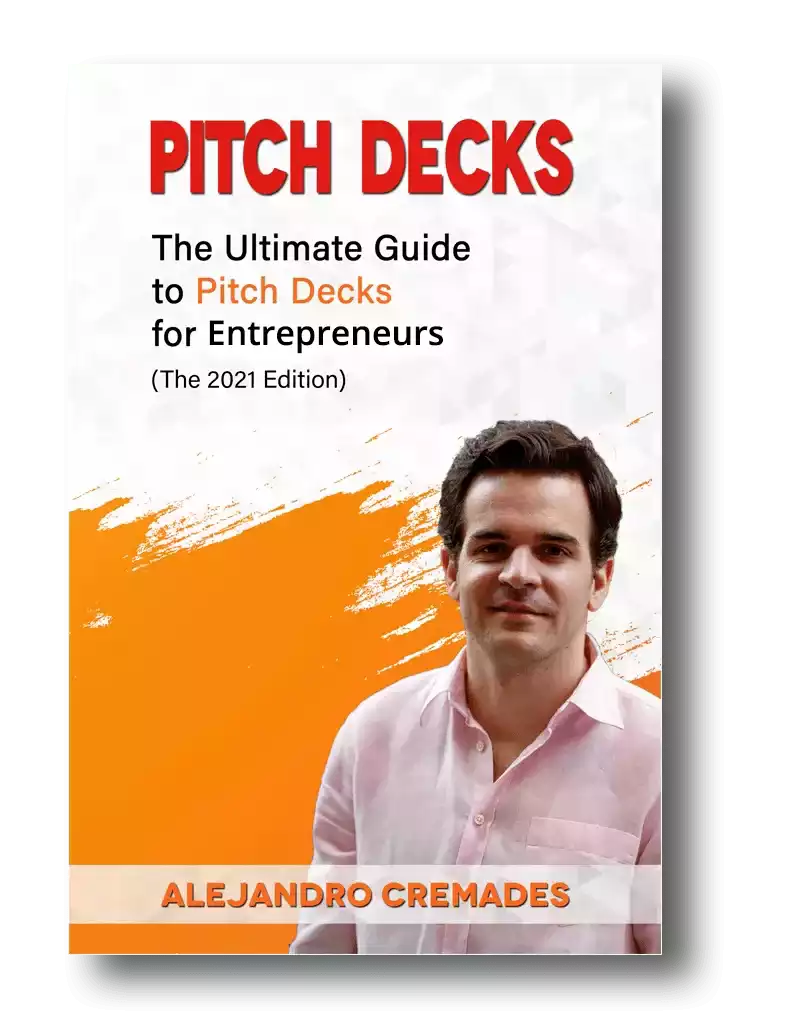
*FREE DOWNLOAD*
The Ultimate Guide To Pitch Decks
Remember to unlock for free the pitch deck template that founders worldwide are using to raise millions below.
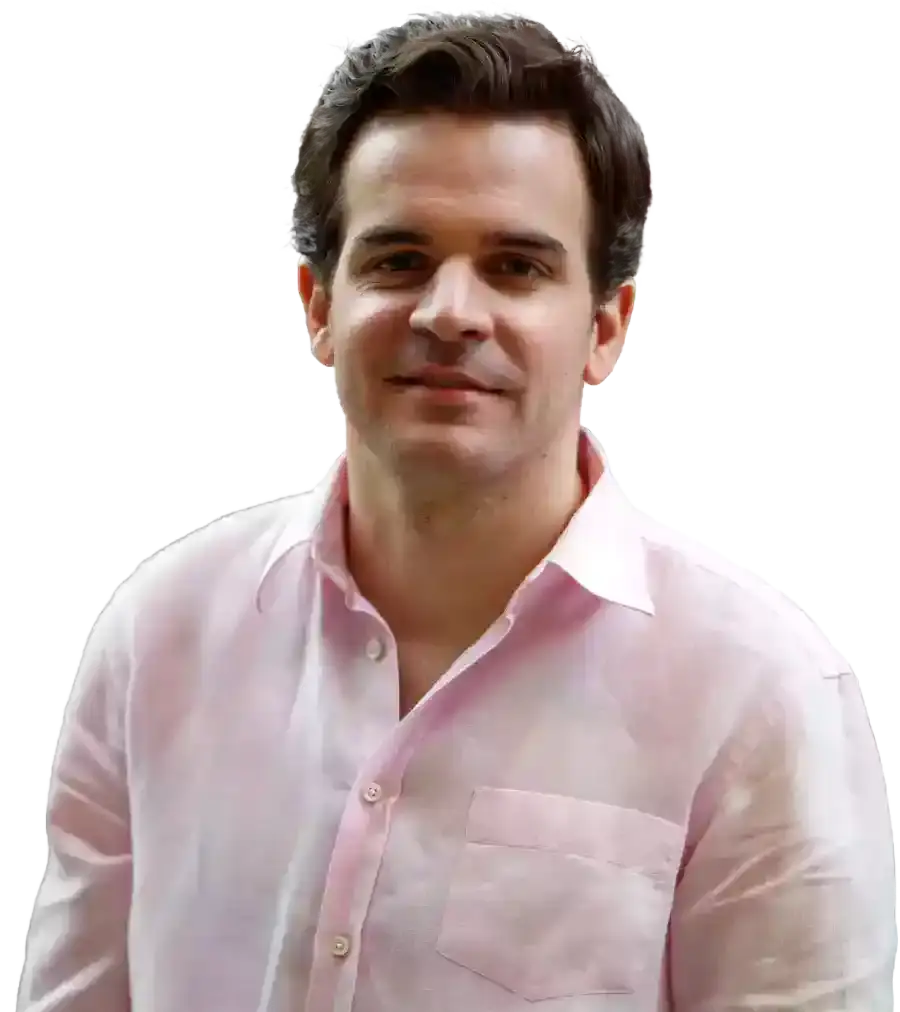
About Philipp Heltewig:
Philipp Heltewig is the Chief AI Officer at NiCE and General Manager of NiCE Cognigy, a global leader in agentic AI for customer experience.
A German-Australian entrepreneur, Philipp holds degrees from universities in Germany, Australia and the US. Previously, Philipp held key positions at SAP and Sitecore, where he established Sitecore’s operations in Australia and New Zealand and led Sitecore’s global sales teams.
In 2016, he co-founded Cognigy, alongside Sascha Poggemann and Benjamin Mayr, steering its evolution into a recognized market leader for enterprise Conversational AI solutions.
Under his leadership, Cognigy served thousands of customers worldwide and was repeatedly named a leader by Gartner, Forrester, IDC, and ISG. The company launched Agentic AI solutions now acclaimed as the most powerful for customer experience on the market.
Cognigy was acquired by NiCE Ltd. in September 2025 and now operates as NiCE Cognigy. Philipp now serves as Chief AI Officer at NiCE and GM of NiCE Cognigy, where he leads the strategic direction of the company’s AI innovation and platform evolution as part of NiCE, a global CX leader.
Raise Capital Smarter, Not Harder
- AI Investor Matching: Get instantly connected with the right investors
- Pitch & Financial Model Tools: Sharpen your story with battle-tested frameworks
- Proven Results: Founders are closing 3× faster using StartupFundraising.com
Connect with Philipp Heltewig:
Read the Full Transcription of the Interview:
Alejandro Cremades: Alrighty, hello everyone and welcome to the DealMaker show. So today we have a really exciting guest, an exciting guest that has done incredible stuff. You know, he recently sold his company, and we’re gonna be learning about the whole building, scaling, financing, and exiting. I mean, he has been involved in two acquisitions for over a billion, you know, each. So a lot to learn, whether it’s how you find product market fit, how you think about co-founders, raising money from the right people and why, as well as how to find the right buyer for your business.
Alejandro Cremades: So again, brace yourself for quite the inspiring conversation. And without further ado, let’s welcome our guest today, Philipp Heltewig. Welcome to the show.
Philipp Heltewig: Yeah, great to be here. Thanks.
Alejandro Cremades: So originally born in Germany. So give us a walk through memory lane. How was life growing up for you?
Philipp Heltewig: I was born in Germany in the early eighties, and I think it was a really good time to grow up. We were really the generation that grew up pretty much without technology, and then as technology emerged, getting into computers really early on. I have an older brother, and he had a Commodore 64, which I inherited at one point. So I started computer programming at the age of nine. I’m not sure you can really call it programming. Maybe you remember you bought these magazines, and they had all the code in it, and then you typed it all into a computer and you hoped you didn’t make a mistake.
Philipp Heltewig: And then you had a little game or something afterwards. And then, of course, the Internet came out in the early 90s. And yeah, it was an exciting time. It was a time where we still knew all the nuts and bolts of every computer that we had, and we built it all ourselves. And I think this had a big impact on me always being curious around technology. And yeah, it was great.
Alejandro Cremades: So I know that in your case, you were there in Germany for quite a bit before you decided to pack the bags and out of all places go to Australia. I mean, Australia is quite far away from Germany. So why Australia out of all places?
Philipp Heltewig: Well, I’d always been quite international. I went to language school in England, and I went to a high school in the U.S. for a while. But then in university, it so happened that the Queensland University of Technology in Brisbane was our partner university. So I studied in Münster in Germany, and QUT was our partner university.
Philipp Heltewig: And they had these scholarship programs where you could go over to Australia to study for a bit. And so I did that for six months. Quite frankly, the day that I landed in Australia, I knew that this was a place where I definitely wanted to stay for longer. I don’t know if you’ve ever been there, but if you have, then you’ll know what I’m talking about.
Philipp Heltewig: Eternal sunshine. People are really nice, hardworking, yet very easygoing. And I really liked that. And then I got the opportunity to establish a business over there. So I went over to study, and then I came back to Germany, and I went back to Australia to finish my master’s thesis at SAP.
Philipp Heltewig: And then I got the opportunity to establish the subsidiary for Australia and New Zealand for a Danish software company called Sitecore. Sitecore was one of the first web content management systems that was using Microsoft technology, .NET technology. At the time, it was really successful already in the United States and in Europe. I think they had around maybe 40-odd employees when I joined.
Philipp Heltewig: And so I joined in Australia to build up the Australia–New Zealand subsidiary. We became very successful in that very quickly. I think we were the largest subsidiary worldwide within a year or two, and then expanded from there on out to other countries in Asia, helping to establish subsidiaries in Japan and other countries before then eventually returning to Europe in 2013 to be a bit closer to family.
Alejandro Cremades: But I mean, close to the family, but also close to where all the action was happening too, I’m sure, because the company went from 40 employees to about 1,000 or so by the time the transaction happened.
Philipp Heltewig: That’s right.
Alejandro Cremades: And the company, again, got acquired for about $1.2 billion or something like that. I mean, that’s crazy growth, crazy outcome too, amazing opportunity for you to be able to learn.
Alejandro Cremades: What does it feel and what does it look like to be part of a rocket ship like that? Because it sounds like you really took that playbook for your next business, which had a similar outcome in terms of numbers of an acquisition. So what were some of those lessons that you got from your experience there?
Philipp Heltewig: And you’re pointing at something very true, that I’ve always thought about it like that. I thought that my time at Sitecore was like really well-paid university, right? Business university, essentially. Because of course, I made a bit of money.
Philipp Heltewig: But the most important thing was that I really learned how to scale an enterprise software business. Sitecore was, in a way, copying the Microsoft model where it was all about partners.
Philipp Heltewig: So you attract the partners, you enable partners, partner training, so that you can use partners as a very mature go-to-market motion to really break into many deals that you otherwise couldn’t have broken into.
Philipp Heltewig: And so I learned a lot from that, both in terms of how to shape the GTM from generating leads, qualifying leads in marketing and BDRs, SDRs, running deals end to end, closing the deals, then working with customer success to actually keep the customers happy. So the whole GTM motion. I wasn’t involved that much in product. I mean, I’m traditionally from a computer science background, so I was a little bit involved, but not that much at Sitecore. But really also leading a business.
Philipp Heltewig: Because if you run a subsidiary in Australia for a European business, then you’re pretty much on your own. You don’t really communicate with headquarters that often, and they kind of let you do your thing, right? Because they go like, well, yeah, let him try whatever he wants.
Philipp Heltewig: If it works, that’s great. If it doesn’t work, well, it’s just Australia. It’s not that big a market. So I learned a lot in building very high-performing teams, creating a good team spirit.
Philipp Heltewig: And I actually learned one thing from my good friend, Bjarne Hansen, who was the founder of Sitecore US. He was an experienced business guy already when I started in Australia–New Zealand. So I met with him in the U.S., and he told me a couple of good things. One of the things was he had established something where every year he would take his whole team on a trip.
Philipp Heltewig: So a company trip. They would usually go—being Americans—to Mexico, Cancun, or someplace like that. And the little special thing about that was he wouldn’t just take his employees; he would take his employees and their partners and families.
Philipp Heltewig: So he would take the wives and husbands as well, because he said, you know what, if someone is on the road all year long selling your software, sure, that makes some money and that’s all good.
Philipp Heltewig: But if we give back through something like this trip, and if we have a good time, we shouldn’t just give back to him; we should also give back to, in this case, for example, his wife. So I learned that from him. We established that at Sitecore in Australia and New Zealand, and we created an amazing culture through that and other means. And then that’s also something I took into my next business, where we kept doing these trips. At one point, we got too big and we couldn’t do them with the partners anymore.
Philipp Heltewig: But we kept doing these trips all the way until just after the acquisition, actually, where we took the whole global team to Sicily with Cognigy.
Philipp Heltewig: And it’s always been a great time. And if you think about it, one way to rationalize it as a business leader: you pay around two or three thousand dollars per employee for this trip.
Philipp Heltewig: Now, what you could do is not do the trip, and you could pay out a bonus.
Philipp Heltewig: But if you’re paying someone two and a half thousand in bonus, what do they actually get, right? They get half of that because of tax. And for someone who makes 150 grand a year or more, if they get a bonus net of one and a half grand, that’s not special.
Philipp Heltewig: They look at it, they go like, oh, nice. And that’s it. Maybe they don’t even see it because it’s bundled with their base salary or whatever. But if you take them on a trip like that, if you create memories, I think this really does a lot. And it’s so important for the culture because, I mean, you probably know that, as they say, if you had drinks with someone, then the next fight in business with them really isn’t that bad, right?
Philipp Heltewig: Because you know each other on a personal level. And so it can avoid a lot of conflicts and so on. So yeah, that’s something I learned there.
Philipp Heltewig: I know I talked a lot about the company trip now as if it’s the most important thing, but it was a unique thing and I really enjoyed that. And I can only encourage everyone to think about that.
Alejandro Cremades: So then let’s talk about Cognigy, because when you connected with your co-founder, that was actually during the acquisition of the first company that you were involved with and the tremendous outcome of the $1.2 billion or so.
Alejandro Cremades: How did that happen? What were the sequence of events where you go from… obviously, somehow, I think that when you’re like an employee 40, it really feels like you’re an intrapreneur type of thing. Like you’re also part of the whole thing, even though you’re not one of the founders, but you’re still very much part of the action.
Alejandro Cremades: How did the whole sequence go from that to meeting your co-founder and being like, you know what, let’s go at it. Let’s make this thing happen.
Philipp Heltewig: Yeah, so you’re right. I mean, when I established the business in Australia–New Zealand, Sitecore, I was the only employee. So I was the managing director. Actually, when they tried to hire me, they tried to hire me and they gave me an offer and they said, Phil, we love what you’re doing.
Philipp Heltewig: We want you to be our solution architect in Australia, pre-sales. And I was super happy about it. And so I went and I told my dad, and my dad is a business guy. And he said, No, you’re going to reject the offer.
Philipp Heltewig: I said, Why? It’s awesome. Like I can stay in Australia, best place on earth, and they’re going to pay me a lot of money. And I can do this tech stuff. It’s fantastic. And he said, No, you should tell them either you become the managing director or you’re not going to do it.
Philipp Heltewig: And I said, Dad, I’m just out of uni and I don’t know anything.
Philipp Heltewig: And he said, Business is common sense. You can do it. Propose it to them. We present a business plan to them and let’s see what they say. So they said yes. So I was the managing director, and I managed a team of one, which was me.
Philipp Heltewig: So I wasn’t really managing a lot. I was just doing stuff. And what I’m getting at is that when you establish a business like that, then you do everything.
Philipp Heltewig: So I was sales. I was marketing. I was pre-sales. I was support, tech support. I was doing everything. And then you start hiring people. Right. So I hired pre-sales. I hired sales. And we hired a marketing person. So we grew over the years.
Philipp Heltewig: I think when I left Australia, we were maybe around— we weren’t that big. We were maybe like 60, 70 people, something like that. And so I returned to Europe, and I became the head of global market sales.
Philipp Heltewig: So I had all these different countries under me—Australia, Japan, Denmark, Germany, etc., etc. And so I became head of global sales. And then after a while, I moved into the C-level at Sitecore, shortly after which we then got acquired.
Philipp Heltewig: So I lived in Düsseldorf in Germany, and my now co-founder of Cognigy sent me a message on the German version of LinkedIn, which is called Xing.
Philipp Heltewig: And he wrote, so he is moving from Münster to Düsseldorf. He wants to open up a startup, and he’s looking to network, and he has this idea, and he saw that I’m an, in his words, experienced business person, and that he would like to show me his idea.
Philipp Heltewig: And I thought, okay, that sounds great. We’re just getting acquired, so maybe if he has a great idea, I’m going to invest in his company and see how it goes. And then we did meet. So I don’t know if you’ve ever been to Düsseldorf, but we have the largest Japanese community in Europe.
Philipp Heltewig: So we met at a Japanese restaurant, as you do here, and talked. And he hit me with an idea that, as a technologist, I found really enticing.
Philipp Heltewig: Because what he said is, Phil, we’re entering an era where humans will be able to communicate with computers using spoken or written words, just like we are communicating with other humans.
Philipp Heltewig: It’s the era of voice AI. And I never really thought about that because at the time, 2016, there really wasn’t Alexa or Google Home or ChatGPT for that matter.
Philipp Heltewig: So I thought that’s really enticing because I’d always been a sci-fi fan—Star Wars, Star Trek. And I thought that is something that could really get me out of bed. Whereas Sitecore and web content management, I mean, it’s exciting, it’s business.
Philipp Heltewig: It’s hustle, but you don’t really get out of bed in the morning, on a Sunday morning, and you go like: web content management, man, that’s amazing. Whereas you could jump out of bed going like: dude, speaking robots.
Philipp Heltewig: Right, that’s cool stuff. So we said, okay, let’s do something together. We’re both technologists with a business background as well, so let’s think about what we could do.
Philipp Heltewig: And so what do you do? You pick these use cases, you build a SWOT analysis, and we decided that we were not going to build enterprise software again, but that we were going to build a speaking teddy bear.
Philipp Heltewig: Now, why a speaking teddy bear? Because we thought, okay, the technology is promising, but the voice and AI technology isn’t really that amazing yet.
Philipp Heltewig: And children are very forgiving. So if a child says to the bear, Oh hey bear, let’s play a game, and the bear goes like, Oh, it’s raining outside, I mean, I have a four-year-old daughter, for example—she would just giggle and find that funny.
Philipp Heltewig: So it would still be fine. So the bear could make mistakes, the AI could make mistakes, and the customers—in this case, the children—wouldn’t really mind. We had other use cases in mind, like building a device for old people that reminds them to take their medicine, stuff like that, or maybe even a business device that can just act like an assistant that tells you about revenue in certain regions and things like that.
Philipp Heltewig: But the healthcare device, we thought, is too risky. If it makes mistakes, then there are liability issues, and getting that certified in Germany would probably take 20 years anyway. And the business device—we thought, well, if this thing makes one mistake, like if you go like, Hey, what’s the revenue in this line in North America for last quarter?
Philipp Heltewig: And the device says, Oh, it’s raining outside. Then you’re not going to use it anymore. So we settled on the bear. So we built the bear, the hardware, and then we thought: we need an AI.
Philipp Heltewig: Okay, because we’re not going to build an AI. We don’t know anything about AI. So what are we going to do? We use the best AI that mankind has ever invented, which is IBM Watson. Also, we thought. If you look at the ads from the 2016–2015 timeframe, it’s literally like the Star Trek computer.
Philipp Heltewig: But then you start using it, and you go like, this is not even 1% of what we’re looking for. So, arrogant as techies are, we said: we can do better than that.
Philipp Heltewig: We’re going to build that ourselves. So we built a platform that had a graphical editor for conversations, because we weren’t just going to build a bear. We were going to build a bear, and then we were going to build a speaking Yoda and a Barbie and all that.
Philipp Heltewig: So we’re going to build a platform that other companies can license to then build these conversations.
Philipp Heltewig: So we needed what’s now dubbed a low-code editor for conversations. And that’s what we built. And then we had a first prototype done around, I would say, October ’16 timeframe.
Philipp Heltewig: And we showed it around in the business community. And everyone was super excited about it. But no one was excited about the bear. They were all excited about the platform. They said, Oh, we can use it for this, and we can use it for that.
Philipp Heltewig: And so we got our first contract, which was voice-enabling a smart home device for a regional smart home producer.
Philipp Heltewig: And then we got another job where we built a virtual reality solution where, using natural language, you could speak with the VR characters. And then we did all kinds of stuff. And then we also did customer service right—projects where the voice bots would answer on the phones, or the chatbots would be on the websites to help customers with their issues.
Philipp Heltewig: And what we found over time was that all these projects were not customer-service-churned.
Philipp Heltewig: And that was because they were all nice-to-have. Like, yeah, sure, maybe a company gives us 200 grand to build a speaking virtual reality character. But it’s kind of like an innovation project. Like it’s a nice-to-have project.
Philipp Heltewig: So if you turn this off tomorrow, nothing’s going to happen. Whereas with customer service, if you have a really good product that takes off the load from your contact center, and you turn that off tomorrow, then you have a real problem because who’s going to handle all these inquiries? You don’t have enough humans to handle them.
Philipp Heltewig: And so we figured that that is really our market. And so we stopped everything else, and we went into full deployment and full development of our conversational AI platform for customer service, which became very successful very quickly.
Philipp Heltewig: We became a leader in the Gartner Magic Quadrant, in the inaugural Gartner Magic Quadrant for conversational AI, and have been a leader ever since.
Philipp Heltewig: And we scaled the business globally. We initially ventured out into the US, which is where Bjarne, who has become an investor in our company, and our other investors were very helpful in finding people that could actually do this for us.
Philipp Heltewig: And so we opened up in Australia, we opened up in the Middle East, we opened up in England, and we opened up in the US. And then COVID hit.
Philipp Heltewig: Now COVID had two impacts. The initial impact was that everything froze. And when everything froze, we had to make a decision.
Philipp Heltewig: What are we going to do with the limited resources that we as a company have? And do we raise more money? Do we maybe go into venture debt?
Philipp Heltewig: Or do we rationalize our business and really focus on the areas that are most promising for us? And that’s what we did. We decided to
Philipp Heltewig: remove all people in Australia, the Middle East, and the UK, and focus on mainland Europe and the US exclusively, while continuing our business in these other regions through partners.
Philipp Heltewig: And that’s what we did. It was a great decision because shortly after all the budgets froze, it became very clear that now, with everyone being at home, and flights being canceled all the time,
Philipp Heltewig: and hotels being canceled all the time and all this kind of stuff, there is a much greater need for customer service. So whilst budgets froze initially, there was then a much stronger investment in customer service, which has pretty much continued unabated until now.
Philipp Heltewig: So our business exploded.
Alejandro Cremades: But so I guess, just so that people really get it, what ended up being the business model of Cognigy? How were you guys making money?
Philipp Heltewig: Yeah. So we produced a platform, what at the time was called a conversational AI platform, that allowed you to build solutions that would autonomously or semi-autonomously resolve customer issues on chat and voice.
Philipp Heltewig: So what this means—I mean, you’ve all done it—you go to a website, there is a chat box, and you have a problem with your headphones or whatever. Well, I have a problem with my headphones.
Philipp Heltewig: Okay, what’s your problem?
Philipp Heltewig: Yeah, I don’t hear anything out of my right speaker or whatever. And then the chatbot helps you resolve that. Or voicebots, which are the same kind of thing but on the voice lines. So you’re calling in, and you’re not greeted by a human initially, but you’re greeted by a voicebot.
Philipp Heltewig: And maybe the voicebot authenticates you, or maybe the voicebot figures out what the issue is that you need help with. And then, of course, as technology progressed, especially with the advent of generative AI technology, these solutions have become increasingly mature.
Philipp Heltewig: And that’s actually—if you want to talk about that—that is really the next inflection point in the business, or was the next inflection point: the advent of generative AI that then changed, of course, everything.
Alejandro Cremades: So talk to us about that moment where you see that this is taking off. Like you said, the business exploded. I mean, what does that look like when you’re inside the rocket ship?
Philipp Heltewig: Yeah. So it’s interesting, right? In my dad’s factories, for example, when he was still working, they had annual revenue growth of around six to ten percent.
Philipp Heltewig: And that was best in class in his industry. Whereas with us, when we had a bad year, we grew 80%. When we had a great year, we grew two or three, 400%.
Philipp Heltewig: So of course, it’s a different perspective. So when I say the business exploded, what happened really was that in the beginning, chatbots had quite a negative image.
Philipp Heltewig: And I guess we can all sympathize with that. I mean, I was the owner, effectively, of a chatbot company, and I didn’t like chatbots. Because they had some utility, but they weren’t even close to this whole Star Trek kind of vision that we had, where you can actually talk to machines.
Philipp Heltewig: But then, I mean, we could already do a lot with traditional technology—NLU technology, conversational AI technology. So I think at the time ChatGPT came out, we were already automating 50, 80 million conversations a year for companies around the world.
Philipp Heltewig: But then generative AI came out, and it became very apparent very quickly that this would change everything. So the initial reaction, of course—and I mean, all our investors pinged me and go like, okay, is this the death of our company?
Philipp Heltewig: And of course, we didn’t really have an answer at the beginning because we needed to explore it just like everyone else needed to explore it in the beginning. But then it became clear that this is not the death. This is really the beginning of this company because all of a sudden we can produce
Philipp Heltewig: conversational AI solutions at a level of quality that was unprecedented. And we had the best framework for it already because over the years, we had built an enterprise platform.
Philipp Heltewig: It was really almost all our customers were enterprise customers. And there’s a lot of stuff in enterprise software that you don’t see but that is required. You have auditing, logging, and alerting, certifications—all the kind of boring stuff that you don’t really see when you look at the UI but that is required.
Philipp Heltewig: And now imagine this: we were in pole position. So we were a leader in any analyst report. Then generative AI came out, and that really then supercharged everything because all of a sudden customers did not go like, oh my God, I need to interact with a chatbot.
Philipp Heltewig: All of a sudden it was like, oh great, a bot. Now everyone loves Gemini, and everyone loves ChatGPT.
Philipp Heltewig: But that is because we as Cognigy, but also we as humans, have now created technology that is very akin to the technology that we have seen in sci-fi for many, many years.
Philipp Heltewig: I always used to say, my dream is creating a technology that lets us communicate as fluently with machines as Jean-Luc Picard talks to the computer of the Enterprise.
Philipp Heltewig: And if you watch one of these Star Trek: Next Generation episodes now, it’s a rather clunky experience compared to ChatGPT advanced voice mode.
Philipp Heltewig: So we have surpassed that by far now: the level of reasoning, the level of integration into backend systems. It is real AI.
Philipp Heltewig: And what this did, it really unlocked big budgets on the customer side. Because in the past, before AI was a thing that everyone talked about, we had to fight for every dollar.
Philipp Heltewig: And if you sold a deal that was 500k, that was a huge deal. I mean, get a company to invest 500k in this speaking-machines thing. But now the budgets are much bigger. Every company is investing in AI, and customer service is, of course, one of the main areas because the ROI is very clear. You can invest in AI to write your blog posts or whatever—that’s fine—but the ROI isn’t that clear. Whereas in the contact center, the contact center has always been very focused on performance and efficiency. So contact-center operators know the exact average cost per call, right? They know if a customer calls us, on average, every call costs us 3.75.
Philipp Heltewig: three euros seventy five. Now we can say, okay, you know what? We can automate 30% of these calls completely. And 30%, we can automate half of the call, as in like authenticating the customer, etc. You can almost calculate the ah ROI to the cent.
Philipp Heltewig: And that, of course, made it very easy for us to then tap into this renewed interest in AI. And um I think we’re not through that wave yet, right? I mean, that that
Alejandro Cremades: Now, what was the journey to of raising money? Because, you know, obviously you had some experience from before, you know, with the last rodeo. So for Cognigy, how did you go about raising the $169 million that you guys raised?
Alejandro Cremades: I mean, what was that experience? What was the journey? What was going through the cycles as well?
Philipp Heltewig: Yeah. So the seed round was essentially raised through friends and family.
Philipp Heltewig: So Bjarne, who I’ve mentioned twice already, and he put in quite a large amount of money of of his own personal wealth. And then we had another investor, Oliver here out of Dusseldorf. They were the seed investors. So this was really at a stage where we didn’t have much. We had an idea. we had a bit of a prototype going on.
Philipp Heltewig: But then um we we raised from institutional investors um very, very quickly after. we had We have always had the philosophy not to raise from strategics.
Philipp Heltewig: Now, the reason for that is because in in our case, we were going to build an enterprise software that can be adopted by any enterprise in the world. And we had the concern that if we were to raise from a strategic and at the time, it wasn’t really as professional as it is now where you have strategics that then have specific investment arms that have nothing to do with the main business itself and so on. But it was really only okay if company X and invested in you was really the main company.
Philipp Heltewig: And so we were always a little bit hesitant to take money from strategics because we thought it might stifle our chances of selling into the industry that the um strategic was from, because maybe their competitors wouldn’t want to buy our software.
Philipp Heltewig: So we raised um mainly from VCs and then later on um a PE. So we raised the series A in 2019, and then the series B just a year and a half later. And that was then, so we raised the series A that the lead investor was DN Capital out London.
Philipp Heltewig: And then the Series B lead investor was Insight Partners um out of New York City. That was a big one for us. I mean, Insight is a great name. They’re fantastic um companies, fantastic portfolio companies.
Philipp Heltewig: So it’s really, it’s a validation, right? But it’s it’s interesting, like it always looks so easy to raise money. And I’m sure for some companies, it also is extremely easy.
Philipp Heltewig: But for most companies, especially in the beginning, it’s not easy. Like for the Series A, I think we spoke with, we must have spoken with 100 investors and that we had almost given up hope. And and then then one said yes. And when one says yes, then all of a sudden many of them say yes. Right. So don’t give up hope. Just just keep keep at it.
Alejandro Cremades: I mean, you’re you’re you’re talking about too fundraising, you know, and the and the difficulties of fundraising, but I find that M&A, going through an acquisition is probably a thousand times tougher, you know, typically.
Alejandro Cremades: yeah I mean, obviously, what I’d like to hear is, what was that experience for you guys? Because I mean, selling your business for one billion bucks, I mean, it’s quite a success, let me tell you, Phil.
Alejandro Cremades: so So make us insiders. How did you go out about finding the right buyer what was that process like what was the experience ultimately of that of that journey you
Philipp Heltewig: Yeah. I’ll tell you as much as I can, looking at that, I’m now a C-level officer at our acquirer. So i need to be a little bit careful there. But I guess the most important thing is you don’t find a buyer.
Philipp Heltewig: OK, forget about that. If you have to find a buyer, then you’re not going to get a great deal because it means you want to sell. And then it doesn’t really work like that. I think this is also something I said to my co-founder, um Sasha, at at the very beginning.
Philipp Heltewig: said, I don’t want to build a startup. Building a startup is bullshit. OK, what you want to do is you want to build a company. And this is important because I think I see so many founders in this industry that ah we want to build a startup and then we do all the cool stuff like, you know, we do like we have the organic ah green matcha tea and then we have a foosball table in in the kitchen and whatever. And that’s great. We have all of that, too. Well, i don’t know if we have the organic tea, but we have all the all the other stuff.
Philipp Heltewig: But you need to build a business to support all of that. That is the most important thing. You need to build a business. You need to hit your KPIs, gross revenue retention and revenue retention.
Philipp Heltewig: If you hit your numbers, as in growth and also efficiency, then um you will find investors. And then eventually you’ll also find um a buyer.
Philipp Heltewig: Now, again, the buyer finds you. but So in in our case, i mean, we had been in on and off at acquisition discussions for probably five years. So we got we regularly got offers.
Philipp Heltewig: One got very close. This was just before the B round. And it was essentially the decision, okay, do we go with the acquisition or do we go with the investment? And we luckily now we decided to go with the investment to keep going.
Philipp Heltewig: But then in the end, so the the buyer, Nice, who I’m working for now, approached us early in 25 and said they wanted to acquire us.
Philipp Heltewig: And we told them very boldly the multiple that we would want to see. and ah And they said no. And then we said, okay, fair enough. And we had spoken to them five times before, and we’d spoken to everyone in the industry. and then couple of months later, they came back and they said, OK, we want to acquire you.
Philipp Heltewig: And I said, well, I know you want to acquire us, but we’ve already spoken about the multiple. And then he said, well, um we know and we still want to acquire you. So let’s talk. And then we went through that.
Philipp Heltewig: Now, I have to admit, i I personally did not find the process that strenuous other than maybe the final purchase price negotiation that was tough yet interesting.
Philipp Heltewig: But um the actual process of due diligence and so on, when you go through investment rounds, you’re going through due diligence every single time, right? And the way that I’ve always looked at it is you learn a lot about where you need to improve your business throughout these due diligence rounds.
Philipp Heltewig: Okay, maybe there are certain things where maybe maybe during the due diligence, they go like, okay, we want to see a copy of every customer contract. And we want to see a register that says in which contracts do you have?
Philipp Heltewig: Have you changed your ah merger merger clauses or something like that? Now, you don’t think about that when you found a startup, right? But maybe after your series A due diligence, you start thinking about that and you go like, you know what, we should have that.
Philipp Heltewig: And then you put that in place. so in the series B, it’s already easier. Now, by the end of i mean, we also went through a series C then after that, you should be in quite good shape to go through an acquisition because anything they ask for, you can produce in a matter of minutes.
Philipp Heltewig: Right now, of course, if my CFO is is watching this, he probably goes like, well, Phil, it wasn’t always a matter of minutes. Sometimes it was a matter of a week where we work 24 seven. But still, um you need to have your act together as a company.
Philipp Heltewig: And then actually going through the process of the acquisition um really doesn’t have to be that tough. So What this allowed us as the founders to do, we spent a lot of time with the teams at Nice to figuring out what would happen after the acquisition.
Philipp Heltewig: Because for us, the money, it sounds silly, but the money was actually secondary. What was important for us that we could continue on our mission and that we would not just be gobbled up and, you know, the teams would be split up.
Philipp Heltewig: And i mean, we have built something really cool here. I think when we got acquired, we were around 350 employees, something like that. Super good culture. we were We were really on a tear. It was great. and And we wanted to continue that. And luckily we found a buyer that came in with that spirit.
Philipp Heltewig: Now we’ve been in what, four or five months. and And I can say that has only continued. So in a way it was it was a perfect match. Now, why was it a perfect match?
Philipp Heltewig: We were a leader in agentic AI at the time and conversational AI. for contact center automation. Nice is the largest provider of contact center software in the world.
Philipp Heltewig: Right. Nice ah has a huge customer base. I think 25,000 plus customers billion billion dollar company um making billions in profit every year.
Philipp Heltewig: And um but did I mean, I guess this is my guess. They must have felt that um Should they develop a solution like Cognigy or should they buy the market leader in that space in a Gentile AI for Contact Center?
Philipp Heltewig: And they decided to buy and to gain speed because of course, could they have built a Cognigy? Sure. would have Would it have taken them four years to do that? Sure. And then the market will be another four years ahead. Right.
Philipp Heltewig: So I think it was really a great match. We brought the technology, we brought the the youthful startup kind of spirit.
Philipp Heltewig: And they brought the maturity in GTM. I mean, we’re talking thousands of salespeople all of a sudden that we have access to tens of thousands of customers that we can sell into. The the potential is is tremendous.
Philipp Heltewig: And we’re seeing we’re already seeing a lot of success together. So in a way, it was a perfect match and it has some it really couldn’t have gone any better than that, I would say.
Alejandro Cremades: That’s amazing. Well, Phil, if I could bring you back in time to the moment that you were thinking about launching Cognigy and you could give yourself one piece of advice before launching the company, what would that be and why?
Philipp Heltewig: focus and be extremely harsh about it. And what do I mean by that? As I said, in the beginning, we did projects in VR, we did a robotics project, we voice enabled a car, and we did customer service, and we did employee service, because you can use this technology for all kinds of stuff.
Philipp Heltewig: And we thought, why would we focus on one area, because we can do all of these, so we can make a lot more money. That’s a mistake. OK.
Philipp Heltewig: Why? Because focus is not around the capabilities of the technology. It is about your whole GTM. Cognigy is now known as a leader in contact center automation. This is our focus, right?
Philipp Heltewig: But um if we had, if we have not focused, it would really be diluting our message.
Philipp Heltewig: So focus on that. Focus on the partners you work with, as in like we are working with a large SIs and so on that implement our software and be harsh about it. Tell the partner, hey, if we’re not making money together, then we’re not going to have a partnership.
Philipp Heltewig: We get requests every week, five requests. Shouldn’t we integrate your software and our software? At the beginning, we said yes to everything because it was interesting. But in the end, we say we simply ask one question back. How much revenue are you going to commit to?
Philipp Heltewig: If the answer is we’re not going to commit to any revenue, then we’re not going to integrate. Right. It’s easy. So you need focus and you need to be very clear on and very harsh about it. And you need to say no many more times than you say yes.
Alejandro Cremades: I love it. Phil, for the people that are listening, that would love to reach out and say hi, what is the best way for them to do so?
Philipp Heltewig: Probably just LinkedIn. You can find me on LinkedIn at me there. And yeah, happy to have a chat.
Alejandro Cremades: Amazing. Easy enough. Well, Phil, thank you so much for being on the Dealmaker Show today. It has been an absolute honor to have you with us.
Philipp Heltewig: Great, thank you. It was great.
*****
If you like the show, make sure that you hit that subscribe button. If you can leave a review as well, that would be fantastic. And if you got any value either from this episode or from the show itself, share it with a friend. Perhaps they will also appreciate it. Also, remember, if you need any help, whether it is with your fundraising efforts or with selling your business, you can reach me at al*******@**************rs.com
Podcast: Play in new window | Download
Subscribe: Apple Podcasts | Spotify | TuneIn | RSS | More

Facebook Comments