


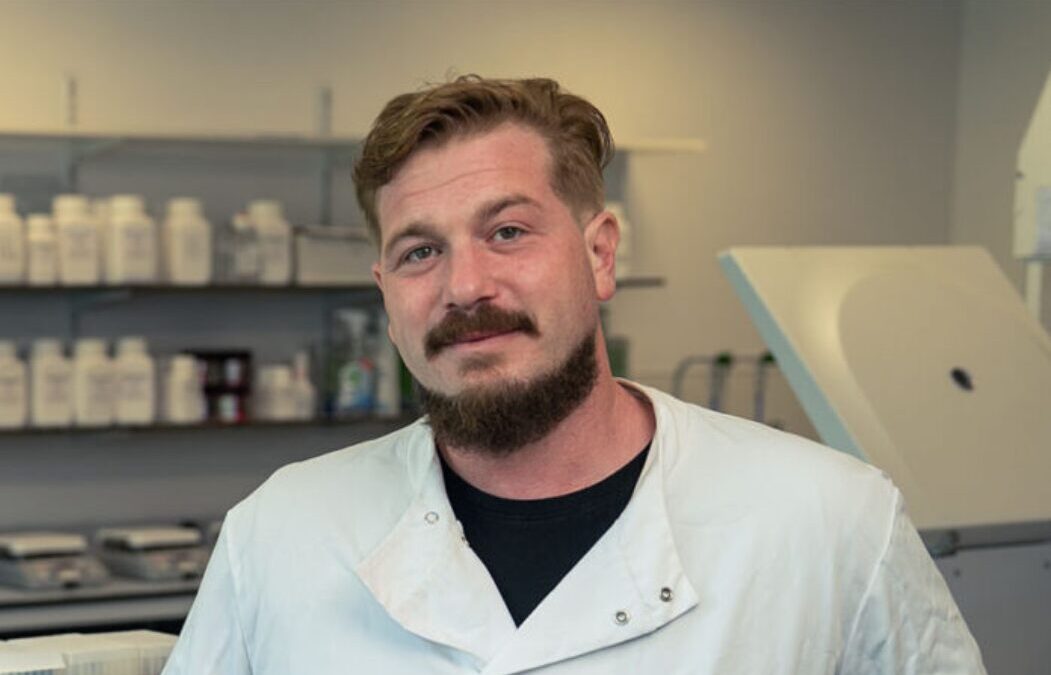
Orr Yarkoni’s path started in academic research and went on to building Colorifix, one of the world’s most ambitious biotech-textile companies that radically reframed how biology can power industry.
Colorifix has secured funding from top-tier investors like Inter Ikea, H&M Group Ventures, and SAGANA.
In this episode, you will learn:
- Orr Yarkoni transitioned from academia to entrepreneurship after realizing that environmental impact must be paired with financial sustainability to endure.
- Colorifix uses engineered microorganisms to produce natural dyes, dramatically reducing water, energy, and emissions in the textile dyeing process.
- Early on, the team made the classic mistake of chasing investors after a patent, rather than validating with customers and proving a real market need.
- Regulatory hurdles around GMO processes and the need to simplify biotech for non-scientist dye-house operators created major barriers to entry—and a strong moat.
- Colorifix chose “numbering up” (distributed, on-site fermentation at dye houses) instead of “scaling up” in a central plant, aligning unit economics with sustainability and supply-chain resilience.
- Blending VCs with strategic investors like H&M and IKEA gave Colorifix both financial backing and deep market validation without sacrificing independence.
- Orr reminds founders that building climate-scale solutions is a marathon, not a sprint, and that patience—with the market and with yourself—is essential.
SUBSCRIBE ON:
 iTunes
 Google Play
 Stitcher
 TuneIn
 RSS
RSS SoundCloud
 Spotify
Keep in mind that storytelling is everything in fundraising. In this regard, for a winning pitch deck to help you, take a look at the template created by Peter Thiel, the Silicon Valley legend (see it here), which I recently covered. Thiel was the first angel investor in Facebook with a $500K check that turned into more than $1 billion in cash.
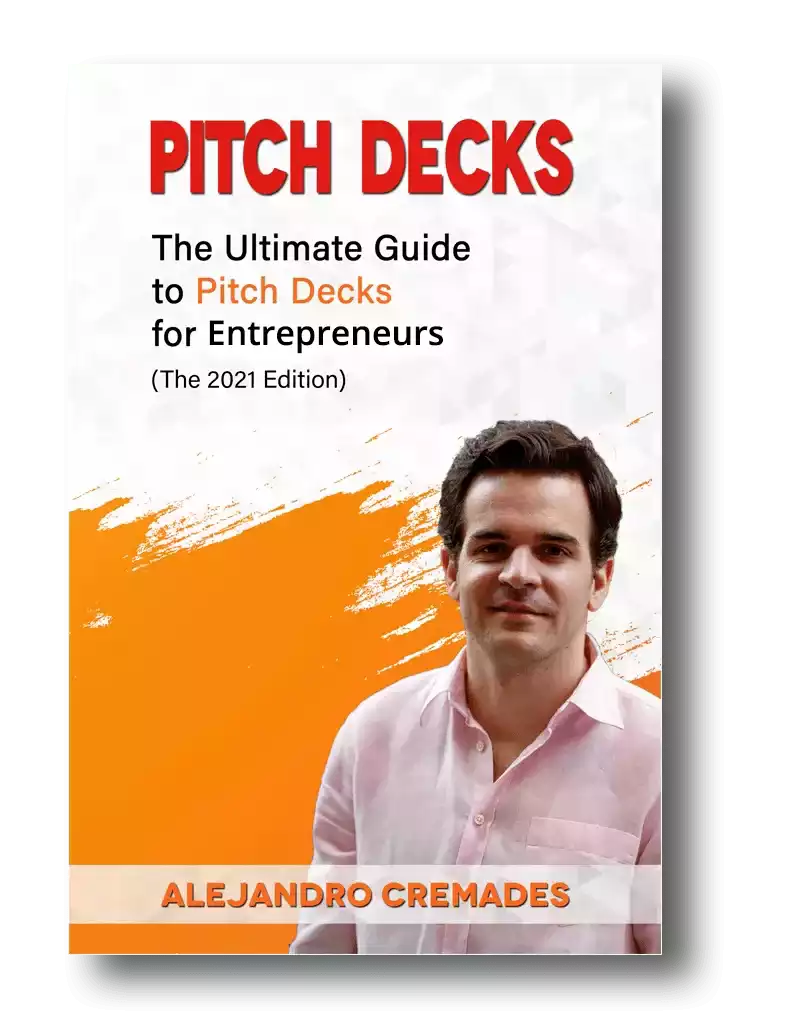
*FREE DOWNLOAD*
The Ultimate Guide To Pitch Decks
Remember to unlock for free the pitch deck template that founders worldwide are using to raise millions below.
About Orr Yarkoni:
Orr is CEO and co-founder of Colorifix. For the last 10 years he’s been applying his skill-set bridging synthetic biology with nanotechnology to biosensors, including the Cambridge/Edinburgh Arsenic Biosensor Collaboration.
Orr is passionate about creating a symbiotic relationship with an industry that has a global impact on the environment by applying synthetic biology to create sustainable solutions that will have environmental, social and economic benefits.
Raise Capital Smarter, Not Harder
- AI Investor Matching: Get instantly connected with the right investors
- Pitch & Financial Model Tools: Sharpen your story with battle-tested frameworks
- Proven Results: Founders are closing 3× faster using StartupFundraising.com
Connect with Orr Yarkoni:
Read the Full Transcription of the Interview:
Alejandro Cremades: Alrighty, hello everyone, and welcome to the DealMaker Show. So today we have an amazing guest joining us. You know, we’re gonna be talking quite a bit about barriers to entry, scaling up versus numbering up, which is quite a unique topic. And then also the fundraising process, whether you’re raising from VCs, the strategics, the angles, the perspectives,
Alejandro Cremades: the roles, building, scaling, financing—all the good stuff that we like to hear. But without further ado, let’s welcome our guest today, Or Yarkoni. Welcome to the show.
Orr Yarkoni: Pleasure to be here, Alejandra.
Alejandro Cremades: So originally born in Israel, but then you kind of moved all over the place—Portugal, the UK. Give us a walk through memory lane. How was life growing up for you?
Orr Yarkoni: So as you said, I was born in Israel. When I was very young, two years of age, my parents moved to Portugal, where they raised me and my sister. At age 18, I moved to the UK for university.
Orr Yarkoni: And I ended up doing my undergraduate through a PhD in the UK in Newcastle, and then moved on to Cambridge where I did my postdoc and met my co-founder, Jim Adjioca.
Alejandro Cremades: So tell us about the whole research and more of the technical side of you. How did you get into this whole segment to begin with?
Orr Yarkoni: So I was always very passionate about nature and particularly living things from an early age. I always loved animals. And when I got into my teens, I really committed that I wanted to get to understand nature better, and particularly nature’s language, which is DNA.
Orr Yarkoni: And that’s what made me go into molecular biology and then synthetic biology and understanding how to work with nature’s own processes to make things. Um, then I worked on interfacing cells in the environment through biosensors for a number of years.
Orr Yarkoni: Which is how I met my co-founder, Jim, working on a biosensor for water quality. And through that work, we became aware of how much impact the textile industry actually has on the environment, particularly on water and pollution.
Orr Yarkoni: And we decided how it would be great to use SynBio to actually make the colors and put color on fabrics rather than measure how much pollution is going into the water to begin with.
Alejandro Cremades: So how big of a decision was that? Because, I mean, up until that point, you were pretty much academia—researching, PhD, all of that good stuff. So it’s quite the shift from that to wanting to start a business.
Orr Yarkoni: Yeah, I mean, I’m not going to say it was easy. Um, it was a difficult decision. But one of the learnings for me from the work with biosensors was that we were developing products that were really good and they were fit for purpose, but they didn’t really have a market—meaning there was no financial incentive to do it.
Orr Yarkoni: So we were making really low-cost sensors to help people monitor the quality of their water, but no one was going to make money by selling those things. And that really drove me further to the realization that to do good, you must also do well. And for something to be sustainable, it has to be financially sustainable, not just environmentally sustainable.
Orr Yarkoni: Right. And that was one of the big drivers to actually go into business and to shift mindset from academia and developing products that were for a good purpose to developing a product that solves a problem and does so in a way that perpetuates its impact on the environment—meaning people earn money doing it.
Alejandro Cremades: And what about the whole journey of putting together technology for what ended up becoming the company, but then spinning it out and going at it with building it? I mean, what does that journey look like?
Orr Yarkoni: Again, it’s very much step by step, and it requires different levels of commitment from you and from those around you, because ultimately it’s going to be very seldom that you can achieve that much by yourself.
Orr Yarkoni: So it starts with surrounding yourself with the right people. Um, and again, very thankful for my co-founder to help me and guide me through some of the steps and to give me the opportunity to step up and be the CEO, as he used to be my boss—you have to keep that in mind.
Orr Yarkoni: Um, but from there, understanding what it means to run a company—in my case, reading the UK Companies Act 2006 and understanding all the obligations of being a director and all those things. And essentially, I approached it from the perspective of:
Orr Yarkoni: I’m doing research, just not into science. I’m learning how to do those things. So it requires that commitment to understand your role, what’s expected of you, and how you can best serve the company in that role.
Orr Yarkoni: And then from there, we made a few mistakes. I’d say the first one was once we had the technology down and we filed for the patent and got the search examiner report, we were like, okay, we have a technology, now we need investors.
Orr Yarkoni: And what you should be doing is: okay, now we have a minimum value proposition. Now we need to test it with the customer. So that took us a little bit of time to get that in place, which is why the company started in 2016. It took us time to get that first funding—learning the ropes of being a first-time entrepreneur, setting up the company, running it, and eventually getting that customer and then investor traction.
Alejandro Cremades: So for Colorifix, so that people get it, what ended up becoming the company? What’s the business model?
Orr Yarkoni: So what we do is we modify microorganisms to produce colorants—dye stuffs—for use in textiles. Um, we basically make them produce the same colors you see in nature. So if you take a parrot, for instance, we could find DNA off the tail end of the parrot.
Orr Yarkoni: And from there, find the message, make that color, put it into our microorganisms. They’ll make the same color the parrot makes the same way the parrot makes it, starting from sugar and nitrogen and building all of the chemistry.
Orr Yarkoni: We then ferment that microbe, much like the way you make beer, but instead of making alcohol, you’re making the dye stuffs. And then we apply all of that mixture—the biomass, dye stuff, and water from fermentation—onto the fabric, and the microbes transfer and fix the dyes into the fabric. So not only are you replacing how the dyes are being made,
Orr Yarkoni: You’re changing how they’re being put on the fabric and removing all of the chemistry that’s normally associated with dyeing. And that allows you to save 77% water, um, a ward off emissions, and depending on what you’re dyeing, between—and on energy.
Alejandro Cremades: And then when you guys were putting together the business, what were some of the biggest barriers to entry that you were encountering?
Orr Yarkoni: Well, firstly, it’s a GM technology to begin with. So the process we’re talking about is a GMO process that makes a non-GM product. That means anywhere that we’re applying it, we need to get a local license and work with local governments.
Orr Yarkoni: And in some countries, particularly in the EU, you’re looking at about 45 days turnaround from applying for a license to getting it. Somewhere like Turkey can take up to 270 days for that application to go through.
Orr Yarkoni: So every time we onboard a customer towards using the process, you have to engage in that long regulatory cycle. And navigating that the first time around and getting a successful application through isn’t simple, as there aren’t many applications for distributed SynBio, really, in the world.
Orr Yarkoni: So that was the first one. Second one: setting up everything for scaling and getting these processes to take place in a dye house to make use of all the existing labor and infrastructure and processes that are in place at the customer side.
Orr Yarkoni: We need to standardize a lot of elements there and simplify them for use by non-fermentation scientists. Right? We want people who are machine operators to use this equipment
Orr Yarkoni: And achieve consistent, reproducible results.
Alejandro Cremades: So then, when it comes to really putting together the proof of concept, how was that, and at what point did you guys feel like you were starting to turn a corner and that this could be something interesting?
Orr Yarkoni: So at different stages of growth, we had different key growth milestones. So the proof of concept toward starting the company was when we managed to dye our first reasonable piece of fabric and have it soak all of the color out of the liquid, and the liquid was totally clear.
Orr Yarkoni: And then that’s where we went, okay, this really works. Then the next one was, okay, we got it to work and pass all the quality metrics and safety metrics and everything else. So like, okay, this is perfect.
Orr Yarkoni: Able to enter the market. Okay, so proving that is something that you can eventually sell once you scale, etc.—that was another one. Then, given the type of business that we have, we need to show that we can do multiple colors. It’s not enough to just make a blue that passes all these tests, right? You need all the colors.
Orr Yarkoni: So getting to that product portfolio that gets a customer to bet on you. Okay, you—this works. The product passes my quality.
Orr Yarkoni: It solves my need. And you’ve made enough that I believe you’ll make more. I’m willing to test you for real and in a meaningful scale.
Orr Yarkoni: Then you get that first scale-up challenge of getting from, you know, a gram to a kilo of product—something you can show—to getting something that’s a first commercial production pilot trial.
Orr Yarkoni: And if the customer doesn’t—if the partner doesn’t—already have the CapEx in place, again, time lapse there. So a lot of planning, a lot of hand-holding to make sure that takes place right.
Orr Yarkoni: And then from there, once you’ve proven all of that concept, you then need to go and raise more money so you can go to the next step in scale, right?
Orr Yarkoni: So our first fundraise got us to the point of: you have product that passes all of the metrics to enter the market. We’ve gotten customers convinced that they’d like to trial this on site.
Orr Yarkoni: Then we went and raised further money. We put the machines on site, got the customers to work with the technology, get their feedback that yes, this is working.
Orr Yarkoni: And then we went for another funding round to get to the next level of scale, such that we can start actual industrial-level production of tons per batch, rather than, you know, tens to hundreds of kilos.
Alejandro Cremades: Yeah, because the total amount raised was $46 million—if you do the conversion, $46 million. So how was the experience of dealing with investors, whether on the first round or the last round that you guys did? Do things get a little bit easier? And what kind of expectations were you seeing shifting as part of the process of engaging with them?
Orr Yarkoni: So, good question. Um, we started off with a lot of interest from small-scale investors, angels, and VCs—brands. So interest from a lot of different areas. But the biggest difficulty is always the same: getting someone to commit and to take that cornerstone lead position on the round.
Orr Yarkoni: And in our case, we worked closely with strategics. In our first funding round, we were led by Sagana, which is an impact VC.
Orr Yarkoni: But they’re the ones who convinced us to listen again to H&M’s proposal to work together. We were hesitant to align closely to a big fashion brand early on,
Orr Yarkoni: Where they might silo us a little bit and constrict us to working more internally with them. But we were assured that there would be no commercial tie-in or exclusivity.
Orr Yarkoni: And we did have to listen to them twice before we accepted that level of risk. And again, thank the impact VC for pushing us in that direction to listen to them again, because they were convinced, whereas on the first instance we weren’t.
Orr Yarkoni: And that’s actually been a great partnership for us. H&M has been super helpful in us understanding the product fit, the market better, and in introducing us to a lot of manufacturers and other customers, as well as promoting the technology, the company, and what we do to other brands.
Orr Yarkoni: So it’s been really useful, and we were worried about it to begin with. So I would fully say: work with strategics, but make sure that their interest is your interest rather than the other way around when setting up the deal.
Alejandro Cremades: And this is interesting too, because it’s a different approach and a different way of dealing with the financial players, whether it’s VC, private equity, versus a strategic like you were saying—an H&M. So what are the main differences that you guys have experienced, and what can you share with the people who are listening, wondering whether it makes sense or not to bring strategics into their business?
Orr Yarkoni: So in my experience, it’s always going to be a mixture of both.
Orr Yarkoni: The strategic is going to have a higher level of scrutiny and focus on your technology and performance of the product, rather than your projections and what you describe as your total addressable market, etc. They have a vision of how they would like this to work for them.
Orr Yarkoni: Internally, as a technology, and they see how it could fit into their competitors as well, which is why they’re betting on you. They just want to ensure that the quality that the product meets all the specs of something that they’re looking for and that the vision and scalability of the technology match what they’re looking for as well. There’s a lot of really nice solutions that don’t work at scale or price slash cost
Orr Yarkoni: for the market that they’re going into. And that’s the key thing. And I think that the strategics are more focused on um than the you know revenue over the first three to five years versus VCs, which are will be more focused on revenue projections than the strategics themselves.
Orr Yarkoni: And I think us having both sides on every funding round, having participation from VCs and strategics first with H&M and our latest funding run with IKEA ah has brought that validation of, you know, checking the numbers, checking the product and making sure that ah there is alignment with what we’re doing and what there’s room to grow in in the industry.
Alejandro Cremades: And you know, the industry, the textile industry is massive, right? So I guess say all these people are betting on a vision. And to that end, if you were to go to sleep tonight or and you wake up in a world where the vision of Color Refix is fully realized, what does that world look like?
Orr Yarkoni: Well, if we go the full vision, it’s not just what everyone wears, but it’s all color that we produce industrially being biological color would be a great start.
Orr Yarkoni: I mean, there’s a use for petrochemicals. There are specific things they can do that natural molecules can’t do, which is why they have certain advantages. But we should focus only on using them where their value is exclusive.
Orr Yarkoni: There’s many things that can be replaced, that we should replace with the use of petrochemicals, and color is definitely one of those.
Alejandro Cremades: So scaling up versus numbering up, what’s the difference?
Orr Yarkoni: So when we were starting out, we had a big decision to make, which was about how do we grow the application of the technology? Do we centralize and make a big fermentation center where we make huge, huge vats of dye stuff and then ship it all over the world? Or do we send fermenters all over the world and ferment things locally?
Orr Yarkoni: Right? So in one model, you need to go really, really big to make the unit economics work because you have all those shipping costs and downstream processing costs and other matters to deal with.
Orr Yarkoni: And that also has an impact on your footprint, both in use of water and in CO2 emissions. So looking at the value chain and looking at trends in the market with more vertical integration happening in the industry and especially during Covid time, the pressure then to push for more vertical integration helped us in positioning the process as another step that you’re integrating vertically. You’re not producing the color, not just applying it.
Orr Yarkoni: um And it gives you that power of producing the color you need on the day you want it, rather than wait for shipping, et cetera. So we thought, given you save all the water and you’re reducing the carbon footprint,
Orr Yarkoni: and you get to have a positive impact on the cost, then it’s better for us to go with this distributed approach. And so then it’s about how do you get to the right batch size when you’re going to be making it at the customer site and each customer has a very different size die house. You have die houses that do 10 tons a day, you have die houses that do 600 tons a day of fabric. so Having a modular approach that can fit small to medium and then a different approach for those really, really big customers became very obvious that we needed to do something like that. And then standardizing that, modularizing it and doing it in a way that our tech support team can support each customer was really critical towards the vision of how do we scale it.
Alejandro Cremades: So then as part of this, you know, one thing that comes to mind is what are some of the challenges that you guys are still facing, let’s say from a tech and rev regulatory perspective?
Orr Yarkoni: So from a regulatory perspective, we’re still facing that challenge of getting licenses in different geographies that we operate. Not everywhere produces um GM processes or or has that tied up with the industry that we’re looking at.
Orr Yarkoni: Where you need to operate geographically where brands already have their supply chains. It can take a large brand up to two years to onboard a new supplier and take them through all of the steps and accreditation before they start supplying to them at volume.
Orr Yarkoni: So it’s really key that we onboard players in the supply chain rather than try to change the supply chain to work with our existing partners. So choosing the right partners, betting on the right players in the supply chain, all of those were key aspects in deciding where to where to grow.
Alejandro Cremades: And one question here that I wanted to ask you too is, what would you say is one assumption in the world of fashion and textile that you think is totally wrong?
Orr Yarkoni: Okay, the sad answer is There’s too much there’s too much that we’ve of what we think that’s right, that’s wrong.
Orr Yarkoni: From the numbers that the industry talks about regarding impact, meaning exactly how much it pollutes, to how things are made and how much of them gets made. There’s too much of all of that.
Orr Yarkoni: So the reality is that The sustainability is with the consumer more so than the manufacturer.
Orr Yarkoni: And brands, all they can do is give options for consumers to drive the the fashion. right Because at the end of the day, consumer dictates fashion, not brands.
Orr Yarkoni: Brands can influence it by putting the choices in front, but it’s going to be consumer ah decision that drives it. And we need to facilitate that decision as much as possible.
Orr Yarkoni: And I hope that there will be more regulatory things against greenwashing and in influencing consumer decision towards real impact rather than marketed impact.
Orr Yarkoni: So Unfortunately, I think the message is there’s too much that we think we know that we don’t. There’s so much that we assume is the status quo that isn’t the status quo.
Orr Yarkoni: And we consume too much, all of that. So too much.
Alejandro Cremades: Well, one question that comes to mind as you’re saying this is, as so you can, let’s say anyone goes out there in nature, you know, what would you say is one color that one could find that is totally underrated that you wish people would use more?
Orr Yarkoni: That’s a great question as well. So everywhere you look around you, um first of all, nature is symbolized with green, and we think of nature in the ocean as blue. So green and blue are the two colors that you see most associated with natural.
Orr Yarkoni: Those are also two of the hardest colors to get to perform that are natural dyes as an interesting aside. But if you walk into most rooms, most fabric today is black, blue, or white. So anywhere you go, if you look at what people are wearing, I’ve just described 70% of apparel in any room you walk into.
Orr Yarkoni: And one color I see underloved is yellow. And i personally love yellow, as I’m sure you can see.
Orr Yarkoni: and And would love to see more of it. It’s a lot of people think of it as a summer to early autumn color, but I think it brings a lot of things to life.
Alejandro Cremades: That’s amazing. So let’s say, or I put you into a time machine. And let’s say i bring you back in time to that moment where you are, you know, meeting for the first time, Jim, and you guys are…
Alejandro Cremades: wondering about a world where you could, you know, bring something of your own to life. And let’s say you’re able to have a chat with that younger Orr and perhaps that younger Jim, and you’re able to give those younger guys one piece of advice, you know, back then in 2016, when you guys were thinking about launching this. And let’s say you’re able to give those younger guys one piece of advice before launching a business. What would that be and why, given what you know now?
Orr Yarkoni: You’re going to have to be a lot more patient with everything, including yourself, to make this work.
Alejandro Cremades: very profound. Or, you know, as they say, it’s a marathon and not ah not a sprint. but Or it has been an absolute honor, I guess, for the people that are listening that would love to reach out and say, hi, what is the best way for them to do so?
Orr Yarkoni: Please do visit us at www.colorifics.com
and email us at info at colorifics.com.
Alejandro Cremades: Easy enough. Well, Orr, thank you so much for being on the Dealmaker Show today. It has been an honor to have you with us.
Orr Yarkoni: Likewise, a pleasure, Alejandra.
*****
If you like the show, make sure that you hit that subscribe button. If you can leave a review as well, that would be fantastic. And if you got any value either from this episode or from the show itself, share it with a friend. Perhaps they will also appreciate it. Also, remember, if you need any help, whether it is with your fundraising efforts or with selling your business, you can reach me at al*******@**************rs.com
Podcast: Play in new window | Download
Subscribe: Apple Podcasts | Spotify | TuneIn | RSS | More


Facebook Comments