

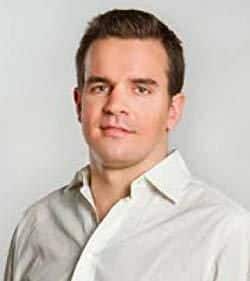

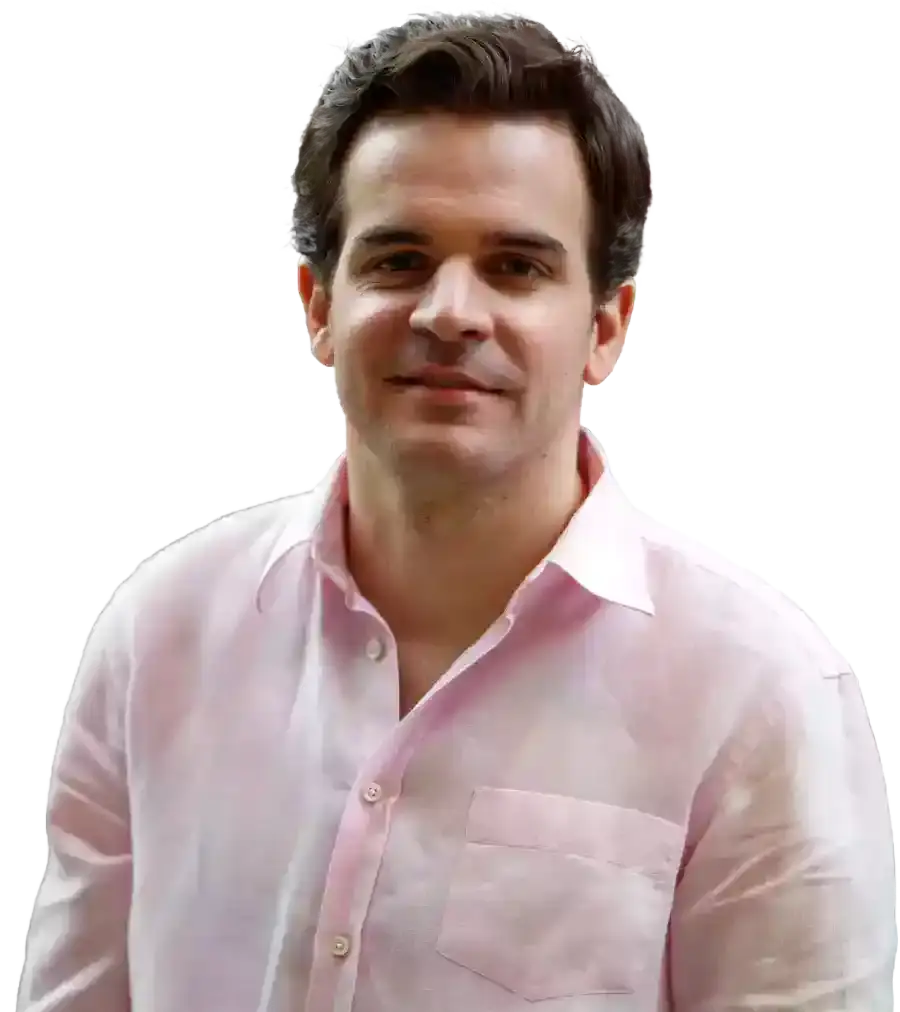
Founder of Dagster, Nick Schrock’s career defies the neat, linear playbooks often associated with Silicon Valley success. He didn’t follow a rigid five-year plan, nor did he obsess over titles or prestige early on. Instead, his journey has been shaped by systems thinking and cultural curiosity.
Dagster Labs has secured funding from top-tier investors like Georgian, Index Ventures, Sequoia Capital, and Slow Ventures.
In this episode, you will learn:
- Nick’s edge came from systems thinking and abstraction, not from chasing titles, prestige, or a rigid five-year plan.
- Non-linear detours like living abroad may “delay” you on paper, but they expand your perspective and widen your opportunity surface area.
- Early startup failure in Chicago taught him that credibility and timing matter, and naïve pitching gets exposed fast in sophisticated markets.
- Facebook’s 2010–2013 “golden age” showed that talent density plus autonomy can produce industry-defining tools without top-down mandates.
- Dagster was born of a contrarian insight: “boring” data pipelines are actually core business logic, especially as AI amplifies the cost of fragile data foundations.
- The CEO-to-CTO transition worked because it was values-aligned and operationally rational, and gaining Pete Hunt became a late-stage co-founder moment when Nick needed it most.
- Fundraising isn’t one game: preemptive rounds reward reputation and narrative, while down-cycle rounds force resilience, sharper positioning, and tighter conviction.
SUBSCRIBE ON:
 iTunes
 Google Play
 Stitcher
 TuneIn
 RSS
RSS SoundCloud
 Spotify
Keep in mind that storytelling is everything in fundraising. In this regard, for a winning pitch deck to help you, take a look at the template created by Peter Thiel, the Silicon Valley legend (see it here), which I recently covered. Thiel was the first angel investor in Facebook with a $500K check that turned into more than $1 billion in cash.
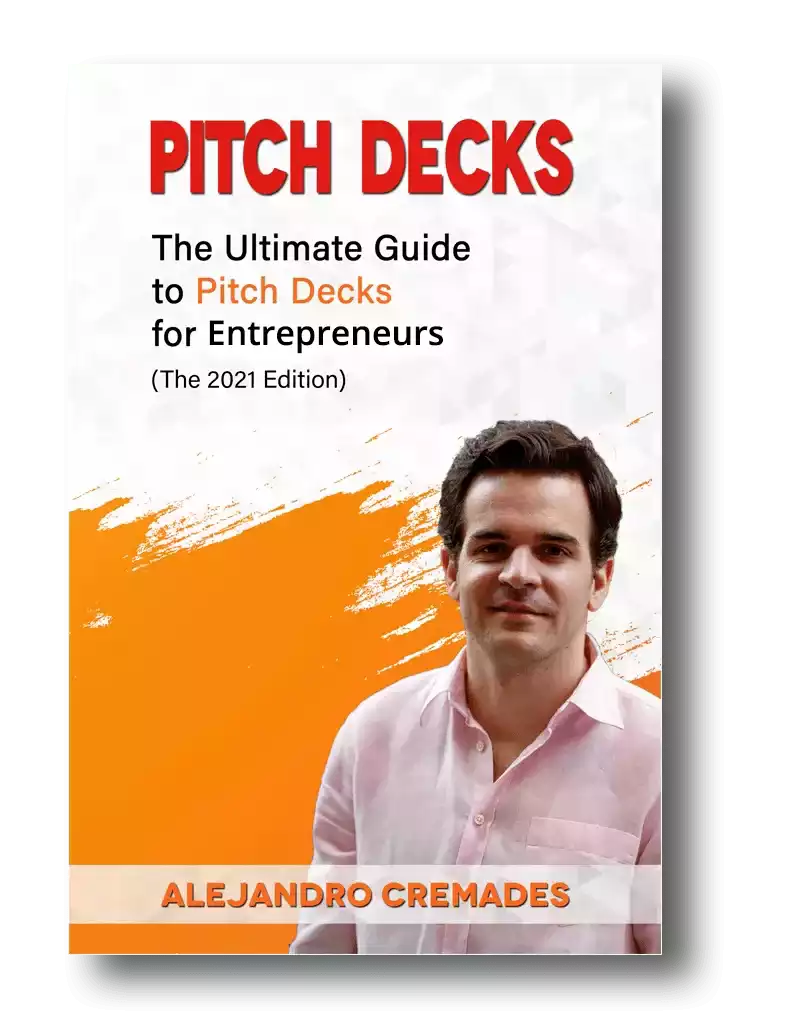
*FREE DOWNLOAD*
The Ultimate Guide To Pitch Decks
Remember to unlock for free the pitch deck template that founders worldwide are using to raise millions below.
About Nick Schrock:
Nicholas Schrock, based in New York, United States, is currently a Founder at Dagster Labs. He brings experience from previous roles at Facebook, CareEvolution and Microsoft.
Nicholas holds a 2004 – 2005 degree from The London School of Economics and Political Science (LSE), and has a robust skill set that includes engineering and more.
Raise Capital Smarter, Not Harder
- AI Investor Matching: Get instantly connected with the right investors
- Pitch & Financial Model Tools: Sharpen your story with battle-tested frameworks
- Proven Results: Founders are closing 3× faster using StartupFundraising.com
Connect with Nick Schrock:
Read the Full Transcription of the Interview:
Alejandro Cremades: All righty. Hello everyone, and welcome to the DealMaker Show. Today we have a really amazing founder. We’re going to be talking about building and scaling and, in this case, transitioning from CEO to CTO. We’ll also explore the implications of AI in today’s world and things to think differently about if you were to start again with everything that’s going on, including raising money. So brace yourself for a very inspiring conversation. Without further ado, let’s welcome our guest today, Nick Schrock. Welcome to the show.
Nick Schrock: Thanks for having me.
Alejandro Cremades: You were originally born in Minnesota and grew up in the suburbs of Minneapolis. Walk us through memory lane. How was life for you growing up?
Nick Schrock: I think I had a pretty conventional upbringing in a lot of ways. I grew up in a city called Edina, which is a middle to upper-middle-class suburb in Minnesota. I come from a medical family. My father is a doctor, a brilliant guy, and my parents were very academically focused.
Nick Schrock: There were always high expectations on that front, with a lot of vigorous conversations. They were well-read, so I had a very enriched childhood from that perspective.
Nick Schrock: I didn’t have a particularly remarkable junior high or high school experience. I was a bit precocious, but I wasn’t one of those Teal Fellows solving world peace at 13 or starting a business empire at 16.
Nick Schrock: I had a fairly well-balanced childhood. I worked hard, did well in school, and I was very into percussion.
Nick Schrock: I was in drumline and then got into marimba, which is kind of a xylophone-like instrument you play with mallets. So, yeah.
Alejandro Cremades: What about history? It sounds like when you were heading off to college, history was what you were thinking about, but eventually you transitioned into computer science, which is quite a shift.
Nick Schrock: It is quite a shift. I like thinking about systems a lot. When I read about politics and history, I approach it—and always have—from a systems perspective, even from a very young age.
Nick Schrock: I once wrote a biography of myself when I was in fifth grade.
Nick Schrock: It was an exercise where you write a future timeline of yourself. In mine, I was going to be President of the United States.
Nick Schrock: The way I was going to get there was by moving to Florida and becoming governor. That was my story. I was about 10 years old when I wrote this, so I was already thinking in terms of strategy and systems.
Nick Schrock: That’s really the way I think about the software world. I’m very interested in abstractions and systems aspects of it, which mirrors how I think about politics and organizational theory.
Nick Schrock: I’m not much of a hacker, actually. I don’t do lots of side projects at home. I’m far more abstract in how I think.
Nick Schrock: That balance is changing with AI, though, because AI can capture so much incidental complexity that I’m much more likely now to do things like home automation.
Nick Schrock: But overall, I like thinking about strategy and systems, and that’s the lens I approach history and politics with.
Alejandro Cremades: When you came out of college, you decided to go to Microsoft. It wasn’t a very long stint before you packed your bags and went to Europe. What was that experience like—working at an iconic company like Microsoft as your first job—and what opened up for you by going to Europe?
Nick Schrock: I ended up going to the London School of Economics. It’s interesting—I actually have very warm feelings toward Microsoft.
Nick Schrock: I was in the Developer Division, which produced .NET and C#. The engineers there were brilliant. I attribute a lot of my success in developer tools at Facebook to that experience.
Nick Schrock: I was actually talking to someone about this earlier today. I kind of worship at the feet of Anders Hejlsberg, who designed C# and now TypeScript. He’s a brilliant engineer with a very pragmatic approach that I try to emulate.
Nick Schrock: I liked Microsoft in a lot of ways, but I was ambitious without a plan. I didn’t really think deeply about what I was doing.
Nick Schrock: In many ways, I was just doing the default thing—going to a company where I’d interned and had a positive experience.
Nick Schrock: One day I woke up and thought, what happens if I devote my life to this and absolutely crush it here for five years? Then I’d be five years ahead, maybe a mid-level manager or something. And I was like, I’m too young.
Nick Schrock: I was 22, had a lot of varied interests, and wanted to travel the world a bit. I was 18 when 9/11 happened, and Napoleon has this line about how you can understand a lot about a man by what was happening in the world when he was 18.
Nick Schrock: I thought maybe the right path forward was going into some form of government or government-adjacent field. I felt LSE would be an interesting place to explore that.
Nick Schrock: I was also very interested in living abroad to vary my experience.
Nick Schrock: I meet a lot of young people, and it’s interesting how interview rubrics guide you to answer questions like, “What are your career goals for the next five years?”
Nick Schrock: I didn’t really have any. I didn’t have an exact plan.
Nick Schrock: I’m a big believer in exposing yourself to a lot of things and going after opportunities. There’s a lot of luck in life.
Nick Schrock: The idea of a direct pipeline—from fancy high school to fancy college to fancy internship to fancy big company—is very institutionalized and narrow now.
Nick Schrock: You go to Stanford, intern at Google, work at Meta, then start a startup. That’s the pipeline.
Nick Schrock: Going abroad may have delayed my career a bit, but I’m happy I did it.
Alejandro Cremades: That clearly opened the door for you to come back and enter the startup world. Early on, as they say, you either succeed or you learn. There were many lessons before you went to Facebook. What was that first startup stint like for you?
Nick Schrock: I gravitated toward what some of my friends were doing. I didn’t know what I didn’t know.
Nick Schrock: It’s ironic—I talked about getting varied experience, but then I ended up back in Ann Arbor of all places, working at a healthcare startup with friends.
Nick Schrock: After a year at LSE, I realized I really was a software engineer, and that’s what I wanted to do.
Nick Schrock: I liked the mission of the company. It worked on healthcare data interoperability, which I think is a very important problem.
Nick Schrock: I worked closely with dear friends, which made it a fun way to spend a couple years in my twenties.
Nick Schrock: Then I went to Chicago to start a business with a college colleague, a brilliant guy.
Nick Schrock: He pitched me on building software for hedge funds and proprietary trading shops because he’d worked at Citadel.
Nick Schrock: We had no support and no investment. That was the first time in my life where I really got my ass handed to me on calls.
Nick Schrock: We were naive, pitching firms that basically said, “Who are you people?”
Nick Schrock: Then the financial crisis happened, and it became a terrible idea to do what we were doing.
Nick Schrock: It worked out pretty well, though, because someone at Microsoft heard I was on the market and put me in the queue for Facebook, which was super transformational and got me out to the Valley.
Alejandro Cremades: You spent eight years at Facebook, which is significant. Seeing a company grow like that must have been transformational. If you had to name the three biggest things you took away, what would they be?
Nick Schrock: It’s hard to tease apart because Facebook defined my professional identity before founding Dagster Labs.
Nick Schrock: When I joined, I fit right in culturally. I was engineer number 180 and quickly aligned with the engineering culture.
Nick Schrock: I deeply cared about software engineering best practices, and the company needed that at the time.
Nick Schrock: It was exhilarating. I had often been a big fish in a small pond, but at Facebook I saw what truly great engineers looked like.
Nick Schrock: It was humbling. I realized how much I had to learn and had to figure out what my real contribution was.
Nick Schrock: Facebook was extraordinary, especially during my first three or four years there.
Nick Schrock: People assume I’m referring to financial outcomes from the IPO, which were great, but what I remember most fondly is the quality and quantity of work.
Nick Schrock: Facebook’s engineering culture from 2010 to 2013 was a golden age.
Nick Schrock: We moved fast without building slop. We open-sourced frameworks that became universal standards.
Nick Schrock: There was a very special culture in the internal developer tools group at Facebook.
Nick Schrock: So I learned about that, and the talent density is very important. I think I’ve learned—and it’s hard to do if you’re not in a super resource—
Nick Schrock: If you give ambitious engineers who have kind of a wide dynamic range of skills room to run, with not too much—and an ability to self-direct and build on their own—not everyone can do this, but there’s a subset who can, and you can really get extraordinary outcomes organically.
Nick Schrock: With these projects that ended up being industry-defining in some ways, it wasn’t directive. It was some individual engineer who had an idea and was given space to build.
Nick Schrock: And then very quickly, the technology to build our core stack. So that was—yeah, you know—great.
Nick Schrock: I really look back on it. I’m very grateful to Mark and Cheryl and the whole team for building this culture—Shrep too, the CTO—building a great culture that defined a career.
Nick Schrock: And yeah, you know, the company—it was great. Like any job, it has ups and downs, but it was a very well-run organization, actually.
Alejandro Cremades: There are always ups and downs. Now, talking about ups and downs, nothing is like the ups and downs of entrepreneurship. Eventually, after eight years, you decide to turn the page and go at it again—now with the Daxter Labs.
Alejandro Cremades: Talk to us about how the idea of Daxter Labs came to you. Obviously, after Facebook, you took a few months off and you were looking into things. How did you land on Daxter Labs?
Nick Schrock: Yeah. So, you know, I knew I wasn’t going to ride off into the sunset.
Nick Schrock: I had a lot of gas left in the tank. So I was looking around at what to do next. I wasn’t necessarily going to start a company. Yeah—what I started to look around at was healthcare again.
Nick Schrock: One of the things I found interesting about how GraphQL was adopted was that it wasn’t just adopted early in its lifecycle by bleeding-edge tech companies with a high-risk profile.
Nick Schrock: It was adopted by KLM, Walmart, et cetera, et cetera. So some sort of cultural shift had happened where more traditional organizations were willing to have engineering groups with a different risk profile and different mentality than the organization that encloses them.
Nick Schrock: I was very interested in, given the advances in dev tools, taking a fresh look at how I could participate in the healthcare sector.
Nick Schrock: Basically, I started talking to people in the area. I talked to them about their technology problems, and they were like, “Oh, our big problem is data.”
Nick Schrock: I’m like, “Oh, like HIPAA?”
Nick Schrock: And they’re like, “No, no, no, no, no. We mean the basic nuts and bolts of moving it from this legacy system into something else.”
Nick Schrock: Then I would talk to them, and at the end of the conversation, one time I was like, “Wait—so you’re telling me you have this vision for transforming American healthcare, but the thing preventing you from doing it is the ability to do regularized computation on a CSV file?”
Nick Schrock: And they’re like, “Yeah.”
Nick Schrock: And I’m like, “Oh my—this is ridiculous.”
Nick Schrock: Throughout my career, I’ve always attempted to work in product management, and then I’ve been drawn down the stack because some aspect of the technology we built on deeply offended me, and I was compelled to work on it.
Nick Schrock: This was the final instance of it, where I was like, “Okay, I’m not going to fight my nature anymore.”
Nick Schrock: Now, because of this conversation and follow-up conversations, I was being drawn to what I like to say is: I’m drawn to developer experience dumpster fires like a moth to a flame. I can’t help myself.
Nick Schrock: Then I started looking into this, and it felt like the developer tools lifecycle in data was going back 10 years.
Nick Schrock: I thought these were incredibly important pieces of software that, for some reason, were referred to as “data cleaning” and “glue code,” and these blue-collar terms.
Nick Schrock: But these are the core business logic and value of a lot of companies. And the ML systems these feed into—and the analytics systems—are basically the basis of most human and automated decision-making in our society.
Nick Schrock: And it’s all built on a house of cards.
Nick Schrock: So I was very compelled by that. I like working on broad horizontal problems where I can impact a lot of developers.
Nick Schrock: I also like problems that are a mix of technical and organizational design.
Nick Schrock: When I was at Facebook, I kind of said to myself, “Listen—if what I’m working on isn’t going to change the org chart, it generally doesn’t interest me.”
Nick Schrock: That’s not true of all engineers, right? Some engineers keep the org chart the same and make something 10x faster—and that’s great. That’s so valuable. I’m not denigrating it.
Nick Schrock: But it doesn’t excite me as much as building technology that allows interfaces between teams to change, too. Then you can think about how the system works. I think that’s very impactful.
Nick Schrock: Data platforms are ripe for that type of thinking, because everyone in the organization has something to say about the data platform.
Nick Schrock: It’s the most heterogeneous stakeholder environment I’ve ever seen. You’ve got all sorts of people building the platform under it, building the data pipelines over it, integrating tools over here—every function tries to get value out of it.
Nick Schrock: And then there’s a technical insight. So it’s this mix. I latched onto it, started to read things, and prototype it.
Nick Schrock: I still think so much of the value here is in the data pipelines—even maybe especially in the AI era.
Nick Schrock: So I think it’s a very boring but important problem. Boring from the outside, I mean—people don’t think it’s glamorous, but I actually, you—
Alejandro Cremades: We’ll talk about the AI era in just a bit. For people listening to really get it, what ended up being the business model of Daxter Labs? How do you guys make money?
Nick Schrock: We’re an open-source framework. People adopt it and use it to model their data platforms and data pipelines, and maybe get basic versions into production.
Nick Schrock: Then we provide a service called Dexter Plus, where we host the operationally demanding parts of the platform and add lots of features that move it from just an orchestrator.
Nick Schrock: So what is Daxter, right? It’s a piece of software where, if you’re a data scientist or data engineer building data pipelines—meaning you’re moving data from some source system to a data warehouse or target system—you need to write code to do that.
Nick Schrock: It needs to be tested. You want to visualize it. You want to observe it.
Nick Schrock: So DAX is a system to do that.
Nick Schrock: And DAX Plus is a hosted enterprise platform that, the way we talk about it, turns DAX from an orchestrator into a full data ops platform that thinks about the entire lifecycle of writing data pipelines, shipping them, doing cloud-based development, and providing very advanced observability tools and very advanced analytics tools over them.
Nick Schrock: It’s a place where everyone can come together and have a system of record for the data platform that makes your data come alive.
Nick Schrock: That’s what we do. Companies like Discord run their entire data platform on Daxter.
Nick Schrock: We host the web tooling and a lot of stateful services on their behalf.
Nick Schrock: They run their own compute in their own data center. Then they have our backend authentication features and other proprietary features, and we charge money for that.
Alejandro Cremades: How was the transition for you from CEO to CTO? That’s quite an interesting transition as well.
Nick Schrock: Yeah. It was in 2022— in twenty twenty two—two things were happening.
Nick Schrock: One, I was reaching my wits end.
Nick Schrock: I was a solo founder. I had made a pandemic move to Jackson Hole, which sounds very fancy, but it was actually a terrible decision. I was incredibly isolated.
Nick Schrock: It was like I was at a breaking point.
Nick Schrock: The other thing that happened is I had hired Pete Hunt. I hired him as head of engineering—head of engineering plus plus.
Nick Schrock: He had formerly been a CEO and sold his company to Twitter.
Nick Schrock: I’ve known him for like 10 years. Very quickly, he had a new energy. He had more experience doing it than I did.
Nick Schrock: He was clearly operationally—in most ways—a more competent administrator.
Nick Schrock: It became a very natural transition. He was taking more responsibility for things—not in a graspy way—but he would help out with marketing and other functions.
Nick Schrock: He had all this energy, and I was just like, “Why don’t we just do this?”
Nick Schrock: I know him. I’ve known him for like 10 years. He’s the co-creator of the React framework—the JavaScript framework.
Nick Schrock: He was very business minded, and we have aligned values on many dimensions, in and outside of work. We’re just aligned.
Nick Schrock: So the transition was extremely smooth.
Nick Schrock: He had previous contacts with a bunch of the team. We were very disciplined about the role change.
Nick Schrock: It’s really been a joy. I kind of got a co-founder after the fact, which has been very critical for me.
Nick Schrock: I need a sounding board. It was my wife for a long time, but that was kind of unfair to her.
Nick Schrock: She started a company too, so it wasn’t crazy for me to do it. But we have to talk about other stuff.
Alejandro Cremades: I hear you. And as you were building the business and capitalizing it too—you’ve raised about $55 million—how has it been raising money through the cycles?
Nick Schrock: The A was kind of in summer of 2019. It was basically a seed round where, you know, the way it works is that I have a previous reputation for building and shipping a project that was broadly adopted.
Nick Schrock: So the investors pay attention.
Nick Schrock: When I announced it, some of the messaging resonated with folks, and that instigated a fundraising process—a so-called preemption.
Nick Schrock: That was a more straightforward process.
Nick Schrock: The Series B was a whole different story.
Nick Schrock: We were just getting momentum on the commercial business. We made progress, like, six to 12 months too late.
Nick Schrock: So we didn’t have enough momentum to have it.
Nick Schrock: And then we were raising in Q1 of 23, which was post the collapse of the Fed bubble and pre the AI excitement.
Nick Schrock: It was the nadir—the low point of the vibes in tech.
Nick Schrock: In fact, the Monday we did a bunch of pitches, lots of people said no. We were scheduled to get our term sheet on a Monday, and that weekend was the collapse of Silicon Valley Bank.
Nick Schrock: So we were like, “Oh my…”
Nick Schrock: And then the investors, for very logical reasons, were scrambling to help their portfolio companies. They were like, “Listen, we can’t have this conversation today.”
Nick Schrock: And we were like, “Oh my God—this is going to blow up our deal.”
Nick Schrock: So yeah, I’ve kind of gone through both…
Nick Schrock: There are versions of fundraising. There’s the version where it kind of falls from the sky a little bit and you get preempted. It’s still stressful, because the psychology of it can be a lot.
Nick Schrock: But then there’s the version where you’re doing a bunch of pitches and you’re getting punched in the face, and yeah, people are rejecting you.
Nick Schrock: That wasn’t fun at the time, but I think it ended up being—one, it built resilience in me to have that experience. Two, it was a very bonding moment between me and Pete, because we had to go through it together.
Nick Schrock: We had to really dial in the narrative of the company, which is very important, actually.
Nick Schrock: I think we ended up getting conviction about the business as a result. So I think the fundraising process is good in some ways.
Nick Schrock: We did have an advantage insofar as we have a rep in the Valley, and therefore investors take us more seriously.
Nick Schrock: You hear these nightmare stories of investors being dismissive or rude to founders, which I find quite objectionable.
Nick Schrock: We only had a couple instances of that. But yeah, it’s not fun to do a whole bunch of pitches and—
Alejandro Cremades: Yeah, not fun, but very formative for sure. As you say, getting punched in the face—you learn quite a bit from that.
Alejandro Cremades: Now, talking about people that are betting on you, the capital raise—you guys have about 80-ish employees too. Everyone is betting on a vision here, right?
Alejandro Cremades: Nick, if you were to go to sleep tonight and you wake up in a world where the vision of Daxter Labs is fully realized, what does that world look like?
Nick Schrock: That’s a good question.
Nick Schrock: It depends on what time horizon.
Nick Schrock: In the current shape of the business, it’s very colored now by the AI wave, because I think the AI wave is disrupting so many layers of the stack simultaneously that it’s a huge opportunity to disrupt and have new players.
Nick Schrock: What I think about every morning is: how do we position ourselves so that we’re the preeminent data platform company?
Nick Schrock: And by data platform, I mean it in a different way. We’re not competing with Snowflake or Databricks—that layer of the data platform.
Nick Schrock: By data platform, I mean: how do we become the preeminent control plane for every company’s data platform in the AI era?
Nick Schrock: Longer term, I love developer tools. What I would love to build is sort of an Apple of dev tools, where you make bets on a few different technologies.
Nick Schrock: You have a taste about it and opinions. Apple doesn’t do focus groups, and they don’t really do that much customer research. They just do what they think is right. I find that very inspiring.
Nick Schrock: For the same reason, I love Rick Rubin. I think he’s so funny.
Nick Schrock: I’ve been working on this internal tool around improving agentic programming, and I’m actually super bullish on it.
Nick Schrock: Someone was like, “How did you make this so it’s good? People are going to love this.”
Nick Schrock: And I’m like, there’s this Rick Rubin line where he’s like, “I’m building it for me.” And by building it for me, I’m doing the best thing for the audience.
Nick Schrock: That’s really how I like to think about dev tools. Even though I’m working in data and stuff, I’m kind of a vibes guy.
Nick Schrock: I believe in passionate artists who have a vision for stuff and then lead people, rather than being led by focus groups.
Nick Schrock: That’s all what I’d love for Daxter.
Nick Schrock: The company was originally called Elemental.
Nick Schrock: It just became too confusing to maintain two brands. But the reason I called it that is that my long-term vision is sort of like a virtual cloud company where you really bet on these frameworks that get broadly adopted, and then build beautiful integrated experiences that feel great.
Nick Schrock: It feels great all the way from you typing code all the way to deploying on tools.
Nick Schrock: You can see there are lots of companies I admire. Vercel kind of feels like that.
Nick Schrock: Pete and I have experience across a few domains of software, and we think we have a playbook for this.
Nick Schrock: So there’s the short-, medium-, and long-term vision around that.
Alejandro Cremades: Nice.
Alejandro Cremades: Now let’s say I put you in a time machine and bring you back to that moment when you’re coming out of Chicago, from the startup you were working at, and thinking about launching something of your own.
Alejandro Cremades: If you could give that younger self one piece of advice for launching a business, what would it be and why, given everything you know now?
Nick Schrock: Launching a business—it’s interesting. The timing of it is interesting, because I’d give different advice at different times based on the iteration of Nick Schrock.
Nick Schrock: What I would tell my Chicago self is: “Listen, you think you’re real hot shit. You’re not.”
Nick Schrock: “Go to where the network is.”
Nick Schrock: “Go to where the best people in the world are at this stuff, and learn from them.”
Nick Schrock: “You can’t come up with this on your own. You’re not that guy.”
Nick Schrock: So go—get out to California and get around all the A players you can find in tech.
Nick Schrock: That’s what I would have told myself: respect the network. It’s everything.
Nick Schrock: I was kind of on my own, wandering around to some degree.
Nick Schrock: So yeah, that’s what I would have told my 27-year-old self.
Alejandro Cremades: I love that. Respect the network.
Nick Schrock: Get over yourself and get around the people you’re going to learn from and feed off of.
Alejandro Cremades: Love it. Nick, for the people listening that would love to reach out and say hi, what’s the best way for them to do so?
Nick Schrock: Yeah, I think on Twitter or X—pardon me—X or LinkedIn are kind of my two networks. So “Shrocken” is my universal handle there: S-C-H-R-O-C-K-N.
Nick Schrock: And yeah, I respond to well-crafted messages that are thoughtful. So feel free to reach out.
Alejandro Cremades: Amazing. Nick, thank you so much for being on the DealMaker Show today. It has been an absolute honor to have you with us.
Nick Schrock: Yeah, yeah. Thanks. It was a great time.
*****
If you like the show, make sure that you hit that subscribe button. If you can leave a review as well, that would be fantastic. And if you got any value either from this episode or from the show itself, share it with a friend. Perhaps they will also appreciate it. Also, remember, if you need any help, whether it is with your fundraising efforts or with selling your business, you can reach me at al*******@**************rs.com
Podcast: Play in new window | Download
Subscribe: Apple Podcasts | Spotify | TuneIn | RSS | More
Facebook Comments