

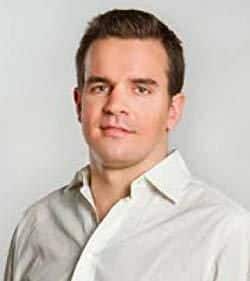
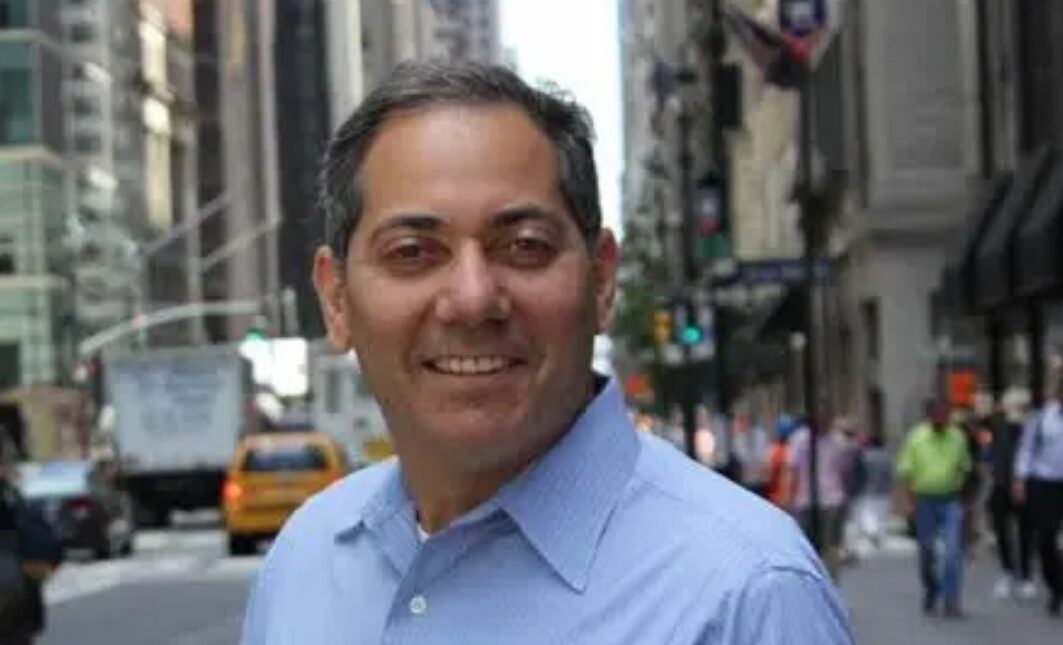
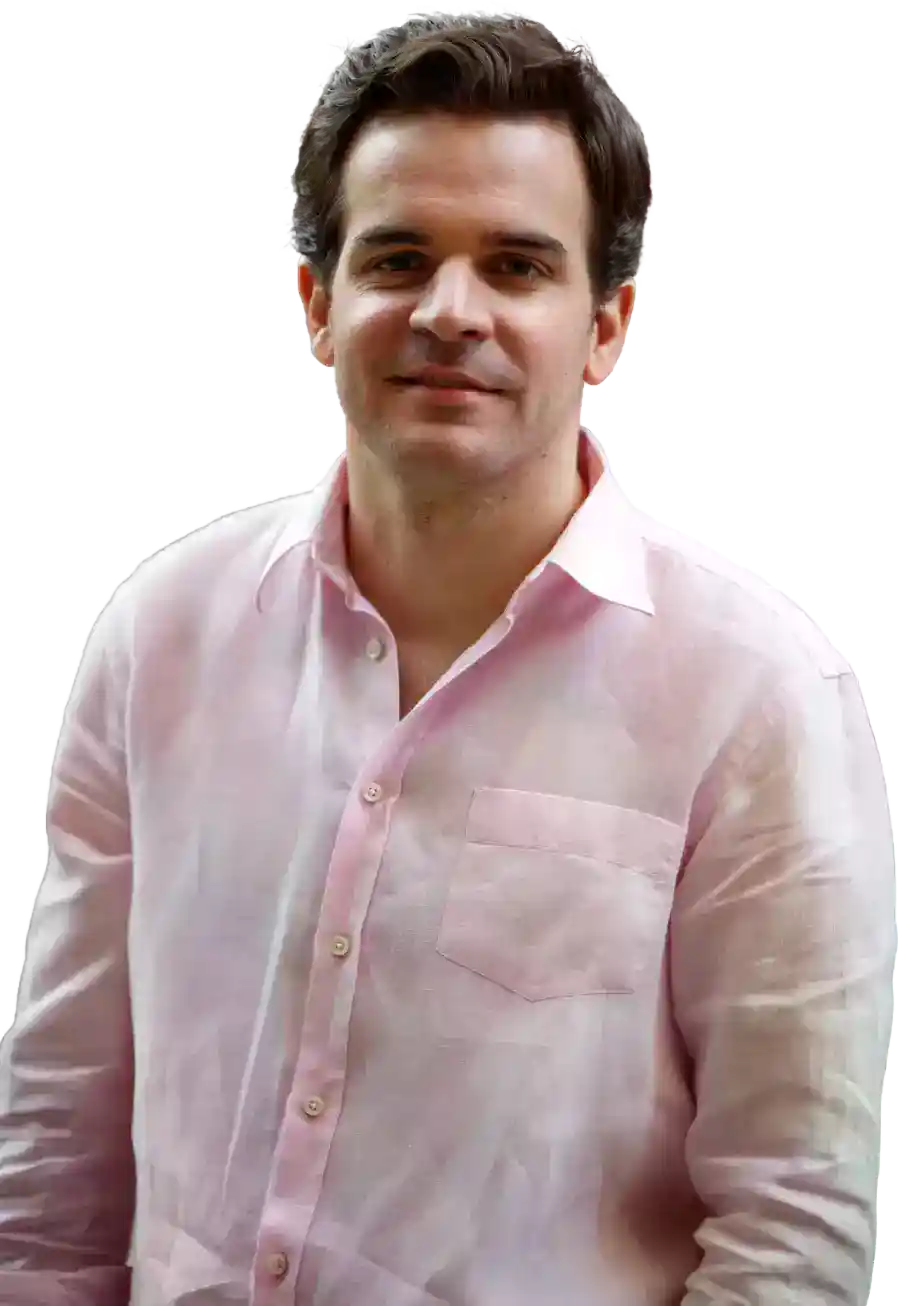
Lyron Bentovim is the founder of a publicly traded immersive-tech platform, The Glimpse Group. His story isn’t merely about navigating ups and downs; it’s about applying lessons across industries, leveraging timing, and learning to build companies differently at different stages of life.
Lyron’s company is now publicly-traded and has secured funding from top-tier investor like National Institute of Nursing Research.
In this episode, you will learn:
- Lyron sees entrepreneurship as cultural DNA, leveraging global perspective and risk-taking instincts to build across industries.
- Early failures taught him a core rule: never say no to capital when it’s available because timing is everything.
- He views tech cycles as lasting 30 to 35 years, and mid-cycle survival creates the giants who shape the future.
- Switching sectors created unfair advantages by transferring insights across food, web, hedge funds, turnarounds, and immersive tech.
- He structured Glimpse as an ecosystem of VR/AR companies, proving the power of a platform over siloed startups.
- Avoiding VC funding allowed alignment with public-company incentives and enabled a rapid, clean IPO.
- Preparedness and decisive action—years before needed—let Glimpse seize market timing, raise capital, and lead the immersive-tech cycle.
SUBSCRIBE ON:
 iTunes
 Google Play
 Stitcher
 TuneIn
 RSS
RSS SoundCloud
 Spotify
Keep in mind that storytelling is everything in fundraising. In this regard, for a winning pitch deck to help you, take a look at the template created by Peter Thiel, the Silicon Valley legend (see it here), which I recently covered. Thiel was the first angel investor in Facebook with a $500K check that turned into more than $1 billion in cash.
*FREE DOWNLOAD*
The Ultimate Guide To Pitch Decks
Remember to unlock for free the pitch deck template that founders worldwide are using to raise millions below.
About Lyron Bentovim:
Lyron Bentovim is the CEO and President of The Glimpse Group, a NASDAQ listed Virtual Reality and Augmented Reality company. Founded in 2016, Glimpse is made up of multiple subsidiary companies all developing enterprise VR/AR solutions for a variety of use cases.
Lyron is a serial entrepreneur with over 25 years of leadership experience in technology and finance companies and holds an MBA from the Yale School of Management as well as a Law degree from Hebrew University.
Raise Capital Smarter, Not Harder
- AI Investor Matching: Get instantly connected with the right investors
- Pitch & Financial Model Tools: Sharpen your story with battle-tested frameworks
- Proven Results: Founders are closing 3× faster using StartupFundraising.com
Connect with Lyron Bentovim:
Read the Full Transcription of the Interview:
Alejandro Cremades: All right. Hello, everyone, and welcome to the DealMaker Show. So today we actually have a really amazing, you know, founder with us. A founder that has done it multiple times. We’re going to be learning the building, the scaling, financing, I mean, all of the above, even taking companies public — what it is to be part of cycles, different tech cycles.
Alejandro Cremades: The glimpse of really getting companies off the ground, as well as the difference between starting a company in your 20s versus maybe, you know, in your 40s or 50s, which is not the same thing. So brace yourself for quite the inspiring conversation to the end. Without further ado, let’s welcome our guest today, Liron Ventobim. Welcome to the show.
Lyron Bentovim: Thank you, Alejandro. Pleasure to be here. Looking forward to a great conversation.
Alejandro Cremades: So born in startup land, startup nation — give us a walk through memory lane. How was life growing up for you?
Lyron Bentovim: Well, you grew up in Israel. You basically have a startup in your vein. So it’s part of the culture — starting things, kind of taking risks and succeeding. And that’s kind of what I’ve been doing all of my career.
Alejandro Cremades: How did you experience life moving a bit around? Because, I mean, you were in Israel, then in the UK. What kind of perspective and lens did that open up for you?
Lyron Bentovim: It gives you an ability to look at wherever you are, whether it’s the US or Israel or England or the world, from almost like from an outside perspective.
Lyron Bentovim: So you’re not in and you’re looking at things like everybody else. You have that different perspective because you see it from different angles. And I think that makes a big difference. The other is the ability to kind of not be afraid of change, not be afraid of moving around,
Lyron Bentovim: and not be afraid to kind of take risks and do something different, because you’ve done it before. You’ve moved between different locations and proven that you can be successful wherever you are. And I think that’s a big lesson.
Alejandro Cremades: And in your case, you know, talk to us about getting started with your first baby, with your first company. You know, it was in the food space. But how was that?
Lyron Bentovim: So I was kind of very young and basically got together with a friend of mine and we were looking to do something and again kind of had that entrepreneur spirit. And we looked for a business and we found this ice cream store that was doing okay but not doing great, and we thought that it had great location and great potential. And we bought it from the owners, and the owners actually had the factory at the time, and so they were supplying us with the ice cream, and we changed around the whole place.
Lyron Bentovim: We redecorated it, we changed the menu and kind of opened it up, and it was a great success. It was a good first chance to understand how a business works — how you balance basically the payables and the receivables, how you deal with customers, how you acquire customers, all of those things that you learn in a big scale later in life.
Lyron Bentovim: I got a chance to kind of do them early on.
Alejandro Cremades: And, you know, in this case too, I mean, you ended up selling your portion to your co-founder, and it’s something that you’ve done twice. I think that the question that comes to mind is, at what point do you realize, you know, in the journey of building a company, that it is perhaps the right time to turn the page?
Lyron Bentovim: It’s kind of when you look at what you’ve built and you say, you know what, I’ve gotten it where I wanted to get it.
Lyron Bentovim: And now I’m more interested in kind of challenging myself with something different. And when that time comes — when you feel it — sometimes you feel it after a couple of years and sometimes it takes longer.
Lyron Bentovim: Obviously, I’ve been running Glimpse now for almost 10 years. So, and I haven’t had that itch yet.
Alejandro Cremades: And what would you say is the main difference now — and we’ll talk about Glimpse in just a little bit — but what would you say is the main difference of, let’s say, starting a company at such a young age versus maybe in your 40s or 50s, like you’ve been able to experience now with Glimpse?
Lyron Bentovim: It’s kind of when you start a company when you’re young, you’ve got a lot of enthusiasm, you’ve got a lot of energy, you’re running around, but you haven’t seen a lot of the world. You haven’t seen it all play out, and you’re eager to push things forward at a totally different pace than how you do things when you’re more mature.
Lyron Bentovim: You’re taking setbacks differently — you’re not seeing them as basically life-changing, but more of a hurdle to pass around.
Lyron Bentovim: You’re basically taking no differently. When someone says no, you try to figure out how to work around it. You also look at the business differently in terms of your willingness to pivot.
Lyron Bentovim: And I see it a lot with younger founders where they’ve got kind of what they figure out is their dream of what they want to build. And they set up doing it, and they don’t have the willingness or the ability to almost look from a different lens at what they’re doing and say, you know what?
Lyron Bentovim: Maybe I should pivot a little bit to kind of adjust and align my vision with what the world’s telling me. So I think when you’re more mature, you’re dealing with situations in a different way and getting to be more creative in resolving challenges.
Alejandro Cremades: How was it like for you to come to the U.S.? Because you came here for your MBA program at Yale. But how was that like, you know, coming here to the land of opportunity, to America?
Lyron Bentovim: Yeah, and I really saw coming to the U.S. as coming to a larger opportunity where you can do things at a totally different scale. And my philosophy, when I look at immigrants coming in, there’s two philosophies. One, you basically stay within your group and you’re just going to live within your people.
Lyron Bentovim: Or you come in and you say, I’m coming into this country and I want to be an American. And for me, from day one, when I arrived at Yale, I wanted to look at things as an American, to act as an American, to focus — kind of keeping my identity with myself, but really embracing connecting with this land of opportunities.
Alejandro Cremades: Now, after Yale, you basically went into what the next company that you would do was essentially another one, which was WebRix. And there you had the opportunity of experiencing cycles. In this case, it was the dot-com bust, right? So how was it like going through something like that? And what kind of lessons, you know, do you think you learned? Because a lot of people are now talking about another potential correction coming. Markets are behaving in a crazy way.
Alejandro Cremades: I guess, how was that experience with WebRix?
Lyron Bentovim: Yeah, so it’s kind of — obviously it sucked given the timing, and I’ve learned a lot of lessons from it. But when you kind of, and I’d love to talk about some of those because it’s kind of life lessons learned — but taking the cycle first, just to understand the digital cycle, which the dot-com crash was a part of.
Lyron Bentovim: The technology cycles, in my view, are 30–35 year cycles.
Lyron Bentovim: So the digital cycle started in the 1980s, and that’s where I started exposing myself to technology. I remember seeing basically an ad when I was in the UK for the ZX81, which was one of the first computers with 1K of memory.
Lyron Bentovim: And I thought that was the coolest thing ever.
Lyron Bentovim: And I started a campaign with my parents to basically let me buy one. And it took me about a year, but eventually I ended up with a slightly more advanced version as things evolved.
Lyron Bentovim: And if you look at the dot-com bust as part of the lens, it is basically probably two thirds of the cycle. So it started in 1980, the dot-com bust was in 1999–2000. And basically the cycle continued all the way to 2015. And it’s almost like the market cleared itself up.
Lyron Bentovim: So if you were caught in it — and obviously I was caught in it with WebRix — one of the lessons I’ve learned is never say no to money. When we started the company, we had a lot more money that wanted to invest in us than we wanted to, at what now I perceive as crazy valuations.
Lyron Bentovim: We raised money at a 10 million valuation for basically a business plan and a couple of kids. And we said no to money, if you believe that. And when you look at that, you say you’re crazy, because when we wanted to raise the money back later in 2000,
Lyron Bentovim: the markets crashed and people didn’t want to touch the internet, even though that was not the end of the cycle — it was just a blip. And if you look at where the companies that won, they were strong enough to go through that cycle — take Amazon as an example — and come out stronger and obviously become dominant in what they’re doing.
Lyron Bentovim: So many lessons learned. First of all, basically, don’t look at this as the end of the world, but just a part of the cycle.
Lyron Bentovim: Learn to survive through it, which I think a more mature me would have survived that company through that cycle. And then position yourself for further success as the cycle continues to happen.
Alejandro Cremades: Now, one thing that I think gives you an advantage — I mean, some people may look at it as sort of a disadvantage, you know, just jumping from one industry to another. I do see it as an advantage because it gives you knowledge transfer. You’re able to apply some of those lessons into a different field. I mean, we’ve seen that with people like Elon Musk, you know, going from payments to cars. You see it. I guess in your case, being able to jump from food to web to hedge funds, back into tech, more like the VR space.
Alejandro Cremades: What have you learned about being able to grab lessons from a different industry and apply it in a way that gives you an edge to whatever new segment you’re looking to tackle?
Lyron Bentovim: Yeah, you raise a really, really good point. And I think it’s very powerful to be able to innovate within different environments and take lessons that work in one place and apply them to the other.
Lyron Bentovim: And that’s true for both private companies, basically startups, but also some of the lessons I’ve learned in public companies. And I look at everything I do as an experience. You learn a new industry.
Lyron Bentovim: You need to get up to speed very quickly.
Lyron Bentovim: So first of all, I’m not afraid
Lyron Bentovim: to get into a new industry. So when I started Glimpse, I didn’t know anything about virtual reality. Now I’ve been doing it for 10 years. I think I know as much as anyone out there.
Lyron Bentovim: And that’s true for all the industries I was in. And the ability to take things that you learn working in one company and then applying them to new opportunities
Lyron Bentovim: is a way of innovation that entrepreneurs should always do. So people should not restrict themselves to just their comfort zone in terms of either technology or industry or what they do, but expand their horizons — and that will make them something that, you were talking about Elon Musk, or you could go back in time to Leonardo da Vinci and all the different things he did.
Lyron Bentovim: And he applied a lot of those things to the things that he was doing. So he was a better artist because he was a better scientist and back and forth.
Alejandro Cremades: So for you then, the next stop was hedge funds. You know, why out of all things, entering the hedge fund world?
Lyron Bentovim: It’s got an interesting story because I was just basically unwinding WebRix, which was hard for me to do because that was like my baby and that was something I really believed in the vision.
Lyron Bentovim: And for a long while, I was used to carry the boxes with all of our materials.
Lyron Bentovim: That was before everything was fully digital, hoping that I would resuscitate the company at some point. But I was looking — back then, I was living in California. So I was in the San Francisco Bay Area in the dot-com bust.
Lyron Bentovim: And everywhere you looked, there were tons of companies that built really cool technologies that all were out of money.
Lyron Bentovim: And I was looking around and I had this story of basically, what if I can combine all these broken companies together and make something out of it. And basically, I started running around talking to companies and investors and VCs and trying to see if I could piece all those things together.
Lyron Bentovim: And the challenge was, every time you start showing interest in any company, suddenly their investors would kind of wake up, even though the company was dead, and tell you that company is worth a lot and they’re not gonna give you kind of access to their technology or their IP or their team unless you give them a lot in return.
Lyron Bentovim: And ah, so there was a lot of challenges dealing with the private company. And then someone introduced me to Silvestri, who became my partner in starting Skirati, and he was dealing with the public company. He said, you’re looking in the wrong place. The VCs will never give you what you want.
Lyron Bentovim: But let’s look at the public market and see what’s there. So this was 2001. And we were looking at, we were, our office was in San Francisco, and there were 550 companies trading below cash within 100 mile radius from our office in San Francisco.
Alejandro Cremades: Go get started. I’m going ahead and get started. started.
Lyron Bentovim: Below cash, because all of them have technology and businesses and what have you, and they were trading below cash. And so we said, well, this is crazy opportunity. How do we kind of know what’s real and what’s not? So we got in the car and started driving around, meeting with management,
Lyron Bentovim: talking to them, understanding who’s going to make it and who’s not, because we’re getting the business for free.
Lyron Bentovim: And ah, that’s kind of why we started. That’s how I evolved into hedge funds and basically kind of taking kind of what I kind of learned from then my my startup and understanding technology and what I’ve learned before doing management consulting and working with C-level executives in large companies, and then bringing that and really working with our
Lyron Bentovim: the companies we invested in to try and help them position myself for the for success.
Lyron Bentovim: And ah, and and that was very successful because the opportunity when we started was was kind of like once in a lifetime opportunity.
Alejandro Cremades: So again, at what point do you realize I’m tired of this thing or it’s time to start a new chapter? Because there you guys were able to get it to ah about 100 million in assets under management.
Alejandro Cremades: So why why turn and shift direction?
Lyron Bentovim: So Kevin, so as we were evolving the fund, I started taking more of an operating partner role, and I would work with our investments and work with the management team, but I was kind of on the outside looking in. So I would be an advisor or kind of ah just an investor, or sometimes I would be a board member.
Lyron Bentovim: And I started getting the itch to actually do things,
Lyron Bentovim: kind of. So I don’t want to just invest or advise.
Lyron Bentovim: I want to actually operate. And when the opportunity came,
Lyron Bentovim: that was Sunrise Telecom, where I was on the board and they needed a turnaround.
Lyron Bentovim: And the board basically challenged me to basically take what I was telling them that needs to be done and actually go and do it.
Lyron Bentovim: And I figured that would be a great opportunity for me. And I talked to my partner and I basically told him, look, I think I need to do something different. And we are still good friends to this day. And I sold him my piece and moved on to basically the operating world.
Alejandro Cremades: Well, Sunrise and and Top Image, you know, basically gave you the opportunity to take a look at how to turn things around, and that is quite the challenge. I guess during those experiences,
Alejandro Cremades: during those experiences what what did you really get about turning a company around and and being able to turn the table so that you are given the opportunity for something to to to thrive, to not only survive, but then also to thrive too, no?
Lyron Bentovim: Yeah. And and kind of, so the first thing to do is to understand the challenges. So a company that is facing a need for a turnaround, you need to understand the problem and kind of, going back even to the hedge fund days, kind of, I would tell my analysts when we’re analyzing companies, as we’re looking at investment, that usually we would come into companies that were kind of basically down on their luck, their stock has been down.
Lyron Bentovim: And I would tell my analysts, kind of, until you understand the problem, why it’s there,
Lyron Bentovim: then you’re you’re you’re you haven’t done enough research. So once you understand the problem, the next question is, when you’re an investor, obviously, does management know how to solve it? When either you’re turning it around yourself, it’s how do you address that problem?
Lyron Bentovim: What is kind of, why is the company challenged and how do you address that? Sometimes it’s a business issue. Sometimes it’s a customer fit issue. Sometimes it’s a product issue.
Lyron Bentovim: Sometimes it’s a cashflow issue.
Lyron Bentovim: There’s a variety of things that could impact companies. You need to understand what they are and then but really target kind of your kind of your effort on the problem.
Lyron Bentovim: And I think I did that very well in both these opportunities in terms of understanding what kind of what can be done differently and how to make it done differently.
Alejandro Cremades: Now, for you it took a ah little bit to um to get going with your next one with Glimpse. And I’d like to know what needed to happen for you to to go at it again.
Lyron Bentovim: So I kind of, I was looking for the right kind of, for me, it’s all about kind of what drives you and getting the passion for what you’re doing. And so when I kind of finished the kind of my role in the turnaround of Top Image, I was looking around and kind of basically immersive technologies really started appealing to me. I’ve been following them from the nineties, but they never looked like they could actually become a real business.
Lyron Bentovim: And when I started doing some reading in 2015, it looked to me that we’re in the beginning of a new tech cycle. And now, going back to our story earlier with the tech cycle, I was always chasing it in the previous one because it started when I was in middle school. So it’s kind of hard to to be at the top of the game kind of when you’re kind of starting very young.
Lyron Bentovim: So I got to play in it, but it wasn’t kind of, I was always chasing it. And the opportunity here was to get into a tech cycle which I think is what I call the immersive tech cycle.
Lyron Bentovim: Immersive technology is virtual reality, augmented reality, together with ai and blockchain, are going to move us from a digital world, which was the end of the previous tech cycle, to an immersive world.
Lyron Bentovim: And when I saw that opportunity, I was like, okay, this is what I want to do.
Lyron Bentovim: I want to take all the lessons I’ve learned in my career and put them together and ah starting doing research on on the technologies and what was the scene in New York where I was based at the time,
Lyron Bentovim: ah in terms of who should I go talk to.
Lyron Bentovim: And that’s basically led for me kind of getting ready for my my my next startup.
Alejandro Cremades: So let’s talk about the next one, the Glimpse Group. Man, how the how did how did you decide, you know, what was that day where you decided to take action and and bring it to life?
Lyron Bentovim: So it’s ah it’s ah it’s a funny story and shows you kind of how timing is everything. So I was talking to a friend of mine who’s kind of a I guess a silent co-founder in in the company. And we were talking about virtual reality and what’s going on and kind of, we were chatting, I was sitting at home, I lived in New Jersey at the time, he was in his office in Manhattan, and we were, I was searching basically and I Googled NYVR, which is New York VR, kind of that would be a logical thing to look for.
Lyron Bentovim: And the first thing that pop up was the meetup that was run and still is run by my co-founder DJ, NYVR. andyvr. So that was the first thing. Now, the timing is interesting because that was five o’clock on a Thursday, and they would meet at the time every Thursday, the last Thursday or the third Thursday of the week at 6 p.m. kind of in Manhattan.
Lyron Bentovim: So I basically kind of a convinced Ariel, my the guy I was talking to, to go visit the the media. It was fully sold out because that was, it was beginning to kind of really become like a hot thing.
Lyron Bentovim: So the the meetup with 300 spots was fully sold out. He got there, talked himself into it, talked to DJ, and he was texting me throughout, Ariel saying, this is amazing. This opportunity is big. We have to do something about it.
Lyron Bentovim: And I said, well, like take this DJ guy and see if he wants to have lunch with us next week.
Lyron Bentovim: So ah, he got go ah got us to meet him for lunch. And and that’s the funny story. So as I was walking for lunch, we were meeting in in an Irish pub New York, which there’s too many of those.
Lyron Bentovim: And I thought I knew which ones, but apparently it wasn’t the one I was thinking. So I had 10 more minutes to walk. And as we were walking, kind of basically kind of the concept, the model for Glimpse, of how we built Glimpse, came into mind. And I kind of basically kind of settled on what I want kind of say.
Lyron Bentovim: So when I sat down after we kind of got introduced, ah kind of DJ asked me, okay, what do you think we should do? And I came up with the whole Glimpse model of basically kind of rolling up multiple early stage startups and building scale in an industry that doesn’t have scale initially.
Lyron Bentovim: And he was like looking at me like, I’ve never heard of this concept. I said, yeah, I just made it up like walking here. But we agreed that it it was the right time to try it. Obviously, DJ was running the the largest meetup in the city for immersive technologies, second largest in the world. So he was connected to a lot of the startups in the scene.
Lyron Bentovim: So we started bringing those companies in to meet with them and see who would fit what we’re trying to do and who would be interested. And at the same time, we started exploring how do we get kind of our seed finding, financing, and combine both of those to start a company.
Lyron Bentovim: But that’s how it started.
Alejandro Cremades: Amazing.
Alejandro Cremades: Now, for the people that are listening to get it, what ended up being the business model of Glimpse? How do you guys make money?
Lyron Bentovim: So we are basically a software company. So we, Glimpse, his multiple, set up is multiple, what I call best of breed software companies selling immersive technologies to enterprise customers.
Lyron Bentovim: So we basically sell software solutions ah in a variety of different areas from ah military and defense now to marketing, to healthcare care and education.
Lyron Bentovim: We have different companies that are focusing on different areas with different technologies, but they’re all parked fully owned by Glimpse. And Glimpse is basically managing and operating those companies.
Lyron Bentovim: Obviously, they’re run day-to-day by their general managers.
Alejandro Cremades: How has it been to the the process of of going through the cycles and and raising money here? I mean, you guys have raised about 50 million bucks. So how how has it been, you know, to raise the money?
Lyron Bentovim: Raising money is is hard. And kind of, I get a lot of founders talking to me, and a lot of people are asking for help in raising money, and I said, raising money is probably one of the hardest challenges in starting a company.
Lyron Bentovim: You have to sell a dream to multiple sets of investors multiple times. a When we were raising money for a Glimpse, I did not want to go the VC round because I think there’s a lot of misalignment between VCs and entrepreneurs.
Lyron Bentovim: And since I had a vision of where I wanted Glimpse to go and I wanted to take Glimpse public, I had a different cycle. So we were focusing on high net worth individuals, family offices. And we did a lot of small rounds where we had to kiss a lot of frogs and found ah some princes every now and again.
Lyron Bentovim: And then, obviously, in the public market, it’s a different challenge. It’s still hard. There’s a lot more ability to raise money when the money wants to be raised.
Lyron Bentovim: So you don’t raise money when you need it. You raise the money when there is interest in your company enough that would make raising money viable, and it’s a totally different skill set and art than raising money for a private company, and you get to learn how to do both.
Alejandro Cremades: How has it been to the the journey of um taking the company public and and being listed? I mean, that’s saying, that sounds challenging.
Lyron Bentovim: Yeah, now it it was definitely a whirlwind. So when we started Glimpse, the vision was always to take the company public. Again, since I grew up and learned about the previous cycle, I knew that kind of companies that would be ready to go public early would benefit from that kind of first mover advantage.
Lyron Bentovim: And so from day one, for example, we audited the company. The first year the auditor was looking at us and thinking we’re crazy because I think in our first year we had $70,000 of revenue and the audit would cost probably more than that.
Lyron Bentovim: And the auditor was trying to try and figure out why we’re wanting to audit that business. But it worked out very well, because when the window opened in 2021 and we thought that we could take advantage of the interest in immersive technologies that was just emerging, we were ready to go public.
Lyron Bentovim: And within six months, from when we decided we’re going to go for it, we were public in a kind of direct regular NASDAQ IPO, which was pretty cool.
Lyron Bentovim: And it’s one of those dreams to basically take something from a concept in your head to a large viable public company. But also you have the challenges of being a very early small public company and dealing with having to explain delays in technology, which happens all the time, to the public investors instead of just dealing with your board and a set of investors that’s supporting you.
Lyron Bentovim: So again, everything has its pros and cons, and you have to learn to navigate those.
Alejandro Cremades: But one of the pros is definitely being able to increase the valuation without moving a finger and while you’re almost in your sleep. You know what happened with that story with Meta — that they really shot up your guys’ value?
Lyron Bentovim: Yeah, so there was a day back when the Metaverse, everybody was talking about that, and Facebook decided that they’re going to rebrand from Facebook to Meta.
Lyron Bentovim: And when they announced that, obviously it had impact on them, but everybody was looking for what else they can invest in that ties to that Metaverse dream. And we were the only pure play company selling software solutions in that space.
Lyron Bentovim: And our stock went up more than 50% that day. And initially I wasn’t even paying attention to it. And then I started getting texts from my board members saying, what’s going on with our stock?
Lyron Bentovim: And I called our bankers and said, guys, you’ve been asking if we want to raise money or not. I think today’s the opportunity. It was like around two in the afternoon. Obviously the market opens until four.
Lyron Bentovim: I said, well, check this out. If you think you can do it, let’s go raise money tonight. And they worked. By the time I had dinner with my wife, we were already kind of locked to raise money. I stayed up all night working all the legal documents with the bankers and lawyers. And when we woke up in the morning, we had the 15 million more in the bank.
Lyron Bentovim: That’s the power where it works of public excitement around the public company.
Alejandro Cremades: Yeah, no kidding. So, Liron, imagine you go to sleep tonight and you wake up in a world where the vision of Glimpse is fully realized. What does that world look like?
Lyron Bentovim: Very immersive, I’ll tell you that. It’s a world where we do everything we do today digitally. So this conversation, for example — I’m looking at you flat. Imagine if I could see you with me in the same room.
Lyron Bentovim: And that’s the power of immersive. So we will do these meetings. All the Zoom calls we’re doing will be in virtual offices. We will do support groups virtually. We will kind of have fun and travel virtually. So that’s the world that Glimpse and our subsidiary companies are trying to create.
Alejandro Cremades: Amazing. Now we’re talking about the future. I want to talk about the past, but doing it with a lens of reflection. Imagine if I was able to put you into a time machine and bring you back in time to the moment where you’re thinking about launching something of your own — you know, before you started your food business.
Alejandro Cremades: And let’s say you’re able to give that younger self, that younger Liron, one piece of advice for launching a business. What would that be and why, given what you know now?
Lyron Bentovim: That’s an easy one. Don’t give up. Just kind of, any challenge you see — just assume it’s an obstacle to go around. Be creative and solve around those, and good things will happen.
Alejandro Cremades: I love it. Well, Liron, for the people that are listening and would love to reach out and say hi, what is the best way for them to do so?
Lyron Bentovim: Best way is probably on LinkedIn. Liron Bentovim, kind of pretty easy to find, unique name. And also feel free to email me, Liron at theglimpsegroup.com.
Alejandro Cremades: Thank you so much for being on the DealMaker Show today. It has been an absolute honor to have you with us.
Lyron Bentovim: It’s been my pleasure, Alejandro. Thank you.
*****
If you like the show, make sure that you hit that subscribe button. If you can leave a review as well, that would be fantastic. And if you got any value either from this episode or from the show itself, share it with a friend. Perhaps they will also appreciate it. Also, remember, if you need any help, whether it is with your fundraising efforts or with selling your business, you can reach me at al*******@**************rs.com
Podcast: Play in new window | Download
Subscribe: Apple Podcasts | Spotify | TuneIn | RSS | More
Facebook Comments