



Julio Martinez is the co-founder and CEO of Abacum, an AI-native Financial Planning and Analysis (FP&A) platform used by finance teams across 40+ countries. He has raised more than $100M from elite global funds like Scale Venture Partners, Y Combinator, Cathay Innovation, Creandum, and Atomico.
In the process, Julio outpaced well-funded competitors who burned out and built what he believes will become the uncontested category leader in financial planning software. He aced product-market fit, scaled the business, navigated financing cycles, and hired top talent.
In this episode, you will learn:
- Julio’s journey proves that cross-disciplinary careers—law, banking, product—build robust pattern recognition that founders can weaponize.
- Abacum was born from deep domain pain, global experience, and a willingness to launch during the worst possible macro environment.
- Y Combinator rewired Julio’s approach to focus, speed, and bottleneck-driven execution, showing that age is never a barrier to founder success.
- Abacum won by out-executing well-funded competitors on product depth, not go-to-market theatrics—because in FP&A, product is the actual moat.
- Julio’s financing strategy combined discipline, timing, and exceptional early metrics, resulting in repeated preemptive rounds from top global funds.
- His leadership evolution—shifting from outcome obsession to input mastery—became the foundation for building a sustainable, high-performance company.
- Julio’s vision is unapologetically global: Abacum aims to become the uncontested FP&A category leader by building slowly, precisely, and for decades.
SUBSCRIBE ON:
 iTunes
 Google Play
 Stitcher
 TuneIn
 RSS
RSS SoundCloud
 Spotify
Keep in mind that storytelling is everything in fundraising. In this regard, for a winning pitch deck to help you, take a look at the template created by Peter Thiel, the Silicon Valley legend (see it here), which I recently covered. Thiel was the first angel investor in Facebook with a $500K check that turned into more than $1 billion in cash.
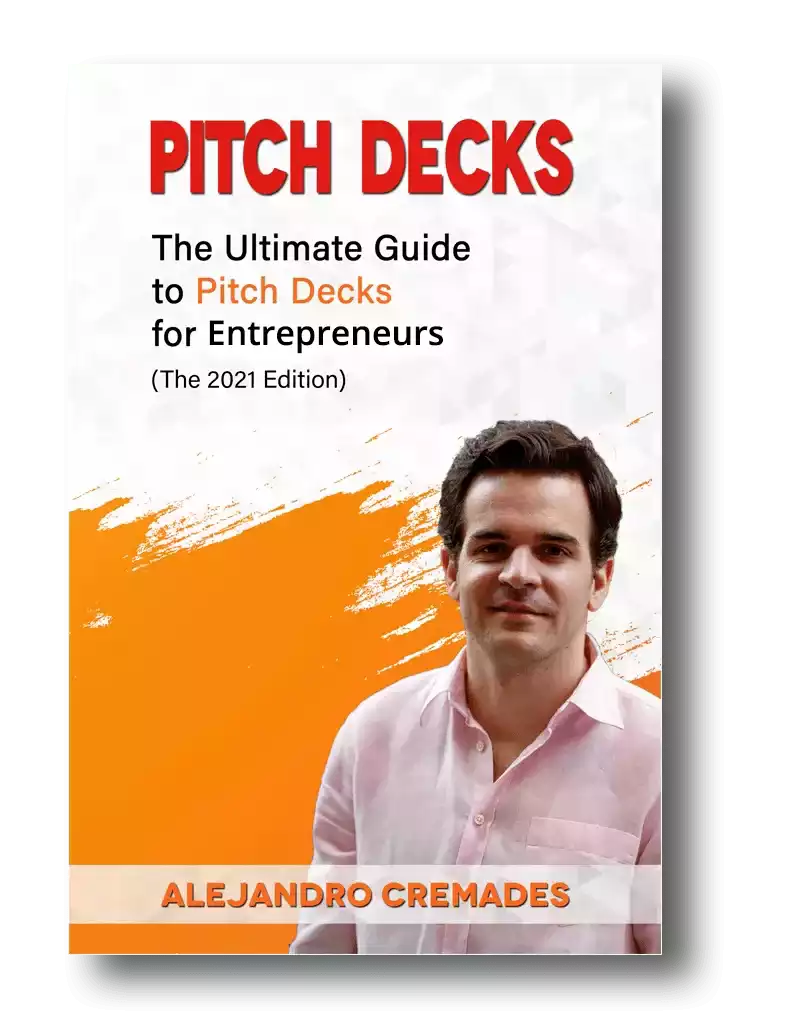
*FREE DOWNLOAD*
The Ultimate Guide To Pitch Decks
Remember to unlock for free the pitch deck template that founders worldwide are using to raise millions below.
About Julio Martinez:
Julio Martinez is the co-founder and CEO of Abacum, the Financial Planning automation platform (W21). Previously, he launched a Fintech Venture Builder, scaling it 10x in 18 months.
Julio was previously the Co-Founder and CEO of Innocells, where he launched four fintech startups to market, and former investment banker at Citigroup in the US, Switzerland, and Brazil.
Julio has an MBA from the Stanford Executive Program at Stanford University’s Graduate School of Business.

Raise Capital Smarter, Not Harder
- AI Investor Matching: Get instantly connected with the right investors
- Pitch & Financial Model Tools: Sharpen your story with battle-tested frameworks
- Proven Results: Founders are closing 3× faster using StartupFundraising.com
Connect with Julio Martinez:
Read the Full Transcription of the Interview:
Alejandro Cremades: Alrighty, hello everyone, and welcome to the DealMakers show. I hope that everyone is ready today because we’re going to have the battle of accents here. We’re going to have the Spanglish kicking in.
Alejandro Cremades: I’m so excited about the founder who is joining us today. He’s also from Spain, just like myself, and he has an amazing story to share. Super inspiring, super authentic, a founder as well.
Alejandro Cremades: We’re going to talk about product market fit, capitalizing the business, every single financing cycle that they have experienced, and then also hiring—how they’ve gone through different senior leadership through the company. I’ve seen tons of lessons learned there along the way.
Alejandro Cremades: And then obsessing over the outcome versus embracing the journey. So again, brace yourself for a very inspiring conversation. And without further ado, let’s welcome our guest today, Julio Martinez. Welcome to the show.
Julio Martinez: Thank you so much, Alejandro. What a blast to be here. I’ve been super excited following you guys. So thank you, thank you so much for having me.
Alejandro Cremades: So Julio, originally born in Barcelona. Give us a walk through memory lane. How was life growing up for you?
Julio Martinez: Life was awesome in Barcelona, so obviously I cannot hide it with my thick accent. So there you go, battle of accents today. Awesome city, very cosmopolitan. And it’s become, during the last 10, 15 years, a tech city as well. Twenty percent, 25% of the city are experts that moved to probably get mostly tech jobs. So now the energy is there. Based in New York, right, and now our business is more on the US side. But Barcelona, obviously, for those who haven’t been there, don’t miss it. It’s great food, great architecture and culture, but also great opportunities today to move into the tech space.
Julio Martinez: Yeah, so that’s a good point, right? Knowledge transfer and the capacity to learn stuff in different fields and then reinvent yourself and apply that through first principles and learning new disciplines with a very fresh approach and a fresh eye into things. So yeah, I was a lawyer, right? Corporate finance lawyer and a financing lawyer, M&A and stuff, so still very close to business. But then after a couple of years there, I realized, hey, probably I want to be on the other side. I feel these guys on the banking, on the investment banking side, are making the goals. They are defining the strategy, and we are just structuring it on the legal side, which is an awesome job. But then I felt I think I’m going to have more meaning on the other side of the fence. So I decided to move into investment banking. I did an MBA and then did banking for a number of years, studying in New York, Sao Paulo, Zurich, and London. I always had a very supportive wife. My first daughter was born in Sao Paulo, then my son was born in Zurich.
Julio Martinez: Then my third one was born when we were back in Barcelona. Working around the clock—you know, the investment banking life or the corporate finance lawyer life—high intensity, high commitment. So I think it’s a great school.
Julio Martinez: I think it’s a great school to start your career, where you learn a lot not only about business but those early motions as to what excellence is, what is driving outcomes, how you engage with customers. So that was a blast. And it was a corporate finance gig anyway. So I loved investing. I love finance deep inside.
Alejandro Cremades: I think the question that comes to mind is from investment banking, I guess you also experienced pattern recognition, you know, being able to identify what works and what doesn’t work when it comes to businesses and execution. So I guess what were some of the things that you encountered and learned from that experience as an investment banker?
Julio Martinez: Clarity in strategy and focus comes to mind immediately. And I think that’s immediately transferable into startup land and building technology and products. When you work across businesses and oftentimes even industries—right? I was covering some industries, but also I was a generalist for quite some time—you start seeing some patterns as to what certain companies were doing with their M&A strategy or how to fund that strategy. Oftentimes the pattern recognition was companies trying to find synergies that were very difficult to execute and deliver based on some thesis that was probably lacking management focus and strategy clarity and direction. And then you obviously saw that later on in the trading stock or some of the performance later on as a private business, right? I also did private placements and stuff. So clarity of strategy and focus and that discipline—and not embarking into the M&A journey unless it made sense. But also that applies to product expansion. Oftentimes many companies… think of Datadog, the company. They have claimed a lot of success later in products and products and products, and that’s awesome. But that can also be survival bias. Most companies, when they start layering products, oftentimes struggle and value can deteriorate. So I believe more in the pursuit of excellence in the single thing that you do. As Charlie Munger would say, hey, pick a simple idea.
Julio Martinez: Pick a simple idea and make it awesome. He didn’t say awesome—whatever he said—but you know that’s the idea. So big believer in that.
Alejandro Cremades: Now, you also moved quite a bit. You’ve lived all over the world—Sao Paulo, Zurich, you name it. I guess what kind of perspective would you say has opened up to you as well, to experience different cultures and different ways of seeing life?
Julio Martinez: It’s been tremendously enriching, I think, for both me and my wife. I used to live abroad as well before getting married. You learn a lot, I think, also professionally. Professionally, you learn different angles and versatility in the market. And then you realize how in Europe and oftentimes in the US we are a bit Western-centric. The moment you are in Asia or even Latin, like a big country like Brazil, you put things in perspective.
Julio Martinez: Not everything gravitates around the Atlantic in the Northern Hemisphere. But culturally as well, they have always been a very enriching experience. So I highly recommend it.
Alejandro Cremades: So then tell us about venturing into the unknown and becoming an entrepreneur, because everything started obviously with the venture studio at the beginning. And obviously that transitioned quite a bit and has evolved into becoming Abacum.
Alejandro Cremades: But it’s quite the shift, man—from being a lawyer, being a banker, which is more traditionally accepted, as it used to be in Spain. I think things have changed quite a bit.
Alejandro Cremades: But shifting and becoming an entrepreneur, how did that come about?
Julio Martinez: I’ve always obsessed over a challenge. Maybe I have a chip on my shoulder, or I don’t know what wound I have inside of me that I cannot heal, but I’ve always wanted more challenge and more stuff I needed to overcome. And I think an international career, for instance, is a bit of that—encountering personal challenge and finding the need to adapt and overcome, learning and satisfying natural curiosity. So when it came the moment to… to be honest, first of all, I moved into a venture studio, to your point.
Julio Martinez: In all honesty, I didn’t see that coming. Somebody—a mentor of mine, with whom I’m extremely grateful—took a shot on me. They offered me a position to co-found that venture studio and then start fundraising from a number of people, mostly a bank, and then start launching fintech products to market serially.
Julio Martinez: Clearly, I didn’t have a lot of product experience. So probably that person saw something in me, and whatever it was, I didn’t see it. To be frank, at first I refused. I was like, I don’t want to do that. I’m a happy banker here. What are you talking about?
Julio Martinez: But I took it with me, and then I reflected a little bit. I thought, damn, that’s really a challenge. That’s a 180-degree change. So why not? Let’s just try this. So I did it. And I will be forever grateful because I found my calling.
Julio Martinez: Starting building products and building companies, I found a sense of purpose and a sense of meaning and a sense of loving my craft that I never had before.
Julio Martinez: And I was enjoying it so thoroughly, like this amazing journey every day. So I did it for four years. And then at some point, I decided, OK, this is not about a venture studio anymore. This is about solving a very real, deep problem that I know very, very well, which is FP&A or corporate finance. I was a finance professional. I understand these themes very well. I was splitting in the head myself, dealing with messy legacy systems. But now I know how to build products, right? After four years building very successful products. So the combination of both was, okay, good.
Julio Martinez: Screw this, let’s do it. So it was a sense of mission, but also a sense of challenge. I remember very well those conversations with my wife. My anchor in life. I’m about to leave everything and just follow a PowerPoint, which is full of mistakes. Like, hey Julio, what are you smoking? I have three kids, right? I have three kids, I have more… like, you know.
Alejandro Cremades: How old were your kids when you decided to really launch Abacum?
Julio Martinez: They were seven, four, and one and a half.
Alejandro Cremades: I mean, that’s quite the risk. So how were you able to calculate, to a certain degree, the risk before you were like, okay, let’s do it?
Julio Martinez: To be honest, I didn’t calculate much. First of all, we launched the first week into COVID. As you might remember, in Spain we had the most severe lockdown—
Alejandro Cremades: It was wild, yeah.
Julio Martinez: —probably almost worldwide. So we spent over two months in my flat, in my apartment, with three kids and a wife as well, when the world wasn’t ready for that. And that was my first week. We didn’t have funds.
Julio Martinez: We had a PowerPoint. We didn’t have employees. And that was a point in time where fundraising via Zoom or hiring people, engineers via Zoom, was not a thing. We lose sight of that now, but back in the day, imagine hiring your early engineers to build your product via Zoom, or asking money from investors that were running headless because their portfolio companies were drowning.
Julio Martinez: They were really struggling, and they were not ready to deploy new capital. They were trying to save and refinance some of their existing companies that, through COVID, had difficulties.
Julio Martinez: So that happened for at least six months. Then eventually we lived an unprecedented bubble in tech, or maybe precedented, I don’t know. But definitely pricing capital was way easier. But at the beginning, the newspapers were saying, oh, we’re going to have a 10-year recession now.
Julio Martinez: Still, I remember with my co-founder—also three kids—saying, hey Jorge, what do we do now? We can still get a safety pass and stay cozy, or the world seems to be ending. What do you think? And then we decided, screw it. We are here for the long term.
Julio Martinez: This type of crisis will come and go. But we’re ready to be here for 15, 20 years. So why not? Let’s just start. This is a great opportunity. And then you convince yourself—because we’ll be in the cave, building and coding and building the product. The world… whatever. We don’t care. We don’t correlate with the market. And then you convince yourself, and then you do it anyway. So not a lot of calculation. And actually, our early employees and teammates—we didn’t have the money. We paid salaries out of our savings.
Julio Martinez: We paid salaries out of our savings for maybe six months or something like that. We were depleting that fast. And then we raised our pre-seed round with already an MVP and so on.
Julio Martinez: So we just zoomed up.
Alejandro Cremades: Well, one of the things that I wanted to ask you there too, because you guys, like you were saying, raising early, was the decision of going to Y Combinator quite early in the journey. Obviously that is pivotal for raising money and for the way that the company gained shape. So how early in the journey with Abacum did you guys decide to attend Y Combinator?
Julio Martinez: Yeah, so the decision of going to Y Combinator was not super early. I think it was at the right time. We were gaining traction both in Europe and also in the US.
Julio Martinez: And we saw the maturity of the US market, which, to be honest, from the beginning was our main target. So we understood from the beginning, hey, what we do is B2B SaaS, and the US still represents 75% of B2B SaaS revenues worldwide—that’s including China and Asia, right? So yeah, we are here to fundamentally change and disrupt the full industry in FP&A software and the office of the CFO. So let’s move into the US fast. And then, for early stage, I think a brand that gave us a lot of recognition and credibility in landing those early customers—and also a lot of very strong company-building advice—was Y Combinator.
Julio Martinez: So we applied early in the batch. I think we were the second company to be accepted in our batch. And it’s been, forever, something that changed our trajectory. So we are very proud alumni of YC.
Alejandro Cremades: I mean, obviously—well, look, Julio, you and I are very close in age, but if I was to be attending Y Combinator, I would be one of the grandpas. So I think that’s because people are a little bit younger.
Alejandro Cremades: So were you on that higher end of the range?
Alejandro Cremades: And I guess, there are a lot of entrepreneurs probably listening to us that are also from our same generation, you know, a little bit on the higher end, and they’re like…
Alejandro Cremades: …wondering whether they should do it or not. Maybe it’s too late for them. What words do you have for them?
Julio Martinez: 100% do it. I think the best entrepreneurs execute later in life despite some of the successes that you see today. But if you think of the most remarkable companies, age is not a consideration.
Julio Martinez: I think we approached YC—it was a humbling lesson for us. So definitely, we were some of the older ones. And Jorge as well—he’s my age as well. So we were more on the senior side. There was a bit of everything, but definitely more younger folks. And hey, we’ve been around the block a couple of times, so we felt, hey, we knew our stuff here. We know it. And we felt a bit confident. It was a super humbling experience because these guys see so many successful companies and entrepreneurs. And I was very privileged to be in a team where my partners were Michael Siebel, the former CEO of Y Combinator—extremely successful guy—and also Gustav, a super seasoned executive.
Julio Martinez: And they are well known for brutal, direct, straightforward feedback. So they’re going to punch you in the face like there is no tomorrow, leave you bleeding on the floor, and then, you know, good luck now—go fucking build this thing. So they are very… it was very humbling because you come with a lot of preconceptions. So I learned a lot from that team and how I think of company building, execution, agility, speed, commitment. It really rewired us in many ways. So I recommend everybody to really explore YC—but in general, at any point in life. Age has nothing to do with entrepreneurial success.
Alejandro Cremades: I love it. And in fact, I think you’re absolutely right that for successful entrepreneurs—the really successful entrepreneurs—I think the median age is mid-40s or very close to 50. Not the typical 20-something eating ramen, finishing college kind of thing. So I’m right there with you, Julio. I guess, so that we’re able to understand, just as if it was plastic surgery: the before and after, right? So what did Abacum look like before YC, and what was Abacum right after YC?
Julio Martinez: So YC is a period of three months. For us it was a bit longer because we were the first company being accepted in the batch, so we were already doing office hours and meetings with the partners ahead of that. But before YC, I think it was somehow an unstructured team with a lot of energy and maybe lacking some of the intentionality around company building, focus, and speed. We were working very long hours anyway, but maybe not with the operational rigor.
Julio Martinez: That, I think, was something that was ingrained in us during Y Combinator. So the after would be: okay, a bigger team, because we continued hiring—but that doesn’t really matter. I think it was that the high energy was way better channeled through the company. For instance, something small—very tactical but operationally important—we started doing, as of YC, Sunday-night meetings with my co-founder. Every week we would start the week with a meeting on Sunday. “What are the goals for the week? What do we need to accomplish? How do we stay accountable and keep each other accountable?”
Julio Martinez: For instance, I became a huge fan of bottleneck analysis during Y Combinator. You need to drive a lot of urgency—maniac urgency and obsession—to solve the growth bottleneck.
Julio Martinez: You can go to any company that has 200 problems. Whatever—who cares? You just need to identify what matters at that point in time. What’s the biggest bottleneck constraining your growth?
Julio Martinez: And then solve one after the other. That’s company building. You can go in 20 directions, but what really matters is: what’s my biggest problem today constraining my growth?
Julio Martinez: That’s something they did very well in YC. Of course, besides product market fit, early go-to-market, brand building—they have amazing tactics that are very founder-led. But also how you think of your early team. As an accelerator, they are very strong at that moment where you are starting to think of those critical building blocks in your company.
Alejandro Cremades: Now for the people listening to get it, what ended up being Abacum? How do you guys make money? What’s the business model?
Julio Martinez: Yeah, so we have a B2B SaaS, which is a subscription fee with some add-ons, but basically a subscription fee that is recurrent. And then we sell to finance teams in companies in the mid-market and early enterprise. We add a financial planning and analysis solution—so FP&A software. What we do is we connect with different data sources in the company. So imagine your accounting software—NetSuite, Intacct, and so on.
Julio Martinez: Imagine your CRM—Salesforce, HubSpot; the underlying data warehouse oftentimes; the HRIS—Workday, ADP. We swallow all those metrics and then provide them to the finance team as a single source of truth.
Julio Martinez: So imagine, Alejandro, having all the metrics that matter to your business in one place, always ready to be analyzed, always in real time—accounting data but also the operational KPIs, the leading indicators that move the needle for your business. And then, with that wealth of data at your fingertips, you can very easily produce reports to provide visibility to your management team, board of directors, CEO, or build your plans. So imagine budgeting—bottom-up, top-down—headcount planning, revenue planning, your forecast. And then especially very meaningful today is scenarios at scale.
Julio Martinez: Very easy to build scenarios where you can have your shadow P&Ls. “Hey, I have different businesses in different customer segments, in different countries across different geographies,” whatever. And then you can slice and dice the data very easily and then plan and report at very granular levels. So this is, in essence, what we do. Legacy solutions in our space—maybe Adaptive Insights acquired by Workday is a name that comes to mind, Anaplan at the enterprise.
Julio Martinez: So this is not really a category we invented. FP&A software, to be clear, was invented in the 70s with TM1 and then in the 80s with Hyperion. This has been up and running for a while. I think what we do is we have built a product that is 30 times better.
Julio Martinez: Adaptive was founded in 2003. Planful is Host Analytics, founded in 2001. So we’re talking about software that is pre-cloud—not even pre-AI. It is pre-cloud.
Julio Martinez: So what we built is the next-generation AI-native FP&A platform, and that explains the very fast growth that we are experiencing in the business.
Alejandro Cremades: I mean, it’s really incredible that you’re making something that is very complex to put together sound so simple, which is remarkable. But I want to ask you: how did product market fit look like for you guys? Because putting this together…
Alejandro Cremades: Quite a challenge, at least from hearing you make it sound so simple, but a difficult operation to assemble. How did product market fit hit, and what did that look like for you guys?
Julio Martinez: It’s a journey. It’s a journey. I think we knew from the beginning very well what to build. I think what we underestimated was the complexity of building it.
Julio Martinez: And this is a very complex problem and space. And from a technology perspective, this is several products tied together.
Julio Martinez: You have an integration layer. You have data cleaning—an ETL layer. You have a modeling planning engine, which is extremely difficult to build—multidimensional modeling at performance with high volumes of data. Then you have almost a BI in your solution to build your reports—a BI solution like Tableau, with all the graphs. And then you have… yeah, so you are assembling different layers in a product, and that creeps into complexity. So for us, getting to product market fit was a long journey.
Julio Martinez: I think at the beginning we thought, hey, we can start selling a reporting solution, or start selling something that makes sense for finance teams. But look, finance teams—and myself being a finance professional—finance teams are very sophisticated, very smart, but also very demanding and oftentimes very unforgiving. And that is fine—it’s an awesome persona, but a difficult persona to sell to.
Julio Martinez: So they wanted everything. They wanted everything. So it took us a while to have the capacity to invest in all the product depth that had to be delivered. And also, Alejandro, let’s put this into context. We had some competitors in the past that had raised a lot of money, launched maybe one year before us or 18 months before us. They raised way more money, at least back then—right now we’ve raised more money than them—but back in the day, we were coming from behind and playing catch-up.
Julio Martinez: And all these guys—they didn’t end up well. They had the time, they had the funding—and these are US players and UK players, backed by some of the best investors in the world, Silicon Valley names. They had the money, they had the time, and they just couldn’t build the right product for customers.
Julio Martinez: So yeah, at some point that was obviously our advantage, but also it was scary for us. We were like, hey, it’s very complex to build. But guess what? We did it.
Julio Martinez: We’ve done it better than everybody else. So I think that speaks volumes about the high-caliber product team that we’ve built in this company and the product that we’ve built.
Alejandro Cremades: And also high-caliber investors too. I mean, you guys have been able to raise money from some of the best investors in the world. So give us kind of an insider scoop on how the journey of going through the financing cycles with Abacum has unfolded. I mean, just to start off, what’s the total amount that you guys have raised? And then how did that—how did you guys go about raising that over time?
Julio Martinez: Yeah, so we’ve raised over 100 million now. And we’ll be raising more. Look, the first round—pre-seed—was a difficult one in the middle of COVID, but in the wrong side of COVID, right? Then there was a good side of COVID—2021 and so on.
Julio Martinez: That was a difficult round, but we did it. We had engineers. We were paying them. We built a strong prototype. So we got the thing going.
Julio Martinez: Then we raised our seed. That was Y Combinator. We were going through Y Combinator. We were going to go to Demo Day. And then we got preempted.
Julio Martinez: We got preempted by a fund that we loved, that passed on one of our previous rounds and told us, “Hey, guys, this is not yet for us.” But they were amazing, and this is Creandum—the best fund in Europe, by far. They have the best returns across funds in seed and Series A in Europe, by far. The highest return fund. And they have Stanford and all the endowments in the US as LPs—super strong player. And we loved them from the beginning. And then we got a no.
Julio Martinez: We got many no’s. But then they became super bullish, and they preempted the round. We were fast enough to get a few more offers because the business was looking stellar.
Julio Martinez: After YC, the business—we were growing very fast. And also metrics.
Alejandro Cremades: I mean, were you in touch with them, or did they just reach out out of the blue? How did that happen?
Julio Martinez: No, they were pinging us. And we were—like, we were heads down in execution and all those things that you want to do, right?
Alejandro Cremades: So then you were playing hard to get. You were like, “Now I’m going to hit you back for rejecting me the first time around.” I love that. And then how did the next financing unfold then?
Julio Martinez: Yeah, so then six months later, on the back of very fast growth, we raised our Series A SAFE. And that was Atomico, the fund led by Niklas Zennström, the founder of Skype and so many others. And it was also a preemption situation, so Atomico didn’t have a lot of time to look at us in the seed round, so they stayed close, they knew the space well, and then we went fast and got capitalized.
Julio Martinez: And that was fantastic. But from then to our Series B, which was the following round, it took us over three years. And this is where the journey towards product maturity… you know, we need to have that conversation, right? It matters a lot. So we were very well capitalized, and then I think the early metrics of the business were fantastic.
Julio Martinez: But then when you start selling… like, hey, we sell to listed companies. So we have a lot of mid-market businesses, and that’s OK. But we also do a lot of enterprise business. And selling to those companies, of course, you need to do some product investments that are fundamental. Think of it: Anaplan at the enterprise continues to do a lot of product investments to keep up with the performance that enterprises need.
Julio Martinez: And everybody’s data volumes are increasing. So this is a fast-moving space where everybody’s heavily investing in product, as we do. So going very deep into that product maturity so that extremely sophisticated finance teams could see that fundamental value in our product. We are very flexible, very easy to use, very fast to implement. It took us a while, and we very intentionally put our heads down and spent a lot of time trying to, and then eventually, get the right product. And this was at a point in time where some of those competitors that I’ve mentioned were… you know, we were crossing the desert.
Julio Martinez: You know, it was hot, it was warm, it was thirsty, like all the stories. But then, hey, all of a sudden, in that freaking vein, you start seeing some corpses.
Julio Martinez: Like, oh, these players, they sold below liquidation preferences. Or this other player, chapter 11. Or this other player, it’s a fire sale as well. Like, hey, maybe we’re getting this right.
Julio Martinez: I mean, maybe then we were getting their customers, and then we were getting bigger and bigger customers.
Alejandro Cremades: What was a very common repeated pattern that you were seeing on why some of those companies failed? Were you seeing something that was repeating amongst them?
Julio Martinez: Yeah, they didn’t get the product right. I think what they got right was marketing and go-to-market, which has taken us a while to figure out, to be honest. But what they got very right was marketing. They were strong in building brand, you know, doing a podcast, right? So we are here, like you build strong brands. And they did the right investments, so hey, it was awesome.
Julio Martinez: But then their churn was crazy. That I saw later on. At some point in time, you don’t really have access to that, but then investors start talking to you and sharing with you data. Or you start pallying at their customers. And then they see, oh, but their product doesn’t do this, that, you know… and then you understand, oh, now I understand.
Julio Martinez: You tried to scale the company and accelerate it in go-to-market without fundamentally understanding the problem space and what you have to ship to get it right. And something that sounds so simple…
Julio Martinez: …and then becomes your competitive advantage because others just couldn’t do it. And hey, those are awesome teams and awesome companies and awesome investors. Kudos to them. They tried very hard. But it’s a very complex space. We suffered a lot to get where we are today. But then once you emerge as the winning, as the very clear category leader…
Julio Martinez: …in front of your ICP, obviously it feels great. And then you are growing over three times a year with awesome efficiency metrics. And it’s a wonderful story. But I’ve got to tell you, that desert was freaking painful.
Julio Martinez: And I, you know…
Alejandro Cremades: When you go through that desert—and obviously it’s just part of the journey too—I mean, I know that you were someone that was really obsessed with the outcome, right? And I think that I’m sure that that was quite painful to go through because the outcome, you know, it’s like you don’t see the clarity. So what do you think you got about embracing the journey versus being so obsessed with the outcome?
Julio Martinez: Yeah, I think for all the entrepreneurs—but it’s not exclusive to entrepreneurs, right? A lot of finance professionals and, you know, some types of people—we are very inclined to obsess about the outcome for a number of reasons. And then I think I encourage everyone to go deep inside. And through that very painful journey, I learned a few things about my obsession with the outcome, right? And look, first of all…
Julio Martinez: …it is a shortcut to unhappiness. So you won’t be happy, right? And then we all love company building and being successful with great companies and great businesses and great teams. But ultimately, what matters is, you know, did I have a happy, fulfilling life or did I not? And you know, life is short, right? So if you’re doing something, make it meaningful, make it count. But besides the shortcut to unhappiness, I think when you’re obsessing over the outcome…
Julio Martinez: …your management and your leadership are very likely going to fall short. And what truly matters as a leader is that you, yourself, but also your focus of the teams, is on what they control and the inputs.
Julio Martinez: And this has been… I’m a big fan of a book that is called “The Score Takes Care of Itself” by Bill Walsh, who was the coach of the 49ers. And I won’t explain the book, but basically…
Julio Martinez: …it’s a leadership philosophy that is very aligned with what I’m sharing now, which is: hey…
Julio Martinez: …fully control and obsess. You want to be channeling your obsession, right? Your obsession is good for business. But channel that towards the inputs, towards driving excellence day to day, towards what you can control. And with that, in that, find the enjoyment of one day at a time, one step at a time, celebrating the small wins, making it meaningful, making it count.
Julio Martinez: And then if you really focus there and focus on agility and learning very fast, at some point—you don’t really know when—but the outcome will arrive.
Julio Martinez: The outcome will arrive. If you divert your energy towards the outcome, then you’re going to be rushing people. You won’t be asking the five whys and the root cause analysis to understand what’s going on. You won’t be able to measure progress so much. You will just be this angry leader that is pushing people to execute faster and “let’s work harder,” but you are not really very smart about how you’re coaching folks to execute and make progress.
Alejandro Cremades: Now, Julio, let’s say you go to sleep tonight and you wake up in a world where the vision of Abacum is fully realized. What does that world look like?
Julio Martinez: We own the market, right? So for me, this is all about world domination and market domination. So we are in every finance team across the geographies we operate in, which are very big, right? We operate in… we have customers in over 40 markets, and this is just day one. So imagine how many more countries we can bring the solution, and it’s about that—becoming the uncontested leader in FP&A, Office of the CFO.
Julio Martinez: And that’s a dream, right? Because we know that we have the best product, and we are continuing aggressively building the best product for our ICP, and we obsess a lot about that.
Julio Martinez: So there is no reason why we shouldn’t be accomplishing it.
Alejandro Cremades: I love it. Now, let’s say I put you into a time machine. And let’s say I bring you back in time. I bring you back in time to maybe six years ago, before Abacum was actually officially born.
Alejandro Cremades: And let’s say you’re still in your investment banking days—let’s say Banco Sabadell—and you’re able to stop that younger Julio that is coming out of the building with the notice in hand and wondering what the future is going to have. Let’s say…
Alejandro Cremades: …you’re able to stop that younger self and give that younger Julio one piece of advice before launching a business. What would that be and why, given what you know now?
Julio Martinez: That’s an awesome… that’s an awesome question.
Julio Martinez: Look, something I’ve learned, I borrow from martial arts, which is a discipline I practice a lot, and it’s a quote that says, “Slow is smooth, smooth is fast.” And I think, in technology especially, oftentimes we lose sight that what truly matters is to build a fundamentally strong business, a sustainable business for the long run.
Julio Martinez: And we oftentimes get trapped into, oh, speed and agility and “let’s move fast and let’s raise and let’s raise more money and let’s move faster.” And then this is when you see companies scaling out of the market without strengthening, for instance, product market fit, as we were just discussing, right? Or when you see some of these mistakes. I think, you know, “slow is smooth, smooth is fast” to me means: go through the motions at the beginning slowly.
Julio Martinez: Learn to operate with precision. Allow yourself to have the best product—the key cash product in your category—so when you put go-to-market dollars into play…
Julio Martinez: …and into investment, you can really get a yield out of them. Make sure you have those foundations in place, because if you look forward—if you go to…
Julio Martinez: …100 million, 200 million, 300 million, 500 million in ARR, and if you did it one year, half a year, two years a little bit faster, a little bit slower, like, who cares? This is not about the ego game. Like, “oh, I was the fastest,” all these graphs that you see. Who cares about that? What matters is that you created a big difference in the industry, and especially in your customers’ lives. So if I were to start the business again…
Julio Martinez: …and because I was a bit rushed at some point, right? So I made that mistake actually a number of times. In my impetus towards outcome, without properly understanding the input. Like, yeah, I want the outcome, so let’s invest here, let’s invest there—like a bit rushed. And then you need to understand, hey, there are certain things in problem spaces that are very complex that you just need to invest slowly, understand, build, and then you’ll be able to accelerate and out-compete anybody else in the market, which is what we’ve done.
Alejandro Cremades: That’s amazing. You know, it’s amazing because when I was hearing you speak, I could visualize the life of an entrepreneur just having a shit storm happening around you and being able to shield yourself and quiet the noise so that you can keep yourself centered and focused. That’s what I was hearing you speak.
Alejandro Cremades: That is kind of like, in the background, the image that was playing for me.
Julio Martinez: Thank you.
Alejandro Cremades: And that was so profound, Julio. I guess for the people that are listening that would love to reach out, that would love to hear more and learn more about Abacum, what is the best way for them to do so?
Julio Martinez: Yeah, so I’m very active in LinkedIn. So I like to build a community there. So in my LinkedIn profile as Julio Martinez at Abacum, probably you’ll find me easily there. And I post regularly on anything business, finance, FP&A, and also life. So we like building in the open. And then our website is abacum.ai. So you can check it out.
Alejandro Cremades: Amazing. Well, Julio, thank you so much for being on the DealMaker Show today. It has been an absolute honor to have you with us.
Julio Martinez: Alejandro, thank you so much for having me. What a blast. Thank you.
*****
If you like the show, make sure that you hit that subscribe button. If you can leave a review as well, that would be fantastic. And if you got any value either from this episode or from the show itself, share it with a friend. Perhaps they will also appreciate it. Also, remember, if you need any help, whether it is with your fundraising efforts or with selling your business, you can reach me at al*******@**************rs.com
Podcast: Play in new window | Download
Subscribe: Apple Podcasts | Spotify | TuneIn | RSS | More



Facebook Comments