


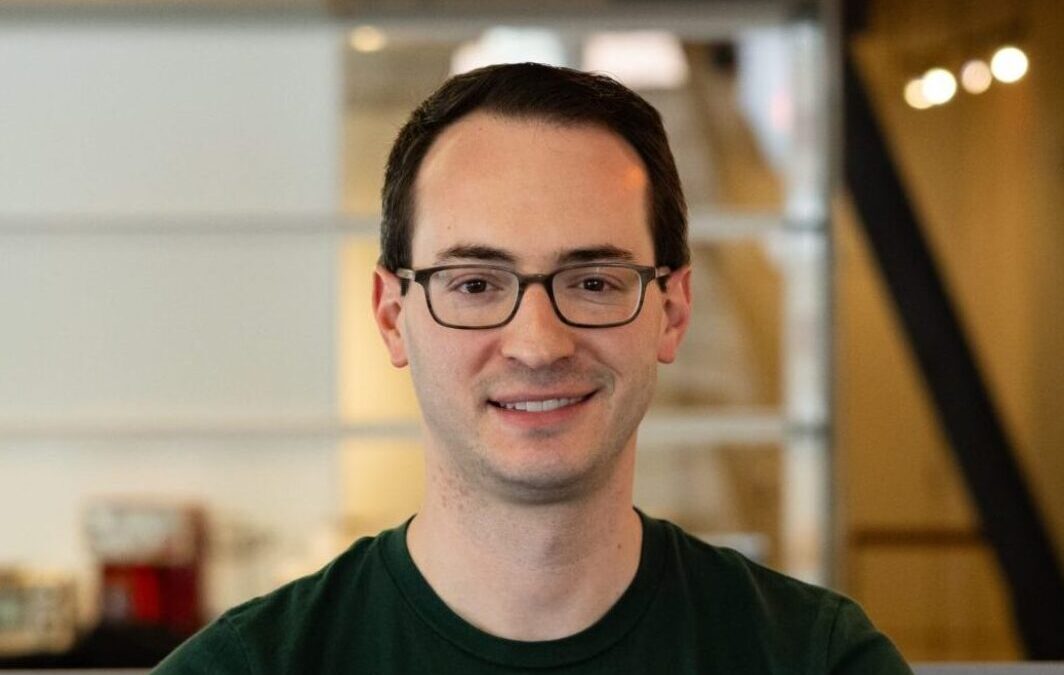
Founders like Joshua Silver are the architects of multiple companies, each bigger, more innovative, and more strategically positioned than the last. His entrepreneurial pathway traces his early days as a tinkerer and engineer to a $450M exit in healthcare payments.
Joshua is now scaling Rainforest, his latest venture, which has attracted capital from top-tier investors like Silicon Valley Bank, Accel, Matrix, and Infinity Ventures.
In this episode, you will learn:
- Joshua’s success began by solving revenue-risk problems in highly regulated healthcare and by aligning incentives so customers earned more.
- Patientco’s $1M bootstrapped ARR and $450M exit show that lean execution, patience, and timing beat fundraising theatrics.
- Great outcomes are earned over years of execution; Patientco was “bought, not sold” because its product and financials were exceptional.
- Consulting became Joshua’s bridge—a deep market pattern recognition that led directly to spotting a massive embedded payments opportunity.
- Rainforest mirrors Patientco’s model: shared incentives, deep domain expertise, and disciplined capital allocation in a massive, underserved market.
- In fundraising, repeat credibility and market timing flip the script—investors approach you when the pain is obvious, and the thesis is proven.
- Joshua’s core principle: success compounds when you get the right people at the right time, because hiring mistakes destroy years of growth.
SUBSCRIBE ON:
 iTunes
 Google Play
 Stitcher
 TuneIn
 RSS
RSS SoundCloud
 Spotify
Keep in mind that storytelling is everything in fundraising. In this regard, for a winning pitch deck to help you, take a look at the template created by Peter Thiel, the Silicon Valley legend (see it here), which I recently covered. Thiel was the first angel investor in Facebook with a $500K check that turned into more than $1 billion in cash.

*FREE DOWNLOAD*
The Ultimate Guide To Pitch Decks
Remember to unlock for free the pitch deck template that founders worldwide are using to raise millions below.
About Joshua Silver:
Joshua Silver has a diverse work experience in the software industry. He is currently the Founder and CEO of Rainforest, a company that focuses on helping software platforms monetize payments.
Prior to this, Joshua founded and served as the President of LaunchPath Group, a boutique consulting firm specializing in payment strategy and vendor selection. He has completed numerous engagements, representing billions of dollars in processing both in the US and abroad.
Additionally, Joshua have co-founded Patientco and served as the Co-founder & Chief Solutions Officer, leading all go-to-market functions and eventually exiting the company.
Joshua was also the Co-founder & Head of Product Development at Patientco. He began his career at CareerBuilder.com, where he worked on product development and business development for the international team.
Joshua has a Bachelor of Science degree in Computer Science – International Plan from the Georgia Institute of Technology. He also holds a Global Leadership Certificate and a CO-OP Diploma Seal.

Raise Capital Smarter, Not Harder
- AI Investor Matching: Get instantly connected with the right investors
- Pitch & Financial Model Tools: Sharpen your story with battle-tested frameworks
- Proven Results: Founders are closing 3× faster using StartupFundraising.com
Connect with Joshua Silver:
Read the Full Transcription of the Interview:
Alejandro Cremades: Alrighty, hello everyone, and welcome to the DealMaker Show. So today we have another repeat founder joining us. We’re going to be talking about all the good stuff that we like to hear, obviously: the building, the financing, the scaling, the exiting.
Alejandro Cremades: Also, we’re going to be talking about how he got started with his first company. They ended up having a really nice transaction there: $450 million that was disclosed. And then we’re going to talk about how he used consulting as the transition bridge in order to get to the next business. So again, we’re going to be talking about good stuff like challenges, experiencing growth today, the world of AI, how that is impacting certain aspects as you’re thinking about the operational structure of your business, and other really good stuff. So brace yourself for a very impactful conversation today. Very inspiring too.
Alejandro Cremades: And without further ado, let’s welcome our guest today, Joshua Silver. Welcome to the show.
Joshua Silver: Thanks so much for having me. Appreciate it.
Alejandro Cremades: So originally born in Boston but grew up in Atlanta. Give us a walk through memory lane. How was life growing up for you, Joshua?
Joshua Silver: You know, it was good. I moved from Boston down to Atlanta when I was in middle school, and then stayed in Atlanta through high school and college. Went to Georgia Tech, studied computer science there, so pretty technical background by training. And that has certainly come in handy over the last almost two decades now of building fintech companies.
Alejandro Cremades: How did you get into the world of computers to begin with?
Joshua Silver: You know, as a kid, I was always a tinkerer. Loved building things, whether it was Legos, K’Nex, or robotics—things like that—and just really carried that through. Pretty early on, I figured out that technology and engineering would make a pretty good career, and I enjoyed doing it. So stuck with it, starting really in middle school all the way till now.
Alejandro Cremades: And how was that moment where you decided to go at it as an entrepreneur? Because, I mean, it took no time right out of college, and I’m sure that your parents were probably like, “Hey Joshua, why don’t you do a few years at least of corporate?”
Joshua Silver: You know, it was a big kind of existential debate I was having when I graduated from school. I had offers from a lot of the top consulting firms, some of the major technology companies at the time, and really had to figure out what I wanted to do with my life—whether I wanted to go more of a traditional path and go work for someone or start my own thing. And ultimately, of course, decided to go down the path of entrepreneurship.
Joshua Silver: I thought a lot about there’s probably no better time in my life than after I graduated college because I had really no expenses at the time—no family commitments or anything like that. And so it was a relatively low-risk time actually to start. And I figured, look, if it didn’t work out, I could always go back to corporate America. But luckily, it worked out very well, and here I am almost 20 years later, still doing entrepreneurship.
Alejandro Cremades: And we’ll talk about your latest baby too. Now for this one, for the first one, for PatientCo—how was that? How did you guys get the band together, and how did you get going? Tell us about the origins.
Joshua Silver: Yeah, so I partnered with another serial entrepreneur, actually. We really split the world almost in half. I took product and engineering and operations; he took the go-to-market and sales side of things.
Joshua Silver: And he had also gone to Georgia Tech, although a number of years before myself. So we had known each other from the Georgia Tech alumni network and had been talking for years throughout my college experience about different ideas.
Joshua Silver: And it kind of finally came time that I was graduating and said, “Alright, it’s time to do this. Let’s go.” And at that point, we got into deep idea search mode where we really spent a lot of time thinking about what would be a good idea.
Joshua Silver: And unlike a lot of other entrepreneurs that are really kind of mission driven or solving some personal problem, we took a much more engineering-centric approach to it—not in terms of the technology, but in finding the problem.
Joshua Silver: And we looked at what were the trends, what were actual problems, and most importantly, how can we make money for someone?
Joshua Silver: That’s been a recurring theme in my business career: always, how can we help a company make money?
Joshua Silver: It’s not about time savings. It’s not about efficiency. When you help a company make more money, I’ve found that it becomes a must-have product.
Joshua Silver: And all of my companies—all three of them now—have kind of shared that same theme.
Alejandro Cremades: So for example, with PatientCo, what were the ingredients that made it the idea that you all ended up thinking, “Hey, this is worth pursuing”?
Joshua Silver: Well, when we started, we actually thought we were going to go out and solve the problem of hospitals and doctor’s offices not having online bill pay at the time. This was in the mid-2000s.
Joshua Silver: And today, online bill pay is commonplace.
Joshua Silver: But back then, almost every healthcare payment came through a check. And so the initial idea was, let’s just electronify all these payments. As we got into it, we quickly realized that the electronification wasn’t the core essence of the problem.
Joshua Silver: The core essence of the problem was that most hospitals are only collecting 50 cents on the dollar of every patient bill they send out.
Joshua Silver: So imagine a grocery store—this is the example I could give people—and in the checkout line, every other person just doesn’t pay, and they walk out with their groceries. What do you think would happen to the price of groceries?
Joshua Silver: Well, it would have to double because every other person wasn’t paying. Well, guess what? That’s exactly what happens in the healthcare realm. And so when we realized that 50% of patients weren’t paying their bills, and many of them had the financial capacity to do so, there were other reasons they weren’t paying. That’s when we pivoted and realized now we can go deep dive on the real problem, which is collectability in healthcare.
Alejandro Cremades: Now, talk to us about the early days. What did they look like, and how did you guys go about shaping up the MVP until you were like, “I think this is heading somewhere”?
Joshua Silver: Yeah, you know, it’s really tough because my original company, PatientCo, was at the intersection of two of the most regulated industries: on one hand financial services, and on the other hand healthcare IT. So you think about things like PCI and HIPAA and compliance. It’s very, very challenging in both of these spaces to get something going from scratch, because unlike vertical software where you can spin up an MVP and it sort of kind of works, there’s really no room for error when you’re moving people’s money and dealing with healthcare data.
Joshua Silver: And so it turns out that it’s a relatively big build to even get your very first customer. And then convincing a customer to be the very first one in these highly regulated industries was really challenging.
Joshua Silver: Luckily, we were able to work our way into it by going to friends of friends of friends who owned small doctor’s offices. Then you work your way up to rural hospitals that are more like clinics. And then you work your way up to regional facilities.
Joshua Silver: And then by exit, we were working with some of the largest healthcare organizations in the country, including BJC Healthcare out of St. Louis and Piedmont out of Atlanta—facilities that had 25 and 30 major hospitals and then thousands and thousands of doctors.
Joshua Silver: So it’s really about just chiseling your way in, wedging your way into that very first one, and then working your way up to bigger and bigger clients until you’ve reached the type of client you want to work with long-term.
Alejandro Cremades: And how were you guys monetizing there?
Joshua Silver: So we were aligning ourselves primarily with the collections. We took a piece of every transaction that came through, and we told the hospitals, “Look, you’re leaving 50 cents on the dollar today on the table. If we can help you improve that and collect more, we can take a piece of it. We get paid when you get paid.” And that’s actually a very similar model to the model I’ve used in my other two companies as well, which is really aligning those incentives between ourselves and our clients. It works very well when you do that.
Alejandro Cremades: Now, obviously as part of this too—I mean, you were alluding to it—you guys had a really nice outcome for the company, which is spectacular coming up right out of college. How did you guys go about financing the operation?
Joshua Silver: So we ran that company very, very lean. Me and my co-founder both put in some working capital to start, and we didn’t raise any outside capital until we hit a million dollars of ARR.
Joshua Silver: Most companies raise a bunch before they even start, but we stayed really scrappy and just worked our way up financing through revenue. And we did a lot of things like asking customers to prepay, working on positive cash flow cycles, things like that. So it was a couple of years in, and then we raised about $4 million at the time.
Joshua Silver: We then went a very long time before we raised any other capital, and then eventually did a Series B—about $27 or $28 million, whatever it was—from a growth equity firm before we ultimately exited.
Joshua Silver: But we ran that company very, very leanly over the years.
Alejandro Cremades: So talk to us about the exit. Obviously, an outcome of $450 million—coming right out of school, building the business—it’s unbelievable as the first rodeo as an entrepreneur. So make us insiders. How did everything happen?
Joshua Silver: Yeah, you know, I think some of it is luck. And I firmly believe that in life, sometimes you just have to be lucky. But it also is about being in the right place at the right time. And I think the ultimate ingredient to that company was, one, we found an idea that solved real pain points for patients and for the health systems.
Joshua Silver: This was a must-have for hospitals and doctor’s offices. So that was ingredient one. Number two, we ran the company really leanly until we were ready to scale it.
Joshua Silver: And it turned out that we actually started that company probably five or six years too early. From start to finish, start to exit, was about 13 years. So that was a relatively long journey.
Joshua Silver: And the first number of years, the graph looked pretty flat. It wasn’t that up-and-to-the-right hockey stick that we all want.
Joshua Silver: It was really flat because it took us a long time to A) build the product and B) find product-market fit. Ultimately, five or six years in, the market was kind of ready for what we had.
Joshua Silver: And because we had been doing it for six or seven years already, the solution was already very mature—much more mature than our competitors.
Joshua Silver: And so we had the grit to withstand those slow years until the market was ready and until we had a really stable and scalable solution. And then the last few years, just extremely rapid growth.
Joshua Silver: One success building on another, lots of momentum. That’s what you always hope to find. So I think making sure you’re building in a good market where the trend is going in the right direction, having enough capital and enough patience to stick with it through the slow times and make sure you get to the point where you can grow quickly.
Joshua Silver: And then three, just building a really quality solution. That was ultimately—when we got acquired—one of the things that the acquirer told us: they had looked at all of our competitors and many of those solutions were subpar.
Joshua Silver: And again, in something like healthcare and finance, it has to work 100% of the time. You can’t mess up someone’s money. You can’t mess up someone’s healthcare data. And we just had that in-built quality. That was always a core value we had. And we got a fantastic multiple right at the height of the market in 2021 when we sold it.
Alejandro Cremades: Now, talk to us about timing too—you know, whether it makes sense to pursue the acquisition or to perhaps raise money and keep growing the business. As you guys were going through the thought process, why selling versus keep going?
Joshua Silver: Yeah, yeah, I’m a big believer in the saying, you know, great companies get bought and not sold. And so we never set out to sell the company specifically. It was looking at some different partnerships over time and making sure that the company is set up in such a good way that when the time comes to sell it, that you’re in a good place to do so, meaning you’ve got good customers, good quality of revenue, all your documents are in order, your finances are in order, all of those things really make a big difference. Ultimately, I think we had been doing it a long time. We had been working on it for 13.
Joshua Silver: As I said, we got a really good multiple on the business at the time. Some of life is luck and being in a good place to be able to sell at the height of the market. When someone makes you a really good offer, you say yes. Also, we felt really good about the acquirer. I kind of look at the number of years, the five or six years now since we left that business. And that acquirer has gone on to buy other companies.
Joshua Silver: They’ve merged them together. They rebranded it, called Waystar, and it’s now publicly traded on the NASDAQ and has done a fantastic job continuing to grow. And so as an entrepreneur, that’s really rewarding to have built something and then the acquirer doesn’t shut it down or shelve it, but actually continues to invest in it.
Joshua Silver: And as a consumer, I still get healthcare bills in the Atlanta market from this software that I knew I created almost 20 years ago. So that’s really, really rewarding. And so I think best possible outcome: great financial outcome for employees, for shareholders, for the founding team, and a product that still continues to work and go strong and have good growth for the acquirer.
Joshua Silver: So that’s just a win-win-win for everybody.
Alejandro Cremades: I mean, for everybody, because the company went public. It’s listed on Nasdaq, as you are alluding to. And I believe the market cap today is $6.4 billion. Is that right?
Joshua Silver: That’s right, yeah. Mm-hmm.
Alejandro Cremades: Wow. Unbelievable. Talk about impact, Joshua. Well done. Now, the transaction happens, you know, obviously, with this private equity firm. And then in your case, rather than either going on vacation or starting another company, one thing that I see here that was really interesting to try as a transition is that you went into consulting. So why consulting?
Joshua Silver: You know, I kind of fell into it by accident, actually. After I’d moved on from PatientCo, I had planned to take some time off. And I think I lasted about two weeks.
Joshua Silver: If you ask my wife, maybe she’ll say it was closer to one. But you know, you are used to the daily grind and the highs of starting the company. To go from that to just sitting on a beach—
Joshua Silver: I’m really envious.
Joshua Silver: There’s a lot of entrepreneurs who can do that. That wasn’t for me. And so I started to kind of look around, and pretty quickly people started calling me saying, hey, we know that you know a lot about payments.
Joshua Silver: Can you come in and help? And so I had a lot of friends that had other companies, other vertical SaaS software companies. And so I went and started spending some time with them, an hour or two here or there.
Joshua Silver: And then it got to the point where on some of them I was spending real time. So I kind of went back to my friends and said, hey, I was happy to help you as a favor when it was a little bit. But this is real work.
Joshua Silver: I think we probably need to come up with some financial arrangement. And so we started doing that. And then the next thing you know, my phone’s ringing off the hook with other private equity firms saying, can you help us do due diligence on assets we’re looking to buy? Can you help us renegotiate payments contracts?
Joshua Silver: We have a company that has problems with risk. We know you know how to manage that. Can you come look at it? And so pretty quickly, I’d spun up a full consulting firm. And over the course of three or four years, did about 50 engagements, myself alone—I’m not even counting some of the rest of the team.
Joshua Silver: And so really fast and furious time for embedded payments. And it was a really good transition. It was intellectually rewarding. You know, I’m an intellectually curious person, and so I got to work with different companies kind of every day, solving different types of problems. And it was really fun for three or four years.
Joshua Silver: But ultimately, got to the point where I missed having that team. I missed having that sense of longevity, of that mission. You know, the work for hire wasn’t something that I wanted to do long term. And so I decided to wind down the consulting and figure out what was next.
Alejandro Cremades: So what happened? What happened next?
Joshua Silver: Well, you know, when I thought about what I wanted to do, I kind of racked my brain and said, what have I learned over the last number of years doing this consulting work? And to make a very long story short, what I learned was, on the one hand, there is a huge, huge market for embedded payment services.
Joshua Silver: And for listeners who may not know, embedded payments is essentially when a software company offers payment processing as part of their core services.
Joshua Silver: One of the best examples is as a consumer, if you go to a restaurant and they use Toast, which is their point of service system, at the end of the meal, they come over, they ring you up, and Toast actually processes that payment.
Joshua Silver: If you’d go back before the days of Toast, you had a point of service system where the server rang in your order, but then they had a separate credit card terminal that was probably from a bank.
Joshua Silver: They were separate payments and software. Embedded payments is when you merge software and payments together. And so there’s this huge trend that’s going on in the market of super fast growth, well into the double digits CAGR year over year for many, many years.
Joshua Silver: And so I saw, on the one hand, huge market. On the other hand, I saw huge levels of dissatisfaction with the vendors. And the vendors in this space at the time were some legacy scaled incumbents like Global Payments and WorldPay and TSYS—these really large payment processors.
Joshua Silver: And then you also had some new companies like Adyen and Stripe, which is probably the more well-known one here in the US. And regardless of the two of those, there was just huge levels of dissatisfaction. None of my clients liked their payments provider.
Joshua Silver: And as an entrepreneur, I got alarm bells going off saying: huge market growing very quickly, it’s an integral service, it’s helping people make money, and there’s huge levels of dissatisfaction.
Joshua Silver: That’s kind of the quadruple whammy there of “this is a good business idea.” And so I decided almost four, four and a half years ago that I was going to start an embedded payments company, and started making some calls to people I know to run the idea by them.
Joshua Silver: And within a few weeks, I had people calling me saying, we love the idea, we want to come work with you again. When do we start? And so I was super fortunate that of the starting team of roughly 10 people, I’d worked with all of them before, including some of the folks like our head of engineering here who I’ve worked with for almost 15 years, some of our architects, and so on and so forth. And so we really got the band back together to do it again here, having a whole lot of knowledge.
Alejandro Cremades: That’s amazing. Now, for the people listening, Rainforest—what ended up being the business model?
Joshua Silver: So Rainforest is a model where we work with software companies.
Joshua Silver: We help them generate revenue. And for best-in-class companies, they can actually double the size of their business. You may have a $10 million ARR software company. If you do a good job of adding payments, you could actually turn that $10 million company into a $20 million company.
Joshua Silver: You could have a 50-50 split between payments and software. So we help them generate more revenue and we take a piece of every transaction.
Joshua Silver: And again, our success is aligned with theirs. When the software company is making more money, we take a small piece of it. And if we don’t do a good job helping them, then we don’t get paid.
Joshua Silver: And so again, there’s a lot of alignment there in terms of incentives. But it’s a very, very basic transactional model. We take a piece of every payment we process.
Alejandro Cremades: So in this case, you guys have also raised venture money. And I’m sure that second time around, after having had a successful exit, I’m sure not only was it easier to raise money, but then also you were able to do it in a very strategic way, right? Because you had the experience from before. So tell us how has been the journey this time around and how perhaps you went about doing things differently?
Joshua Silver: Yeah, absolutely. I think some things stay the same, which is we still are very lean.
Joshua Silver: When we compare ourselves to competitors who have raised similar amounts of money, we’ve spent a lot less. We’ve done it a lot faster. So we’ve maintained that lean mentality.
Joshua Silver: On the flip side, we knew that this business was actually going to be way bigger than PatientCo was, which was still an excellent outcome.
Joshua Silver: I think this one will be much, much bigger. It’s a bigger market, we know what we’re doing, the timing is better. I’ve had the opportunity when I was consulting to watch the market and wait to start this at just the right time. So I didn’t have to wait through that low period. It was fast and furious from day one.
Joshua Silver: Certainly fundraising as a repeat successful founder is a whole lot easier. Probably the most interesting thing I found when fundraising is investors told me, “We love the category.”
Joshua Silver: We already are familiar with the category and we’re really bullish on it.
Joshua Silver: And we’ve looked at all of your competitors and we didn’t back them. We’ve been waiting for the right company to put money into. And so I had to do almost no education to our investors on what the problem was or how we were solving it.
Joshua Silver: It was really just a question of how are we going to do it better than competitors and why do we have the right to win when they don’t?
Joshua Silver: But after that, it was almost like investors were seeking us out, which is very different than in PatientCo, where we had to do a lot of education as to the problem and what the revenue model was. It wasn’t as established as a market, whereas here it certainly is. And so that’s made a big difference, even beyond just being a repeat founder. Market timing and investor awareness make all the difference in the world.
Alejandro Cremades: So let’s say you go to sleep tonight, Joshua, and you wake up in a world where the vision of Rainforest is fully realized. What does that world look like?
Joshua Silver: So we are seeking to be the default payments provider for all vertical software companies. So there’s 10,000 software companies based in the U.S. alone, potentially double that if you bring in all the global companies. And very, very few of them are being serviced well today.
Joshua Silver: They’re very unhappy, and there’s huge opportunities. And I look at it and I wake up each and every day knowing that I get to partner with other fantastic entrepreneurs to help them grow their businesses, to make them more financially solvent, and to improve their revenue streams, etc.
Joshua Silver: And so that’s really rewarding to me.
Joshua Silver: And I think we will ultimately achieve our vision when we get the nod of approval as being the default. Anytime someone starts a company, they know Rainforest is the place to go for payments.
Joshua Silver: And when companies are unhappy with their current payments partner, they know Rainforest is the place to go. And, you know, we’re four years in, and I think we’ve made tremendous progress towards that and are winning deals against some of these much, much larger competitors. So the signs are good at pointing in that direction that we’re heading down that path.
Alejandro Cremades: So let’s say I put you, Joshua, into a time machine now, and I bring you back in time to Georgia Tech. Let’s say you’re in one of those classes.
Alejandro Cremades: You’re now with your co-founder at the time and brainstorming about a world in which you could bring a company of your own to market. And let’s say you’re able to show up right there on the spot, and you’re able to have a chat with the two of you, and you’re able to give a piece of advice before launching a business. What would that be, and why, given what you know now?
Joshua Silver: Hard to distill it into one piece of advice, but I think if it was anything, I would say ultimately the success of companies is dependent on the team. And I think that’s probably the biggest learning I’ve had over the 20 years—is how do you figure out if someone’s going to be a good fit for your startup or not?
Joshua Silver: And over the different time periods and different phases of growth, you have different needs. But really trying to distill down what does good look like in this role? Is this a zero-to-one role?
Joshua Silver: Is this a high-growth role? Is this someone who’s coming to build out the team? Is this a role where you can take a flyer on someone who maybe hasn’t done it before and hope they figure it out? Or is this a role in a time where you need someone who’s done this 10 times and they’re going to come in on day one and know what’s going on?
Joshua Silver: And that’s probably the biggest mistake that I’ve made and the biggest mistake I see other founders make—is not getting the right people on the bus at the right time.
Joshua Silver: And it costs you not only a lot of money, but it costs you a lot of opportunity because you’re forgoing that growth that you could have had.
Joshua Silver: And in most businesses like ours, it compounds over time. And so you miss a quarter or two—it’s not just that you missed a quarter or two, you missed the compounding effect of that quarter or two until you sell the company, which could be a decade later.
Joshua Silver: So it turns out it’s not just one or two quarters of miss; it could be 40 quarters of miss.
Alejandro Cremades: Fully agree on that. So, Joshua, for the people that are listening, that would love to reach out and say hi, perhaps learn more about Rainforest, what is the best way for them to do so?
Joshua Silver: So you can learn about us on our website at rainforestpay.com. Also, I encourage everyone to look me up on LinkedIn. I’m a really avid writer. I put out content usually two or three times a week.
Joshua Silver: Some of it’s payment-specific, but also a lot of it’s just general advice on leadership and growing businesses. And I’m extremely transparent there. I share mistakes we made.
Joshua Silver: I share times that we’ve messed up. I also share things that are working. And so hit me up on LinkedIn.
Alejandro Cremades: Amazing. Well, Joshua, thank you so much for being on the DealMaker Show today. It has been an absolute honor to have you with us.
Joshua Silver: Thank you so much for having me. I really appreciate it.
*****
If you like the show, make sure that you hit that subscribe button. If you can leave a review as well, that would be fantastic. And if you got any value either from this episode or from the show itself, share it with a friend. Perhaps they will also appreciate it. Also, remember, if you need any help, whether it is with your fundraising efforts or with selling your business, you can reach me at al*******@**************rs.com
Podcast: Play in new window | Download
Subscribe: Apple Podcasts | Spotify | TuneIn | RSS | More



Facebook Comments