

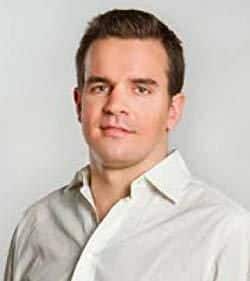
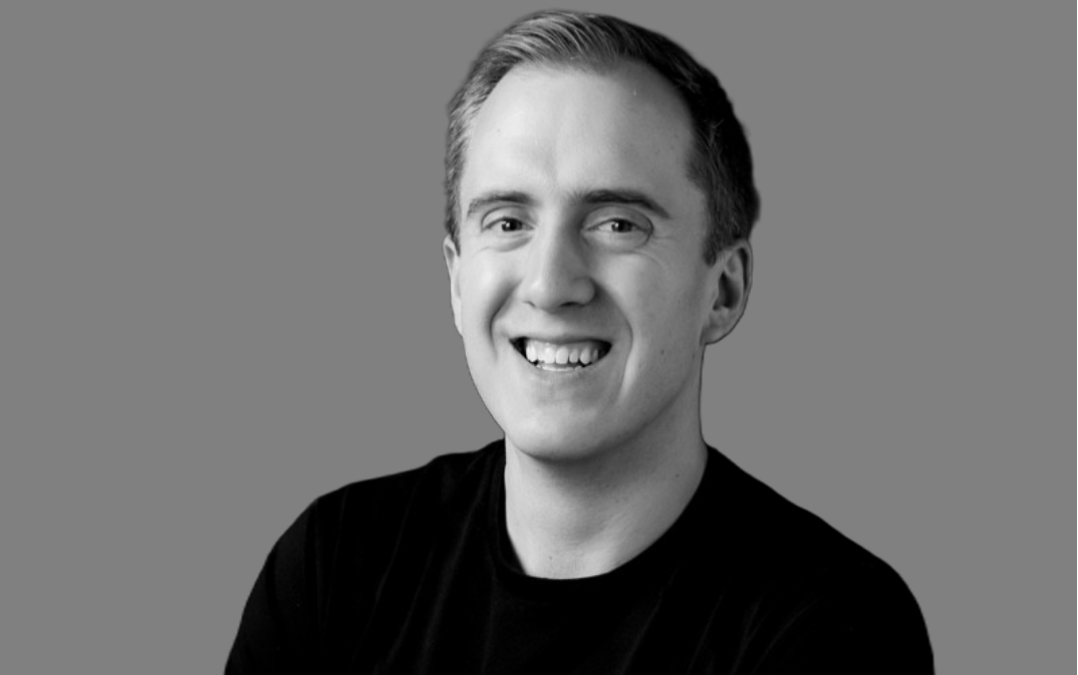
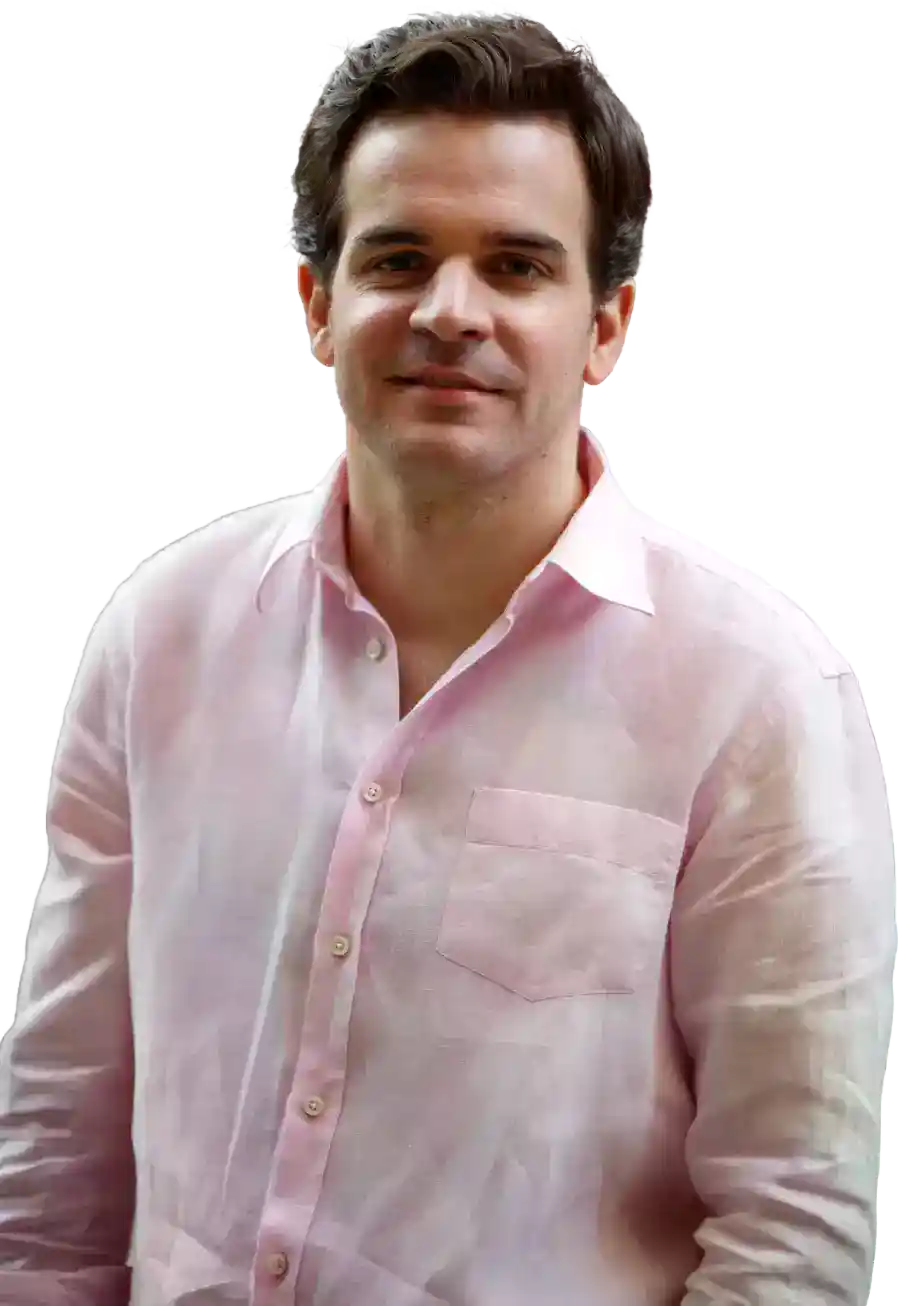
While many startup founders begin as engineers, product builders, or early-stage operators, John Howard took a very different path. His entrepreneurial journey began in unexpected places—the structured, high-stakes world of investment banking and private equity.
Eventually, John transitioned to building startups. Today, he is the founder of Croissant, a fintech-enabled commerce platform that has secured funding from top-tier investors like BoxGroup, Twelve Below, Portage Ventures, XRC Ventures, and 25madison.
In this episode, you will learn:
- John Howard’s path to entrepreneurship began in investment banking and private equity rather than the typical engineering or startup background.
- His time at KKR exposed him to inefficiencies in financial infrastructure, shaping the investment insights that later inspired his startup ideas.
- Building companies from scratch inside private equity gave John hands-on operational experience that awakened his builder mindset.
- Launching and scaling platforms like the UK auto lender and Toorak Capital proved that technology could modernize outdated financial markets.
- Croissant was born from the observation that fintech innovation focused on consumer debt rather than helping consumers build asset value.
- By combining AI, resale-value insights, and rewards, Croissant promotes “intentional commerce” in which consumers buy higher-quality items that retain their value.
- John’s biggest lesson for founders is that startups take far longer than expected and success requires humility, rapid learning, and constant adaptation.
SUBSCRIBE ON:
 iTunes
 Google Play
 Stitcher
 TuneIn
 RSS
RSS SoundCloud
 Spotify
Keep in mind that storytelling is everything in fundraising. In this regard, for a winning pitch deck to help you, take a look at the template created by Peter Thiel, the Silicon Valley legend (see it here), which I recently covered. Thiel was the first angel investor in Facebook with a $500K check that turned into more than $1 billion in cash.
*FREE DOWNLOAD*
The Ultimate Guide To Pitch Decks
Remember to unlock for free the pitch deck template that founders worldwide are using to raise millions below.
About John Howard:
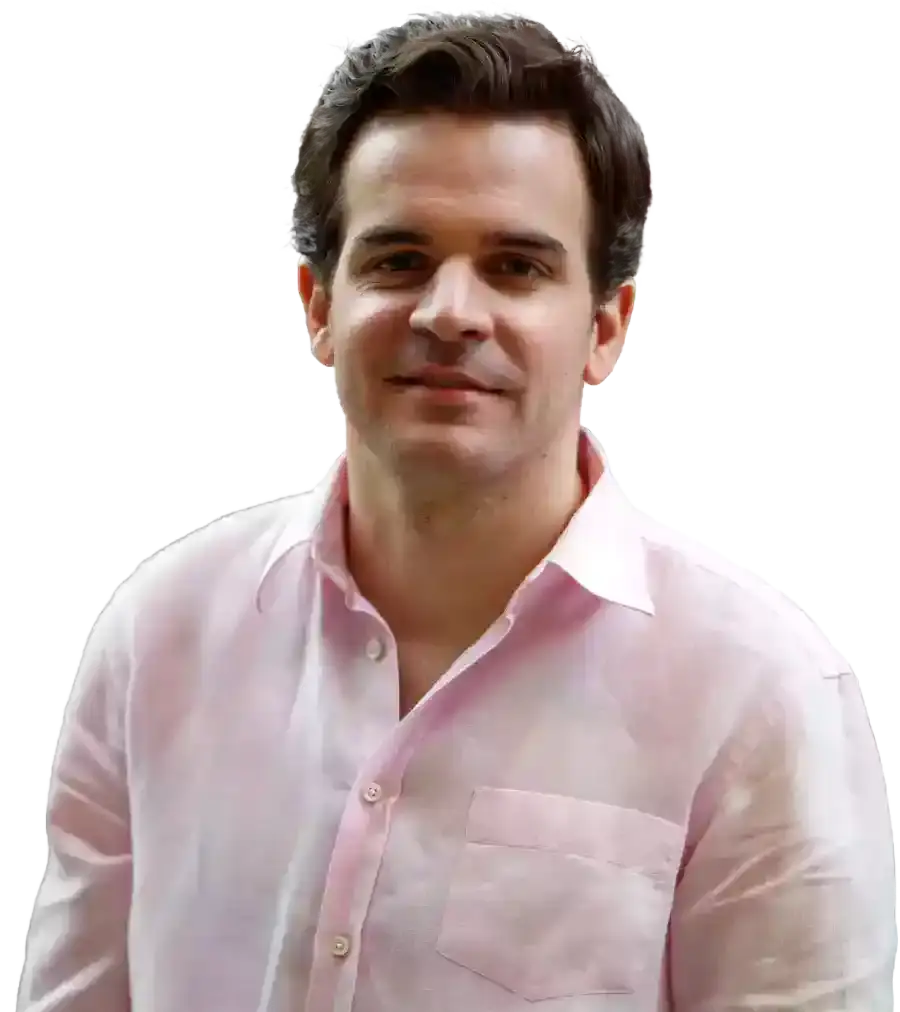
John Howard is the Co-Founder and CEO of Croissant, a Nashville-based fintech startup offering an intentional commerce platform that guarantees buyback values at the point of sale. Previously a Director at KKR in private equity, Howard launched Croissant in 2022 to revolutionize consumer and brand approaches to asset ownership and resale.
Raise Capital Smarter, Not Harder
- AI Investor Matching: Get instantly connected with the right investors
- Pitch & Financial Model Tools: Sharpen your story with battle-tested frameworks
- Proven Results: Founders are closing 3× faster using StartupFundraising.com
Connect with John Howard:
Read the Full Transcription of the Interview:
Alejandro Cremades: Already, hello everyone, and welcome to the DealMaker Show. So today we have a very exciting story, a story where we’re going to be learning about how to transition from private equity to the world of startups, thinking about problems, really when it comes to the application of AI also in the process of that journey. We’re going to be talking about building, scaling, financing.
Alejandro Cremades: All of the good stuff that we like to hear. So without further ado, let’s welcome our guest today, John Howard. Welcome to the show.
John Howard: Awesome. Thank you, Alejandro. Good to be here.
Alejandro Cremades: So originally born, of all places, in Spain, in Valladolid, obviously a place that is dear to my heart.
Alejandro Cremades: So give us a walk through memory lane. How was life growing up for you, John?
John Howard: Life is good. Unfortunately, I don’t remember Spain very much because I was three months old when my parents went back to the U.S.
John Howard: I grew up in Boston. My parents were both educators, and so I grew up in a household that loved books. I grew up in the inner city in Boston. I went to public school for most of my years and then found my way down to Nashville, of all places, for college at Vanderbilt University, thanks to a favorite English teacher of mine who encouraged me to apply and thought it would be a good fit for me.
John Howard: She didn’t know how right she was. I met my future wife there. We dated in college and jumped off into a career that I’ve loved. It was a great experience and the start of everything we’re going to talk about today.
Alejandro Cremades: That’s amazing. Now, for you, after university and going to Vanderbilt, there were quite some shifts in your professional career and how you ended up landing in private equity, because you went from Bank of America, I mean Merrill Lynch, to then essentially hedge funds and then landing in KKR, which was pivotal for you.
Alejandro Cremades: How did you go through those motions and what needed to happen to go from one to the other?
John Howard: Yeah, you know, interestingly, Alejandro, my story is probably not that typical for a founder because I took a somewhat formulaic track out of school. So I did the standard summer analyst investment banking program while I was at Vanderbilt.
John Howard: The typical thing where people come on campus to recruit and you show up in a suit and tie as a 21-year-old pretending you know what you’re talking about. And I landed a great role in Bank of America Merrill Lynch’s leveraged finance team, which is between them and JP Morgan, always competing for the most active desk on the street for leveraged finance transactions.
John Howard: So I had a good summer internship program. I got invited back full time. I was fortunate to come into senior year at Vanderbilt knowing that I had a job on the other side, which was a lot of fun and made senior year really special.
John Howard: One of the things I did during that senior year that I recommend to a lot of young people who ask me is that I reached out to all my friends who I respected academically and said, “Who’s the very best professor you took during your time here? It doesn’t matter what subject.”
John Howard: I wanted to just take the very best professors for my last two semesters here and make the most of the experience. So I ended up taking art history classes and Russian literature classes and a geology course and astronomy, and really just embraced that last year. I kind of had fun with it since I knew I was going off to Bank of America afterwards. I also cemented my relationship with my girlfriend at the time, who has now been my wife of 11, coming on 12 years. So, you know, kind of an ideal senior year.
John Howard: I went back to BofA and joined the LevFin team. It was an awesome experience. As bad as people describe it in terms of hours and stress and the MD who would call me eight minutes before a call with the management team and say, “I actually need seven new slides, get them ready,” and then we’d get on the call and he’d say, “I don’t know what’s taking my colleagues so long, but we’ll have those to you soon.”
John Howard: That said, I wouldn’t trade it for anything. I would go back and do it 10 out of 10 times. I loved the team there. The exposure was phenomenal. I had so many deal toys stacked up on my counter or back in my apartment that my wife made me throw out like 90% of them when we got married and said, “You can keep two or three favorites.”
John Howard: But it was a great way to get exposure. It was a phenomenal first step in a career as a 22- and 23-year-old, being in the room with those decision makers, with the management teams of large companies, thinking about their capital structure and making pivotal decisions on M&A and on how they finance their business and return capital to shareholders. It is a huge privilege.
John Howard: I just tried to soak it all in and, through osmosis, be in those conversations and make sure that I was on those calls and in those rooms. So I am very grateful for that experience. Coming from a family where my parents were educators, I didn’t really fully know what I was getting myself into, but I ended up jumping all the way into the deep end and embracing it.
John Howard: I recruited for private equity and hedge fund roles as part of that. That’s the standard thing analysts do. Three months into the job, the PE firms start calling and you start taking interviews.
John Howard: I knew I wanted to be an investor at the time. That was really clearly on my mind. For the last several years in college, I had been the guy reading Graham and Dodd and the Howard Marks letters on value investing. I loved the ethos of trying to match patterns and put capital behind conviction, and I wanted to get an investing role. I was especially drawn toward special situations investing thanks to the value investors who were sort of my teachers through everything I was reading.
John Howard: And so when I got a chance to interview with and ultimately secured an offer with KKR’s special situations team in New York, I jumped on it.
John Howard: That was a broad role at the time. It was part of KKR’s credit business, which was still fairly nascent. This was 2013 when I got the role and 2014 when I started.
John Howard: The business was fairly flexibly designed, frankly. We were looking at everything from public securities to private securities to distressed loan portfolios.
John Howard: I came in as the financial services special situations guy and then got to look at, frankly, everything. It was a super cool role as a 24-year-old. It felt like it was opening up a lot of options for me in my career.
John Howard: It was probably not the right way for the firm to be run with that much flexibility, and so pretty quickly after I joined, the firm started to become more siloed in positive ways.
John Howard: During that time, a segment that I had been focused on, the specialty finance vertical, really started to expand and became something that the firm doubled down on.
John Howard: The idea here was that banks had been large credit providers to small businesses and consumers in ways pre-crisis that didn’t exist post-global financial crisis. Private capital was moving into that space more and more. So where the banks used to be, there was now a gap and a void, and we could buy companies in that void. We could buy loan portfolios. We could start things.
John Howard: I had been doing that in my first two years at KKR. The change was that in 2016 we started to formalize it and we raised a big fund around it.
John Howard: At the beginning of 2016, we hired a new partner, a gentleman named Dan Peterczak, who became a dear friend and mentor to me, an American guy who was living in London at the time.
John Howard: He asked me to move over to London to be his first hire on this new strategy. We went together, just the two of us, and raised a $2.25 billion inaugural fund.
John Howard: I think I personally put about 50% of the capital to work as a 26-, 27-, 28-year-old, probably not knowing how out of my depth I was and just absolutely drinking it all in and stepping on the gas.
John Howard: So I was living in London, investing in Asia Pacific, continental Europe, the UK, and back home in the U.S.
John Howard: And the investment—
Alejandro Cremades: And I guess one of the things there too that I thought was really amazing is that you had this builder in you. While at KKR, there was the opportunity to do something that they were not as used to, which was really participating in companies from the inception.
Alejandro Cremades: You did that a couple of times, which I think, more than anything, fueled even more that builder mentality and spirit inside of you. So tell us about some of those things that you did. And how do you think that shaped up a little bit more the founder inside of you?
John Howard: Yeah, the lovely thing about this mandate, the specialty finance fund that we raised, was that it was very sector specific. It was all financial services, but it was stage agnostic.
John Howard: It included things like the earliest stage operating platforms to publicly listed companies and everything in between.
John Howard: So we had this broad mandate in terms of stage but were specific on industry, which is unusual for PE. You typically think about the large-cap buyout funds going across industries but looking for things that are, say, $300 million plus in EBITDA and fairly stage-homogenous.
John Howard: Within that sector, I had a somewhat open-ended question that I could ask when I was looking at a new space: how do we play this investment thesis?
John Howard: So, for example, in the UK, the auto lending segment was really broken. The way people bought and financed their vehicles was heavily intermediated.
John Howard: There weren’t big dealership networks like there are in the U.S., at least not to the same degree. The lenders that served these smaller mom-and-pop style dealerships were taking big fees, using brokers, and there was a lot of fat in the system.
John Howard: So the same borrower who would borrow at maybe 5% in the U.S. was borrowing at something more like 15% in the UK.
John Howard: I set my sights on that and said there is an opportunity here. Surely we can do something to step into this market, drive down borrowing costs for borrowers, and also take a big chunk of market share for ourselves.
John Howard: I looked at a bunch of the existing small auto lenders that were in operation and serving that ecosystem. I looked at potentially buying loans from originators to take advantage of the excess yield, but neither of those solutions was quite right.
John Howard: For the existing incumbents, they were small, old school, and pretty comfortable living in that sort of fat excess return environment. They traded at premiums to book value that were fairly significant.
John Howard: So I looked at that and said, what are we buying with this goodwill premium over the book value of the business? What are we actually getting?
John Howard: The answer wasn’t great. Buying loan portfolios, for a variety of reasons, wasn’t that attractive either.
John Howard: Ultimately, what I did was find a management team that we had worked with before. I sat down with them and digested the space together, built conviction around it, and came to the investment committee at KKR saying this segment is ripe for disruption.
John Howard: The only way to do it is to start something from scratch. Here’s the management team to do it, and here’s what the construct would look like if we were to go and stand that up.
John Howard: I got buy-in from the investment committee. We wrote the first £30 million of equity into the business through a combination of operating equity and asset funding.
John Howard: Over time, we followed our money and wrote £230 million of equity over five years to scale this into the leading non-bank auto lending company in the UK, with 600 employees and hundreds of millions in revenue.
John Howard: For the first six months of that business’s inception, I lived inside the business alongside the CEO, the Chief Risk Officer, and the gentleman responsible for winning dealer partnerships, who were our first three hires.
John Howard: So I got a very intimate taste of building a business that was unusual for an investor of, frankly, any kind. I don’t even think, typically from my experience, VCs live this intimately with their businesses.
John Howard: But it was the best way to go and build this. It was a fantastic experience for me in my mid-to-late 20s to help bring that thing into existence.
John Howard: I did a very similar trade, Alejandro, in the U.S. in the specialist mortgage space with a company called Turaq Capital Partners, which serves the residential transition loan segment, so loans made to fix-and-flippers.
John Howard: Those people obviously don’t take a 30-year mortgage out to buy a house that they’re going to sell within the year. It’s a commercial purpose mortgage backed by the home value of a house that needs to have draw capacity to complete projects.
John Howard: The way that was delivered was really broken. The only way to go and do it was to build something new in the space.
John Howard: So I found another gentleman who was equally interested in the space, who had previously built a mortgage company for Blackstone and was now out in the market trying to find something to do in this segment.
John Howard: We paired up and started from scratch again, with me going to the investment committee, getting the first check into this new platform.
John Howard: Then from London I flew around to Greenville, South Carolina, Denver, Colorado, and other places, selling these originators on why they should use our tech, our operating platform, and our capital stack, and building this thing from scratch.
John Howard: We ultimately put $500 million of equity behind that company.
John Howard: It’s the largest provider of capital, operations, services, and tech to the specialist mortgage space in the U.S., and it has been a great success story.
John Howard: So you’re right. That’s definitely where a lot of the builder mode in me first found its outlet.
John Howard: And it’s the things, those are two of the things that I was most proud of and excited about during my time at KKR.
Alejandro Cremades: So then for you, you know, you eventually moved back from London to New York. And this is a time where now the whole idea of Croissant is knocking, and is knocking loud, to the point that you decide to take action. So walk us through what did that look like, because after being for over seven years at KKR, which is arguably one of the best private equities out there, I mean, it’s quite the move to leave that behind and start something from nothing.
John Howard: I can’t recommend it to everybody, but if you get the opportunity, it’s a jump that can be worth taking. My circumstances were such that I kind of had to take it, and I’ll tell you why.
John Howard: My eight years at KKR, you know, there was that investing role, building a specialty finance fund.
John Howard: I was noticed by senior management and asked to step into a corporate role. So I moved up from the fund level to the GP level and helped KKR think about how to get bigger and better as a firm in a corporate development capacity. I was very fortunate to be in the right place at the right time, where I helped lead the acquisition of Global Atlantic, a big insurance business that really changed the shape of what KKR is as a company and gave us $150 billion of new assets to invest.
John Howard: And that moved me back to New York, like you said. After a period helping integrate that acquisition, I raised my hand and said, I’m not sure that I want to be the insurance guy forever. I’d like to go back into a more traditional investing role. And I led FinTech and related payments investing out of the big North America buyout fund for my last 18 months at the firm. And it was during that time that the idea for Croissant came knocking, as you said.
John Howard: I’ll go more into what Croissant does and why I was having that idea. But the general premise is that over my eight years at KKR, I was always financial services and fintech focused, lived in New York, London, back in New York, and invested across the world.
John Howard: Everything was tied together by this thread of financial services investing, whether that was at the GP level or in the funds. And something that kind of always scratched at me was that so much of our time and attention as fintech investors is devoted to how we do more on the liability side of the customer’s balance sheet, how we give a little bit more debt a little bit more easily through a new funding mechanic that makes us better off as lenders, but relatively little innovation and investment flows to the asset side of the customer’s balance sheet. And it was just kind of tugging on that idea for years. That ultimately started to serve as that primordial fluid out of which Croissant evolved.
John Howard: So Croissant is a different take on the tried and true version of helping customers do, say, impulse consumption through taking on debt through their credit card or through buy now, pay later. We’re bringing something called intentional commerce, where we’re helping customers be incentivized to step up and buy higher-quality things that have lasting value, that are more rewarding to own and to purchase, and actually better choices financially. We’re making that clear to consumers and rewarding them for making that decision by working with really great partners, particularly in the fashion space today, but soon to be across sectors.
Alejandro Cremades: And how are you guys making money there?
John Howard: I can go deeper on the business model now, if you’d like.
Alejandro Cremades: Let’s hear it.
John Howard: Finish.
Alejandro Cremades: Let’s hear it. Go for it.
John Howard: Yeah, okay. So on the business model, the way that a consumer typically uses Croissant is they’ll maybe hear about us through an Instagram ad or through one of our brand partners talking about us. So they download the Croissant app.
John Howard: And during onboarding, they’ll be asked to do two things. One is to set up our shopping tools so that they can go out and get 10% back at all of our partners on everything they buy, which actually starts to become quite material to our shoppers since they spend $700 per checkout. That’s $70 of incremental credit dropped back in their account every time they shop.
John Howard: And the other thing they’re asked to do is to sync their Gmail account and see guaranteed resale values on their past purchases. So all of their past receipts, not just the future things they buy, our AI tooling pulls in their past receipts and puts what we would buy it out from them for in that same credit.
John Howard: So what we become to the user is this ecosystem of earned credit where, through selling or through shopping, they’re earning this one universal Croissant currency to go and spend with our brand partners. From the brand partners’ perspective, what we’re doing through these value-add services for our consumers is we’re attracting a very uniquely high-value luxury or premium shopper.
John Howard: And we’re creating this very dense base of ideal shoppers for the types of brands that we work with. Then we’re saying to the brands, look, not only are we bringing these people in, who should know about your site and should come to it, but we’re empowering them with hundreds or thousands of dollars to spend thanks to giving them this 10% reward and thanks to paying them out for their resale activity.
John Howard: There’s now $160 million in collection value in people’s accounts. They’re looking for places to spend that. You as a brand should install the Croissant checkout widget so that you can take advantage of that spend. So now the brands are increasingly installing Croissant as a checkout option where our consumers can come and spend with them.
John Howard: We also will prepay because we can tell how much checkout volume is going to go from our base to those brands. We’ll pre-purchase future revenue from those brands at a discount. So we’ll tell them, we know that $3 million are going to come through this checkout lane over the next 12 months. We’ll pay you $2.1 million for those future sales. And when the redemptions happen, we won’t pay you then. We paid you up front, but we make a spread based on that. So the way that we’re making money primarily is through affiliate commissions. When users come take their credit and go shop at our partners, we get attribution for having sent that customer to them.
John Howard: And then, to the extent that our brand partners participate in that pre-funded revenue, it’s effectively a non-debt capital source for them that we can continually top up. We make a bigger spread on the store credit discount at which we purchase that future revenue.
Alejandro Cremades: And also, I mean, how do you guys go about financing the operation? Because this is something that you do very well. So, you know, you got the debt, you got the equity side of things. So walk us through how the cycles there also unfolded.
John Howard: This is not for the capital shy, right? This is a capital-consumptive business because we’re doing two things that are capital intensive. One, we’re buying out resold inventory from consumers and paying them in credit and then taking on the risk of going and selling those items ourselves.
John Howard: We’ve gotten that down to a science and we do that pretty well, but it ties up capital for a couple of months while we own the item and while we sell it. We fund that through a combination of equity, and then we have the ABL facility helping us more efficiently fund the period of time where we have working capital associated with that.
John Howard: That’s only a small part of the business. Think of that as a couple million dollars at any given point outstanding. The bigger chunk is the credit that we pre-purchase from brands because we’re buying upfront the right to future revenue, and that can go into the millions or even, for some of the larger brands, tens of millions.
John Howard: We’re using, again, ABL funding for a lot of that. And then we have to have a significant amount of equity on balance sheet to support that. So that’s why we’ve raised, as you’ll see it in the recent press release, just over $52 million between debt and equity to fund that operation.
Alejandro Cremades: So then in terms of vision, because obviously the investors that have invested here, they’re betting on you. They’re betting on the vision. Same with employees, with customers.
Alejandro Cremades: If you were to go to sleep tonight, John, and you wake up in a world where the vision of Croissant is fully realized, what does that world look like?
John Howard: The vision of Croissant fully realized is a ubiquitous network of the best brands and retailers where Croissant as a redemption option is everywhere, right? So every brand that Croissant makes sense for, think of the brands like Johanna Ortiz or Altuzarra or a bunch of our partners who we have in place today, and the multi-brand retailers like Neiman Marcus or Moda Operandi, they all have Croissant at checkout where people can earn and redeem Croissant credit.
John Howard: That’s the network that we’re trying to build. And in that world, of course, every premium shopper is thinking more intentionally, is choosing higher-quality items, is thinking with the intentional commerce mindset that we’re trying to pioneer, and has the Croissant app and has thousands of dollars of credit to go spend with these partners and is getting rewarded continually for their intentional commerce within this ecosystem.
Alejandro Cremades: So then let me ask you, because now we’re kind of looking at the future, but I want to talk about the past and do so with a lens of reflection.
Alejandro Cremades: If I was to bring you back in time, maybe to the point where you were thinking about giving your notice at KKR and really about to take that jump off the cliff and figuring out, as they say, building the plane on the way down, if you were able to have a chat with that younger John and give that John one piece of advice before launching a business, what would that be and why?
John Howard: Two things come to mind. One is that great old sign that you’ll see online that some people have in their office that says, we didn’t do this because it was easy. We did it because we thought it would be easy. That often comes to mind for me.
John Howard: I definitely, like many founders, left with a bent towards optimism on how quickly we could assemble the big vision.
John Howard: And telling my younger self to be patient and roll with all the twists and turns would have been a core piece of advice. The second thing is, probably on the humility side, I heard a really great quote that I don’t fully agree with, but I think is kind of a funny, provocative framing. I was at a founder dinner in San Francisco a couple years ago, and the keynote speaker said, he was a very successful multi-time founder with multiple unicorn exits, and said, I make 80% wrong decisions.
John Howard: Wrong decisions. And we all kind of looked around. There was a chuckle in the room. He goes, no, I’m serious. If you look at any of my companies, what do they take? Ten years to get from nothing to the successful point where I would consider it as having made it.
John Howard: Well, if you look back on that company, you’d say, hey, knowing what I know now, I could have built that thing in two years, not 10 years. Therefore, it took me an extra eight years. I make 80% bad decisions and only 20% good decisions. So I love that lens. It’s not necessarily true, but it shows you that humility, that ability to adapt quickly,
John Howard: the awareness going in that you don’t know everything, you’re about to learn a whole lot, is the other thing that I would encourage young founders to channel before they go and make the leap.
Alejandro Cremades: I love that. So, John, for the people that are listening that would love to reach out, say hi, would love to perhaps take a look and learn more about Croissant, what can you tell them?
John Howard: I tell you first and foremost, get on the iOS store and download our app. It’s a very rewarding experience. As you heard in my overview, it’s multifaceted, it’s complex. It’s not a point solution, it’s an ecosystem. And it’s a little tricky to understand sometimes, frankly, but as you get into it, you realize more and more how powerful and rewarding it is, both financially, but then also in terms of the quality of products and brands that it introduces you to and what you’d end up discovering and falling in love with.
John Howard: So I tell you to do that, and then don’t hesitate to reach out on LinkedIn if I can be helpful in any capacity.
Alejandro Cremades: Amazing. Well, John, thank you so much for being on the DealMaker Show today. It has been an absolute honor to have you with us.
John Howard: Likewise, Alejandro. It has been great. Thanks for having me.
*****
If you like the show, make sure that you hit that subscribe button. If you can leave a review as well, that would be fantastic. And if you got any value either from this episode or from the show itself, share it with a friend. Perhaps they will also appreciate it. Also, remember, if you need any help, whether it is with your fundraising efforts or with selling your business, you can reach me at al*******@**************rs.com
Podcast: Play in new window | Download
Subscribe: Apple Podcasts | Spotify | TuneIn | RSS | More
Facebook Comments