

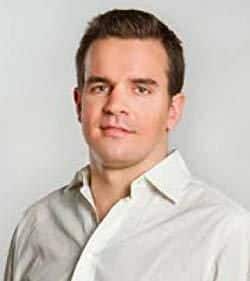

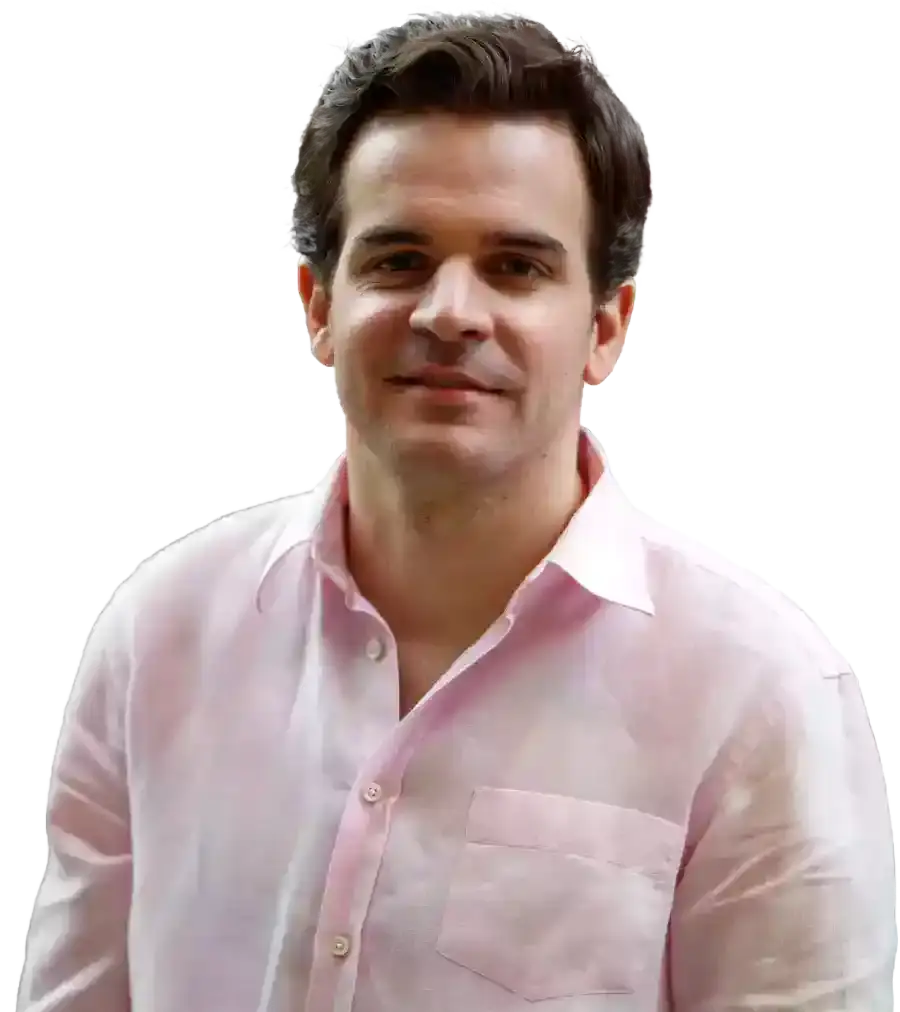
Few founders embody the entrepreneurship journey better than Jagdeep Singh. In reality, building transformative companies is a long journey of curiosity, persistence, and disciplined problem-solving. It’s never about a series of lightning strikes of ideas and overnight successes, as often portrayed.
Jagdeep has successfully built seven startups, including his latest venture, Rhoda AI, which has secured funding from Temasek Holdings, Khosla Ventures, Mayfield Fund, and Matter Venture Partners.
In this episode, you will learn:
- Great companies emerge from solving large, unsolved problems, not chasing small opportunities or trends.
- Differentiated technology and deep domain understanding are essential to avoid becoming a commodity business and to build lasting value.
- World-class teams are built through vision and persuasion, convincing exceptional people to leave great jobs and join a risky mission.
- The most valuable startup ideas are often contrarian and misunderstood at first, but backed by rigorous analysis.
- Founders should build companies for long-term impact, not with the primary goal of getting acquired.
- Strong execution is essentially a disciplined process of identifying, ranking, and reducing risks.
- The next massive technological transformation may come from bringing AI-powered robotics into the real world and reshaping the global labor economy.
SUBSCRIBE ON:
 iTunes
 Google Play
 Stitcher
 TuneIn
 RSS
RSS SoundCloud
 Spotify
Keep in mind that storytelling is everything in fundraising. In this regard, for a winning pitch deck to help you, take a look at the template created by Peter Thiel, the Silicon Valley legend (see it here), which I recently covered. Thiel was the first angel investor in Facebook with a $500K check that turned into more than $1 billion in cash.
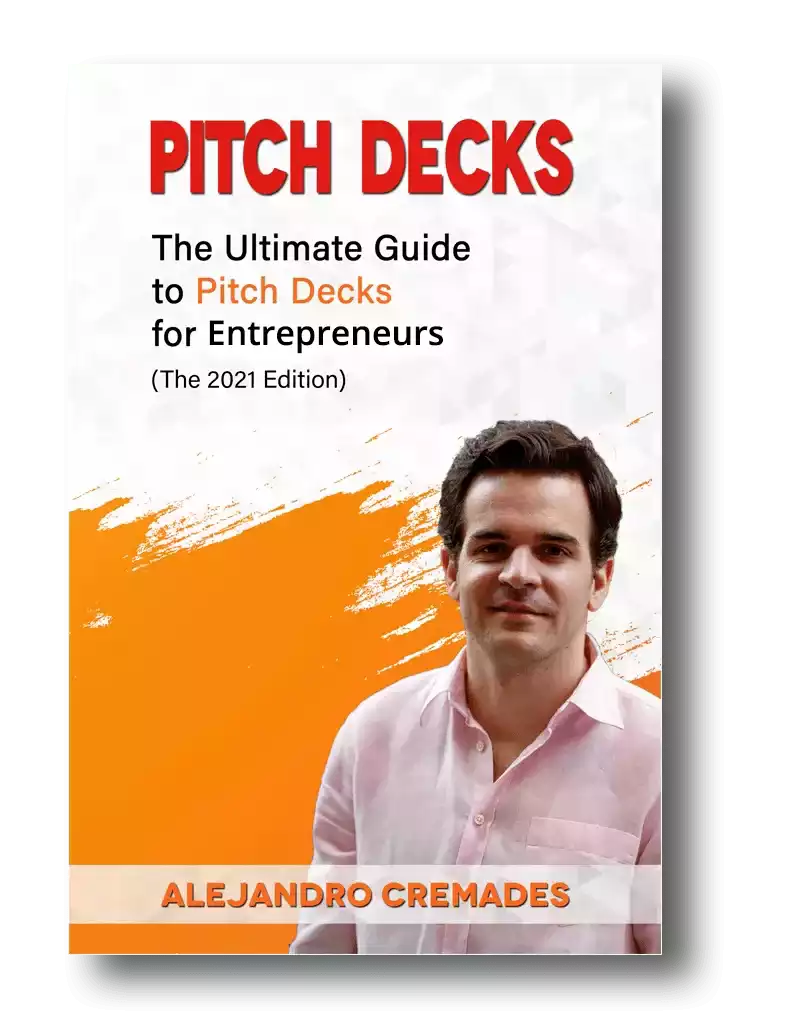
*FREE DOWNLOAD*
The Ultimate Guide To Pitch Decks
Remember to unlock for free the pitch deck template that founders worldwide are using to raise millions below.
About Jagdeep Singh:
Jagdeep Singh is Cofounder and CEO of Rhoda, a company building next-generation robot foundation models designed to bring general intelligence into the physical world.
Previously, he was cofounder and CEO of QuantumScape (NYSE: QS), where he led the company from early research through public listing, pioneering advances in solid-state battery technology for electric vehicles.
Over the course of his career, Jagdeep has founded and scaled multiple deep-technology companies spanning AI, communications, and advanced materials, including Infinera (NASDAQ: INFN), Lightera (acquired by Ciena), and Raxium (acquired by Google).
He holds an MS in Computer Science from Stanford University and an MBA from UC Berkeley. His work at Rhoda focuses on the intersection of AI, robotics, and large-scale industrial systems — often referred to as “physical AI”
Raise Capital Smarter, Not Harder
- AI Investor Matching: Get instantly connected with the right investors
- Pitch & Financial Model Tools: Sharpen your story with battle-tested frameworks
- Proven Results: Founders are closing 3× faster using StartupFundraising.com
Connect with Jagdeep Singh:
Read the Full Transcription of the Interview:
Alejandro Cremades: Alrighty, hello everyone and welcome to the DealMakers show. Today we have a really spectacular guest. He has done it so many times, so many companies that just counting them made me dizzy. So I think you guys are all going to be able to learn a lot.
Alejandro Cremades: It’s going to be quite inspiring. The whole full life cycle of building, scaling, financing, and exiting—he has done it multiple, multiple times. I think you are all going to find today’s conversation really, really inspiring. So without further ado, let’s welcome our guest today, Jagdeep Singh. Welcome to the show.
Jagdeep Singh: Hi, Alejandro. Pleasure to be here. Thanks for having me.
Alejandro Cremades: So you were born in Delhi. Obviously, you don’t remember much because you moved out of there at four years old to the U.S., but walk us through what life was like growing up for you. Give us a walk down memory lane.
Jagdeep Singh: Yeah, you know, I did grow up in the D.C. area. I started college a bit early, at 15, and I remember when I was still in high school seeing an issue of Time Magazine with Steve Jobs on the cover.
Jagdeep Singh: And that was pretty inspirational. I felt like that was the path I wanted to pursue—entrepreneurship in the technology field.
Alejandro Cremades: So at 19, and not even waiting any longer, you moved to the Valley. Being there in the Bay Area, I want to ask you about problem solving. You went to study computer science, so where did that whole love for solving problems come from? In your case, you’ve been starting so many companies and going deep into identifying problems and resolving them. Where did that love come from?
Jagdeep Singh: Yeah, I think it basically came from that issue of Time Magazine where I wanted to follow in the footsteps of Steve Jobs. But as I realized I wanted to start a company, I also realized that starting a company really comes down to finding problems that need solving and then solving them better than they have been solved before.
Jagdeep Singh: To be more precise, over time I came up with four key things that I think are required to build a great company.
Jagdeep Singh: These learnings came over time, but at this point my last several companies have had these four things in common. The first is that you have to find a large unsolved problem. You can’t build a great company in a small space, right? So it has to be a big problem. And you define big by how many people have that problem,
Jagdeep Singh: times how much they are willing to pay per unit for the solution. So it’s got to be a big problem. But the second thing you need is a differentiated solution.
Jagdeep Singh: You need to solve that problem in a way that has not been solved before. Now, if it’s a big unsolved problem, chances are it has been looked at by others because it’s a big problem. The question then becomes: why have others not solved it? You have to do a lot of research and understand why previous approaches haven’t worked.
Jagdeep Singh: You’ve got to come up with a novel approach that is different and that actually solves the problem. That’s key because if it’s not differentiated, then you’re in a commodity business. Commodity businesses are not fun because there is a lot of pricing pressure, margins are low, and you can’t really reinvest in R&D and innovation.
Jagdeep Singh: So the second key thing is a differentiated solution.
Jagdeep Singh: The third key thing, obviously—and this is almost a cliché—is that you really do need a world-class team. You need people who are the best at what they do, and you really don’t want to settle there, especially with your co-founders.
Jagdeep Singh: You want people who are deeply experienced in the domain, who have the IQ, the people skills ideally, and a history of getting things done—getting results, not just talking.
Jagdeep Singh: The last thing I look for in my companies—and this is not required for every company, but for the kind of companies I build, which tend to be deep tech—is early customer validation.
Jagdeep Singh: Before we even spend a dime building anything, I like to engage with potential customers and say, “Look, here’s what we’re thinking. Here’s what we see as your problem, and here’s how we think we can solve it.”
Jagdeep Singh: Is this compelling to you? If they say, “Yeah, it’s interesting, come back when you have a product,” that is actually not a good answer. The answer I want to hear is, “This is so compelling that we want to help you get this to market.”
Jagdeep Singh: “What can we do to help you make this real?” That’s when you know you have something interesting, and that’s when you go off and build it.
Jagdeep Singh: So those are the four things I look for. If you look at my startups, they have all, to one extent or another, had those four things in common.
Jagdeep Singh: I’ve worked across many spaces—from telecom equipment to solid-state batteries and now AI-driven robotics.
Jagdeep Singh: But the common thread is those four things. They have all attacked what I saw as big unsolved problems. They have all had novel, differentiated technical solutions.
Jagdeep Singh: They have had exceptional teams. And in every one of them, we had early customer validation that gave us comfort that we were solving a real problem that needed solving.
Alejandro Cremades: So in your case, after your computer science degree and your master’s, you were working at Hewlett-Packard and another company.
Alejandro Cremades: What was the other one? It was Sun Microsystems, right?
Jagdeep Singh: Yes, Sun Microsystems.
Alejandro Cremades: So what pushed you toward entrepreneurship in your case?
Jagdeep Singh: It’s something I wanted to do even before I was in college. Throughout college I kept wanting to start companies. I started small consulting companies when I was an undergraduate computer science student, helping people implement software systems in their companies.
Jagdeep Singh: When I came out to California, to Silicon Valley, I realized this was the epicenter of entrepreneurship. That just fueled the fire.
Jagdeep Singh: I’ve always wanted to start a company because I feel that starting companies is the best way to make a sustainable impact.
Jagdeep Singh: You solve a problem that someone needs solved, and if you succeed, it generates an ongoing revenue stream that allows you to fund additional innovation and keep making an impact. It’s a self-sustaining paradigm.
Alejandro Cremades: But what were you waiting for to really launch what became your first company, AirSoft? You worked at these big companies and knew you wanted to do this. What were you waiting for?
Jagdeep Singh: I wasn’t waiting. I was literally coming up with ideas all the time.
Jagdeep Singh: I had notebooks where I wrote down ideas and tried to do the homework for each one. I’d say: here’s the concept, here’s the problem I think exists.
Jagdeep Singh: How big is this problem? Do people really care about it? Can I solve it? What are the different ways to solve it? Can I convince great people to join me? Can I talk to customers and see if they actually care?
Jagdeep Singh: And then I would rule the idea out.
Jagdeep Singh: I would go to the next page and start another idea. I did that for years while I was working at Hewlett-Packard and Sun Microsystems.
Jagdeep Singh: Finally, while doing my master’s degree in computer science at Stanford, one of the ideas was about improving network protocols so they could work on very low bandwidth, high latency networks—like the wireless and remote-access networks that were emerging at the time.
Jagdeep Singh: That idea passed all the checks I was applying and led to the first company. But before that, there were many ideas that didn’t go anywhere.
Alejandro Cremades: Based on your experience and all the companies you have started, where do ideas come from for you? And how do you validate them until you decide, “This is the one I’m going to pursue”?
Jagdeep Singh: It’s a great question. I think you have to know a domain deeply enough to understand what the open problems are in that space.
Jagdeep Singh: It’s very hard to come in with a shallow understanding of an area and identify truly important unsolved problems. You need to go deep.
Jagdeep Singh: When young entrepreneurs ask me how they can come up with ideas, I usually tell them to start by getting deep into one domain—either by working in it or studying it—to understand what the unsolved problems are.
Jagdeep Singh: Once you have some ideas, you can engage with customers to validate whether they agree with you. You can talk to technologists to see if your solution ideas are feasible.
Jagdeep Singh: You can also see if you can get great people to join you in pursuing the idea.
Jagdeep Singh: But it all starts with understanding a domain deeply and identifying the open problems within it.
Alejandro Cremades: Your first company, AirSoft, gave you financial independence at 29. If you could talk to your younger self—or someone experiencing a big liquidity event early in life—what advice would you give them so it doesn’t go to their head?
Jagdeep Singh: Do you mean before or after the liquidity event?
Alejandro Cremades: Both.
Jagdeep Singh: Before the liquidity event, one piece of advice I’d give entrepreneurs is that it’s important to do your own work and form your own opinion about whether what you’re doing makes sense.
Jagdeep Singh: A lot of people will have opinions.
Jagdeep Singh: One thing I learned over the years comes from investing. You were an investor, so you understand this. In investing, there is the concept of being contrarian.
Jagdeep Singh: If you invest in stocks that everyone already believes are great, then that belief is already priced in. Even if you’re right, there’s not much value to create.
Jagdeep Singh: But if you are contrarian and right, there is a lot of value to create.
Jagdeep Singh: I think the same principle applies to entrepreneurship. You want an idea that is contrarian—meaning not everyone agrees it’s a good idea.
Jagdeep Singh: In fact, if everyone thinks it’s a great idea, it might already be too late.
Jagdeep Singh: You want something that is different from what everyone else believes is the right way to do it.
Jagdeep Singh: You should listen to criticism and evaluate whether you agree with it. Don’t get swayed by the emotional aspect of criticism. Ask yourself whether the substance of the criticism is valid.
Jagdeep Singh: If you don’t agree with it, that’s okay.
Jagdeep Singh: Because then you have something that is contrarian but that you genuinely believe could work.
Jagdeep Singh: The trick is to be contrarian and right. If you’re contrarian and wrong, you’re still wrong.
Jagdeep Singh: Being right requires doing the homework up front—thinking through what could go wrong and whether those risks are addressable.
Jagdeep Singh: That’s the paradigm I use: be contrarian and right.
Jagdeep Singh: When you’re doing that, you also have to learn not to be swayed by criticism. A lot of people will think what you’re doing is wrong.
Jagdeep Singh: But that can actually be a good sign, because it means that if it works, it will truly be contrarian.
Alejandro Cremades: So in your case, I mean, we could go on and on with all the companies, but just so that the people listening get it, you did AirSoft, then you did Lightera Networks, which was acquired by Ciena literally 10 months in for $550 million. I guess with that one specifically, I want to ask you about timing.
Alejandro Cremades: How do you think about M&A? Because 10 months in is quite early in the life cycle of the business. So at what point should a founder think about whether it’s a good time to get acquired or not?
Jagdeep Singh: Yeah, great question. And I learned a lesson from Lightera, actually, because there was a funny story there. One of my investors was Vinod Khosla. You might know Vinod from Khosla.
Alejandro Cremades: Yes, of course.
Jagdeep Singh: Back then he was at Kleiner Perkins. When we started that company and then the offer came in to get acquired, the other investors in that company were looking at the return they were making, and they were making more than 10x their money.
Jagdeep Singh: And they were like, wow, this is a great return. Let’s sell the company. Vinod was the one guy who saw the potential of what the company could become, and he urged us not to sell.
Jagdeep Singh: He was like, look, you guys could build a really great independent company here. Don’t sell this company. In the end, he actually even drove over on a Saturday to try to convince the management team not to sell. The team, in the end, decided to sell. But post-sale, the company ended up generating literally billions in revenue for Ciena. And there was no doubt in my mind that it could have been a great independent company. But I think the lesson there for me was that every company I start now, I don’t start it with the intention of M&A. I start it with the intention of building a permanent company that can really make an impact in the industry. Now, if along the way,
Jagdeep Singh: somebody comes in and makes a crazy offer to buy the company, well, look, the board has to consider that. The board has a fiduciary responsibility to look at those options, and they might choose to take that option. But if you start a company with M&A as the end goal, then you’re just not thinking big enough, in my view, to really make a big impact.
Jagdeep Singh: So I like to start companies with a viewpoint of, how can we build a permanent part of the economy? And then if an M&A happens because you got a crazy offer, fine. But that’s not the primary purpose.
Alejandro Cremades: That’s amazing. Now, obviously, then after that, you did OnFiber, also acquired by Qwest Communications. And then after that, you started Infinera. And that one you took public, and the IPO was $1.2 billion when you guys went public.
Alejandro Cremades: I guess, how was the experience of running one of those IPO processes? And then also, being the founder and CEO of a company that is private versus public, because that’s a little bit of a different challenge.
Jagdeep Singh: It’s a very different challenge. And it’s so funny—going public is like things just flip overnight, right? Before you’re public,
Jagdeep Singh: you’re cash-poor, but you don’t care about the P&L because it’s just paper losses, right? But you care about the cash balance a lot. Once you go public, you raise a lot of money. Now you have a very strong balance sheet, but you can’t really spend it because you have to be P&L positive, right?
Jagdeep Singh: So you’re constrained by your top line relative to how much you can spend. And that’s a different mindset, right? Also, your board of directors goes from being a bunch of capitalists who understand your business quite well because they were with you as a small private company, and they’re also the main stockholders, to now becoming a board of people who are representing the shareholders.
Jagdeep Singh: You have a lot of public shareholders. The board represents them. But no one board member controls the company the way they do in the private company case. And that’s a different paradigm as well. The other thing about public companies, of course, that is not fun is that now you’re open to lawsuits, right? Basically, securities lawsuits. There’s a whole army of people out there whose job it is to sue public companies and try to get a settlement and make some money. So you’ve got to be very careful about what you say and how you manage all that. So there are pros and cons. Some people like running public companies, some people don’t.
Jagdeep Singh: To be candid, I don’t know if I love running public companies, but I do love building companies. And I think a lot more of the building happens while you’re still private. Once you’re public, it becomes a little more of an incremental kind of growth as opposed to the truly radical ideas.
Alejandro Cremades: And talking about building companies, after this one, you bought a Tesla and you saw the inefficiencies that were going on there, but you joined Khosla Ventures.
Alejandro Cremades: And you’ve been in and out of the VC space, or the side of the table that you’re on, whether it’s as a founder or as an investor.
Alejandro Cremades: Tell us about that rotation that you have experienced in your career too, and how you think that has helped you in terms of thinking differently about the execution of building and scaling a company.
Jagdeep Singh: Yeah, I think it’s been very helpful to be on the other side and see how VCs think about investments and what they look for. I did realize that it wasn’t what I wanted to do. Obviously, being a VC at a successful venture capital firm provides a good living. You can make a decent living, and that’s not a problem.
Jagdeep Singh: But the venture capital lifestyle, if you will, is one where you’re involved in multiple companies, but not very deeply in any one, right? And if that’s the kind of person you are, great, it’s a good lifestyle.
Jagdeep Singh: For me, I tend to want to go deep into whatever I do, and I wouldn’t be happy just serving on a board and giving advice to the founders or CEO and then going away, basically. Before I give advice, I like to make sure that I understand the space really well, the problem, the technical approach, the customer needs, and so on. And I realized, through those venture capital stints, if you will, that what made me the happiest was picking one venture and going deep, really being an operating guy in the end. And having learned that, that’s what I’ve been doing the whole time.
Alejandro Cremades: So after this, you went on to start QuantumScape, also took it public. But with this one, you stayed for quite a while—14 years. What do you think kept you there for so long?
Jagdeep Singh: Well, both Infinera and QuantumScape were pretty long ventures. I mean, Infinera was almost 10 years and QuantumScape was 14 years. Two main reasons. One is that the technologies in both companies were deep tech, difficult technologies. They both involved material science and semiconductors in one case, and battery fabrication in the other, and so on. But the companies were just fun. It was fun to grow those companies and navigate all the challenges. And so they certainly kept my interest, right?
Jagdeep Singh: The other companies that I’ve done over the years, we had these acquisition offers come in and the board decided to take the offers.
Jagdeep Singh: And that’s why those companies got acquired. But my preference is to build companies for the long run. So I would like to do companies for 10-plus years at a stretch, right?
Alejandro Cremades: And even if you were there for 14 years, you were not getting bored at all because you were also doing stuff on the side, like Raxium, for example, where you were the executive chairman. That sold to Google for a billion.
Alejandro Cremades: And obviously, that was the most immediate step before you got started with your most recent baby, I would say, with Roda. So talk to us about Roda.
Alejandro Cremades: How did the idea come knocking? Why did you think it was meaningful enough to take action? And what needed to happen for you to bring it to life and be where you are today?
Jagdeep Singh: Yeah, yeah, Roda is something I’m really excited about. We’ve all been following the AI revolution, right? And it really is a revolution. The world is going to be different post-AI than it was pre-AI.
Jagdeep Singh: And I took my first class in AI back in 2018. So is that almost like seven or eight years ago now? Eight years. It was a class on neural networks, but for natural language. And I remember the Transformer paper had just come out from Google. One of the authors actually came into the class to present the paper. And nobody knew at the time how big this was going to be, that this was going to lead to ChatGPT and the whole revolution of OEI. So as I was following the space, what I realized was that obviously AI was going to be transformative, but I also realized that a lot of the big opportunities in AI were already addressed, right? In language models, in image generation models, in video generation models, there already existed 800-pound gorillas in each of those spaces. And I didn’t want to do a company that was just another me-too player in one of those spaces. I was looking for an unsolved problem. And as I was looking around the industry, the one area where AI had not yet made an impact, where there was no 800-pound gorilla,
Jagdeep Singh: was in robotics, right? Robotics clearly needs intelligence for the robot to know what to do and how to solve problems in the physical world. But nobody had figured out how to take robots from the laboratory, where they can do kind of cool things, into the real world.
Jagdeep Singh: And the reason for that is because in the laboratory setting, you can basically control the setting that the robot is operating in and allow the setting to match the dataset that you train the model on very closely.
Jagdeep Singh: In the real world, the actual dataset that you see diverges from the training dataset. And that divergence is enough to make the models fail. So these AI models that have worked great for language and image and video have not worked for robotics.
Jagdeep Singh: And that was really, in my mind, one of the biggest unsolved problems in technology: bringing AI to the physical world. And that’s why I got excited about trying to solve it here with Roda.
Alejandro Cremades: And how have you guys gone about capitalizing the operation? Because after all these companies that you’ve done, I’m sure that you were very intentional as to who you would bring in and what the process was for doing so.
Jagdeep Singh: Yeah, so we knew this company was going to require a really solid balance sheet. This is not for the faint of heart. We wanted to do our own AI model. We wanted to do our own AI hardware, robotic hardware, and sell to customers directly.
Jagdeep Singh: So we needed a good balance sheet. We wanted to go with investors that we had worked with before, who had shown that they were really supportive investors, that they were long-term thinkers. They cared about building a real, permanent
Jagdeep Singh: part of the economy. And so we brought in a number of people that I’ve successfully worked with before. I mentioned people like Vinod Khosla, but also people like John Doerr, people like Bill Gates. These are all people who have invested in the company. We have raised $450 million in the Series A, so it’s enough capital.
Jagdeep Singh: And with that, we’re attacking the problem now.
Alejandro Cremades: I mean, that’s a hell of a Series A. Probably one of the largest Series A’s that I have heard in a long time. So how do you go about it? Because I do come across a lot of founders out there who are kind of outside of the typical norm of a Series A, where the median average could be around $10 to $15 million.
Alejandro Cremades: How do you go about it? Obviously, you go after sophisticated players that really understand what you’re tackling, but what can you tell founders that are a little bit outside of the typical average about how to approach that and get investors to be a little bit more educated or informed?
Jagdeep Singh: Well, I think, you know, there are, I think, four things that you want in an investor, right?
Jagdeep Singh: You care about the investor’s name brand because their credibility helps you in terms of attracting employees and customers and so on. You care about their strategic advice and their value, whether they can really give you value in terms of building the company.
Jagdeep Singh: You obviously care about their money, their capital, and you care about the network that they have. Do they actually have people they can introduce you to and so on? And you really want to try to find people that have a lot to contribute on each of those metrics.
Jagdeep Singh: So it’s not just money, but it’s money that comes with a network, money that comes with credibility, money that comes with actual advice that can help you build your business.
Jagdeep Singh: So I’ve been lucky because this is, I guess, my seventh startup now, and I’ve been able to work with a lot of great VCs over the many years to be able to tap into those networks. If you’re starting out from scratch as an entrepreneur, it’s a bit harder.
Jagdeep Singh: You’re kind of unproven, so there’s a bit more skepticism. But I think in the end, if you have those four things I mentioned at the beginning, if you have a big unsolved problem, if you have a differentiated solution, if you have an exceptional team, and if you have customer validation, then I think you have a pretty good chance of bringing in some great investors at good valuations.
Alejandro Cremades: So what does a great investor look like? If you had to break that down, what does that look like?
Jagdeep Singh: Again, I would say those four things for the investors, right? How good is their network? How much experience do they have relative to building other companies so they can give you advice? How much cash can they put in, basically? These are all the things that I think create a great investor.
Alejandro Cremades: So obviously, when you get investors on board, they’re betting on a vision, right? On a big vision.
Alejandro Cremades: And that’s obviously what you guys are doing with Roda. And talking about that, if you were to go to sleep tonight, Jagdeep, and you wake up in a world where the vision of Roda is fully realized, what does that world look like?
Jagdeep Singh: Yeah, I mean, to be candid, in the fullness of time, we think what we’re doing transforms the future of work, right? So these robots are general purpose and they’re intended to basically do any task, right? Now we’re starting out in the near term with a very specific focus on manufacturing and logistics tasks because those are tasks that we think customers are actually willing to pay for today. In the fullness of time, though, all tasks, whether it’s actual manufacturing, logistics, or whether it’s household robots doing your laundry and your dishes and your cleaning, could be handled this way. You could have robots driving your car for you if you don’t want to have a self-driving car. All that is within the realm of possibility. Labor in the United States alone is on the order of, from numbers I’ve seen, between $4 and $5 trillion dollars a year.
Jagdeep Singh: And that’s just the U.S. Worldwide, it’s probably north of double that, north of $10 trillion dollars a year. And if you can have robots do all that labor, then that’s probably the biggest transformation in how humans live since, well, in recorded history, right? I mean, it’s only once in human history that you actually transition to a point where machine intelligence becomes smarter than humans, and we may be living in that era now. So I think that the long-term impact is truly, truly transformative.
Alejandro Cremades: So I guess, you know, you were alluding to earlier, and we were talking about it, the caliber of people that you’ve been able to bring on board is really spectacular. For a kid that went from D.C.
Alejandro Cremades: to Silicon Valley and was able to do what you’ve been able to do, I’m sure that surrounding yourself with the right people has been critical. How do you think people should be intentional about building their network as founders?
Jagdeep Singh: I think it’s probably one of the most important things you can do as a founder, right? If people ask me, you say you want to build an exceptional team or a world-class team, how do you do it? And I say, look, this is exactly where you need to prove your worth as a founder, right? If you’re a founder worth your salt, you’ve got to be able to convince the best people in the world, people who have great jobs working at the best companies in the world, to leave those great jobs and great companies and come join you in your vision. And how do you do that? Well, there’s no one formula. It’s a mix of using the power of the vision, using your personal charm, using fear, greed, right? Basically, whatever is required in the end. You need to be able to convince these incredible people, who are very well taken care of wherever they are because they’re so good, to leave what they’re doing and drop the opportunity cost of the second-best opportunity to come join you in pursuing this. And if you can do that,
Jagdeep Singh: you’re cut out to be a great entrepreneur. If you can’t do that, then you’re not an entrepreneur. You need to keep working on improving those skills. So I think that’s important. This also ties into, I think, the question you asked about investors. You asked me what I look for in a great investor. And there is one thing in common that I think great investors and great team members have in common, or have to have, which is they both have to have complete belief in the vision of what you’re doing, right? They have to have complete buy-in and have to be super excited about the idea and the potential impact on society if you succeed. So you want people who really buy into the overall story because you don’t want founders at the helm who are half bought in. But let me be careful. When I say people who are bought in, I don’t mean people who are just yes men. I mean, you can have people who believe in the vision, but there has to be that tension where, once you buy into the vision, then it all becomes about what the risks are in executing this vision. And you’ve got to have people who, along with you, are willing to brainstorm everything that can go wrong.
Jagdeep Singh: Right. And then you can systematically say, okay, which of these risks is the biggest risk in terms of both probability and magnitude of impact?
Jagdeep Singh: And you can start, you can literally rank-order the list and start addressing them one by one. And that becomes your execution plan. Think of your execution plan as being a risk-reduction plan. And to think about the risks, you need people who are not just yes men, but who can really think about what can go wrong, who can almost be paranoid about what can go wrong. That’s actually one of the other key things that you need as an entrepreneur, a sense of paranoia, right? Your job as CEO or co-founder is to be the chief risk officer of the company, which means you’ve got to be thinking about
Jagdeep Singh: how many ways this can go wrong. And then for every one of those different ways it can go wrong, you need someone who’s worrying about it more than you are, and you need a plan for how to address those risks. Now, some of those risks will be mitigated, but some will not. And then you have to react to the risks that are happening. My personal experience has been
Jagdeep Singh: usually it’s not the risks you worry about that come back to bite you. It’s the risk that you aren’t worrying about that actually causes a problem. And so the more you think about the risks up front, the more likely you are to be able to deal with them preemptively and not let them come back and bite you.
Alejandro Cremades: I love that. So Jagdeep, for the people that are listening that would love to reach out, say hi, and learn more about Roda, what can you tell them?
Jagdeep Singh: Yeah, so by the time this airs, we will be out of stealth and we will have a full website up, Rolada.ai. We would welcome people that have this ambition to bring robots out of the lab and into the world to reach out to us.
Jagdeep Singh: We think there are huge opportunities here to both help them grow and also help them make an impact with what we’re doing. And the best way to reach us would be through our website at RodeR.ai.
Alejandro Cremades: Amazing. Well, Jagdeep, thank you so much for being on the DealMakers Show today. It has been an absolute honor to have you with us.
Jagdeep Singh: Alejandro, the pleasure is all mine. Thank you so much for hosting. And we look forward to talking again soon.
*****
If you like the show, make sure that you hit that subscribe button. If you can leave a review as well, that would be fantastic. And if you got any value either from this episode or from the show itself, share it with a friend. Perhaps they will also appreciate it. Also, remember, if you need any help, whether it is with your fundraising efforts or with selling your business, you can reach me at al*******@**************rs.com
Podcast: Play in new window | Download
Subscribe: Apple Podcasts | Spotify | TuneIn | RSS | More
Facebook Comments