


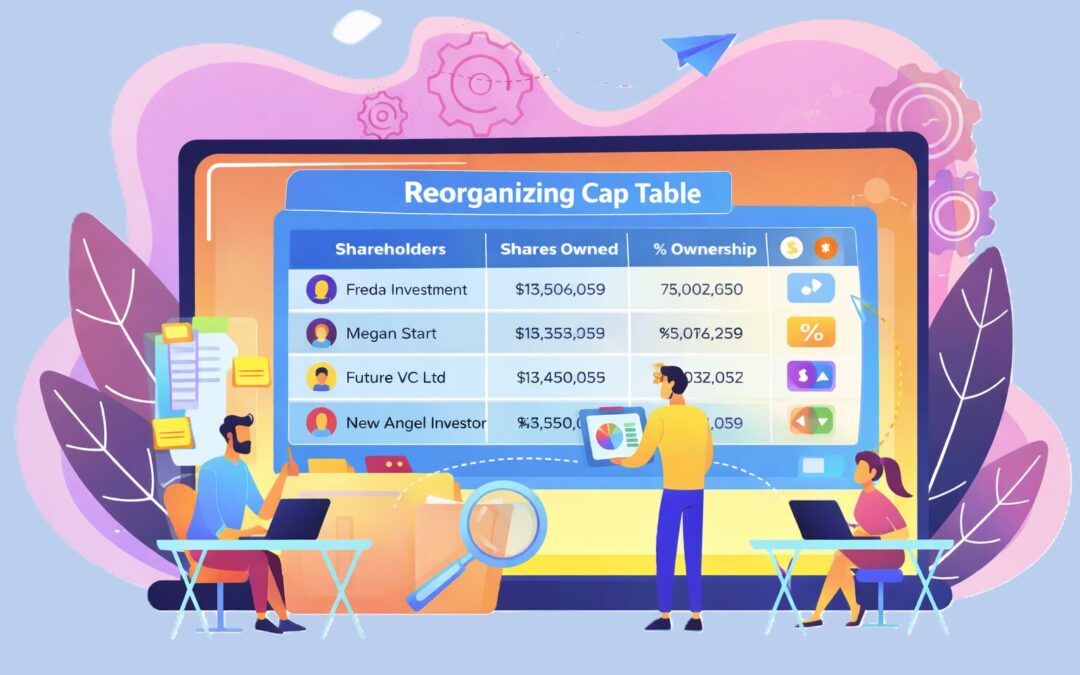
How would you navigate a recapitalization to ensure the company’s long-term success while also reducing risk for the founders? When strategically organized, recapitalization is a tactical approach that benefits all stakeholders. It simply involves reorganizing the cap table without dilution.
The company can take on more debt or get an infusion of capital from external investors. However, the cap table remains unchanged, with existing equity holders simply transferring a portion of their stake to the new investors. Of course, the original owners’ roles and control in the company may alter.
Recapitalizations may occur in any sector. But typically, industries such as software and technology, financial services (insurance and banking), and capital-intensive sectors see more deals. Similarly, highly volatile segments and distressed companies may opt to reorganize their cap tables.
As the founder, you’ll take the time to understand the typical ownership structures within your sector. Pattern recognition will help you plan for a future recapitalization. It can be partial by taking on a reduced role within the company. Or, completely, by stepping away and accepting an acquisition offer.
Whatever the pathway you choose, ensure you navigate a recapitalization to support long-term growth and align with your objectives.

*FREE DOWNLOAD*
The Ultimate Guide To Pitch Decks
Different Forms of Recapitalization
Recapitalizing the cap table has various forms, and company founders choose the option that best aligns with their needs. For instance, some founders choose to sell a minority stake, typically less than 50%. This strategy enables them to retain complete control over the decision-making.
At the same time, they can deploy the capital to scale the company or meet its next milestones. Other objectives can include expanding the team or ramping up operations with equipment and inventory purchases. Most fundraising strategies follow this approach.
Alternatively, the founders may choose to pursue a major capitalization, by which they sell a larger stake. For instance, you could choose to liquidate 75% of the company’s equity by selling to a venture capitalist firm. Or larger financial institutions, such as a private equity firm.
Accordingly, if the company is worth $100M, 75% of the value would be distributed to shareholders. The founders now own only 25% ownership in the company. They can divert funds to build their next venture and achieve personal objectives.
The company also benefits because the venture capital fund or private equity firm purchasing the stake can assist in growth. These top institutions bring additional expertise and resources to the company, thereby accelerating its growth. Typically, such transactions occur in later-stage ventures.
The original founders retain their stake until the company goes public with an initial public offering (IPO). Or enters into a major merger or acquisition (M&A). At this time, they can take advantage of the potential for much higher returns, as the company has grown exponentially.
Recapitalizations typically occur when the company has reached a valuation of between $5M and $10M. At this stage, founders recognize the need to bring in top-notch professionals. These expert executives can run the company at the corporate level by leveraging their expertise.

Raise Capital Smarter, Not Harder
- AI Investor Matching: Get instantly connected with the right investors
- Pitch & Financial Model Tools: Sharpen your story with battle-tested frameworks
- Proven Results: Founders are closing 3× faster using StartupFundraising.com
How to Navigate a Recapitalization – Planning the Process in Detail
Organizing a recapitalization is a detailed, step-by-step process requiring extensive planning. It’s always advisable to retain an expert M&A advisor to ensure efficient execution. These professionals have in-depth, industry-specific expertise and can help you through the transaction.
Remember that the better prepared you are for the deal, the more streamlined the process will be. Ensure the company’s financials and business records are up to date with accurate data. You’ll shorten the timeframe, which can range from several months to a year or more.
Assessing the Company’s Needs
The first step always centers around evaluating the company’s needs and setting a clear overview of the objectives. This strategy ensures that you navigate a recapitalization with concrete expectations. You’ll communicate your goals to all stakeholders across the company and secure their buy-in.
These stakeholders include the cofounders, management, employees, existing shareholders, and new investors. Identifying goals ensures you stay laser-focused on what you aim to achieve from the project. That’s how you’ll raise the chances of a successful outcome.
For instance, are the cofounders looking to lower their risk by liquidating a portion of their equity? Does the company need capital to scale operations, purchase inventory, research product portfolios, expand into new markets, or hire talent? How much capital will cover these needs?
Your capital pre-allocation should be based on extensive market research and verified data sourced from credible sources. Analyze the market, future projections for growth and demand, expected sales from the customer base, and more. Preventing a hostile takeover can also be an objective.
Analyzing the Current Capital Structure
Most companies have a cap table that combines equity and debt. Work with your financial advisors to understand the ratios and the amount the company owes to creditors. Many founders navigate a recapitalization to reduce debt or take on more debt to raise capital without incurring dilution.
Keep in mind that storytelling is everything in fundraising. In this regard, for a winning pitch deck to help you here, take a look at the template created by Peter Thiel, Silicon Valley legend (see it here), that I recently covered. Thiel was the first angel investor in Facebook with a $500K check that turned into more than $1 billion in cash.
Remember to unlock the pitch deck template that founders worldwide are using to raise millions below.
Developing a Recapitalization Strategy
Once you have an expert advisor on board and have defined the objectives, the next step is to work toward achieving them. Your options include an equity recapitalization, in which the existing owners relinquish some of their ownership stake. Alternatively, you can opt for debt recapitalization.
If you do choose to borrow money, ensure that your cash flows and revenue can cover payments and interest. You’ll also carefully work out the terms and conditions. A hybrid model is also a common approach where the company restructures the cap table to include new investors.
Some of these investors may receive equity, while others may receive debt instruments. On the other hand, if the company has excessive debt, you can choose to issue new shares and convert that debt into equity. This strategy reduces leverage and the obligation to make regular payments.
You’ll free up cash to scale operations or fund capital expenditures, such as expanding the facility or purchasing inventory. On the other hand, interest payments are tax-deductible, whereas dividend payments attract tax. Thus, more debt enables you to increase profit distributions to shareholders.
Companies also opt for debt recapitalization to cover liquidity shortfalls. For instance, when they need to pay dividends to existing shareholders or cover any other significant expenses. Accordingly, you’ll explore the available options and select those that work best for the company.
Before finalizing your strategy to navigate a recapitalization, conduct thorough market research and analysis. Ensure that internal economic and geopolitical conditions remain favorable and that the restructuring does not affect the company’s stability. Timing is always crucial.
Your advisor will run multiple scenario analyses and evaluate different financial models to identify the most suitable option. The ultimate objective is a new cap table, which is efficient and flexible. The new owners should also have adequate control over the company’s decision-making.
Identifying Strategic Partners
You’ll need networking skills and connections to reach out to the right partners, typically private equity (PE) firms. In addition to researching and identifying the optimal fit, the advisor will guide you through the deal frameworks. They’ll structure the terms so they align with the company’s interests.
Identifying the right candidates for the recapitalization is crucial, as you want entities that share your vision. They should demonstrate interest in advancing the mission and have the resources and skills to achieve the company’s long-term goals.
On their part, top private equity (PE) firms are looking to invest in founders who are dedicated and enthusiastic. They prefer to partner with owners who understand the need for new leadership, expert direction, and resources to drive growth.
Alignment of interests and mutual understanding are crucial to improving the company’s operations and performance. Most PE firms have a fixed lifecycle, and they organize their partnerships to align with that horizon. Accordingly, you can expect the partnership to last for three to seven years.
After this period, the firm exits via an M&A transaction or an IPO. If the firm chooses to sell the company, the original founders may not have a say in choosing the buyer. However, you can include certain terms and conditions in the agreement in anticipation of a future sale.
Conducting Valuation and Due Diligence
When you’re ready to navigate a recapitalization and have a list of potential partners, initiate outreach and negotiations. You’ll compare the term sheets that different PE firms offer and evaluate the terms. Side by side, also entrust the company’s valuation to a professional team.
Investors will eventually run their own analysis. But having a number in hand, along with the metrics, will enable you to negotiate aggressively. You’ll also prepare the company data room and populate it with all the documents and financials that investors will need.
Due diligence is a critical step in the transaction and is time-consuming. On your part, you’ll conduct reverse due diligence on your investors to ensure they are a good fit. Avoiding unpleasant surprises on both the buy and sell sides is always advisable. Also, ensure complete transparency.
Once the final due diligence is complete, both sides proceed with the final negotiations. You’ll align valuation numbers with the investors’ findings and discuss the terms and conditions. For instance, the degree of control you’ll retain as the founder and the company’s future performance milestones.
Many founders prefer to have a say about the buyers when the PE firm is ready to exit. If this is you, include the provision in the final agreement. You can also add any other clauses that define the company’s new cap table, board structure, and other nuances.
Drafting Legal Documents and Ensuring Compliance
Most dealmakers have a legal team on board by this time. Investors need their expertise to evaluate the company’s legal structure and compliance. The team’s next task is to draft the agreement to effect the equity transfer, issue new shares, or restructure the debt.
Each document is prepared in accordance with applicable legal guidelines to ensure compliance with local, state, and federal regulations. You’ll also have expert accountants on board to work out the tax implications and ensure that all obligations are met.
Don’t overlook sending timely updates to the company’s existing stakeholders about the progress of the deal. You’ll ensure complete transparency through open communication, thereby avoiding uncertainty and confusion. Your goal should be to secure and strengthen relationships and trust.
Executing the Recapitalization
Your attorneys draw up the final documents, including the Letter of Intent (LOI), definitive agreements, and any other relevant paperwork. They also draft the Recapitalization Agreement in accordance with the U.S. Securities and Exchange Commission (SEC) requirements.
Once the papers are signed and filed with the concerned regulatory authority, the deal is complete. The actual transfer of funds can proceed, and the company executes the pre-determined financial maneuvers. You’ll pay out dividends, issue shares, refinance debt, or hire new talent.
Post-Recapitalization Integration and Monitoring
Having completed the recapitalization, the partners can proceed to integrate and implement the new financial structure. Extensive discussions during board meetings center on the company’s future growth plans.
In addition to appointing executives to positions, the partners may establish new key performance metrics (KPIs). Constant monitoring of the company’s performance is necessary to further refine the capital structure.
Board members continue to tweak decisions to adapt to the growing company’s needs. They may also need to adapt to shifting market conditions, competitive dividend payment approaches, and debt refinancing.
Depending on the recapitalization terms, founders may remain involved in operations. Or, they may move on to other pursuits, including starting and investing in new ventures.
The Takeaway!
Once you navigate a recapitalization strategically, you can expect improved financial stability for the company. It will have the capital, resources, and expertise for accelerated growth. Added capital enables you to explore new growth opportunities and infuses flexibility in decision-making.
Growth, product portfolio expansion, penetrating new markets, and hiring top talent are now possible. Most importantly, having strategic partners on board enhances market perception and prestige. Customers, investors, and shareholders are more likely to trust the brand and its products.
These are only a few of the significant growth pathways that open up post-recapitalization. However, ensure that you work with expert consultants who can assist you in the smooth organization and execution.
You may also find our free library of business templates interesting. There, you will find every single template you need to build and scale your business completely, all for free. See it here.



Facebook Comments