

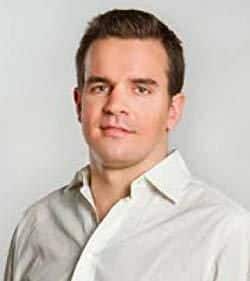
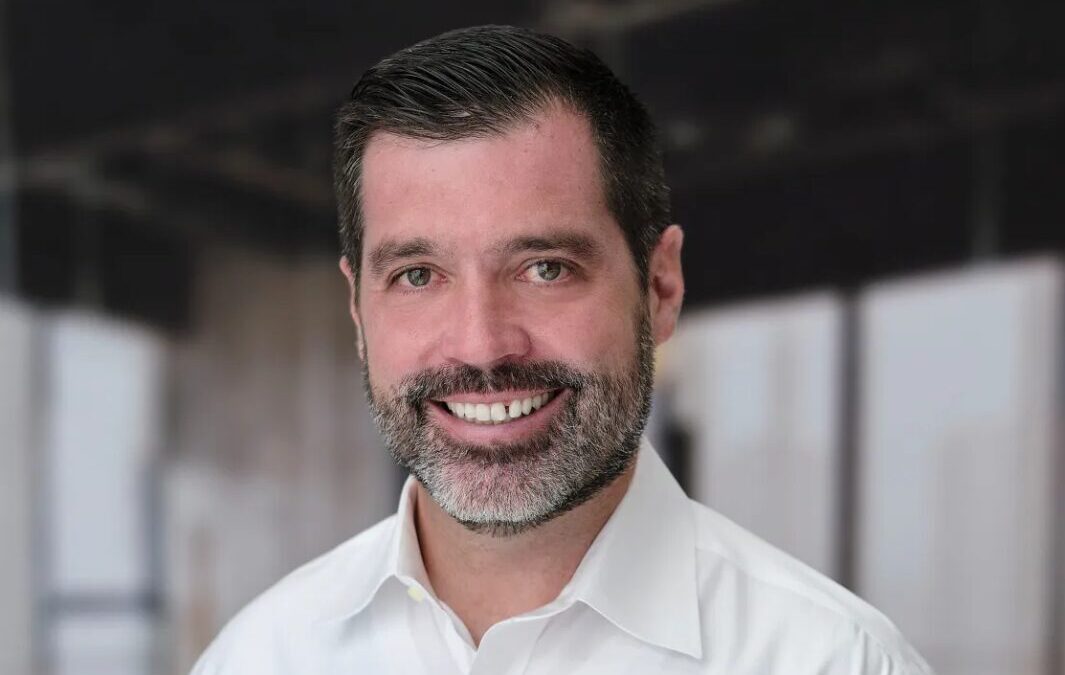
Some founders build careers. Others build legacies. For Rylan Hamilton, the journey from Boston to Harvard, from working in the Navy to multimillion-dollar exits, and from warehouse robotics to autonomous naval vessels has been anything but linear.
Rylan’s story is shaped by discipline, risk, curiosity, and a relentless drive to tackle problems on a global scale. Today, as the co-founder of Blue Water Autonomy, Rylan is building fully autonomous ocean-going vessels that can travel across open waters for months at a time.
But the path to this moment threads through life-altering experiences, such as witnessing 9/11 from a New York office window, surviving missile alerts in the Persian Gulf, helping Amazon redefine logistics, and scaling a robotics startup that Shopify acquired for $450M. This is the inside story.
Listen to the full podcast episode and review the transcript here.
*FREE DOWNLOAD*
The Ultimate Guide To Pitch Decks
Growing Up in Boston: Foundations of Curiosity and Ambition
Born and raised in Boston, Massachusetts, Rylan grew up steps away from the iconic Freedom Trail, though he jokes he never actually walked it end to end.
More than the landmarks, the city’s unique mix of people, including academics, technologists, doctors, financiers, and researchers, living and working side by side, shaped him.
“It was a great environment to grow up in,” Rylan recalls. “You’re constantly surrounded by people who are pushing the boundaries of what’s possible.” That intellectual curiosity carried him to Harvard, where he explored both finance and startups.
Like many of his classmates, Rylan initially leaned toward traditional career paths, such as consulting, banking, or finance. But during an internship on Wall Street, something shifted.
He surrounded himself with great people, learned quickly, but realized he wasn’t meant for a life in front of a computer from nine to five, navigating spreadsheets. Then came the day that changed everything.
9/11 and the Decision to Serve
Just weeks after finishing his New York internship, 9/11 happened. The office where Rylan had worked faced the Twin Towers directly. “It shook me up. I realized I wanted to do something more meaningful,” he remembers.
In retrospect, Rylan says that being in the Navy was in his family. His grandfather had served in the Pacific. His father attended the Naval Academy and served on nuclear submarines in the sixties. However, Rylan didn’t grow up with that legacy around the dining table, as his father passed when he was young.
One year later, despite skepticism from his adopted father—“no one from Harvard joins the Navy”—Rylan enlisted. After speaking with veterans who unanimously encouraged the move, he enrolled in Officer Candidate School in Pensacola.
The next stop was the deck of a Navy ship in the Persian Gulf, where, with a shaved head, he was trying to figure out what this whole experience would be like. The vessel was an amphibious transport ship.
Trial by fire came immediately. On Rylan’s very first day aboard, Iranian forces launched missiles. He found himself in the midst of Operation Iraqi Freedom, on a ship offloading Marines and all their equipment.
The ship went to general quarters while Rylan, still in civilian clothes, ran through chaotic hallways before an officer pulled him into safety.
Thus began a career that would take him through the Persian Gulf, the Suez Canal, the Panama Canal, and, finally, the Eastern Pacific, where he served on a frigate in counter-narco-terrorism missions.

Raise Capital Smarter, Not Harder
- AI Investor Matching: Get instantly connected with the right investors
- Pitch & Financial Model Tools: Sharpen your story with battle-tested frameworks
- Proven Results: Founders are closing 3× faster using StartupFundraising.com
Three Leadership Principles the Navy Instilled Forever
Rylan’s military experience continues to shape his leadership philosophy. Three lessons stand above the rest:
- Extreme Ownership: On a ship, nothing “just doesn’t work.” You must solve the problem and not take no for an answer. Your shipmates’ lives depend on it, and the whole team operates cohesively.
- Lead From the Front: If the leader won’t do the hard work, no one else will. Leaders have to be willing to roll up their sleeves and work long hours.
- War Room Mentality: No titles, no politics—just a shared mission and a war room mentality. Salaries are posted on the wall, and it’s not about getting promoted and getting bonuses. Rylan remembers, “That sense of camaraderie and clarity of mission is exactly how a startup should feel.”
Joining Kiva Systems Before the Amazon Acquisition
After the Navy, Rylan married his college sweetheart and returned to civilian life. His first landing spot was Vistaprint, a global leader making marketing material for small businesses, including business cards.
But the real pivotal moment came when he discovered Kiva Systems, the robotics startup reinventing warehouse automation. Despite having no background in robotics or supply chains, Rylan “snuck his way in,” starting on the warehouse floor as employee no. 200, and working upward.
By then, Kiva was a rocket ship, e-commerce was exploding, and major retailers (Toys ‘R’ Us, Dillard’s, Office Depot) were adopting Kiva’s mobile robots to help fulfill online orders. But even rocket ships need scaling. And Kiva’s technology wasn’t there yet.
The early successful deployments ran on “heroics,” not systems. Teams worked 100+ hour weeks. Rylan watched the transition from adrenaline-driven deployments to scalable engineering, and two years later, witnessed the massive $775M Amazon acquisition.
At the time, Kiva had a market capitalization of $40B, and the entire team had a spectacular exit. It was Rylan’s masterclass in scaling a company and spotting the next big opportunity.
Becoming a Founder: Launching 6 River Systems
Ironically, Rylan wasn’t hunting for startup ideas. By that time, Boston had become the hub for consumer and industrial robots, and most robotic companies were in the city’s environs.
As Rylan explored the Boston robotics ecosystem, a realization struck him. All the technology being used for autonomous vehicles, including sensors, GPUs, and autonomy software, could power a new generation of warehouse robots.
Instead of robots trapped behind cage systems (like Kiva), Rylan envisioned collaborative robots that could roam freely, work safely alongside humans, and be deployed at a fraction of the cost. With co-founder Jérôme Dubois, he took the leap.
Rylan recalls, “We said, if we don’t do this now, we’ll regret it for the rest of our lives.” They raised capital, built prototypes themselves, and even personally drove four hours from Boston to Pennsylvania to install their first deployments.
Rylan and Jérôme even paid themselves a minimal salary for the first year while they got the company off the ground. Their scrappiness paid off. 6 River Systems scaled rapidly, automating warehouses for major customers.
The business model involved selling or leasing robotic systems to automate e-commerce warehouses, serving customers like XPO that adopted the technology en masse. Four years later, Shopify acquired the company for $450M.
The Reality of Raising $45M: Why It Was Much Harder Than It Looked
As Rylan reveals, they raised $45M for the company and sold it for $450M, resulting in a great exit for investors and employees. The technology is now being used in over 100 warehouses worldwide.
As Rylan estimates, there are possibly tens of thousands of robots throughout the world, which is a mainstream solution for automating warehouses today.
Founders often fantasize about oversubscribed rounds and a dozen competing term sheets. Rylan’s experience was different. The financing cycles Rylan and Jérôme went through were highly challenging, primarily because they were developing the hardware and software.
As the duo learned, hardware is expensive, robotics is slow, and investors can be cautious. Since the sector is capital-intensive, they needed much more capital to get early indications of product-market fit, especially in robotics, which became a very complicated problem.
Secondly, the cofounders needed to find investors who believed in what they were doing and understood the competition. Rylan and Jérôme needed capital to scale with customers. In the initial couple of years, raising funding was difficult.
The Capital Efficiency Strategy
“We always had a couple of term sheets, but we worked incredibly hard for every dollar,” Rylan recalls. This scarcity bred discipline. Instead of building a big team early, the founders themselves did the grunt work to get the systems up and running.
Instead of hiring engineers, the duo did everything themselves, from deploying robots, fixing issues on-site, talking directly to customers. That scrappiness ultimately became a competitive advantage.
Rylan and Jerome were mindful of their capital raise and resources, which made them highly capital-efficient. Thus, they didn’t raise much capital relative to their exit returns.
As Rylan points out, some current robotics companies are raising tens of millions, if not hundreds of millions, of dollars out of the gate. In his opinion, raising too much money too quickly can be risky because founders can lose that scrappy mentality.
Inside the Shopify Acquisition: Pattern Recognition and Perfect Timing
Talking about the exit, Rylan underscores that the finish line of the journey is ultimately about optimizing to get the best possible outcome for all the stakeholders. And, their buyer was Shopify.
Twelve months before the acquisition, Rylan barely knew Shopify. At the time, the cofounders weren’t looking to sell their company to a traditional automation provider that had historically deployed automation-like conveyors.
These providers weren’t really innovative, and in Rylan’s opinion, that would stifle their aspirations. Rylan and Jérôme had always anticipated taking the company public and were raising their Series C round at the time. They even had a term sheet for around $50M.
As Shopify launched its logistics initiative, it approached 6 River Systems, not to buy it, but to explore using its automation solutions internally in its warehouses. Operating out of Canada, the company is Amazon’s biggest competitor.
Although Shopify had a different business model, it powered most of the websites on Amazon that allowed merchants to sell online. The conversations went so well that Shopify wanted its websites prioritized and to pull 6 River Systems into its strategic roadmap.
That was impossible with 20+ other customers relying on the technology. Then came the founder instinct and the pattern recognition from watching Amazon acquire Kiva. “If you really want to move fast with us, maybe you should acquire us,” Rylan offered.
Shopify agreed. Since Rylan already had a signed $50M Series C term sheet, he had leverage. Within four months, the acquisition was complete. But it wasn’t glamorous. Looking back at the journey, Rylan recalls the series of steps they had to navigate.
The acquisition started with a verbal agreement, then moved to negotiations over the price and the Letter of Intent (LOI). Over the protracted period of diligence and revisions, stress mounted, which the leadership absorbed. Their CFO lost 10 pounds during the process.
Yet the relief and gratitude when the deal finally closed made it all worthwhile. “There’s just a lot of stages that you have to go through,” as Rylan says.
Life After the Exit: A Boat, Unfinished Energy, and the Next Big Calling
With financial freedom, Rylan indulged a long-held dream: he bought a boat. But retirement was far from his mind. He continued working at Shopify for a couple of years after the acquisition.
Most of his friends still worked. Days on the water were peaceful but unfulfilling. So Rylan entered an exploration phase. He spent time meeting with some of the most interesting people in his network over coffee, lunch, and Zoom calls.
At this point, Rylan wasn’t sure whether he wanted to start a new company, join an existing one, or become an investor. Somewhere in those meetings, lightning struck again.
Blue Water Autonomy: Transforming the Future of Naval and Commercial Shipping
Rylan met Austin Gray, a fellow Navy veteran who had spent the previous summer working in a drone factory on the front lines of Ukraine. Austin saw firsthand how rapidly autonomous systems were transforming warfare. Together, they recognized a massive blind spot.
The U.S. Navy had been slow in adopting autonomous systems, especially attributable systems that can move some of the payloads that main warships today carry across the open ocean. The Navy needed platforms that could move those payloads using lower-cost, unmanned vessels.
At the time, Austin was laser-focused on contested logistics and started meeting with Rylan once a week to explore options. The duo spoke with industry professionals and Navy veterans. After six months of deep research and conversations, they committed.
Rylan and Austin developed an idea around building a purpose-built autonomous ship for contest logistics. The ship would be a multi-mission vessel capable of performing various functions for the Navy and powered by key enabling technology.
As Rylan points out, the toughest aspect of building and launching the vessel was that it would be deployed at sea and operate on its own for months at a time.
In 2024, the duo founded Blue Water Autonomy, raising capital from top partners including Google Ventures, Eclipse, and Riot. Within two years, they raised over $60M, with Google Ventures funding their Series A.
Storytelling is everything that Rylan Hamilton was able to master. The key is capturing the essence of what you are doing in 15 to 20 slides. For a winning deck, take a look at the pitch deck template created by Peter Thiel, Silicon Valley legend (see it here), where the most critical slides are highlighted.
Remember to unlock the pitch deck template that founders worldwide are using to raise millions below.
The Hardest Challenge: “Autonomy on the Inside”
Rylan underscores that Google is one of the pioneers in autonomy through Waymo, which operates under Alphabet. He observes that when people talk about autonomous systems, they think about autonomy on the outside of the vehicle.
The car or ship has sensors that enable it to navigate waypoints and avoid obstacles. But ships are different as they need to be out at sea for weeks or months at a time. Waymo cars return to the garage at night, where engineers can repair and recalibrate the sensors. Ships don’t.
Rylan notes, “The hardest part isn’t navigation. It’s taking 50 engineers off a ship and still keeping it running for months.” That is, without engineers to monitor, maintain, and repair its internal systems.
Blue Water Autonomy now builds full-stack ship autonomy, from navigation to engineering to payload integration—a capability that immediately drew attention from naval leadership. It was an unconventional approach that quickly gained traction.
As for raising funding, Rylan reveals that it was much easier to convince investors. For one, he was a repeat founder with a successful exit. Secondly, this opportunity was 10x bigger than his last company.
The Market Opportunity: Bigger Than Robotics, Logistics, and Defense Combined
This opportunity dwarfs anything Rylan has tackled before because 80% of the world’s GDP moves across oceans, and middle-mile maritime logistics is inefficient and dangerous. But if any kind of goods can be transported by sea, the costs would be a fraction of those compared to railway or road.
Just as SpaceX lowered the cost of putting payloads into space, Blue Water Autonomy aims to lower the cost of moving payloads across oceans. The stakes—and potential impact—are enormous. As Rylan reveals, their first customers are the U.S. Navy and Allied Navies.
Advice for Aspiring Entrepreneurs
Rylan’s framework is simple: Aim high and be ambitious. If you don’t aim high, the market opportunity will be much smaller, and raising funding will be much more challenging. Being ambitious is good because you get only a few opportunities to start a company.
Rylan strongly believes, “If you’re going to spend the next 10 years on something, make sure the opportunity is massive.” Many founders rush into ideas without giving themselves the mental space to think deeply.
Rylan argues the best ventures often come after a period of reflection—sometimes forced (getting fired) or intentional (taking time off). He advises aspiring founders to give themselves 6 months to explore the best opportunity before jumping into a startup.
Rylan also suggests being deliberate about what you start because once you start, there’s no going back. Looking back, launching 6 River Systems was a natural progression in his career trajectory after Kiva Systems. He knew the market, customers, and the technology well by then.
Today, Rylan welcomes connections from people curious about robotics, autonomy, defense innovation, or entrepreneurship. He is active on LinkedIn and loves meeting people from different backgrounds.
The 10-Year Vision: An Unmanned Global Fleet
In a fully realized future, Rylan sees two seismic shifts:
- Navies Become Hybrid Fleets: A significant portion of naval missions, from reconnaissance and logistics to surveillance, will be handled by unmanned surface vessels. We’re moving across all domains and all kinds of services to basically drone warfare or a hybrid fleet.
- Global Commercial Shipping Goes Autonomous: Standing watch in engine rooms for weeks is dangerous and dull. Around 30% of the fleet, comprising software-defined ships, could travel autonomously across the world at a fraction of today’s costs.
Blue Water Autonomy aims to lead that transformation.
Listen to the full podcast episode to know more, including:
- Rylan Hamilton’s journey from Harvard to the Persian Gulf and eventually to two major tech exits shows how nonlinear paths can forge remarkable founders.
- His Navy experience instilled extreme ownership, frontline leadership, and a mission-first mindset that became the foundation of his entrepreneurial style.
- Joining Kiva Systems gave Rylan firsthand exposure to scaling robotics, culminating in Amazon’s $775M acquisition and shaping his approach to building companies.
- At 6 River Systems, Rylan leveraged scrappiness and capital efficiency to grow a warehouse robotics startup that Shopify acquired for $450M.
- His latest venture, Blue Water Autonomy, tackles the hard problem of “autonomy on the inside,” enabling ships to operate for months without crews.
- With over $60M raised and Google Ventures behind the Series A, Blue Water Autonomy aims to transform naval and commercial shipping just as SpaceX transformed space logistics.
- Rylan advises founders to aim high, take time for exploration, and choose opportunities worthy of a decade-long commitment.
SUBSCRIBE ON:
 iTunes
 Google Play
 Stitcher
 TuneIn
 RSS
RSS SoundCloud
 Spotify
Keep in mind that storytelling is everything in fundraising. In this regard, for a winning pitch deck to help you, take a look at the template created by Peter Thiel, the Silicon Valley legend (see it here), which I recently covered. Thiel was the first angel investor in Facebook with a $500K check that turned into more than $1 billion in cash.
*FREE DOWNLOAD*
The Ultimate Guide To Pitch Decks
Remember to unlock for free the pitch deck template that founders worldwide are using to raise millions below.
Podcast: Play in new window | Download
Subscribe: Apple Podcasts | Spotify | TuneIn | RSS | More



Facebook Comments