

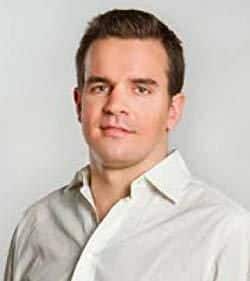
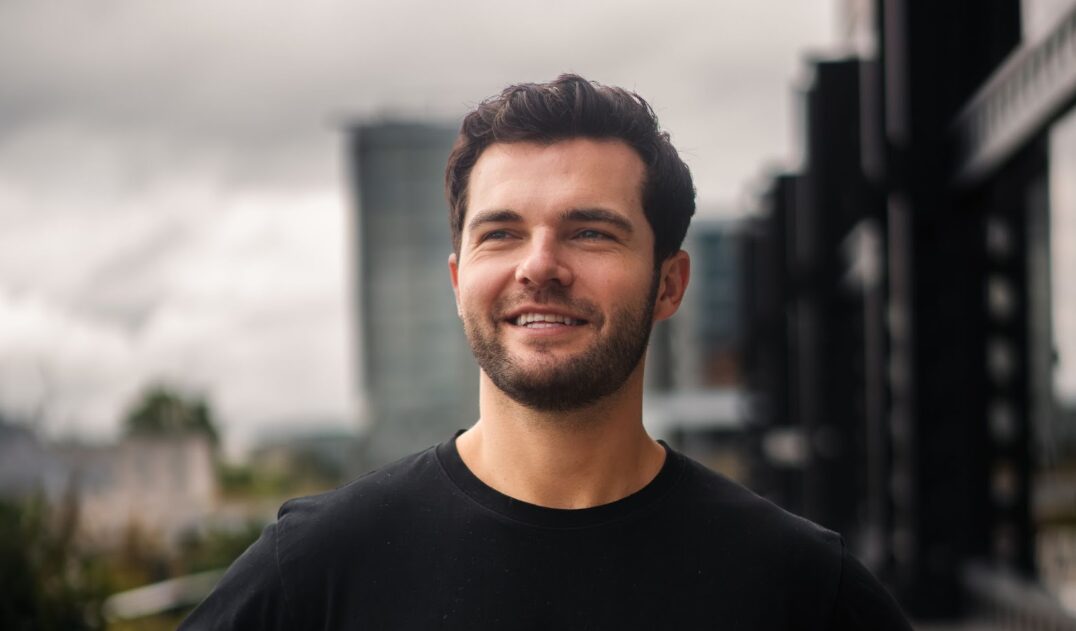
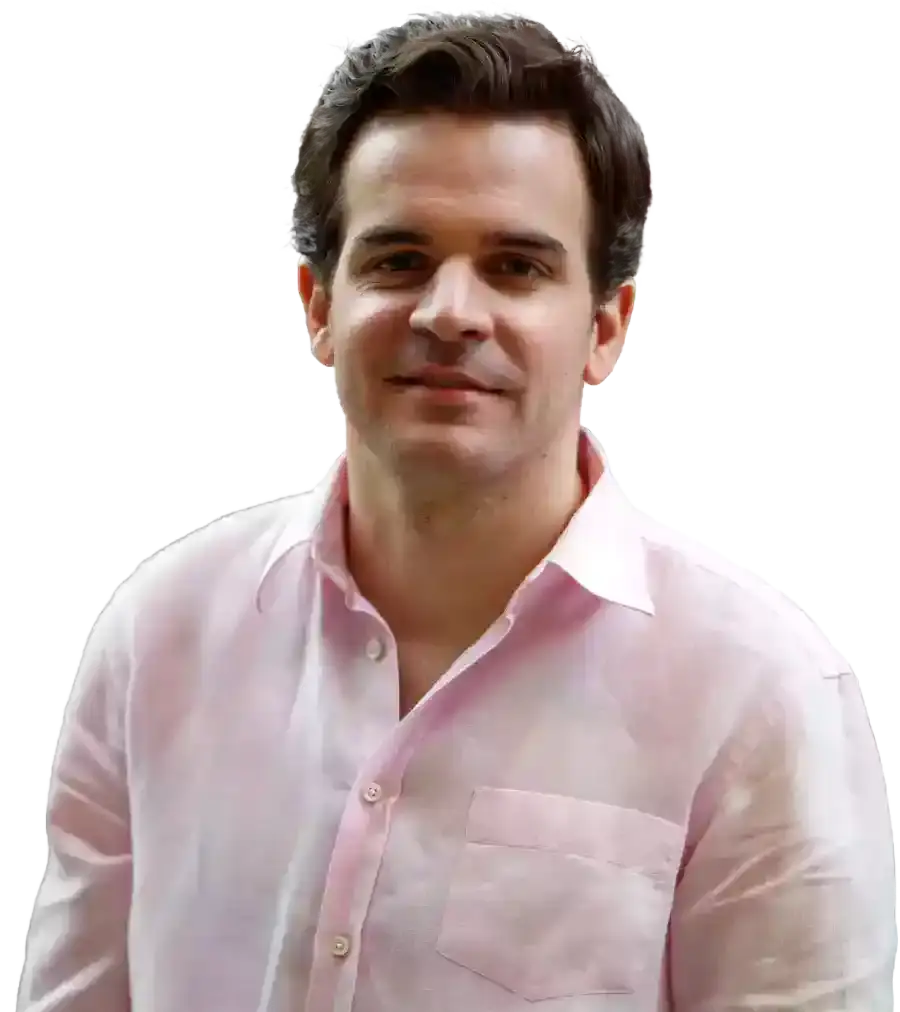
Ben Freeman’s story is not one of overnight success or neatly plotted career moves. It is a story of friction—between old-economy instincts and venture-scale ambition, between external validation and internal conviction, and between momentum and meaning.
What makes Ben’s journey compelling is not just where he landed with Omnea, but how deliberately he learned what not to build, how to build, and when to walk away.
Listen to the full podcast episode and review the transcript here.
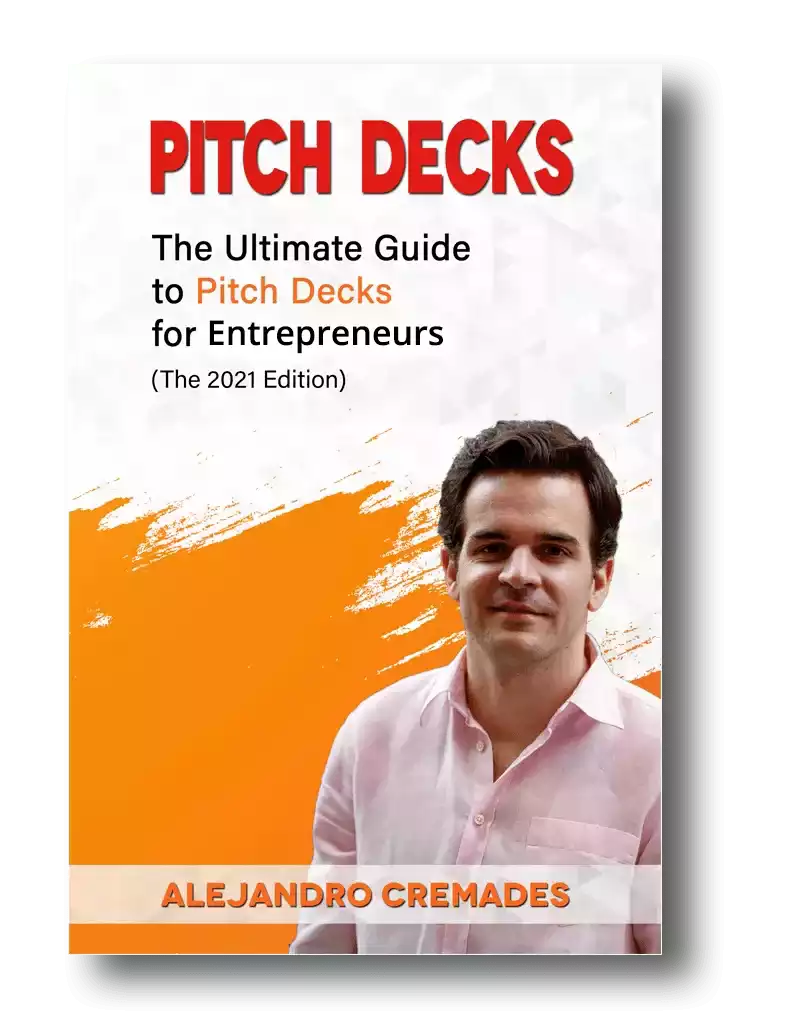
*FREE DOWNLOAD*
The Ultimate Guide To Pitch Decks
Growing Up Between Countryside and Commerce
Ben was raised in Cheshire, in the British countryside just outside Manchester, a place defined more by space, nature, and traditional industry than by venture capital or hypergrowth startups.
Ben grew up appreciating hard work, tangible businesses, and the idea that companies should make money, treat people well, and stand on solid foundations. His home was close to Manchester, which he thinks has a similar energy to London—just on a smaller scale..
Manchester, with its roots in retail, manufacturing, and heavy industry, instilled a “proper business” mindset from an early age. Tech, venture capital, and Silicon Valley playbooks were not part of the conversation. That would come much later. What was present early, however, was a relentless drive.
Ben’s entrepreneurial spirit was obvious at a young age: as a teenager, he was already finding small opportunities—trading vehicle number plates, selling whatever he could, and quickly learning that initiative can make effort go further.
Ben’s father, a lawyer, reinforced discipline and work ethic, even if the expected path was law rather than entrepreneurship. Ben absorbed the values, but chose a different outlet.
Dropping Out, Building Early, and Learning the Hard Way
Ben’s first real business came immediately after high school as an events company. He dropped out of school to pursue it full-time and ran Freesha Limited for over four years. Financially, it worked, and operationally, it scaled. But, personally, it was exhausting and eye-opening.
Ben learned that you have to select a business to build based to a great extent on the market and its scope. The theory that entrepreneurs should follow their passion, do what they understand, and solve problems they face, didn’t hold much value.
Young founders lacking experience would find that principle incredibly limiting. For instance, a young person could never start a B2B SaaS company. Then again, a founder aspiring to solve problems for corporates would need experience with how corporates operate.
Running an events business meant dealing with risk in its rawest form. One formative lesson came from discovering that outsourced door security often had conflicting incentives, sometimes tied to gangs or side deals.
Rather than accept the risk, Ben internalized security operations and built a parallel security business to regain control. That experience taught him something foundational: trust is not abstract; it is operational. If you do not control critical functions, you inherit hidden risk.
But the biggest lesson was more strategic than tactical. The events business was simply a bad market. Even the most successful operators in that industry created a limited economic impact compared to mid-tier tech companies, given the magnitude of their businesses.
Ben realized that talent and effort cannot overcome market constraints. You can put brilliant people into a stagnant or structurally capped market, and the outcome will never be transformative. That insight stayed with him.
Ben advises founders to choose a market that is big enough and growing quickly. That’s the first step in creating the impact they want to have on that market, society, economy, and people.
Raise Capital Smarter, Not Harder
- AI Investor Matching: Get instantly connected with the right investors
- Pitch & Financial Model Tools: Sharpen your story with battle-tested frameworks
- Proven Results: Founders are closing 3× faster using StartupFundraising.com
Education, London, and Rejecting Linear Careers
Ben briefly enrolled at the University of Warwick to study accounting and finance, but left after three and a half weeks—not for lack of ability, but because he wanted to be all-in on building, preferring to learn by doing versus spending time in classrooms and exam cycles.
Ben felt that entrepreneurship resonated deeply with him more than academics. Most of his friends were doing banking and consulting, but Ben realized that he was doing well financially. However, considering the problems he was handling with Freesha, he knew it wasn’t a long-term career.
Eventually, Ben returned to university, this time in London, choosing King’s College for culture and flexibility rather than league tables. He ran his events business throughout university, commuting constantly between Manchester and London, working 40 to 50 hours a week.
London changed his exposure, and here, Ben tried his hand at investment banking. Having graduated from university, he considered banking or consulting and applied to McKinsey & Company, Bain & Company, and the Boston Consulting Group (BCG).
Eventually, Ben joined Lazard, believing boutique investment banking could offer prestige while providing entrepreneurial exposure. Within three months, he knew it was wrong. The work did not play to his strengths, the growth curve was linear, and the upside felt capped.
That realization pushed him back toward building his next company. Still carrying his old economy mindset from Manchester, Ben considered starting an alcohol brand, and explored options for pivoting the Freesha Limited business model.
Tessian: Learning Venture, Scale, and Sacrifice
Ben continued exploring his options and looking for his next venture. The turning point came when he met Tim Sadler and joined the early team at what was then called CheckRecipient, a barely formed startup that would become Tessian.
What drew Ben in was not the product or the polish, but the people. The founding team, comprising Tim Sadler (CEO), Ed Bishop (CTO), and Tom Adams, was smart, ambitious, and had real opportunity costs. They could have stayed in banking, but they chose to build.
At Tessian, Ben learned the venture-backed SaaS model from the inside: seed rounds, hypergrowth, enterprise sales, and eventually raising over $130M from top-tier investors. In retrospect, he considers the whole stint was a valuable learning experience, a perfect stepping stone.
Ben worked as though the business were his own. Post-Series B — as Tessian scaled rapidly and raised from marquee investors like Sequoia Capital — experienced executives were brought in, and governance changed.
Ben increasingly disagreed with the direction, and his sense of ownership eroded. When he moved to New York, the pressure intensified. He pushed himself too hard, burned out, and fell into a prolonged depression.
Eventually, with transparency and respect, he planned his exit. Tessian had been a remarkable company, but if Ben was going to build again, it had to be bigger, cleaner, and truer to his principles.
The Long Search for the Right Problem
What followed was one of the hardest phases of Ben’s career. For over a year and a half, he explored relentlessly, researching dozens of ideas. He examined roll-ups, traditional businesses, manufacturing plays, and multiple tech startups. He nearly launched a premium ice manufacturing company.
Ben even had term sheets for ventures he ultimately walked away from. Valuations during COVID didn’t click. This was not indecision; it was a disqualification. Having learned how much market selection matters, he raised his bar.
Why Procurement—and Why Omnea
The seed of Omnea came from pain Ben personally experienced. As he explains, Tessian is an enterprise email security provider with top clients, including most of the world’s leading investment banks, law firms, and several tech companies.
Selling enterprise email security at Tessian exposed Ben to procurement — and he hated it. The process was fragmented, manual, and adversarial. In Ben’s view, the procurement teams were set up to fail with poor systems and misaligned incentives.
At the same time, Ben noticed macro forces converging on the procurement space and related those to similar trends he had seen influence the infosec space in 2017, where Tessian operated.
Back then the EU General Data Protection Regulation (GDPR) drove cybersecurity into the spotlight, providing a perfect ‘why now’ for Tessian.
With Omnea, Ben saw the increased drive for capital efficiency (due to increasing interest rates), rising governance and risk scrutiny, and the maturation of AI would put procurement into the spotlight.
Omnea’s Model: Simplicity Over Extraction
By the time Ben committed to Omnea, he had already spent over a year validating the space. His conviction was earned before the company even existed. When he finally moved, there was no hesitation. By this time, he had developed a solid foundation for understanding its potential.
Omnea is enterprise software, but with a deliberate rejection of complexity where it hurts customers most: pricing. Rather than usage-based chaos or opaque license structures, Omnea prices are simply based on company size and integrations.
As Ben explains in detail, Omnea has disrupted the traditional pricing model prevalent in the market. They explore their client company’s needs and evaluate its headcount. Next, they ask about the integrations the client needs and quote an annual fee.
This fee is not usage-based or tied to expensive admin licenses, unlike some incumbent platforms. Customers know what they will pay. AI agents and automation are embedded, not monetized opportunistically. Agentic processes are part of the platform and are not charged separately.
In Ben’s view, enterprises do not want surprise invoices. They want predictability. That philosophy extends to fundraising.
Fundraising as a Rite of Passage, Not a Scorecard
Omnea has raised roughly $75M, but Ben is explicit. In his view, raising capital is not success. Having lived through excess at Tessian and watched COVID-era valuations collapse, he sees fundraising as a tool, not validation.
Storytelling is everything that Ben Freeman was able to master. The key is capturing the essence of what you are doing in 15 to 20 slides. For a winning deck, take a look at the pitch deck template created by Peter Thiel, Silicon Valley legend (see it here), where the most critical slides are highlighted.
Remember to unlock the pitch deck template that founders worldwide are using to raise millions below.
As Ben points out, benchmarks and reality matter. At some point, markets correct. Rather than maximizing valuation, Omnea has focused on staying sensible and grounded, raising when justified, and learning to do more with less. Adopting the lean operational strategy is an advantage.
Ben believes this discipline compounds into long-term advantage, especially when cycles turn. Omnea has been fortunate to elicit investor interest before actively seeking capital.
The Vision: Procurement as a Competitive Advantage
Ben’s ambition for Omnea is expansive but precise. He wants Omnea to become the default system for all supplier-related activities. If an employee needs to hire a contractor, sponsor a conference booth, or purchase software, Omnea should be the intuitive place they go.
Users can take advantage of the conversational intake driven by AI, where they can chat, describe their requirements, and get options, making the process entirely seamless.
Behind the scenes, AI routes contracts to legal, flags risks, manages approvals, issues purchase orders, and ensures payment, all without friction.
The deeper vision is more strategic. Ben cites an analogy to explain. Companies divert extensive resources toward recruiting, retaining, and managing their employees and team members. But when it comes to sourcing, managing, choosing, and paying their suppliers, they need more efficiency.
Current systems are totally disjointed, and Omnea is the solution that companies need. Procurement and supply management, when done well, can become a competitive advantage rather than a bottleneck.
Hiring: Obsession, Not Compromise
People remain Ben’s non-negotiable. At Omnea, the hiring bar is intentionally extreme. An “8 out of 10” candidate is not enough. The process is intensive and designed to surface misalignment early. If someone drops out along the way, that is a feature, not a bug.
Ben believes that talent density compounds and that it is better to stay small and exceptional than to scale prematurely with mediocrity.
Advice to His Younger Self: Stop Worrying, Start Iterating
If Ben could give his younger self one piece of advice, it would not be tactical. It would be this: Worrying is wasted energy. You cannot predict outcomes. You can only increase learning speed. Build the thing. Discover it is wrong. Move on faster. Stress does not substitute for progress.
Looking back, Ben sees that many of his hardest moments, such as dropping out, walking away, and starting again, only make sense in hindsight. The dots connect later. The only constant is motion.
And for Ben Freeman, that willingness to keep moving with intention, discipline, and conviction has made all the difference.
Listen to the full podcast episode to know more, including:
- Market selection is destiny, because talent and effort cannot compensate for a structurally capped industry.
- “Follow your passion” is limiting when you’re young, since you can’t solve problems you don’t yet understand or have access to.
- Trust is operational because if you don’t control critical functions, you inherit hidden risks and incentives.
- Linear prestige paths (banking/consulting/) aren’t worth it if you can’t be world-class and the upside is capped.
- Omnea won by choosing simplicity over extraction, using predictable pricing and embedding AI without turning customers into variable-cost experiments.
- The compounding edge is discipline—raise capital as a tool, hire with an extreme bar, and iterate fast rather than waste energy worrying.
SUBSCRIBE ON:
 iTunes
 Google Play
 Stitcher
 TuneIn
 RSS
RSS SoundCloud
 Spotify
Keep in mind that storytelling is everything in fundraising. In this regard, for a winning pitch deck to help you, take a look at the template created by Peter Thiel, the Silicon Valley legend (see it here), which I recently covered. Thiel was the first angel investor in Facebook with a $500K check that turned into more than $1 billion in cash.
*FREE DOWNLOAD*
The Ultimate Guide To Pitch Decks
Remember to unlock for free the pitch deck template that founders worldwide are using to raise millions below.
Podcast: Play in new window | Download
Subscribe: Apple Podcasts | Spotify | TuneIn | RSS | More

Facebook Comments