

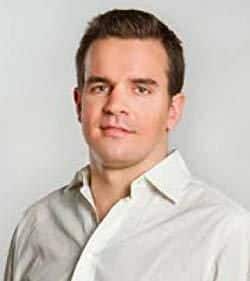

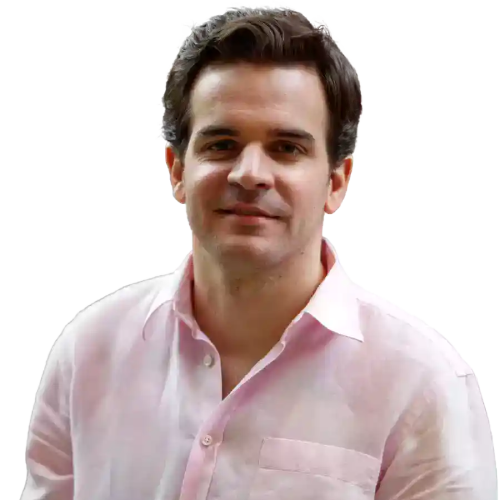
Nick Schrock’s career defies the neat, linear playbooks often associated with Silicon Valley success. He didn’t follow a rigid five-year plan, nor did he obsess over titles or prestige early on. Instead, his journey has been shaped by systems thinking and cultural curiosity.
Nick has always felt that persistent pull toward solving foundational problems that most people overlook. His journey traces the path from growing up in suburban Minnesota to shaping Facebook’s golden-era engineering culture and later founding Dagster Labs.
Nick’s story is ultimately about building leverage at the deepest layers of software and knowing when to step aside so the company can scale beyond you. In this interview, he talks about transitioning from CEO to CTO, the implications of AI in today’s world, and rethinking his fundraising strategies.
Listen to the full podcast and review the transcript here.
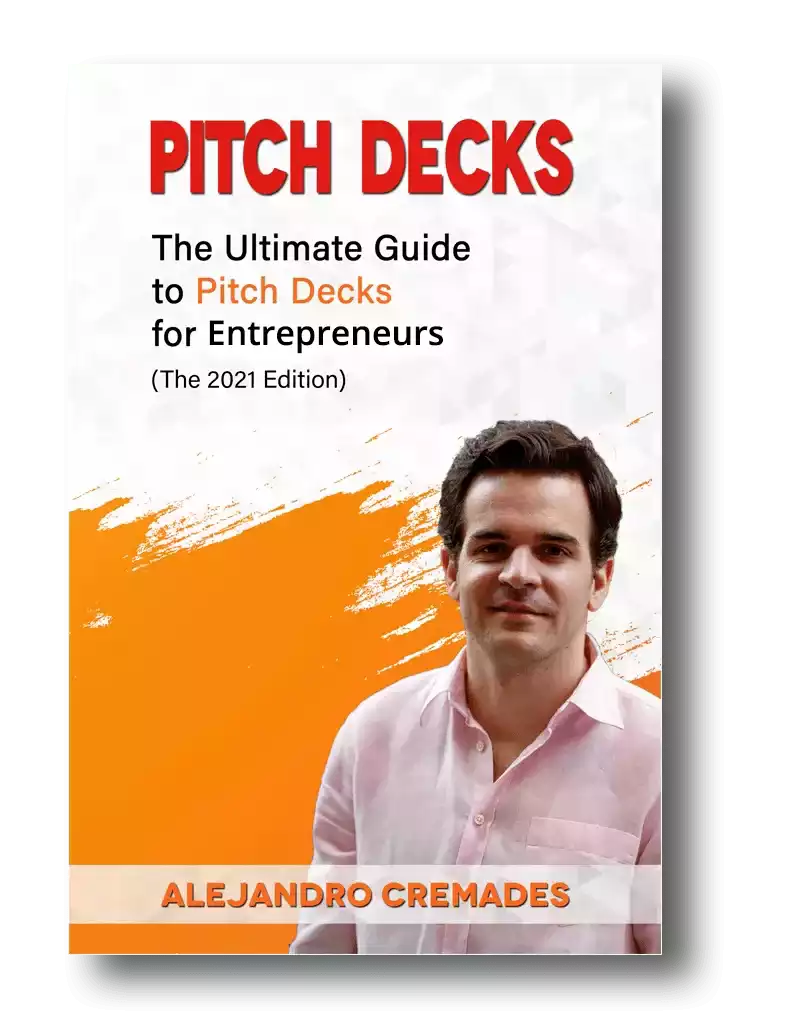
*FREE DOWNLOAD*
The Ultimate Guide To Pitch Decks
Growing Up in Minnesota: Early Signs of a Systems Thinker
Nick was born and raised in Edina, an upper-middle-class suburb outside Minneapolis in Minnesota. His childhood was academically rigorous but otherwise unremarkable by startup mythology standards.
Nick’s parents, both with medical and academic backgrounds, set high expectations for learning, debate, and intellectual curiosity. He wasn’t a prodigy or a teenage founder. Instead, Nick describes himself as gifted, but in a quieter way, curious, analytical, and keenly interested in how systems work.
That interest showed up early. In fifth grade, he wrote a fictional biography of his future self, mapping out a strategic path to the presidency through state-level politics. Even at ten years old, he was thinking in abstractions, incentives, and organizational structures.
Music also played a role. Nick spent years in percussion, including drumline, marimba, and ensemble performance. It helped him develop a sense of rhythm, discipline, and collaboration that would later echo in his engineering leadership.
From History to Computer Science: Abstractions Over Hacks
Unlike many engineers, Nick never identified as a hardcore hacker. He wasn’t obsessively building side projects late into the night. Instead, he was drawn to abstractions, frameworks, and strategy—the layers of software that shape how organizations operate.
Nick initially gravitated toward history and politics, but that same lens eventually drew him to computer science.
Microsoft: Learning Craft from the Best
Nick’s first job was working at an iconic company like Microsoft, where he joined the developer division working on .NET and C#. The experience left a lasting imprint. He credits much of his later success in developer tooling to that environment.
Anders Hejlsberg, the creator of C# and later TypeScript, became an inspiration for Nick, who remembers Anders as a brilliant engineer with a very pragmatic approach. Despite enjoying the internship and experience at Microsoft, he had an uneasy realization in his early twenties.
If Nick stayed on the default path, he could “crush it” for five years and still end up as a mid-level manager, far too young to feel settled. He wanted broader exposure to the world, to ideas, and to uncertainty. He also wanted a career in a government-related or politics-adjacent field.
Nick remembers doing behavioral interviews that could help him define his career goals for the next five years. At the time, he didn’t really have a plan about what he wanted to do next, and that was intentional.
Raise Capital Smarter, Not Harder
- AI Investor Matching: Get instantly connected with the right investors
- Pitch & Financial Model Tools: Sharpen your story with battle-tested frameworks
- Proven Results: Founders are closing 3× faster using StartupFundraising.com
Europe and the Value of Non-Linear Paths
At 22, Nick packed his bags and moved to Europe to study at the London School of Economics. It was less about credentials and more about perspective. As a person, he enjoys exposing himself to different opportunities.
Living abroad forced him out of the highly institutionalized Silicon Valley pipeline, which included attending an elite school and interning at a top company. This pathway would have been very similar to the typical tech careers today.
.
Nick deeply believes in exposing yourself to varied experiences and letting luck play a role. The detour may have delayed his career on paper, but it enriched his thinking and reinforced his belief that narrow pipelines produce narrow outcomes.
Early Startups and Hard Lessons
After LSE, Nick returned to the US and dived into startups. He recalls gravitating toward what his friends were doing. His first stint was at a healthcare interoperability company in Ann Arbor, where he worked closely with friends on a mission he found motivating.
Later, in Chicago, Nick co-founded a startup building software for hedge funds and proprietary trading firms. It was there that reality hit hard. With no funding, little credibility, and a naïve pitch, Nick found himself repeatedly rejected by sophisticated financial clients.
Although his friend had worked at Citadel, investors didn’t find that impressive or even relevant. ”Then the 2008 financial crisis hit, and the business collapsed.
Facebook: A Defining Chapter
A former Microsoft colleague tipped Nick off that Facebook was hiring, and the move changed everything. He joined Facebook as roughly engineer #180 and spent eight years there during one of the most formative periods in the company’s history. Those years defined his professional identity.
Nick cared deeply about software engineering and best practices, which were exactly what the company needed at the time. Thus, he assimilated into the culture perfectly. More importantly, he gained valuable (and humbling) exposure to good engineers and their exceptional productivity.
That exposure forced Nick to clarify his own strengths. His value wasn’t raw output; it was building frameworks, shaping culture, and designing systems that changed how teams interacted.
Nick describes Facebook’s engineering culture between 2010 and 2013 as a golden age. Talent density was extraordinary. Engineers were given autonomy, trust, and room to build. Many of the tools developed internally during that era, GraphQL among them, became industry standards.
What stood out most wasn’t speed alone, but quality and quantity at speed. Teams shipped ambitious systems without devolving into chaos, and individual engineers could organically spark projects that reshaped the company’s core stack.
Nick gives a shout-out to Mark, Chreryl, Shrep, the CTO, and the whole team for building a great, career-defining culture. He considers the Facebook experience extraordinary, not just for the financial outcomes of an IPO.
Dagster Labs: Drawn to the “Developer Experience Dumpster Fire”
After Facebook, Nick took time off but knew he wasn’t done. Initially, he explored healthcare again. He was intrigued by how conservative industries such as KLM, Walmart, and others were now willing to adopt modern developer tooling, such as GraphQL.
It wasn’t just cutting-edge tech companies with a high risk profile. Traditional organizations were also willing to have engineering groups with a different risk profile and mentality than the organization that enclosed them.
Repeated conversations revealed a frustrating truth: many organizations with ambitious visions were blocked not by regulation or strategy, but by brittle, primitive data pipelines. Core decision-making systems were built on fragile CSV files and glue code. That offended Nick at a fundamental level.
He had always attempted to work in product management and had been drawn to the stack because of shortcomings in some aspect of the underlying technology. He was compelled to resolve the problems.
Nick realized that data pipelines, often dismissed as “data cleaning,” were actually the core business logic of modern organizations, especially in an AI-driven world. Yet the tooling lagged by at least a decade.
Nick also noted that analytics systems are the basis for most human and automated decision-making in our society. And it’s all built on a framework like a house of cards. He recognized the horizontal problems, a mix of technical and organizational design issues, that affect many developers.
Dagster Labs was born from that insight.
What Dagster Is and Why It Matters
Dagster is an open-source framework for building, testing, observing, and operating data pipelines. Nick explains the concept behind Dagster in simpler terms.
When data scientists and engineers build data pipelines, they move data from a source system to a data warehouse or a target system. To do that, they must write code that needs testing. Engineers also need to be able to visualize and observe it, which is what Dagster does.
Dagster Plus, the company’s commercial offering, is an enterprise platform that hosts operationally complex components. It is a full data ops platform that covers the entire data pipeline lifecycle: writing and shipping pipelines, cloud-based development, advanced observability, and advanced analytics on top of them.
As Nick says, “It’s a place where developers can come together to have a system of record for the data platform that makes their data come alive.” Companies like Discord run their entire data platform on Dagster, combining their own compute with Dagster’s managed services.
Nick sees Dagster not just as an orchestrator, but as a control plane for the data platform, especially critical as AI disrupts every layer of the stack. Companies run their own compute in their data centers, but also leverage Dagster’s authentication and other proprietary features by paying a fee.
Stepping Down as CEO: Gaining a Co-Founder When It Mattered Most
In 2022, Nick hit a breaking point. As a solo founder, isolated during the pandemic, he was exhausted. Around the same time, he hired Pete Hunt, the former CEO and co-creator of the React framework and longtime collaborator, as Head of Engineering.
The transition happened organically. Pete brought operational strength, energy, business acumen, and leadership. Nick recognized that the company would be stronger with Pete as CEO and himself as CTO. The handoff was disciplined, values-aligned, and smooth.
For Nick, it was transformative. He gained a true partner and returned to the work he loved most: technology, vision, and systems design.
Fundraising Across Cycles: From Preemption to Pain
Dagster Labs has raised roughly $55M. Nick has lived on both sides of fundraising, and recalls that the seed round was preemptive. Thanks to his reputation for building and shipping a project that was broadly adopted, he successfully convinced investors. His messaging resonated with them.
Storytelling is everything that Nick Schrock was able to master. The key is capturing the essence of what you are doing in 15 to 20 slides. For a winning deck, take a look at the pitch deck template created by Peter Thiel, Silicon Valley legend (See it here), where the most critical slides are highlighted.
Remember to unlock the pitch deck template that founders worldwide are using to raise millions below.
Later, the Series B was brutal. Raised in early 2023, post-Fed tightening, pre-AI hype, it coincided with the collapse of Silicon Valley Bank. Although they were getting momentum on the commercial business, it was six to 12 months too late. Pitch after pitch ended in rejection.
While painful, the process forced clarity. Nick and Pete refined the narrative, built conviction, and emerged more resilient. The experience bonded the leadership team and sharpened the company’s strategy.
The AI Era and the Long-Term Vision
Asked about his vision for Dagster, Nick accounts for the time horizon. He believes AI is simultaneously disrupting every layer of the stack and that data platforms sit at the center of that disruption. His ambition isn’t to compete directly with Snowflake or Databricks.
Instead, Nick wants Dagster to become the control plane for how companies reason about, operate, and evolve their data systems in the AI era. Longer term, he envisions something closer to an “Apple of developer tools”—opinionated and taste-driven.
Nick admires companies like Vercel and creators like Rick Rubin, who build for themselves first and trust that authenticity resonates. He himself has been working on this internal tool to improve agentic programming, and is super bullish on it.
Although he’s passionate about working in the data sphere, Nick likes to consider himself a vibes guy. He has a vision and believes in leading people rather than being led by focus groups. His long-term dream is a virtual cloud company built on frameworks that are widely adopted.
Nick envisions designing beautiful integrated experiences that feel great all the way from typing code to deploying the tools.
Advice to His Younger Self
If Nick could go back, he wouldn’t offer tactical tips or motivational slogans. He’d say this: “Get over yourself. Go where the network is. Surround yourself with the best people in the world at what you want to do. You can’t figure this out alone.”
For Nick Schrock, success wasn’t about raw intelligence or perfect planning. It was about systems, culture, timing, and the humility to evolve as the company outgrows you.
Listen to the full podcast episode to know more, including:
- Nick’s edge came from systems thinking and abstraction, not from chasing titles, prestige, or a rigid five-year plan.
- Non-linear detours like living abroad may “delay” you on paper, but they expand your perspective and widen your opportunity surface area.
- Early startup failure in Chicago taught him that credibility and timing matter, and naïve pitching gets exposed fast in sophisticated markets.
- Facebook’s 2010–2013 “golden age” showed that talent density plus autonomy can produce industry-defining tools without top-down mandates.
- Dagster was born of a contrarian insight: “boring” data pipelines are actually core business logic, especially as AI amplifies the cost of fragile data foundations.
- The CEO-to-CTO transition worked because it was values-aligned and operationally rational, and gaining Pete Hunt became a late-stage co-founder moment when Nick needed it most.
- Fundraising isn’t one game: preemptive rounds reward reputation and narrative, while down-cycle rounds force resilience, sharper positioning, and tighter conviction.
SUBSCRIBE ON:
 iTunes
 Google Play
 Stitcher
 TuneIn
 RSS
RSS SoundCloud
 Spotify
Keep in mind that storytelling is everything in fundraising. In this regard, for a winning pitch deck to help you, take a look at the template created by Peter Thiel, the Silicon Valley legend (see it here), which I recently covered. Thiel was the first angel investor in Facebook with a $500K check that turned into more than $1 billion in cash.
*FREE DOWNLOAD*
The Ultimate Guide To Pitch Decks
Remember to unlock for free the pitch deck template that founders worldwide are using to raise millions below.

Facebook Comments