

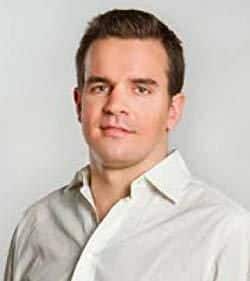
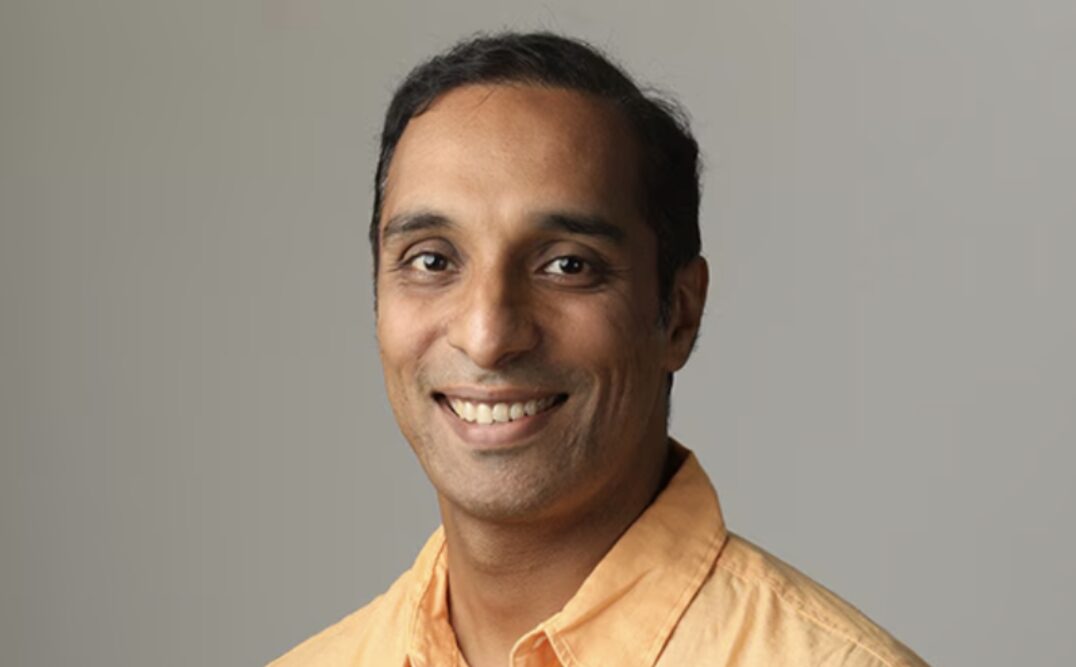
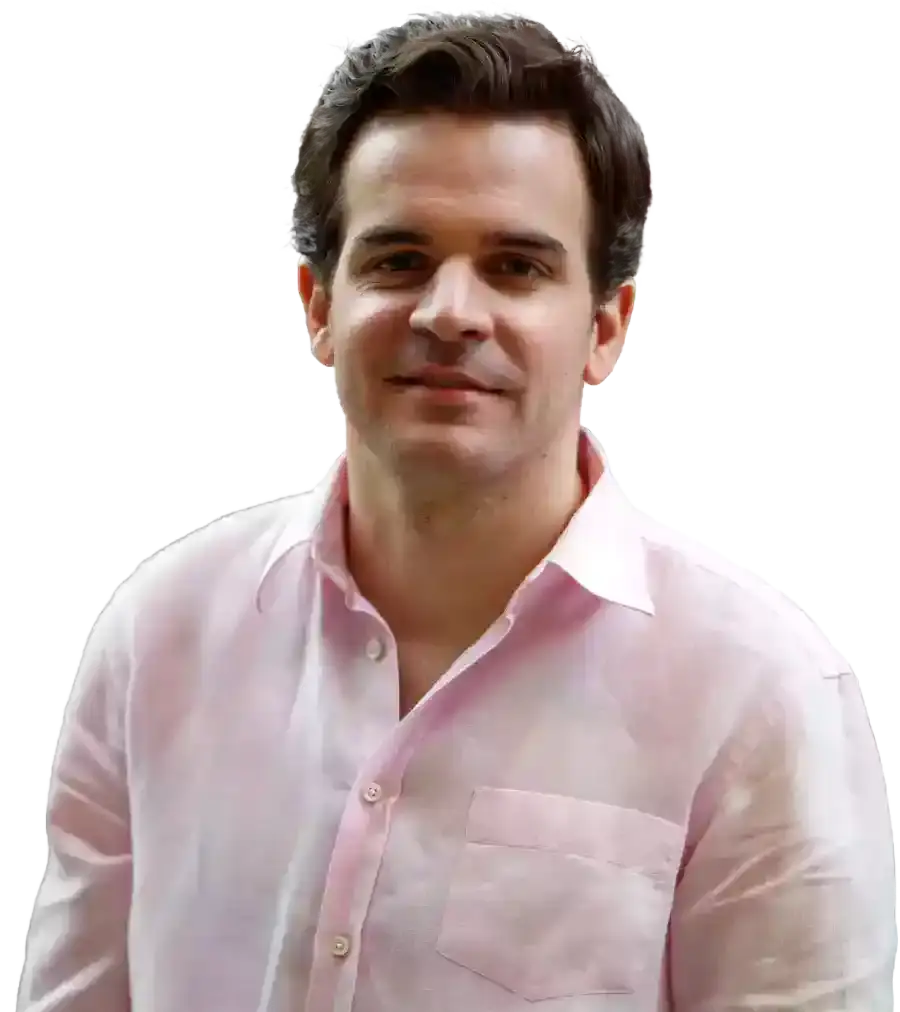
Aneesh Reddy belongs to that rare category of founders who have built their companies for nearly two decades through multiple cycles, reinvented their businesses through crises, expanded across continents, and still managed to retain over 100 employees who have stayed for more than 10 years.
.
As the co-founder and CEO of Capillary Technologies, Aneesh has scaled the company from a $30K campus seed loan to serving two Fortune 10 companies, 19 Fortune 500 companies, and powering over a trillion dollars in commerce annually.
Capillary is now a global loyalty and customer engagement leader that has raised more than $100M in equity, over $200M in secondary, and successfully executed a $100M IPO that was oversubscribed 52x. Capillary also navigated the challenges posed by the global pandemic proficiently.
Aneesh’s story impresses with its perseverance, customer obsession, international expansion, crisis pivots, and, uniquely, the founding of mental healthcare. This is the journey behind Capillary.
Listen to the full podcast episode and review the transcript here.
*FREE DOWNLOAD*
The Ultimate Guide To Pitch Decks
Growing Up in Hyderabad: The Early Spark
Aneesh grew up in Hyderabad, the emerging IT capital of southern India. Both of his parents were doctors, a classic backdrop to the familiar “doctor or engineer” career expectation many Indian children grow up with.
In Aneesh’s case, engineering won out not because of cultural pressure, but because of honest self-awareness and a proficiency in math and physics. As his father put it: “You need a lot of patience to be a doctor.” Aneesh needed speed, challenge, and the thrill of solving things.
That led him to IIT Kharagpur. Here, Aneesh’s curiosity deepened, and his entrepreneurial instincts surfaced. He built robotics projects, ran the robotics club, and in 2005 co-founded the Entrepreneurship Cell, years before startup culture became mainstream in India.
Aneesh recalls how challenging it was to procure the equipment needed to build, including motors, ICs, and other components. His solution? To build a company that would create robotic hobby kits. However, he didn’t know how to build a company. So, the next solution was to establish the cell.
The Entrepreneurship Cell planted the seed: solving real problems through software was the career he wanted.
Leaving Corporate Life to Chase Purpose
After graduating in 2006, Aneesh joined the cigarettes-to-FMCG superbrands-to-hotels conglomerate ITC, one of India’s top five public companies. The job was prestigious, fast-moving, and well-paid. He advanced quickly, moving up two roles in two years. But he also felt a creeping internal question:
“What am I really adding here? What is my purpose? Which cog am I in this massive wheel?” Because his parents were financially independent, Aneesh didn’t need to send money home. This gave him the freedom and psychological cushion to explore entrepreneurship.
By early 2008, Aneesh knew he had to try. He teamed up with Krishna Mehra, a friend from IIT. They took a small ₹15 lakh (approximately $30K) seed loan from IIT, which gave the institute a 4% equity stake. And they set out with a simple thesis.
Find two booming sectors and build in the intersection. The duo chose retail and mobile, both of which were surging in India in 2008. At the time, the country had just opened to international brands such as Walmart, Levi’s, and others.
Aneesh and Krishna set out to meet everyone in their networks who was operating in the retail and mobile spaces. They offered to build good software to solve their problems. Their strategy? Don’t write a single line of code until someone is willing to pay for it.
Then Lehman Brothers collapsed one month later on September 11, 2008.
Raise Capital Smarter, Not Harder
- AI Investor Matching: Get instantly connected with the right investors
- Pitch & Financial Model Tools: Sharpen your story with battle-tested frameworks
- Proven Results: Founders are closing 3× faster using StartupFundraising.com
Finding Product-Market Fit in a Crisis
In the aftermath of the global recession, retailers suddenly faced a painful truth: same-store sales were collapsing. Aneesh and Krishna spent months visiting retail and mobile executives, asking a single question: “What is your biggest problem right now?”
Every answer pointed to the same friction: Physical loyalty programs were outdated, slow, and unusable. Only 5% of customers bothered to fill out long forms. Retailers had no visibility into who their customers were or how to bring them back. The duo would ask, “Who are your customers?”
Aneesh and Krishna introduced a simple, elegant idea: Use the customer’s mobile number as the universal identifier. No forms. No cards. Just tell the cashier your number. Sign-ups jumped from 5% to 80%, instantly demonstrating value. Removing the friction created a bigger option curve.
The cofounders coupled that with an early, bold SaaS model. They charged $50 per store per month at a time when India’s SaaS ecosystem didn’t yet exist. Retailers could try the product for three months before rolling it out across their footprint.
The friction was gone, the ROI was obvious, and the recession became an unexpected tailwind. As Aneesh recalls, their foray into the retail loyalty space was accidental. Customers hesitated to buy the big license software and were reluctant to invest in servers.
Aneesh and Krishna simply offered to host it on the cloud for a $50 fee. The culture was to listen to customers and keep reiterating. This philosophy has helped Capillary time and time again. By 2011, the company was powering loyalty programs across 5,000 stores in India.
The Capillary Business Model
Explaining the Capillary business model, Aneesh reveals that they serve large enterprises, working with two of the Fortune 10 and 19 of the Fortune 500 companies. Essentially, Capillary is a software-as-a-service platform that leverages AI to drive loyalty programs for large enterprises.
The company’s customer profile includes retailers, healthcare companies, car rental companies, airlines, banks, and telcos. The underlying principle is customer retention. Think subscription points, memberships, promotions, coupons, and others for huge enterprises.
Capillary operates in the cloud and today has around a billion consumers on its platform across the various brands it works with. The company handles around a trillion dollars of commerce annually.
Customers are charged an annual, recurring subscription fee, similar to SaaS, tied to the number of transactions or customers on the platform.
Aneesh underscores two execution strategies that have worked well for Capillary. He considers them crucial lessons that aspiring entrepreneurs can leverage.
- They pivoted to unlock new verticals, serving more customers and a wider range of customer profiles.
- They developed playbooks to expand beyond India and launch into other countries. Their first stop was Singapore, before moving on to more developed countries, such as the US.
Scaling Across Geographies: The “Low-Risk Pilot” Playbook
As Aneesh recalls, when they started Capillary in 2008, they made great strides in the first three to four years because they had solved a critical problem for retailers.
In addition to 5,000 stores in India, Capillary soon began working with leading brands, including Puma, Pizza Hut, and other conglomerates. However, global expansion for enterprise SaaS is notoriously difficult due to risk perceptions among large companies, despite the best software.
Capillary solved this through a simple but brilliant lever. It used existing customers to bring them into new countries. Puma took them to Southeast Asia. Pizza Hut took them to the Middle East.
And the pitch everywhere was the same: “Try a $50-per-store pilot for three months. If you see 4% to 5% revenue uplift, scale it.”
It was the perfect “small affordable loss, massive upside” framing. Once they had a couple of large marquee brands in each market, risk perception dropped, and sales accelerated.
By the mid-2010s, Capillary had crossed $30M in revenue across India, the Middle East, and Southeast Asia. Aneesh and Krishna began considering expansion into small and medium-sized businesses (SMBs) and offering additional products. But the biggest test was still coming.
COVID: The Pivot That Defined the Company
COVID nearly broke Capillary. In 2020, the company had just turned profitable and, for the first time, hadn’t raised funding, relying on its cash flows to remain operational. However, it was a retail tech platform. Retail stores unexpectedly shut down across Asia.
Governments weren’t offering the kinds of relief packages seen in the US or Europe. For a company deeply tied to retail, the risk was existential. Aneesh and his team had to make the hardest decisions of their careers. Capillary shut down its SMB mid-market business and focused on large enterprises.
Next, Aneesh and Krishna shut down all non-core products, keeping only the loyalty programs. They cut costs by 65%, focusing on the one thing they were especially good at. They also started pivoting toward the West and into newer verticals.
As Aneesh points out, at the time, retail represented nearly the entire business. Today, retail accounts for only 25% of revenue, and Asia is only 25% of the market. Furthermore, SMBs generate less than 3% of revenue. The transformation was radical. From the depths of COVID, Capillary has grown 5x.
The Founder’s Mind: Anxiety, Cycles, and Vipassana
One of the most striking parts of Aneesh’s story is his candor about founder psychology and mental health. During the first COVID-19 downturn, he began prioritizing mental health and highlighted its critical importance across his organization.
After 17 years of building, Aneesh felt overwhelmed by mistakes, customer churn, close calls with cash, key employees leaving, and perpetual uncertainty. He faced situations when the self-criticism would become overpowering.
Aneesh describes the founder mind as either your greatest asset or your greatest enemy. In 2018–19, he reached a breaking point. A friend suggested he attend a Vipassana retreat. Ten days of silence. No devices. No talking. Just breathing and awareness. He came out feeling 15 years younger.
The negative loops were gone, and 85% to 90% of the mental clutter dissolved. For the first time in years, Aneesh felt light, energized, and clear. He realized that taking care of your mind is crucial for founders, given the ambiguity, anxiety, feelings of helplessness, and chaos they live with.
Aneesh made the 10-day Vipassana retreat an annual practice and institutionalized it inside Capillary. The company now runs a program called Life Beyond Numbers, with 10-day retreats available to any employee. Shorter inner-peace retreats, meditation sessions, sports programs, and wellness investments are also options.
Today, more than 100 out of 700 employees have been with Capillary for 10+ years. They have made money and done well for themselves. Beyond ESOPs, they have grown and lead happy lives. But a culture like that does not happen by accident.
Financing: $100M Equity and $200M Secondary
Talking about their financing cycles, Aneesh reveals that they’ve raised $100M in equity and $200M in secondaries. Then came the $100M IPO and another round of secondaries. Investors like Sequoia, Norwest, Warburg Pincus, Avataar, Filter, American Express, and Qualcomm backed the company.
Storytelling is everything that Aneesh Reddy was able to master. The key is capturing the essence of what you are doing in 15 to 20 slides. For a winning deck, take a look at the pitch deck template created by Peter Thiel, Silicon Valley legend (see it here), where the most critical slides are highlighted.
Remember to unlock the pitch deck template that founders worldwide are using to raise millions below.
Aneesh is unusually disciplined about fundraising. Instead of running frantic fundraising campaigns, he maintained a simple habit for over a decade: meeting 1 or 2 investors every week. Always. Whether fundraising or not.
This strategy kept relationships warm, feedback flowing, and investor trust building consistently. Interacting with investors and answering their questions kept Aneesh grounded. He would constantly review whether he was building the business correctly or missing anything crucial.
When Capillary did raise, rounds closed in 2 to 3 months without bankers. Aneesh and his team would simply reach out to the five or six people from the cohort with whom he had been in touch over the last few years.
When Sequoia Capital and Norwest Venture Partners came together for the Series A funding round, it signaled they wanted a larger allocation, creating space for a secondary. Aneesh is clear about his principle: Founders who never take secondary early tend to sell too soon.
Early liquidity gave the team the confidence to play a long game, 17 years and counting. This strategy gave founders staying power and employees financial stability. It enabled Aneesh and his team to cycle out older funds, bring in fresh capital, and reset the investor lifecycle so no one became stale.
As Aneesh underscores, he believes in being one step ahead in creating secondary projects and opportunities for existing investors, employees, and even the founders themselves.
The 52x Oversubscribed IPO
When Capillary finally went public, the timing was precise. It had EBITDA margins above 10%, 30% to 40% growth, and strong cash generation. The company also had a global customer base and clear signals of enterprise trust.
The IPO was oversubscribed 52x, with six of India’s eight largest funds participating. The stock is trading at 20% above the listing price, and the company now operates with the transparency and credibility that global enterprises prefer.
Aneesh’s Vision: A Happier, Less Anxious World
When asked what the world would look like if his company’s mission were fully realized, Aneesh did not discuss revenue, scale, or enterprise penetration. He spoke about people and a world where individuals are less anxious, less greedy, and less fearful.
Aneesh foresees a balanced world, what he describes as a “Buddhist middle path,” where founders are not crushed by cycles, pressure, and self-criticism. His vision is deeply human, with people taking more care of themselves, especially from a mental health perspective.
Advice to Founders: A 20-Year Playbook
Aneesh’s guidance for entrepreneurs is grounded in both scars and successes:
- Always listen to customers. Every time he built based on intuition instead of real pain, it failed. Pick a problem, find the tech, and solve it. Loyalty was the pain. SaaS was the solution. Building without talking to customers will get you nowhere, Aneesh says.
- Expect a 20-year journey. Real companies take decades. Capillary will likely be a 30-year journey before it outlives him.
- Protect your mind. Founders think success comes at the expense of family, friends, health, and sanity. Aneesh believes the opposite. A well-balanced life sharpens judgment and prolongs endurance. Focus on strong family bonds and a great friend circle.
Conclusion
Aneesh Reddy’s journey is one of the most compelling founder stories in India’s technology ecosystem. It is a story of building slow, building right, and building with clarity of purpose.
Aneesh scaled a company through the global financial crisis, COVID-19, international expansion, and multiple reinventions, culminating in a wildly successful IPO. But his greatest lesson is not about SaaS, fundraising, or scale. It is about the founder’s mind.
In a world obsessed with growth at any cost, Aneesh built something remarkably different: long-term, resilient, and deeply human.
Listen to the full podcast episode to know more, including:
- Aneesh scaled Capillary from a $30K campus loan to a global enterprise platform powering over a trillion dollars in commerce.
- Capillary’s breakthrough came from solving real retail pain points with a frictionless mobile-based loyalty system.
- International expansion succeeded through a “low-risk pilot” playbook and customer-led entry into new markets.
- COVID forced Capillary to reinvent itself, shut non-core products, pivot to the West, and ultimately grow 5x.
- Aneesh institutionalized mental health through Vipassana and company-wide wellbeing programs, driving extraordinary team retention.
- His disciplined fundraising rhythm—meeting investors weekly—enabled $100M equity, $200M secondary, and a 52x oversubscribed IPO.
- Aneesh’s core philosophy: listen to customers, build for decades, and protect your mind because clarity compounds more than capital.
SUBSCRIBE ON:
 iTunes
 Google Play
 Stitcher
 TuneIn
 RSS
RSS SoundCloud
 Spotify
Keep in mind that storytelling is everything in fundraising. In this regard, for a winning pitch deck to help you, take a look at the template created by Peter Thiel, the Silicon Valley legend (see it here), which I recently covered. Thiel was the first angel investor in Facebook with a $500K check that turned into more than $1 billion in cash.
*FREE DOWNLOAD*
The Ultimate Guide To Pitch Decks
Remember to unlock for free the pitch deck template that founders worldwide are using to raise millions below.

Facebook Comments