

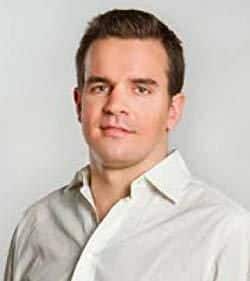
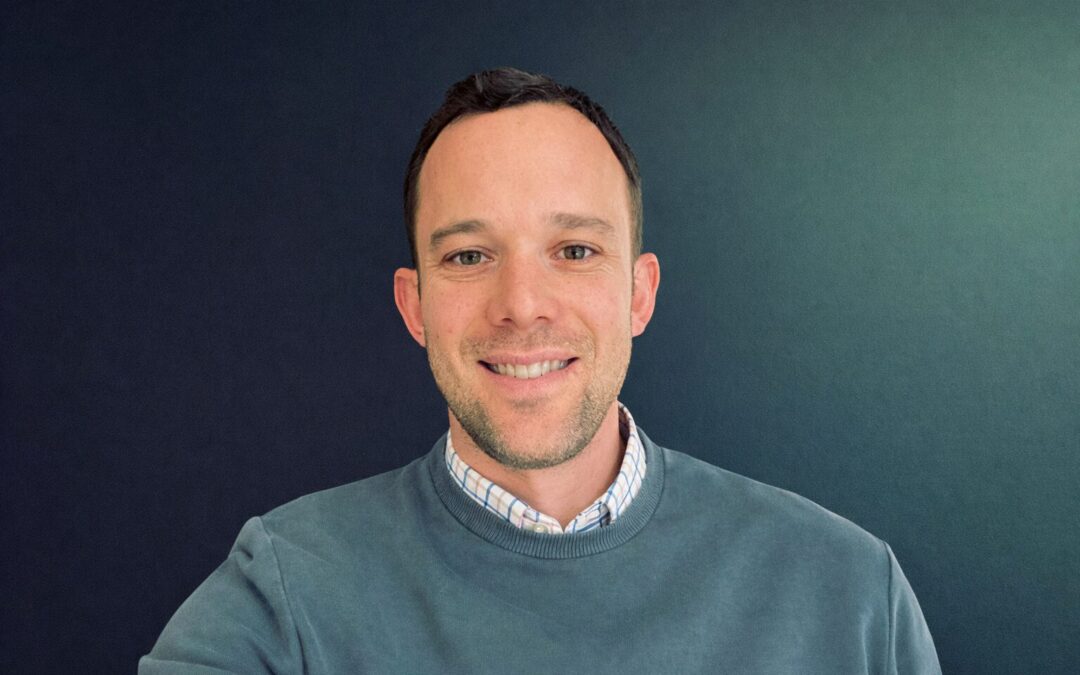
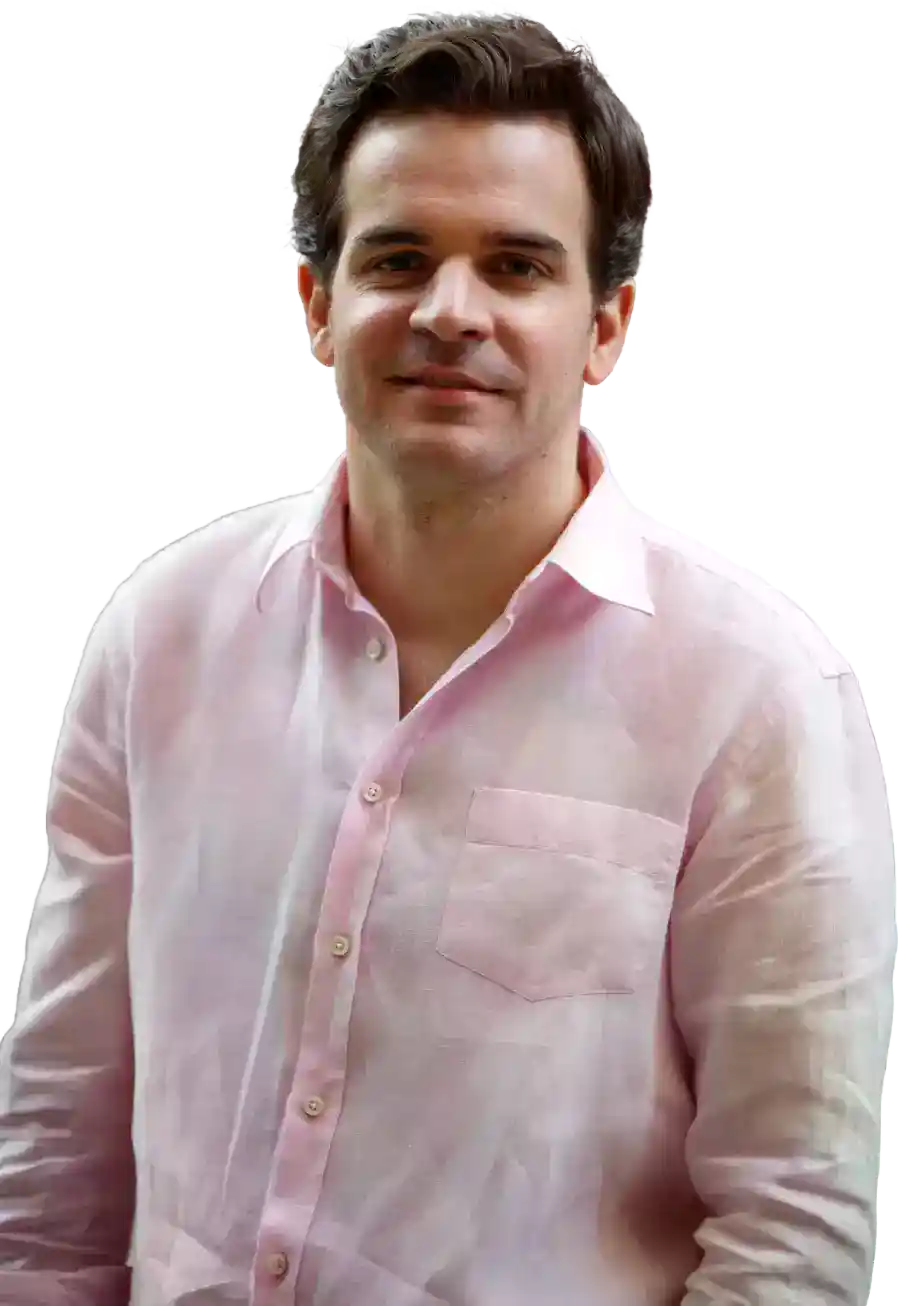
What does it take to go from $100K in startup capital to $100M in annual revenue—and finance and execute $750M worth of projects along the way? For Dylan Rudney, founder of Verano Energy, it isn’t just about vision or timing; it’s execution and adaptability.
Dylan developed the deep understanding that in infrastructure businesses, reality always beats spreadsheets. This is the story of how he built Verano Energy—one of the most ambitious renewable energy platforms in Latin America—and raised $247M through a combination of debt and equity.
In this inspiring interview, Dylan discusses in detail why the biggest opportunity ahead may not be energy itself, but battery storage (BESS) and powering the AI revolution.
Listen to the full podcast episode and review the transcript here.
*FREE DOWNLOAD*
The Ultimate Guide To Pitch Decks
A Global Upbringing That Built Adaptability
Dylan’s journey didn’t follow a straight line. Born in Washington, D.C., and raised in a small farm town in Iowa, he experienced early what it means to constantly adapt. That continued into adulthood, in California for university, then Mexico City, Colombia, and eventually Chile.
Dylan has now spent 13 years in Santiago. That constant movement shaped something critical: The ability to reset, rebuild, and adapt quickly. And that skill would later become a defining advantage in emerging markets.
Falling Into Latin America—and Seeing the Opportunity
Dylan didn’t initially plan to build a career in Latin America. Coming out of high school, he didn’t speak a word of Spanish, but at university, he had several Spanish-speaking friends. That’s when he picked up a few basics and eventually took Spanish classes, developing a love for the language.
Dylan was studying business and finance and recognized opportunities in Latin America. He decided that was where he wanted to focus his time. His entry point was practical: a role at PwC (PricewaterhouseCoopers).
PwC is a consulting and audit firm that also offers mergers and acquisitions (M&A) and investment banking (IB) services in Mexico City. Dylan worked in the M&A area.
Later, Dylan was recruited into a private equity fund, backed by angel investors across South America. That exposure—through their office in Chile—changed everything.
Dylan realized he knew nothing about the country, except that it was beautiful and well-developed. He also noted the level playing field. Contrary to expectations, it was highly functional, economically stable, and business-friendly, but also had an underserved infrastructure.
For Dylan, it was clear—this wasn’t just an emerging market—it was a platform for opportunity. As he remarks, the consistency of the incredible Chilean market became a valuable learning experience, not just for the private equity fund but also for Dylan himself on personal and professional levels.
The Hard Lesson: Finance Models Don’t Build Real Assets
Before becoming a founder, Dylan worked on the investor side at a private equity firm, an experience that revealed a brutal truth. A great financial model and projections mean nothing if you can’t execute on the ground.
The PE firm had made money in the tech sector in the early 2000s and had a background in finance. Although run by a highly successful group of individuals, the firm had no experience in the energy or infrastructure sectors.
Dylan quickly learned firsthand how projects that looked perfect on paper failed in reality. That insight became foundational:
- Execution leads to projections
- Asset quality leads to capital availability
- Contracts (offtake)
In infrastructure, the real business is de-risking execution—not building models. That’s what Dylan has focused on when building Verano Energy, a project that was all about taking ownership of his future and making the leap from a stable income and job in private equity to entrepreneurship.
Raise Capital Smarter, Not Harder
- AI Investor Matching: Get instantly connected with the right investors
- Pitch & Financial Model Tools: Sharpen your story with battle-tested frameworks
- Proven Results: Founders are closing 3× faster using StartupFundraising.com
Taking the Leap: Leaving Stability for Uncertainty
In retrospect, Dylan explains that he had always wanted to build something of his own. Coming from a family of entrepreneurs, he approached every job the same way, asking questions like: “Could I do this myself? Could I replicate this?”
The turning point came around 2012. Dylan was working on hydroelectric projects, which were complex, capital-intensive, and difficult to execute. He had to deal with community and environmental issues, which literally involved engineering a river. Construction and civil works were very difficult.
At the same time, Dylan noticed something critical—the costs and business model of developing, building, and operating solar assets were dropping rapidly. Particularly when compared to river hydro, thermal, coal, and gas plants, which had been largely rejected in Chile and other parts of the world.
Getting approval for these projects was becoming increasingly challenging. Because of the rising demand for cheaper energy, the trend leaned toward dropping prices of solar panels and equipment in general. Dylan was very confident that solar would win. However, his firm passed on the idea.
Dylan didn’t hesitate. He had all the contacts and knew how to execute on his idea. He was ready to invest his savings and take the leap. One of the first major lessons he leveraged was the importance of adapting and moving quickly.
Starting with $100K and the First Business Model
Verano Energy began with just $100K from friends and family. Initially, Dylan started as a pure renewable-energy developer, similar to real estate developers. The strategy was simple—but high risk:
- Secure land (long-term leases or options)
- Obtain permits
- Find pathways to interconnect an environmental permit and get municipal approvals
- De-risk the project
Then sell to institutional investors at a premium. Why it worked:
- Funds avoid early-stage risk
- Developers create value by removing uncertainty
- Margins can be 5x–20x on initial capital
This allowed Verano to scale quickly with minimal capital. Dylan explains how they started doing development in a market where permitting is considered challenging. Yet, they were able to execute with a small amount of money.
At the same time, Dylan deliberately chose to structure it as preferred equity to retain control from day one. Initially, Verano progressed well, and Dylan successfully retained 100% ownership. They started developing small solar assets and smaller projects in a market where solar energy was debuting.
Storytelling is everything that Dylan was able to master. The key is capturing the essence of what you are doing in 15 to 20 slides. For a winning deck, take a look at the pitch deck template created by Peter Thiel, Silicon Valley legend (see it here), where the most critical slides are highlighted.
Remember to unlock the pitch deck template that founders worldwide are using to raise millions below.
Navigating the Initial Challenges and Running Out of Capital
Solar was gradually making its mark, and costs were reaching the point where it could—during the day—compete with other energy sources in Chile. As Dylan points out, the Chilean market has no hydrocarbons. It imports fuels like coal and LNG, which are expensive.
Although solar could compete, Dylan underscores that it could compete ONLY during the day. Verano had developed two or three projects, but early traction was hard to come by, and one of them failed.
Within a year, the capital was gone. Survival was uncertain, so Dylan took on an additional $65K in debt just to stay alive. It took nearly two years to reach the first breakthrough—the sale of two solar projects to a fund.
Using the proceeds, Dylan repaid the original preferred equity and debt and reinvested the remainder in larger projects across the country. Eventually, Verano expanded into other countries and evolved.
The Key Pivot: From Developer to Full-Stack Operator
The breakthrough came when Dylan realized something critical. They were leaving most of the value on the table. Development accounted for ~10% of revenue, while construction accounted for ~90%. Dylan wanted to build and operate, so Verano pivoted.
However, becoming a bankable EPC (Engineering, Procurement, and Construction) company wasn’t easy. Project finance banks were conservative and hesitated to fund their projects. Eventually, Verano landed a small distressed project.
Its organizers had to work with Verano or risk losing it. Dylan recalls how they built it within a very short timeframe. This success enabled them to demonstrate that Verano was a bankable company. It had developed, built, and operated a project from end to end.
Investors could now come to Latin America with their checkbooks, and Verano Energy would take care of the rest. The result? Explosive growth. That pivot had an incredible impact on growth—from smaller numbers with higher margins to larger numbers with lower margins.
Verano achieved the ultimate distinction between developing and flipping assets and constructing the assets it had developed. The company was now handling both aspects of the business—construction and operation of assets that resulted in sustained revenue.
Scaling Through Integration
Once Verano proved it could develop, build, and operate projects, Dylan leaned into sales. He realized that they could continue their original development business and sell it with construction. This strategy would guarantee a large construction revenue, which was 10x higher than before.
That positioning unlocked exponential growth. Verano acquired multi-project deals, larger contracts, and Institutional partnerships. At one point, Verano sold over 20 projects in a single transaction to TPG Matrix for more than $200M. This deal marked the turning point.
Navigating Latin America: Complexity as a Moat
As Dylan points out, operating across Latin America is not for the faint of heart because each market behaves differently from the US. These differences included business execution, culture, hiring talent, and more.
- Chile: Structured, predictable, and business-friendly, with a culture similar to the US
- Argentina: High volatility, difficulty in finding investors because of the uncertainty of restrictions, and exit risks
- Peru: Land and title complexity, along with political instability, though the market seems almost unfazed by changes in the government
- Colombia: Slow-moving but high potential and a unique opportunity
Even cultural nuances matter, Dylan remarks. Some markets are transactional, while others require relationship-building first. His edge came from embracing—not avoiding—this complexity.
Financing and Executing $750M: From Selling Projects to Owning Them
Initially, Verano sold projects early through a basic sales process. Dylan recalls how they would execute deals or hire an investment bank to help with a more competitive process. But a major strategic shift changed everything.
Verano started selling assets to funds, complete with construction, using a turnkey strategy. It partnered with both boutique and larger investment banks in the region, which placed it in the spotlight.
At one time, around 10 private equity firms, infrastructure firms, and strategic investors were interested in Verano’s assets. Verano was now a bankable EPC fund capable of sourcing projects, obtaining permits, and executing engineering, construction, and operations.
Verano could close the PPA or the offtake agreement with the energy buyer, and could also handle the project finance. Then, Dylan started to think: Why sell value when you can capture it?
Three years ago, the company decided to become an Independent Power Producer (IPP) and compete with the largest energy companies. Verano was ready to play on the bigger field and in the big leagues.
That’s when Dylan partnered with Lumina Capital, a Brazilian debt fund that provided Verano with $100M in growth equity. Verano could now control the entire process from the very beginning until the operation or the flip of the asset. Thus, it grew its internal pipeline by ~10x in two years.
Rather than selling its assets at some stage in the development process, Verano can enter operations, sell energy with a long-term cash flow guarantee, and explore opportunities to divest. As a result, it can get access to institutional capital through project finance.
As Dylan explains, project finance enables Verano to finance the construction at much cheaper rates than using equity, MEZ, or dev funds. Thus, they work extensively with banks to get funding.
The Big Insight: Solar Alone Isn’t Enough
Despite building a solar company, Dylan holds a contrarian view. Solar by itself is not a complete solution, he says. In the US, solar tends to increase electricity costs and create problems for the grid. There are essentially two different types of markets—exporters or importers of energy.
Energy exporters like the US, which export gas, don’t really need renewables, Dylan points out. Gas is cheap, has a quick response, and is relatively clean energy.
The opportunity lies with importers and countries like Chile, Colombia, and Peru. Here, Verano must compete with the costs of importing coal and gas. When starting out, Dylan wanted to sell solar power during the day to lower energy costs.
His objective was to sell the cheapest energy possible, which is also clean and better for the world. However, he also wanted it to be the best—a crucial consideration. However, at ~30% market saturation, solar starts becoming a problem—not a solution. Oversupply reduces value.
Dylan underscores that putting more solar into the system actually creates a problem for it. Solar needs to be ramped up in the afternoon and ramped down in the morning. They also looked into exporting green hydrogen and green ammonia to take advantage of cheap green electrons.
At one time, people had considered using green hydrogen and green ammonia to meet the world’s energy needs. However, the hype didn’t translate into practical adoption. Governments were unwilling to subsidize, and companies were unwilling to make the switch to a green product.
The risk factor was too high, so the markets didn’t work. Then, batteries came along.
The Breakthrough: Solar + Batteries = 24/7 Power
The real game-changer isn’t solar. It’s solar + storage. As Dylan points out, batteries aren’t new technology; it’s just that the costs have dropped at an incredible rate. At the same time, solar has also gotten cheaper.
With falling battery costs, something unprecedented is now possible: 24×7 renewable energy at competitive prices. Verano recently secured a 24×7 energy contract using this model. For the first time, on a free market basis, solar and batteries beat conventional imported fuel.
That’s a fundamental shift. And Dylan is super excited about it.
Why AI Could Be the Biggest Opportunity
The next frontier isn’t just energy—it’s who powers AI. Data centers require massive amounts of energy, a reliable supply, and, increasingly, clean power. Dylan sees a massive opportunity and a simpler business plan based more on the execution of larger-scale generation assets.
Dylan is working out how to export renewable energy through AI infrastructure. In places like Chile, solar radiation is the highest globally, and infrastructure is improving, complete with underwater cables to transport the energy. Energy can be produced cheaply.
Instead of exporting raw energy, the idea is to use it locally to power AI—and export computation. As Dylan points out, Chile has the highest solar radiation in the world. If it can use cheap 24×7 green energy to power AI centers and export renewable energy through AI, Chile can lead the world.
And, Verano Energy is at the right place at the right time.
The Long-Term Vision: Competing with Energy Giants
Dylan’s ambition is clear: Compete with the largest energy companies in the world. To make that happen, Verano needs to raise long-term capital. Dylan does not want the company to be in a position where it is restricted or constrained by capital. Once that happens, it can reach the biggest markets.
Dylan envisions a future where Verano has the desired capital and smart partners to access partnerships with massive AI offtakers. He wants Verano to power the future of growth and innovation with clean energy from Chile.
The company has been awarded very large contracts against much larger companies that have been around longer. Its edge includes being smart about procurement, engineering, and finding the right type of off-takers. Verano is generally leaner than its competitors.
These advantages make it unbeatable, as Dylan points out. Soon, they will close a competitive smart capital round, which could make Verano a household name for the most competitive, clean, and solar-battery-focused energy in the world, driving innovation, data centers, and AI.
Lessons for Founders
Dylan’s journey offers several hard-earned lessons.
- Execution Beats Everything: Don’t be fooled by how attractive a business plan looks on paper. A great model won’t save a bad project.
- Costs Are Always Higher, Revenues Always Lower: Don’t think you’re within 10% to 15% of your projections. Assume your costs are higher than expected and revenue is lower than expected—because they are. Efficient planning is crucial.
- Be Extremely Careful with Fixed Costs: Recurring expenses can force bad decisions under pressure. Be careful about hiring, spending, and anything that you have to pay for month over month.
- Adapt Quickly or Fall Behind: What worked at the start may not work at scale.
- Control Matters Early: Structuring early capital correctly allowed long-term ownership.
The Bottom Line
Dylan Rudney didn’t just build a company. He built a system to identify inefficiencies, de-risk execution, capture more of the value chain, and adapt ahead of the market. From $100K to $100M in revenue, the story isn’t about luck.
It’s about understanding where value actually lives—and moving fast enough to capture it. And if Dylan’s vision plays out, the next phase won’t just be about energy. It will be about powering the infrastructure behind the most important technological shift of our time.
Listen to the full podcast to know more, including:
- Execution—not capital or vision—is what turns $100K into a $100M business.
- Emerging markets reward operators who can navigate complexity, not avoid it.
- In infrastructure, de-risking projects creates far more value than building financial models.
- Owning more of the value chain is what unlocks exponential growth.
- Solar alone isn’t enough—storage is what makes renewable energy truly competitive.
- The biggest opportunity isn’t energy itself but powering AI and data infrastructure.
- Control your costs early, or they will control your decisions later.
SUBSCRIBE ON:
 iTunes
 Google Play
 Stitcher
 TuneIn
 RSS
RSS SoundCloud
 Spotify
Keep in mind that storytelling is everything in fundraising. In this regard, for a winning pitch deck to help you, take a look at the template created by Peter Thiel, the Silicon Valley legend (see it here), which I recently covered. Thiel was the first angel investor in Facebook with a $500K check that turned into more than $1 billion in cash.
*FREE DOWNLOAD*
The Ultimate Guide To Pitch Decks
Remember to unlock for free the pitch deck template that founders worldwide are using to raise millions below.
Podcast: Play in new window | Download
Subscribe: Apple Podcasts | Spotify | TuneIn | RSS | More
Facebook Comments