

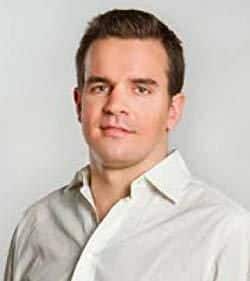
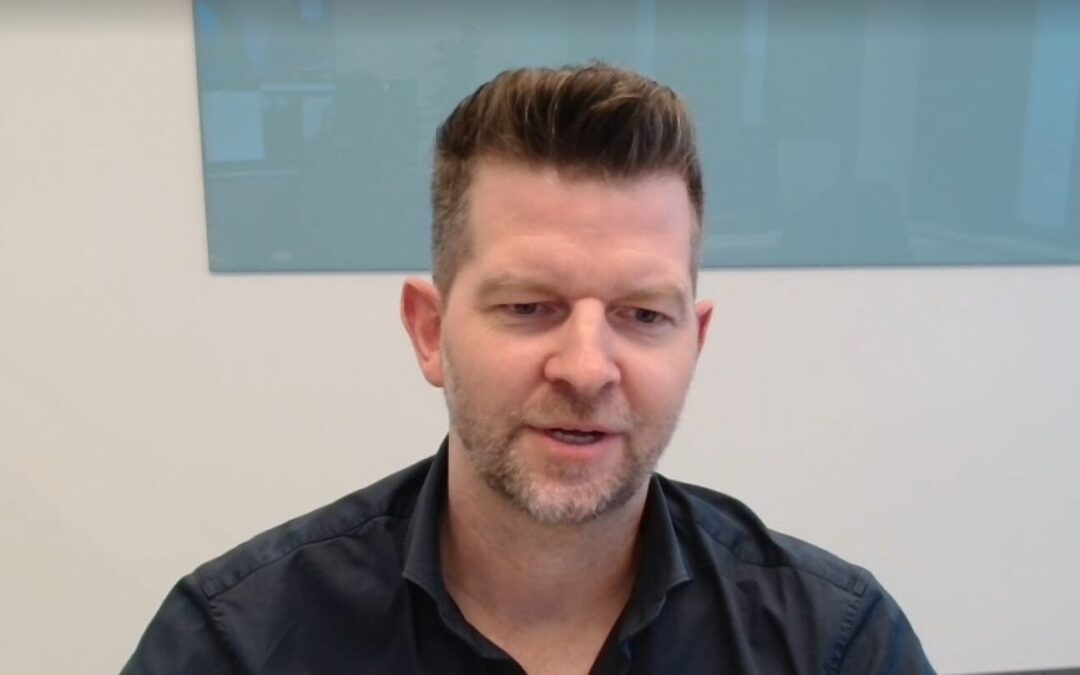
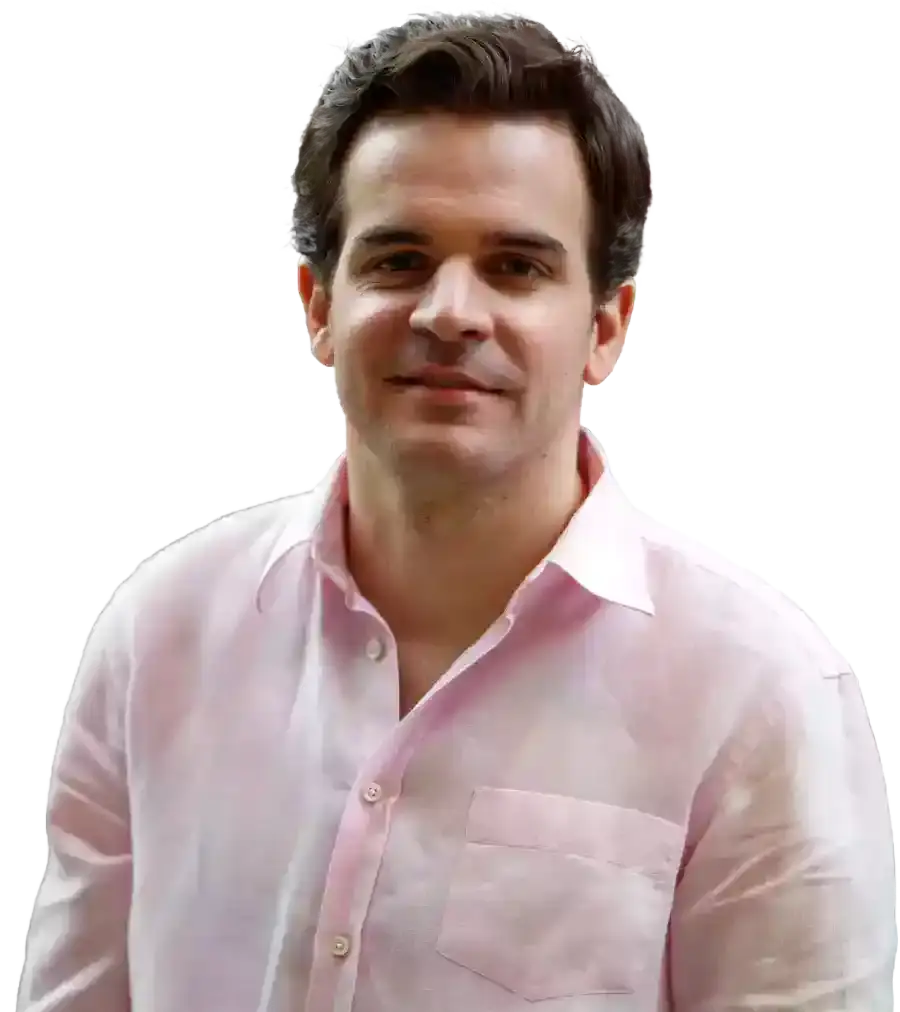
When Philipp Heltewig talks about his journey, he does not describe “building a startup.” He talks about building a real company, one that hits its KPIs, scales globally, survives shocks like COVID, and rides new technology waves like generative AI.
Philipp’s vision was for his company, Cognigy, to ultimately become so strategically important that a buyer came to him on his terms. By the time Cognigy was acquired by NICE in a deal valued north of $1B, he had already lived through one rocket ship journey at Sitecore.
Cognigy was his second go-around with a category-defining enterprise software business. This is the story behind that journey that traces learning to scale through partners, building culture, and riding the AI wave from rules-based bots to generative AI, raising $169M+ of capital.
Most importantly, Philipp’s story is about navigating a strategic sale without ever “shopping” the company. In this interview, he discusses finding the ideal product-market fit and raising capital from the right investors.
Listen to the full podcast episode and review the transcript here.
*FREE DOWNLOAD*
The Ultimate Guide To Pitch Decks
Growing Up Between the Analog and Digital Worlds
Philipp was born in Germany in the early 1980s, a sweet spot between the pre-digital world and the first consumer computers. He and his older brother grew up tinkering with hardware. His brother owned a Commodore 64, which Philipp eventually inherited.
That machine became his gateway into programming at age nine. He laughs about whether it really counted as “programming” back then. “You would buy magazines full of code, type every line into your machine, pray you had not made a typo, and if you did it right, you got a little game at the end.”
The arrival of the Internet in the early 90s was an exciting time. That era shaped Philipp in two ways. He developed a deep curiosity about technology. He and his peers knew “all the nuts and bolts” of the machines they used and often built or fixed them themselves.
Philipp was also comfortable with change and traveled extensively, acquiring an education in different parts of the world. That global exposure would matter later when he started opening subsidiaries across continents.
Australia: A One-Way Ticket to Entrepreneurship
Philipp attended language school in England, high school in the US, and then Queensland University of Technology in Brisbane. During his university in Münster, his school had a partner program with Queensland University of Technology (QUT) in Brisbane.
Philipp won a scholarship and spent six months in Australia. The impact was immediate. The day he landed, he knew he wanted to stay longer. Eternal sunshine, friendly and hardworking people, but also an easygoing lifestyle, clicked.
After studying there, Philipp returned to Germany, then to Australia to complete his master’s thesis at SAP. That second stint opened the door to a career-changing change. A Danish software company, Sitecore, asked him to help establish its Australia/New Zealand subsidiary.
The First Job at Sitecore
At the time, Sitecore had about 40 employees worldwide and was among the first web content management systems built on Microsoft’s .NET stack, with strong traction in the U.S. and Europe.
Philipp helped establish subsidiaries in Japan and other countries before returning to Europe in 2013 to be closer to his family. It was also closer to the action. The company’s original plan was to hire Philipp as a pre-sales solution architect.
When Philipp proudly brought home the offer, his father, a seasoned businessperson, told him to reject it unless they made him Managing Director for Australia & New Zealand. He said, “Business is common sense. You can do it. Present a business plan and see what they say.”
Sitecore said yes. Overnight, fresh out of university, Philipp became MD of a one-person “team” — himself. At the time, Sitecore was the largest subsidiary worldwide and had expanded into other Asian countries.
Eventually, Philipp was instrumental in helping Sitecore grow from roughly 40 people to about 1,000 and into a $1.2B acquisition. The incredible growth and outcome offered Philipp an amazing opportunity to learn.
Raise Capital Smarter, Not Harder
- AI Investor Matching: Get instantly connected with the right investors
- Pitch & Financial Model Tools: Sharpen your story with battle-tested frameworks
- Proven Results: Founders are closing 3× faster using StartupFundraising.com
Rocket Ship at Sitecore: A Well-Paid Business School
Looking back on his stint at Sitecore, Philipp views it as a “well-paid business university” where he also made money. He learned how to scale an enterprise software business. Sitecore emulated the Microsoft business model, centered on attracting partners.
This partner-first, enterprise GTM motion later became Philipp’s playbook for Cognigy. He picked up skills, such as using a go-to-market motion to secure many deals that otherwise wouldn’t have been possible.
Philipp also learned to shape the GTM by generating and qualifying leads, running deals end-to-end, and managing the end-to-end deal lifecycle. Working with customer support to keep customers happy was part of his job.
Running a remote subsidiary for a European software company is the definition of being thrown in the deep end. Philipp handled everything, including sales, marketing, pre-sales, support, technical support, hiring, and team building.
As the Australia/New Zealand business grew to 60-70 people, Philipp experienced the full lifecycle of building a high-performing go-to-market operation.
Eventually, Philipp moved back to Europe, became Head of Global Market Sales (overseeing Australia, Japan, Denmark, Germany, and others), then joined Sitecore’s C-level just before the company was acquired for roughly $1.2B.
Culture by Design: Why He Took Teams (and Families) on Trips
One of Philipp’s most distinctive leadership rituals came from a friend and mentor, Bjarne Hansen, who built Sitecore’s U.S. business. Bjarne had a tradition: every year, he took his whole team on a trip.
But Bjarne did not just bring employees; he also brought their partners and, sometimes, their families to locations such as Mexico, Cancun, and others. His philosophy?
“If someone spends the year on the road selling your software, yes, they earn commissions, but their partner carries a lot of the personal cost. If you give back, give back to the whole unit, not just the individual.”
Philipp adopted this at Sitecore in Australia and New Zealand, and later at Cognigy. Company trips became central to culture-building. He breaks it down as a rational business decision.
As Philipp points out, a trip might cost $2K to $3K per employee. If you skip the trip and pay a cash bonus, half of it disappears to taxes. For someone earning €150K a year, an extra €1.5K in net income is nice but not memorable.
However, a shared trip becomes a core memory, deepens relationships, and makes future conflicts easier to handle because people know each other as humans, not just titles.
Cognigy continued these trips well into the post-acquisition era, including taking the entire global team to Sicily after the NICE transaction. Eventually, the company grew too large to include partners and families, but the core idea remained: shared experiences as the culture’s glue.
The Spark for Cognigy: A Message on “German LinkedIn”
The seed for Cognigy was planted while Sitecore was in the final stages of its sale. Living in Düsseldorf, Philipp received a message on XING (the German equivalent of LinkedIn) from Sascha Poggemann, who would become his co-founder.
Sascha wrote that he was moving from Münster to Düsseldorf, wanted to start a startup, had an idea, and hoped to connect with Philipp, whom he described as an “experienced business person,” to show him what he was working on.
Philipp thought he might become an angel investor post-exit, so he agreed to meet. They met at a Japanese restaurant in Düsseldorf, home to Europe’s largest Japanese community. Over dinner, Sascha shared an idea that immediately triggered Philipp’s inner sci-fi geek.
“We’re entering an era where humans will be able to communicate with computers using spoken or written words, just like we communicate with other humans. It’s the era of voice AI.” This was 2016, before Alexa and Google Home were mainstream, long before ChatGPT.
For someone who loved Star Trek and Star Wars, the idea of “speaking robots” was a lot more exciting than another decade in web content management. They decided to build something together.
The Speaking Teddy Bear That Accidentally Created a Platform
Philipp and Sascha are both technologists with business experience. They began with use-case exploration: what should this “voice AI” actually do? They considered three options: a speaking teddy bear for children, or a healthcare device that reminds elderly people to take medication.
The third was a business assistant interface for voice-driven analytics (e.g., “What was our North America revenue last quarter?”). After completing the SWOT analysis, they decided not to build enterprise software again. They picked the teddy bear.
Their reasoning? The technology in 2015–2016 was not great. Children are forgiving. If a kid says, “Hey bear, let’s play a game,” and the bear replies, “It’s raining outside,” the child might giggle rather than abandon the product.
In contrast, healthcare and business use cases have low tolerance for error and high liability if things go wrong.
IBM Watson Disappointment and Building Its Own Low-Code Platform
To power the bear, Philipp and Sascha turned to what marketing hype called “the best AI humankind had ever built,” the IBM Watson. The ads made it look like the Star Trek computer. The reality was that it was nowhere near that. Like many engineers, they thought, “We can do better.”
So the duo built a platform with a graphical (low-code) editor for designing conversations. They also built a reusable engine that could power not just a teddy bear, but also other characters and devices, including speaking Yoda, Barbie, smart home devices, and more.
By October 2016, they had a prototype and began showing it to potential customers. Everyone loved the technology. No one cared about the bear. They cared only about the platform, the underlying conversational infrastructure.
From “Nice-to-Have” Experiments to Mission-Critical Customer Service
Early contracts came from a wide variety of “innovation” projects, including voice-enabled regional smart home devices, virtual reality experiences where users could talk to characters in natural language and interact with VR characters, and robotics projects.
Philipp and Sascha also served voice-enabled cars, chat, and voice projects for both customer and employee service. They implemented projects in which voice bots answered phone calls, and chatbots were available on websites to help customers with their issues.
The pattern that emerged over time was clear. Non-customer-service use cases (VR, robotics, and experimental smart devices) tended to churn. They were “nice-to-have” innovation budgets. If you turned them off, nothing broke.
However, customer service use cases in which bots handled real volume in contact centers were mission-critical. If you turned off a successful customer service deployment, the contact center failed because there were not enough human agents to handle all calls and chats.
That realization led to a decisive focus. Cognigy would be a conversational AI platform for customer service and contact centers. They dropped all other use cases and doubled down on this segment. It worked.
Cognigy was named a Leader in the inaugural Gartner Magic Quadrant for Conversational AI and has remained a Leader since.
COVID: Shock, Hard Choices, and Then Explosive Growth
Before COVID, Cognigy expanded aggressively. Philipp and Sascha established offices in the U.S., Australia, the Middle East, the UK, and mainland Europe. Cognigy also had direct teams plus partners in multiple regions. Philipp’s friend, Bjarne, also became an investor.
When COVID hit, everything froze. Budgets were paused. Pipelines stalled. The company had to decide how to allocate limited resources. They could raise more capital aggressively, take on venture debt, or rationalize operations and focus on where the upside was highest.
Philipp and Sascha chose focus. Cognigy removed employees in Australia, the Middle East, and the UK and concentrated on direct operations in mainland Europe and the U.S. It continued to serve other regions through partners.
In hindsight, it was the right call. After the initial freeze, demand for customer service automation surged. Flights were canceled, hotels were rebooked, and people needed help with everything from refunds to rebookings to support.
Contact centers were overwhelmed, and remote work made staffing harder. Customer service suddenly became a high-priority AI use case. Investment followed, and Cognigy’s business took off.
The Business Model: Automating Millions of Conversations
At its core, Cognigy built what at the time was called a conversational AI platform that enabled users to build solutions that autonomously or semi-autonomously resolved customer issues across chat and voice.
Essentially, it is a conversational AI platform that enables enterprises to design, orchestrate, and deploy bots that fully resolve customer issues on chat and voice, or semi-autonomously handle parts of the interaction (e.g., authentication and routing).
As Philipp explains, most people have likely interacted with systems, such as website chatbots, that help them troubleshoot, say, broken headphones. And voicebots that greet callers, authenticate them, and route them to the right agent or self-service workflow.
Before generative AI and ChatGPT, Cognigy’s platform, which was powered by NLU and traditional conversational AI, was already automating 50–80 million conversations per year for enterprises worldwide.
Generative AI: Existential Threat or Ultimate Accelerator?
When generative AI and ChatGPT arrived, every investor asked Philipp the same question. “Is this the death of your company?” Initially, there was uncertainty. No one knew how the technology would shake out. But the team quickly saw that generative AI was not the end of Cognigy.
It was the beginning of the next chapter. Cognigy already had what most new AI players did not. It had a mature enterprise-grade platform with compliance, auditing, logging, alerting, and certifications baked in.
Cognigy had deep integrations into contact center and backend systems and a proven record in high-volume customer service environments.
Generative AI made three things happen:
- Quality leap: The quality of conversational experiences jumped to levels that were previously only seen in science fiction.
- Perception shift: Customers went from “Ugh, another chatbot” to “Great, there’s a bot; it might actually help.”
- Budget unlock: AI became a board-level priority. Customer service, with its clear cost-per-call/chat metrics and measurable ROI, became one of the first areas where enterprises invested heavily.
Contact center leaders know their average cost per call (e.g., €3.75). If you can:
- Fully automate 30% of calls
- Partially automate another 30% (authentication, routing, FAQs, etc.)
You can calculate ROI down to the cent. That clarity made Cognigy’s value proposition even stronger. They were in pole position as a category leader just as a new wave of AI hit.
Raising $169M: Friends, Family, VCs, and the “No Strategics” Rule
Cognigy’s funding journey combined early trust capital with later institutional backing. The seed round came from people who knew Philipp and believed in him. Bjarne Hansen, his Sitecore colleague and friend, wrote a personal check for a significant amount.
Oliver, a local investor in Düsseldorf, also provided seed funding. At that stage, Cognigy had an idea and a prototype, but no real market validation yet. But those early believers provided enough runway to prove there was something there.
Storytelling is everything that Philipp Heltewig was able to master. The key is capturing the essence of what you are doing in 15 to 20 slides. For a winning deck, take a look at the pitch deck template created by Peter Thiel, Silicon Valley legend (see it here), where the most critical slides are highlighted.
Remember to unlock the pitch deck template that founders worldwide are using to raise millions below.
From the outset, Philipp and Sascha were cautious about raising capital from strategic investors, especially in the early years, when corporate venture arms were less mature. Their concern was that Cognigy was building a horizontal enterprise platform that any large enterprise could adopt.
If a major player in a given industry invested, competitors might hesitate to adopt Cognigy, seeing it as “owned” by a rival. The duo focused on venture capitalists (VC) and later private equity (PE), maintaining neutrality and maximizing their addressable market.
Series A, B, C: Persistence and Validation
Cognigy’s key rounds include the Series A (2019) led by DN Capital (London). It was hard. They spoke with around 100 investors. At one point, they nearly lost hope, but then one said yes. As often happens, once one credible investor leads, others suddenly become interested.
The next round was a Series B (~18 months later) led by Insight Partners (New York). This was a major validation. Insight has a strong enterprise portfolio and is highly selective. The later rounds had Series C and PE involvement, further strengthening Cognigy’s balance sheet and growth capacity.
The lesson Philipp emphasizes is that fundraising is not effortless for most companies. It is a grind. “You keep going until you find the one that sees what you see,” he says.
You Don’t “Find a Buyer” — the Buyer Finds You
Philipp is blunt about M&A, saying, “If you have to go out and find a buyer, you’re unlikely to get a great deal.” His philosophy:
- Don’t build a “startup” with foosball tables and organic matcha as the core identity.
- Build a business that hits its KPIs (growth, gross revenue retention, net revenue retention, efficiency), is operationally tight (contracts, systems, metrics, governance), and solves a mission-critical problem better than anyone else.
If you do that consistently, investors will find you. And eventually, so will strategic buyers.
Years of On-Again, Off-Again Acquisition Conversations
As Philipp reveals, Cognigy was not bought overnight. For around five years, they had recurring M&A conversations with multiple potential acquirers, and many offers came and went.
One deal came very close just before the Series B. The choice became: sell now or raise and keep going. They chose to raise and continue building.
NICE: Why the Match Worked
Eventually, in early 2025, NICE — the world’s largest provider of contact center software — approached Cognigy and expressed interest in acquiring it. Philipp and his co-founder were clear. They gave a bold valuation multiple that they would need to see. NICE initially said no.
A few months later, they came back and said they still wanted to do the deal, at the multiple Cognigy had laid out. And the $1B+ deal was finalized. From the outside, it looked like the perfect strategic fit.
Cognigy was a leader in agentic and conversational AI for contact center automation with ~350 employees, a strong culture, and startup agility. NICE was global #1 in contact center software with 25,000+ customers, billions in revenue and profits, thousands of salespeople, and a massive GTM engine.
NICE could theoretically have built a Cognigy-like solution, but it might have taken four years. In four years, the market would have moved another four years ahead. Buying the category leader was the faster way to capture the opportunity.
Why Due Diligence Was Not a Nightmare
Many founders say M&A is “1,000x harder than fundraising.” Philipp’s experience was different because every funding round had been a rehearsal. The Series A due diligence had forced them to get the basics in order (e.g., customer contract registers, clarity on merger clauses, data rooms).
Series B and C layered on more sophistication. By then, they were used to producing whatever investors needed, often within hours or days. Just as important: the founders spent a lot of time with the NICE team on post-acquisition integration before signing.
The money was secondary. They cared deeply about continuing Cognigy’s mission, keeping the team together, and avoiding being “gobbled up” and dissolved into a big corporate machine
Months into the integration, Philipp says the partnership is delivering exactly what they hoped: a true combination of startup innovation and enterprise GTM scale.
Focus: Saying “No” Much More Than “Yes”
If Philipp had to give his past self one piece of advice before starting Cognigy, it would be focus — and being “extremely harsh” about it. In the early days, they experimented with different projects. They thought, “Our technology can do all of this, so we can make more money.”
The mistake was that their focus was not on what their technology can do. It is about what their entire GTM motion can support and what they want the brand to stand for. Today, Cognigy is known as a leader in contact center automation.
That clarity only came about because they made hard calls to drop side use cases and commit only to those that would generate revenue. Partnerships, like features and use cases, must be filtered through the lens of focus and ROI. Otherwise, you dilute energy and confuse the market.
Philipp Heltewig’s story is not just about building and selling an AI company. It is a blueprint for founders who want to do more than “launch a startup”; they want to build enduring, acquisition-worthy companies that survive category shifts and emerge stronger on the other side.
Listen to the full podcast episode to know more, including:
- Philipp built Cognigy by focusing on mission-critical customer service use cases, not “nice-to-have” experiments.
- Strategic buyers came to him because he built a real business with KPIs, governance, and category leadership.
- Cognigy survived COVID by making hard focus decisions that later unlocked explosive AI-driven demand.
- Generative AI became an accelerator, not a threat, because Cognigy already had deep enterprise infrastructure.
- Philipp scaled through a partner-first enterprise GTM playbook learned during his Sitecore rocket-ship years.
- Culture was deliberately engineered, with team trips and shared experiences serving as “glue” during growth.
- The $1B+ exit happened after years of on-again, off-again M&A conversations and relentless operational discipline.
SUBSCRIBE ON:
 iTunes
 Google Play
 Stitcher
 TuneIn
 RSS
RSS SoundCloud
 Spotify
Keep in mind that storytelling is everything in fundraising. In this regard, for a winning pitch deck to help you, take a look at the template created by Peter Thiel, the Silicon Valley legend (see it here), which I recently covered. Thiel was the first angel investor in Facebook with a $500K check that turned into more than $1 billion in cash.
*FREE DOWNLOAD*
The Ultimate Guide To Pitch Decks
Remember to unlock for free the pitch deck template that founders worldwide are using to raise millions below.
Podcast: Play in new window | Download
Subscribe: Apple Podcasts | Spotify | TuneIn | RSS | More

Facebook Comments